



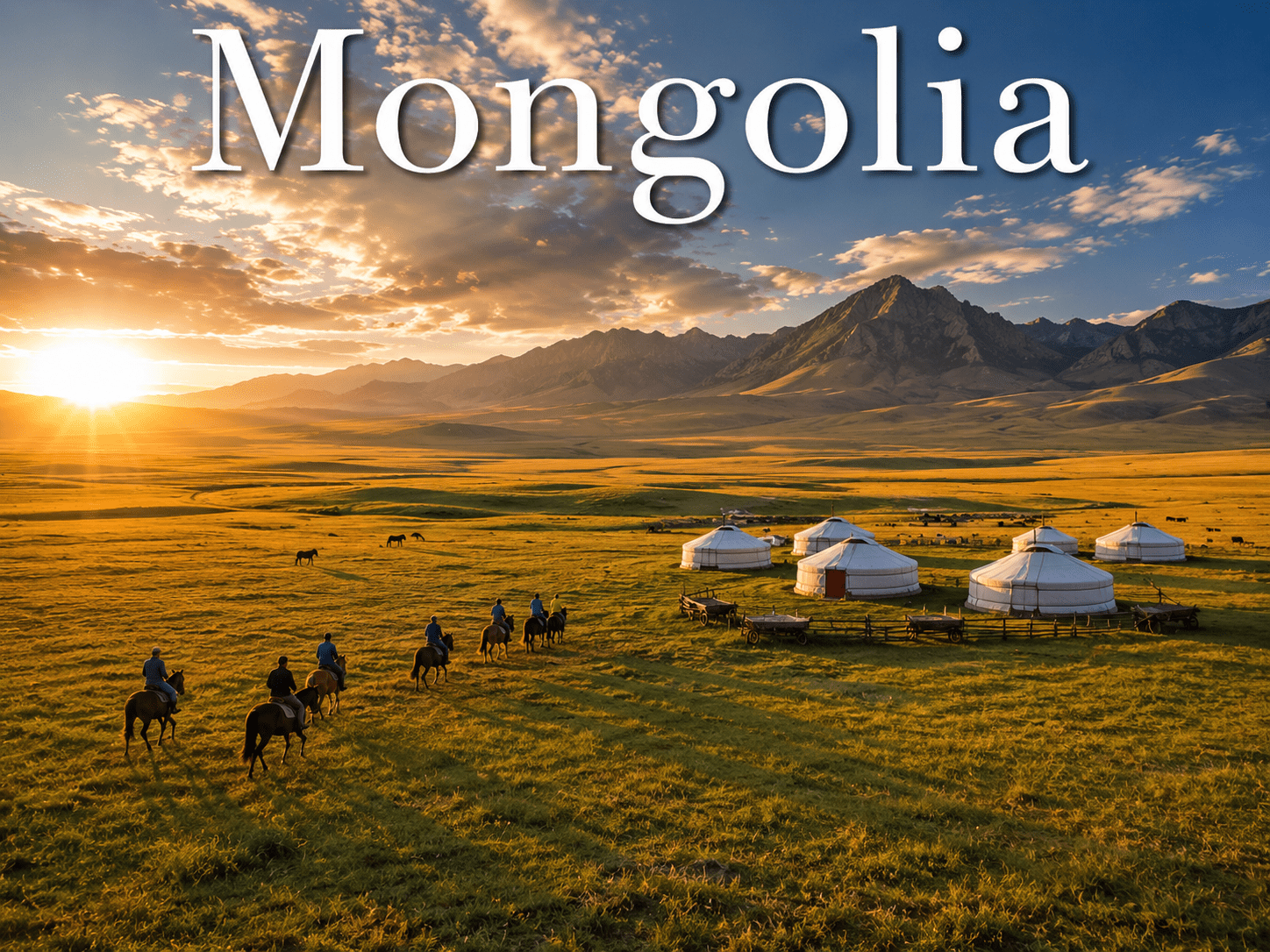
Mongolia Introduction
Mongolia is one of the most fascinating and adventurous destinations in Asia. Known for endless grasslands, dramatic deserts, nomadic traditions, and the legendary empire of Genghis Khan, Mongolia offers travelers an unforgettable experience filled with history, culture, and natural beauty.
Located between Russia and China, Mongolia is famous for its wide-open landscapes, horse-riding traditions, eagle hunters, Buddhist monasteries, and remote wilderness. The country is often called the “Land of the Eternal Blue Sky” because it enjoys more than 250 sunny days each year.
Travelers visiting Mongolia experience a unique way of life that has remained connected to nature for centuries. Traditional nomadic communities continue to live in portable homes called gers while herding livestock across vast steppes and mountain valleys.
Mongolia is also internationally recognized for its role in world history. The Mongol Empire, founded by Genghis Khan during the thirteenth century, became one of the largest empires in human history. This powerful legacy continues to shape national identity and cultural pride.
From the Gobi Desert to snow-covered mountains and crystal-clear lakes, Mongolia provides remarkable scenery for adventure tourism, cultural exploration, and eco-travel experiences.
Quick Facts About Mongolia
| Feature | Details |
|---|---|
| Official Name | Mongolia |
| Capital City | Ulaanbaatar |
| Continent | Asia |
| Population | Around 3.5 million |
| Official Language | Mongolian |
| Currency | Mongolian Tögrög |
| Government Type | Parliamentary Republic |
| Major Religion | Tibetan Buddhism |
| Area | Approximately 1.56 million sq km |
| Independence | 1921 |
History of Mongolia
Ancient History of Mongolia
The territory of Mongolia has been inhabited since prehistoric times. Ancient nomadic tribes moved across the grasslands for thousands of years, developing strong horse-riding skills and survival techniques suited for harsh climates.
The region became home to several tribal confederations before the rise of the Mongol Empire.
Rise of Genghis Khan
One of the most important periods in Mongolia history began in the early thirteenth century with the rise of Genghis Khan.
Born as Temüjin, Genghis Khan united rival nomadic tribes and established the Mongol Empire in 1206. Under his leadership, Mongolian warriors conquered vast territories across Asia and Europe.
The empire expanded rapidly and became one of the largest empires in world history.
Achievements of the Mongol Empire
- Expansion of trade routes
- Cultural exchange between East and West
- Military innovation
- Development of diplomatic networks
The Silk Road flourished during Mongol rule, increasing international trade and communication.
Mongolia After the Empire
Following the decline of the Mongol Empire, Mongolia experienced political divisions and foreign influence.
During later centuries, the Qing Dynasty of China controlled the region before Mongolia declared independence in the twentieth century.
Soviet Influence and Independence
In 1921, Mongolia established independence with Soviet support and later became a socialist republic closely connected with the Soviet Union.
The socialist period brought modernization, education reforms, and industrial development.
In 1990, Mongolia peacefully transitioned toward democracy and a market economy following political reforms.
Today, Mongolia is an independent democratic nation balancing traditional culture with modern development.
Geography of Mongolia
Where Is Mongolia Located?
Mongolia is located in East and Central Asia between Russia to the north and China to the south.
Geographic Coordinates
- Latitude: 46.8625° N
- Longitude: 103.8467° E
Mongolia is one of the world’s largest landlocked countries.
Landscape and Natural Features
Mongolia is famous for its dramatic and diverse landscapes.
Main Geographic Regions
- Vast steppes
- Gobi Desert
- Altai Mountains
- Forested valleys
- Lakes and rivers
The country’s low population density creates enormous open spaces rarely found elsewhere in the world.
The Gobi Desert
The Gobi Desert is one of Mongolia’s most famous natural attractions.
Unlike typical sandy deserts, the Gobi contains rocky terrain, cliffs, dunes, and fossil-rich areas.
Highlights of the Gobi Desert
- Flaming Cliffs
- Sand dunes
- Dinosaur fossil sites
- Camel trekking
- Remote nomadic camps
Adventure travelers frequently explore the desert through multi-day expeditions.
Mountains and Lakes
Mongolia also features beautiful mountain ranges and freshwater lakes.
Popular Natural Destinations
Altai Mountains
Known for snow-capped peaks and eagle hunting traditions.
Lake Khövsgöl
One of Asia’s cleanest freshwater lakes.
Terelj National Park
A scenic destination near Ulaanbaatar.
Nature tourism is increasingly popular among international visitors.
Climate of Mongolia
Extreme Continental Climate
Mongolia experiences an extreme continental climate with long winters and short summers.
Seasonal Overview
Winter
Very cold temperatures with heavy snowfall in some regions.
Spring
Windy conditions and changing temperatures.
Summer
Warm weather ideal for tourism and outdoor activities.
Autumn
Cool temperatures with colorful landscapes.
The climate varies greatly between deserts, mountains, and grasslands.
Culture and Traditions of Mongolia
Nomadic Lifestyle
One of the most unique aspects of Mongolia is its nomadic culture.
Many families continue living traditional lifestyles by moving seasonally with livestock such as sheep, goats, horses, camels, and yaks.
Traditional Nomadic Homes
Nomads live in circular portable tents called gers or yurts.
These homes are designed to withstand Mongolia’s harsh weather conditions and can be assembled quickly.
Hospitality in Mongolia
Hospitality is an important cultural value in Mongolia.
Visitors are often welcomed with traditional milk tea, dairy products, and home-cooked meals.
Nomadic families are known for generosity toward travelers.
Religion in Mongolia
Tibetan Buddhism is the dominant religion in Mongolia.
Buddhist monasteries, prayer wheels, and spiritual traditions remain central to cultural identity.
Shamanism also continues to influence spiritual beliefs in some rural communities.
Festivals in Mongolia
Naadam Festival
The Naadam Festival is Mongolia’s most famous cultural celebration.
The festival includes three traditional sports:
- Wrestling
- Horse racing
- Archery
Naadam celebrations showcase national pride, traditional costumes, music, and cultural performances.
Eagle Hunting Festivals
In western Mongolia, Kazakh eagle hunters organize festivals demonstrating traditional hunting skills using trained golden eagles.
These events attract photographers and adventure travelers from around the world.
Traditional Food in Mongolia
Mongolian Cuisine
Mongolian food reflects the nomadic lifestyle and cold climate.
Meals often include meat, dairy products, and hearty soups.
Popular Mongolian Dishes
Buuz
Steamed dumplings filled with meat.
Khorkhog
A traditional barbecue cooked with hot stones.
Boodog
Meat cooked using heated stones inside the animal carcass.
Airag
Fermented horse milk commonly consumed during festivals.
Traditional meals provide energy needed for harsh environmental conditions.
Official Language of Mongolia
Mongolian Language
The official language of Mongolia is Mongolian, written primarily using the Cyrillic alphabet.
Traditional Mongolian script is also preserved for cultural and historical purposes.
Other Languages Spoken
Additional languages spoken in parts of Mongolia include:
- Kazakh
- Russian
- English in tourism sectors
Multilingual communication is increasing due to tourism and international education.
Major Cities in Mongolia
Ulaanbaatar
Ulaanbaatar is the capital and largest city of Mongolia.
The city serves as the country’s political, cultural, and economic center.
Main Attractions
- Gandan Monastery
- Sukhbaatar Square
- National Museum
- Winter Palace of Bogd Khan
Ulaanbaatar combines modern buildings with traditional cultural influences.
Darkhan
Darkhan is an important industrial city in northern Mongolia.
Features
- Educational institutions
- Manufacturing industries
- Cultural centers
Erdenet
Erdenet is famous for one of Asia’s largest copper mining operations.
Mining contributes significantly to Mongolia’s economy.
Tourism in Mongolia
Why Visit Mongolia?
Mongolia attracts travelers seeking adventure, wilderness, cultural authenticity, and outdoor exploration.
Top Reasons to Visit
- Nomadic culture
- Horse trekking
- Desert adventures
- Buddhist monasteries
- Eagle hunting traditions
- Remote natural landscapes
The country is especially popular among eco-tourists and adventure travelers.
External DoFollow Links
- Official Mongolia Tourism Website
- United Nations Mongolia Profile
- UNESCO Official Website
- World Bank Mongolia Data
Economy of Mongolia
Mongolia Economy Overview
Mongolia has a rapidly developing economy strongly connected with mining, agriculture, livestock farming, and international trade. The country’s enormous natural resources have helped shape modern economic growth, while traditional nomadic lifestyles continue supporting rural communities.
The economy of Mongolia combines ancient traditions with modern industries. Mining exports, especially copper, coal, and gold, contribute significantly to national revenue. Agriculture also remains important because many families continue raising livestock across the countryside.
Economic development in Mongolia has increased urbanization, infrastructure projects, tourism opportunities, and international business partnerships.
Currency of Mongolia
The official currency of Mongolia is the Mongolian Tögrög (MNT).
Currency Facts
| Feature | Details |
|---|---|
| Official Currency | Mongolian Tögrög |
| Currency Code | MNT |
| Central Bank | Bank of Mongolia |
| Common Payments | Cash and digital payments |
Travelers often exchange money in Ulaanbaatar before visiting rural regions.
Mining Industry in Mongolia
Mining is one of the largest industries in Mongolia.
Important Mineral Resources
- Copper
- Coal
- Gold
- Fluorspar
- Uranium
Large mining projects have attracted international investment and strengthened trade relationships with neighboring countries.
Agriculture and Livestock
Livestock farming remains central to rural life in Mongolia.
Animals Raised by Nomadic Families
- Horses
- Sheep
- Goats
- Camels
- Yaks
- Cattle
Cashmere production is especially important because Mongolia produces some of the world’s finest cashmere wool.
Trade Partners of Mongolia
Mongolia maintains strong trade connections with neighboring countries and global markets.
Main Trade Partners
- China
- Russia
- South Korea
- Japan
Exports mainly include minerals, wool, and animal products.
Tourism in Mongolia
Why Tourism Is Growing in Mongolia
Tourism in Mongolia continues expanding because travelers seek authentic cultural experiences and untouched natural landscapes.
Unlike crowded international destinations, Mongolia offers open spaces, remote adventures, and strong cultural traditions connected with nomadic life.
Adventure travelers, photographers, hikers, and eco-tourists increasingly choose Mongolia for unique outdoor experiences.
Top Tourist Attractions in Mongolia
Gobi Desert
The Gobi Desert is one of the most iconic destinations in Mongolia.
Popular Activities
- Camel trekking
- Sand dune climbing
- Camping under the stars
- Visiting fossil sites
The desert landscape includes dramatic cliffs, rocky valleys, and wide-open plains.
Flaming Cliffs
The Flaming Cliffs, also called Bayanzag, became internationally famous after dinosaur fossils were discovered in the region.
Why Visitors Love the Area
- Red sandstone formations
- Sunset photography
- Fossil exploration
- Desert scenery
The cliffs glow beautifully during sunset hours.
Terelj National Park
Terelj National Park is among the most visited natural attractions in Mongolia.
Attractions Inside the Park
- Rock formations
- Horse riding
- Hiking trails
- Traditional ger camps
- Buddhist temples
Its location near Ulaanbaatar makes it accessible for short trips.
Lake Khövsgöl
Lake Khövsgöl is one of Asia’s cleanest freshwater lakes.
Activities Around the Lake
- Kayaking
- Horse trekking
- Hiking
- Fishing
- Camping
The surrounding forests and mountains create stunning scenery.
Altai Mountains
The Altai Mountains in western Mongolia are famous for rugged landscapes and traditional eagle hunters.
Adventure Experiences
- Mountain trekking
- Eagle hunting festivals
- Glacier exploration
- Cultural tourism
This region is especially popular among photographers and outdoor explorers.
Wildlife in Mongolia
Unique Animals of Mongolia
Mongolia supports diverse wildlife across deserts, mountains, forests, and grasslands.
Famous Wildlife Species
- Snow leopard
- Wild horses
- Golden eagle
- Bactrian camel
- Argali sheep
Wildlife tourism has become increasingly important for conservation and eco-travel.
Takhi Wild Horses
The Takhi, also called Przewalski’s horse, is one of the rarest horse species in the world.
Conservation programs in Mongolia successfully reintroduced these horses into protected natural habitats.
National Parks in Mongolia
Hustai National Park
Hustai National Park is internationally recognized for wild horse conservation.
Park Highlights
- Takhi horses
- Hiking routes
- Grassland scenery
- Wildlife photography
Altai Tavan Bogd National Park
This national park contains glaciers, mountains, and remote wilderness landscapes.
Popular Activities
- Trekking
- Ice climbing
- Cultural tours
- Camping
The park is located near the borders of Russia and China.
Gorkhi-Terelj National Park
This protected area combines forests, rivers, and dramatic rock formations.
Tourists enjoy outdoor recreation and traditional ger accommodations.
Adventure Tourism in Mongolia
Horse Riding Adventures
Horse culture is deeply connected with Mongolia’s national identity.
Travelers frequently join horseback expeditions across the steppes to experience traditional nomadic routes.
Camel Trekking
Camel trekking is popular in the Gobi Desert.
Experienced guides lead visitors through remote desert landscapes and nomadic camps.
Hiking and Trekking
Mongolia offers excellent trekking opportunities due to its remote wilderness and low population density.
Popular Trekking Areas
- Altai Mountains
- Khövsgöl region
- National parks
- Desert valleys
Winter Adventures
Winter tourism in Mongolia has become increasingly popular.
Winter Activities
- Ice festivals
- Dog sledding
- Frozen lake tours
- Snow photography
The cold climate creates unique travel experiences.
Traditional Sports in Mongolia
Mongolian Wrestling
Traditional wrestling is one of the oldest sports in Mongolia.
During Naadam Festival competitions, wrestlers wear colorful traditional costumes and compete in front of large audiences.
Horse Racing
Horse racing remains an important cultural tradition.
Unlike many countries, children often serve as riders during long-distance races across open landscapes.
Archery
Archery has historical importance connected with Mongol military traditions.
Today, archery competitions remain popular during cultural festivals.
Transportation in Mongolia
Traveling to Mongolia
Most international travelers arrive through Chinggis Khaan International Airport near Ulaanbaatar.
Main Transportation Options
- International flights
- Trains from Russia and China
- Domestic airlines
- Road travel
Transportation Inside Mongolia
Due to the country’s large size and remote regions, transportation can be challenging.
Common Travel Methods
- Four-wheel-drive vehicles
- Domestic flights
- Horse riding
- Trains
- Buses
Adventure tours often require off-road vehicles.
Best Time to Visit Mongolia
Summer Season
Summer is the best season for tourism in Mongolia.
Advantages
- Warm temperatures
- Green landscapes
- Festival season
- Easier road access
Most tourists visit between June and August.
Autumn Season
Autumn offers beautiful scenery and fewer crowds.
Golden grasslands and cooler temperatures create excellent photography conditions.
Winter Season
Winter tourism appeals to travelers seeking snow landscapes and cultural festivals.
However, temperatures can become extremely cold.
Mongolian Arts and Handicrafts
Traditional Handicrafts
Mongolian artisans create handmade crafts using wool, leather, wood, and metal.
Popular Souvenirs
- Cashmere clothing
- Traditional boots
- Horsehead fiddles
- Handmade jewelry
Craftsmanship reflects centuries of nomadic culture.
Music and Instruments
Traditional Mongolian music often imitates sounds from nature and animals.
Famous Instruments
- Morin Khuur (horsehead fiddle)
- Drums
- Flutes
Throat singing is another internationally recognized cultural tradition.
Modern Lifestyle in Mongolia
Urban Development
Ulaanbaatar continues expanding with modern buildings, shopping centers, universities, and business districts.
The city reflects a blend of traditional culture and contemporary urban life.
Technology and Education
Modern Mongolia invests in education, digital technology, and international partnerships.
Young people increasingly engage with global industries while preserving cultural identity.
External DoFollow Links
- Official Mongolia Tourism Website
- United Nations Mongolia Profile
- UNESCO Official Website
- World Bank Mongolia Data
Unique and Interesting Facts About Mongolia
Mongolia Has One of the Lowest Population Densities
Mongolia is one of the least densely populated countries in the world. Although the territory is enormous, the population remains relatively small.
This creates endless open landscapes where travelers can experience untouched wilderness and peaceful natural surroundings rarely found elsewhere.
Mongolia Is Known as the Land of the Eternal Blue Sky
Mongolia receives more than 250 sunny days each year, giving rise to the nickname “Land of the Eternal Blue Sky.”
The bright skies and dramatic natural scenery create excellent conditions for outdoor exploration and photography.
Horse Culture Is Central to Mongolia
Horses are deeply connected with Mongolia’s identity and history.
Children often learn horseback riding at an early age, and horses continue playing important roles in transportation, sports, and cultural traditions.
The country reportedly has more horses than people.
Genghis Khan Remains a National Symbol
Genghis Khan is one of the most respected historical figures in Mongolia.
His influence appears in museums, statues, currency, monuments, and national celebrations.
The massive Genghis Khan Equestrian Statue near Ulaanbaatar has become one of the country’s most visited attractions.
Mongolia Has Ancient Dinosaur Fossils
The Gobi Desert is internationally famous for important dinosaur fossil discoveries.
Scientists discovered dinosaur eggs and fossils in Mongolia that greatly contributed to paleontological research.
The Flaming Cliffs remain one of the world’s most important fossil locations.
Education and Healthcare in Mongolia
Education System in Mongolia
Mongolia has made major progress in education and literacy during recent decades.
Schools and universities operate across urban and rural regions, although remote nomadic communities sometimes face educational challenges because of distance and climate conditions.
Main Areas of Study
- Science
- Technology
- Engineering
- Medicine
- International studies
Young Mongolians increasingly pursue international education opportunities.
Universities in Mongolia
Several universities in Ulaanbaatar attract both domestic and international students.
Well-Known Institutions
- National University of Mongolia
- Mongolian University of Science and Technology
Higher education continues expanding alongside economic development.
Healthcare Services in Mongolia
Healthcare services are concentrated mainly in urban areas.
Modern hospitals and clinics are available in Ulaanbaatar, while rural healthcare often relies on regional medical centers and mobile services.
Healthcare Improvements
- Expanded medical training
- International partnerships
- Improved technology
- Public health programs
Travelers visiting remote areas are advised to carry basic medical supplies.
Festivals and Celebrations in Mongolia
Naadam Festival
Naadam is the most important national festival in Mongolia.
The celebration takes place every summer and showcases the “Three Manly Games”:
- Wrestling
- Horse racing
- Archery
Traditional clothing, music, and ceremonies create a vibrant atmosphere during the festival.
Tsagaan Sar
Tsagaan Sar is the Mongolian Lunar New Year celebration.
Families gather to honor elders, share traditional meals, and exchange greetings.
The holiday represents renewal, family unity, and cultural heritage.
Golden Eagle Festival
In western Mongolia, Kazakh eagle hunters organize festivals demonstrating centuries-old hunting traditions.
Festival Attractions
- Eagle hunting competitions
- Traditional costumes
- Horseback performances
- Cultural exhibitions
The festival attracts photographers and cultural travelers from around the world.
Hidden Attractions in Mongolia
Amarbayasgalant Monastery
This peaceful Buddhist monastery is one of Mongolia’s most important religious sites.
Highlights
- Traditional architecture
- Mountain scenery
- Spiritual atmosphere
- Historical artifacts
Kharkhorin and Erdene Zuu Monastery
Kharkhorin was once part of the ancient Mongol Empire capital region.
Nearby Erdene Zuu Monastery remains one of the country’s oldest Buddhist monasteries.
The area combines historical significance with cultural beauty.
Khuvsgul Lake Villages
Remote villages near Lake Khövsgöl offer opportunities to experience traditional lifestyles and untouched natural landscapes.
Travelers enjoy hiking, horseback riding, and lakeside camping.
Food Experiences in Mongolia
Traditional Dairy Products
Nomadic communities produce many dairy-based foods.
Popular Dairy Items
- Yogurt
- Cheese
- Dried curds
- Fermented milk drinks
Dairy products are important sources of nutrition in rural areas.
Meat-Based Cuisine
Mongolian cuisine traditionally includes lamb, beef, goat, and yak meat.
Meals are designed to provide energy during cold winters and physically demanding lifestyles.
Modern Restaurants in Ulaanbaatar
The capital city now offers a growing international food scene.
Travelers can enjoy:
- Traditional Mongolian cuisine
- Korean food
- Chinese dishes
- European restaurants
- Modern cafés
Shopping in Mongolia
Popular Souvenirs
Travelers visiting Mongolia often purchase traditional handmade products.
Common Souvenirs
- Cashmere scarves
- Felt crafts
- Leather goods
- Traditional clothing
- Handmade jewelry
Local markets provide excellent opportunities to support artisans.
Cashmere Industry
Mongolia is one of the world’s leading producers of high-quality cashmere.
Luxury cashmere products are internationally recognized for softness and craftsmanship.
Safety and Travel Tips for Mongolia
Is Mongolia Safe for Tourists?
Mongolia is generally considered safe for international travelers.
The country’s low population density and friendly hospitality contribute to positive travel experiences.
Important Travel Tips
Prepare for Weather Conditions
Temperatures can change rapidly, especially in desert and mountain regions.
Carry Cash in Rural Areas
Remote communities may not accept digital payments.
Use Experienced Guides
Professional guides are recommended for wilderness expeditions and remote travel.
Respect Nomadic Traditions
Visitors should respect local customs and hospitality practices.
Best Experiences in Mongolia
Staying in a Traditional Ger
One of the most memorable travel experiences in Mongolia is staying with nomadic families inside traditional gers.
Visitors gain insight into rural culture, livestock herding, and traditional cooking.
Horse Trekking Across the Steppes
Horse trekking allows travelers to experience Mongolia’s landscapes in a traditional and immersive way.
The vast open grasslands create unforgettable adventure opportunities.
Stargazing in Remote Regions
Low population density and minimal light pollution make Mongolia ideal for stargazing.
The night sky over the steppes and desert regions appears exceptionally clear.
Mongolia and International Organizations
United Nations Membership
Mongolia became a member of the United Nations in 1961.
The country participates in international cooperation programs related to peacekeeping, environmental protection, and sustainable development.
Other International Organizations
Mongolia is also associated with:
- UNESCO
- World Health Organization
- Asian Development Bank
- International Monetary Fund
International cooperation supports development and cultural preservation projects.
Final Summary
Mongolia is one of the world’s most extraordinary travel destinations. From endless grasslands and remote deserts to ancient traditions and modern cities, the country offers experiences unlike anywhere else on Earth.
The deep connection between nature, nomadic culture, and historical heritage gives Mongolia a unique identity that continues inspiring travelers, historians, photographers, and adventurers.
Whether exploring the Gobi Desert, attending the Naadam Festival, staying with nomadic families, or discovering Buddhist monasteries, visitors encounter authentic cultural experiences and breathtaking natural beauty.
Mongolia’s combination of history, wilderness, hospitality, and adventure tourism makes it one of Asia’s most rewarding destinations for travelers seeking something truly different.
Key Facts About Mongolia
| Category | Information |
|---|---|
| Official Name | Mongolia |
| Capital City | Ulaanbaatar |
| Continent | Asia |
| Population | Around 3.5 million |
| Official Language | Mongolian |
| Currency | Mongolian Tögrög |
| Major Religion | Tibetan Buddhism |
| Government Type | Parliamentary Republic |
| Area | Approximately 1.56 million sq km |
| Famous Festival | Naadam Festival |
| Major Desert | Gobi Desert |
| Major Mountain Range | Altai Mountains |
| Independence | 1921 |
| UN Membership | Joined in 1961 |
Frequently Asked Questions About Mongolia
What is Mongolia famous for?
Mongolia is famous for nomadic culture, Genghis Khan, horse riding, the Gobi Desert, and vast grasslands.
What is the best time to visit Mongolia?
Summer between June and August is considered the best time for tourism and outdoor adventures.
Is Mongolia expensive for tourists?
Mongolia can be affordable compared to many international destinations, although remote tours may increase travel costs.
What language is spoken in Mongolia?
Mongolian is the official language.
Is Mongolia safe for travelers?
Yes, Mongolia is generally safe for tourists, especially when traveling with experienced guides in remote regions.
Internal Links
Explore more destinations:
External DoFollow Links
- Official Mongolia Tourism Website
- United Nations Mongolia Profile
- UNESCO Official Website
- World Bank Mongolia Data

