



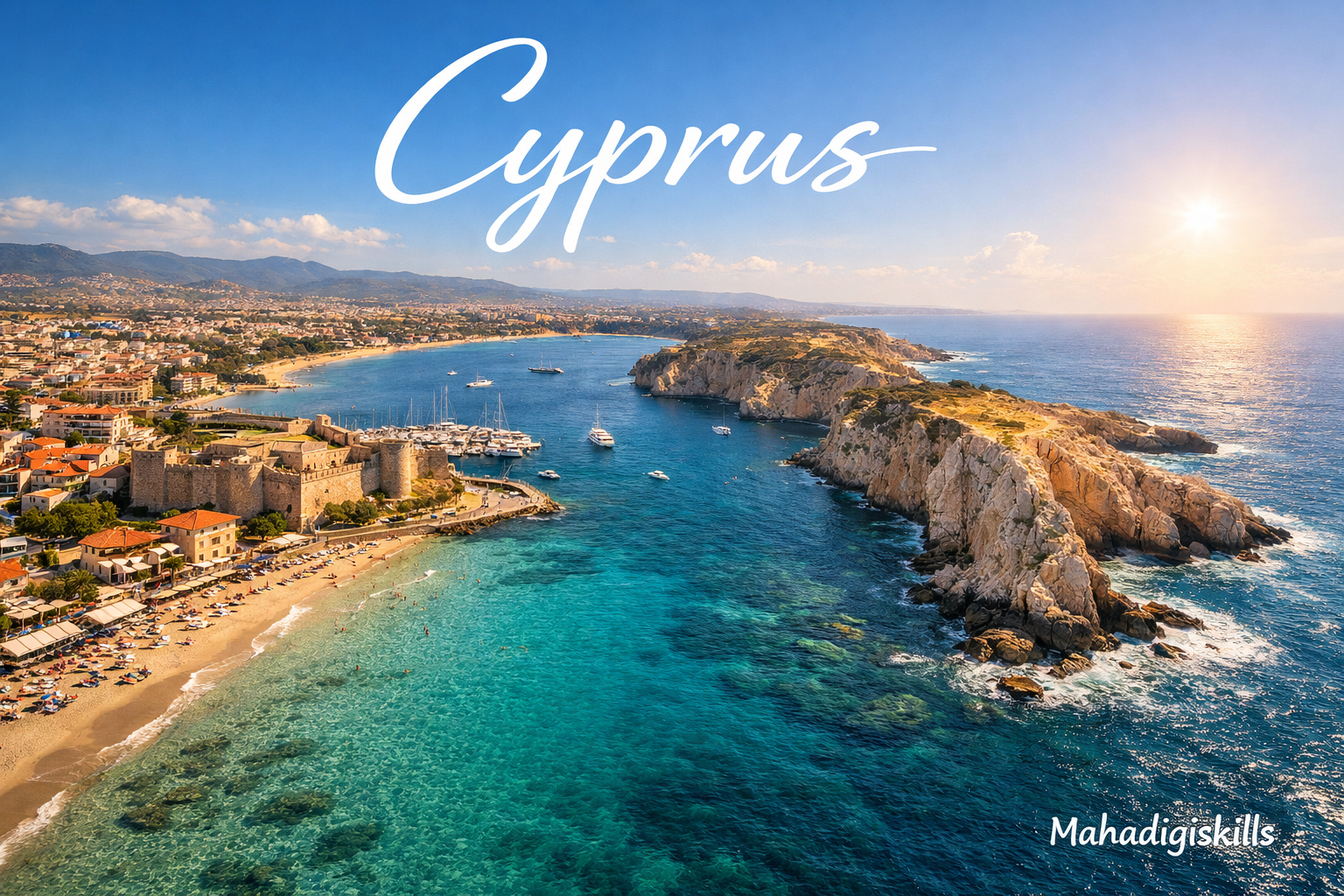
Introduction to Cyprus
Cyprus is one of the most fascinating islands in the Mediterranean Sea, known for its rich history, beautiful landscapes, and vibrant cultural traditions. Located at the crossroads of Europe, Asia, and Africa, Cyprus has been influenced by numerous civilizations throughout its long history. This unique geographical position has shaped the culture, architecture, and lifestyle found across the island today.
Travelers visiting Cyprus are often captivated by its stunning coastline, historic ruins, charming villages, and lively cities. From ancient Greek temples to medieval castles and modern seaside resorts, the island offers an incredible variety of experiences. Whether exploring archaeological sites or relaxing on golden beaches, visitors quickly discover why Cyprus is one of the Mediterranean’s most appealing destinations.
The island is famous for its warm climate, friendly people, and vibrant traditions. Visitors can experience authentic Mediterranean cuisine, explore scenic mountains, and discover centuries-old cultural heritage. Because of its diverse attractions, Cyprus attracts travelers interested in history, culture, nature, and seaside relaxation.
History of Cyprus
The history of Cyprus stretches back thousands of years, making it one of the oldest inhabited regions in the Mediterranean. Archaeological discoveries reveal that humans lived on the island as early as 10,000 years ago. Over time, the island became an important trading hub due to its strategic location.
Ancient Civilizations
During ancient times, Cyprus was heavily influenced by Greek culture. Greek settlers arrived on the island around the 2nd millennium BCE and established city-kingdoms. These early societies developed thriving trade networks, exporting copper, pottery, and other goods.
The name Cyprus itself is believed to be connected to the island’s ancient copper resources. In fact, the Latin word cuprum for copper originated from the island’s name.
Throughout history, Cyprus was ruled by several powerful empires, including:
- The Assyrians
- The Egyptians
- The Persians
These civilizations recognized the strategic importance of Cyprus and used it as a major commercial and naval base.
Greek and Roman Period
In 333 BCE, Cyprus came under the control of Alexander the Great after he defeated the Persian Empire. Greek culture became dominant across the island, shaping its language, religion, and artistic traditions.
After the death of Alexander, the island was ruled by the Ptolemaic Kingdom of Egypt, and later became part of the Roman Empire in 58 BCE. Under Roman rule, Cyprus experienced economic growth and infrastructure development.
One of the most significant events in the island’s history occurred during this time: the introduction of Christianity. According to historical records, the Apostle Paul visited Cyprus during his missionary journeys, making the island one of the earliest Christian regions in the world.
Byzantine and Medieval Era
Following the division of the Roman Empire, Cyprus became part of the Byzantine Empire. During this period, many churches and monasteries were built across the island. Byzantine art and architecture still influence religious sites found in Cyprus today.
In the medieval era, the island was conquered by Richard the Lionheart during the Third Crusade in 1191. Shortly afterward, Cyprus came under the rule of the Lusignan dynasty, which established a feudal kingdom on the island.
The Lusignan rulers constructed Gothic cathedrals and castles that still stand today. These structures are among the most remarkable historical landmarks in Cyprus.
Ottoman and British Rule
In 1571, the Ottoman Empire conquered Cyprus, marking a new chapter in the island’s history. Ottoman rule lasted for more than three centuries and introduced new cultural and architectural influences.
In 1878, the island came under British administration, eventually becoming a British colony in 1925. During the British period, modern infrastructure, education systems, and political institutions were developed.
Independence and Modern Cyprus
After years of political negotiations and nationalist movements, Cyprus gained independence from the United Kingdom in 1960. The Republic of Cyprus was established as an independent nation with a constitution designed to balance the interests of Greek Cypriots and Turkish Cypriots.
However, political tensions eventually led to the division of the island in 1974. Today, the island remains politically divided, though the Republic of Cyprus is internationally recognized and a member of the European Union.
Despite political complexities, Cyprus continues to grow as a tourism destination and economic center in the Mediterranean.
Geography of Cyprus
Location in the Mediterranean
Cyprus is located in the eastern Mediterranean Sea and is the third-largest island in the Mediterranean after Sicily and Sardinia.
The island lies near several important regions:
- Turkey to the north
- Syria to the east
- Lebanon to the southeast
- Israel to the south
- Greece to the west
Because of this strategic location, Cyprus has historically served as a bridge between Europe, Asia, and the Middle East.
Geographic Coordinates
- Latitude: 35° N
- Longitude: 33° E
Landscapes and Natural Features
The geography of Cyprus includes diverse landscapes ranging from mountains to coastal plains.
Troodos Mountains
The Troodos Mountains dominate the central region of the island. These mountains are known for forests, traditional villages, and historic monasteries.
Mount Olympus, the highest peak in Cyprus, rises to approximately 1,952 meters.
Kyrenia Mountains
Located along the northern coastline, the Kyrenia mountain range offers dramatic cliffs and scenic views of the Mediterranean Sea.
These mountains are also home to historic castles and hiking trails.
Coastal Plains
The island features several fertile plains that support agriculture. The Mesaoria Plain is one of the most important farming areas in Cyprus, producing wheat, olives, citrus fruits, and vegetables.
Climate of Cyprus
The climate of Cyprus is typically Mediterranean, characterized by warm summers and mild winters.
Summer Season
Summer temperatures in Cyprus often reach 30°C to 35°C, especially in inland areas. Coastal regions benefit from sea breezes that make the weather more comfortable.
Winter Season
Winters are mild, with temperatures averaging between 10°C and 15°C. Snowfall sometimes occurs in the Troodos Mountains, allowing winter sports activities.
Sunshine
One of the reasons tourists love Cyprus is the island’s abundant sunshine. The country enjoys approximately 300 days of sunshine per year, making it ideal for beach holidays and outdoor exploration.
Culture and Traditions of Cyprus
The culture of Cyprus reflects centuries of influences from Greek, Turkish, Middle Eastern, and European traditions. Despite these influences, the island has developed its own unique identity.
Family life, hospitality, and community traditions play a central role in daily life in Cyprus.
Religion in Cyprus
Religion has historically played an important role in the culture of Cyprus.
The majority of Greek Cypriots belong to the Greek Orthodox Church, while Turkish Cypriots primarily follow Islam.
Throughout the island, visitors can find historic churches, monasteries, and mosques that reflect the religious diversity of Cyprus.
Festivals and Celebrations
Festivals are an important part of life in Cyprus, celebrating religious events, seasonal traditions, and local culture.
Popular festivals include:
- Limassol Carnival Festival
- Anthestiria Flower Festival
- Kataklysmos Water Festival
These events feature music, dancing, food, and community gatherings.
Traditional Food of Cyprus
Cuisine in Cyprus reflects Mediterranean flavors and fresh local ingredients.
Popular dishes include:
- Halloumi cheese
- Souvlaki
- Moussaka
- Sheftalia sausages
- Meze platters
Meals in Cyprus are often social occasions where families and friends gather to share a variety of dishes.
Music and Dance
Music and dance traditions are an essential part of Cypriot culture. Traditional instruments include the bouzouki, violin, and lute.
Folk dances performed during celebrations showcase the vibrant heritage of Cyprus.
Languages Spoken in Cyprus
The official languages of Cyprus are:
- Greek
- Turkish
However, English is widely spoken, especially in tourism areas, making travel easier for international visitors.
Different dialects of Greek and Turkish also exist across various regions of Cyprus.
Economy of Cyprus
The economy of Cyprus has developed significantly over the past several decades. Once primarily dependent on agriculture, Cyprus has transformed into a diversified economy that includes tourism, financial services, shipping, and technology industries.
Today, Cyprus is considered one of the more stable economies in the eastern Mediterranean. Its strategic location between Europe, the Middle East, and North Africa has helped the country become an important hub for trade and business.
The Republic of Cyprus joined the European Union in 2004, which further strengthened economic development and international partnerships. In 2008, the country adopted the Euro as its official currency, replacing the Cypriot pound.
Membership in the European Union has helped Cyprus attract foreign investment and expand its economic connections with other European countries.
Currency of Cyprus
The official currency of Cyprus is the Euro (€).
Using the Euro simplifies travel for visitors from other European countries and facilitates trade across the European Union. Prices across Cyprus are generally comparable to other Mediterranean destinations, though costs may vary depending on location and tourist demand.
Major cities such as Nicosia, Limassol, and Larnaca have modern banking systems, international ATMs, and credit card facilities widely available.
Key Industries in Cyprus
Several industries contribute significantly to the economic growth of Cyprus.
Tourism Industry
Tourism is one of the most important sectors in Cyprus. Millions of international visitors travel to the island each year to enjoy its beaches, historic landmarks, and Mediterranean climate.
Tourism supports hotels, restaurants, transportation services, entertainment businesses, and cultural attractions across Cyprus.
Shipping and Maritime Services
Another important industry in Cyprus is maritime shipping. The country operates one of the largest merchant shipping fleets in Europe.
Due to its strategic location and modern port infrastructure, Cyprus serves as an important shipping center connecting Europe with Asia and the Middle East.
Financial and Business Services
The financial sector also plays a major role in the economy of Cyprus. The country has developed into an international business hub offering banking, accounting, legal services, and investment opportunities.
Many international companies operate regional offices in Cyprus because of its favorable business environment and connections with European markets.
Agriculture
Although agriculture is no longer the dominant sector, farming still contributes to the economy of Cyprus.
Key agricultural products include:
- Citrus fruits
- Olives and olive oil
- Grapes and wine
- Potatoes
- Vegetables
Traditional farming practices remain an important part of rural life across Cyprus.
Trade Partners of Cyprus
Because Cyprus is part of the European Union, many of its major trade partners are European countries.
Important trade partners include:
- Greece
- Italy
- Germany
- United Kingdom
- Israel
- Turkey
- Lebanon
Trade primarily includes manufactured goods, agricultural products, machinery, and tourism-related services.
Tourism in Cyprus
Tourism is one of the largest contributors to the economy of Cyprus. The island attracts travelers from across Europe, Asia, and the Middle East thanks to its beautiful beaches, historic ruins, and welcoming atmosphere.
Visitors come to Cyprus for many different reasons, including cultural exploration, beach vacations, outdoor adventures, and culinary experiences.
The island offers a unique blend of ancient history and modern tourism infrastructure.
Famous Tourist Attractions in Cyprus
Paphos Archaeological Park
One of the most important historical sites in Cyprus is Paphos Archaeological Park, a UNESCO World Heritage Site.
The site contains impressive Roman mosaics, ancient villas, temples, and theaters. These mosaics depict scenes from Greek mythology and are considered some of the finest examples of Roman art in the Mediterranean region.
Visitors exploring Paphos quickly realize how deeply ancient history is woven into the identity of Cyprus.
Tombs of the Kings
Another remarkable historical site in Cyprus is the Tombs of the Kings, located near Paphos.
Despite the name, these tombs were not actually used for kings but for high-ranking officials and aristocrats during the Hellenistic and Roman periods.
The underground tombs carved from solid rock demonstrate the architectural sophistication of ancient Cyprus.
Kyrenia Castle
Kyrenia Castle is one of the most famous medieval fortresses in Cyprus. Located on the northern coast, the castle overlooks a picturesque harbor and offers spectacular views of the Mediterranean Sea.
The castle has been controlled by several civilizations throughout history, including the Byzantines, Venetians, and Ottomans.
Inside the castle, visitors can explore historical exhibits and learn about the maritime history of Cyprus.
Beautiful Beaches in Cyprus
One of the main reasons travelers visit Cyprus is its stunning Mediterranean coastline. The island is home to numerous beautiful beaches that offer clear water, soft sand, and excellent weather conditions.
Nissi Beach
Nissi Beach in Ayia Napa is one of the most famous beaches in Cyprus. Known for its turquoise waters and lively atmosphere, the beach attracts visitors from around the world.
Water sports, beach bars, and vibrant nightlife make Nissi Beach a popular destination for younger travelers.
Fig Tree Bay
Located in Protaras, Fig Tree Bay is widely regarded as one of the most beautiful beaches in Cyprus.
The beach features calm waters and golden sand, making it perfect for families and swimming enthusiasts.
Coral Bay
Coral Bay, located near Paphos, is another popular beach destination in Cyprus.
This beach offers a relaxed environment with scenic cliffs, warm water, and soft sand. It is an excellent spot for snorkeling and swimming.
UNESCO World Heritage Sites in Cyprus
The island of Cyprus is home to several UNESCO World Heritage Sites that highlight its historical and cultural significance.
Paphos
The entire city of Paphos has been designated a UNESCO World Heritage Site due to its remarkable archaeological treasures.
Painted Churches of the Troodos Region
Located in the Troodos Mountains, these medieval churches feature stunning Byzantine frescoes. They provide insight into the religious and artistic traditions of Cyprus.
Choirokoitia
Choirokoitia is an important prehistoric settlement that dates back to the Neolithic period. The site provides valuable information about early human life in Cyprus.
National Parks and Natural Landscapes
Nature lovers visiting Cyprus will find numerous national parks, forests, and scenic landscapes.
Troodos National Forest Park
The Troodos National Forest Park covers a large mountainous area and offers hiking trails, waterfalls, and wildlife habitats.
Visitors can explore traditional villages, monasteries, and scenic viewpoints throughout this region of Cyprus.
Akamas Peninsula
The Akamas Peninsula is one of the most pristine natural regions in Cyprus. Known for its rugged coastline, wildflowers, and wildlife, the area is popular for hiking and nature exploration.
One of the most famous attractions here is the Blue Lagoon, where crystal-clear waters attract swimmers and boat tours.
Cultural Tourism in Cyprus
Cultural tourism is another important attraction in Cyprus. The island hosts museums, art galleries, and historic sites that showcase its diverse heritage.
Visitors exploring Cyprus can discover:
- Ancient Greek temples
- Roman theaters
- Medieval castles
- Byzantine churches
- Ottoman mosques
These landmarks demonstrate the many civilizations that shaped the island’s identity.
Food Tourism in Cyprus
Cuisine is a major highlight of travel in Cyprus. The island’s food reflects Mediterranean ingredients and traditional cooking techniques.
A typical meal in Cyprus often includes a meze, which is a collection of small dishes served together.
Popular ingredients include:
- Olive oil
- Fresh vegetables
- Seafood
- Lamb and chicken
- Herbs and spices
Many restaurants in Cyprus offer outdoor dining where visitors can enjoy meals while overlooking the sea.
Wine Production in Cyprus
Wine production has been part of life in Cyprus for thousands of years. Archaeological evidence shows that wine was produced on the island as early as the Bronze Age.
One of the most famous wines from Cyprus is Commandaria, considered one of the oldest named wines still produced today.
Visitors interested in wine tourism can explore vineyards and wineries throughout the Troodos mountain region.
Major Cities in Cyprus
Several cities across Cyprus highlight the island’s blend of ancient history, modern development, and Mediterranean charm. Each city offers a different perspective on the culture, lifestyle, and history of Cyprus.
Nicosia – Capital of Cyprus
Nicosia is the capital and largest city of Cyprus. Located near the center of the island, it serves as the political, financial, and administrative center of the country.
One of the most unique characteristics of Nicosia is that it is the last divided capital city in Europe. The city is separated into two areas by the Green Line, which divides the Republic of Cyprus and the Turkish-controlled northern region.
Visitors exploring Nicosia can discover:
- Venetian city walls
- Ledra Street shopping district
- Cyprus Archaeological Museum
- Historic churches and mosques
The city combines modern infrastructure with centuries-old architecture, making it an important cultural hub of Cyprus.
Limassol – Coastal Business and Tourism Hub
Limassol is the second-largest city in Cyprus and one of the island’s most dynamic economic centers. Located on the southern coast, Limassol is known for its vibrant nightlife, luxury marina, and international business community.
The city has become an important financial and shipping center while also maintaining a strong tourism industry.
Popular attractions in Limassol include:
- Limassol Castle
- Limassol Marina
- Ancient city of Amathus
- Beaches along the Mediterranean coast
Every year, Limassol hosts the famous Limassol Carnival Festival, one of the largest cultural celebrations in Cyprus.
Larnaca – Historic Coastal City
Larnaca is one of the oldest continuously inhabited cities in Cyprus. Located on the southeastern coast, the city offers a relaxed atmosphere and beautiful seaside promenades.
Larnaca is also home to one of the island’s major international airports, making it a common entry point for visitors arriving in Cyprus.
Key attractions in Larnaca include:
- Finikoudes Beach promenade
- Church of Saint Lazarus
- Hala Sultan Tekke Mosque
- Larnaca Salt Lake
During winter months, the salt lake becomes a popular habitat for migrating flamingos, creating a unique natural attraction in Cyprus.
Paphos – City of Mythology
Paphos is a historic coastal city in western Cyprus and one of the island’s most important archaeological destinations.
According to Greek mythology, Aphrodite, the goddess of love and beauty, was born near the coast of Paphos. Because of this legend, the city holds a special place in the cultural identity of Cyprus.
Visitors to Paphos can explore:
- Paphos Archaeological Park
- Tombs of the Kings
- Paphos Castle
- Aphrodite’s Rock
Due to its historical significance, the entire area of Paphos has been designated a UNESCO World Heritage Site.
Unique and Interesting Facts About Cyprus
Cyprus is full of fascinating historical and cultural facts that make the island unique in the Mediterranean.
Here are some interesting facts about Cyprus:
- Cyprus is the third-largest island in the Mediterranean Sea.
- The island has been inhabited for more than 10,000 years.
- Cyprus enjoys around 300 days of sunshine per year.
- The island is known for producing halloumi cheese, which originated in Cyprus.
- Commandaria wine from Cyprus is considered one of the oldest named wines in the world.
- The Troodos Mountains in Cyprus are home to UNESCO-listed Byzantine churches.
- Aphrodite, the Greek goddess of love, is believed to have been born on the shores of Cyprus.
These fascinating facts highlight the rich heritage and cultural importance of Cyprus.
Cyprus and the United Nations
The Republic of Cyprus became a member of the United Nations (UN) in 1960 shortly after gaining independence from the United Kingdom.
As a UN member state, Cyprus participates in international cooperation programs related to:
- Economic development
- Peace and security
- Environmental sustainability
- Cultural preservation
The country is also a member of several global and regional organizations, including:
- European Union (EU)
- Council of Europe
- Commonwealth of Nations
- World Trade Organization
Through these organizations, Cyprus plays an active role in international diplomacy and global development initiatives.
Best Time to Visit Cyprus
The best time to visit Cyprus depends on the type of experience travelers want.
Spring (March – May)
Spring is one of the most pleasant seasons to visit Cyprus. The weather is warm but not too hot, and wildflowers bloom across the countryside.
Summer (June – September)
Summer is the peak tourist season in Cyprus. Beaches are lively, and temperatures often reach 30–35°C. This season is ideal for swimming, water sports, and beach vacations.
Autumn (October – November)
Autumn offers mild temperatures and fewer crowds. Many travelers consider this one of the best times to explore historic sites and natural landscapes in Cyprus.
Winter (December – February)
Winters are mild compared to most European destinations. Visitors can explore cities comfortably, and snow sometimes falls in the Troodos Mountains.
Transportation in Cyprus
Traveling around Cyprus is relatively easy thanks to modern infrastructure and transportation services.
International Airports
The main international airports in Cyprus are:
- Larnaca International Airport
- Paphos International Airport
These airports connect the island with major destinations across Europe and the Middle East.
Road Transportation
Road travel is the most common way to explore Cyprus. Visitors often rent cars to travel between cities, beaches, and mountain villages.
One interesting aspect of driving in Cyprus is that vehicles drive on the left side of the road, a legacy of British rule.
Public Transport
Buses operate between major cities and tourist areas across Cyprus. However, many visitors prefer renting a car for greater flexibility.
Internal Link Example
If you enjoy exploring Mediterranean destinations, you may also like our detailed travel guide on Croatia, another beautiful country known for coastal cities and historic landmarks.
DoFollow References
United Nations – Cyprus
https://www.un.org/en/member-states/cyprus
UNESCO World Heritage Sites
https://whc.unesco.org/en/statesparties/cy
World Bank Country Profile
https://www.worldbank.org/en/country/cyprus
Final Summary
Cyprus is a remarkable Mediterranean island that blends ancient history, beautiful landscapes, and vibrant culture. From archaeological ruins and historic cities to golden beaches and scenic mountains, the island offers diverse experiences for travelers.
The rich heritage of Cyprus reflects influences from Greek, Roman, Byzantine, Ottoman, and British civilizations. These influences have shaped the architecture, traditions, and cultural identity of the island.
Visitors traveling through Cyprus can explore fascinating archaeological sites, relax on stunning Mediterranean beaches, and enjoy authentic local cuisine. Cities such as Nicosia, Limassol, Larnaca, and Paphos provide unique cultural experiences while showcasing the island’s modern lifestyle.
With its warm climate, welcoming communities, and rich historical heritage, Cyprus remains one of the most captivating destinations in the Mediterranean region.
Key Facts About Cyprus
| Category | Information |
|---|---|
| Official Name | Republic of Cyprus |
| Capital City | Nicosia |
| Region | Eastern Mediterranean |
| Population | ~1.2 million |
| Official Languages | Greek and Turkish |
| Currency | Euro (€) |
| EU Membership | Since 2004 |
| UN Membership | Since 1960 |
| Largest Cities | Nicosia, Limassol, Larnaca, Paphos |
| Famous For | Beaches, ancient history, Mediterranean culture |
List of All 195 Countries
- Afghanistan
- Albania
- Algeria
- Andorra
- Angola
- Antigua and Barbuda
- Argentina
- Armenia
- Australia
- Austria
- Azerbaijan
- Bahamas
- Bahrain
- Bangladesh
- Barbados
- Belarus
- Belgium
- Belize
- Benin
- Bhutan
- Bolivia
- Bosnia and Herzegovina
- Botswana
- Brazil
- Brunei
- Bulgaria
- Burkina Faso
- Burundi
- Cabo Verde
- Cambodia
- Cameroon
- Canada
- Central African Republic
- Chad
- Chile
- China
- Colombia
- Comoros
- Congo (Congo-Brazzaville)
- Costa Rica

