



Introduction
France is one of the most visited countries in the world, famous for its rich history, artistic heritage, romantic cities, and diverse landscapes. Located in Western Europe, France attracts millions of travelers every year who come to explore its iconic landmarks, historic villages, world-class cuisine, and cultural treasures.
From the elegant boulevards of Paris to the sunny beaches of the French Riviera, France offers an extraordinary variety of experiences. Visitors can admire world-renowned museums, medieval castles, charming countryside villages, and breathtaking natural scenery.
France is also known for its global influence in art, fashion, gastronomy, and philosophy. Cities such as Paris, Lyon, and Marseille have shaped European culture for centuries. The country’s cuisine, including dishes like croissants, cheese, and fine wines, has become a symbol of culinary excellence around the world.
Beyond tourism, France is one of the largest economies in Europe and a major player in international politics. As a founding member of the European Union and the United Nations, France plays a significant role in global diplomacy, economic development, and cultural exchange.
Whether travelers seek romantic city breaks, cultural exploration, or scenic countryside adventures, France remains one of the most captivating destinations on Earth.
History of France
Early Civilizations
The history of France dates back thousands of years. Archaeological evidence shows that humans lived in this region during prehistoric times. One of the most famous prehistoric sites is the Lascaux Cave, known for its ancient cave paintings created over 17,000 years ago.
During ancient times, the area was inhabited by Celtic tribes known as the Gauls. These tribes developed agricultural societies and trade networks across Western Europe.
Roman Rule
In the first century BC, the Roman general Julius Caesar conquered the region during the Gallic Wars. After the conquest, the territory became part of the Roman Empire and was known as Gaul.
Roman rule introduced:
- Advanced infrastructure such as roads and aqueducts
- Roman law and governance
- Urban development and trade expansion
Many cities in modern France, including Lyon and Paris, grew during this period.
Medieval Kingdom
After the fall of the Roman Empire, the region became part of the Frankish Kingdom. The name France itself comes from the Franks, a Germanic tribe that ruled the territory.
One of the most famous early rulers was Charlemagne, who expanded his empire across much of Western Europe during the 8th and 9th centuries.
During the Middle Ages, France developed into a powerful kingdom with feudal institutions, castles, and strong religious influence from the Catholic Church.
The French Revolution
One of the most important events in world history occurred in 1789, when the French Revolution began.
The revolution led to:
- The end of absolute monarchy
- The establishment of a republic
- The spread of ideas about liberty, equality, and democracy
These revolutionary ideas later influenced political movements across the world.
Modern France
During the 19th and 20th centuries, France experienced industrialization, colonial expansion, and major conflicts such as World War I and World War II.
Today, France is a modern democratic republic known for its strong economy, cultural influence, and leadership within Europe.
Geography of France
Location
France is located in Western Europe and is one of the largest countries on the continent.
Geographic Details
- Continent: Europe
- Coordinates: Approximately 46°N latitude and 2°E longitude
- Total Area: About 643,801 square kilometers
Neighboring Countries
France shares borders with several European nations:
- Belgium
- Luxembourg
- Germany
- Switzerland
- Italy
- Spain
- Andorra
- Monaco
Its western border faces the Atlantic Ocean, while the southern coast borders the Mediterranean Sea.
Natural Landscapes
France is known for its incredibly diverse landscapes.
Major geographical regions include:
- The Alps mountains in the east
- The Pyrenees mountains along the Spanish border
- The Loire Valley with fertile farmland
- Mediterranean coastlines
- Rolling countryside and vineyards
The highest peak in Western Europe, Mont Blanc, is located in the French Alps.
Culture of France
Art and Architecture
France has played a major role in the development of art and architecture throughout history.
The country has produced world-famous artists such as:
- Claude Monet
- Edgar Degas
- Paul Cézanne
Paris is home to some of the most important museums in the world, including the Louvre Museum, which houses the famous Mona Lisa painting.
Cuisine
French cuisine is considered one of the finest culinary traditions in the world.
Famous foods include:
- Croissants and baguettes
- Cheese varieties such as Camembert and Brie
- Escargots (snails)
- Coq au vin
- Fine wines and champagne
Meals are an important social tradition in France and often include multiple courses.
Festivals and Traditions
France celebrates many cultural festivals each year.
Popular events include:
- Bastille Day (July 14) – National Day
- Cannes Film Festival – International cinema event
- Tour de France – Famous cycling race
These celebrations attract visitors from around the world.
Economy of France
Economic Overview
France has one of the largest and most diversified economies in Europe and ranks among the top economies in the world. The country is known for its strong industrial base, advanced technology sectors, agricultural production, and global tourism industry.
The French economy operates under a mixed economic system, combining free-market principles with government involvement in key industries. This model has helped France develop modern infrastructure, strong social services, and competitive global industries.
Several major sectors contribute to the national economy, including manufacturing, aerospace, tourism, agriculture, luxury goods, and finance.
France also benefits from its strategic location in Western Europe, which makes it an important hub for international trade and transportation.
Currency and Financial System
The official currency used in France is the Euro (€). France adopted the Euro in 2002, replacing the former French franc.
The country is part of the Eurozone, meaning it shares a common currency with many European Union members. This system simplifies trade and financial cooperation across Europe.
France has a highly developed banking system with major financial institutions operating both domestically and internationally. Paris is considered one of Europe’s important financial centers.
Major Industries
Tourism Industry
Tourism is one of the most important industries in France. The country consistently ranks as the most visited nation in the world, welcoming tens of millions of international tourists every year.
Visitors travel to France for many reasons, including:
- Historic landmarks
- World-class museums
- Culinary experiences
- Fashion and luxury shopping
- Scenic landscapes
Popular destinations include Paris, the French Riviera, Provence, and the Loire Valley.
Aerospace and Aviation
France is a global leader in the aerospace industry. The country is home to Airbus, one of the largest aircraft manufacturers in the world.
The aerospace sector includes:
- Aircraft manufacturing
- Satellite technology
- Space exploration programs
The European space agency CNES also operates major space research programs from France.
Agriculture and Food Production
France is one of Europe’s largest agricultural producers.
Major agricultural products include:
- Wheat
- Wine grapes
- Dairy products
- Cheese
- Fruits and vegetables
French wine regions such as Bordeaux, Burgundy, and Champagne are famous worldwide.
Luxury Goods and Fashion
France is internationally recognized for its luxury fashion and cosmetics industry.
Global brands based in France include:
- Louis Vuitton
- Chanel
- Dior
- Cartier
Paris is widely regarded as one of the world’s fashion capitals.
Trade Partners
France maintains strong trade relationships with many countries.
Major Export Partners
Key trading partners include:
- Germany
- United States
- Italy
- Spain
- Belgium
Major exports include aircraft, automobiles, pharmaceuticals, luxury goods, and agricultural products.
External economic reference:
https://www.worldbank.org
Languages of France
Official Language
The official language of France is French. It is spoken by the vast majority of the population and is used in government, education, and business.
French is also one of the most widely spoken languages in the world, used across Europe, Africa, Canada, and parts of Asia.
Regional Languages
Although French is the official language, several regional languages and dialects are spoken in different parts of the country.
Examples include:
- Breton in Brittany
- Occitan in southern regions
- Alsatian near the German border
- Corsican on the island of Corsica
These languages reflect the rich cultural diversity of France.
English and International Communication
English is widely spoken in major tourist areas and business environments. Visitors generally find it easy to communicate in large cities such as Paris, Lyon, and Nice.
France in Global Organizations
France plays an important role in international diplomacy and global cooperation.
United Nations
France is a founding member of the United Nations (UN) and one of the five permanent members of the UN Security Council.
This position gives France a significant role in global peacekeeping and international decision-making.
Official UN information:
https://www.un.org
European Union
France is also a founding member of the European Union and one of its most influential countries.
Through EU membership, France participates in:
- Trade agreements
- Environmental policies
- Economic cooperation
- Regional development programs
Other International Organizations
France is a member of several major global organizations:
- NATO (North Atlantic Treaty Organization)
- World Trade Organization (WTO)
- OECD (Organisation for Economic Co-operation and Development)
- Council of Europe
These memberships strengthen France’s influence in global political and economic affairs.
Major Cities of France
Paris – Capital and Cultural Center
Paris is the capital and largest city of France. Known as the “City of Light,” Paris is one of the most famous cities in the world.
Major attractions include:
- Eiffel Tower
- Louvre Museum
- Notre-Dame Cathedral
- Champs-Élysées boulevard
Paris is also a global center for art, fashion, cuisine, and culture.
Lyon – Culinary Capital
Lyon is the third-largest city in France and is widely known for its culinary traditions.
The city is famous for:
- Historic old town (UNESCO site)
- Traditional restaurants called bouchons
- Renaissance architecture
Lyon also serves as a major economic and transportation hub.
Marseille – Mediterranean Port City
Marseille is the second-largest city in France and one of the oldest cities in Europe.
Located along the Mediterranean Sea, Marseille is known for:
- Historic Old Port
- Multicultural atmosphere
- Seafood cuisine
The city has long served as an important gateway for international trade.
Nice – French Riviera Destination
Nice is located on the famous French Riviera along the Mediterranean coast.
The city attracts millions of tourists each year due to:
- Sunny beaches
- Beautiful seaside promenades
- Mediterranean climate
- Cultural festivals
Nice is also a popular destination for luxury tourism.
Transportation in France
France has one of the most advanced transportation systems in Europe.
High-Speed Rail
The TGV (Train à Grande Vitesse) is one of the fastest train networks in the world, connecting major cities across the country.
Airports
Major international airports include:
- Paris Charles de Gaulle Airport
- Paris Orly Airport
- Nice Côte d’Azur Airport
Road Network
France also has an extensive highway system that connects cities and regions efficiently.
Tourist Attractions in France
France is home to some of the most famous landmarks and cultural sites in the world. Millions of travelers visit every year to explore historic monuments, picturesque countryside villages, museums, and beautiful coastlines.
Eiffel Tower
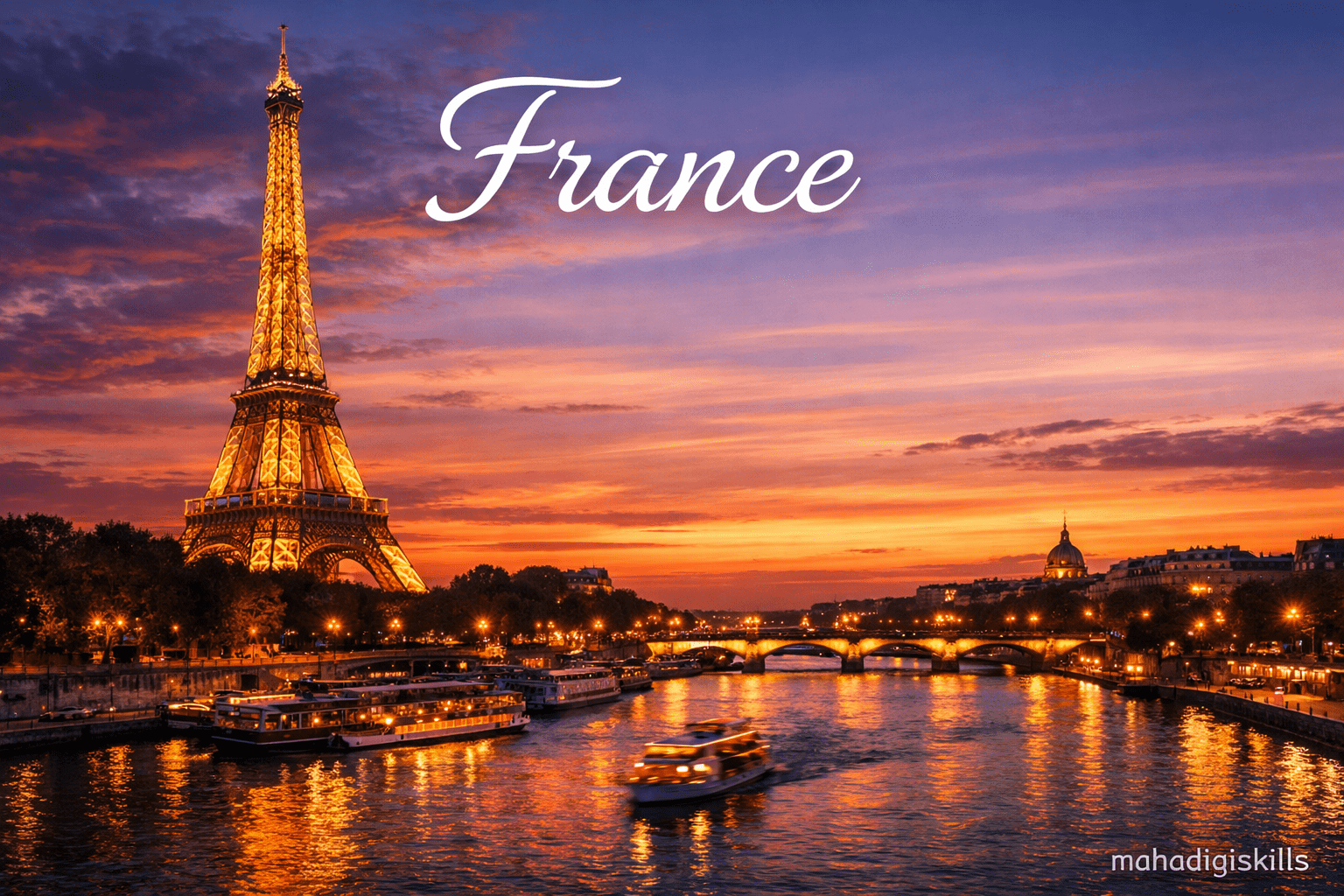
The Eiffel Tower is the most iconic landmark in France and one of the most recognized structures in the world. Built in 1889 for the Paris World’s Fair, the tower attracts millions of visitors annually.
Travelers can climb or take an elevator to observation decks that provide breathtaking views of Paris. At night, the tower lights up with sparkling illuminations, creating a magical atmosphere in the city.
Louvre Museum
The Louvre Museum in Paris is the largest art museum in the world. It houses thousands of masterpieces, including the famous Mona Lisa painting by Leonardo da Vinci.
Originally built as a royal palace, the museum now attracts millions of visitors each year who come to admire its historic architecture and priceless artworks.
External reference:
https://www.louvre.fr
Palace of Versailles
Located just outside Paris, the Palace of Versailles is one of the most magnificent royal residences ever built.
The palace was originally constructed for King Louis XIV, the “Sun King,” and became a symbol of royal power and luxury.
Highlights include:
- The Hall of Mirrors
- Beautiful palace gardens
- Historic royal apartments
Versailles is recognized as a UNESCO World Heritage Site.
Mont Saint-Michel
Mont Saint-Michel is one of the most unique landmarks in France. This medieval island abbey is located in Normandy and appears to rise dramatically from the sea.
The site has been a pilgrimage destination for centuries and remains one of the most photographed places in Europe.
French Riviera
The French Riviera, also known as the Côte d’Azur, is famous for its glamorous beaches, luxury resorts, and Mediterranean climate.
Popular Riviera destinations include:
- Nice
- Cannes
- Monaco
- Saint-Tropez
The region attracts celebrities, artists, and tourists from around the world.
Best Time to Visit France
France can be visited throughout the year, but the best time depends on the type of travel experience desired.
Spring (April – June)
Spring is one of the best times to visit France.
Advantages include:
- Pleasant weather
- Blooming gardens and countryside
- Fewer tourist crowds than summer
Cities like Paris and regions such as Provence become especially beautiful during this season.
Summer (July – August)
Summer is the peak tourist season in France.
Reasons many travelers visit during summer include:
- Warm Mediterranean beaches
- Outdoor festivals and events
- Long daylight hours
However, popular tourist attractions can be crowded during this time.
Autumn (September – October)
Autumn is an excellent season for travelers interested in wine tourism and countryside scenery.
Harvest festivals and colorful landscapes make the season particularly appealing in regions like Bordeaux and Burgundy.
Winter (November – March)
Winter offers a quieter travel experience.
Highlights include:
- Christmas markets
- Snow sports in the Alps
- Festive decorations in Paris
Ski resorts in the French Alps attract winter sports enthusiasts from around the world.
Traveling Around France
France has a modern and efficient transportation system that makes exploring the country convenient.
Train Travel
The TGV high-speed rail network connects major cities such as Paris, Lyon, Marseille, and Bordeaux.
Travelers can quickly move across the country with comfortable and fast trains.
Air Travel
Major airports include:
- Paris Charles de Gaulle Airport
- Paris Orly Airport
- Nice Côte d’Azur Airport
These airports connect France with destinations across Europe, Asia, and the Americas.
Road Travel
Driving is also a popular option for exploring rural areas, vineyards, and coastal regions.
France has an extensive highway network, making road travel relatively easy.
Unique and Interesting Facts About France
France has many fascinating characteristics that make it unique.
1. Most Visited Country in the World
France consistently ranks as the most visited country globally, welcoming tens of millions of tourists every year.
2. Eiffel Tower Height Changes
The Eiffel Tower actually changes height slightly during different seasons because the metal expands in warmer temperatures.
3. Over 40,000 Castles
France has more than 40,000 castles, many of which date back to the medieval period.
4. Birthplace of Modern Cinema
The Lumière brothers in France created one of the first motion picture cameras, helping launch the global film industry.
5. World-Famous Cuisine
French gastronomy is so influential that UNESCO recognized French cuisine as part of the world’s cultural heritage.
External UNESCO reference:
https://www.unesco.org
France and Global Cooperation
France plays an important role in global politics and diplomacy.
United Nations
France is one of the five permanent members of the United Nations Security Council, giving it a major role in international decision-making.
Official UN information:
https://www.un.org
International Organizations
France is also an active member of:
- European Union
- NATO
- OECD
- World Trade Organization
These partnerships strengthen its influence in global economic and political affairs.
Final Summary
France is one of the most culturally rich and historically significant countries in the world. From its medieval castles and royal palaces to modern cities and scenic countryside, the country offers a wide range of travel experiences.
Visitors can explore iconic landmarks such as the Eiffel Tower, wander through art museums filled with masterpieces, relax on Mediterranean beaches, or enjoy world-famous cuisine and wine.
France also plays a major role in global economics, politics, and cultural influence. Its strong economy, advanced infrastructure, and leadership within Europe make it an important international power.
Whether travelers seek history, art, cuisine, nature, or luxury tourism, France remains one of the most fascinating and unforgettable destinations on Earth.
Key Facts About France
| Category | Information |
|---|---|
| Official Name | French Republic |
| Capital City | Paris |
| Continent | Europe |
| Population | Around 67 million |
| Total Area | 643,801 sq km |
| Official Language | French |
| Currency | Euro (€) |
| Government | Semi-Presidential Republic |
| UN Membership | Founding member |
| Major Industries | Tourism, aerospace, agriculture, luxury goods |
| Famous Landmark | Eiffel Tower |
List of All 195 Countries
- Afghanistan
- Albania
- Algeria
- Andorra
- Angola
- Antigua and Barbuda
- Argentina
- Armenia
- Australia
- Austria
- Azerbaijan
- Bahamas
- Bahrain
- Bangladesh
- Barbados
- Belarus
- Belgium
- Belize
- Benin
- Bhutan
- Bolivia
- Bosnia and Herzegovina
- Botswana
- Brazil
- Brunei
- Bulgaria
- Burkina Faso
- Burundi
- Cabo Verde
- Cambodia
- Cameroon
- Canada
- Central African Republic
- Chad
- Chile
- China
- Colombia
- Comoros
- Congo (Congo-Brazzaville)
- Costa Rica

