



Introduction
Guatemala is one of the most fascinating countries in Central America, known for its ancient civilizations, dramatic volcanic landscapes, vibrant culture, and diverse ecosystems. Located between Mexico and Honduras, Guatemala offers travelers a unique combination of history, natural beauty, and cultural traditions that have evolved over thousands of years.
This Central American nation is home to the legacy of the Mayan civilization, colonial Spanish architecture, colorful indigenous traditions, and breathtaking natural attractions such as Lake Atitlán and tropical rainforests. Guatemala attracts tourists, historians, and adventurers who wish to explore both ancient ruins and modern cultural experiences.
From bustling markets and historic cities to volcanic mountains and jungle temples, Guatemala stands as one of the most culturally rich destinations in Latin America.
Historical Background
Ancient Mayan Civilization
The territory of Guatemala was once the heartland of the Mayan civilization, one of the most advanced ancient cultures in the Americas.
The Maya developed:
- advanced mathematics and astronomy
- complex calendars
- impressive architecture
- hieroglyphic writing systems
Between 250 and 900 AD, Mayan city-states flourished across the region. One of the most famous archaeological sites is Tikal, located deep in the northern rainforest.
Tikal contains:
- massive stone pyramids
- royal palaces
- ceremonial plazas
These ruins provide evidence of a powerful and sophisticated ancient society that shaped the history of Guatemala.
Spanish Colonial Period
In the early 16th century, Spanish explorers arrived in the region and gradually conquered the Mayan kingdoms.
Guatemala became part of the Spanish Empire, and colonial rule lasted for nearly three centuries.
During this time:
- European architecture influenced local cities
- Catholic Christianity spread widely
- colonial towns and administrative centers were established
The historic city of Antigua Guatemala became the colonial capital and remains one of the most beautiful preserved Spanish cities in the Americas.
Independence and Modern History
Guatemala gained independence from Spain in 1821.
After independence, the country experienced periods of political instability, economic reforms, and social change.
Key historical events include:
- joining and later leaving the Federal Republic of Central America
- civil conflicts during the 20th century
- democratic reforms and modernization
Today Guatemala continues to develop as a vibrant nation with growing tourism, agriculture, and cultural industries.
Geographical Location
Guatemala is located in Central America, connecting North America and South America.
Geographic Coordinates
Approximately 15° North latitude and 90° West longitude.
Neighboring Countries
Guatemala shares borders with:
- Mexico (north and west)
- Belize (northeast)
- Honduras (east)
- El Salvador (southeast)
The country also has coastlines along:
- the Pacific Ocean
- the Caribbean Sea
This location gives Guatemala diverse landscapes including coastlines, mountains, jungles, and fertile valleys.
Natural Landscapes
Guatemala is famous for its remarkable geographical diversity.
Major natural features include:
- volcanic mountain ranges
- tropical rainforests
- highland plateaus
- lakes and rivers
Volcanic Mountains
Guatemala has more than 30 volcanoes, several of which are active.
The most famous include:
- Volcán de Fuego
- Pacaya Volcano
- Tajumulco (highest peak in Central America)
These volcanoes create spectacular landscapes and attract adventure travelers.
Lake Atitlán
Lake Atitlán is considered one of the most beautiful lakes in the world.
Surrounded by three volcanoes and small indigenous villages, the lake is known for its:
- crystal-clear waters
- scenic mountain views
- traditional Mayan communities
Travelers visit Lake Atitlán to experience peaceful nature and local culture.
Tropical Rainforests
Northern Guatemala contains large areas of tropical rainforest, particularly within the Petén region.
These forests contain:
- wildlife habitats
- ancient Mayan ruins
- protected national parks
The region is part of the Mesoamerican Biological Corridor, an important conservation zone.
Climate
Guatemala has a tropical climate, but weather conditions vary depending on elevation.
Lowland Climate
Lowland areas are typically:
- warm
- humid
- tropical
Temperatures remain high throughout the year.
Highland Climate
The mountainous highlands experience cooler temperatures and mild weather.
Cities like Antigua and Guatemala City have comfortable climates that make them attractive for travelers.
Rainy and Dry Seasons
Guatemala has two main seasons:
Dry Season: November – April
Rainy Season: May – October
The dry season is usually the best time for tourism.
Major Cities
Guatemala City
Guatemala City is the capital and largest city of the country.
It serves as the main center for:
- government
- business
- transportation
- culture
The city contains museums, markets, modern shopping centers, and historic landmarks.
Antigua Guatemala
Antigua is one of the most famous cities in Guatemala and a UNESCO World Heritage Site.
The city is known for:
- colorful colonial buildings
- cobblestone streets
- historic churches
- views of surrounding volcanoes
Antigua is also one of the most visited destinations in Central America.
Quetzaltenango
Quetzaltenango, often called Xela, is the second-largest city in Guatemala.
The city is known for:
- cultural traditions
- Spanish language schools
- mountain scenery
Many travelers visit Xela to learn Spanish and explore indigenous communities.
Culture of Guatemala
Culture in Guatemala reflects a rich blend of Mayan heritage and Spanish influence.
Traditional customs remain strong, especially in rural areas where indigenous communities maintain centuries-old traditions.
Indigenous Heritage
Around 40% of the population belongs to indigenous groups descended from the Maya.
Different communities preserve their own:
- languages
- clothing styles
- cultural rituals
- festivals
Colorful woven textiles are an important part of traditional identity.
Traditional Clothing
Many indigenous people wear handwoven garments, including:
- embroidered blouses (huipiles)
- colorful skirts
- woven belts and shawls
These designs often represent the wearer’s village or cultural identity.
Religion
Religion in Guatemala includes a mixture of:
- Roman Catholic Christianity
- Protestant Christianity
- traditional Mayan spiritual practices
Many festivals combine Catholic traditions with ancient Mayan beliefs.
Festivals and Celebrations
Festivals are an important part of life in Guatemala.
Popular celebrations include:
- Semana Santa (Holy Week)
- Independence Day
- local patron saint festivals
Semana Santa in Antigua is especially famous for its elaborate religious processions and colorful street decorations.
Tourism in Guatemala
Tourism has become one of the most important sectors of Guatemala’s economy, attracting travelers interested in history, culture, and nature. The country offers a unique mix of archaeological sites, colonial cities, volcano landscapes, lakes, and tropical rainforests.
Visitors travel to Guatemala for many reasons, including:
- exploring ancient Mayan ruins
- visiting traditional indigenous villages
- hiking volcanic mountains
- relaxing near scenic lakes
- discovering colonial architecture
Because Guatemala combines history with breathtaking natural landscapes, it has become one of the most fascinating travel destinations in Central America.
Tikal National Park
One of the Greatest Mayan Cities
Tikal National Park is one of the most famous attractions in Guatemala and one of the most important archaeological sites in the world.
Located in the Petén rainforest, this ancient city was once a powerful center of the Mayan civilization.
Tikal contains impressive structures such as:
- towering stone pyramids
- royal palaces
- ceremonial plazas
- ancient temples rising above the jungle canopy
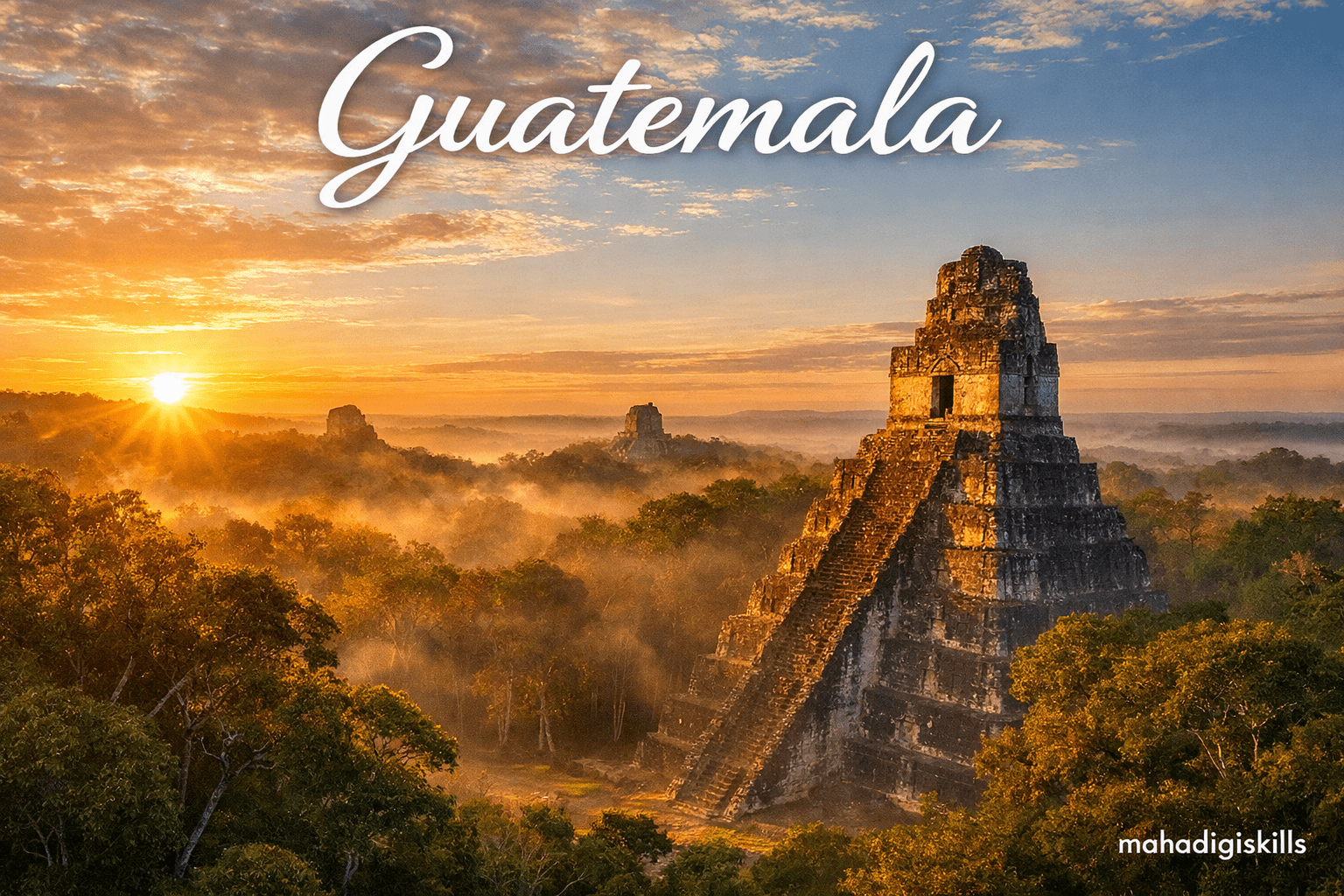
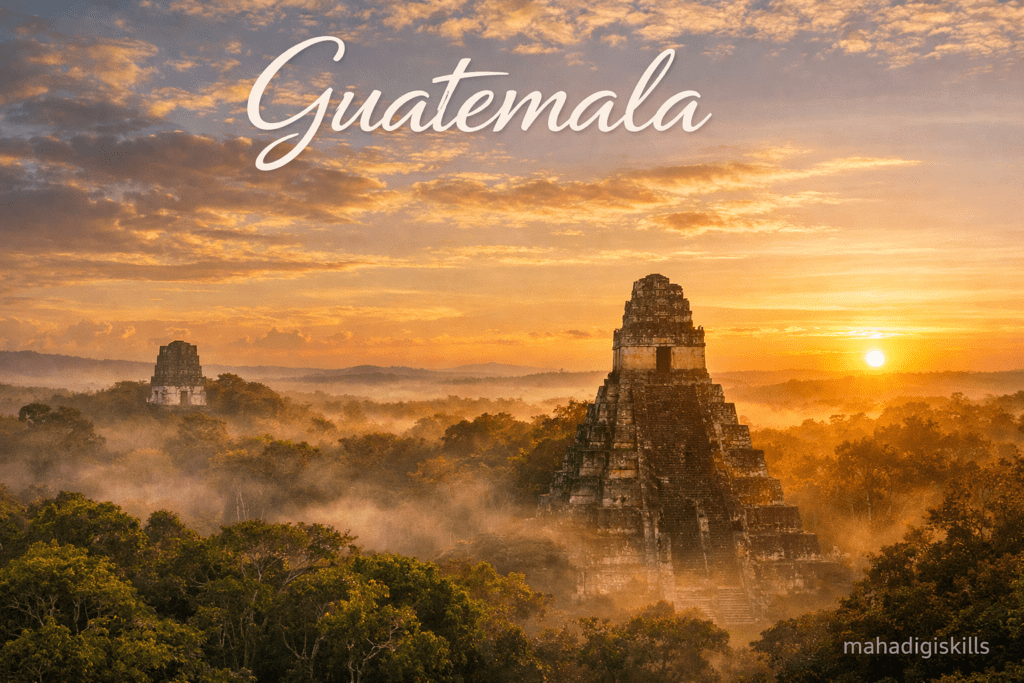
Temple IV, one of the tallest pyramids, provides stunning sunrise views across the rainforest.
UNESCO World Heritage Site
Tikal was declared a UNESCO World Heritage Site because of its historical and cultural significance.
The surrounding rainforest also protects diverse wildlife including:
- jaguars
- howler monkeys
- toucans
- tropical birds
External Source (DoFollow):
UNESCO World Heritage Centre
https://whc.unesco.org
Lake Atitlán
Lake Atitlán is considered one of the most beautiful lakes in Central America.
The lake sits in a volcanic crater and is surrounded by three majestic volcanoes.
Small traditional villages are located along the lakeshore, each offering unique cultural experiences.
Popular villages include:
- Panajachel – main tourism hub
- San Pedro La Laguna – popular with backpackers
- San Juan La Laguna – known for art and textiles
Visitors often travel between villages using small boats that cross the lake.
Antigua Guatemala
Antigua Guatemala is one of the most famous historic cities in the country.
The city features:
- colonial Spanish architecture
- colorful houses
- cobblestone streets
- historic cathedrals and monasteries
Antigua is surrounded by three volcanoes:
- Agua
- Fuego
- Acatenango
Travelers frequently climb Acatenango Volcano to see lava eruptions from nearby Fuego Volcano.
Semuc Champey
Semuc Champey is one of the most breathtaking natural attractions in Guatemala.
Located deep in the jungle, this destination features a series of turquoise limestone pools flowing above an underground river.
Visitors can enjoy:
- swimming in natural pools
- hiking scenic viewpoints
- exploring nearby caves
Semuc Champey is often described as one of the hidden natural wonders of Central America.
National Parks and Wildlife
Guatemala has several national parks and protected ecosystems that support diverse wildlife.
Major protected areas include:
- Tikal National Park
- Laguna del Tigre National Park
- Sierra de las Minas Biosphere Reserve
These parks protect tropical forests, wildlife habitats, and archaeological sites.
Animals found in Guatemala include:
- jaguars
- tapirs
- monkeys
- exotic birds
The biodiversity of Guatemala makes it an important region for environmental conservation.
Local Cuisine
Food in Guatemala reflects a mixture of Mayan traditions and Spanish culinary influence.
Traditional dishes often include corn, beans, vegetables, meat, and spices.
Popular dishes include:
Pepian
Pepian is a rich traditional stew made with:
- chicken or beef
- vegetables
- roasted spices and seeds
This dish is considered one of the national foods.
Tamales
Guatemalan tamales are made from corn dough filled with meat or vegetables and wrapped in banana leaves.
Tamales are commonly eaten during holidays and celebrations.
Kak’ik
Kak’ik is a traditional Mayan turkey soup flavored with herbs and spices.
The dish is recognized as an important part of national culinary heritage.
Coffee Production
Guatemala is internationally famous for producing high-quality coffee.
Coffee plantations are located mainly in the volcanic highlands where fertile soil and ideal climate conditions create excellent coffee beans.
Coffee regions include:
- Antigua
- Huehuetenango
- Cobán
- Atitlán
Guatemalan coffee is known for its:
- rich aroma
- balanced acidity
- chocolate-like flavor
Handicrafts and Markets
Local markets are some of the most vibrant cultural experiences in Guatemala.
Markets offer:
- woven textiles
- handmade ceramics
- traditional clothing
- carved wooden crafts
One of the most famous markets is the Chichicastenango Market, where indigenous artisans sell colorful handicrafts.
These markets reflect centuries-old traditions that continue today.
Transportation and Travel
Travel within Guatemala is possible through several transportation options.
Airports
The main international gateway is La Aurora International Airport in Guatemala City.
It connects the country to major destinations in:
- North America
- Central America
- Europe
Road Transport
Common travel options include:
- buses
- tourist shuttles
- taxis
- rental cars
Colorful local buses called “chicken buses” are widely used by residents.
Best Time to Visit
The best time to visit Guatemala is during the dry season from November to April.
During this period:
- rainfall is lower
- skies are clearer
- travel conditions are easier
The rainy season from May to October still offers lush green landscapes but may include heavy afternoon showers.
Travel Experiences
Travelers visiting Guatemala often enjoy a variety of unique experiences such as:
- exploring Mayan temples in the jungle
- hiking volcanic mountains
- visiting indigenous villages
- taking boat rides across Lake Atitlán
- attending traditional festivals
These experiences make Guatemala one of the most culturally and naturally diverse destinations in the Americas.
Economy of Guatemala
The economy of Guatemala is the largest in Central America and is supported by agriculture, manufacturing, tourism, and international trade. Over the past decades, economic development has expanded through exports, foreign investment, and growing service industries.
Key sectors contributing to the national economy include:
- agriculture
- coffee production
- textiles and manufacturing
- tourism
- remittances from overseas workers
Although Guatemala continues to face economic challenges, the country has gradually expanded its infrastructure and international trade networks.
Agriculture and Natural Resources
Agriculture remains one of the most important industries in Guatemala. The country’s fertile volcanic soil and tropical climate support a wide variety of crops.
Major agricultural exports include:
- coffee
- bananas
- sugar
- cardamom
- vegetables and fruits
Guatemala is one of the world’s largest producers of cardamom, a valuable spice used in cooking and perfumes.
Coffee plantations in the highlands produce premium beans that are exported to global markets.
Manufacturing and Industry
Manufacturing also plays a growing role in the Guatemalan economy.
Important industries include:
- textile production
- clothing manufacturing
- food processing
- construction materials
Many manufacturing businesses export products to international markets, particularly the United States.
International Trade
Guatemala maintains trade relationships with several global partners.
Major trading partners include:
- United States
- Mexico
- Central American countries
- European Union nations
Exports mainly consist of agricultural goods, textiles, and manufactured products.
External Source (DoFollow)
World Bank
https://www.worldbank.org
Languages of Guatemala
Language diversity is one of the most fascinating aspects of Guatemalan culture.
Official Language
The official language of Guatemala is Spanish, which is widely used in government, business, education, and media.
Indigenous Languages
In addition to Spanish, more than 20 indigenous Mayan languages are spoken across the country.
Some of the most widely spoken indigenous languages include:
- K’iche’
- Q’eqchi’
- Kaqchikel
- Mam
These languages reflect the deep historical roots of the Mayan civilization in Guatemala.
Population and Society
The population of Guatemala is approximately 18 million people, making it the most populous country in Central America.
The population is culturally diverse and includes:
- indigenous Mayan communities
- people of mixed European and indigenous ancestry (Mestizo or Ladino)
- smaller groups of European descent
Community life often revolves around family traditions, local markets, and religious festivals.
Guatemala in International Organizations
Guatemala plays an active role in international diplomacy and regional cooperation.
United Nations
Guatemala became a member of the United Nations in 1945, shortly after the organization was founded.
The country participates in global initiatives related to:
- economic development
- human rights
- environmental protection
External DoFollow Source
United Nations
https://www.un.org/en/member-states
Regional Organizations
Guatemala is also a member of several regional organizations such as:
- Central American Integration System (SICA)
- Organization of American States (OAS)
- World Trade Organization (WTO)
These organizations promote trade, political cooperation, and economic development throughout the region.
Interesting Facts About Guatemala
Here are several fascinating facts about Guatemala:
Heart of the Mayan World
Many historians consider Guatemala the center of ancient Mayan civilization, with hundreds of archaeological sites located throughout the country.
Land of Volcanoes
Guatemala contains over 30 volcanoes, several of which remain active today.
Volcano landscapes create dramatic scenery and attract hikers and adventure travelers.
Lake Atitlán Beauty
Lake Atitlán is often described as one of the most beautiful lakes in the world, surrounded by mountains and traditional villages.
Unique Textiles
Guatemalan textiles are famous for their bright colors and intricate designs. Each indigenous community often has its own traditional patterns.
Coffee Excellence
Guatemalan coffee is widely regarded as one of the finest coffees globally due to high-altitude volcanic soil and ideal climate conditions.
Best Travel Experiences
Travelers visiting Guatemala can enjoy many unforgettable experiences such as:
- exploring ancient temples in Tikal
- hiking volcanic mountains
- visiting colonial towns like Antigua
- boating across Lake Atitlán
- shopping at traditional markets
These activities offer visitors a deep cultural and natural experience.
Travel Tips
Visitors traveling to Guatemala should consider the following advice:
- carry lightweight clothing suitable for tropical climates
- bring comfortable hiking shoes for exploring ruins and volcanoes
- try traditional local cuisine
- visit indigenous markets for authentic crafts
Respect for local customs and traditions enhances the travel experience.
Final Summary
Guatemala is a remarkable destination rich in ancient history, cultural traditions, and breathtaking landscapes. From the towering pyramids of Tikal to the peaceful villages surrounding Lake Atitlán, the country offers an extraordinary mix of natural beauty and historical heritage.
Travelers can explore volcanic mountains, colonial cities, vibrant markets, and traditional Mayan communities that preserve centuries-old customs.
Whether visiting archaeological wonders, hiking volcanoes, or enjoying local cuisine, Guatemala provides unforgettable travel experiences that showcase the diversity and beauty of Central America.
Key Facts Table
| Category | Information |
|---|---|
| Capital | Guatemala City |
| Continent | North America (Central America) |
| Population | ~18 million |
| Official Language | Spanish |
| Currency | Guatemalan Quetzal (GTQ) |
| Independence | September 15, 1821 |
| Major Export | Coffee |
| Government | Presidential Republic |
| UN Membership | 1945 |
List of All 195 Countries
- Afghanistan
- Albania
- Algeria
- Andorra
- Angola
- Antigua and Barbuda
- Argentina
- Armenia
- Australia
- Austria
- Azerbaijan
- Bahamas
- Bahrain
- Bangladesh
- Barbados
- Belarus
- Belgium
- Belize
- Benin
- Bhutan
- Bolivia
- Bosnia and Herzegovina
- Botswana
- Brazil
- Brunei
- Bulgaria
- Burkina Faso
- Burundi
- Cabo Verde
- Cambodia
- Cameroon
- Canada
- Central African Republic
- Chad
- Chile
- China
- Colombia
- Comoros
- Congo (Congo-Brazzaville)
- Costa Rica

