



Introduction
Grenada is a beautiful island nation located in the southeastern Caribbean Sea. Known as the “Spice Island,” Grenada is famous for its production of nutmeg, cinnamon, cloves, and other aromatic spices. The country offers breathtaking beaches, lush rainforests, and vibrant Caribbean culture.
Travelers visit Grenada for its natural beauty, warm hospitality, and rich cultural traditions. With turquoise waters, scenic waterfalls, and colorful towns, the island is one of the Caribbean’s most charming destinations.
Grenada also has an interesting history shaped by indigenous peoples, European colonization, and modern Caribbean identity.
Geography of Grenada
Location in the Caribbean
Grenada is located in the Caribbean Sea, near the southern end of the Windward Islands.
Neighboring islands and countries include:
- Saint Vincent and the Grenadines to the north
- Trinidad and Tobago to the south
- Barbados to the east
Geographic Coordinates
Approximate coordinates:
12.1165° N latitude
61.6790° W longitude
The country consists of the main island of Grenada and several smaller islands, including Carriacou and Petit Martinique.
Landscape and Natural Features
Grenada’s landscape is dominated by tropical forests, volcanic hills, and coastal beaches.
Mountains and Rainforests
The interior of the island is mountainous and covered with dense rainforest.
The highest peak is Mount Saint Catherine, rising about 840 meters (2,756 feet) above sea level.
These mountains help create fertile soil that supports agriculture and spice production.
Lakes and Waterfalls
Grenada is home to beautiful natural waterfalls and crater lakes.
Grand Etang Lake
Grand Etang Lake is a volcanic crater lake located in the central highlands.
The surrounding Grand Etang National Park protects tropical rainforest and wildlife habitats.
Visitors often explore hiking trails and observe monkeys and tropical birds.
Climate of Grenada
The climate of Grenada is tropical, with warm temperatures throughout the year.
Dry Season
The dry season typically runs from January to May.
During this period, the weather is sunny and ideal for beach vacations and outdoor exploration.
Rainy Season
The rainy season generally occurs from June to December.
Rainfall supports the island’s lush vegetation and agricultural production.
Although occasional tropical storms may occur, the island remains a popular travel destination year-round.
History of Grenada
Indigenous Peoples
Before European arrival, the island of Grenada was inhabited by indigenous peoples such as the Arawaks and Caribs.
These communities lived by fishing, farming, and trading across Caribbean islands.
European Colonization
European exploration reached Grenada in 1498 when Christopher Columbus sailed through the Caribbean.
Later, the island was colonized by both France and Britain, leading to conflicts for control of the territory.
The French introduced plantation agriculture, including sugar production.
British Rule
Eventually, Britain gained control of Grenada in the 18th century.
During colonial rule, enslaved Africans were brought to work on plantations.
These historical events shaped the island’s cultural diversity and heritage.
Independence
Grenada gained independence from the United Kingdom on February 7, 1974.
Today the country is a parliamentary democracy and a member of the Commonwealth of Nations.
Culture of Grenada
The culture of Grenada blends African, European, and Caribbean influences.
Music and Dance
Music plays a central role in everyday life and celebrations.
Popular musical styles include:
- Calypso
- Soca
- Reggae
- Steelpan music
Festivals and cultural events often feature energetic dance performances and live music.
Traditional Food
Cuisine in Grenada reflects Caribbean flavors and local ingredients.
Common foods include:
- seafood
- rice
- plantains
- tropical fruits
- spices
Oil Down
The national dish of Grenada is Oil Down, a flavorful meal prepared with breadfruit, coconut milk, spices, vegetables, and meat or fish.
Spice Production
Grenada is famous for producing aromatic spices.
Important exports include:
- nutmeg
- mace
- cinnamon
- cloves
- cocoa
Because of this, the island is often called the “Spice Island of the Caribbean.”
Major Cities of Grenada
St. George’s (Capital)
St. George’s is the capital and largest city of Grenada.
The city is known for its:
- colorful houses
- horseshoe-shaped harbor
- historic forts
Important attractions include:
- Fort George
- St. George’s Market Square
- National Museum
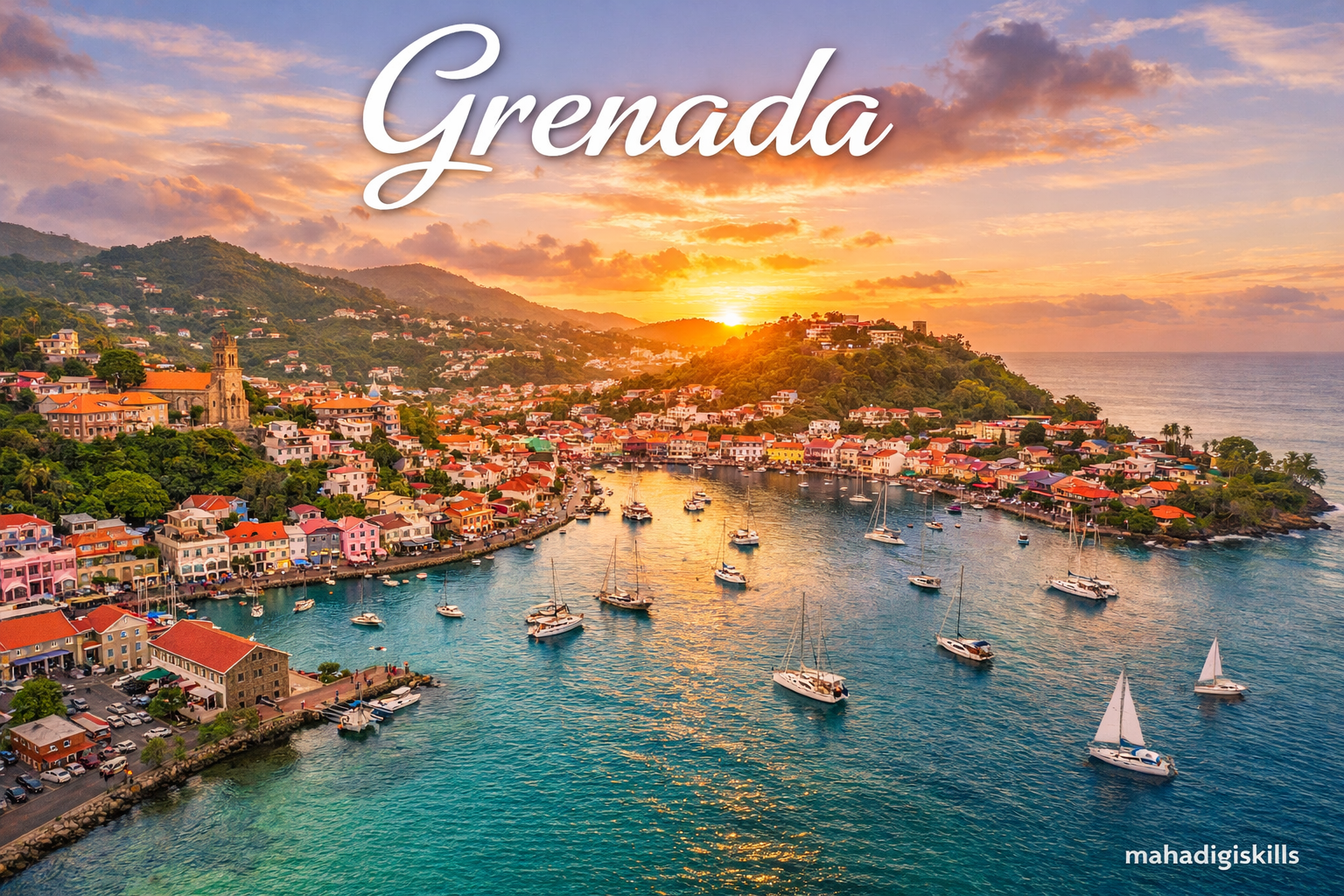
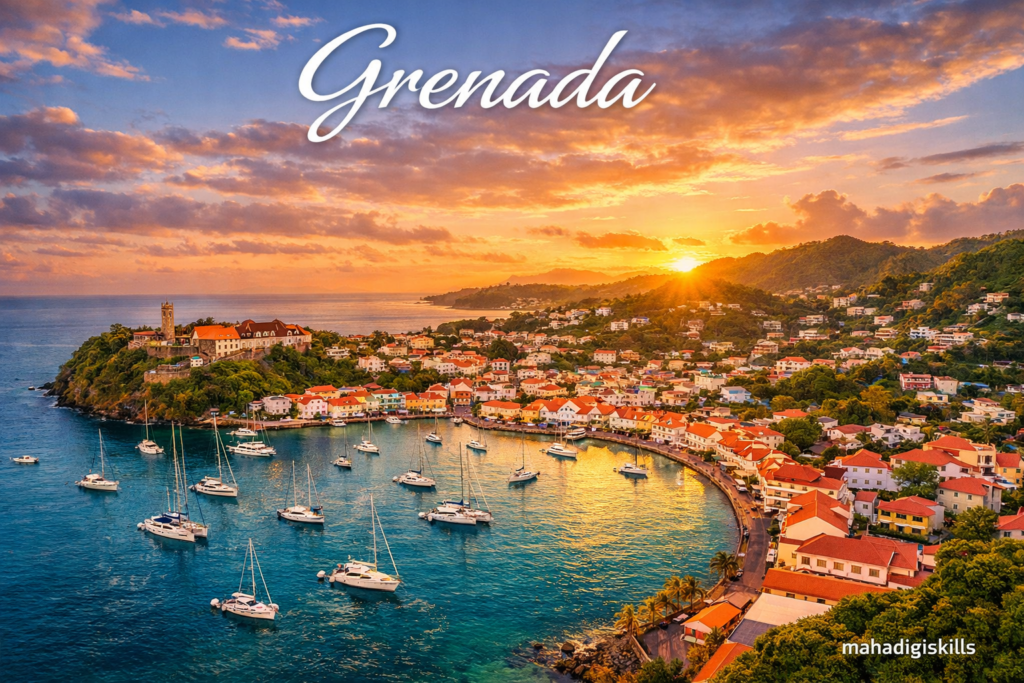
The harbor area is often considered one of the most beautiful ports in the Caribbean.
Gouyave
Gouyave is a small coastal town famous for its fishing industry.
Visitors often enjoy the Friday Fish Fry, where locals gather to enjoy fresh seafood, music, and community celebrations.
Internal Link Example
For readers interested in Caribbean destinations, explore:
- Barbados Travel Guide
- Dominica Tourism Guide
Internal linking improves SEO and helps search engines understand related content.
Tourism in Grenada
Tourism is one of the most important industries in Grenada, attracting visitors from around the world who come to enjoy the island’s tropical beauty, friendly communities, and relaxing Caribbean atmosphere.
Travelers choose Grenada because it offers a balance between luxury tourism and untouched natural landscapes. Unlike some heavily developed Caribbean destinations, Grenada maintains a peaceful and authentic island environment.
Popular tourism experiences include:
- relaxing on white-sand beaches
- exploring rainforests and waterfalls
- diving and snorkeling in coral reefs
- visiting historic forts and towns
- experiencing Caribbean festivals and local culture
Because of its warm climate and scenic landscapes, Grenada is considered one of the most charming travel destinations in the Caribbean.
Famous Beaches in Grenada
Grenada is known for its spectacular beaches featuring soft white sand and crystal-clear turquoise water.
Grand Anse Beach
Grand Anse Beach is the most famous beach in Grenada and stretches for nearly 3 kilometers (2 miles) along the island’s southwestern coast.
The beach is popular for:
- swimming
- sunbathing
- kayaking
- sailing
Luxury resorts, restaurants, and beach cafés line the shoreline, making it one of the most visited areas on the island.
Morne Rouge Beach
Morne Rouge Beach, sometimes called BBC Beach, is a quieter alternative to Grand Anse.
This peaceful beach offers:
- calm shallow water
- fewer crowds
- beautiful sunset views
It is an excellent place for families and travelers seeking relaxation.
Levera Beach
Levera Beach is located on the northern coast of Grenada and is surrounded by natural scenery.
The beach is important for sea turtle nesting, especially during certain seasons.
Nearby wetlands also support birdlife and wildlife habitats.
Underwater Sculpture Park
One of the most unique attractions in Grenada is the Moliniere Underwater Sculpture Park.
This underwater museum was created by artist Jason deCaires Taylor and features dozens of sculptures placed on the ocean floor.
Visitors can explore the sculptures by:
- snorkeling
- scuba diving
- glass-bottom boat tours
Over time, coral and marine life have grown around the sculptures, turning them into artificial reefs.
This attraction is considered one of the most unusual underwater art installations in the world.
National Parks and Natural Attractions
Nature lovers visiting Grenada will find many protected areas filled with tropical rainforest, wildlife, and waterfalls.
Grand Etang National Park
Grand Etang National Park is located in the mountainous interior of the island.
The park includes:
- Grand Etang crater lake
- rainforest hiking trails
- tropical wildlife habitats
Visitors may encounter animals such as:
- Mona monkeys
- tropical birds
- colorful butterflies
The park offers excellent hiking opportunities and scenic viewpoints.
Annandale Falls
Annandale Falls is one of the most accessible waterfalls in Grenada.
Located near the capital city, the waterfall cascades into a small natural pool surrounded by tropical plants.
Visitors can:
- swim in the cool water
- enjoy photography
- watch local divers perform jumps from the cliffs
Seven Sisters Falls
Seven Sisters Falls is another beautiful natural attraction located deep within the rainforest.
Reaching the falls requires a short hike through plantations and forest trails.
The waterfall features several cascades flowing through lush tropical vegetation.
Cultural Festivals
Festivals in Grenada celebrate Caribbean traditions, music, and community spirit.
Grenada Carnival
The Grenada Carnival, also known as Spicemas, is the largest festival on the island.
The event includes:
- colorful costumes
- calypso music competitions
- street parades
- steelpan performances
Carnival usually takes place in August and attracts visitors from across the Caribbean and beyond.
Carriacou Maroon Festival
The Maroon Festival on the island of Carriacou celebrates African heritage and traditions.
The festival features:
- traditional drumming
- storytelling
- cultural ceremonies
This event reflects the island’s strong historical connections to African culture.
Markets and Local Crafts
Markets in Grenada offer a glimpse into everyday island life.
St. George’s Market Square
The central market in the capital city sells a wide variety of local products.
Visitors can find:
- spices
- tropical fruits
- handmade crafts
- local clothing
The market is also one of the best places to purchase authentic nutmeg and cocoa products.
Transportation in Grenada
Travel around Grenada is relatively easy thanks to a compact island layout.
Air Travel
The main international gateway is Maurice Bishop International Airport, located near the capital.
The airport connects Grenada with major destinations in:
- North America
- Europe
- Caribbean islands
Road Transport
Transportation options on the island include:
- taxis
- minibuses
- rental cars
Roads connect most towns, beaches, and tourist attractions.
Best Time to Visit Grenada
The best time to visit Grenada is during the dry season from January to May.
During these months:
- rainfall is lower
- weather is sunny
- sea conditions are ideal for water activities
However, the island remains warm and welcoming throughout the year.
Economy of Grenada
The economy of Grenada is largely based on tourism, agriculture, and services. Despite being a small island nation, Grenada has developed a stable economy supported by natural resources and international trade.
Key sectors of the economy include:
- tourism
- agriculture
- spice production
- fisheries
- financial services
Tourism generates a large share of national income, as visitors arrive to experience the island’s beaches, tropical forests, and cultural festivals.
Agriculture and Spice Production
Agriculture has historically played a major role in the economy of Grenada.
The island is globally known for its production of spices, especially nutmeg and mace.
Grenada is one of the world’s largest producers of nutmeg, which is used in cooking, cosmetics, and medicinal products.
Other agricultural exports include:
- cocoa
- bananas
- cinnamon
- cloves
Because of its strong spice industry, Grenada is often called the “Spice Island.”
Fisheries and Marine Resources
Fishing is another important source of income for coastal communities.
Common seafood products include:
- tuna
- lobster
- snapper
- shrimp
Fresh seafood is widely used in local cuisine and exported to international markets.
Trade and International Partners
Grenada participates in international trade with several countries.
Major trading partners include:
- United States
- United Kingdom
- Trinidad and Tobago
- European Union countries
Exports from Grenada mainly include:
- spices
- agricultural products
- seafood
External Source (DoFollow)
World Bank
https://www.worldbank.org
Languages of Grenada
Language reflects the island’s diverse cultural influences.
Official Language
The official language of Grenada is English, which is used in government, education, and business.
Because of this, communication with international visitors is generally easy.
Local Dialects
Many residents also speak a local dialect known as Grenadian Creole English.
This language combines English vocabulary with African and Caribbean linguistic influences.
The dialect is commonly used in everyday conversations and cultural expressions.
Population and Society
The population of Grenada is approximately 125,000 people.
Although the country is small, it has a vibrant and diverse society influenced by African, European, and Caribbean traditions.
Ethnic Composition
The population mainly includes people of:
- African descent
- mixed heritage
- European and East Indian ancestry
Community life often centers around family gatherings, religious activities, and festivals.
Grenada in International Organizations
Grenada participates actively in global and regional organizations.
United Nations
Grenada became a member of the United Nations in 1974, shortly after gaining independence.
The country supports international initiatives related to:
- sustainable development
- environmental protection
- peacekeeping
External DoFollow Source
United Nations
https://www.un.org/en/member-states
Regional Organizations
Grenada is also a member of several regional organizations, including:
- Caribbean Community (CARICOM)
- Organization of Eastern Caribbean States (OECS)
- Commonwealth of Nations
These organizations promote economic cooperation, cultural exchange, and regional development.
Interesting Facts About Grenada
Here are several interesting facts about Grenada:
Spice Island
Grenada produces around 20% of the world’s nutmeg, giving the country its famous nickname “Spice Island.”
Underwater Sculpture Park
Grenada is home to the world’s first underwater sculpture park, located in Moliniere Bay.
The sculptures create artificial reefs that support marine life.
Beautiful Harbors
The capital city, St. George’s, is often considered one of the most beautiful harbor cities in the Caribbean.
Chocolate Production
Grenada also produces high-quality organic chocolate, made from locally grown cocoa beans.
Rainforest Biodiversity
The island’s rainforest ecosystems contain diverse wildlife, tropical plants, and rare bird species.
Best Travel Experiences
Travelers visiting Grenada can enjoy many memorable experiences.
Popular activities include:
- relaxing on Grand Anse Beach
- snorkeling in the underwater sculpture park
- hiking through rainforest trails
- visiting spice plantations
- attending Caribbean carnival festivals
These activities allow visitors to explore the island’s natural beauty and vibrant culture.
Travel Tips
Visitors traveling to Grenada should consider these tips:
- bring lightweight tropical clothing
- carry sunscreen and insect protection
- try local Caribbean cuisine
- explore both beaches and inland rainforests
The island’s friendly communities and relaxed atmosphere make it an enjoyable destination for travelers.
Final Summary
Grenada is a tropical Caribbean paradise known for its beautiful beaches, lush rainforests, and rich cultural heritage. From its spice plantations and vibrant festivals to its underwater sculpture park and scenic coastline, the island offers unforgettable experiences for travelers.
The country’s friendly communities, relaxed atmosphere, and stunning landscapes make Grenada one of the most charming destinations in the Caribbean.
Whether exploring historic towns, hiking rainforest trails, or relaxing on white-sand beaches, visitors will find that Grenada offers a perfect blend of nature, culture, and adventure.
Key Facts Table
| Category | Information |
|---|---|
| Capital | St. George’s |
| Continent | North America (Caribbean) |
| Population | ~125,000 |
| Official Language | English |
| Currency | Eastern Caribbean Dollar (XCD) |
| Independence | February 7, 1974 |
| Major Export | Nutmeg |
| Government | Parliamentary Democracy |
| UN Membership | 1974 |
List of All 195 Countries
- Afghanistan
- Albania
- Algeria
- Andorra
- Angola
- Antigua and Barbuda
- Argentina
- Armenia
- Australia
- Austria
- Azerbaijan
- Bahamas
- Bahrain
- Bangladesh
- Barbados
- Belarus
- Belgium
- Belize
- Benin
- Bhutan
- Bolivia
- Bosnia and Herzegovina
- Botswana
- Brazil
- Brunei
- Bulgaria
- Burkina Faso
- Burundi
- Cabo Verde
- Cambodia
- Cameroon
- Canada
- Central African Republic
- Chad
- Chile
- China
- Colombia
- Comoros
- Congo (Congo-Brazzaville)
- Costa Rica

