



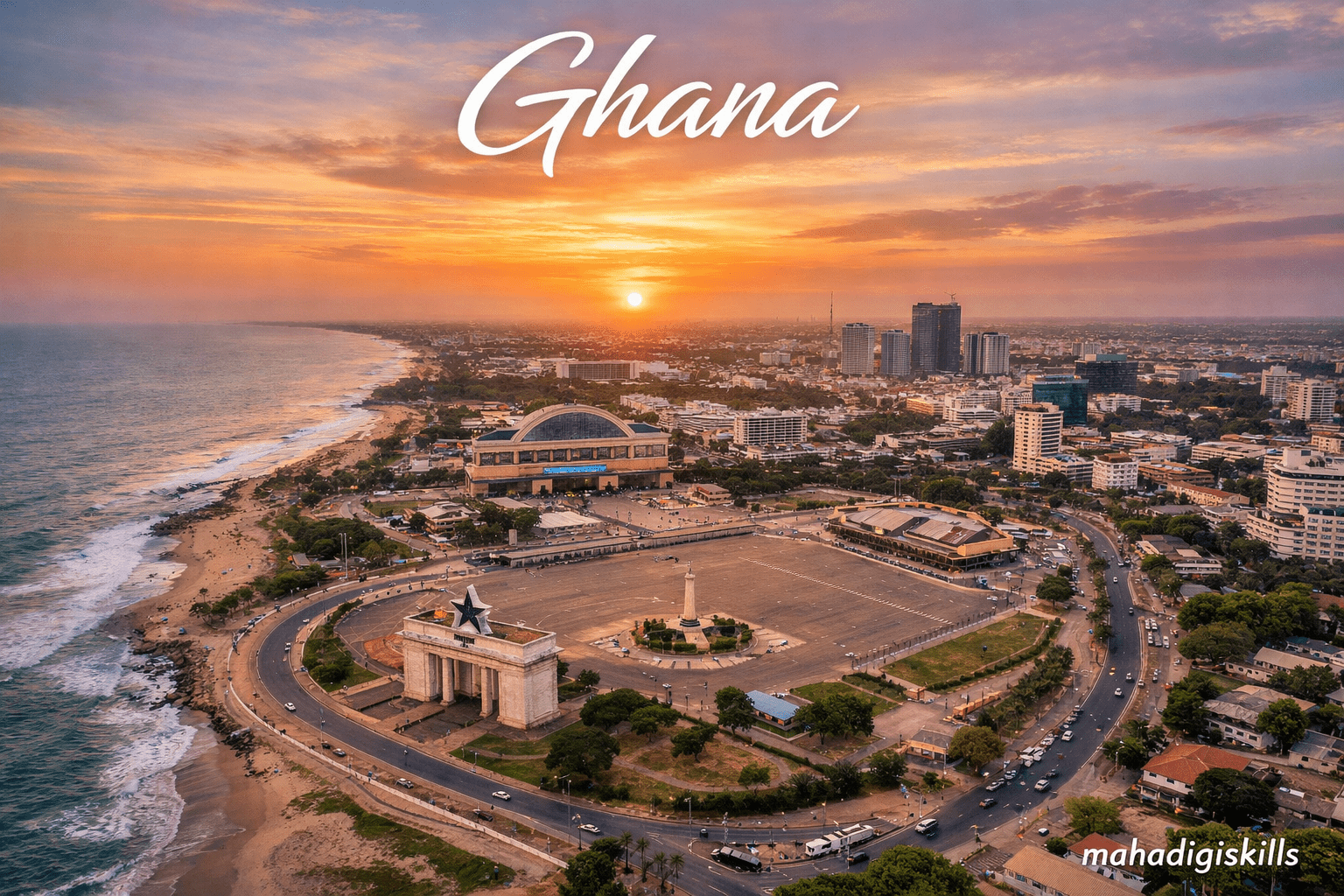
Introduction
Ghana is one of the most historically significant and culturally vibrant countries in West Africa. Known for its warm hospitality, diverse landscapes, and deep historical roots, Ghana attracts travelers, historians, and cultural explorers from around the world.
Located along the Gulf of Guinea, Ghana offers an incredible mix of golden beaches, lush forests, historic forts, and energetic cities. The nation is often celebrated for its democratic stability and strong cultural identity.
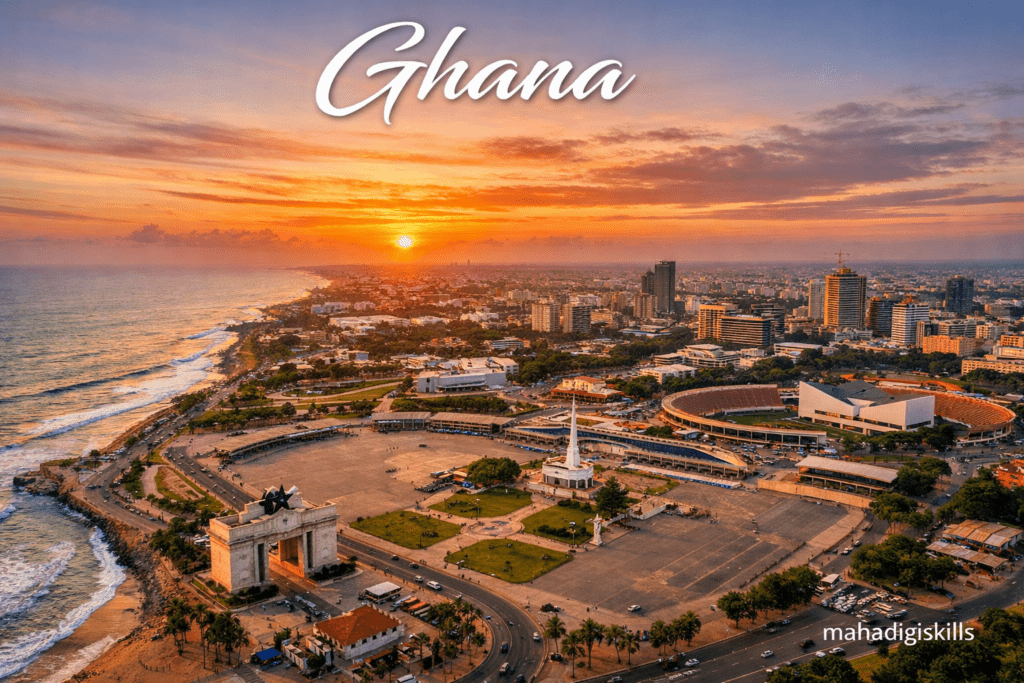
Visitors to Ghana experience colorful festivals, traditional music, local cuisine, and welcoming communities. These features make the country one of Africa’s most fascinating travel destinations.
Geography of Ghana
Location in Africa
Ghana is situated in West Africa, along the Gulf of Guinea and the Atlantic Ocean. Its central position in the region makes it an important gateway to West African culture and commerce.
The country shares borders with several nations:
- Ivory Coast to the west
- Burkina Faso to the north
- Togo to the east
- Atlantic Ocean to the south
Coordinates
Approximate geographic coordinates:
7.9465° N latitude
1.0232° W longitude
The landscape of Ghana includes coastal plains, tropical forests, savannas, and rolling hills.
Major Rivers and Natural Features
Several important rivers flow across Ghana and support agriculture and local communities.
Volta River
The Volta River is the most important river system in the country. It flows through the eastern region and feeds into Lake Volta, one of the largest artificial lakes in the world.
Lake Volta was created by the Akosombo Dam, which generates hydroelectric power for Ghana.
Forest Regions
The southern regions contain dense tropical rainforests filled with wildlife and plant diversity.
These forests are home to:
- monkeys
- forest elephants
- rare birds
- exotic butterflies
Climate of Ghana
The climate of Ghana is primarily tropical, with warm temperatures throughout the year.
Seasons
The country experiences two main seasons:
Rainy Season
Rainfall typically occurs between:
- April to July
- September to November
These months bring lush greenery and agricultural productivity.
Dry Season
The dry season usually runs from December to March.
During this time, the Harmattan wind blows from the Sahara Desert, bringing dry air and dusty skies.
History of Ghana
Ancient Kingdoms
The region now known as Ghana was once home to powerful African kingdoms and trading networks.
Important historical states included:
- Ashanti Kingdom
- Dagbon Kingdom
- Fante Confederacy
These societies developed advanced systems of governance, trade, and culture.
The Ashanti Empire became particularly influential due to its military strength and gold trade.
European Contact
During the 15th century, European traders arrived along the coast of Ghana.
Countries involved included:
- Portugal
- Netherlands
- Britain
- Denmark
They built coastal forts and castles used for trade, including the tragic transatlantic slave trade.
Historic castles such as Cape Coast Castle and Elmina Castle remain powerful reminders of this period.
Independence
Ghana became the first sub-Saharan African country to gain independence from colonial rule.
Independence was declared on:
March 6, 1957
The leader of the independence movement was Dr. Kwame Nkrumah, who became the country’s first prime minister and later president.
This historic moment inspired many other African nations to seek independence.
Culture of Ghana
Culture in Ghana reflects a rich combination of traditions, languages, and artistic expression.
Ethnic Diversity
The population includes many ethnic groups, each with its own customs and traditions.
Major groups include:
- Akan
- Mole-Dagbani
- Ewe
- Ga-Dangme
Despite this diversity, there is strong national unity and pride.
Traditional Clothing
One of the most famous cultural symbols of Ghana is Kente cloth.
Kente is a brightly colored woven fabric traditionally worn during important ceremonies.
Each pattern and color has symbolic meaning representing:
- leadership
- wisdom
- unity
- prosperity
Music and Dance
Music plays an important role in daily life and celebrations.
Popular musical styles include:
- Highlife music
- Hiplife (modern fusion of hip hop and African rhythms)
- Traditional drumming
Dance is also central to festivals and cultural events.
Cuisine of Ghana
Food in Ghana is flavorful and often prepared with fresh local ingredients.
Common staples include:
- cassava
- plantains
- rice
- maize
Popular dishes include:
Jollof Rice
A famous West African rice dish cooked with tomato sauce and spices.
Fufu
A soft dough-like food made from cassava and plantains, served with soup.
Banku
Fermented corn and cassava dough served with fish and spicy pepper sauce.
Major Cities
Accra (Capital City)
Accra is the capital and largest city of Ghana.
It serves as the country’s political, economic, and cultural center.
Key attractions include:
- Independence Square
- Kwame Nkrumah Memorial Park
- National Museum of Ghana
The city is also known for its beaches, nightlife, and markets.
Kumasi
Kumasi is the historic capital of the Ashanti Kingdom.
The city is famous for:
- traditional crafts
- gold jewelry
- cultural heritage
Visitors can explore the Manhyia Palace Museum, which showcases the history of the Ashanti rulers.
Takoradi
Takoradi is a major port city in western Ghana.
It plays an important role in:
- oil production
- maritime trade
- fishing industries
The city is also a gateway to coastal beaches and historic forts.
Internal Link (Example)
For readers interested in African travel destinations, explore:
Ethiopia Travel Guide
Egypt Tourism Guide
Internal linking helps search engines understand related travel content.
Tourism in Ghana
Tourism plays a growing role in the economy of Ghana. Visitors from around the world travel to the country to explore its historic castles, beautiful beaches, vibrant cities, and national parks.
The tourism industry highlights several types of travel experiences:
- Historical tourism
- Cultural tourism
- Nature and wildlife tourism
- Coastal and beach tourism
Because of its peaceful political environment and welcoming culture, Ghana is often considered one of the safest and most accessible destinations in West Africa.
Historic Attractions
Cape Coast Castle
Cape Coast Castle is one of the most important historical landmarks in Ghana.
Originally built by European traders in the 17th century, the castle later became a major center during the transatlantic slave trade.
Today, the site is a UNESCO World Heritage Site and serves as a museum and memorial honoring the millions of people affected by slavery.
Visitors can explore:
- underground slave dungeons
- historic courtyards
- museum exhibitions
- ocean views from the castle walls
Elmina Castle
Elmina Castle is another powerful historic site located along the Atlantic coast.
Constructed by Portuguese traders in 1482, it is one of the oldest European buildings in sub-Saharan Africa.
Today it stands as a reminder of the region’s colonial history and its connection to global trade routes.
Travelers often visit both Cape Coast Castle and Elmina Castle as part of a historical heritage tour.
National Parks and Wildlife
Nature lovers visiting Ghana can explore several national parks and protected wildlife areas.
Kakum National Park
Kakum National Park is one of the most famous natural attractions in Ghana.
Located in the Central Region, this tropical rainforest park is known for its canopy walkway, which allows visitors to walk above the forest treetops.
Wildlife in the park includes:
- forest elephants
- monkeys
- rare bird species
- butterflies
The canopy bridge offers spectacular views of the rainforest ecosystem.
Mole National Park
Mole National Park is the largest wildlife reserve in Ghana.
Located in the northern region, it is home to many African animals such as:
- elephants
- antelopes
- warthogs
- baboons
Safari tours allow visitors to observe animals in their natural environment.
The park is also known for its scenic savanna landscapes and sunset views.
Beaches of Ghana
The coastline of Ghana stretches along the Atlantic Ocean and features many beautiful beaches.
Labadi Beach
Labadi Beach, located in Accra, is one of the most popular beaches in the country.
Visitors enjoy:
- live music
- horseback riding
- local food vendors
- ocean views
The beach is especially lively during weekends and holidays.
Busua Beach
Busua Beach is a peaceful coastal destination popular among surfers and travelers seeking relaxation.
The beach is known for:
- golden sand
- clear ocean water
- fishing villages
It is also a great place for surfing lessons.
Cultural Festivals
Festivals in Ghana are colorful celebrations of history, tradition, and community.
Homowo Festival
The Homowo Festival is celebrated by the Ga people in the capital region.
The festival commemorates a historic famine that was overcome through unity and resilience.
Celebrations include:
- traditional dances
- music performances
- special foods
Aboakyir Festival
The Aboakyir Festival takes place in the town of Winneba.
It involves a traditional deer-hunting competition between two warrior groups.
This unique event attracts visitors interested in cultural traditions and community celebrations.
Arts and Crafts
Traditional crafts are an important part of the economy and culture of Ghana.
Popular crafts include:
- Kente cloth weaving
- wood carvings
- bead jewelry
- pottery
Many artisans sell their products in local markets and craft villages.
Markets and Shopping
Local markets provide a vibrant look into everyday life.
Makola Market
Makola Market in Accra is one of the largest and busiest markets in Ghana.
Visitors can find:
- textiles
- handmade crafts
- fresh food
- clothing
Exploring markets is a great way to experience the local culture and interact with residents.
Transportation in Ghana
Traveling within Ghana is relatively convenient due to improving transportation infrastructure.
Road Transport
Road travel is the most common way to move between cities.
Options include:
- buses
- shared minibuses (tro-tros)
- taxis
Major highways connect the capital to regional centers.
Air Travel
The main international gateway is Kotoka International Airport in Accra.
Domestic flights also connect cities such as:
- Kumasi
- Tamale
- Takoradi
These flights help travelers reach distant regions quickly.
Best Time to Visit Ghana
The best time to visit Ghana depends on weather preferences and travel plans.
Dry Season
The most popular travel period is the dry season from November to March.
Weather during this time is warm and suitable for sightseeing and beach visits.
Rainy Season
The rainy season occurs mainly from April to October.
While rainfall can be heavy at times, landscapes become lush and green.
Nature enthusiasts may enjoy visiting during this period.
Local Travel Tips
Travelers exploring Ghana should consider the following tips:
- carry local currency for markets and small shops
- respect local customs and traditions
- stay hydrated due to the warm climate
- use registered transportation services
Friendly local communities often help visitors feel welcome and comfortable.
Economy of Ghana
The economy of Ghana is one of the fastest-growing in West Africa. The country has a diversified economic structure supported by natural resources, agriculture, and an expanding service sector.
Important sectors include:
- agriculture
- mining
- oil production
- manufacturing
- tourism
The nation is globally known for its production of gold and cocoa, which are among its most valuable exports.
Agriculture
Agriculture plays a vital role in the economy of Ghana, employing a large portion of the population.
Key agricultural products include:
- cocoa
- cassava
- maize
- rice
- palm oil
Ghana is one of the largest cocoa producers in the world, supplying raw materials for global chocolate industries.
Mining and Natural Resources
The country is rich in natural resources.
Major mineral exports include:
- gold
- diamonds
- bauxite
- manganese
Because of its large gold reserves, Ghana is sometimes referred to as the “Gold Coast,” a historical name used during the colonial era.
Oil production has also grown since offshore oil fields were discovered in the early 21st century.
Trade and Global Partners
The economy of Ghana relies heavily on international trade.
Major trading partners include:
- China
- United States
- India
- Netherlands
- United Kingdom
Exports mainly consist of:
- cocoa beans
- gold
- crude oil
- timber
External DoFollow Source:
World Bank
https://www.worldbank.org
Languages in Ghana
Language diversity reflects the multicultural nature of Ghana.
Official Language
The official language is English, which is used in government, education, media, and business.
Because of this, communication for international visitors is usually easy.
Local Languages
More than 70 local languages are spoken across the country.
Some widely used languages include:
- Akan
- Ewe
- Ga
- Dagbani
These languages are used in daily communication and cultural activities.
Population and Society
The population of Ghana is estimated to be over 33 million people.
The population is young, dynamic, and culturally diverse.
Major Ethnic Groups
The largest ethnic communities include:
- Akan
- Mole-Dagbani
- Ewe
- Ga-Dangme
Despite ethnic diversity, national identity and social harmony remain strong.
Ghana in Global Organizations
The country participates actively in international organizations and global diplomacy.
United Nations
Ghana joined the United Nations in 1957, shortly after independence.
The country contributes to:
- peacekeeping missions
- humanitarian programs
- international development projects
External DoFollow Source:
United Nations
https://www.un.org/en/member-states
Other International Memberships
Ghana is also a member of several international organizations:
- African Union (AU)
- Economic Community of West African States (ECOWAS)
- Commonwealth of Nations
- World Trade Organization (WTO)
These organizations promote regional cooperation and economic development.
Interesting Facts About Ghana
Here are some unique and interesting facts about Ghana:
First African Independence
Ghana was the first sub-Saharan African country to gain independence from colonial rule in 1957.
Lake Volta
Lake Volta, located in Ghana, is one of the largest artificial lakes in the world.
It was created by the construction of the Akosombo Dam.
Kente Cloth
The famous Kente cloth originates from Ghana and symbolizes African cultural heritage.
Each color and pattern carries symbolic meaning.
Friendly Reputation
The country is widely known for its friendly and welcoming people, making it one of the most hospitable destinations in Africa.
Best Travel Experiences
Travelers visiting Ghana can enjoy many memorable experiences.
Popular activities include:
- exploring historic slave castles
- walking the Kakum rainforest canopy bridge
- relaxing on Atlantic beaches
- experiencing traditional festivals
- shopping in colorful local markets
These experiences provide deep insight into West African culture and history.
Travel Around Ghana
Transportation infrastructure continues to improve across the country.
Common travel options include:
- domestic flights
- buses and minibuses
- taxis and ride-sharing
- car rentals
Major highways connect the capital city with regional towns and tourist destinations.
Final Summary
Ghana is a fascinating destination that blends history, culture, nature, and modern development. From its historic coastal castles and vibrant cities to lush rainforests and national parks, the country offers travelers an unforgettable experience.
The nation’s cultural diversity, democratic stability, and strong traditions make it an important cultural and political center in West Africa. Visitors exploring Ghana can discover colorful festivals, historic landmarks, and welcoming communities.
With its growing tourism sector, rich heritage, and beautiful landscapes, Ghana continues to attract travelers seeking authentic African experiences.
Key Facts Table
| Category | Information |
|---|---|
| Capital | Accra |
| Continent | Africa |
| Population | ~33 million |
| Official Language | English |
| Currency | Ghanaian Cedi (GHS) |
| Major Lake | Lake Volta |
| Independence | March 6, 1957 |
| Government | Presidential Republic |
| UN Membership | 1957 |
List of All 195 Countries
- Afghanistan
- Albania
- Algeria
- Andorra
- Angola
- Antigua and Barbuda
- Argentina
- Armenia
- Australia
- Austria
- Azerbaijan
- Bahamas
- Bahrain
- Bangladesh
- Barbados
- Belarus
- Belgium
- Belize
- Benin
- Bhutan
- Bolivia
- Bosnia and Herzegovina
- Botswana
- Brazil
- Brunei
- Bulgaria
- Burkina Faso
- Burundi
- Cabo Verde
- Cambodia
- Cameroon
- Canada
- Central African Republic
- Chad
- Chile
- China
- Colombia
- Comoros
- Congo (Congo-Brazzaville)
- Costa Rica

