



Introduction
Germany is one of the most influential and historically rich countries in Europe. Located in the heart of the continent, Germany is known for its advanced economy, cultural heritage, historic cities, and scenic landscapes. From medieval castles and picturesque villages to modern cities and cutting-edge industries, the country offers a unique blend of tradition and innovation.
Germany attracts millions of visitors each year who come to explore its famous landmarks, cultural festivals, and natural beauty. Travelers often visit for experiences such as walking through the historic streets of Berlin, exploring fairy-tale castles in Bavaria, cruising along the Rhine River, and attending world-famous festivals like Oktoberfest.
Because of its central location in Europe, Germany has played a major role in shaping the political, cultural, and economic history of the continent.
Historical Background of Germany
The history of Germany spans thousands of years and includes periods of powerful kingdoms, cultural movements, and major global events.
Early Germanic Tribes
The earliest inhabitants of the region were Germanic tribes who lived across Central Europe. These tribes interacted with the Roman Empire, which controlled parts of southern Germany for several centuries.
One of the most famous historical events was the Battle of the Teutoburg Forest in 9 AD, when Germanic tribes defeated Roman forces and halted Roman expansion into northern Europe.
The Holy Roman Empire
During the medieval period, much of the region that is now Germany became part of the Holy Roman Empire, a vast political structure that existed from the 10th century until 1806.
This empire consisted of numerous kingdoms, duchies, and free cities. While politically fragmented, it was an important center of European culture and trade.
Reformation and Religious Change
Germany was the birthplace of the Protestant Reformation in the 16th century. The movement began when Martin Luther, a German theologian, challenged the practices of the Catholic Church in 1517.
The Reformation had a lasting impact on religion, politics, and culture across Europe.
Unification of Germany
For many centuries, the German lands remained divided into separate states. However, in 1871, the various states united to form the German Empire under the leadership of Otto von Bismarck.
This unification marked the emergence of Germany as a powerful nation in Europe.
World Wars and Division
Germany played a central role in both World War I and World War II, which had profound consequences for the country and the world.
After World War II, Germany was divided into two separate states:
- West Germany (Federal Republic of Germany)
- East Germany (German Democratic Republic)
The division lasted throughout the Cold War.
Reunification
In 1990, East and West Germany were reunited following the fall of the Berlin Wall. This historic event symbolized the end of Cold War divisions in Europe.
Today, Germany is a democratic nation and one of the leading economies in the world.
Geography of Germany
Germany has diverse landscapes that include mountains, rivers, forests, and coastal regions.
Location
Germany is located in Central Europe and shares borders with nine countries.
Geographic Coordinates
- Latitude: 51° North
- Longitude: 9° East
Neighboring Countries
Germany borders the following countries:
- Denmark
- Poland
- Czech Republic
- Austria
- Switzerland
- France
- Luxembourg
- Belgium
- Netherlands
Because of this central location, Germany is often described as the heart of Europe.
Major Rivers
Several important rivers flow through Germany and play a vital role in transportation and agriculture.
Key rivers include:
- Rhine River
- Danube River
- Elbe River
- Main River
The Rhine River is especially famous for its scenic castles and vineyards.
Mountain Ranges
Germany includes several mountain regions, particularly in the south.
The Bavarian Alps are the highest mountain range in the country and attract visitors for skiing, hiking, and scenic views.
The highest peak is Zugspitze, which rises to 2,962 meters.
Climate
Germany has a temperate seasonal climate.
- Summers are generally mild and pleasant.
- Winters can be cold, especially in mountainous regions.
Spring and autumn are popular seasons for tourism due to comfortable weather.
Culture of Germany
German culture has influenced art, philosophy, music, and science across the world.
Literature and Philosophy
Germany has produced many influential thinkers and writers, including:
- Johann Wolfgang von Goethe
- Friedrich Nietzsche
- Immanuel Kant
- Karl Marx
Their works have shaped modern philosophy and literature.
Music and Arts
Germany is the birthplace of some of the world’s greatest composers.
Famous musicians include:
- Johann Sebastian Bach
- Ludwig van Beethoven
- Richard Wagner
Classical music remains an important part of the cultural tradition.
Festivals and Traditions
Germany is famous for its cultural festivals.
The most famous is Oktoberfest, held annually in Munich. This festival celebrates Bavarian culture with traditional music, food, and beverages.
Other festivals include:
- Christmas markets
- Carnival celebrations
- Wine festivals
German Cuisine
German cuisine varies by region but often includes hearty and flavorful dishes.
Popular foods include:
- Bratwurst (sausages)
- Sauerkraut (fermented cabbage)
- Pretzels
- Schnitzel
Bread and baked goods are also an important part of the culinary tradition.
Economy of Germany
Germany has one of the largest and most advanced economies in the world.
Key industries include:
- Automotive manufacturing
- Engineering
- Chemicals
- Technology
- Renewable energy
Major companies such as BMW, Mercedes-Benz, Volkswagen, and Siemens are globally recognized.
The official currency is the Euro (EUR).
External Source
World Bank
https://www.worldbank.org
Tourism in Germany
Tourism is an important part of the economy of Germany, attracting millions of international visitors every year. Travelers visit the country to explore its historic cities, world-famous castles, vibrant cultural festivals, and scenic natural landscapes.
The country offers a wide variety of travel experiences, including:
- Historic city tours
- Castle and palace visits
- Cultural festivals and events
- Mountain and nature adventures
- River cruises through historic valleys
Because of its excellent infrastructure and central location in Europe, Germany is also a major hub for international travel.
Major Tourist Attractions
Germany has many iconic landmarks and historic sites that represent its cultural and architectural heritage.
Neuschwanstein Castle
One of the most famous landmarks in Germany is Neuschwanstein Castle, located in the Bavarian Alps.
This fairy-tale castle was built in the 19th century by King Ludwig II of Bavaria. Its dramatic towers and mountain setting inspired the design of many fantasy castles around the world.
Visitors travel here to enjoy:
- panoramic mountain views
- castle tours
- hiking trails in the surrounding forests
The castle is one of the most photographed attractions in Europe.
Brandenburg Gate
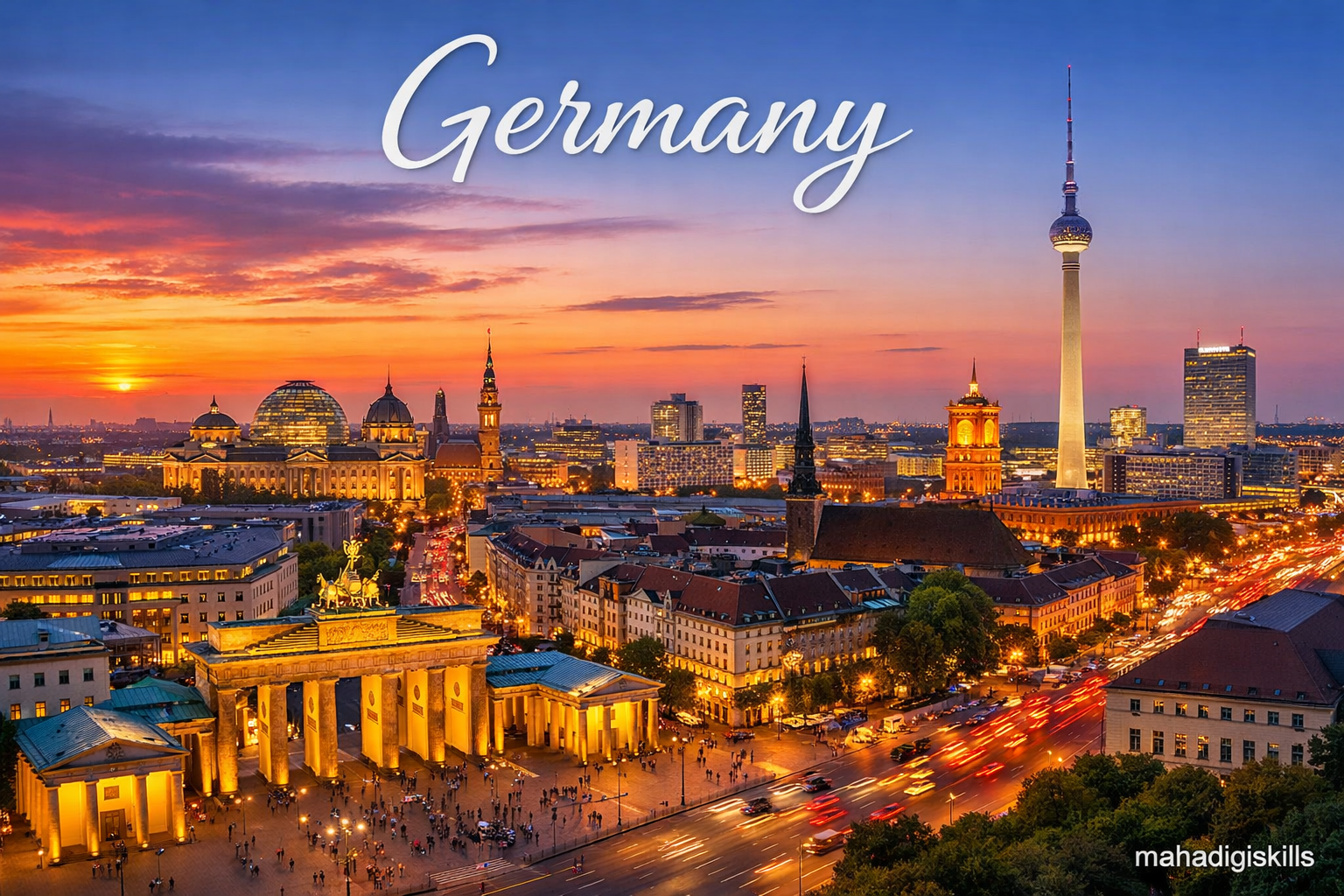
The Brandenburg Gate in Berlin is one of the most recognizable symbols of Germany.
Originally built in the 18th century, the gate has witnessed many important historical events, including the division and reunification of Germany.
Today it stands as a symbol of peace and unity.
Cologne Cathedral
The Cologne Cathedral (Kölner Dom) is one of the largest Gothic cathedrals in Europe and a UNESCO World Heritage Site.
Construction began in the 13th century and continued for hundreds of years.
The cathedral is famous for:
- towering twin spires
- stained glass windows
- historic religious artifacts
Millions of visitors travel to Cologne each year to see this architectural masterpiece.
The Rhine Valley
The Rhine River Valley is one of the most scenic regions in Germany.
The valley features:
- medieval castles
- vineyards
- picturesque villages
River cruises along the Rhine allow travelers to explore historic towns and beautiful landscapes.
Famous Cities in Germany
Germany is home to many vibrant cities that combine historic heritage with modern innovation.
Berlin
Berlin is the capital and largest city of Germany.
The city is known for its history, museums, and cultural diversity.
Important attractions include:
- Berlin Wall Memorial
- Brandenburg Gate
- Museum Island
- Reichstag Parliament Building
Berlin also has a thriving arts, music, and nightlife scene.
Munich
Munich is the capital of Bavaria and one of the most visited cities in Germany.
The city is famous for:
- Oktoberfest festival
- historic architecture
- traditional Bavarian culture
Visitors often explore Marienplatz, the central square surrounded by historic buildings.
Hamburg
Hamburg is a major port city located on the Elbe River.
It is one of the largest ports in Europe and an important center for trade and commerce.
Popular attractions include:
- Hamburg Harbor
- Speicherstadt historic warehouse district
- Elbphilharmonie concert hall
Frankfurt
Frankfurt is known as Germany’s financial center.
The city hosts the European Central Bank and many international financial institutions.
Frankfurt is also famous for its modern skyline and international airport.
Natural Landscapes and National Parks
Germany offers many natural landscapes including forests, mountains, and lakes.
Bavarian Alps
The Bavarian Alps are located in southern Germany and offer stunning alpine scenery.
Popular activities include:
- skiing in winter
- hiking and climbing in summer
- scenic mountain drives
Black Forest
The Black Forest is a famous mountainous region known for dense forests and charming villages.
Visitors often enjoy:
- hiking trails
- scenic lakes
- traditional villages
- cuckoo clocks and local crafts
Saxon Switzerland National Park
This national park features dramatic sandstone rock formations and deep valleys.
The park is a paradise for:
- hikers
- climbers
- photographers
Cultural Festivals
Germany hosts many festivals that celebrate culture, traditions, and seasonal events.
Oktoberfest
Oktoberfest in Munich is the largest folk festival in the world.
The event includes:
- traditional Bavarian music
- cultural performances
- local food and drinks
Millions of visitors attend every year.
Christmas Markets
Germany is famous for its Christmas markets, which take place in many cities during December.
Visitors enjoy:
- festive decorations
- handmade gifts
- traditional holiday food and sweets
Transportation in Germany
Germany has one of the best transportation systems in the world.
Rail Network
The Deutsche Bahn railway system connects major cities and regions.
High-speed ICE trains allow fast travel between cities such as Berlin, Munich, and Frankfurt.
Airports
Major international airports include:
- Frankfurt Airport
- Munich Airport
- Berlin Brandenburg Airport
These airports connect Germany to destinations around the world.
Road Network
Germany has an extensive highway system known as the Autobahn.
Some sections of the Autobahn have no speed limit, making them famous worldwide.
Best Time to Visit Germany
Germany can be visited throughout the year depending on travel interests.
Spring (April–June)
Spring offers pleasant weather and blooming landscapes, making it ideal for sightseeing.
Summer (June–August)
Summer is perfect for outdoor festivals, city tours, and river cruises.
Autumn (September–October)
Autumn is famous for wine harvest festivals and Oktoberfest.
Winter (December–February)
Winter is popular for Christmas markets and alpine skiing.
Languages in Germany
Language plays a central role in the cultural identity of Germany. The official language spoken across the country is German, which belongs to the West Germanic language family.
German is widely used in government, education, business, and everyday communication. It is also one of the most spoken languages in Europe.
Regional Dialects
Several regional dialects exist throughout the country, reflecting local traditions and historical influences.
Some well-known dialect groups include:
- Bavarian
- Swabian
- Saxon
- Low German
Although these dialects vary in pronunciation and vocabulary, Standard German remains the common language used nationwide.
Foreign Languages
Many residents also speak additional languages, particularly:
- English
- French
- Spanish
English is widely spoken in major cities, universities, and tourist destinations.
Society and Population
The population of Germany is approximately 84 million people, making it the most populous country in the European Union.
German society is known for its strong emphasis on education, innovation, and social welfare.
Urban Population
Major cities include:
- Berlin
- Hamburg
- Munich
- Frankfurt
- Cologne
These cities serve as economic and cultural centers.
Education and Research
Germany is known for its high-quality education system and world-class universities.
Many universities attract international students due to strong academic programs and research opportunities.
The country is also known for its vocational training system, which combines classroom learning with practical work experience.
Economy of Germany
Germany has one of the largest and most powerful economies in the world.
It is the largest economy in Europe and a leading exporter of manufactured goods.
Major Industries
Important industries include:
- Automotive manufacturing
- Engineering and machinery
- Chemicals and pharmaceuticals
- Technology and electronics
- Renewable energy
German companies such as Volkswagen, BMW, Mercedes-Benz, Siemens, and Bosch are globally recognized.
Trade and Global Partnerships
Germany is a major international trading nation.
Key trading partners include:
- United States
- China
- France
- Netherlands
- United Kingdom
Exports include automobiles, machinery, chemicals, and electronic equipment.
External Source (DoFollow)
World Bank
https://www.worldbank.org
Germany in International Organizations
Germany plays an important role in international politics and global cooperation.
United Nations
Germany joined the United Nations in 1973.
The country participates in international initiatives related to peacekeeping, humanitarian aid, and sustainable development.
External Source (DoFollow)
United Nations
https://www.un.org/en/member-states
Other Global Organizations
Germany is also a member of several major organizations:
- European Union (EU)
- NATO
- G7
- World Trade Organization (WTO)
These memberships allow Germany to participate in international decision-making and economic cooperation.
Interesting Facts About Germany
There are many fascinating facts that make Germany unique.
Castles
Germany has more than 20,000 castles, many of which date back to the medieval period.
Autobahn Highways
The German Autobahn is famous for sections without speed limits, making it one of the most unique highway systems in the world.
Christmas Traditions
Many Christmas traditions popular around the world originated in Germany, including:
- Christmas trees
- Advent calendars
- festive holiday markets
Beer Culture
Germany has a long brewing tradition and produces hundreds of varieties of beer.
The Reinheitsgebot, or Beer Purity Law of 1516, regulated the ingredients used in brewing.
Environmental Leadership
Germany is known for its commitment to renewable energy and environmental sustainability.
Best Travel Experiences
Visitors traveling to Germany can enjoy many memorable experiences.
Popular activities include:
- Exploring historic castles and palaces
- Visiting world-class museums and galleries
- Hiking in mountain regions and national parks
- Attending traditional festivals
- Taking scenic river cruises along the Rhine
The combination of cultural heritage and modern infrastructure makes Germany a top travel destination.
Travel Tips for Visitors
Traveling in Germany is convenient thanks to efficient transportation and well-developed tourism services.
Entry Requirements
Most travelers require:
- a valid passport
- visa depending on nationality
Visitors from many countries can enter the Schengen Area without a visa for short stays.
Transportation
Common transportation options include:
- high-speed trains
- regional trains
- buses and trams
- taxis and ride-sharing services
Public transportation systems in major cities are highly efficient.
Internal Links (SEO)
For better website SEO, connect this article with related travel guides such as:
- Georgia Travel Guide
- Egypt Travel Guide
- Estonia Tourism Guide
Internal links improve site navigation and help search engines understand related content.
Final Summary
Germany is a country that combines historic heritage, cultural traditions, technological innovation, and scenic landscapes. From medieval castles and charming villages to modern cities and advanced industries, the country offers a unique mix of past and present.
Travelers visiting Germany can explore vibrant cities like Berlin and Munich, discover beautiful natural landscapes such as the Bavarian Alps and Black Forest, and experience cultural festivals that attract visitors from around the world.
With its rich history, strong economy, and diverse attractions, Germany remains one of the most influential and fascinating destinations in Europe.
Key Facts Table
| Category | Information |
|---|---|
| Capital | Berlin |
| Continent | Europe |
| Population | ~84 million |
| Official Language | German |
| Currency | Euro (EUR) |
| Major Rivers | Rhine, Danube, Elbe |
| Highest Mountain | Zugspitze |
| Government | Federal Parliamentary Republic |
| UN Membership | 1973 |
List of All 195 Countries
- Afghanistan
- Albania
- Algeria
- Andorra
- Angola
- Antigua and Barbuda
- Argentina
- Armenia
- Australia
- Austria
- Azerbaijan
- Bahamas
- Bahrain
- Bangladesh
- Barbados
- Belarus
- Belgium
- Belize
- Benin
- Bhutan
- Bolivia
- Bosnia and Herzegovina
- Botswana
- Brazil
- Brunei
- Bulgaria
- Burkina Faso
- Burundi
- Cabo Verde
- Cambodia
- Cameroon
- Canada
- Central African Republic
- Chad
- Chile
- China
- Colombia
- Comoros
- Congo (Congo-Brazzaville)
- Costa Rica

