



Introduction
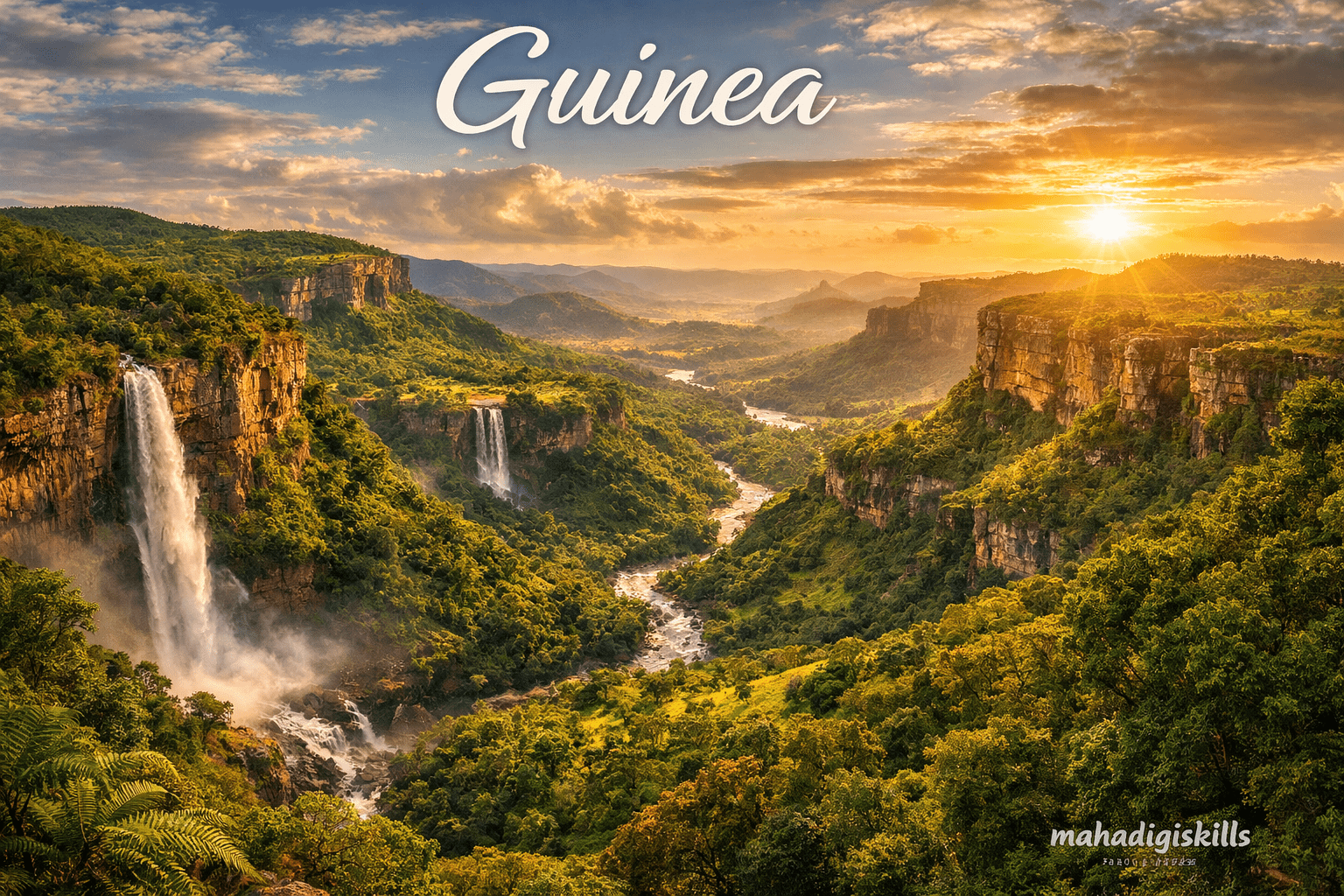
Guinea is a diverse West African country known for its rich cultural traditions, dramatic landscapes, and important natural resources. Located along the Atlantic coast, Guinea offers a mix of tropical forests, highland plateaus, savannas, and coastal plains.
The nation is sometimes called the “Water Tower of West Africa” because several major rivers originate in its mountains. These rivers support agriculture, ecosystems, and neighboring countries across the region.
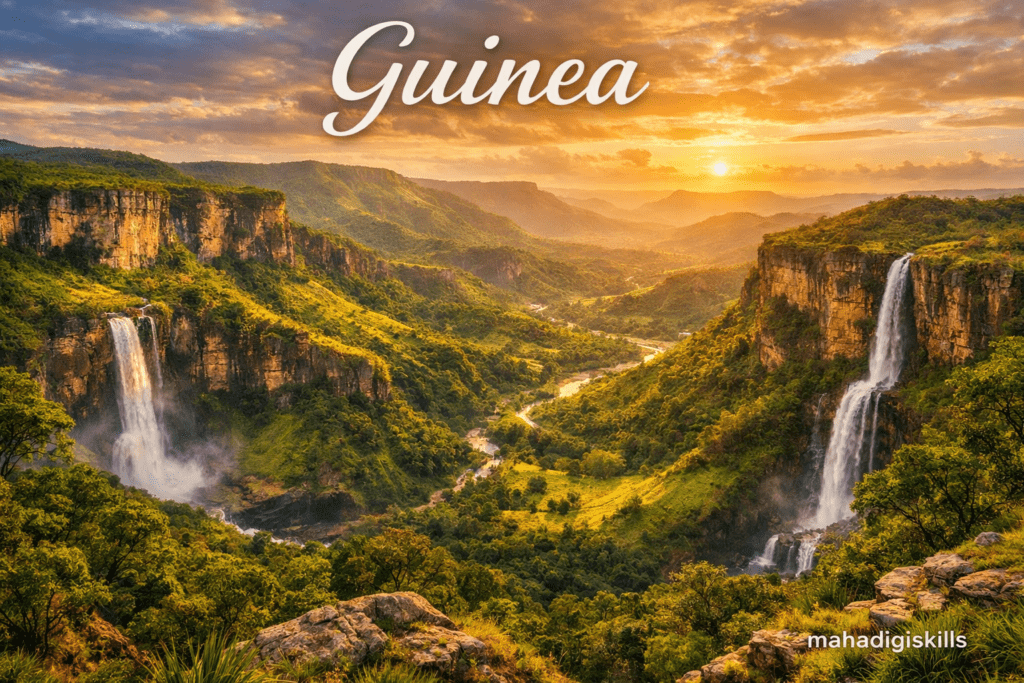
Guinea is also recognized for its vibrant musical heritage, ethnic diversity, and traditional festivals that reflect centuries of history. Travelers interested in nature, culture, and adventure will find unique experiences throughout the country.
Historical Background
Ancient Kingdoms and Early Civilizations
The region that is now Guinea has been inhabited for thousands of years. Early societies developed farming, trade routes, and cultural traditions long before European contact.
Guinea was historically influenced by powerful West African empires such as:
- the Ghana Empire
- the Mali Empire
- the Songhai Empire
These empires controlled large trade networks across West Africa and played an important role in the spread of culture, commerce, and religion.
Gold, salt, and other valuable goods moved through these trade routes, connecting Guinea with North Africa and the Mediterranean world.
Islamic Influence
Islam spread throughout the region beginning around the 10th century, mainly through traders and scholars traveling across the Sahara Desert.
Islamic traditions influenced:
- education
- architecture
- social customs
- legal systems
Today, Islam remains the dominant religion in Guinea and plays an important role in everyday life.
French Colonial Period
During the 19th century, European powers expanded their influence across Africa. Guinea eventually became part of French West Africa, a colonial federation controlled by France.
Under French rule:
- infrastructure such as railways and ports was developed
- colonial administration was established
- natural resources were exploited for export
Despite these changes, many traditional cultures and languages remained strong among local communities.
Independence
Guinea gained independence from France in 1958, becoming one of the first French colonies in Africa to do so.
The country chose independence through a referendum led by political leader Ahmed Sékou Touré, who became the first president.
Independence marked the beginning of a new era in which Guinea sought to develop its own political and economic systems.
Geographical Location
Guinea is located in West Africa, along the Atlantic Ocean.
Geographic Coordinates
Approximately 10° North latitude and 10° West longitude.
Neighboring Countries
Guinea shares borders with several nations:
- Senegal
- Mali
- Ivory Coast (Côte d’Ivoire)
- Liberia
- Sierra Leone
- Guinea-Bissau
This central position makes Guinea an important geographical link between coastal and inland West Africa.
Natural Landscapes
Guinea is known for its diverse geography and beautiful natural environments.
Major landscapes include:
- coastal plains
- highland plateaus
- savannas
- tropical rainforests
These landscapes support rich biodiversity and provide vital water resources for the region.
Fouta Djallon Highlands
One of the most famous natural regions in Guinea is the Fouta Djallon Highlands.
This mountainous plateau features:
- rolling green hills
- waterfalls
- rivers and valleys
The highlands are the source of several important West African rivers including:
- the Niger River
- the Senegal River
- the Gambia River
Because of this, Guinea is often called the “Water Tower of West Africa.”
Mount Nimba
Mount Nimba is another remarkable natural landmark located near the borders with Liberia and Côte d’Ivoire.
The Mount Nimba Strict Nature Reserve is a UNESCO World Heritage Site known for its biodiversity.
The region contains:
- rare plant species
- unique wildlife
- protected rainforest ecosystems
Coastal Areas
The coastal region along the Atlantic Ocean includes mangroves, beaches, and fishing communities.
Fishing is an important livelihood for many coastal residents, and seafood plays a major role in local cuisine.
Climate
Guinea experiences a tropical climate with two main seasons.
Rainy Season
May to October
During this period, heavy rainfall supports agriculture and lush vegetation.
Dry Season
November to April
The dry season includes the Harmattan winds, which bring dry air from the Sahara Desert.
Temperatures remain warm throughout the year, especially in lowland regions.
Major Cities
Conakry
Conakry is the capital and largest city of Guinea.
Located on a peninsula along the Atlantic Ocean, the city serves as the country’s main center for:
- government
- commerce
- transportation
- culture
Conakry also contains important landmarks such as markets, museums, and the national stadium.
Kankan
Kankan is one of the largest inland cities in Guinea and an important center for trade and education.
The city has historically served as a cultural hub in the region.
Labé
Labé is located in the Fouta Djallon highlands and is known for its cool climate and scenic landscapes.
The city is an important center for the Fulani (Fula) culture.
Culture of Guinea
The culture of Guinea reflects centuries of African traditions and influences from different ethnic groups.
The population includes more than 20 ethnic communities, each with unique customs and languages.
Major ethnic groups include:
- Fulani (Fula)
- Malinke (Mandinka)
- Susu
Music and Dance
Guinea is internationally famous for its music and dance traditions.
Traditional music often features instruments such as:
- djembe drums
- balafon (wooden xylophone)
- kora (string instrument)
These instruments create rhythmic music used during ceremonies, festivals, and storytelling performances.
Traditional Festivals
Festivals in Guinea celebrate cultural heritage, religion, and community traditions.
Important celebrations include:
- Islamic holidays such as Eid al-Fitr
- harvest festivals
- traditional cultural events
These gatherings feature music, dance, colorful clothing, and traditional foods.
Cuisine
Food in Guinea reflects West African culinary traditions.
Common ingredients include:
- rice
- cassava
- vegetables
- fish
- peanuts
Popular dishes include rice with peanut sauce, grilled fish, and spicy stews.
Tourism in Guinea
Tourism in Guinea is gradually developing as travelers discover the country’s natural beauty, cultural heritage, and unique landscapes. Although Guinea is not yet a major international tourist destination, it offers authentic experiences that are difficult to find in more commercial travel locations.
Visitors are attracted to Guinea because of:
- dramatic mountain scenery
- tropical rainforests and waterfalls
- traditional West African culture
- wildlife reserves and national parks
- coastal islands and fishing communities
Adventure travelers, nature lovers, and cultural explorers often visit Guinea to experience its untouched landscapes and welcoming communities.
Fouta Djallon Highlands
The Fouta Djallon Highlands are among the most spectacular natural regions in Guinea.
This mountainous plateau covers a large part of central Guinea and is famous for its:
- green hills and valleys
- dramatic waterfalls
- fertile farmland
- cool mountain climate
The area is also culturally significant because it is home to many Fulani (Fula) communities, who maintain traditional lifestyles and pastoral traditions.
Waterfalls of Fouta Djallon
The highlands contain some of the most beautiful waterfalls in West Africa.
Popular waterfalls include:
- Ditinn Falls
- Kambadaga Falls
- Saala Falls
These natural sites attract visitors who enjoy hiking, photography, and scenic viewpoints.
Because of its unique landscapes, the region is sometimes compared to the Scottish Highlands or other mountain landscapes around the world.
Mount Nimba Strict Nature Reserve
Mount Nimba is one of the most important ecological areas in West Africa.
Located near the borders of Liberia and Côte d’Ivoire, the Mount Nimba Strict Nature Reserve is protected as a UNESCO World Heritage Site.
The reserve contains exceptional biodiversity, including:
- rare amphibians
- unique plant species
- endangered mammals
- tropical forest ecosystems
Because of its environmental importance, conservation programs help protect wildlife habitats and biodiversity in the region.
External DoFollow Source
UNESCO World Heritage Centre
https://whc.unesco.org
Îles de Los (Los Islands)
The Îles de Los are a small group of tropical islands located just off the coast near the capital city.
These islands are known for:
- sandy beaches
- palm trees
- fishing villages
- relaxing ocean scenery
Visitors can reach the islands by boat from Conakry and enjoy peaceful coastal landscapes away from the busy mainland.
Popular activities include:
- swimming
- fishing
- beach relaxation
- exploring local villages
National Parks and Wildlife
Guinea contains several protected areas that preserve natural ecosystems and wildlife.
Major conservation areas include:
- Mount Nimba Strict Nature Reserve
- Badiar National Park
- Upper Niger National Park
These parks protect forests, savannas, and wetlands that support diverse wildlife.
Animals found in Guinea include:
- chimpanzees
- antelopes
- monkeys
- tropical birds
Nature tourism and conservation projects help protect these species and encourage sustainable tourism.
Local Markets and Cultural Experiences
Markets are an essential part of daily life in Guinea and provide fascinating cultural experiences for visitors.
One of the most vibrant markets is located in Conakry, the capital city.
Markets typically sell:
- fresh fruits and vegetables
- spices and grains
- colorful fabrics
- handmade crafts
These markets offer an excellent opportunity for travelers to interact with local communities and learn about everyday life.
Handicrafts and Traditional Art
Guinean artisans produce beautiful handmade crafts that reflect local traditions.
Popular crafts include:
- woven baskets
- carved wooden sculptures
- traditional musical instruments
- hand-dyed textiles
These items are often sold in markets and artisan workshops.
Traditional craft production supports local economies and preserves cultural heritage.
Transportation in Guinea
Travel around Guinea can be an adventure due to the country’s large size and varied terrain.
Airports
The main international gateway is Ahmed Sékou Touré International Airport in Conakry.
The airport connects Guinea with destinations in:
- West Africa
- Europe
- the Middle East
Road Transport
Road transportation is the most common way to travel within Guinea.
Available transport options include:
- taxis
- minibuses
- shared cars
Road conditions vary depending on the region, and travel between cities may take several hours.
Best Time to Visit Guinea
The best time to visit Guinea is during the dry season from November to April.
During this time:
- rainfall is lower
- roads are easier to travel
- outdoor activities are more comfortable
The rainy season from May to October brings heavy rainfall, especially in coastal areas.
However, the rainy season also creates lush green landscapes and flowing waterfalls.
Travel Experiences
Visitors to Guinea can enjoy many memorable experiences such as:
- hiking through the Fouta Djallon mountains
- exploring waterfalls and rivers
- visiting traditional villages
- relaxing on the Los Islands
- experiencing vibrant African markets
These experiences provide travelers with a deeper understanding of the country’s culture and natural beauty.
Economy of Guinea
The economy of Guinea is strongly supported by natural resources, agriculture, and mining industries. The country is internationally known for its vast mineral reserves, especially bauxite, which is the primary raw material used to produce aluminum.
Guinea holds some of the largest bauxite reserves in the world, making mining one of the most important sectors of the national economy.
Key economic sectors include:
- mining and natural resources
- agriculture
- fisheries
- trade and services
Although Guinea has rich resources, economic development continues to face challenges related to infrastructure and investment.
Mining and Natural Resources
Mining is the most significant industry in Guinea.
The country produces several important minerals, including:
- bauxite
- gold
- diamonds
- iron ore
Large mining operations export these resources to international markets, especially in Asia and Europe.
Bauxite production plays a major role in global aluminum supply chains.
External Source (DoFollow)
World Bank
https://www.worldbank.org
Agriculture
Agriculture remains a key livelihood for many people in Guinea, particularly in rural areas.
Farmers grow crops such as:
- rice
- cassava
- maize
- peanuts
- bananas
Rice is the staple food for most households and is widely cultivated throughout the country.
Livestock farming and fishing also contribute to food production and local economies.
Fisheries
Guinea’s Atlantic coastline supports an active fishing industry.
Fish and seafood are important both for domestic consumption and for export markets.
Coastal fishing communities rely on the ocean as a major source of income and food.
Languages of Guinea
Language diversity reflects the multicultural nature of Guinea.
Official Language
The official language of Guinea is French, which is used in government, education, and official communication.
French was introduced during the colonial period and remains widely used in administration and business.
Local Languages
Many indigenous languages are spoken across the country.
Major languages include:
- Fula (Fulani)
- Malinke (Mandinka)
- Susu
These languages are commonly spoken in homes, communities, and regional markets.
Population and Society
The population of Guinea is approximately 14 million people.
The country has a youthful population and diverse cultural communities.
Major ethnic groups include:
- Fulani (Fula)
- Malinke (Mandinka)
- Susu
Each community has its own cultural traditions, music styles, and social customs.
Family and community relationships play an important role in daily life.
Guinea in International Organizations
Guinea participates in several international and regional organizations.
United Nations
Guinea became a member of the United Nations in 1958, shortly after gaining independence.
The country contributes to international initiatives related to:
- development programs
- peacekeeping
- environmental sustainability
External DoFollow Source
United Nations
https://www.un.org/en/member-states
Regional Organizations
Guinea is also a member of several African regional organizations including:
- African Union (AU)
- Economic Community of West African States (ECOWAS)
- Organization of Islamic Cooperation (OIC)
These organizations promote cooperation in areas such as economic development, security, and regional trade.
Interesting Facts About Guinea
Here are some fascinating facts about Guinea:
Water Tower of West Africa
Several major rivers in West Africa originate in Guinea, including the Niger River, making the country extremely important for regional water resources.
Rich Mineral Resources
Guinea holds some of the largest bauxite deposits in the world, making it a key supplier of aluminum raw materials.
Famous Music Culture
The country has produced internationally recognized musicians and is famous for traditional drumming styles using instruments such as the djembe.
Biodiversity Hotspot
Mount Nimba contains rare wildlife species and is considered one of the most important conservation areas in Africa.
Cultural Diversity
More than 20 ethnic groups live in Guinea, creating a vibrant mix of languages, customs, and traditions.
Best Travel Experiences
Travelers visiting Guinea can enjoy many memorable activities such as:
- exploring the Fouta Djallon mountains
- hiking to scenic waterfalls
- visiting traditional villages
- relaxing on the Los Islands
- discovering local markets and crafts
These experiences allow visitors to explore both nature and culture.
Travel Tips
Visitors traveling to Guinea should consider the following tips:
- carry lightweight clothing suitable for tropical climates
- stay hydrated in warm weather
- respect local customs and traditions
- plan transportation carefully due to long travel distances
Understanding local culture and travel conditions helps visitors have a safe and enjoyable journey.
Final Summary
Guinea is a fascinating West African country known for its rich cultural traditions, diverse landscapes, and valuable natural resources. From the scenic mountains of Fouta Djallon to the wildlife-rich forests of Mount Nimba, the country offers impressive natural attractions.
Guinea’s cultural diversity, vibrant music traditions, and welcoming communities create unique experiences for visitors interested in authentic African culture.
Although tourism remains relatively undeveloped, the country holds enormous potential as a destination for adventure travel, ecological exploration, and cultural discovery.
Key Facts Table
| Category | Information |
|---|---|
| Capital | Conakry |
| Continent | Africa |
| Population | ~14 million |
| Official Language | French |
| Currency | Guinean Franc (GNF) |
| Independence | October 2, 1958 |
| Major Resource | Bauxite |
| Government | Presidential Republic |
| UN Membership | 1958 |
List of All 195 Countries
- Afghanistan
- Albania
- Algeria
- Andorra
- Angola
- Antigua and Barbuda
- Argentina
- Armenia
- Australia
- Austria
- Azerbaijan
- Bahamas
- Bahrain
- Bangladesh
- Barbados
- Belarus
- Belgium
- Belize
- Benin
- Bhutan
- Bolivia
- Bosnia and Herzegovina
- Botswana
- Brazil
- Brunei
- Bulgaria
- Burkina Faso
- Burundi
- Cabo Verde
- Cambodia
- Cameroon
- Canada
- Central African Republic
- Chad
- Chile
- China
- Colombia
- Comoros
- Congo (Congo-Brazzaville)
- Costa Rica

