



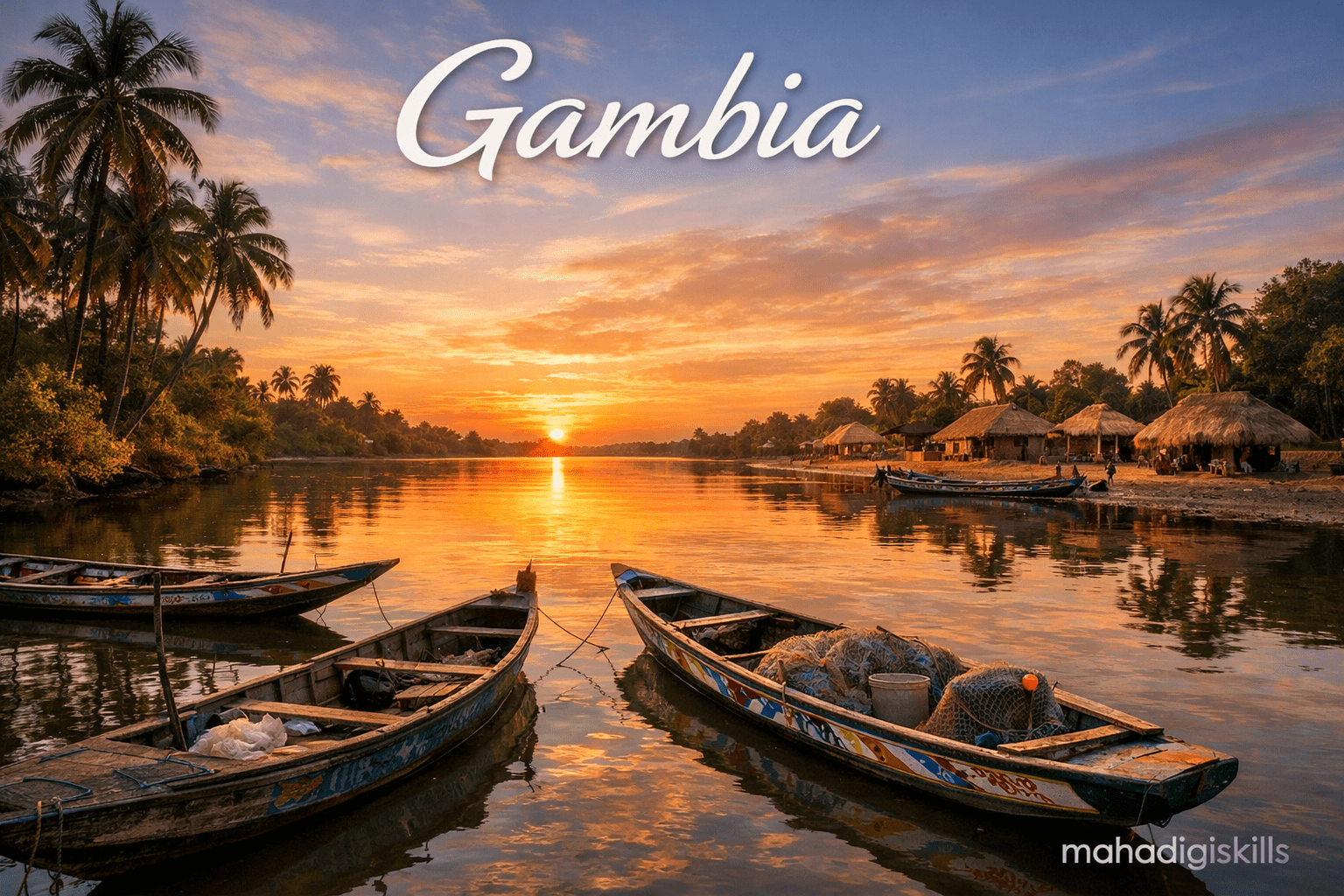
Introduction to Gambia
Gambia is one of the smallest countries in mainland Africa, yet it offers an incredible combination of rich history, vibrant culture, and beautiful natural landscapes. Located along the winding Gambia River in West Africa, this fascinating nation attracts travelers who want to experience authentic African culture, wildlife, and coastal scenery.
Despite its small size, Gambia plays an important role in regional history and tourism. The country is known for its friendly people, diverse wildlife, historical heritage sites, and stunning Atlantic beaches. Because of its welcoming atmosphere, the destination is often called “The Smiling Coast of Africa.”
Visitors exploring Gambia can discover lively markets, historic colonial towns, wildlife reserves, and peaceful river landscapes. From the capital city of Banjul to the famous Kunta Kinteh Island, the country provides both cultural and historical experiences.
This detailed travel guide explores the history, geography, culture, and economic development of Gambia, along with useful travel insights for visitors interested in exploring West Africa.
History of Gambia
Early Civilizations
The region now known as Gambia has been inhabited for thousands of years. Early communities settled along the fertile banks of the Gambia River, which served as an important route for trade, agriculture, and transportation.
Ancient trade networks connected the area with powerful West African kingdoms such as:
- The Ghana Empire
- The Mali Empire
- The Songhai Empire
These empires influenced the development of trade, religion, and culture in the region.
European Exploration
In the 15th century, European explorers began arriving along the West African coast. Portuguese traders were among the first Europeans to explore the Gambia River region.
Later, other European powers became involved in trade along the river, including:
- Britain
- France
- Netherlands
The region eventually became an important location for trade routes between Africa and Europe.
Colonial Period
During the colonial era, Britain established control over the territory. The British administration governed the region as a colony and developed trading posts along the Gambia River.
The capital city Banjul was founded in 1816 as a military base and trading center.
Colonial rule influenced many aspects of society, including:
- Government administration
- Infrastructure development
- Education systems
Independence
Gambia gained independence from the United Kingdom in 1965.
After independence, the country continued to maintain diplomatic relations with many international partners and organizations.
Today, Gambia operates as a democratic republic, with a government that participates in regional and global institutions.
Geography of Gambia
Location and Coordinates
Gambia is located in West Africa, surrounded almost entirely by Senegal except for its Atlantic Ocean coastline.
Geographic Coordinates
13.4432° N latitude
15.3101° W longitude
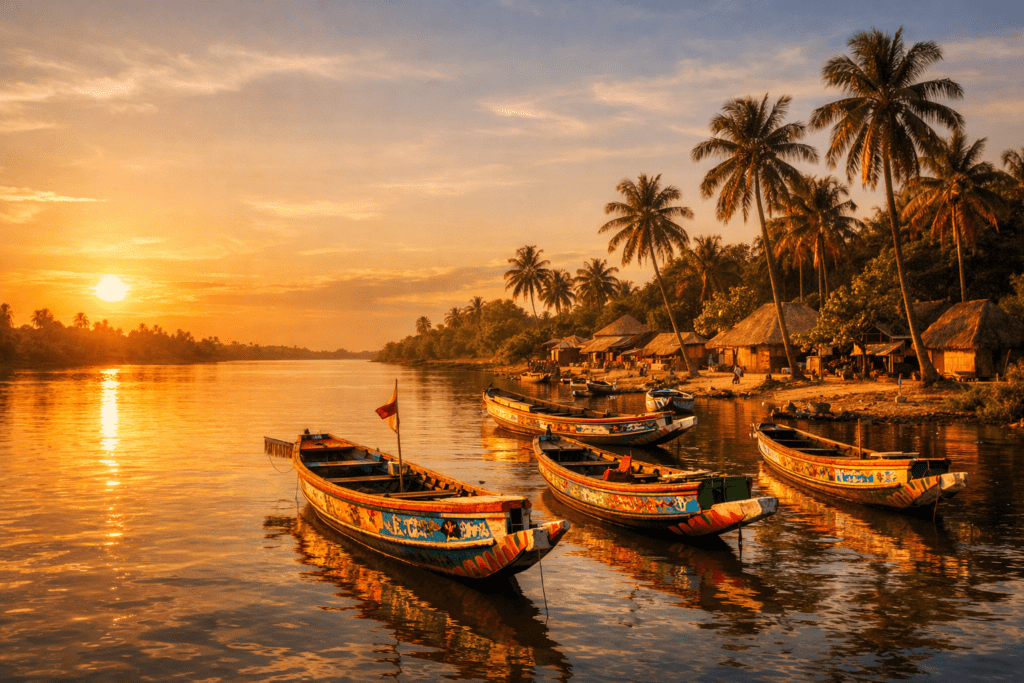
The country follows the path of the Gambia River, which runs through the center of the nation and plays a major role in transportation and agriculture.
Neighboring Countries
Gambia shares borders with:
- Senegal (north, south, and east)
Although the country is narrow, it stretches nearly 480 kilometers along the Gambia River.
Landscape and Natural Environment
The landscape of Gambia consists mainly of:
- River plains
- Mangrove forests
- Savannah grasslands
- Coastal beaches
The fertile river valley supports agriculture and wildlife habitats, making the region important for both farming and eco-tourism.
Climate
Gambia has a tropical climate with two main seasons:
Dry Season
November to May
During this period the weather is warm and dry, making it the most popular time for tourism.
Rainy Season
June to October
Heavy rains support agriculture but may make travel in rural areas more difficult.
Culture of Gambia
Ethnic Diversity
The population of Gambia includes several ethnic groups, each with its own traditions and cultural practices.
Major ethnic communities include:
- Mandinka
- Fula
- Wolof
- Jola
- Serahule
These groups contribute to the rich cultural diversity of the country.
Religion
Religion plays an important role in daily life in Gambia.
The majority of the population practices Islam, while smaller communities follow Christianity or traditional African beliefs.
Religious celebrations and festivals are important parts of community life.
Music and Dance
Traditional music is an essential part of Gambian culture. Instruments such as the kora, a traditional West African string instrument, are widely used.
Music styles often feature:
- Storytelling traditions
- Cultural history
- Community celebrations
Dance performances are commonly seen during festivals and ceremonies.
Food and Cuisine
Gambian cuisine reflects local ingredients and West African culinary traditions.
Popular dishes include:
- Domoda (peanut stew)
- Benachin (one-pot rice dish)
- Yassa (chicken or fish with onions and lemon)
- Fresh seafood
Meals often include rice, vegetables, and locally grown spices.
Economy of Gambia
The economy of Gambia is primarily based on agriculture, tourism, and trade.
Agriculture
Agriculture provides employment for a large portion of the population.
Important crops include:
- Peanuts (groundnuts)
- Rice
- Millet
- Maize
Peanut exports have historically been one of the country’s major sources of revenue.
Tourism
Tourism is another major contributor to the economy.
Visitors are attracted to:
- Atlantic beaches
- Wildlife reserves
- Birdwatching opportunities
- Cultural heritage sites
The tourism industry also supports hotels, restaurants, and local markets.
Trade and Currency
The official currency used in Gambia is the Gambian Dalasi (GMD).
Major trading partners include:
- United Kingdom
- China
- Senegal
- European Union countries
For economic statistics and development data:
https://www.worldbank.org
Languages of Gambia
Official Language
The official language used in government and education is English, reflecting the country’s British colonial history.
Local Languages
Several local languages are widely spoken across the country.
These include:
- Mandinka
- Wolof
- Fula
- Jola
- Serahule
Multilingual communication is common, especially in markets and rural communities.
Major Cities in Gambia
Although Gambia is geographically small, it has several vibrant cities and towns that play important roles in the country’s economy, culture, and tourism.
Banjul – The Capital City
Banjul is the capital city of Gambia and one of the most historically important locations in the country. It is situated on St. Mary’s Island, where the Gambia River meets the Atlantic Ocean.
Banjul was founded in 1816 by the British as a military post and trading center.
Important attractions in Banjul include:
- Albert Market – one of the busiest traditional markets in the country
- Arch 22 Monument – a famous national landmark
- National Museum of Gambia – showcasing the country’s history and culture
The city also serves as an important administrative and government center.
Serekunda – The Largest Urban Area
While Banjul is the capital, Serekunda is actually the largest city in Gambia in terms of population.
Serekunda is known for:
- Bustling markets
- Street food vendors
- Local crafts and textiles
- Cultural festivals
The city provides visitors with a glimpse into everyday life in urban Gambia.
Brikama – Cultural Center
Brikama is another important city known for its strong artistic and cultural traditions.
The town is famous for:
- Traditional wood carving
- Craft markets
- Cultural music performances
Many local artisans create handcrafted souvenirs that reflect Gambian culture.
Bakau – Coastal Tourism Town
Bakau is located along the Atlantic coast and is one of the most popular tourist towns in Gambia.
Visitors often come here to explore:
- Beaches and coastal resorts
- Fishing villages
- Wildlife attractions
Bakau offers a relaxed coastal atmosphere and is an excellent place for tourists to experience Gambian hospitality.
Tourist Attractions in Gambia
Despite its small size, Gambia offers many exciting places for visitors interested in culture, wildlife, and history.
Kunta Kinteh Island (UNESCO Site)
Kunta Kinteh Island is one of the most historically significant places in Gambia.
Located in the Gambia River near the town of Albreda, the island played a role in the transatlantic slave trade during the colonial era.
Today it is recognized as a UNESCO World Heritage Site and serves as an important historical memorial.
Visitors can explore the island and learn about its historical importance.
External reference:
https://whc.unesco.org
Abuko Nature Reserve
Abuko Nature Reserve is one of the most accessible wildlife parks in Gambia.
It is known for its:
- Forest trails
- Birdwatching opportunities
- Monkey populations
- Small wildlife species
Nature lovers and photographers often visit this reserve because of its peaceful environment.
Kachikally Crocodile Pool
The Kachikally Crocodile Pool in Bakau is a sacred cultural site and a popular tourist attraction.
This pool is home to numerous crocodiles that are believed to bring good luck and fertility according to local traditions.
Visitors can observe the crocodiles up close while learning about Gambian cultural beliefs.
Bijilo Forest Park
Also known as Monkey Park, Bijilo Forest Park is a protected forest reserve located near the coastal tourist area.
The park features walking trails where visitors can see:
- Green monkeys
- Red colobus monkeys
- Tropical birds
- Native plants
It is one of the most popular nature attractions in the country.
Wildlife and Nature in Gambia
Gambia may be small, but it is one of the best birdwatching destinations in Africa.
More than 560 bird species have been recorded in the country.
Popular bird species include:
- African fish eagle
- Kingfishers
- Pelicans
- Bee-eaters
Birdwatchers from around the world travel to Gambia to observe these species in natural habitats.
National Parks and Protected Areas
The government of Gambia has established several protected areas to conserve wildlife and ecosystems.
Important conservation areas include:
- Kiang West National Park
- River Gambia National Park
- Niumi National Park
These parks protect endangered animals and preserve natural landscapes.
Gambia and Global Organizations
United Nations Membership
Gambia became a member of the United Nations in 1965, the same year it gained independence.
The country participates in international programs related to:
- Sustainable development
- Peacekeeping operations
- Environmental protection
Official UN information:
https://www.un.org
African Union
Gambia is also a member of the African Union (AU), an organization that promotes cooperation and development among African countries.
Economic Community of West African States
Another important organization is ECOWAS, which focuses on regional economic cooperation and trade in West Africa.
Membership helps strengthen trade relationships and economic development within the region.
Transportation in Gambia
Traveling within Gambia is relatively simple due to its small geographic size.
Road Transportation
Most domestic travel is done by road.
Common transportation options include:
- Buses
- Shared taxis
- Private taxis
Road networks connect major cities and tourist areas.
River Transportation
The Gambia River plays an important role in transportation. Ferries and boats are commonly used to cross the river or travel between towns.
Air Travel
International visitors typically arrive at Banjul International Airport, the country’s main aviation hub.
The airport connects Gambia with several European and African cities.
Best Time to Visit Gambia
Gambia has a tropical climate, meaning temperatures remain warm throughout the year. However, different seasons can influence travel experiences.
Dry Season (November – May)
The dry season is widely considered the best time to visit Gambia.
During these months visitors can enjoy:
- Sunny weather
- Comfortable temperatures
- Clear skies for photography
- Easier wildlife viewing
Tourism activity is highest during this season because beaches, parks, and cities are easier to explore.
Rainy Season (June – October)
The rainy season brings heavy tropical rainfall, especially in July and August.
While travel is still possible, visitors may experience:
- Humid weather
- Occasional flooding in rural areas
- Limited access to remote parks
However, this season also transforms the countryside into lush green landscapes, which can be beautiful for nature lovers.
How to Travel Around Gambia
Because Gambia is one of the smallest countries in Africa, traveling across the nation is relatively easy.
Road Transport
Road transportation is the most common way to move around the country.
Travelers can use:
- Local buses
- Shared taxis
- Private taxis
These vehicles connect cities such as Banjul, Serekunda, Brikama, and Bakau.
River Transport
The Gambia River is an important transportation route. Ferries and boats help travelers cross the river and reach rural communities.
River travel also provides scenic views of wildlife and river landscapes.
Air Travel
International visitors usually arrive through Banjul International Airport, the country’s primary airport.
Flights connect the country with destinations in:
- Europe
- North Africa
- Other West African nations
Unique and Interesting Facts About Gambia
Gambia has several unique features that make it stand out among African destinations.
1. Smallest Country in Mainland Africa
Gambia is the smallest country on mainland Africa, covering about 11,295 square kilometers.
2. The River That Defines the Country
The nation is named after the Gambia River, which flows through the entire country and supports agriculture, fishing, and transportation.
3. Famous Birdwatching Destination
Gambia is known as one of the top birdwatching locations in Africa, with more than 560 recorded bird species.
4. The Smiling Coast of Africa
Because of the friendly and welcoming nature of its people, the country is often called “The Smiling Coast of Africa.”
5. Cultural Music Heritage
Traditional music using instruments such as the kora plays an important role in Gambian storytelling and cultural identity.
Gambia in Global Organizations
United Nations
Gambia joined the United Nations in 1965 after gaining independence from the United Kingdom.
The country participates in international programs focusing on:
- Sustainable development
- Human rights
- Environmental protection
Official UN information:
https://www.un.org
African Union
Gambia is also a member of the African Union, which promotes political cooperation and economic development across the continent.
ECOWAS
Another important organization is the Economic Community of West African States (ECOWAS). This regional organization helps improve trade and economic collaboration among West African nations.
Internal Link Example
If you enjoy exploring African travel destinations, you may also read our travel guide about Gabon, which highlights rainforest wildlife, national parks, and eco-tourism opportunities.
Final Summary
Gambia may be small in size, but it offers a rich combination of history, culture, and natural beauty. The country’s landscapes range from tropical riverbanks and wildlife reserves to stunning Atlantic beaches.
Visitors traveling through Gambia can explore lively cities, traditional markets, historic UNESCO sites, and protected wildlife parks. The nation’s cultural diversity, music traditions, and delicious cuisine add depth to the travel experience.
The friendly people, peaceful atmosphere, and fascinating history make Gambia an appealing destination for travelers seeking authentic West African culture.
Whether visitors come for birdwatching, beach relaxation, cultural exploration, or river adventures, Gambia offers memorable experiences that reflect the vibrant spirit of West Africa.
Key Facts About Gambia
| Category | Information |
|---|---|
| Official Name | Republic of The Gambia |
| Capital City | Banjul |
| Continent | Africa |
| Population | About 2.7 million |
| Total Area | 11,295 sq km |
| Official Language | English |
| Currency | Gambian Dalasi (GMD) |
| Government | Presidential Republic |
| Independence | 1965 |
| UN Membership | 1965 |
| Major Industries | Agriculture, tourism, fishing |
List of All 195 Countries
- Afghanistan
- Albania
- Algeria
- Andorra
- Angola
- Antigua and Barbuda
- Argentina
- Armenia
- Australia
- Austria
- Azerbaijan
- Bahamas
- Bahrain
- Bangladesh
- Barbados
- Belarus
- Belgium
- Belize
- Benin
- Bhutan
- Bolivia
- Bosnia and Herzegovina
- Botswana
- Brazil
- Brunei
- Bulgaria
- Burkina Faso
- Burundi
- Cabo Verde
- Cambodia
- Cameroon
- Canada
- Central African Republic
- Chad
- Chile
- China
- Colombia
- Comoros
- Congo (Congo-Brazzaville)
- Costa Rica

