



Introduction
Gabon is a beautiful country located in Central Africa, known for its vast rainforests, incredible wildlife, and untouched natural landscapes. Often referred to as one of Africa’s hidden gems, Gabon offers travelers a rare opportunity to experience pristine ecosystems and extraordinary biodiversity.
With more than 80% of its land covered by dense tropical forests, Gabon is considered one of the most environmentally protected countries in the world. The government has established numerous national parks to preserve its wildlife, making the country a leading destination for eco-tourism and wildlife exploration.
The capital city Libreville sits along the Atlantic Ocean and serves as the political, economic, and cultural center of Gabon. Visitors can explore modern city life while also enjoying nearby beaches and natural reserves.
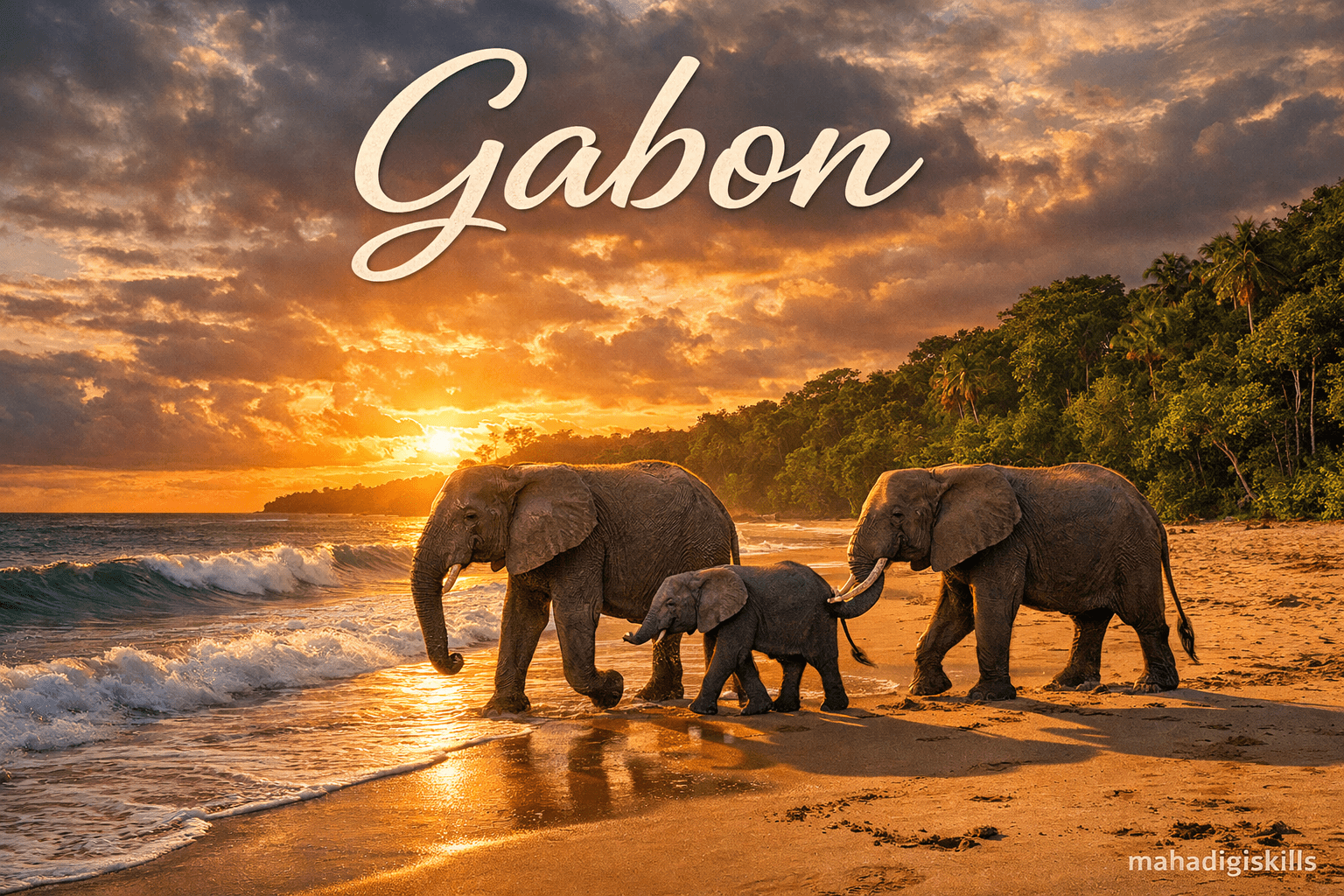
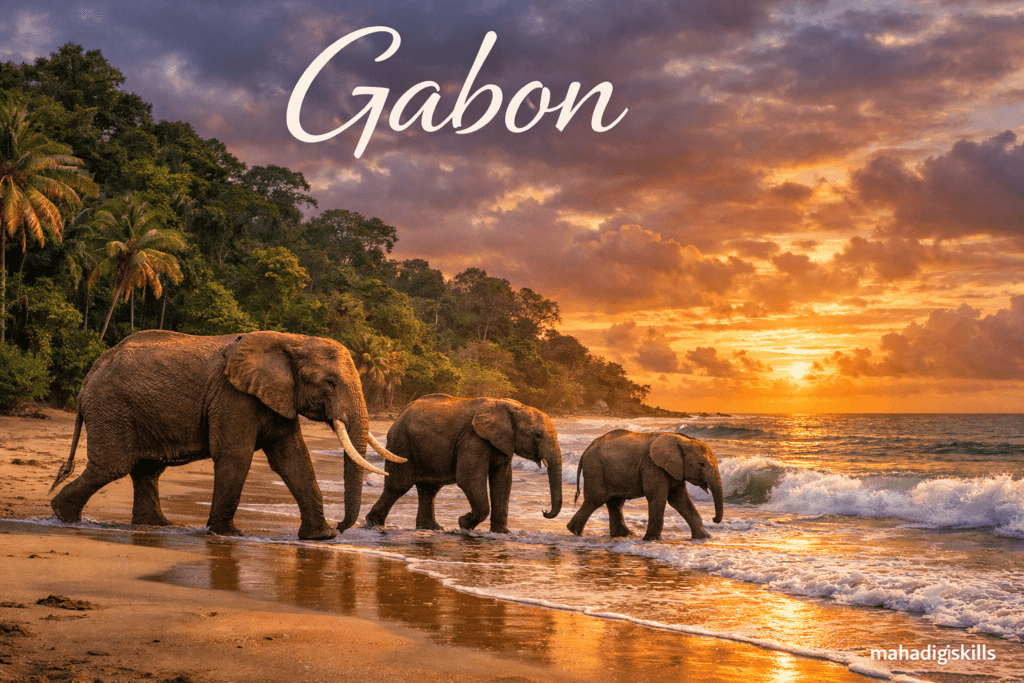
Gabon is also famous for its remarkable wildlife. The country’s forests and coastal regions are home to forest elephants, gorillas, chimpanzees, hippos, and sea turtles. In fact, Gabon is one of the few places on Earth where elephants can sometimes be seen walking along ocean beaches.
In addition to its natural beauty, Gabon has a rich cultural heritage influenced by traditional African customs, colonial history, and modern global connections. Music, dance, rituals, and traditional art continue to play an important role in everyday life.
Whether travelers are interested in wildlife safaris, tropical landscapes, or cultural discovery, Gabon offers a unique travel experience that remains largely unexplored compared to many other African destinations.
History of Gabon
Early Inhabitants
The earliest inhabitants of Gabon were Pygmy hunter-gatherer communities who lived in the forests thousands of years ago. These indigenous groups relied on hunting, fishing, and gathering forest resources for survival.
Later, several Bantu ethnic groups migrated into the region between the 14th and 18th centuries. These communities established villages, farming systems, and regional trade networks.
These early societies developed strong cultural traditions that continue to influence modern Gabonese identity.
European Contact
Portuguese explorers were among the first Europeans to reach the coast of Gabon during the 15th century.
The name “Gabon” is believed to come from the Portuguese word “gabão,” meaning cloak or coat. Explorers used this name because the shape of the Komo River estuary resembled a cloak.
During the following centuries, European traders established trading posts along the coast. Unfortunately, the region also became involved in the transatlantic slave trade, which affected many communities across Central Africa.
French Colonial Period
In the 19th century, France gradually established control over the region. Gabon officially became a French colony in 1885 and was later incorporated into French Equatorial Africa.
During the colonial period:
- French language and administrative systems were introduced
- Infrastructure such as ports and roads began developing
- Missionaries expanded Christian education and religious institutions
Libreville, which means “Free Town,” was originally founded as a settlement for freed slaves.
Independence and Modern Nation
Gabon gained independence from France on August 17, 1960.
After independence, the country experienced relatively stable political leadership compared with many other African nations. For several decades, Gabon’s economy grew significantly due to oil production and natural resource exports.
In recent years, the government has worked to diversify the economy and promote environmental conservation and tourism.
Geography of Gabon
Location
Gabon is located in Central Africa, along the western coast of the African continent.
Geographic Details
- Continent: Africa
- Coordinates: Approximately 0° to 2° South latitude and 9° to 14° East longitude
- Total Area: About 267,667 square kilometers
Neighboring Countries
Gabon shares borders with several nations:
- Equatorial Guinea (northwest)
- Cameroon (north)
- Republic of the Congo (east and south)
The western border faces the Atlantic Ocean, providing coastal landscapes and marine ecosystems.
Natural Landscapes
Gabon is known for its remarkable natural beauty and biodiversity.
Major geographical features include:
- Dense equatorial rainforests
- River systems such as the Ogooué River
- Coastal beaches along the Atlantic Ocean
- Wetlands and mangrove ecosystems
Because of its rich ecosystems, Gabon has become one of Africa’s most important conservation regions.
National Parks and Protected Areas
In 2002, Gabon created 13 national parks covering about 11% of the country’s land area.
These parks protect:
- Rainforests
- Wildlife habitats
- Rivers and waterfalls
- Rare plant species
Some famous national parks include:
- Loango National Park
- Ivindo National Park
- Lopé National Park
These protected areas make Gabon a global leader in conservation.
Culture of Gabon
Ethnic Groups
Gabon is home to more than 40 ethnic groups, each with its own cultural traditions and languages.
Some major ethnic communities include:
- Fang
- Myene
- Nzebi
- Punu
- Teke
Although these groups have distinct cultural identities, they share many common traditions and social customs.
Religion
Religion plays an important role in Gabonese society.
Major religions include:
- Christianity (majority)
- Traditional African religions
- Small communities of Islam
Traditional spiritual beliefs often coexist with Christian practices, creating a unique blend of cultural traditions.
Music and Dance
Music and dance are central elements of Gabonese culture.
Traditional ceremonies often include:
- Drumming
- Ritual dances
- Storytelling performances
One famous cultural tradition is the Bwiti spiritual practice, which combines music, dance, and religious rituals.
Food and Cuisine
Gabonese cuisine reflects the country’s natural resources and regional traditions.
Common ingredients include:
- Cassava
- Plantains
- Rice
- Fish and seafood
- Tropical fruits
Popular dishes include grilled fish, peanut sauces, and stews served with cassava or plantains.
Economy of Gabon
Economic Overview
Gabon has one of the highest income levels in Central Africa, largely due to its natural resources and energy exports. The country’s economy has historically relied on oil production, which contributes a significant portion of national revenue.
Although oil has been the dominant economic sector for decades, the government has been working to diversify the economy by investing in mining, forestry, agriculture, and tourism.
Gabon also benefits from a relatively small population and large natural resource reserves. This allows the country to maintain strong economic potential compared to many neighboring countries.
However, economic development remains uneven, and many regions still rely on traditional industries such as farming and fishing.
Currency
The official currency used in Gabon is the Central African CFA Franc (XAF).
This currency is shared by several countries in Central Africa and is managed by the Bank of Central African States (BEAC).
Using a common currency helps maintain monetary stability and encourages regional economic cooperation among member countries.
Major Industries
Oil and Energy
The oil industry is the largest contributor to Gabon’s economy. Oil production began in the 1970s and quickly transformed the country into one of Africa’s major petroleum exporters.
Oil exports generate a significant portion of government revenue and support infrastructure development.
However, because oil resources are finite, the government has launched long-term plans to reduce economic dependence on petroleum.
Mining
Gabon is also rich in mineral resources. One of the most important mining products is manganese, which is used in steel production.
The country is among the largest manganese exporters in the world, with major mining operations located in regions such as Moanda.
Other mineral resources include:
- Gold
- Uranium
- Iron ore
Mining continues to play an important role in the national economy.
Forestry
Because most of the land is covered by tropical forests, the timber industry has become another important economic sector.
Major forestry products include:
- Hardwood timber
- Plywood
- Wood products
To protect biodiversity, Gabon has introduced stricter regulations to ensure sustainable forest management.
Agriculture
Agriculture employs many people in rural areas. However, agricultural production remains relatively small compared to oil and mining industries.
Common crops include:
- Cassava
- Bananas
- Cocoa
- Coffee
- Sugarcane
The government has been encouraging agricultural development to improve food security and reduce dependence on imported food.
Trade Partners
Gabon exports natural resources and imports manufactured goods from various international partners.
Major Export Partners
Key trading partners include:
- China
- United States
- France
- Netherlands
- South Korea
Major exports include oil, manganese, timber, and mineral products.
External economic data reference:
https://www.worldbank.org
Languages of Gabon
Official Language
The official language of Gabon is French, a legacy of the country’s colonial history under France.
French is used in:
- Government administration
- Education
- Media and communication
- Business and trade
Most urban residents speak French fluently.
Local Languages
In addition to French, many local languages are spoken throughout Gabon.
Some commonly spoken languages include:
- Fang
- Myene
- Nzebi
- Punu
- Teke
These languages reflect the cultural diversity of Gabon and are used in everyday communication within communities.
Multilingual Society
Many Gabonese citizens are multilingual, speaking both French and their regional language. This linguistic diversity contributes to the country’s rich cultural heritage.
Gabon in Global Organizations
United Nations
Gabon became a member of the United Nations in 1960, the same year it gained independence.
The country has participated in various UN programs related to:
- Environmental protection
- Sustainable development
- Peacekeeping missions
Official UN information:
https://www.un.org
African Union
Gabon is also a member of the African Union (AU), which promotes economic cooperation, political stability, and development across the African continent.
Economic Communities
The country is a member of regional economic organizations including:
- Economic Community of Central African States (ECCAS)
- Central African Economic and Monetary Community (CEMAC)
These organizations encourage regional trade, infrastructure development, and economic cooperation.
Major Cities of Gabon
Libreville – Capital City
Libreville is the capital and largest city of Gabon. Located on the Atlantic coast, it serves as the country’s political, economic, and cultural center.
The city is known for:
- Coastal beaches
- Government institutions
- Universities and cultural centers
- Markets and restaurants
Libreville also acts as the main gateway for international visitors arriving in Gabon.
Port-Gentil – Economic Hub
Port-Gentil is the second-largest city in Gabon and the center of the country’s oil industry.
Located on Mandji Island, Port-Gentil has developed into a major economic hub with ports, oil facilities, and international companies operating in the region.
The city also features beaches and coastal scenery.
Franceville – Southeastern City
Franceville is an important city located in southeastern Gabon. It serves as a regional center for education and commerce.
The city is also known for nearby natural attractions and research institutions studying the country’s wildlife and ecosystems.
Transportation in Gabon
Air Travel
International flights typically arrive at Libreville International Airport, the country’s main aviation hub.
Domestic flights connect major cities and remote regions.
Railways
The Trans-Gabon Railway connects Libreville with inland cities and mining areas. This railway is essential for transporting minerals and goods across the country.
Road Network
Road infrastructure continues to develop, though many rural areas still rely on unpaved roads.
River transportation also remains important in some forest regions.
Tourist Attractions in Gabon
Gabon is considered one of Africa’s most untouched natural destinations. With vast rainforests, wildlife reserves, and coastal ecosystems, the country is perfect for eco-tourism and wildlife exploration.
Loango National Park
Loango National Park is often called “Africa’s Last Eden.” This remarkable park combines beaches, savannas, forests, and lagoons.
Visitors may see unique wildlife such as:
- Forest elephants walking along ocean beaches
- Hippos swimming near coastal areas
- Gorillas and chimpanzees in rainforest habitats
- Whales and dolphins offshore
This rare combination of ecosystems makes Loango one of the most extraordinary wildlife destinations in Africa.
Ivindo National Park
Ivindo National Park is located in the northeastern part of Gabon and is famous for its dense tropical rainforest and spectacular waterfalls.
The highlight of the park is Kongou Falls, a wide and powerful waterfall often compared to the famous waterfalls of the Congo Basin.
The park is also home to:
- Forest elephants
- Gorillas
- Rare bird species
- Diverse plant life
Ivindo National Park is recognized as a UNESCO World Heritage Site due to its ecological importance.
External reference:
https://whc.unesco.org
Lopé National Park
Lopé National Park offers a unique landscape where savanna grasslands meet dense rainforest.
This contrast creates a perfect habitat for many animal species, including:
- Mandrill monkeys
- Forest buffalo
- Leopards
- Numerous bird species
The park is also historically important because it contains ancient rock carvings and archaeological sites.
Pongara National Park
Located near the capital city Libreville, Pongara National Park is known for its coastal beaches and mangrove forests.
The park is one of the most important nesting areas for sea turtles in Central Africa. Every year, thousands of turtles arrive on the beaches to lay their eggs.
Visitors can explore the park through guided tours, wildlife observation, and boat excursions.
Best Time to Visit Gabon
The climate in Gabon is tropical, meaning it is generally warm and humid throughout the year. However, some seasons are better for travel than others.
Dry Season (May – September)
The dry season is considered the best time to visit Gabon.
Advantages include:
- Easier access to national parks
- Better wildlife viewing opportunities
- Lower rainfall
This period is ideal for eco-tourism and wildlife photography.
Short Dry Season (December – January)
Another good time to travel occurs during the short dry season around December and January.
During this period, visitors may also observe whale migration along the coast.
Rainy Seasons
Gabon experiences two rainy seasons:
- February to April
- October to November
During these months, heavy rainfall can make travel to remote areas more difficult.
Traveling Around Gabon
Traveling across Gabon can be an adventure because much of the country remains covered by forests and natural landscapes.
Air Travel
The fastest way to travel between major cities is by domestic flights. Airports in Libreville, Port-Gentil, and Franceville connect different regions of the country.
Rail Travel
The Trans-Gabon Railway connects the capital with inland cities and mining areas. It is one of the most reliable transportation routes in the country.
River and Boat Travel
In forest regions, rivers serve as important transportation routes. Boats are often used to reach remote villages and wildlife reserves.
Unique and Interesting Facts About Gabon
Gabon has many fascinating characteristics that make it special.
1. Vast Rainforest Coverage
More than 80% of the country is covered by rainforest, making Gabon one of the most forested nations in Africa.
2. Wildlife Conservation Leader
Gabon created 13 national parks in 2002, protecting a large portion of its natural ecosystems.
3. Elephants on the Beach
Gabon is one of the few places on Earth where elephants can sometimes be seen walking along ocean beaches.
4. Rich Biodiversity
The country contains thousands of species of plants and animals, including many rare and endangered species.
5. Important Whale Migration Route
Every year, humpback whales migrate along the coast of Gabon, attracting marine wildlife enthusiasts.
Gabon and Global Cooperation
Gabon plays an active role in international cooperation and environmental protection.
United Nations
Gabon joined the United Nations in 1960 and participates in international programs related to sustainability and development.
Official UN information:
https://www.un.org
Environmental Leadership
The country has gained international recognition for its forest protection policies and climate initiatives, which help preserve biodiversity and reduce global carbon emissions.
Internal Link Example
If you enjoy discovering African destinations, you may also explore our travel guide about France, which highlights historic cities, culture, and famous European landmarks.
Final Summary
Gabon is one of Africa’s most extraordinary yet underexplored destinations. With vast rainforests, rich biodiversity, and unique wildlife experiences, the country offers an authentic eco-tourism adventure.
Travelers can explore remote national parks, observe rare animals, and experience the natural beauty of Central Africa. From the beaches of Loango National Park to the waterfalls of Ivindo, Gabon provides unforgettable opportunities for nature lovers and adventure seekers.
In addition to its natural treasures, Gabon has a diverse cultural heritage influenced by traditional African customs and modern global connections. Music, dance, cuisine, and local traditions remain important aspects of everyday life.
As the country continues to develop eco-tourism and environmental protection programs, Gabon is becoming an increasingly important destination for travelers seeking sustainable and responsible tourism experiences.
Key Facts About Gabon
| Category | Information |
|---|---|
| Official Name | Gabonese Republic |
| Capital City | Libreville |
| Continent | Africa |
| Population | Around 2.3 million |
| Total Area | 267,667 sq km |
| Official Language | French |
| Currency | Central African CFA Franc (XAF) |
| Government | Presidential Republic |
| UN Membership | Joined in 1960 |
| Major Industries | Oil, mining, forestry |
| Famous Natural Feature | Tropical rainforests |
List of All 195 Countries
- Afghanistan
- Albania
- Algeria
- Andorra
- Angola
- Antigua and Barbuda
- Argentina
- Armenia
- Australia
- Austria
- Azerbaijan
- Bahamas
- Bahrain
- Bangladesh
- Barbados
- Belarus
- Belgium
- Belize
- Benin
- Bhutan
- Bolivia
- Bosnia and Herzegovina
- Botswana
- Brazil
- Brunei
- Bulgaria
- Burkina Faso
- Burundi
- Cabo Verde
- Cambodia
- Cameroon
- Canada
- Central African Republic
- Chad
- Chile
- China
- Colombia
- Comoros
- Congo (Congo-Brazzaville)
- Costa Rica

