



Introduction
Finland is one of the most fascinating destinations in Northern Europe, known for its breathtaking landscapes, peaceful lifestyle, and strong connection to nature. Located in the Nordic region, Finland has earned a global reputation for its high quality of life, clean environment, advanced education system, and innovative economy.
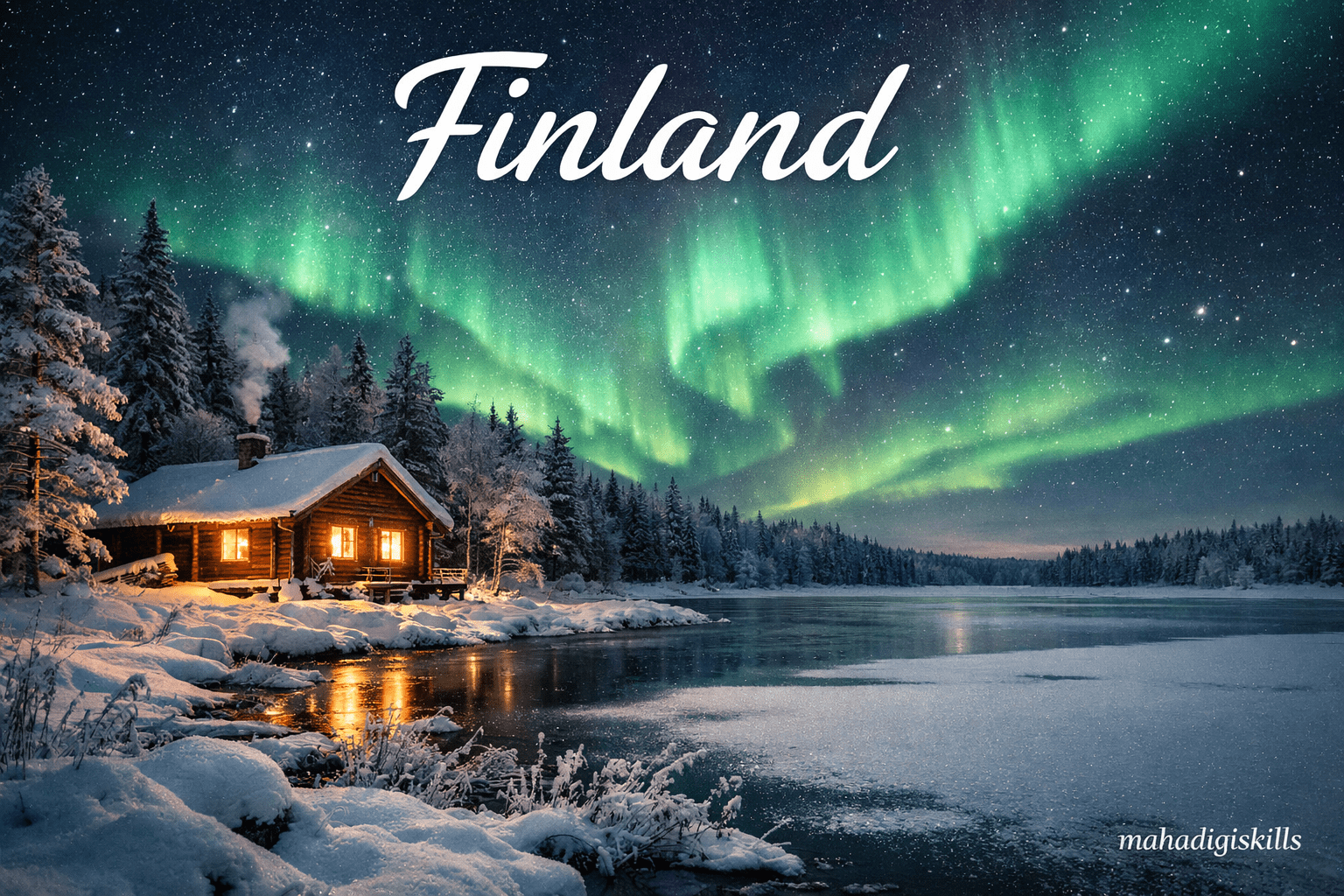
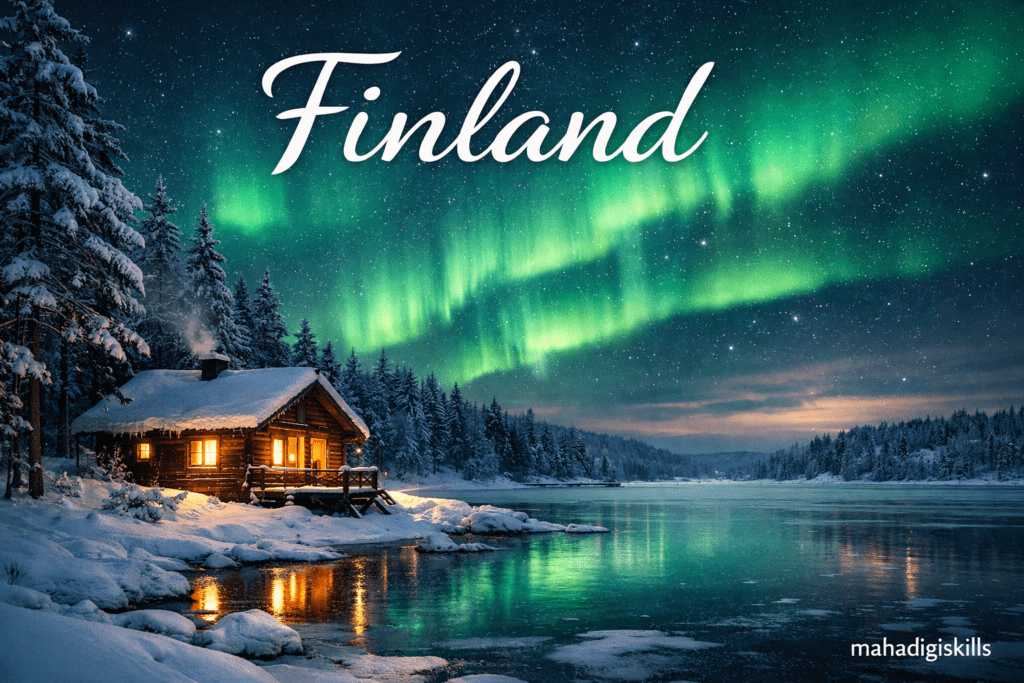
This Nordic country is often called the “Land of a Thousand Lakes,” although it actually has more than 188,000 lakes and over 170,000 islands. These natural wonders make Finland one of the most scenic nations in Europe. Visitors travel here to experience magical natural phenomena such as the Northern Lights (Aurora Borealis) and the Midnight Sun, where the sun remains visible even at midnight during summer months.
In addition to natural beauty, Finland offers rich cultural traditions, historic cities, unique architecture, and world-famous sauna culture. The capital city Helsinki is known for its modern design, waterfront scenery, and vibrant arts scene. Meanwhile, the Arctic region of Lapland attracts tourists looking for winter adventures, reindeer safaris, and Santa Claus Village.
Beyond tourism, Finland is also recognized globally for its innovation, technology sector, and sustainable development policies. It consistently ranks among the happiest countries in the world according to international studies. Strong democratic institutions, social welfare programs, and environmental conservation policies contribute to this reputation.
Whether someone is interested in nature, culture, history, or modern innovation, Finland offers a unique blend of tradition and progress that continues to attract travelers, researchers, and entrepreneurs from around the world.
History of Finland
Early History and Indigenous Culture
The earliest human settlements in Finland date back to around 9000 BC, shortly after the Ice Age glaciers retreated from Northern Europe. Archaeological discoveries suggest that early inhabitants survived through hunting, fishing, and gathering, taking advantage of the vast forests and lakes of the region.
The indigenous Sámi people, who still live in northern parts of the country, are among the earliest known cultural groups connected with Finland. The Sámi have maintained their own languages, traditions, clothing styles, and livelihoods for centuries. Reindeer herding remains a central part of Sámi culture today.
During ancient times, the territory was inhabited by Finno-Ugric tribes, whose languages were related to those spoken in parts of modern-day Estonia and Hungary.
Swedish Rule (12th–19th Century)
Beginning in the 12th century, Sweden gradually expanded its influence eastward, bringing Finland under Swedish control. This period lasted for nearly 700 years and had a major impact on the country’s political, cultural, and administrative development.
During Swedish rule:
- Christianity spread throughout the region.
- Swedish became an important administrative language.
- Trade networks developed across the Baltic Sea.
- Coastal towns such as Turku and Helsinki began to grow.
The Swedish legal and political system shaped many aspects of governance that still influence modern institutions.
Russian Empire Period
In 1809, after the Finnish War between Sweden and Russia, Finland became part of the Russian Empire as the Grand Duchy of Finland.
Despite being under Russian rule, the region retained a significant level of autonomy. The Finnish parliament and local administration continued to operate with relative independence.
During this period:
- National identity and cultural awareness grew stronger.
- Finnish language gained greater recognition.
- Literature and art celebrating national traditions flourished.
Independence and Nation Building
Finland declared independence from Russia on December 6, 1917, following the Russian Revolution. Soon afterward, the country experienced a civil war between socialist and conservative forces.
Although the conflict was short, it deeply influenced national politics. Eventually, Finland developed into a democratic republic with a strong parliamentary system.
During the 20th century, the country faced significant challenges, including conflicts with the Soviet Union during World War II. Despite these challenges, Finland maintained its sovereignty and gradually built a strong economy and stable political system.
Geography of Finland
Location and Borders
Finland is located in Northern Europe, forming part of the Nordic region alongside Sweden, Norway, Denmark, and Iceland.
Geographic Overview
- Continent: Europe
- Latitude & Longitude: Approximately 64°N, 26°E
- Total Area: Around 338,455 square kilometers
Neighboring Countries
Finland shares borders with:
- Sweden (west)
- Norway (north)
- Russia (east)
The southern coastline faces the Baltic Sea, which connects the country with Estonia and other Baltic nations.
Internal Link Example:
If you enjoy exploring European destinations, you might also like reading about Argentina’s landscapes and culture in our related travel guide.
Natural Landscapes
One of the defining features of Finland is its stunning natural environment. Approximately 75% of the country is covered by forests, making it one of the most forested nations in Europe.
Key natural features include:
- Vast boreal forests
- Thousands of lakes and rivers
- Arctic tundra landscapes
- Coastal archipelagos
The Finnish Lakeland region in central and eastern areas contains the highest concentration of lakes in Europe.
Climate
The climate of Finland is classified as cold temperate, strongly influenced by northern latitude.
Winter
- Long and snowy
- Temperatures often drop below -20°C in northern regions
- Ideal conditions for winter sports
Summer
- Mild and pleasant
- Long daylight hours
- Midnight Sun visible in Lapland
These seasonal variations make Finland attractive for both winter tourism and summer nature travel.
Culture and Traditions
Sauna Culture
Sauna culture is one of the most famous aspects of Finnish life. There are estimated to be over 3 million saunas in the country—more than the number of cars.
Traditional saunas play an important role in social life, relaxation, and health traditions. Many families visit saunas weekly, and they are commonly found in homes, apartments, and even offices.
UNESCO recognized Finnish sauna culture as an important element of intangible cultural heritage.
External reference:
Learn more at the UNESCO cultural heritage website
https://www.unesco.org
Religion
Religion in Finland is relatively diverse but historically dominated by Christianity.
Major religious affiliations include:
- Evangelical Lutheran Church
- Finnish Orthodox Church
- Smaller communities of Catholics, Muslims, and Jews
Modern society is largely secular, though traditional celebrations still reflect Christian heritage.
Festivals and Celebrations
Several national festivals highlight cultural traditions.
Midsummer Festival (Juhannus)
This celebration marks the longest day of the year and includes:
- Bonfires
- Lakeside gatherings
- Traditional music and food
Independence Day
Celebrated on December 6, Independence Day commemorates the nation’s independence in 1917. Events include official ceremonies, parades, and televised presidential receptions.
Music and Arts
Finland has produced many influential musicians, composers, and designers.
The classical composer Jean Sibelius helped shape national musical identity. Modern music scenes include rock, metal, and electronic genres, with Finnish bands gaining international popularity.
Design and architecture are also globally recognized, with famous brands and designers contributing to minimalist Nordic style.
Traditional Food
Finnish cuisine reflects local ingredients and seasonal traditions.
Popular dishes include:
- Karjalanpiirakka (Karelian pies)
- Salmon soup
- Rye bread
- Reindeer meat dishes
Wild berries such as lingonberries and cloudberries are widely used in desserts and jams.
Economy of Finland
Economic Overview
Finland has one of the most stable and advanced economies in Europe. The country combines a strong welfare system with a competitive free-market economy, creating high living standards and low levels of corruption.
The economy is highly industrialized and technology-driven, with strong contributions from manufacturing, digital innovation, forestry, and services. Over the past few decades, Finland has successfully transitioned from a resource-based economy to a knowledge-based economy supported by education, research, and innovation.
Several global reports consistently rank Finland among the most competitive economies in the world, thanks to its transparent governance, skilled workforce, and modern infrastructure.
Currency and Financial System
The official currency used in Finland is the Euro (€).
Before adopting the Euro in 2002, the country used the Finnish markka as its national currency. Joining the Eurozone strengthened Finland’s integration with the European economic system and improved trade relations with neighboring countries.
The financial sector is stable and well regulated. Major banks operate throughout the country, and digital payments are widely used in everyday life. Cashless transactions are extremely common in cities and rural areas alike.
Major Industries
Several industries play a key role in the economic success of Finland.
Technology and Innovation
Finland is widely known for its contributions to technology and telecommunications. The country became globally recognized through companies such as Nokia, which once dominated the mobile phone market.
Today, the technology sector includes:
- Software development
- Artificial intelligence research
- Gaming industry
- Telecommunications infrastructure
The Finnish gaming industry has produced globally successful companies responsible for popular mobile games.
Forestry and Paper Industry
Forests cover approximately three-quarters of Finland’s land area, making forestry one of the most traditional industries.
Major forestry products include:
- Paper and pulp
- Timber and wood products
- Bioenergy materials
Sustainable forest management is a national priority, ensuring that natural resources remain protected for future generations.
Manufacturing and Engineering
Finland also has a strong engineering and manufacturing sector.
Important industries include:
- Shipbuilding
- Machinery manufacturing
- Metal processing
- Industrial equipment production
Shipyards in coastal cities produce large cruise ships and icebreakers used around the world.
Clean Energy and Sustainability
Environmental sustainability is a major focus in Finland’s economic strategy.
Key developments include:
- Renewable energy technology
- Clean transportation systems
- Carbon-neutral development programs
The government aims to make Finland carbon neutral by 2035, one of the most ambitious climate targets globally.
Trade Partners
Finland relies heavily on international trade. Major export products include machinery, electronics, chemicals, paper products, and vehicles.
Main Export Partners
Key trade partners include:
- Germany
- Sweden
- United States
- Netherlands
- China
The country’s strategic location between Western Europe and Russia has historically supported international trade routes.
External economic data source:
World Bank Global Economy Database
https://www.worldbank.org
Languages of Finland
Official Languages
Finland has two official languages:
- Finnish
- Swedish
Finnish is spoken by the majority of the population, while Swedish is mainly used in coastal regions and among a smaller percentage of citizens.
Both languages are used in government administration, education, and official documentation.
Minority Languages
Several minority languages are also spoken in Finland.
Sámi Languages
The Sámi people, who live mainly in the northern region of Lapland, speak several Sámi languages. These languages are officially recognized and protected under Finnish law.
Other Languages
Due to immigration and globalization, additional languages spoken include:
- Russian
- Estonian
- English
- Arabic
English proficiency in Finland is among the highest in Europe, making communication easy for international visitors and travelers.
Finland in Global Organizations
Finland plays an active role in international diplomacy and global cooperation.
United Nations Membership
Finland became a member of the United Nations (UN) in 1955.
Since joining the UN, the country has contributed to peacekeeping missions, humanitarian aid programs, and international development initiatives.
Official UN information:
https://www.un.org
European Union
Finland joined the European Union in 1995, strengthening political and economic ties with other European nations.
EU membership allows Finland to participate in:
- Single market trade
- Shared environmental policies
- European security cooperation
Other International Organizations
Finland is also a member of several major international organizations, including:
- World Trade Organization (WTO)
- Organisation for Economic Co-operation and Development (OECD)
- Council of Europe
- Nordic Council
Through these institutions, Finland contributes to global economic development, environmental sustainability, and peacebuilding initiatives.
Major Cities of Finland
Helsinki – The Capital City
Helsinki is the capital and largest city of Finland. Located on the southern coast along the Baltic Sea, Helsinki serves as the country’s political, cultural, and economic center.
The city is known for:
- Modern architecture
- Beautiful seaside landscapes
- Design districts and museums
- Vibrant culinary scene
Important landmarks include Helsinki Cathedral, Suomenlinna Sea Fortress, and the Market Square.
Helsinki is also recognized as one of Europe’s most livable and sustainable cities.
Turku – Historic Cultural Center
Turku is the oldest city in Finland and was once the capital before Helsinki.
Located along the Aura River, Turku is famous for:
- Medieval architecture
- Turku Castle
- Historic cathedral
- Cultural festivals
The city plays an important role in education and maritime trade.
Tampere – Industrial Heritage City
Tampere is one of the largest inland cities in Finland and is often referred to as the “Manchester of the North.”
The city developed around industrial manufacturing during the 19th century and later transformed into a modern center for technology and education.
Highlights of Tampere include:
- Museums and cultural centers
- Lakeside scenery
- Vibrant student population
Oulu – Northern Technology Hub
Located in northern Finland, Oulu is known as a center for technology innovation and research.
The city has a strong reputation in:
- telecommunications research
- digital startups
- academic innovation
Oulu is also famous for its unique winter events and creative cultural scene.
Education System in Finland
Although this blog focuses on travel and geography, it is impossible to discuss Finland without mentioning its world-famous education system.
The education model emphasizes:
- equal access to learning
- minimal standardized testing
- teacher autonomy
- student well-being
Teachers are highly respected professionals, and most hold advanced university degrees.
The system has been widely studied by educators and policymakers worldwide.
Innovation and Technology Leadership
Finland has become a global leader in innovation.
Key factors behind this success include:
- strong investment in research and development
- collaboration between universities and companies
- government support for startups
The country consistently ranks high in global innovation indexes.
Major innovation hubs exist in cities like:
- Helsinki
- Espoo
- Tampere
- Oulu
Transportation Infrastructure
Transportation networks in Finland are efficient and modern.
Rail Network
The railway system connects major cities with comfortable high-speed trains.
Air Travel
Helsinki Airport serves as the main international gateway connecting Europe and Asia.
Road System
High-quality highways and road networks allow smooth travel across the country.
Tourist Attractions in Finland
Lapland – Arctic Wonderland
Lapland is one of the most famous regions in Finland and a dream destination for winter travelers. Located in the northernmost part of the country, Lapland offers breathtaking Arctic landscapes and unforgettable natural experiences.
Visitors come to Lapland to witness the Aurora Borealis (Northern Lights), one of the most spectacular natural phenomena in the world. During winter months, the sky often lights up with colorful waves of green, purple, and blue.
Popular activities in Lapland include:
- Reindeer sleigh rides
- Husky sledding adventures
- Snowmobile safaris
- Ice fishing
- Skiing and snowboarding
The town of Rovaniemi is widely known as the official hometown of Santa Claus, making it a magical destination for families during the Christmas season.
Helsinki – Modern Nordic Capital
The capital city of Finland offers a perfect combination of modern design, historic architecture, and seaside scenery.
Important attractions in Helsinki include:
Helsinki Cathedral
This iconic white cathedral sits in Senate Square and is one of the most recognizable landmarks in the country.
Suomenlinna Sea Fortress
A UNESCO World Heritage Site, Suomenlinna is a historic fortress built across several islands near Helsinki. It was originally constructed in the 18th century and now attracts thousands of visitors each year.
External UNESCO reference:
https://whc.unesco.org
Design District
Helsinki is known as a global design capital, with many galleries, boutiques, and museums showcasing modern Nordic design.
Finnish Lakeland
The Finnish Lakeland region is the largest lake district in Europe and one of the most scenic areas in Finland.
This region is famous for:
- Thousands of interconnected lakes
- Peaceful forests and national parks
- Traditional lakeside cottages
Many visitors choose to stay in wooden cabins and enjoy activities such as boating, swimming, hiking, and fishing during summer.
The tranquil atmosphere makes this region ideal for relaxation and nature tourism.
National Parks
Finland has over 40 national parks, protecting forests, wetlands, and Arctic landscapes.
Some popular parks include:
- Nuuksio National Park near Helsinki
- Koli National Park known for its scenic viewpoints
- Urho Kekkonen National Park in Lapland
These parks offer opportunities for hiking, wildlife watching, and camping.
Best Time to Visit Finland
The best time to visit Finland depends on the type of experience travelers want.
Winter (December – March)
Winter transforms the country into a snowy wonderland.
Reasons to visit during winter:
- Northern Lights viewing
- Christmas festivals
- Winter sports and skiing
- Arctic adventures
Temperatures can drop significantly, especially in northern regions.
Summer (June – August)
Summer is the warmest season and one of the most popular times for tourism.
Highlights include:
- The Midnight Sun, where daylight lasts almost 24 hours
- Outdoor festivals and cultural events
- Hiking and lake activities
Temperatures are generally mild and comfortable.
Autumn and Spring
These seasons offer fewer crowds and beautiful landscapes.
Autumn features colorful forests, while spring marks the return of wildlife and greenery after winter.
Traveling Around Finland
Public Transportation
Public transportation in Finland is efficient and reliable.
Major options include:
- High-speed trains connecting major cities
- Domestic flights to northern regions
- Long-distance buses
Helsinki also has an excellent metro, tram, and bus system.
Road Travel
Driving is another popular way to explore Finland, especially in rural regions and lake districts.
Road conditions are generally excellent, although winter driving requires caution due to snow and ice.
Unique and Interesting Facts About Finland
Finland has many fascinating characteristics that make it unique.
1. Happiest Country in the World
Finland has ranked first in the World Happiness Report multiple times, thanks to strong social systems and high quality of life.
2. Thousands of Lakes
The country has more than 188,000 lakes, making it one of the most water-rich nations in the world.
3. Sauna Capital
There are approximately three million saunas, meaning nearly every household has access to one.
4. Education Excellence
The Finnish education system is widely considered one of the best globally, emphasizing equality and creativity.
5. Northern Lights
Lapland is one of the best places on Earth to see the Aurora Borealis.
Finland and Global Cooperation
Finland plays an active role in global diplomacy and cooperation.
United Nations
Finland joined the United Nations in 1955 and actively contributes to peacekeeping and humanitarian initiatives.
Official UN reference:
https://www.un.org
International Cooperation
The country also participates in:
- European Union
- Nordic Council
- World Trade Organization
- OECD
These partnerships strengthen Finland’s role in international development and economic cooperation.
Final Summary
Finland stands out as one of the most remarkable countries in Northern Europe. Known for its breathtaking natural scenery, strong democratic institutions, innovative economy, and rich cultural traditions, the country continues to attract visitors from around the world.
From the vibrant capital of Helsinki to the magical Arctic landscapes of Lapland, Finland offers a diverse range of experiences. Travelers can explore historic cities, relax beside peaceful lakes, hike through national parks, or witness the mesmerizing Northern Lights.
Beyond tourism, Finland is admired for its commitment to sustainability, education, and technological advancement. Its strong social welfare system and high quality of life consistently place it among the most successful and happiest nations globally.
Whether visiting for adventure, culture, or relaxation, Finland provides an unforgettable travel experience that blends natural beauty with modern innovation.
Key Facts About Finland
| Category | Information |
|---|---|
| Official Name | Republic of Finland |
| Capital City | Helsinki |
| Continent | Europe |
| Population | Approximately 5.5 million |
| Area | 338,455 sq km |
| Official Languages | Finnish and Swedish |
| Currency | Euro (€) |
| Government | Parliamentary Republic |
| UN Membership | Joined in 1955 |
| Major Industries | Technology, forestry, manufacturing |
| Famous Natural Feature | Northern Lights |
List of All 195 Countries
- Afghanistan
- Albania
- Algeria
- Andorra
- Angola
- Antigua and Barbuda
- Argentina
- Armenia
- Australia
- Austria
- Azerbaijan
- Bahamas
- Bahrain
- Bangladesh
- Barbados
- Belarus
- Belgium
- Belize
- Benin
- Bhutan
- Bolivia
- Bosnia and Herzegovina
- Botswana
- Brazil
- Brunei
- Bulgaria
- Burkina Faso
- Burundi
- Cabo Verde
- Cambodia
- Cameroon
- Canada
- Central African Republic
- Chad
- Chile
- China
- Colombia
- Comoros
- Congo (Congo-Brazzaville)
- Costa Rica

