



Introduction
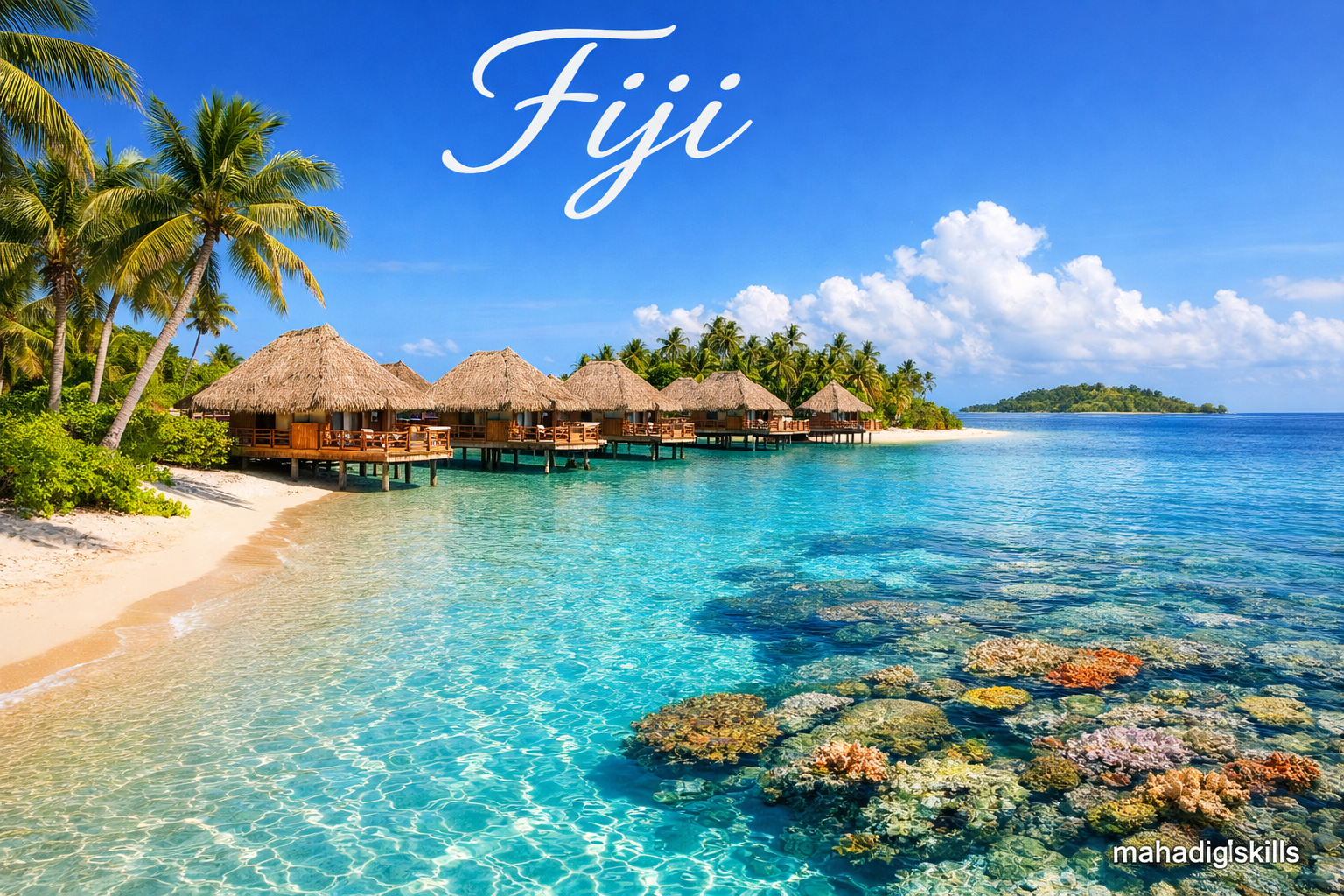
Fiji is a breathtaking island nation located in the South Pacific Ocean, known for its crystal-clear waters, tropical beaches, coral reefs, and welcoming culture. The country consists of more than 300 islands, many of which are covered in lush rainforests and surrounded by vibrant marine ecosystems.
Because of its stunning natural beauty and warm hospitality, Fiji has become one of the most popular travel destinations in the Pacific region. Travelers from around the world visit Fiji to enjoy activities such as snorkeling, diving, island hopping, and relaxing on white sand beaches.
Beyond tourism, Fiji has a fascinating cultural heritage influenced by Melanesian traditions, colonial history, and diverse communities. Modern Fiji blends traditional village life with growing urban centers and a developing economy.
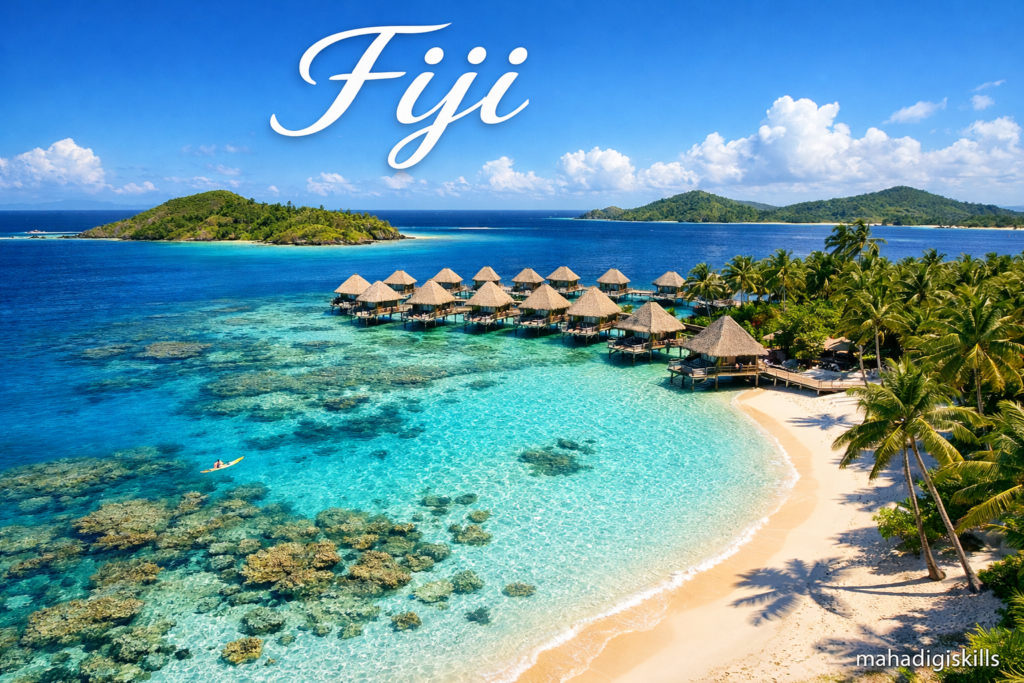
This guide explores the history, geography, culture, tourism, economy, and travel experiences that make Fiji one of the most remarkable island nations in the world.
Historical Background
The history of Fiji stretches back thousands of years and reflects influences from early Pacific civilizations, European explorers, and colonial administration.
Early Settlements
Archaeological research shows that the islands of Fiji were first settled around 3,500 years ago by Austronesian seafarers.
These early settlers developed:
- Fishing communities
- Agriculture based on root crops
- Maritime navigation traditions
Village life became the foundation of society across the islands.
Traditional Chiefdoms
Before European contact, Fiji was organized into tribal chiefdoms governed by powerful local leaders.
Communities built fortified villages and developed complex social structures based on family, clan, and hierarchy.
Inter-island trade and cultural exchange were common among these communities.
European Exploration
European explorers first reached Fiji during the 17th and 18th centuries.
The famous British navigator Captain James Cook sailed near the islands in 1774, and later explorers documented the region’s geography and culture.
European contact eventually brought missionaries, traders, and colonial influence.
British Colonial Period
In 1874, Fiji became a British colony.
During this period, the British introduced new economic systems and infrastructure. Workers from India were brought to the islands as indentured laborers to work on sugar plantations.
This migration significantly shaped Fiji’s cultural diversity.
Independence
Fiji gained independence from the United Kingdom in 1970.
Since independence, the country has developed its own political institutions and national identity while maintaining strong ties with the Commonwealth.
Geography of Fiji
The geography of Fiji is defined by volcanic islands, coral reefs, tropical forests, and warm ocean waters.
Location
Fiji is located in the South Pacific Ocean, northeast of New Zealand and east of Australia.
Geographic coordinates:
17.71° S latitude and 178.07° E longitude
Island Groups
Fiji consists of more than 300 islands, though only about one-third are permanently inhabited.
The two largest islands are:
- Viti Levu
- Vanua Levu
Most of the country’s population lives on these islands.
Other popular island groups include:
- Mamanuca Islands
- Yasawa Islands
- Lau Islands
These islands are famous for beaches, coral reefs, and tourism resorts.
Mountains and Forests
Many islands in Fiji were formed through volcanic activity.
Mountain ranges run across the interiors of major islands, creating dramatic landscapes and lush rainforests.
The highest mountain is Mount Tomanivi, located on Viti Levu.
Coral Reefs
Fiji is surrounded by one of the world’s most impressive coral reef systems.
These reefs support extraordinary marine biodiversity including:
- Tropical fish
- Sea turtles
- Sharks
- Coral gardens
Because of these ecosystems, Fiji is often called the “Soft Coral Capital of the World.”
Climate
The climate of Fiji is tropical, with warm temperatures throughout the year.
Wet Season
The wet season occurs from November to April.
This period brings higher rainfall and occasional tropical storms.
Dry Season
The dry season lasts from May to October and is considered the best time to visit Fiji.
During this time:
- Temperatures are pleasant
- Rainfall is lower
- Outdoor activities are easier to enjoy
Culture and Traditions
Culture in Fiji reflects a combination of indigenous traditions, colonial influence, and multicultural communities.
Indigenous Fijian Culture
Traditional Fijian society is built around village communities led by chiefs.
Respect, hospitality, and community cooperation are core cultural values.
Visitors often notice the friendly greeting “Bula!”, which means welcome or hello.
Traditional Ceremonies
Ceremonies play an important role in Fijian culture.
One of the most famous traditions is the kava ceremony, where a drink made from the kava root is shared among participants.
The ceremony symbolizes respect, friendship, and social connection.
Music and Dance
Music and dance are central elements of celebrations in Fiji.
Traditional performances include:
- Rhythmic chanting
- Storytelling through dance
- Drum-based musical performances
These traditions are often performed during festivals and village events.
Cuisine
Food in Fiji reflects both indigenous and multicultural influences.
Common ingredients include:
- Coconut
- Taro
- Cassava
- Seafood
- Tropical fruits
Popular dishes include kokoda (marinated fish), coconut-based curries, and grilled seafood.
Economy of Fiji
The economy of Fiji relies heavily on tourism, agriculture, and international trade.
Tourism Industry
Tourism is the largest contributor to the economy of Fiji.
Visitors travel from countries such as:
- Australia
- New Zealand
- United States
- Europe
Resorts, cruise tourism, and diving tourism play major roles in economic development.
Agriculture
Agriculture has historically been important to the economy.
Key agricultural products include:
- Sugarcane
- Coconut
- Taro
- Tropical fruits
Sugar production was once the primary export industry.
Manufacturing and Services
Other important economic sectors include:
- Manufacturing
- Financial services
- Telecommunications
Economic development continues to diversify the country’s industries.
External Source (DoFollow)
World Bank
https://www.worldbank.org
Major Cities of Fiji
Several cities serve as administrative, economic, and tourism centers in Fiji.
Suva – Capital City
Suva is the capital and largest city of Fiji.
Located on the island of Viti Levu, Suva is the political and administrative center of the country.
The city features:
- Government buildings
- Universities
- Museums
- Cultural institutions
Nadi
Nadi is one of the most important tourism gateways.
The city is home to Nadi International Airport, the main airport connecting Fiji with the rest of the world.
Nearby attractions include beaches, temples, and island resorts.
Lautoka
Lautoka is the second-largest city and is known as the “Sugar City” because of its historic sugar industry.
The city also serves as an important port and commercial center.
Tourism in Fiji
Tourism plays a central role in the economy of Fiji, attracting millions of visitors every year who come to experience its tropical landscapes, friendly culture, and world-class marine environments.
Travelers exploring Fiji often enjoy:
- White sand beaches
- Coral reef diving and snorkeling
- Island-hopping adventures
- Luxury resorts and eco-lodges
- Cultural village tours
Because of its warm hospitality and stunning natural beauty, Fiji has earned a reputation as one of the top tropical destinations in the South Pacific.
Major Tourist Attractions in Fiji
The islands of Fiji offer many destinations that combine natural beauty with cultural experiences.
Yasawa Islands
The Yasawa Islands are among the most famous destinations in Fiji.
These islands feature:
- Crystal-clear turquoise waters
- Dramatic volcanic cliffs
- Remote beaches
- Coral reef snorkeling
Many travelers visit the Yasawa Islands for peaceful island escapes and spectacular sunsets.
Mamanuca Islands
The Mamanuca Islands are located west of Viti Levu and are easily accessible from Nadi.
These islands are popular for:
- Luxury beach resorts
- Water sports
- Surfing locations
- Diving and snorkeling
Several international films have been filmed in this beautiful island group.
Coral Coast
The Coral Coast stretches along the southern shore of Viti Levu and offers beautiful beaches and resort areas.
Visitors to this region can enjoy:
- Beach resorts
- Coral reef snorkeling
- Cultural village visits
- Scenic coastal drives
The Coral Coast is one of the most developed tourism regions in Fiji.
Taveuni Island
Taveuni, often called the “Garden Island of Fiji,” is known for its lush rainforests and waterfalls.
Nature lovers travel here to explore:
- Bouma National Heritage Park
- Tropical bird habitats
- Rainforest hiking trails
- Waterfall landscapes
Taveuni is also a great destination for scuba diving.
National Parks and Natural Areas
Nature conservation is important in Fiji, and several protected areas showcase the country’s biodiversity.
Bouma National Heritage Park
Located on Taveuni Island, Bouma National Heritage Park protects rainforests, rivers, and waterfalls.
Visitors can explore:
- The Tavoro Waterfalls
- Rainforest hiking trails
- Birdwatching areas
- Traditional village communities
The park offers some of the most beautiful natural scenery in Fiji.
Sigatoka Sand Dunes National Park
Sigatoka Sand Dunes National Park is one of Fiji’s most unique landscapes.
The park contains:
- Ancient archaeological sites
- Coastal sand dunes
- Native plant ecosystems
It was the first national park established in Fiji.
Marine Life and Coral Reefs
Fiji is famous for its underwater ecosystems.
The coral reefs surrounding the islands support one of the richest marine environments in the world.
Diving and Snorkeling
Scuba diving is one of the most popular activities in Fiji.
Divers can explore:
- Coral gardens
- Reef sharks
- Sea turtles
- Colorful tropical fish
Because of the diversity of coral species, Fiji is often called the “Soft Coral Capital of the World.”
Great Astrolabe Reef
The Great Astrolabe Reef is one of the largest barrier reefs in the Pacific Ocean.
Located near Kadavu Island, this reef attracts divers and marine researchers from around the world.
Cultural Tourism in Fiji
Cultural tourism allows visitors to experience the traditions and daily life of local communities.
Traditional Villages
Many villages across Fiji welcome visitors who want to learn about local culture.
Visitors may experience:
- Traditional food preparation
- Storytelling and music
- Village ceremonies
- Community hospitality
Guests are usually welcomed with the greeting “Bula!”, symbolizing friendliness and warmth.
Kava Ceremony
The kava ceremony is one of the most important cultural traditions in Fiji.
During this ceremony:
- The kava drink is prepared from a plant root
- Participants sit in a circle
- The drink is shared as a sign of respect and friendship
Visitors who attend the ceremony gain deeper insight into local customs.
Adventure Activities
Beyond relaxing beaches, Fiji offers many adventurous outdoor experiences.
Surfing
Fiji is famous for its world-class surfing waves.
Popular surf locations include:
- Cloudbreak
- Restaurants surf break
- Namotu Island
These waves attract surfers from around the world.
Hiking
Several islands feature hiking trails through rainforests and mountains.
Popular hiking destinations include:
- Mount Tomanivi
- Taveuni Island forests
- National park trails
Hikers can enjoy scenic views of waterfalls and tropical landscapes.
Island Hopping
Island-hopping tours allow visitors to explore multiple islands during one trip.
Boat tours connect popular destinations such as:
- Yasawa Islands
- Mamanuca Islands
- Kadavu Island
Each island offers unique scenery and cultural experiences.
Transportation in Fiji
Traveling around Fiji involves a combination of air, sea, and road transportation.
Air Travel
The main international gateway is Nadi International Airport, which connects Fiji with major cities around the world.
Domestic flights also connect many of the smaller islands.
Ferry Services
Ferries operate between major islands and are widely used by both residents and tourists.
These routes allow travelers to reach remote island resorts and communities.
Road Transportation
On the main islands, buses and taxis provide transportation between towns and villages.
Rental cars are also available for visitors who want to explore independently.
Best Time to Visit Fiji
Choosing the best time to visit Fiji depends on weather conditions and travel preferences.
Dry Season (May – October)
The dry season is considered the best time to visit Fiji.
During this period:
- Weather is cooler and more comfortable
- Rainfall is minimal
- Conditions are ideal for beach activities
Many tourists visit during this season.
Wet Season (November – April)
The wet season brings warmer temperatures and occasional tropical storms.
Advantages of visiting during this time include:
- Fewer tourists
- Lower travel prices
- Lush green landscapes
However, travelers should monitor weather conditions.
Festival Season
Visitors interested in cultural experiences may plan travel around major festivals and celebrations.
Events often include:
- Traditional dances
- Music performances
- Food celebrations
These events highlight the vibrant cultural life of Fiji.
Languages in Fiji
Language diversity is an important part of life in Fiji, reflecting the country’s multicultural history and international connections.
Official Languages
The three official languages of Fiji are:
- English
- Fijian (iTaukei)
- Fiji Hindi
English is widely used in government, education, tourism, and business. It also serves as the primary language for communication between different communities.
Fijian is spoken by indigenous Fijian communities and is deeply connected to traditional culture and village life.
Fiji Hindi developed among the Indo-Fijian community and remains widely used in everyday communication.
Regional Dialects
Across the islands of Fiji, several local dialects exist within the Fijian language family.
Different island communities have developed their own linguistic variations, reflecting geographic and cultural diversity.
Despite these differences, most residents understand the standard Fijian language.
Society and Population
The population of Fiji is approximately 900,000 people.
The society of Fiji is known for its cultural diversity and community-centered traditions.
Ethnic Communities
Fiji’s population includes several cultural groups:
- Indigenous iTaukei Fijians
- Indo-Fijians (descendants of Indian workers brought during the colonial era)
- Smaller communities of Chinese, European, and Pacific Island heritage
This diversity contributes to the country’s unique cultural identity.
Community Life
Village life remains an important part of society in Fiji.
Traditional villages are organized around community leadership structures where chiefs and elders play important roles in decision-making and cultural preservation.
Community events, festivals, and ceremonies often bring residents together.
Economy of Fiji
The economy of Fiji is one of the most developed in the Pacific island region.
Several sectors contribute to national income and employment.
Tourism Industry
Tourism is the largest economic sector in Fiji.
Visitors arrive primarily from:
- Australia
- New Zealand
- United States
- Europe
- Asia
Luxury resorts, cruise tourism, diving tourism, and eco-tourism are major contributors to economic growth.
Agriculture
Agriculture remains an important economic activity, particularly in rural areas.
Major agricultural products include:
- Sugarcane
- Coconut
- Taro
- Cassava
- Tropical fruits
Sugar exports have historically played a significant role in the national economy.
Manufacturing and Services
Other important sectors include:
- Food processing
- Textile manufacturing
- Financial services
- Telecommunications
Economic development efforts continue to diversify industries across Fiji.
External Source (DoFollow)
World Bank
https://www.worldbank.org
Trade Partners
Fiji maintains trade relationships with many countries around the world.
Major trading partners include:
- Australia
- New Zealand
- United States
- China
- Japan
Exports include agricultural products, bottled water, fish, and manufactured goods.
Fiji in International Organizations
Fiji actively participates in global and regional organizations that promote cooperation and development.
United Nations Membership
Fiji became a member of the United Nations in 1970, the same year the country gained independence.
Participation in the United Nations allows Fiji to contribute to international initiatives related to:
- Climate change
- Sustainable development
- Peacekeeping missions
- Environmental protection
External Source (DoFollow)
United Nations
https://www.un.org/en/member-states
Regional Organizations
Fiji is also part of several regional groups including:
- Pacific Islands Forum
- Commonwealth of Nations
- Asian Development Bank
These organizations support economic development and regional cooperation across the Pacific.
Interesting Facts About Fiji
Several unique facts make Fiji one of the most fascinating island nations in the world.
More Than 300 Islands
Fiji consists of over 300 islands, though only about one-third are inhabited.
Each island offers different landscapes, cultures, and natural attractions.
Soft Coral Capital of the World
Because of its vibrant marine ecosystems, Fiji is often called the Soft Coral Capital of the World by divers and marine scientists.
Traditional Greeting “Bula”
The word “Bula” is the traditional greeting in Fiji.
It means hello, welcome, and good wishes, reflecting the friendly nature of the local people.
Rugby Passion
Rugby is the most popular sport in Fiji.
The national rugby team has achieved international success, especially in rugby sevens competitions.
World-Famous Bottled Water
Fiji is internationally known for Fiji Water, a bottled water brand exported to many countries.
Travel Tips for Visiting Fiji
Traveling to Fiji is generally easy and comfortable for international visitors.
Entry Requirements
Most visitors entering Fiji need:
- A valid passport
- A return travel ticket
- Visa depending on nationality
Many countries receive visa-free entry for short stays.
Cultural Etiquette
Visitors should respect local traditions and customs.
Helpful etiquette includes:
- Dressing modestly when visiting villages
- Removing hats in traditional ceremonies
- Asking permission before photographing people
These gestures show respect for local culture.
Transportation Advice
Travel around Fiji usually involves:
- Domestic flights between islands
- Ferries and boat transfers
- Buses and taxis on larger islands
Island resorts often arrange transportation for guests.
Internal Links (SEO)
To improve your website’s SEO structure, connect this article to related travel blogs such as:
Internal links help search engines understand relationships between content pages.
Final Summary
Fiji is one of the most beautiful island nations in the South Pacific, offering travelers a combination of tropical landscapes, rich cultural traditions, and welcoming communities.
From the bustling capital of Suva to the peaceful beaches of the Yasawa and Mamanuca Islands, Fiji provides unforgettable travel experiences. Coral reefs, rainforests, waterfalls, and traditional villages create a diverse environment that appeals to adventure seekers and relaxation travelers alike.
Beyond tourism, Fiji plays an important role in regional cooperation and global environmental initiatives. Its vibrant culture, friendly people, and extraordinary natural beauty continue to attract visitors from around the world.
For those seeking a tropical destination filled with culture, adventure, and relaxation, Fiji remains one of the most remarkable places to explore.
Key Facts About Fiji
| Category | Information |
|---|---|
| Capital | Suva |
| Continent | Oceania |
| Population | ~900,000 |
| Official Languages | English, Fijian, Fiji Hindi |
| Currency | Fijian Dollar (FJD) |
| Independence | 1970 |
| Major Islands | Viti Levu, Vanua Levu |
| Major Cities | Suva, Nadi, Lautoka |
| Ocean | South Pacific Ocean |
| UN Membership | 1970 |
List of All 195 Countries
- Afghanistan
- Albania
- Algeria
- Andorra
- Angola
- Antigua and Barbuda
- Argentina
- Armenia
- Australia
- Austria
- Azerbaijan
- Bahamas
- Bahrain
- Bangladesh
- Barbados
- Belarus
- Belgium
- Belize
- Benin
- Bhutan
- Bolivia
- Bosnia and Herzegovina
- Botswana
- Brazil
- Brunei
- Bulgaria
- Burkina Faso
- Burundi
- Cabo Verde
- Cambodia
- Cameroon
- Canada
- Central African Republic
- Chad
- Chile
- China
- Colombia
- Comoros
- Congo (Congo-Brazzaville)
- Costa Rica

