



Introduction
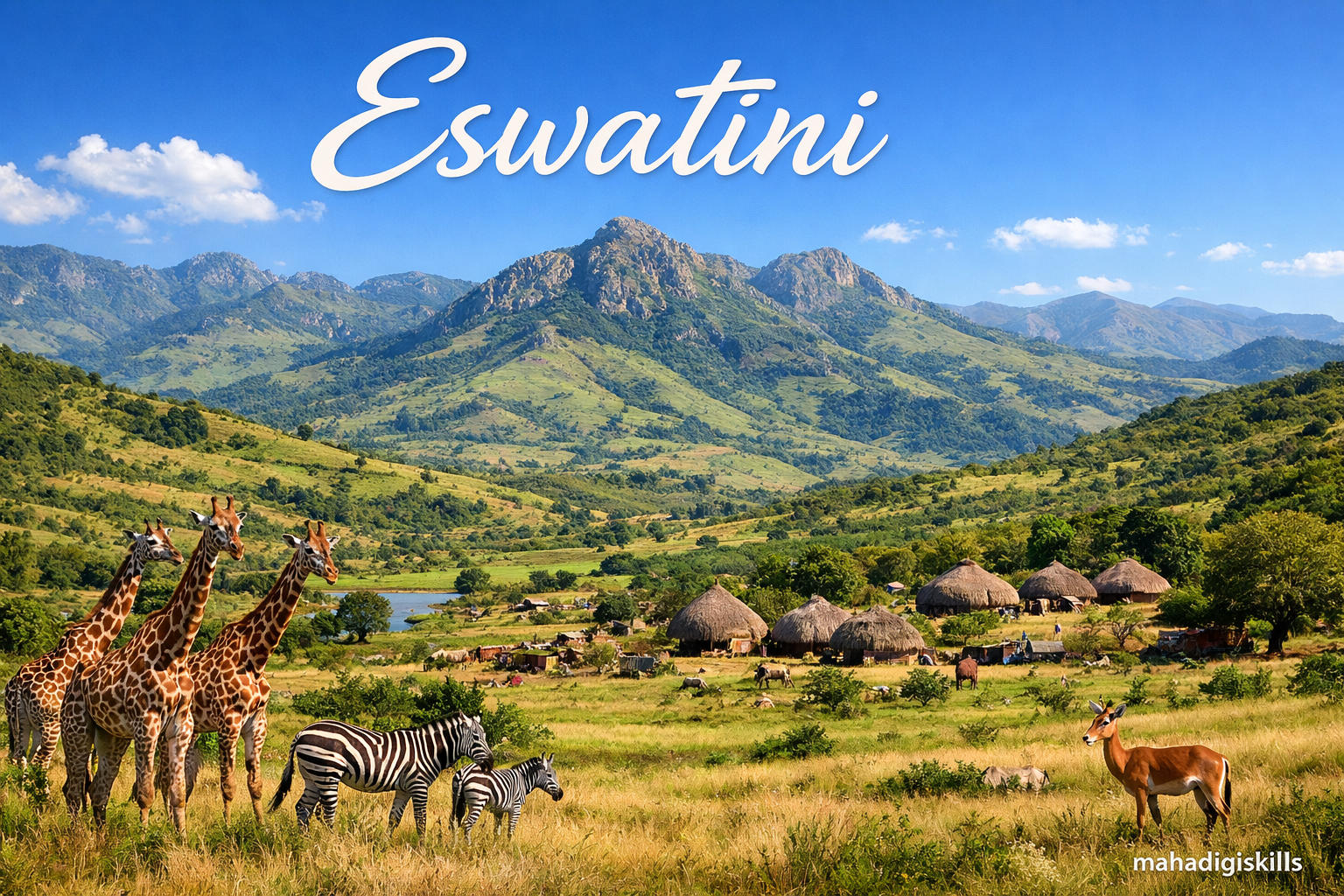
Eswatini is a small yet culturally rich country located in Southern Africa, known for its stunning mountain landscapes, vibrant traditions, and strong cultural identity. Surrounded by South Africa and Mozambique, the kingdom offers visitors a fascinating blend of wildlife, heritage, and natural beauty.
Despite its modest size, Eswatini has a long and unique history shaped by traditional leadership, regional trade, and colonial influence. Today the country maintains strong cultural traditions while also participating in modern economic and global systems.
Travelers who explore Eswatini often discover a destination filled with national parks, cultural festivals, traditional villages, and scenic valleys. From the vibrant markets of Mbabane to the wildlife reserves of Hlane Royal National Park, the country provides memorable experiences for visitors interested in culture, nature, and adventure.
This guide explores the history, geography, culture, economy, tourism, and travel opportunities available across Eswatini.
Historical Background
The history of Eswatini is closely tied to the development of the Swazi people and their traditional monarchy.
Early Settlements
The earliest communities in the region that is now Eswatini lived through agriculture, livestock farming, and trade. Archaeological evidence suggests that Bantu-speaking groups settled in the area several centuries ago.
These early communities developed social structures based on clan systems and agricultural livelihoods.
Formation of the Swazi Kingdom
The modern state of Eswatini traces its origins to the 18th and 19th centuries, when the Swazi nation was unified under powerful kings.
One of the most influential rulers was King Mswati II, who expanded the kingdom’s territory and strengthened its political structure. The country’s current name, Eswatini, honors this historic leader.
During this period, the kingdom developed strong cultural traditions, including royal ceremonies and clan-based social systems.
Colonial Era
During the late nineteenth century, European colonial influence reached the region.
The territory eventually became a British protectorate known as Swaziland. Although the monarchy remained influential, colonial authorities oversaw administration and foreign relations.
Independence
Eswatini gained independence from Britain in 1968.
Following independence, the country continued to maintain its monarchy and traditional governance system while developing national institutions.
Name Change to Eswatini
In 2018, the country officially changed its name from Swaziland to Eswatini, which means “Land of the Swazis.”
The change was announced during celebrations marking the 50th anniversary of independence.
Geography of Eswatini
Eswatini’s geography is diverse, featuring mountains, valleys, savannas, and rivers despite the country’s relatively small size.
Location
Eswatini is located in Southern Africa.
Geographic coordinates:
26.5° S latitude and 31.5° E longitude
Neighboring Countries
Eswatini shares borders with:
- South Africa to the north, west, and south
- Mozambique to the east
Its location places it near several important regional trade routes.
Physical Regions
The country is divided into several geographical regions based on altitude and climate.
These include:
Highveld
The Highveld region is mountainous and cooler than other parts of the country. It contains forests, rivers, and scenic valleys.
Middleveld
The Middleveld is known for agriculture and rolling hills. Many farms and rural communities are located here.
Lowveld
The Lowveld is warmer and drier, characterized by savanna landscapes and wildlife reserves.
Lubombo Plateau
Along the eastern border lies the Lubombo mountain range, which forms a natural boundary with Mozambique.
Climate
Eswatini experiences a subtropical climate with noticeable seasonal differences.
Summer
Summer occurs between October and March and is usually warm with occasional rainfall.
Temperatures often range between 25°C and 35°C in lower regions.
Winter
Winter lasts from May to August and brings cooler, drier conditions.
Mountain areas can experience chilly mornings and evenings.
Culture and Traditions
The culture of Eswatini is deeply rooted in traditional customs, ceremonies, and royal heritage.
Monarchy and Cultural Identity
Eswatini is one of the few remaining absolute monarchies in the world.
The king plays an important role in national traditions and governance.
Traditional leadership structures continue to influence social life and community organization.
Traditional Festivals
Two of the most famous cultural events in Eswatini attract visitors from around the world.
Umhlanga Reed Dance
The Umhlanga ceremony, also known as the Reed Dance, is one of the largest cultural celebrations in Africa.
Thousands of young women participate in this annual festival honoring the queen mother and celebrating cultural heritage.
Incwala Ceremony
The Incwala ceremony is another important traditional ritual associated with kingship and national unity.
This sacred event marks the renewal of the nation and involves traditional dances, songs, and ceremonies.
Traditional Food
Cuisine in Eswatini reflects agricultural traditions and local ingredients.
Common dishes include:
- Maize porridge (pap)
- Grilled meat
- Beans and vegetables
- Pumpkin dishes
Food often plays an important role in community gatherings and celebrations.
Economy of Eswatini
The economy of Eswatini relies on agriculture, manufacturing, and regional trade.
Major Industries
Important industries include:
- Agriculture
- Sugar production
- Textiles and manufacturing
- Forestry
- Tourism
Sugar production is one of the country’s largest export industries.
Currency
The official currency of Eswatini is the Swazi Lilangeni (SZL).
The currency is closely linked to the South African Rand, which is also widely accepted in the country.
Trade Partners
Major trade partners include:
- South Africa
- United States
- European Union countries
Regional trade agreements help support economic growth.
External Source (DoFollow)
World Bank
https://www.worldbank.org
Major Cities of Eswatini
Although the country is relatively small, several cities serve important roles in administration and commerce.
Mbabane – Capital City
Mbabane is the administrative capital of Eswatini.
The city is located in the Highveld region and serves as the center of government offices, shopping centers, and business activity.
Lobamba – Royal and Legislative Capital
Lobamba is the traditional and legislative capital.
Important national institutions and royal residences are located here.
Many cultural ceremonies take place in Lobamba.
Manzini – Economic Hub
Manzini is the largest city and commercial center of Eswatini.
Markets, transportation hubs, and industrial activities are concentrated in this area.
Tourism in Eswatini
Tourism in Eswatini offers visitors a unique combination of wildlife experiences, cultural traditions, and scenic landscapes. Despite being one of Africa’s smaller countries, the kingdom provides a rich variety of travel destinations.
Visitors exploring Eswatini often enjoy:
- Wildlife safaris
- Traditional cultural festivals
- Scenic mountain landscapes
- Local craft markets
- Rural village experiences
Because of its compact size, travelers can easily explore many parts of the country within a short time.
Major Tourist Attractions in Eswatini
The country features several remarkable destinations that highlight both natural beauty and cultural heritage.
Hlane Royal National Park
Hlane Royal National Park is the largest protected wildlife area in Eswatini.
The park was once a royal hunting ground but has been transformed into a conservation area protecting many species.
Visitors to Hlane Royal National Park can see:
- Lions
- Elephants
- White rhinos
- Antelope species
- Diverse birdlife
Guided safari drives and walking tours provide opportunities to observe wildlife in their natural habitat.
Mlilwane Wildlife Sanctuary
Mlilwane Wildlife Sanctuary is one of the oldest conservation areas in Eswatini and a popular destination for nature lovers.
The sanctuary offers activities such as:
- Hiking trails
- Mountain biking
- Horseback safaris
- Wildlife observation
Animals in the sanctuary include zebras, wildebeest, and impalas.
Because predators are absent in most areas, visitors can safely explore the park on foot or bicycle.
Malolotja Nature Reserve
Malolotja Nature Reserve is located in the Highveld region and is known for its dramatic mountain landscapes.
This protected area features:
- Deep valleys
- Waterfalls
- Forested hills
- Rare plant species
Malolotja is also home to the Malolotja Canopy Tour, where visitors can zip-line through forest valleys.
Mantenga Cultural Village
Mantenga Cultural Village provides an immersive experience into the traditional lifestyle of Eswatini.
The village demonstrates:
- Traditional Swazi architecture
- Cultural dances
- Historical storytelling
- Local customs and crafts
Visitors gain insight into the cultural heritage and daily life of rural communities.
Ngwenya Glass Factory
Ngwenya Glass Factory is a famous craft center where artisans produce handmade glass items using recycled materials.
Visitors can watch craftsmen creating:
- Decorative glass sculptures
- Glassware
- Artistic souvenirs
The factory is also known for promoting environmentally sustainable production.
Natural Landscapes
One of the most impressive features of Eswatini is its diverse natural environment.
Mountain Scenery
The Highveld region offers spectacular mountain scenery with forests, rivers, and waterfalls.
These landscapes provide excellent opportunities for:
- Hiking
- Photography
- Birdwatching
Mountain viewpoints reveal sweeping views of valleys and distant hills.
Savanna Landscapes
The Lowveld region contains savanna ecosystems where many wildlife reserves are located.
Typical features include:
- Grasslands
- Acacia trees
- Wildlife habitats
These areas are ideal for safari experiences.
Rivers and Waterfalls
Several rivers flow through Eswatini, creating scenic valleys and waterfalls.
Some popular waterfall locations are found in Malolotja Nature Reserve and surrounding mountain areas.
Cultural Tourism
Cultural tourism is an important part of the travel experience in Eswatini.
Visitors often travel to the country to learn about its unique traditions and ceremonies.
Reed Dance Festival
The Umhlanga Reed Dance is one of the most famous cultural events in Eswatini.
Thousands of young women participate in traditional dance ceremonies celebrating cultural identity and honoring the queen mother.
The event attracts visitors and photographers from around the world.
Traditional Crafts
Local artisans produce a variety of handmade crafts.
Popular craft items include:
- Handwoven baskets
- Wooden carvings
- Beaded jewelry
- Traditional textiles
Markets and craft centers across Eswatini showcase these unique cultural products.
Transportation in Eswatini
Traveling within Eswatini is relatively easy due to its small geographic size and road network.
Road Travel
Most visitors travel around Eswatini by road.
Major highways connect cities such as:
- Mbabane
- Manzini
- Lobamba
Rental cars and taxis are commonly used for transportation.
Bus Services
Public buses and minibuses operate between major towns and villages.
These services provide affordable transportation for both locals and tourists.
International Access
The main airport serving the country is King Mswati III International Airport, located near the eastern border.
Travelers can also reach Eswatini via road connections from South Africa and Mozambique.
Best Time to Visit Eswatini
The best time to visit Eswatini depends on travel interests and weather preferences.
Dry Season (May – September)
The dry season is considered the best time for wildlife viewing.
During this period:
- Vegetation is thinner
- Animals gather around water sources
- Temperatures are comfortable
This season is ideal for safaris and outdoor activities.
Wet Season (October – April)
The wet season brings greener landscapes and occasional rain showers.
Advantages of traveling during this period include:
- Beautiful scenery
- Fewer tourists
- Active birdlife
Photographers often enjoy the vibrant landscapes during this season.
Cultural Festival Periods
Visitors interested in cultural events may plan travel around major festivals such as:
- Umhlanga Reed Dance
- Incwala Ceremony
These celebrations provide unforgettable cultural experiences.
Languages in Eswatini
Language is an important part of cultural identity in Eswatini. The country recognizes multiple languages used in government, education, and everyday communication.
Official Languages
The two official languages of Eswatini are:
- Swati (siSwati)
- English
SiSwati is widely spoken across the country and is closely connected to traditional culture and daily life. English is commonly used in administration, education, and international business.
Regional and Community Languages
While siSwati and English dominate communication, people in Eswatini may also understand or speak neighboring regional languages due to trade and migration.
These languages include:
- Zulu
- Tsonga
- Portuguese (near the Mozambique border)
Language diversity reflects the country’s connections with neighboring regions in Southern Africa.
Population and Society
The population of Eswatini is estimated at around 1.2 million people. Despite its small population, the country maintains a strong cultural identity and social structure based on family and community traditions.
Languages in Eswatini
Language is an important part of cultural identity in Eswatini. The country recognizes multiple languages used in government, education, and everyday communication.
Official Languages
The two official languages of Eswatini are:
- Swati (siSwati)
- English
SiSwati is widely spoken across the country and is closely connected to traditional culture and daily life. English is commonly used in administration, education, and international business.
Regional and Community Languages
While siSwati and English dominate communication, people in Eswatini may also understand or speak neighboring regional languages due to trade and migration.
These languages include:
- Zulu
- Tsonga
- Portuguese (near the Mozambique border)
Language diversity reflects the country’s connections with neighboring regions in Southern Africa.
Population and Society
The population of Eswatini is estimated at around 1.2 million people. Despite its small population, the country maintains a strong cultural identity and social structure based on family and community traditions.
Ethnic Composition
The majority of the population belongs to the Swazi ethnic group, whose traditions form the foundation of national culture.
Other smaller communities also live within the country, contributing to social diversity and economic activity.
Rural and Urban Communities
Many people in Eswatini live in rural areas, where agriculture and livestock farming remain important sources of livelihood.
Urban centers such as Mbabane and Manzini are growing rapidly due to economic development and migration from rural communities.
Economy and Trade
The economy of Eswatini is closely connected to regional trade networks in Southern Africa.
Major Economic Sectors
Key sectors supporting economic activity include:
- Agriculture
- Sugar production
- Manufacturing
- Forestry
- Tourism
Sugar exports represent one of the most significant contributions to national income.
Trade Partnerships
Eswatini maintains strong trade relationships with several countries.
Major partners include:
- South Africa
- United States
- European Union nations
- Mozambique
Regional trade agreements within Southern Africa support economic cooperation and development.
External Source (DoFollow)
World Bank
https://www.worldbank.org
Eswatini in International Organizations
Eswatini participates in several international and regional organizations that promote cooperation, development, and diplomacy.
United Nations Membership
Eswatini joined the United Nations in 1968, the same year it gained independence.
Membership enables participation in global discussions related to:
- Economic development
- Environmental protection
- Human rights
- International peace and security
External Source (DoFollow)
United Nations
https://www.un.org/en/member-states
African Union
Eswatini is also a member of the African Union (AU), which promotes political cooperation and economic development across the African continent.
Southern African Development Community
The country participates in the Southern African Development Community (SADC), a regional organization that encourages trade integration and economic collaboration.
Unique and Interesting Facts About Eswatini
Several fascinating facts make Eswatini one of the most unique countries in Africa.
One of the World’s Last Absolute Monarchies
Eswatini is one of the few countries where an absolute monarchy still exists.
The king plays a central role in both traditional culture and political leadership.
Former Name Swaziland
The country was known as Swaziland until 2018, when the official name changed to Eswatini.
The new name reflects the local language and cultural identity.
Rich Cultural Ceremonies
Eswatini is famous for large traditional ceremonies such as:
- Umhlanga Reed Dance
- Incwala Kingship Ceremony
These events celebrate national unity and cultural heritage.
Diverse Landscapes
Despite its small size, Eswatini contains four different geographical regions, ranging from mountains to savannas.
This diversity supports rich wildlife and scenic beauty.
Strong Craft Traditions
Handmade crafts remain an important part of the economy and cultural expression.
Popular crafts include:
- Basket weaving
- Wood carving
- Glass art
- Beaded jewelry
Travel Tips for Visitors
Travelers planning to visit Eswatini should consider several helpful tips to ensure a comfortable experience.
Entry Requirements
Visitors generally need:
- A valid passport
- Visa depending on nationality
Travelers are encouraged to check official visa regulations before arrival.
Cultural Respect
Visitors should respect traditional customs and ceremonies.
Helpful etiquette includes:
- Dressing modestly in rural areas
- Asking permission before taking photographs
- Respecting cultural events and traditions
Transportation Advice
Most visitors explore Eswatini by car because the country’s road network connects major cities and parks.
Travelers can use:
- Rental vehicles
- Tour operators
- Regional buses
Planning transportation in advance is recommended when visiting wildlife reserves.
Internal Links (SEO)
For strong SEO structure, link this article with related country blogs such as:
Internal linking improves search engine understanding of your website structure.
Final Summary
Eswatini is a fascinating country in Southern Africa known for its rich cultural traditions, diverse landscapes, and unique monarchy. Although small in size, the kingdom offers visitors an impressive range of experiences including wildlife safaris, mountain scenery, and vibrant festivals.
Cities such as Mbabane, Manzini, and Lobamba provide insight into both modern life and traditional heritage. Wildlife reserves like Hlane Royal National Park and Mlilwane Wildlife Sanctuary highlight the country’s natural beauty and conservation efforts.
Beyond tourism, Eswatini maintains strong cultural identity through ceremonies, crafts, and community traditions that have been preserved for generations.
For travelers seeking an authentic African experience combining culture, nature, and history, Eswatini offers a unique and memorable destination.
Key Facts About Eswatini
| Category | Information |
|---|---|
| Capital | Mbabane (administrative) |
| Legislative Capital | Lobamba |
| Continent | Africa |
| Population | ~1.2 million |
| Official Languages | siSwati, English |
| Currency | Swazi Lilangeni (SZL) |
| Independence | 1968 |
| Former Name | Swaziland |
| Major Cities | Mbabane, Manzini, Lobamba |
| Region | Southern Africa |

