



Introduction
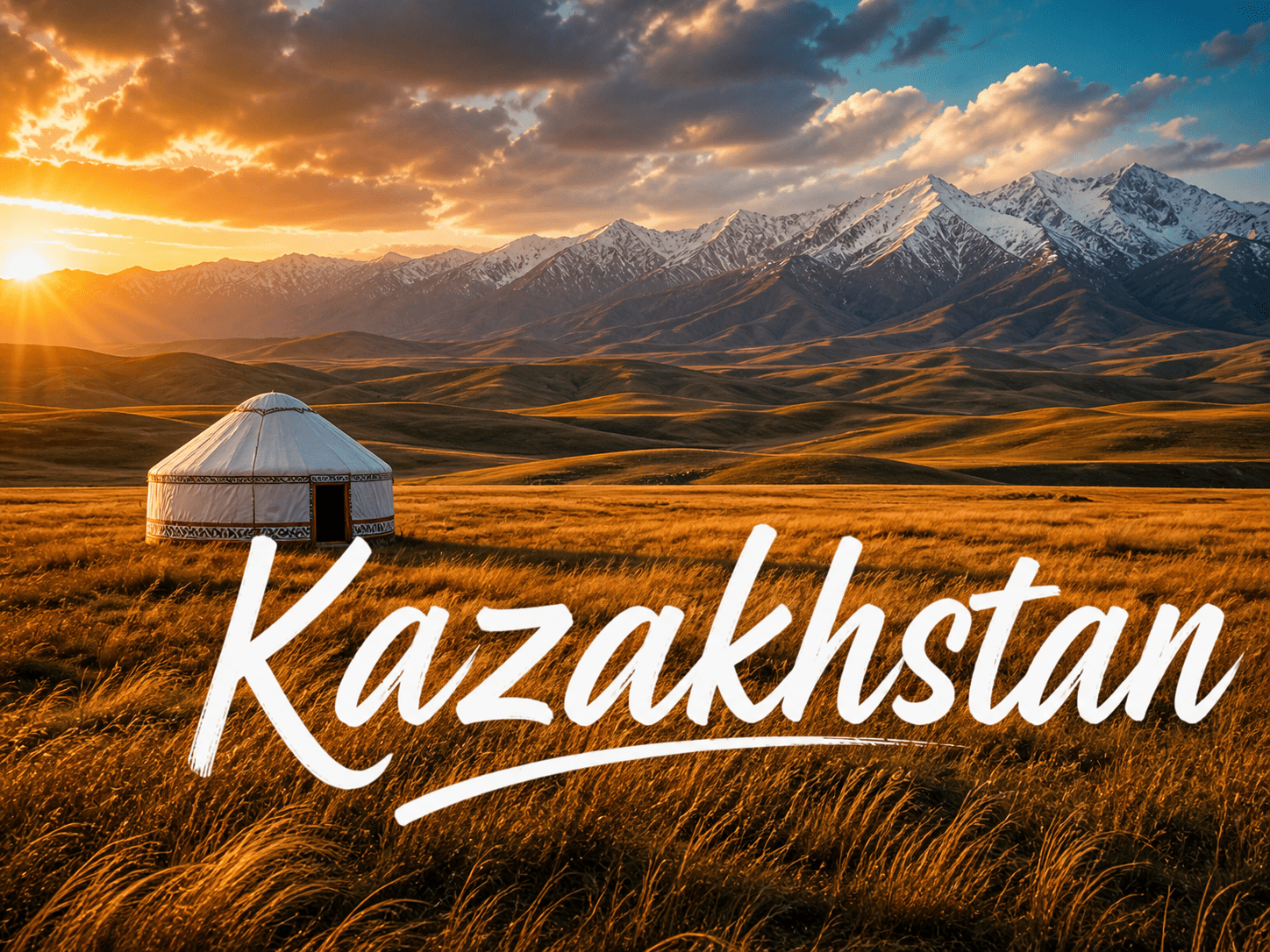
Kazakhstan is the largest landlocked country in the world, located in Central Asia. Known for its vast steppes, mountain ranges, and modern cities, Kazakhstan offers a unique mix of natural beauty and rapid development.
Travelers exploring Kazakhstan discover a land where ancient nomadic traditions meet futuristic skylines. From endless grasslands to vibrant urban centers, Kazakhstan is one of the most geographically diverse countries in Asia.
🏛 History of Kazakhstan
Ancient Nomadic Roots
The early history of Kazakhstan is deeply connected to nomadic tribes who moved across the Eurasian steppe. These tribes shaped the cultural identity of Kazakhstan for centuries.
Silk Road Influence
Kazakhstan played an important role in the Silk Road trade route, connecting Europe and Asia. Cities in Kazakhstan became key trade and cultural exchange points.
Mongol and Imperial Era
During the 13th century, Kazakhstan became part of the Mongol Empire under Genghis Khan. Later, it came under Russian influence, which shaped modern development in Kazakhstan.
Independence of Kazakhstan
In 1991, Kazakhstan gained independence after the dissolution of the Soviet Union, becoming a sovereign nation with rapid modernization.
🌍 Geography of Kazakhstan
Location and Coordinates
Kazakhstan is located in Central Asia and partly in Eastern Europe.
- Coordinates: 48.0196° N, 66.9237° E
- Continent: Asia (partly Europe)
Neighboring Countries
Kazakhstan shares borders with:
- Russia
- China
- Kyrgyzstan
- Uzbekistan
- Turkmenistan
Landscape of Kazakhstan
The geography of Kazakhstan includes:
- Vast steppes
- Mountains
- Deserts
- Lakes
The diversity of landscapes makes Kazakhstan unique.
Climate
Kazakhstan has a continental climate:
- Cold winters
- Hot summers
- Low rainfall
🎭 Culture of Kazakhstan
Traditions and Lifestyle
Culture in Kazakhstan is strongly influenced by nomadic traditions. Hospitality is a core value in Kazakhstan, and guests are treated with great respect.
Religion
Religion in Kazakhstan is diverse:
- Islam
- Christianity
Festivals and Celebrations
Festivals in Kazakhstan include:
- Nauryz (New Year celebration)
- Independence Day
Nomadic Heritage
Traditional nomadic life still influences culture in Kazakhstan, especially in rural areas.
Food Culture of Kazakhstan
Cuisine in Kazakhstan is rich and meat-based:
- Beshbarmak
- Kazy (horse meat sausage)
- Baursak
Food reflects nomadic traditions in Kazakhstan.
🗣 Language in Kazakhstan
Official Language
- Kazakh
Widely Spoken Language
- Russian is widely spoken in Kazakhstan
🏙 Major Cities of Kazakhstan
Astana (Capital)
Astana is:
- Capital of Kazakhstan
- Modern architectural city
Almaty
Almaty is:
- Cultural and financial hub
- Surrounded by mountains
Shymkent
Shymkent is:
- Industrial center
- Southern city of Kazakhstan
🌐 Kazakhstan in Global Organizations
Kazakhstan is a member of:
Eurasian Economic Union
United Nations
🎭 Deep Cultural Insights
Traditions and Daily Life
Life in this vast Central Asian nation is shaped by a deep respect for heritage, family, and hospitality. Even in modern cities like Astana and Almaty, traditional values remain strong and influence daily routines.
Hospitality is one of the most important cultural traits—guests are often treated with food, tea, and great respect. In rural regions, nomadic traditions are still visible in lifestyle, clothing, and social customs.
Nomadic Heritage
The historical identity of the region is strongly connected to nomadic tribes. Horse culture, yurts (portable tents), and livestock herding remain symbolic elements of national identity.
This heritage is celebrated through festivals, music, and traditional sports, preserving centuries-old customs across generations.
Religion and Beliefs
The population follows a mix of beliefs:
- Islam (majority)
- Christianity (minority)
Religious tolerance is widely practiced, and cultural harmony is an important part of national identity.
Festivals and Celebrations
One of the most important celebrations is Nauryz, marking the arrival of spring and renewal of life.
Other celebrations include:
- Independence Day
- Cultural heritage festivals
- Regional folk events
During these events, traditional clothing, music, and food play a central role.
Music, Arts & Crafts
Traditional music uses instruments like the dombra, a two-stringed instrument. Folk songs often tell stories of nature, history, and heroism.
Handmade crafts such as carpets, embroidery, and jewelry reflect nomadic artistic traditions.
Modern cities also support contemporary art, architecture, and digital creativity.
🍽 Food Culture
Traditional Cuisine
Food is heavily influenced by nomadic history and meat-based diets.
Popular dishes include:
- Beshbarmak (boiled meat with noodles)
- Kazy (horse meat sausage)
- Baursak (fried dough)
- Shashlik (grilled meat skewers)
Meals are often shared communally, reflecting strong social traditions.
Beverages
Common drinks include:
- Kumis (fermented mare’s milk)
- Shubat (camel milk drink)
- Black tea
Tea is especially important in hospitality culture and daily life.
Street Food & Modern Cuisine
In cities like Almaty, modern restaurants serve:
- International dishes
- Fusion cuisine
- Fast food
This mix reflects urban modernization alongside traditional food culture.
🗺 7-Day Travel Itinerary
Day 1: Arrival in Almaty
Explore:
- City parks
- Local markets
- Panoramic viewpoints
Day 2: Almaty City Tour
Visit:
- Central museums
- Green Bazaar
- Cultural districts
Day 3: Tien Shan Mountains
Experience:
- Hiking trails
- Snow peaks
- Alpine lakes
Day 4: Charyn Canyon Adventure
Explore:
- Dramatic rock formations
- Valley viewpoints
A natural highlight of the country.
Day 5: Astana (Capital City)
Discover:
- Futuristic architecture
- Government buildings
- Modern city planning
Day 6: Cultural Villages
Visit rural areas to experience:
- Nomadic lifestyle
- Yurts
- Traditional food
Day 7: Return & Leisure
Shopping, relaxation, and departure.
🌍 Global Relations
The country plays an active role in international diplomacy and cooperation through major global organizations:
- United Nations
- Eurasian Economic Union
- Shanghai Cooperation Organization
These partnerships support trade, security, and development.
🤔 Interesting Facts
- It is the largest landlocked country in the world
- It spans both Europe and Asia
- Has extremely low population density
- Home to the Baikonur Cosmodrome (space launch site)
- Traditional nomadic lifestyle still exists in rural regions
- Winters can drop below -30°C in some areas
🔗 Internal Link Suggestion
If you enjoyed this guide, explore:
➡️ Jordan Travel Guide (internal link suggestion)
📊 Final Summary
This Central Asian country is a land of vast steppes, modern cities, and deep cultural traditions. It offers travelers a unique combination of natural beauty, history, and rapid modernization.
From dramatic canyons and mountain ranges to futuristic skylines and nomadic heritage, this destination provides one of the most diverse travel experiences in the region.
Whether exploring urban centers or remote landscapes, visitors discover a nation that blends ancient identity with modern ambition.
📋 Key Facts Table
| Category | Details |
|---|---|
| Country | Kazakhstan |
| Capital | Astana |
| Largest City | Almaty |
| Region | Central Asia |
| Coordinates | 48.0196° N, 66.9237° E |
| Language | Kazakh (official), Russian widely spoken |
| Currency | Tenge (KZT) |
| Population | ~19 million |
| Government | Presidential republic |
| Famous Landmark | Charyn Canyon |
| Climate | Continental |
| UN Membership | Yes |
List of All 195 Countries
- Afghanistan
- Albania
- Algeria
- Andorra
- Angola
- Antigua and Barbuda
- Argentina
- Armenia
- Australia
- Austria
- Azerbaijan
- Bahamas
- Bahrain
- Bangladesh
- Barbados
- Belarus
- Belgium
- Belize
- Benin
- Bhutan
- Bolivia
- Bosnia and Herzegovina
- Botswana
- Brazil
- Brunei
- Bulgaria
- Burkina Faso
- Burundi
- Cabo Verde
- Cambodia
- Cameroon
- Canada
- Central African Republic
- Chad
- Chile
- China
- Colombia
- Comoros
- Congo (Congo-Brazzaville)
- Costa Rica

