



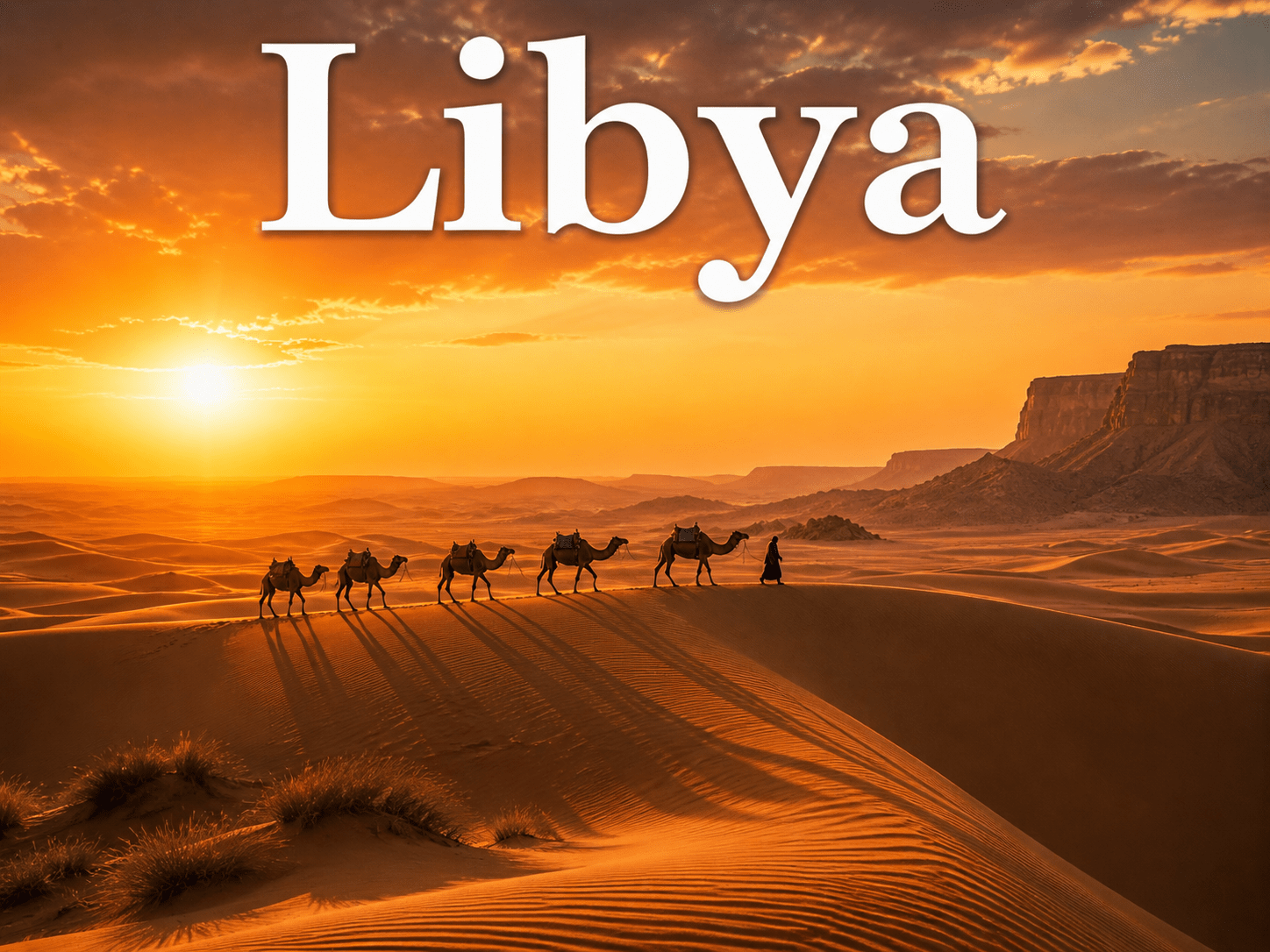
🌟 Introduction
Libya is a vast North African country known for its rich history, ancient civilizations, and dramatic desert landscapes. Located along the Mediterranean Sea, it offers a blend of coastal beauty and Sahara wilderness.
Traveling through Libya reveals a land of contrasts—Roman ruins, Islamic architecture, and endless sand dunes. It is a destination that holds immense historical significance and natural diversity.
Although tourism is limited due to current conditions, the cultural and historical depth of Libya makes it one of the most fascinating countries in Africa.
🏛 History of Libya
Ancient Civilizations
The region has been inhabited for thousands of years and was influenced by:
- Phoenicians
- Greeks
- Romans
One of the most famous ancient sites is
- Leptis Magna
Roman Era
During Roman rule, the region flourished as a center of trade and architecture. Cities were developed with advanced infrastructure, many of which still exist today.
Islamic Period
After the spread of Islam, Arab culture and religion became dominant, shaping language, architecture, and traditions.
Modern History
In the 20th century, the country was under Italian rule before gaining independence in 1951.
Later political changes shaped modern Libya, influencing governance and development.
🌍 Geography of Libya
Location and Coordinates
Libya is located in North Africa.
- Coordinates: 26.3351° N, 17.2283° E
- Region: North Africa
Neighboring Countries
Libya shares borders with:
- Egypt
- Sudan
- Chad
- Niger
- Algeria
- Tunisia
It also has a long Mediterranean coastline.
Landscape Features
The geography includes:
- Sahara Desert
- Coastal plains
- Rocky plateaus
The Sahara covers most of Libya, making it one of the driest regions in the world.
Climate
The climate is:
- Desert (hot and dry) inland
- Mediterranean (milder) along the coast
🎭 Culture of Libya
Arab and Berber Influence
Culture is shaped by a mix of Arab and Berber traditions, reflected in language, clothing, and social customs.
Religion
Islam is the dominant religion and plays a central role in daily life and cultural practices.
Language
- Arabic (official language)
- Berber languages (regional use)
Social Traditions
Community and family are important, with strong emphasis on hospitality and respect.
🏙 Major Cities of Libya
Tripoli (Capital)
Tripoli is:
- The capital city
- Economic and political center
- Located on the Mediterranean coast
Benghazi
Benghazi is:
- Second-largest city
- Important port and commercial hub
Misrata
Misrata is:
- Industrial city
- Key trade center
🌐 Libya in Global Organizations
Libya is a member of:
African Union
United Nations
💰 Economy of Libya
Overview of the Economy
The economy of this North African country is heavily dependent on natural resources, particularly oil and gas. It has one of the largest proven oil reserves in Africa, which plays a central role in national income and exports.
Economic activity has faced challenges in recent years, but the resource base remains strong and significant for future growth.
Key Economic Sectors
1. Oil and Gas Industry
The oil sector dominates the economy and contributes the majority of export revenue. Production, refining, and export activities are central to economic stability.
2. Agriculture
Agriculture is limited due to desert conditions but includes:
- Dates
- Olives
- Wheat
Irrigation systems support farming in certain regions.
3. Trade and Services
Urban centers support:
- Trade
- Transportation
- Retail markets
Ports along the Mediterranean are important for imports and exports.
Currency and Trade
- Currency: Libyan Dinar (LYD)
Major trade partners include:
- European countries
- China
- Regional African markets
Exports are primarily energy resources.
Economic Challenges
Key challenges include:
- Dependence on oil
- Political instability
- Infrastructure development
- Water scarcity
Organizations such as the
- World Bank
play a role in monitoring and supporting development efforts.
🏛 Ancient Sites and Historical Attractions
Roman Ruins
The country is home to some of the best-preserved Roman ruins in the world.
Leptis Magna
- Leptis Magna
This UNESCO-listed site features:
- Amphitheaters
- Temples
- Arches
Other Archaeological Sites
- Sabratha
- Cyrene
These sites reflect ancient Greek and Roman influence.
🏜 Sahara Desert Experience
Desert Landscape
The Sahara dominates much of the land, offering:
- Vast sand dunes
- Rocky plateaus
- Unique desert ecosystems
Desert Travel
Activities include:
- Camel trekking
- 4×4 desert tours
- Camping under the stars
Natural Wonders
The desert includes:
- Oases
- Salt flats
- Rock formations
🌊 Mediterranean Coast
Coastal Beauty
The northern coastline offers:
- Sandy beaches
- Historic ports
- Scenic views
Coastal Cities
Cities along the coast combine:
- Modern life
- Historical architecture
- Cultural heritage
🏙 Tourism in Libya
Overview
Tourism has great potential due to:
- Historical sites
- Desert landscapes
- Mediterranean coastline
However, travel conditions should always be carefully checked before planning a visit.
Cultural Tourism
Visitors can explore:
- Ancient ruins
- Islamic architecture
- Local traditions
Adventure Tourism
The country offers unique adventure opportunities:
- Desert exploration
- Archaeological tours
- Coastal travel
🚵 Outdoor Activities
Desert Exploration
Guided tours provide access to remote desert areas.
Photography
The landscape is ideal for:
- Sunset photography
- Architectural shots
- Natural scenery
Cultural Exploration
Markets and cities offer insights into local life and traditions.
🌿 Unique Landscapes
Sahara Desert
One of the largest deserts in the world, covering most of the territory.
Coastal Plains
The Mediterranean region offers fertile land and urban development.
Mountain Areas
Some regions include rocky highlands and scenic plateaus.
✨ Unique Facts
- Home to some of the best-preserved Roman ruins
- Vast Sahara desert covers most of the land
- Rich oil reserves
- Mediterranean coastline offers diverse landscapes
- Blend of Arab and Berber culture
- Historically significant trade routes
🎭 Culture and Daily Life
Cultural Identity
Culture in Libya is deeply rooted in Arab and Berber traditions, shaped by centuries of history, trade, and religious influence. Daily life reflects strong family values, hospitality, and respect for tradition.
Traditional Lifestyle
In many parts of the country, especially outside major cities, traditional lifestyles are still maintained. Communities value:
- Family unity
- Cultural customs
- Respect for elders
Clothing
Traditional clothing is influenced by climate and culture:
- Long robes for men
- Head coverings
- Modest attire for women
Religion and Society
Islam plays a central role in shaping social norms, daily routines, and cultural practices. Religious holidays and customs are widely observed.
Music and Arts
Music reflects both traditional and modern influences:
- Folk music
- Instruments like drums and flutes
- Storytelling through songs
🎉 Festivals and Celebrations
Religious Festivals
Major celebrations include:
- Eid al-Fitr
- Eid al-Adha
These events bring families and communities together.
Cultural Events
Local festivals celebrate:
- Heritage
- Music
- Traditions
🍽 Food Culture
Traditional Cuisine
Food is influenced by Mediterranean and North African flavors.
Popular dishes include:
- Couscous
- Stews with lamb or chicken
- Bread-based meals
Meals are often shared, emphasizing hospitality.
Staple Foods
Common staples include:
- Wheat-based products
- Olive oil
- Vegetables
Street Food
Urban areas offer:
- Sandwiches
- Grilled meats
- Local snacks
Beverages
Popular drinks include:
- Tea
- Coffee
- Fresh juices
🗺 7-Day Travel Itinerary
Day 1: Arrival in Tripoli
Explore:
- Tripoli
- Old city streets
- Markets
Day 2: Cultural Exploration
Visit:
- Museums
- Historic mosques
- Coastal areas
Day 3: Leptis Magna
Travel to:
- Leptis Magna
Explore Roman ruins and architecture.
Day 4: Sabratha Visit
Discover:
- Ancient theater
- Coastal ruins
Day 5: Desert Journey
Head into the Sahara for:
- Desert landscapes
- Sunset views
Day 6: Oasis Experience
Visit:
- Desert oasis
- Local communities
Day 7: Return & Departure
Return to Tripoli for departure.
🌐 International Role
This North African country participates in global cooperation and diplomacy.
It is a member of:
- United Nations
- African Union
🤔 Interesting Facts
- Home to ancient Roman cities like Leptis Magna
- Large portion covered by the Sahara Desert
- Rich oil reserves
- Mediterranean coastline adds geographic diversity
- Blend of Arab and Berber heritage
- Historically important trade routes
🔗 Internal Link Suggestion
Explore next:
➡️ India Travel Guide
📊 Final Summary
This North African destination offers a unique mix of history, culture, and natural landscapes. From ancient Roman ruins to vast desert expanses, it presents a journey through time and geography.
Visitors interested in history, archaeology, and desert exploration will find it especially fascinating. While travel requires careful planning, the country holds immense cultural and historical value.
From coastal cities to Sahara adventures, Libya remains one of the most historically rich and geographically diverse countries in Africa.
📋 Key Facts Table
| Category | Details |
|---|---|
| Country | Libya |
| Capital | Tripoli |
| Region | North Africa |
| Coordinates | 26.3351° N, 17.2283° E |
| Language | Arabic |
| Currency | Libyan Dinar (LYD) |
| Population | ~7 million |
| Geography | Desert, coastline |
| Famous Site | Leptis Magna |
| Climate | Desert & Mediterranean |
| UN Membership | Yes |
List of All 195 Countries
- Afghanistan
- Albania
- Algeria
- Andorra
- Angola
- Antigua and Barbuda
- Argentina
- Armenia
- Australia
- Austria
- Azerbaijan
- Bahamas
- Bahrain
- Bangladesh
- Barbados
- Belarus
- Belgium
- Belize
- Benin
- Bhutan
- Bolivia
- Bosnia and Herzegovina
- Botswana
- Brazil
- Brunei
- Bulgaria
- Burkina Faso
- Burundi
- Cabo Verde
- Cambodia
- Cameroon
- Canada
- Central African Republic
- Chad
- Chile
- China
- Colombia
- Comoros
- Congo (Congo-Brazzaville)
- Costa Rica

