



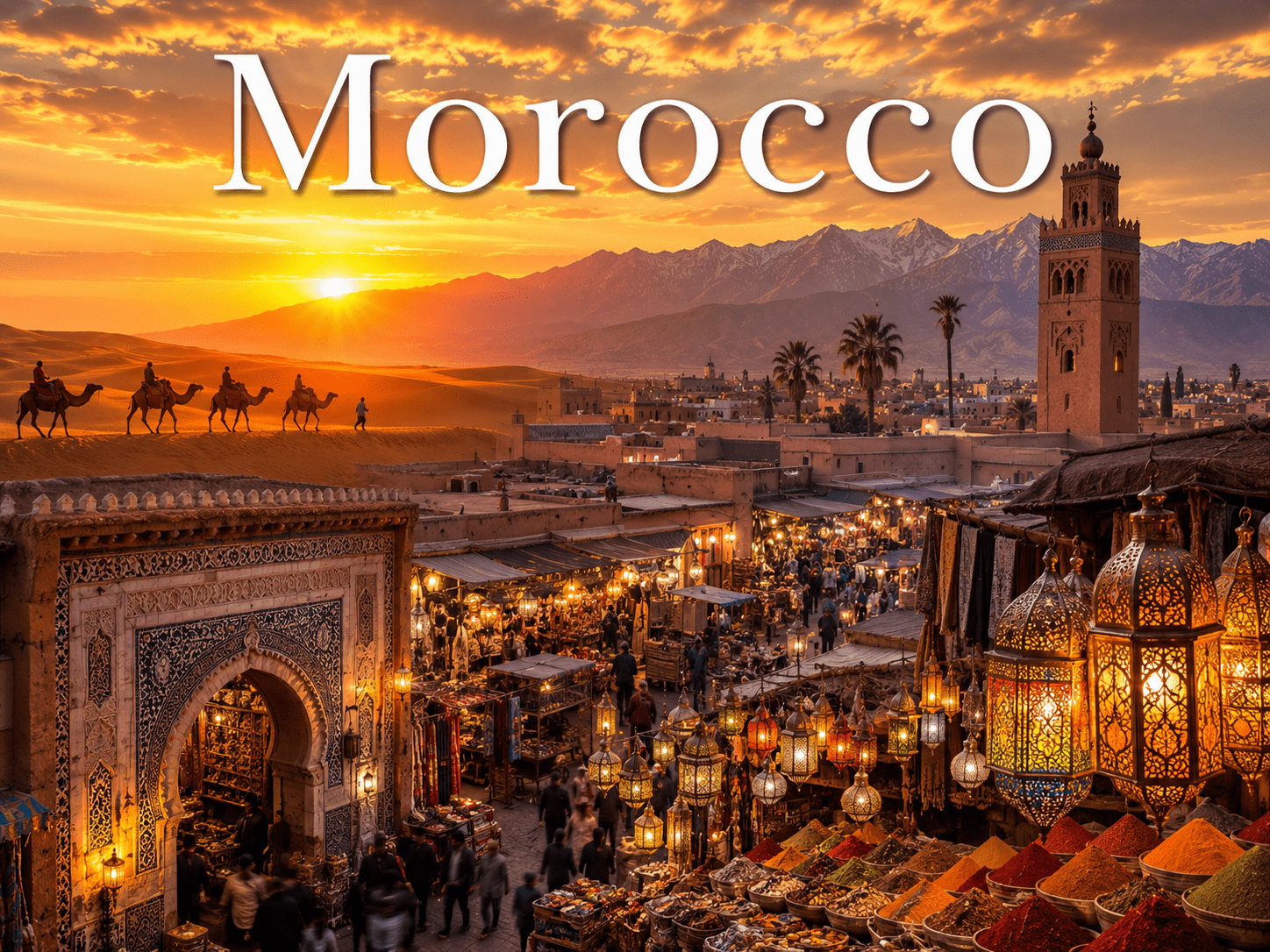
Morocco Introduction
Morocco is one of the most captivating destinations in North Africa, famous for colorful markets, ancient medinas, desert landscapes, mountain scenery, and rich cultural traditions. Located at the crossroads of Africa and Europe, Morocco combines Arab, Berber, African, and Mediterranean influences to create a truly unique identity.
Travelers visiting Morocco experience bustling souks, historic palaces, traditional riads, coastal towns, and breathtaking natural scenery. From the Sahara Desert to the Atlas Mountains and Atlantic coastline, Morocco offers remarkable diversity for adventure travelers, photographers, historians, and cultural explorers.
The country is internationally recognized for cities such as Marrakech, Casablanca, Fes, Chefchaouen, and Rabat. Each region of Morocco has distinct architecture, cuisine, traditions, and landscapes that reflect centuries of historical influence.
Morocco also has a long history connected with trade, exploration, and Islamic civilization. Ancient caravan routes once crossed the desert carrying spices, gold, textiles, and cultural ideas between Africa, Europe, and the Middle East.
Today, Morocco continues growing as one of Africa’s leading tourism destinations because of its hospitality, affordability, rich heritage, and extraordinary scenery.
Quick Facts About Morocco
| Feature | Details |
|---|---|
| Official Name | Kingdom of Morocco |
| Capital City | Rabat |
| Continent | Africa |
| Population | Around 38 million |
| Official Languages | Arabic and Amazigh |
| Currency | Moroccan Dirham |
| Government Type | Constitutional Monarchy |
| Major Religion | Islam |
| Area | Approximately 446,550 sq km |
| Independence | 1956 |
History of Morocco
Early History of Morocco
The territory of Morocco has been inhabited since prehistoric times.
Ancient Berber communities established settlements across mountains, deserts, and coastal regions long before foreign civilizations arrived.
Because of its strategic geographic location, Morocco became an important center for trade and cultural exchange.
Phoenician and Roman Influence
Phoenicians established trading posts along the Moroccan coast, followed later by Roman influence in northern regions.
Roman ruins found in Morocco today reflect the importance of ancient trade networks and urban development.
Islamic Expansion and Dynasties
Islam arrived in Morocco during the seventh century and became deeply connected with national identity and culture.
Several powerful Islamic dynasties later ruled the region, expanding architecture, education, trade, and religious influence.
Famous Historical Dynasties
- Almoravid Dynasty
- Almohad Dynasty
- Marinid Dynasty
These dynasties helped build famous mosques, palaces, universities, and fortified cities.
Colonial Era and Independence
During the twentieth century, Morocco experienced French and Spanish colonial influence.
After years of political struggle and nationalist movements, Morocco gained independence in 1956.
Since independence, Morocco has modernized infrastructure, tourism, education, and international trade while preserving cultural heritage.
Geography of Morocco
Where Is Morocco Located?
Morocco is located in North Africa.
Geographic Coordinates
- Latitude: 31.7917° N
- Longitude: 7.0926° W
The country borders:
- Algeria
- Western Sahara
- Atlantic Ocean
- Mediterranean Sea
Morocco is separated from Europe by the Strait of Gibraltar.
Landscape and Natural Features
Morocco is famous for diverse landscapes ranging from deserts to mountains and coastlines.
Main Geographic Features
- Sahara Desert
- Atlas Mountains
- Atlantic beaches
- Mediterranean coast
- Fertile valleys
- Palm oases
The country’s geographical diversity makes it ideal for multiple travel experiences.
Atlas Mountains
The Atlas Mountains stretch across central Morocco and provide spectacular scenery.
Popular Activities
- Hiking
- Trekking
- Skiing
- Village tourism
- Photography
Traditional Berber villages are scattered throughout the mountain regions.
Sahara Desert
The Sahara Desert is one of Morocco’s most famous tourism attractions.
Desert Experiences
- Camel trekking
- Luxury desert camps
- Sand dunes
- Stargazing
- Off-road adventures
Sunrise and sunset over desert dunes create unforgettable travel moments.
Climate of Morocco
Diverse Climate Zones
Morocco experiences several climate types because of its varied geography.
Coastal Climate
Mild temperatures and refreshing ocean breezes characterize coastal cities.
Mountain Climate
Higher elevations experience colder temperatures and snowfall during winter.
Desert Climate
Southern desert regions are hot and dry with dramatic temperature changes between day and night.
Culture and Traditions of Morocco
Cultural Identity of Morocco
Morocco has a rich cultural identity shaped by Berber, Arab, African, and Mediterranean influences.
Traditional craftsmanship, music, architecture, and hospitality remain central to everyday life.
Religion in Morocco
Islam is the dominant religion in Morocco.
Mosques, religious festivals, and Islamic traditions strongly influence culture and daily routines.
Religious tolerance and historical multicultural influences also contribute to the country’s cultural diversity.
Traditional Moroccan Music
Traditional music styles vary across different regions.
Popular Music Traditions
- Andalusian music
- Gnawa music
- Berber folk music
- Chaabi music
Music festivals attract both local audiences and international visitors.
Food and Cuisine in Morocco
Moroccan Cuisine
Moroccan cuisine is internationally famous for rich flavors, spices, and traditional cooking methods.
Popular Moroccan Dishes
Tagine
Slow-cooked stew prepared in a clay pot.
Couscous
A traditional dish often served with vegetables and meat.
Pastilla
A savory pastry combining sweet and salty flavors.
Harira
Traditional soup commonly served during Ramadan.
Mint tea is considered a symbol of hospitality in Morocco.
Moroccan Spices
Traditional cooking uses spices such as:
- Saffron
- Cinnamon
- Cumin
- Ginger
- Turmeric
Local food markets provide colorful culinary experiences for visitors.
Official Languages of Morocco
Arabic and Amazigh
Arabic and Amazigh are the official languages of Morocco.
Modern Standard Arabic is used in administration and education, while Amazigh languages reflect indigenous Berber heritage.
Other Languages Spoken
Additional languages commonly spoken include:
- French
- Spanish
- English in tourism areas
Multilingual communication is common in urban centers and tourist destinations.
Major Cities in Morocco
Marrakech
Marrakech is one of the most famous cities in Morocco.
Main Attractions
- Jemaa el-Fnaa Square
- Traditional souks
- Palaces
- Gardens
- Riads
The city is known for vibrant colors, markets, and cultural energy.
Casablanca
Casablanca is the largest city and economic center of Morocco.
Highlights
- Hassan II Mosque
- Coastal promenades
- Business districts
- Modern architecture
Fes
Fes is famous for its ancient medina and traditional craftsmanship.
Attractions
- Historic universities
- Narrow alleyways
- Leather tanneries
- Religious schools
The city preserves important historical traditions.
Chefchaouen
Chefchaouen is internationally recognized for blue-painted streets and mountain scenery.
Popular Experiences
- Photography
- Shopping
- Hiking
- Relaxed atmosphere
Rabat
Rabat is the capital city of Morocco and an important administrative center.
Attractions
- Historic monuments
- Museums
- Coastal scenery
- Government institutions
Tourism in Morocco
Why Visit Morocco?
Morocco offers a combination of cultural exploration, desert adventures, coastal tourism, mountain trekking, and historical discovery.
Top Reasons Tourists Visit
- Ancient medinas
- Sahara Desert
- Traditional markets
- Islamic architecture
- Beaches and mountains
- Moroccan cuisine
Tourism continues growing rapidly because of the country’s diversity and hospitality.
External DoFollow Links
- Official Morocco Tourism Website
- United Nations Morocco Profile
- UNESCO Official Website
- World Bank Morocco Data
Economy of Morocco
Morocco Economy Overview
Morocco has one of the most diversified economies in North Africa. Major industries include tourism, agriculture, mining, manufacturing, fishing, renewable energy, and international trade.
The country’s strategic location between Africa and Europe makes Morocco an important commercial gateway connecting multiple international markets.
Modern infrastructure projects, transportation systems, and industrial investments continue supporting economic growth across urban and rural regions.
Currency of Morocco
The official currency of Morocco is the Moroccan Dirham (MAD).
Currency Facts
| Feature | Details |
|---|---|
| Official Currency | Moroccan Dirham |
| Currency Code | MAD |
| Central Bank | Bank Al-Maghrib |
| Common Payment Methods | Cash and cards |
Cash is still widely used in traditional markets and smaller towns.
Agriculture in Morocco
Agriculture remains an important part of the Morocco economy.
Main Agricultural Products
- Olives
- Citrus fruits
- Dates
- Wheat
- Vegetables
- Argan oil
Rural communities rely heavily on farming and livestock activities.
Mining and Natural Resources
Morocco is one of the world’s leading producers of phosphate minerals.
Mining contributes significantly to exports and industrial development.
Important Resources
- Phosphates
- Silver
- Lead
- Zinc
The mining sector continues attracting international investment.
Tourism Industry in Morocco
Tourism is one of the largest sectors of the Morocco economy.
Millions of visitors travel to Morocco every year to explore historical cities, deserts, beaches, mountains, and cultural festivals.
Major Tourism Regions
- Marrakech
- Fes
- Casablanca
- Sahara Desert
- Atlas Mountains
- Atlantic Coast
The tourism industry supports hotels, restaurants, transportation, and local handicraft businesses.
Top Tourist Attractions in Morocco
Marrakech Medina
The historic medina of Marrakech is one of the most visited destinations in Morocco.
Main Highlights
- Jemaa el-Fnaa Square
- Traditional souks
- Palaces
- Gardens
- Street performers
The atmosphere becomes especially lively during evening hours.
Hassan II Mosque
Located in Casablanca, Hassan II Mosque is one of the largest mosques in the world.
Why Visitors Love It
- Oceanfront location
- Islamic architecture
- Decorative mosaics
- Tall minaret
The mosque reflects Morocco’s artistic and religious heritage.
Chefchaouen
Chefchaouen is known worldwide for blue-painted streets and mountain scenery.
Popular Activities
- Photography
- Shopping
- Café culture
- Hiking
The city provides a peaceful atmosphere compared to larger urban centers.
Sahara Desert Tours
Sahara Desert tourism is one of the most famous experiences in Morocco.
Desert Activities
- Camel trekking
- Luxury camps
- Sandboarding
- Stargazing
- Off-road adventures
Many travelers visit Merzouga and Erg Chebbi dunes for desert excursions.
Fes Medina
Fes contains one of the oldest medinas in the world.
Main Attractions
- Ancient universities
- Tanneries
- Narrow alleyways
- Traditional markets
- Religious schools
The city preserves centuries-old craftsmanship and architecture.
Beaches and Coastal Tourism in Morocco
Atlantic Coast
Morocco has a long Atlantic coastline with beautiful beaches and surf destinations.
Famous Coastal Destinations
- Agadir
- Essaouira
- Taghazout
- Casablanca
Beach tourism attracts both domestic and international travelers.
Surfing in Morocco
Morocco has become one of the world’s most popular surfing destinations.
Best Surf Areas
- Taghazout
- Imsouane
- Tamraght
Consistent waves and warm weather attract surfers year-round.
Essaouira
Essaouira is a historic coastal city known for relaxed atmosphere and artistic culture.
Popular Experiences
- Seafood dining
- Beach walks
- Historic medina
- Wind sports
The city combines coastal beauty with traditional architecture.
Adventure Tourism in Morocco
Camel Trekking
Camel trekking across the Sahara Desert remains one of the most iconic travel experiences in Morocco.
Visitors often spend nights in traditional desert camps under star-filled skies.
Hiking in the Atlas Mountains
The Atlas Mountains attract hikers and trekkers from around the world.
Popular Trekking Areas
- Toubkal National Park
- Berber villages
- Mountain valleys
- Waterfalls
Mount Toubkal is the highest peak in North Africa.
Quad Biking and Off-Road Adventures
Adventure tourism companies organize desert and mountain expeditions using:
- Quad bikes
- Jeeps
- Motorcycles
- Off-road vehicles
These tours allow travelers to explore remote landscapes.
Moroccan Architecture
Traditional Architecture
Moroccan architecture combines Islamic, Berber, and Andalusian influences.
Famous Architectural Features
- Decorative tiles
- Courtyards
- Arches
- Wooden carvings
- Geometric patterns
Historic palaces and riads showcase exceptional craftsmanship.
Riads
Riads are traditional Moroccan houses built around interior courtyards.
Many historic riads have been transformed into boutique hotels for tourism.
Shopping and Souks in Morocco
Traditional Souks
Traditional markets called souks are major attractions in Morocco.
Common Products
- Carpets
- Leather goods
- Ceramics
- Lanterns
- Spices
- Jewelry
Bargaining is an important part of the shopping experience.
Argan Oil Products
Morocco is internationally famous for argan oil production.
Argan oil is widely used in cooking, skincare, and cosmetics.
Transportation in Morocco
Getting to Morocco
International travelers commonly arrive through major airports in:
- Casablanca
- Marrakech
- Rabat
- Agadir
The country also has ferry connections with Europe.
Transportation Inside Morocco
Traveling around Morocco is relatively convenient due to modern infrastructure improvements.
Common Transportation Options
- Trains
- Buses
- Domestic flights
- Taxis
- Rental cars
High-speed rail services connect important cities.
Festivals in Morocco
Marrakech Popular Arts Festival
This cultural festival celebrates traditional music, dance, and storytelling.
Performers from different regions showcase Morocco’s cultural diversity.
Fes Festival of World Sacred Music
This internationally recognized festival attracts musicians and artists from around the world.
The event promotes intercultural dialogue through music.
Religious Celebrations
Islamic holidays and religious traditions remain important throughout Morocco.
Celebrations often include family gatherings, special meals, and cultural activities.
Best Time to Visit Morocco
Spring Season
Spring is one of the best times to visit Morocco.
Advantages
- Pleasant temperatures
- Blooming landscapes
- Comfortable sightseeing conditions
Autumn Season
Autumn also offers ideal travel weather for cities, mountains, and desert tours.
Summer Season
Coastal regions remain popular during summer, although desert areas can become extremely hot.
Winter Season
Winter tourism includes mountain snow activities and mild coastal weather.
Desert nights can become very cold during winter months.
Food Experiences in Morocco
Street Food Culture
Street food plays an important role in Moroccan culinary culture.
Popular Street Foods
- Grilled meats
- Fresh pastries
- Snail soup
- Mint tea
Markets provide exciting culinary experiences for visitors.
Moroccan Tea Culture
Mint tea symbolizes hospitality and social connection in Morocco.
Tea preparation itself is considered a cultural tradition.
Modern Lifestyle in Morocco
Urban Development
Major cities continue modernizing with:
- Shopping centers
- Business districts
- Luxury hotels
- Transportation projects
Modern life blends with centuries-old traditions.
Art and Fashion
Moroccan craftsmanship influences fashion, interior design, and global art trends.
Traditional textiles and decorative arts remain internationally admired.
External DoFollow Links
- Official Morocco Tourism Website
- United Nations Morocco Profile
- UNESCO Official Website
- World Bank Morocco Data
Unique and Interesting Facts About Morocco
Morocco Is Home to One of the World’s Oldest Universities
Morocco is home to the University of Al Quaraouiyine in Fes, recognized as one of the oldest continuously operating universities in the world.
Founded in the ninth century, the institution became an important center for Islamic learning, science, and philosophy.
Morocco Connects Africa and Europe
Morocco occupies a strategic location between Africa and Europe.
The Strait of Gibraltar separates the country from Spain by only a short distance, making Morocco an important historical center for trade and cultural exchange.
Morocco Has Diverse Landscapes
One of the most remarkable things about Morocco is the variety of landscapes found within a single country.
Travelers can experience:
- Deserts
- Mountains
- Beaches
- Valleys
- Forests
- Ancient cities
This diversity makes Morocco one of Africa’s most versatile travel destinations.
Morocco Is Famous for Blue Streets
Chefchaouen has become internationally famous for its blue-painted buildings and narrow streets.
Photographers and social media travelers often visit the city because of its unique atmosphere and mountain scenery.
Morocco Produces Argan Oil
Morocco is the world’s leading producer of argan oil.
Argan trees grow mainly in southwestern regions, and local cooperatives produce oil used in cosmetics, skincare, and cooking.
Education and Healthcare in Morocco
Education System in Morocco
Morocco has expanded access to education through schools, universities, and vocational institutions.
Educational reforms continue improving literacy, technology training, and international academic partnerships.
Main Areas of Study
- Engineering
- Tourism
- Medicine
- Information technology
- Business administration
Large universities are located in cities such as Rabat, Casablanca, and Fes.
Healthcare Services in Morocco
Healthcare services are available through public hospitals, clinics, and private medical centers.
Urban regions generally provide more advanced healthcare facilities than remote rural areas.
Healthcare Improvements
- Medical infrastructure development
- Expanded health programs
- International cooperation
- Increased healthcare access
Travel insurance is recommended for visitors exploring remote desert or mountain regions.
Hidden Attractions in Morocco
Aït Benhaddou
Aït Benhaddou is a historic fortified village recognized as a UNESCO World Heritage Site.
Why Visitors Love It
- Ancient mud-brick architecture
- Desert scenery
- Film locations
- Historical atmosphere
Many international movies and television productions have been filmed there.
Dades Valley
The Dades Valley is famous for dramatic rock formations and scenic mountain landscapes.
Popular Activities
- Hiking
- Road trips
- Photography
- Village exploration
The winding roads through the valley create spectacular travel experiences.
Ouzoud Waterfalls
These waterfalls are among the most beautiful natural attractions in Morocco.
Visitors often enjoy boat rides, hiking trails, and wildlife observation near the falls.
Volubilis
Volubilis contains some of the best-preserved Roman ruins in North Africa.
Main Features
- Ancient mosaics
- Roman columns
- Archaeological remains
- Historical significance
The site reflects Morocco’s ancient Roman connections.
Cultural Traditions in Morocco
Moroccan Hospitality
Hospitality is deeply rooted in Moroccan culture.
Guests are commonly welcomed with mint tea, sweets, and warm conversation.
Family gatherings and community celebrations remain important parts of social life.
Traditional Clothing
Traditional Moroccan clothing reflects centuries of cultural heritage.
Common Traditional Garments
- Djellaba
- Kaftan
- Babouche slippers
Colorful fabrics and embroidery are widely admired.
Henna Art
Henna designs are popular during weddings, celebrations, and festivals.
Traditional artists create intricate decorative patterns on hands and feet.
Food Experiences in Morocco
Traditional Moroccan Breakfast
Breakfast often includes:
- Bread
- Olive oil
- Honey
- Pancakes
- Mint tea
Fresh ingredients play an important role in daily meals.
Moroccan Desserts
Traditional desserts combine nuts, honey, cinnamon, and pastry.
Popular Sweets
- Chebakia
- Gazelle horns
- Almond pastries
Desserts are frequently served with tea during social gatherings.
Cooking Traditions
Many traditional dishes are prepared slowly using clay cookware and aromatic spices.
Cooking techniques have been passed through generations for centuries.
Shopping in Morocco
Artisan Markets
Markets in Morocco are internationally famous for handcrafted products.
Popular Souvenirs
- Carpets
- Leather bags
- Ceramics
- Metal lanterns
- Jewelry
- Spices
Traditional craftsmanship remains an important part of local identity and economy.
Moroccan Carpets
Handwoven carpets from Morocco are admired worldwide for quality and artistic design.
Different regions produce unique patterns and weaving techniques.
Luxury Tourism in Morocco
Luxury Riads and Resorts
Luxury tourism has expanded significantly across Morocco.
Travelers can stay in:
- Historic riads
- Desert luxury camps
- Coastal resorts
- Mountain lodges
These accommodations combine traditional architecture with modern comfort.
Spa and Wellness Tourism
Traditional hammams and wellness centers attract visitors seeking relaxation and cultural experiences.
Argan oil treatments and spa rituals are especially popular.
Safety and Travel Tips for Morocco
Is Morocco Safe for Tourists?
Morocco is generally considered safe for international travelers.
Tourism infrastructure continues improving in major cities and tourist destinations.
Important Travel Tips
Dress Respectfully
Modest clothing is appreciated, especially in religious or rural areas.
Bargaining Is Common
Negotiating prices is normal in markets and souks.
Carry Cash
Smaller businesses and markets may not accept cards.
Prepare for Climate Differences
Temperatures vary greatly between coastlines, mountains, and desert regions.
Best Experiences in Morocco
Sleeping in the Sahara Desert
Many travelers consider overnight desert camps among the most unforgettable experiences in Morocco.
The peaceful atmosphere and star-filled skies create incredible memories.
Exploring Ancient Medinas
Historic medinas allow visitors to discover traditional markets, architecture, and local culture.
Drinking Mint Tea in a Traditional Riad
Relaxing inside traditional riads provides insight into Moroccan hospitality and design traditions.
Hiking Through Berber Villages
Mountain villages in the Atlas region offer cultural immersion and stunning scenery.
Morocco and International Organizations
United Nations Membership
Morocco became a member of the United Nations in 1956 after gaining independence.
The country participates in international diplomacy, peacekeeping, and development programs.
Other International Organizations
Morocco is associated with several global organizations, including:
- UNESCO
- African Union
- Arab League
- World Trade Organization
International cooperation supports economic growth and cultural preservation.
Final Summary
Morocco is one of the most colorful, diverse, and culturally rich destinations in the world. The country offers ancient medinas, mountain landscapes, Atlantic beaches, desert adventures, historic architecture, and extraordinary hospitality.
From the vibrant markets of Marrakech to the peaceful blue streets of Chefchaouen and the golden dunes of the Sahara Desert, Morocco provides unforgettable travel experiences for every type of traveler.
The combination of Arab, Berber, African, and Mediterranean influences creates a unique cultural atmosphere unlike anywhere else.
Whether exploring ancient cities, enjoying traditional cuisine, trekking through mountain villages, or relaxing in luxury desert camps, visitors discover the timeless beauty and cultural depth of Morocco.
Key Facts About Morocco
| Category | Information |
|---|---|
| Official Name | Kingdom of Morocco |
| Capital City | Rabat |
| Continent | Africa |
| Population | Around 38 million |
| Official Languages | Arabic and Amazigh |
| Currency | Moroccan Dirham |
| Major Religion | Islam |
| Government Type | Constitutional Monarchy |
| Area | Approximately 446,550 sq km |
| Famous City | Marrakech |
| Famous Desert | Sahara Desert |
| Highest Mountain | Mount Toubkal |
| Independence | 1956 |
| UN Membership | Joined in 1956 |
Frequently Asked Questions About Morocco
What is Morocco famous for?
Morocco is famous for desert tours, ancient medinas, colorful markets, mountain scenery, and traditional cuisine.
What is the best time to visit Morocco?
Spring and autumn are considered the best seasons because temperatures are comfortable for sightseeing and outdoor activities.
Is Morocco expensive for tourists?
Morocco can be affordable compared to many international destinations, although luxury tourism options are also available.
What language is spoken in Morocco?
Arabic and Amazigh are the official languages, while French is also widely spoken.
Is Morocco safe for travelers?
Yes, Morocco is generally considered safe for tourists visiting major cities and tourism areas.
Internal Links
Explore more destinations:
- Argentina
- Barbados
External DoFollow Links
- Official Morocco Tourism Website
- United Nations Morocco Profile
- UNESCO Official Website
- World Bank Morocco Data

