



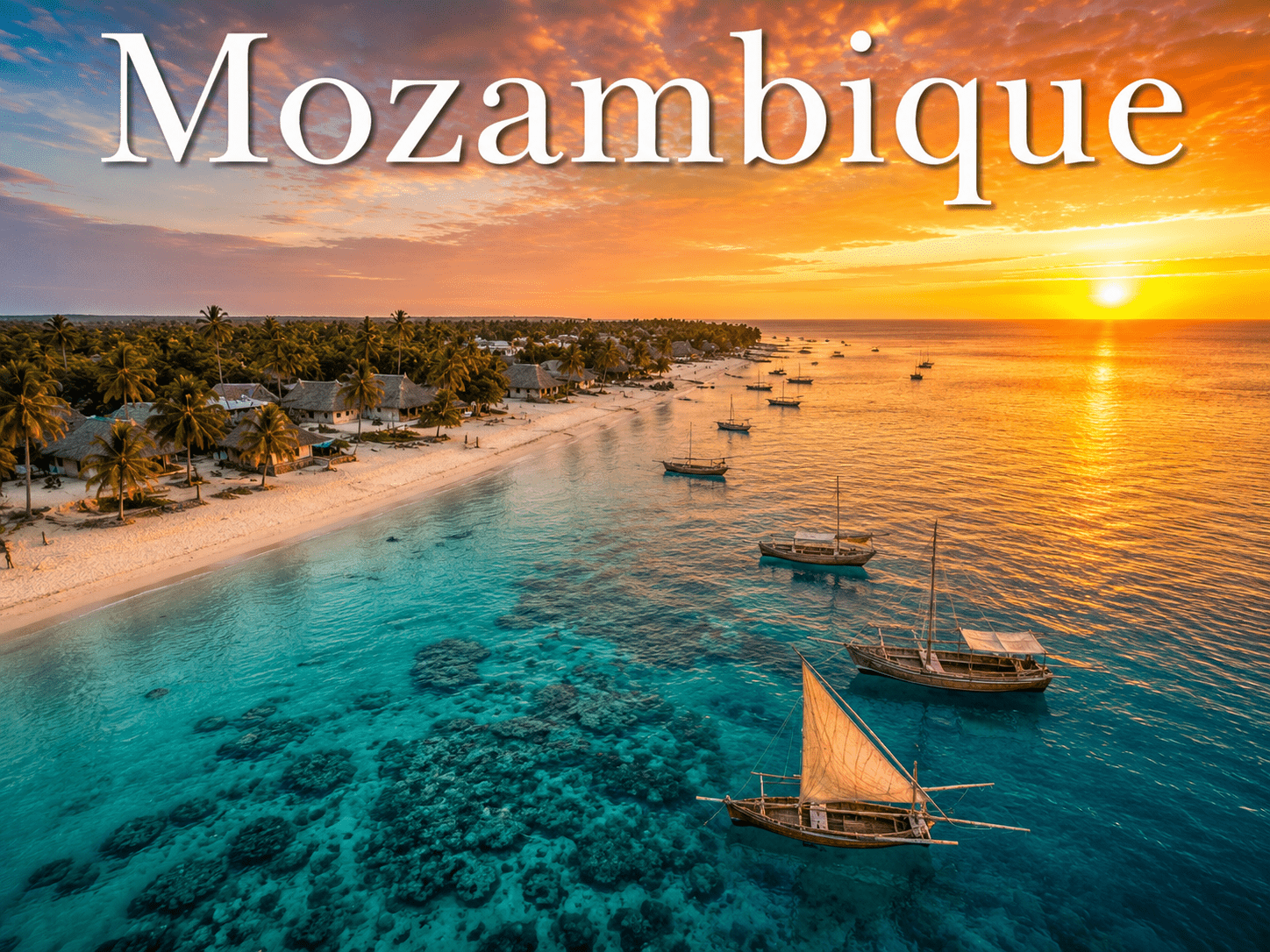
Mozambique Introduction
Mozambique is one of Africa’s most fascinating coastal destinations, famous for Indian Ocean beaches, tropical islands, marine biodiversity, rich cultural traditions, and historic heritage. Located on the southeastern coast of Africa, Mozambique combines African, Portuguese, Arab, and Indian influences to create a unique cultural identity and unforgettable travel experiences.
Travelers visiting Mozambique can explore white-sand beaches, coral reefs, national parks, island archipelagos, historic cities, and vibrant local markets. The country offers a blend of tropical relaxation, adventure tourism, cultural exploration, and wildlife experiences.
Mozambique is internationally recognized for destinations such as Maputo, Bazaruto Archipelago, Tofo Beach, Gorongosa National Park, and Ilha de Moçambique. From diving with whale sharks to exploring colonial architecture and enjoying fresh seafood, Mozambique offers remarkable diversity for international travelers.
The country’s long coastline stretches along the Indian Ocean, making Mozambique one of the most scenic beach destinations in Africa. Warm waters, tropical weather, and marine ecosystems attract tourists interested in diving, snorkeling, fishing, and eco-tourism.
Modern Mozambique continues growing as a tourism and investment destination while preserving cultural heritage, music traditions, and natural beauty.
Quick Facts About Mozambique
| Feature | Details |
|---|---|
| Official Name | Republic of Mozambique |
| Capital City | Maputo |
| Continent | Africa |
| Population | Around 33 million |
| Official Language | Portuguese |
| Currency | Mozambican Metical |
| Government Type | Presidential Republic |
| Major Religion | Christianity |
| Area | Approximately 801,590 sq km |
| Independence | 1975 |
History of Mozambique
Early History of Mozambique
The territory of Mozambique has been inhabited for thousands of years by African communities engaged in farming, fishing, and trade.
Because of its Indian Ocean coastline, Mozambique became an important center for maritime trade between Africa, the Middle East, and Asia.
Arab traders established coastal settlements long before European colonization.
Portuguese Colonial Period
Portuguese explorers arrived in Mozambique during the late fifteenth century.
Over time, Portugal established colonial control over much of the territory and developed trading ports along the coast.
Portuguese influence shaped architecture, language, religion, cuisine, and administration throughout Mozambique.
Independence Movement
During the twentieth century, nationalist movements demanded independence from colonial rule.
After years of political struggle and armed conflict, Mozambique gained independence from Portugal in 1975.
The country later experienced civil conflict before moving toward peace and national reconstruction.
Modern Mozambique
Modern Mozambique continues developing infrastructure, tourism, energy projects, and international trade partnerships.
Economic growth has increased investment opportunities while tourism remains an important developing sector.
Geography of Mozambique
Where Is Mozambique Located?
Mozambique is located in southeastern Africa along the Indian Ocean coastline.
Geographic Coordinates
- Latitude: 18.6657° S
- Longitude: 35.5296° E
The country borders:
- Tanzania
- Malawi
- Zambia
- Zimbabwe
- South Africa
- Eswatini
The Indian Ocean forms Mozambique’s eastern boundary.
Landscape and Natural Features
Mozambique is known for tropical coastlines, rivers, islands, forests, and wildlife reserves.
Main Geographic Features
- Indian Ocean beaches
- Coral reefs
- River systems
- Coastal islands
- Savannah landscapes
- National parks
The diverse geography supports tourism, agriculture, and fishing industries.
Indian Ocean Coastline
The Mozambique coastline stretches for more than 2,000 kilometers along the Indian Ocean.
Coastal Attractions
- White-sand beaches
- Coral reefs
- Diving locations
- Fishing villages
- Tropical islands
The coastline is one of the country’s greatest tourism assets.
Bazaruto Archipelago
The Bazaruto Archipelago is one of the most famous island destinations in Mozambique.
Popular Activities
- Snorkeling
- Scuba diving
- Boat tours
- Luxury beach resorts
- Marine wildlife observation
Crystal-clear water and coral reefs attract international visitors.
Climate of Mozambique
Tropical Climate
Mozambique has a tropical climate with warm temperatures throughout most of the year.
Seasonal Overview
Dry Season
Cooler and more comfortable weather ideal for tourism.
Rainy Season
Warmer temperatures with tropical rainfall and lush landscapes.
Coastal areas remain popular year-round because of warm ocean temperatures.
Culture and Traditions of Mozambique
Cultural Identity of Mozambique
Mozambique has a rich cultural identity influenced by African traditions, Portuguese colonial history, and Indian Ocean trade connections.
Music, dance, storytelling, and craftsmanship remain important aspects of community life.
Religion in Mozambique
Christianity is the dominant religion in Mozambique, although Islam and traditional African beliefs are also practiced.
Religious diversity contributes to the country’s multicultural atmosphere.
Music and Dance in Mozambique
Traditional music and dance play major roles in cultural celebrations.
Popular Cultural Elements
- Drumming
- Traditional dances
- Marrabenta music
- Coastal cultural festivals
Music traditions reflect both African and Portuguese influences.
Food and Cuisine in Mozambique
Mozambican Cuisine
Mozambican cuisine combines African, Portuguese, and coastal influences.
Fresh seafood, spices, rice, cassava, and tropical fruits are common ingredients.
Popular Mozambican Dishes
Peri-Peri Chicken
Spicy grilled chicken flavored with chili sauce.
Matapa
Traditional dish made with cassava leaves, peanuts, and coconut milk.
Grilled Seafood
Fresh prawns, lobster, and fish are widely enjoyed.
Coconut Rice
A popular coastal side dish served with seafood meals.
The country’s cuisine is known for rich flavors and fresh ingredients.
Seafood Culture
Seafood plays an important role in coastal communities.
Common Seafood Specialties
- Prawns
- Crab
- Lobster
- Octopus
- Tuna
Beach restaurants often serve freshly caught seafood.
Official Language of Mozambique
Portuguese Language
Portuguese is the official language of Mozambique and is widely used in education, government, and business.
The language reflects the country’s colonial history and international connections.
Indigenous Languages
Many local African languages are spoken throughout Mozambique.
Common Indigenous Languages
- Makhuwa
- Sena
- Tsonga
- Swahili in northern regions
Multilingual communication is common across the country.
Major Cities in Mozambique
Maputo
Maputo is the capital and largest city of Mozambique.
Main Attractions
- Colonial architecture
- Markets
- Museums
- Waterfront areas
- Restaurants and nightlife
The city combines historic charm with modern urban development.
Beira
Beira is an important port city in central Mozambique.
Features
- Coastal scenery
- Commercial activities
- Transportation hub
Nampula
Nampula is one of the country’s largest inland cities.
Highlights
- Regional markets
- Cultural diversity
- Economic importance
Pemba
Pemba is known for beaches, diving tourism, and access to island destinations.
Popular Activities
- Snorkeling
- Boat tours
- Coastal tourism
- Marine adventures
Tourism in Mozambique
Why Visit Mozambique?
Mozambique offers a combination of tropical beaches, island tourism, cultural experiences, wildlife safaris, and marine adventures.
Top Reasons Tourists Visit
- Indian Ocean beaches
- Diving and snorkeling
- Island resorts
- Seafood cuisine
- Wildlife tourism
- Cultural heritage
The country continues attracting eco-tourists, divers, and beach travelers from around the world.
External DoFollow Links
- Official Mozambique Tourism Website
- United Nations Mozambique Profile
- UNESCO Official Website
- World Bank Mozambique Data
Economy of Mozambique
Mozambique Economy Overview
Mozambique has a developing economy supported by agriculture, fishing, tourism, mining, energy production, and international trade. Since gaining independence, the country has continued investing in infrastructure, ports, transportation, and natural resource development.
The long Indian Ocean coastline plays a major role in economic activities because fishing, tourism, and maritime trade contribute significantly to national growth.
Modern Mozambique continues attracting foreign investment in energy, natural gas, agriculture, and tourism industries.
Currency of Mozambique
The official currency of Mozambique is the Mozambican Metical (MZN).
Currency Facts
| Feature | Details |
|---|---|
| Official Currency | Mozambican Metical |
| Currency Code | MZN |
| Central Bank | Bank of Mozambique |
| Common Payment Methods | Cash and cards |
Tourist regions and larger cities commonly accept international payment cards.
Agriculture in Mozambique
Agriculture remains one of the most important sectors of the Mozambique economy.
Main Agricultural Products
- Cassava
- Maize
- Sugarcane
- Cashew nuts
- Cotton
- Coconut
Many rural communities depend on farming and fishing for livelihoods.
Fishing Industry
Fishing is essential to coastal communities and export industries in Mozambique.
Important Seafood Exports
- Prawns
- Tuna
- Lobster
- Crab
The Indian Ocean provides abundant marine resources supporting both local markets and international trade.
Natural Resources and Energy
Mozambique has large reserves of natural gas, coal, and minerals.
Energy projects have increased international investment and economic opportunities in recent years.
Major Resources
- Natural gas
- Coal
- Graphite
- Titanium minerals
These industries continue shaping long-term economic development.
Top Tourist Attractions in Mozambique
Bazaruto Archipelago
The Bazaruto Archipelago is one of the most famous tourism destinations in Mozambique.
Main Attractions
- White-sand beaches
- Coral reefs
- Luxury resorts
- Marine wildlife
- Diving opportunities
The islands are considered among the most beautiful tropical destinations in Africa.
Ilha de Moçambique
Ilha de Moçambique is a historic island recognized as a UNESCO World Heritage Site.
Why Visitors Love It
- Colonial architecture
- Historic churches
- Fortresses
- Cultural heritage
- Narrow streets
The island reflects centuries of Portuguese and Swahili influence.
Gorongosa National Park
Gorongosa National Park is one of the most important wildlife conservation areas in Africa.
Wildlife Experiences
- Safari tours
- Birdwatching
- Nature photography
- Guided wildlife drives
The park contains elephants, lions, antelope, hippos, and diverse bird species.
Tofo Beach
Tofo Beach is internationally famous for marine tourism and diving experiences.
Popular Activities
- Scuba diving
- Whale shark tours
- Snorkeling
- Surfing
The beach attracts backpackers, divers, and eco-tourists from around the world.
Pemba
Pemba is known for tropical beaches and access to island adventures.
Highlights
- Coral reefs
- Coastal resorts
- Boat excursions
- Fresh seafood
The city serves as a gateway to northern coastal tourism.
Beaches and Island Tourism in Mozambique
Indian Ocean Beaches
The Indian Ocean coastline is one of Mozambique’s greatest tourism attractions.
Famous Beaches
- Tofo Beach
- Vilanculos beaches
- Ponta do Ouro
- Barra Beach
Warm water and tropical scenery create ideal beach holiday conditions.
Diving and Snorkeling
Mozambique is internationally recognized for marine biodiversity.
Marine Attractions
- Coral reefs
- Whale sharks
- Dolphins
- Sea turtles
- Manta rays
Diving tourism is especially popular in coastal regions and island archipelagos.
Luxury Island Resorts
Luxury tourism continues expanding in Mozambique.
Exclusive beach resorts provide:
- Private villas
- Oceanfront accommodations
- Boat tours
- Spa experiences
The country attracts honeymoon travelers and luxury tourists seeking tropical destinations.
Wildlife and Safari Tourism in Mozambique
Safari Experiences
Mozambique offers both coastal tourism and wildlife safari experiences.
Popular Wildlife Areas
- Gorongosa National Park
- Niassa Reserve
- Zinave National Park
Wildlife conservation programs continue improving biodiversity protection.
Birdwatching Tourism
Wetlands, rivers, forests, and coastal ecosystems attract birdwatchers from around the world.
Hundreds of bird species can be observed throughout Mozambique.
Adventure Tourism in Mozambique
Deep-Sea Fishing
The Indian Ocean supports world-class fishing tourism.
Popular Fishing Targets
- Marlin
- Tuna
- Sailfish
Fishing charters operate in many coastal destinations.
Surfing and Water Sports
Coastal waves and warm water create excellent conditions for water sports.
Common Activities
- Surfing
- Kitesurfing
- Paddleboarding
- Jet skiing
Beach tourism continues growing rapidly.
Boat Excursions
Island-hopping tours and traditional dhow boat trips are popular tourism experiences.
Travelers often explore hidden beaches, coral reefs, and fishing villages by boat.
Transportation in Mozambique
Getting to Mozambique
International travelers commonly arrive through airports in:
- Maputo
- Beira
- Pemba
- Vilanculos
Regional flights connect major tourism destinations.
Transportation Within Mozambique
Transportation options vary depending on region and infrastructure.
Common Travel Methods
- Domestic flights
- Buses
- Minibuses
- Rental vehicles
- Boats
Coastal and island tourism areas often require boat transportation.
Festivals and Celebrations in Mozambique
Cultural Festivals
Traditional festivals celebrate music, dance, food, and local heritage.
Common Festival Features
- Drumming
- Traditional costumes
- Coastal celebrations
- Community gatherings
Festivals reflect the multicultural identity of Mozambique.
Music and Dance Events
Marrabenta music festivals are especially popular in urban areas.
Live music performances remain important aspects of nightlife and cultural tourism.
Best Time to Visit Mozambique
Dry Season
The dry season is generally considered the best time to visit Mozambique.
Advantages
- Pleasant temperatures
- Better wildlife viewing
- Comfortable beach conditions
- Easier transportation
This season is ideal for safaris and outdoor activities.
Rainy Season
The rainy season transforms landscapes into lush green environments.
Fewer tourists visit during this period, although some roads become difficult to access.
Food Experiences in Mozambique
Coastal Seafood Cuisine
Fresh seafood is one of the highlights of Mozambican cuisine.
Popular Seafood Dishes
- Grilled prawns
- Coconut fish curry
- Crab dishes
- Lobster platters
Beach restaurants often serve seafood caught the same day.
Portuguese Culinary Influence
Portuguese influence can be seen in sauces, spices, pastries, and cooking methods.
Peri-peri seasoning is especially famous in Mozambique.
Tropical Fruits
Local tropical fruits commonly include:
- Mangoes
- Papayas
- Pineapples
- Bananas
- Coconuts
Fresh fruit juices are widely available in tourism areas.
Modern Lifestyle in Mozambique
Urban Development
Cities such as Maputo continue modernizing with:
- Hotels
- Shopping centers
- Restaurants
- Transportation projects
Urban growth supports tourism and business development.
Tourism Investment
Eco-tourism, island resorts, and marine conservation projects continue attracting international investment.
Mozambique is increasingly recognized as an emerging luxury beach destination in Africa.
External DoFollow Links
- Official Mozambique Tourism Website
- United Nations Mozambique Profile
- UNESCO Official Website
- World Bank Mozambique Data
Unique and Interesting Facts About Mozambique
Mozambique Has One of Africa’s Longest Coastlines
Mozambique has a coastline stretching more than 2,000 kilometers along the Indian Ocean.
This extraordinary coastline contains tropical beaches, coral reefs, fishing villages, islands, and marine ecosystems that attract tourists from around the world.
Mozambique Is Famous for Marine Biodiversity
The warm waters of Mozambique are home to remarkable marine life.
Marine Species Commonly Found
- Whale sharks
- Dolphins
- Sea turtles
- Manta rays
- Coral reef fish
The country is considered one of Africa’s best diving destinations.
Mozambique Has Strong Portuguese Influence
Portuguese colonial history strongly shaped architecture, cuisine, language, and religion in Mozambique.
Today, Portuguese remains the official language and an important part of national identity.
Mozambique Is Home to Historic Island Heritage
Ilha de Moçambique served as an important trading center connecting Africa, Europe, and Asia.
Historic buildings and forts still reflect centuries of maritime trade and cultural exchange.
Mozambique Combines Beaches and Wildlife Tourism
Unlike many destinations, Mozambique offers both tropical beach tourism and African safari experiences within the same country.
Travelers can combine diving adventures with wildlife safaris during a single trip.
Education and Healthcare in Mozambique
Education System in Mozambique
Mozambique continues improving educational access through schools, universities, and literacy programs.
Education reforms focus on infrastructure development and teacher training.
Common Fields of Study
- Agriculture
- Tourism
- Engineering
- Business
- Healthcare
Universities and vocational institutions are mainly located in larger cities.
Healthcare Services in Mozambique
Healthcare services are available through public hospitals, clinics, and private medical centers.
Urban regions generally have better medical facilities than remote rural areas.
Healthcare Features
- Emergency services
- Vaccination programs
- Public hospitals
- Private healthcare clinics
Travel insurance is strongly recommended for international visitors.
Hidden Attractions in Mozambique
Quirimbas Archipelago
The Quirimbas Archipelago contains beautiful tropical islands with white-sand beaches and coral reefs.
Popular Experiences
- Snorkeling
- Island hopping
- Diving
- Cultural tourism
The islands provide peaceful alternatives to crowded tourism destinations.
Niassa Reserve
Niassa Reserve is one of Africa’s largest protected wildlife areas.
Wildlife Attractions
- Elephants
- Lions
- Buffalo
- Leopards
- Bird species
Remote safari experiences attract eco-tourists and wildlife photographers.
Ponta do Ouro
Ponta do Ouro is a coastal destination famous for beaches and marine activities.
Activities
- Dolphin tours
- Diving
- Surfing
- Beach relaxation
The region is especially popular with adventure travelers.
Inhaca Island
Located near Maputo, Inhaca Island offers tropical scenery and marine biodiversity.
Visitors enjoy boat trips, fishing, snorkeling, and seafood dining.
Cultural Traditions in Mozambique
Traditional Community Life
Family and community relationships remain central to cultural traditions in Mozambique.
Celebrations often include music, dance, storytelling, and shared meals.
Traditional Dance and Music
Music and dance are important expressions of cultural identity.
Popular Cultural Elements
- Drumming performances
- Marrabenta music
- Traditional costumes
- Coastal dance festivals
Festivals help preserve regional traditions and artistic heritage.
Handicrafts and Art
Local artisans create:
- Wood carvings
- Basket weaving
- Beadwork
- Paintings
- Traditional textiles
Handmade crafts are commonly sold in local markets.
Food Experiences in Mozambique
Seafood Culture
Seafood is one of the highlights of Mozambican cuisine.
Famous Seafood Specialties
- Grilled prawns
- Lobster dishes
- Crab curry
- Octopus meals
Fresh ingredients and coastal spices create rich flavors.
Peri-Peri Cuisine
Peri-peri seasoning is internationally associated with Mozambique.
The spicy chili sauce is commonly used in grilled chicken and seafood dishes.
Coconut-Based Dishes
Coconut milk is widely used in traditional recipes, especially in coastal regions.
Popular Ingredients
- Coconut milk
- Cassava
- Rice
- Peanuts
- Tropical spices
Shopping in Mozambique
Traditional Markets
Local markets provide insight into daily life and culture.
Common Products
- Handmade jewelry
- Wooden sculptures
- Fabrics
- Spices
- Seafood products
Markets are popular destinations for cultural tourism.
Coastal Souvenirs
Beach regions sell handmade crafts inspired by marine life and island culture.
Tourists often purchase shells, paintings, and woven products.
Luxury Tourism in Mozambique
Luxury Beach Resorts
Luxury tourism has expanded significantly in Mozambique.
Travelers can enjoy:
- Private beach villas
- Island resorts
- Spa retreats
- Oceanfront dining
The country attracts honeymoon travelers and eco-luxury tourists.
Eco-Tourism Experiences
Eco-tourism projects focus on sustainability and marine conservation.
Luxury lodges often support local communities and environmental programs.
Safety and Travel Tips for Mozambique
Is Mozambique Safe for Tourists?
Many tourism regions in Mozambique are considered safe for visitors, especially coastal resort areas and organized safari destinations.
Travelers should stay informed about local conditions before visiting remote areas.
Important Travel Tips
Carry Local Currency
Cash is useful in smaller towns and markets.
Prepare for Tropical Weather
Light clothing, sunscreen, and insect protection are recommended.
Respect Local Culture
Modest and respectful behavior is appreciated in communities and religious areas.
Plan Transportation Carefully
Road conditions vary depending on region and season.
Best Experiences in Mozambique
Diving With Whale Sharks
Tofo Beach is internationally famous for whale shark encounters.
This experience is considered one of the highlights of marine tourism in Mozambique.
Relaxing on Tropical Islands
The country’s islands provide peaceful escapes with turquoise waters and white-sand beaches.
Exploring Historic Coastal Heritage
Historic architecture and island towns reveal centuries of maritime trade and cultural exchange.
Enjoying Fresh Seafood by the Ocean
Beach restaurants offer unforgettable dining experiences with fresh seafood and Indian Ocean views.
Mozambique and International Organizations
United Nations Membership
Mozambique became a member of the United Nations in 1975 after independence.
The country participates in international development programs, peace initiatives, and environmental cooperation.
Other International Memberships
Mozambique is associated with several international organizations, including:
- African Union
- UNESCO
- Commonwealth of Nations
- Southern African Development Community
These partnerships support economic growth and regional cooperation.
Final Summary
Mozambique is one of Africa’s most beautiful coastal destinations, offering tropical beaches, marine biodiversity, island adventures, wildlife safaris, and rich cultural traditions.
From the coral reefs of the Indian Ocean to the wildlife reserves of Gorongosa National Park, Mozambique provides extraordinary travel experiences for nature lovers, divers, photographers, and cultural explorers.
The country’s Portuguese heritage, African traditions, warm hospitality, and fresh seafood create a unique atmosphere unlike anywhere else in the region.
Whether relaxing on tropical islands, diving with whale sharks, exploring historic coastal towns, or enjoying sunset views along the Indian Ocean, visitors discover the natural beauty and cultural richness of Mozambique.
Key Facts About Mozambique
| Category | Information |
|---|---|
| Official Name | Republic of Mozambique |
| Capital City | Maputo |
| Continent | Africa |
| Population | Around 33 million |
| Official Language | Portuguese |
| Currency | Mozambican Metical |
| Major Religion | Christianity |
| Government Type | Presidential Republic |
| Area | Approximately 801,590 sq km |
| Famous Attraction | Bazaruto Archipelago |
| Largest City | Maputo |
| Main Ocean | Indian Ocean |
| Independence | 1975 |
| UN Membership | Joined in 1975 |
Frequently Asked Questions About Mozambique
What is Mozambique famous for?
Mozambique is famous for tropical beaches, coral reefs, diving tourism, seafood cuisine, and Indian Ocean islands.
What is the best time to visit Mozambique?
The dry season is generally considered the best period for beach tourism, safaris, and outdoor activities.
Is Mozambique expensive for tourists?
Mozambique offers both affordable travel experiences and luxury beach resorts depending on travel style.
What language is spoken in Mozambique?
Portuguese is the official language, although many indigenous African languages are also spoken.
Is Mozambique safe for travelers?
Major tourism destinations are generally safe, but travelers should stay informed about local conditions and transportation safety.
Internal Links
Explore more destinations:
External DoFollow Links
- Official Mozambique Tourism Website
- United Nations Mozambique Profile
- UNESCO Official Website
- World Bank Mozambique Data

