



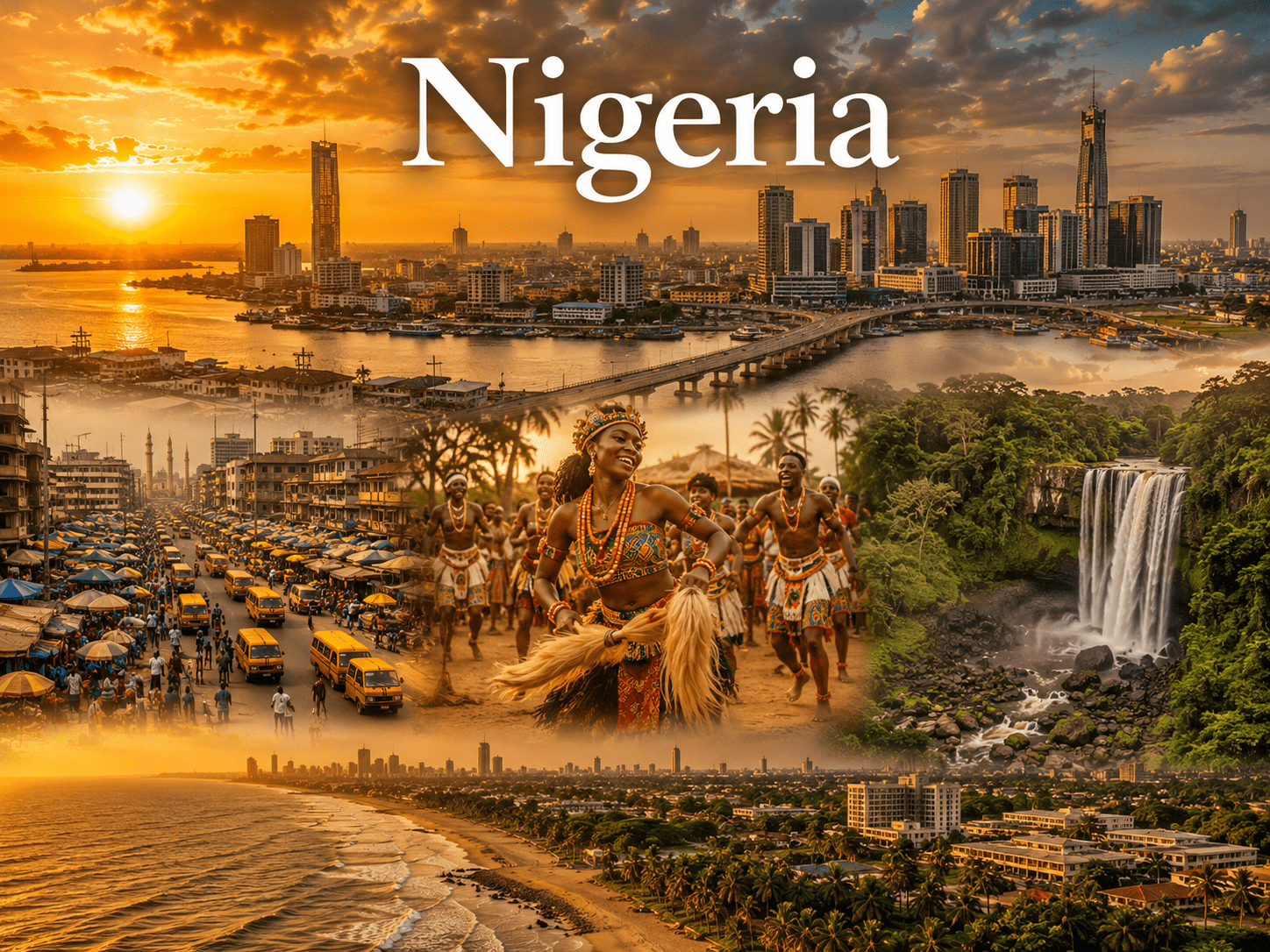
Nigeria – The Giant of Africa
Nigeria is one of Africa’s most influential and culturally diverse nations, known for its massive population, vibrant cities, rich traditions, music industry, economic power, and extraordinary natural beauty. Often referred to as the “Giant of Africa,” the country plays a major role in politics, entertainment, trade, and culture across the African continent.
From the energetic streets of Lagos to the modern architecture of Abuja and the historic kingdoms of northern regions, this remarkable nation offers a powerful combination of tradition and modernization. Travelers can explore tropical coastlines, wildlife reserves, bustling markets, waterfalls, rainforests, cultural festivals, and globally recognized entertainment industries.
The country is home to hundreds of ethnic groups and languages, creating one of the world’s most culturally rich societies. Music, fashion, cuisine, literature, and film continue shaping global perceptions of African creativity and innovation.
Despite economic and infrastructural challenges, the nation remains a major center for entrepreneurship, technology, entertainment, and regional leadership in Africa.
Historical Background of Nigeria
Ancient Kingdoms and Civilizations
Long before colonial rule, the territory now known as Nigeria was home to powerful kingdoms, empires, and trading civilizations.
Important historical states included:
- Benin Kingdom
- Oyo Empire
- Kanem-Bornu Empire
- Hausa city-states
- Nok civilization
These societies developed:
- Trade systems
- Metalworking
- Art traditions
- Political institutions
- Religious practices
The Nok Civilization
The Nok civilization is among the earliest known cultures in West Africa and became famous for remarkable terracotta sculptures dating back thousands of years.
Trans-Saharan and Coastal Trade
The region participated in:
- Sahara trade routes
- Atlantic commerce
- Agricultural exchange
- Craft production
Gold, ivory, kola nuts, textiles, and later palm oil became important trade products.
Colonial Era
British colonial influence expanded during the 19th and early 20th centuries. Colonial administration merged different regions and ethnic groups into one political territory.
British rule influenced:
- Education
- Language
- Infrastructure
- Legal systems
- Government administration
Independence
The country gained independence from Britain on October 1, 1960. Since independence, the nation has experienced military governments, democratic transitions, civil conflict, and economic transformation.
Geographical Location and Natural Features
Where Is Nigeria Located?
Nigeria is located in West Africa along the Gulf of Guinea.
It shares borders with:
- Niger
- Chad
- Cameroon
- Benin
Geographic Coordinates
- Approximate Coordinates: 9°N latitude and 8°E longitude
Landscape Diversity
The country contains a wide variety of landscapes including:
- Tropical rainforests
- Savannah grasslands
- River systems
- Mountains
- Coastal beaches
- Wetlands
Major Rivers
Two major rivers dominate the geography:
- Niger River
- Benue River
These rivers support agriculture, transportation, fishing, and urban development.
Climate in Nigeria
Tropical Climate
Nigeria experiences tropical climate conditions with regional variations.
Southern Regions
- Humid and rainy
- Dense rainforest vegetation
Northern Regions
- Drier and hotter
- Sahel and savannah landscapes
Seasons
Rainy Season
- Generally April to October
Dry Season
- Usually November to March
The Harmattan wind from the Sahara influences weather conditions during dry months.
Culture and Traditions of Nigeria
Extraordinary Cultural Diversity
Nigeria is one of the most ethnically diverse countries in the world.
Major ethnic groups include:
- Yoruba
- Hausa
- Igbo
- Fulani
- Ijaw
- Kanuri
- Tiv
Each community contributes unique:
- Languages
- Clothing
- Festivals
- Music
- Cuisine
- Traditional beliefs
Family and Community Life
Family networks and community relationships remain extremely important across society. Respect for elders and cultural traditions plays a major role in daily life.
Religion in Nigeria
Religion strongly influences culture, traditions, politics, and social life.
Major Religions
- Christianity
- Islam
Traditional African spiritual practices also continue in some communities.
Religious celebrations often involve:
- Music
- Feasting
- Community gatherings
- Cultural performances
Music and Entertainment Industry
Afrobeats Global Influence
Nigeria is internationally famous for Afrobeats music, which has become a major global cultural force.
Popular genres include:
- Afrobeats
- Highlife
- Fuji
- Juju
- Hip-hop
- Gospel music
Nollywood Film Industry
Nollywood is one of the world’s largest film industries by production volume.
The industry produces:
- Drama films
- Romantic movies
- Action films
- Cultural stories
- Comedy productions
Entertainment continues driving global recognition of African creativity.
Traditional Food in Nigeria
Cuisine in Nigeria is rich, flavorful, and regionally diverse.
Popular Dishes
Jollof Rice
One of West Africa’s most famous dishes made with rice, tomatoes, spices, and vegetables.
Pounded Yam and Egusi Soup
A traditional meal enjoyed across many communities.
Suya
Spicy grilled meat sold by street vendors.
Moi Moi
Steamed bean pudding flavored with peppers and spices.
Pepper Soup
A spicy broth often prepared with fish or meat.
Economy of Nigeria
Africa’s Largest Economies
Nigeria has one of the largest economies in Africa due to its:
- Oil industry
- Banking sector
- Telecommunications
- Entertainment
- Agriculture
Currency
The official currency is the Nigerian Naira (NGN).
Oil and Energy Industry
Petroleum exports remain a major source of national revenue.
The country is rich in:
- Crude oil
- Natural gas
- Mineral resources
Agriculture
Agriculture continues employing millions of people.
Major agricultural products include:
- Cassava
- Cocoa
- Rice
- Palm oil
- Maize
Technology and Startups
Major cities have become technology and innovation hubs with growing:
- Fintech companies
- Digital startups
- E-commerce platforms
Major Cities in Nigeria
Abuja – The Capital City
Abuja serves as the capital and political center of the nation.
The city is known for:
- Modern infrastructure
- Government institutions
- Diplomatic centers
- Planned urban design
Lagos
Lagos is Africa’s largest urban economy and one of the continent’s most dynamic cities.
The city offers:
- Beaches
- Nightlife
- Business districts
- Entertainment industries
- Technology startups
Kano
Kano is one of the oldest commercial cities in West Africa.
Port Harcourt
Port Harcourt is an important oil and industrial center.
Languages Spoken in Nigeria
Official Language
English is the official language used in:
- Government
- Education
- Media
- Business
Indigenous Languages
Hundreds of indigenous languages are spoken across the country.
Major languages include:
- Yoruba
- Hausa
- Igbo
- Fulfulde
- Kanuri
Multilingual communication is common.
Tourist Attractions in Nigeria
Zuma Rock
Near Abuja, Zuma Rock is one of the nation’s most recognizable natural landmarks.
Yankari National Park
The park is famous for:
- Wildlife safaris
- Elephants
- Hot springs
- Savannah landscapes
Obudu Mountain Resort
Located in southeastern highlands, this destination offers:
- Mountain scenery
- Cable cars
- Cool climate
- Nature tourism
Lekki Conservation Centre
This conservation area in Lagos features:
- Forest walkways
- Wildlife observation
- Eco-tourism experiences
Nigeria and International Organizations
Nigeria is a member of many international organizations including:
- United Nations (UN)
- African Union (AU)
- ECOWAS
- Commonwealth of Nations
- Organization of Petroleum Exporting Countries (OPEC)
Official Resources
Biodiversity and Natural Environment in Nigeria
Nigeria possesses one of the most diverse natural environments in Africa. From Atlantic coastlines and mangrove forests to savannah grasslands and mountain plateaus, the country supports a wide range of ecosystems and wildlife.
Rainforests and Mangroves
Southern regions contain tropical rainforests rich in biodiversity. Coastal mangrove ecosystems provide habitats for:
- Fish species
- Birds
- Reptiles
- Marine wildlife
These ecosystems are important for:
- Fishing industries
- Environmental protection
- Climate balance
Savannah Landscapes
Northern and central parts of Nigeria feature wide savannah grasslands suitable for:
- Agriculture
- Wildlife habitats
- Livestock grazing
Mountain Regions
Mountainous areas such as the Mambilla Plateau and Obudu highlands offer:
- Cooler climates
- Scenic valleys
- Eco-tourism opportunities
- Hiking experiences
National Parks and Wildlife
Yankari National Park
One of the country’s most famous wildlife reserves, Yankari National Park attracts nature lovers and safari enthusiasts.
Wildlife includes:
- Elephants
- Baboons
- Buffalo
- Antelope
- Crocodiles
The park also features natural warm springs and forest trails.
Cross River National Park
This rainforest reserve protects endangered species and dense tropical ecosystems.
The park is known for:
- Rare primates
- Birdwatching
- Biodiversity conservation
- Eco-tourism
Gashaka-Gumti National Park
The largest national park in Nigeria offers mountainous scenery and wildlife habitats.
Festivals and Celebrations in Nigeria
Cultural Festivals
The country celebrates numerous festivals reflecting ethnic diversity and cultural traditions.
Eyo Festival
Held in Lagos, the Eyo Festival features:
- White traditional costumes
- Street processions
- Cultural performances
- Historic ceremonies
Durbar Festival
Northern emirate cities host colorful Durbar festivals featuring:
- Decorated horses
- Traditional warriors
- Royal parades
- Music performances
New Yam Festival
Celebrated mainly among Igbo communities, this festival honors harvest traditions and agricultural heritage.
Traditional Clothing and Fashion
Fashion in Nigeria combines tradition with modern creativity.
Popular Traditional Attire
Agbada
A flowing robe commonly worn during ceremonies.
Ankara Fabrics
Bright patterned fabrics used in dresses, shirts, and formal wear.
Gele Headwraps
Colorful headwraps worn during celebrations and weddings.
Fashion designers from the country continue influencing African and global fashion industries.
Arts and Creative Industries
Literature and Writers
The nation has produced internationally respected authors and literary figures.
Literature often explores:
- Colonial history
- Social change
- Identity
- Politics
- Cultural traditions
Contemporary Art
Modern art scenes are growing in:
- Lagos
- Abuja
- Port Harcourt
Artists create works inspired by:
- Urban life
- African heritage
- Social issues
- Traditional symbolism
Sports and Recreation
Football Passion
Football is the most popular sport in Nigeria. Local clubs and international competitions attract massive support.
The national football team has achieved success in:
- African tournaments
- International competitions
- Youth championships
Basketball and Athletics
Basketball and athletics are also gaining popularity, especially among younger generations.
Traditional Sports
Traditional wrestling and local sporting competitions remain important in some regions.
Transportation and Infrastructure
International Airports
Major international airports are located in:
- Lagos
- Abuja
- Kano
- Port Harcourt
These airports connect the country with destinations across Africa, Europe, the Middle East, and North America.
Road Networks
Road transportation is the primary way people travel domestically.
Common transportation options include:
- Buses
- Taxis
- Ride-hailing services
- Motorcycles
Rail Development
Railway modernization projects continue expanding transportation infrastructure across Nigeria.
Best Time to Visit Nigeria
Dry Season Travel
The most popular travel period is generally from November to March.
Benefits include:
- Lower rainfall
- Easier transportation
- Comfortable sightseeing
- Festival activities
Rainy Season
The rainy season creates greener landscapes and cooler temperatures in some regions.
Travelers visiting rainforest areas may enjoy lush scenery during this period.
Food Culture Beyond Traditional Dishes
Street Food Scene
Street food culture is vibrant and energetic.
Popular street snacks include:
- Puff-puff
- Roasted corn
- Meat skewers
- Fried plantains
Regional Cuisine Diversity
Different regions of Nigeria offer unique culinary traditions.
Northern Cuisine
Often includes:
- Grilled meat
- Millet dishes
- Spiced rice meals
Southern Cuisine
Known for:
- Seafood
- Pepper soups
- Palm oil dishes
Technology and Innovation
Africa’s Tech Hub
Lagos has become one of Africa’s leading technology ecosystems.
Growing sectors include:
- Fintech
- E-commerce
- Digital banking
- Online media
- Software startups
Digital Entrepreneurship
Young entrepreneurs are creating businesses in:
- Mobile apps
- Education technology
- Logistics
- Entertainment platforms
Technology continues transforming the economy.
Education System in Nigeria
Universities and Higher Education
Nigeria has numerous universities and educational institutions.
Major academic fields include:
- Engineering
- Medicine
- Business
- Technology
- Arts
Student Population
The country has one of Africa’s largest student populations.
Educational Challenges
Challenges include:
- Infrastructure needs
- Access disparities
- Funding limitations
Despite these issues, higher education remains highly valued.
Adventure Tourism in Nigeria
Mountain Tourism
Destinations such as Obudu Mountain Resort attract visitors seeking:
- Cool weather
- Scenic views
- Hiking trails
- Nature retreats
Beach Tourism
Atlantic coastal regions provide:
- Beaches
- Resorts
- Water sports
- Relaxation destinations
Waterfalls and Nature Sites
Popular natural attractions include:
- Erin Ijesha Waterfalls
- Gurara Falls
- Awhum Waterfall
Daily Life and Modern Lifestyle
Urban Energy
Cities such as Lagos showcase:
- Fast-paced lifestyles
- Creative industries
- Business growth
- Vibrant nightlife
Rural Communities
Rural areas preserve:
- Farming traditions
- Community festivals
- Indigenous customs
- Handcraft production
Markets and Shopping Experiences
Traditional Markets
Markets remain central to economic and social life.
Popular items include:
- Spices
- Fabrics
- Jewelry
- Traditional crafts
- Fresh produce
Modern Shopping Centers
Urban areas increasingly feature:
- Shopping malls
- International brands
- Entertainment complexes
Hidden Gems in Nigeria
Idanre Hills
These historic hills feature:
- Ancient settlements
- Rocky landscapes
- Hiking routes
- Cultural history
Ogbunike Caves
This cave system combines natural beauty with spiritual and cultural significance.
Tarkwa Bay
Located near Lagos, Tarkwa Bay offers:
- Calm beaches
- Water sports
- Relaxed coastal atmosphere
Environmental Challenges and Sustainability
Deforestation
Environmental concerns include:
- Forest loss
- Urban expansion
- Pollution
Conservation Efforts
Organizations continue supporting:
- Wildlife protection
- Renewable energy
- Reforestation
- Coastal preservation
Climate Concerns
Flooding and changing weather patterns increasingly affect communities and agriculture.
Hospitality and Tourism Growth
Tourism infrastructure continues developing across Nigeria with investments in:
- Hotels
- Resorts
- Transportation
- Entertainment venues
International visitors increasingly explore cultural and business tourism opportunities.
Government and Political Structure
Nigeria operates as a federal republic with executive, legislative, and judicial branches. The nation consists of 36 states and the Federal Capital Territory.
Executive Branch
The president serves as:
- Head of state
- Head of government
- Commander-in-chief
The executive branch oversees:
- National policies
- Foreign relations
- Security matters
- Economic planning
Legislative Branch
The National Assembly consists of:
- Senate
- House of Representatives
Lawmakers are responsible for:
- Passing legislation
- Approving budgets
- Monitoring government activities
Judicial System
The judiciary interprets laws and maintains constitutional order throughout the federation.
Famous Landmarks in Nigeria
Zuma Rock
Near Abuja, Zuma Rock is one of the country’s most recognizable natural monuments.
The giant rock formation is famous for:
- Massive height
- Historical significance
- Scenic photography
- Cultural symbolism
Olumo Rock
Located in Abeokuta, Olumo Rock served as a historical refuge during inter-tribal conflicts.
Visitors enjoy:
- Rock climbing
- Historical caves
- Panoramic city views
Lekki Conservation Centre
This eco-tourism attraction in Lagos features:
- Nature trails
- Wildlife habitats
- Canopy walkways
- Forest conservation
Obudu Mountain Resort
This mountain destination is known for:
- Scenic landscapes
- Cool temperatures
- Cable car rides
- Adventure tourism
Unique and Interesting Facts About Nigeria
Africa’s Most Populous Country
Nigeria has the largest population in Africa, making it one of the continent’s most influential nations.
Nollywood Powerhouse
The country’s film industry, Nollywood, is among the largest movie industries in the world.
Over 500 Languages
Hundreds of languages are spoken across the nation, reflecting extraordinary cultural diversity.
Afrobeats Global Success
Afrobeats music from the country has achieved worldwide popularity and influenced international music trends.
Major Oil Producer
The nation is one of Africa’s largest oil-producing countries and an important energy exporter.
Business and Investment Opportunities
Technology Industry
Nigeria has become one of Africa’s leading technology and startup ecosystems.
Growing industries include:
- Fintech
- E-commerce
- Mobile banking
- Artificial intelligence
- Digital entertainment
Agriculture Investment
Agriculture remains a key sector with opportunities in:
- Rice farming
- Cocoa production
- Palm oil processing
- Food exports
Entertainment Industry
Music, film, and digital media industries continue expanding globally.
Manufacturing and Trade
Industrial growth continues in:
- Construction
- Consumer goods
- Telecommunications
- Transportation
Detailed Guide to Major Cities
Abuja
Abuja is the planned capital city and center of government.
Popular attractions include:
- Millennium Park
- National Mosque
- National Christian Centre
- Government districts
The city is known for modern roads and organized urban planning.
Lagos
Lagos is Africa’s largest urban economy and one of the continent’s most energetic cities.
Travelers experience:
- Beaches
- Luxury hotels
- Music culture
- Shopping districts
- Business centers
The city is also a major hub for fashion, film, and technology.
Kano
Kano remains historically important for:
- Trade routes
- Textile industries
- Ancient city walls
- Cultural heritage
Port Harcourt
Port Harcourt is known for:
- Oil industry operations
- Waterfront areas
- Business activity
Festivals and Cultural Celebrations
Durbar Festival
Northern emirate cities organize spectacular Durbar celebrations featuring:
- Decorated horses
- Traditional rulers
- Music performances
- Cultural pageantry
Osun-Osogbo Festival
This spiritual festival celebrates Yoruba traditions and attracts international visitors.
Calabar Carnival
Often called Africa’s biggest street party, the Calabar Carnival includes:
- Dance parades
- Colorful costumes
- Music events
- Tourism activities
Traditional Architecture and Heritage
Ancient City Walls
Historic cities contain ancient defensive walls reflecting centuries of urban civilization.
Palaces and Sacred Sites
Traditional rulers maintain palaces that symbolize:
- Cultural authority
- Heritage preservation
- Community leadership
Colonial-Era Buildings
Some cities preserve colonial architecture mixed with modern development.
Transportation and Infrastructure
Air Transportation
Major international airports connect Nigeria with:
- Europe
- North America
- Middle East
- African destinations
Urban Transportation
Transportation systems include:
- Buses
- Ride-sharing apps
- Ferries
- Rail projects
Seaports
Major ports support:
- International trade
- Oil exports
- Shipping industries
Education and Scientific Development
Universities and Research
The country hosts many universities and research institutions focused on:
- Medicine
- Technology
- Agriculture
- Engineering
Youth Innovation
Young innovators increasingly contribute to:
- Digital startups
- Software development
- Creative industries
International Academic Influence
Graduates from Nigeria contribute globally in:
- Business
- Healthcare
- Technology
- Entertainment
Cuisine and Culinary Experiences
Diverse Regional Food
Cuisine varies significantly across regions.
Popular Foods
- Jollof rice
- Egusi soup
- Suya
- Akara
- Pounded yam
- Pepper soup
Street Food Culture
Street food vendors create lively culinary experiences in urban areas.
Suggested 7-Day Travel Itinerary
Day 1–2: Abuja
Explore government landmarks, museums, and Zuma Rock.
Day 3–4: Lagos
Experience beaches, nightlife, shopping, and entertainment.
Day 5: Calabar or Obudu
Discover mountain scenery and eco-tourism attractions.
Day 6: Cultural Villages
Learn about traditional crafts and heritage.
Day 7: Wildlife and Nature
Visit conservation parks and natural reserves.
Why Travelers Love Nigeria
Travelers are drawn to Nigeria because of:
- Dynamic cities
- Rich traditions
- Music and nightlife
- Cultural diversity
- Business opportunities
- Warm hospitality
The country combines modern African urban energy with deep historical and cultural roots.
UNESCO and International Recognition
Several cultural and natural heritage sites connected to Nigeria receive international attention through:
- UNESCO
- United Nations
- African Union
Official Resources
Challenges and Future Outlook
Infrastructure and Development
Challenges include:
- Transportation expansion
- Energy supply
- Urban planning
- Environmental management
Economic Opportunities
Future growth sectors include:
- Technology
- Renewable energy
- Manufacturing
- Agriculture
- Entertainment
Cultural Influence
Global influence continues expanding through:
- Afrobeats music
- Fashion
- Film industry
- Literature
Final Summary
Nigeria stands among Africa’s most influential and culturally vibrant nations. Its enormous population, dynamic economy, world-famous entertainment industry, diverse ethnic traditions, and energetic urban centers make it one of the continent’s most fascinating destinations.
From the modern skyline of Lagos to traditional northern emirates and tropical southern coastlines, the country offers remarkable diversity in landscapes, languages, cuisine, music, and lifestyles. Whether visitors are interested in business, culture, entertainment, wildlife, or history, the nation provides unforgettable experiences filled with creativity, energy, and heritage.
As infrastructure and tourism continue developing, the country is expected to strengthen its position as a major center of African culture, innovation, and economic growth.
Nigeria Key Facts Table
| Category | Information |
|---|---|
| Official Name | Federal Republic of Nigeria |
| Capital City | Abuja |
| Region | West Africa |
| Official Language | English |
| Currency | Nigerian Naira (NGN) |
| Population | Over 220 million |
| Major Religions | Christianity and Islam |
| Climate | Tropical |
| Largest City | Lagos |
| Main Industries | Oil, Agriculture, Entertainment, Technology |
| Major Exports | Crude Oil, Cocoa, Natural Gas |
| UN Membership | Yes |
| Famous Music Genre | Afrobeats |
| Major River | Niger River |
| Coastline | Gulf of Guinea |
FAQ Section
What is Nigeria famous for?
The country is famous for Afrobeats music, Nollywood films, oil production, cultural diversity, and major African cities like Lagos and Abuja.
What language is spoken in Nigeria?
English is the official language, while hundreds of indigenous languages are spoken nationwide.
What is the capital of Nigeria?
Abuja is the capital city.
What currency is used in Nigeria?
The official currency is the Nigerian Naira (NGN).
What are the best tourist attractions in Nigeria?
Popular attractions include Zuma Rock, Lekki Conservation Centre, Obudu Mountain Resort, Yankari National Park, and Lagos beaches.

