



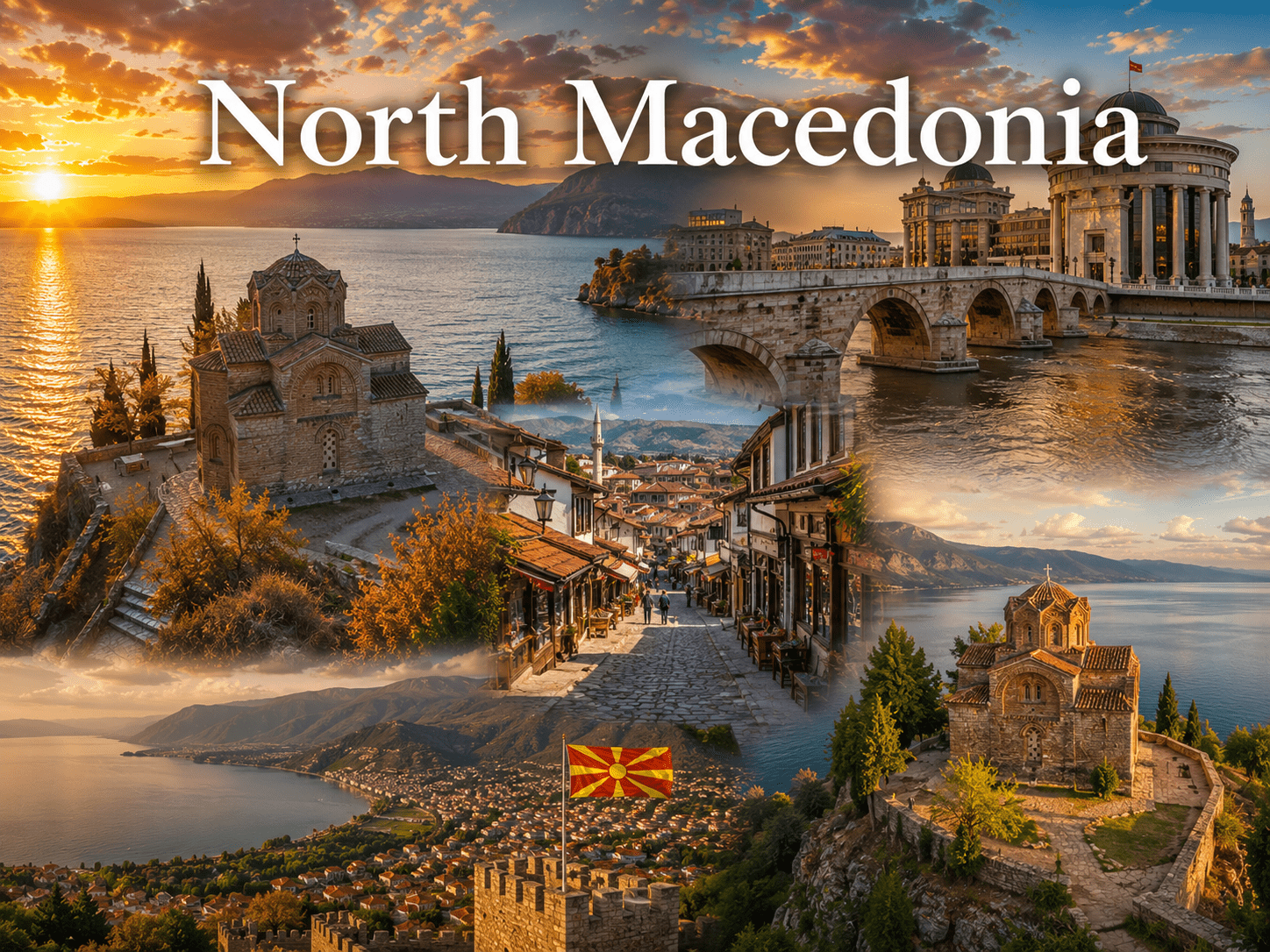
North Macedonia – A Hidden Gem of the Balkans
North Macedonia is one of the Balkans’ most fascinating and underrated destinations, known for its ancient history, dramatic mountains, beautiful lakes, Ottoman heritage, vibrant traditions, and warm hospitality. Located in Southeast Europe, this landlocked country combines medieval architecture, archaeological treasures, scenic landscapes, and rich cultural diversity into one unforgettable travel experience.
From the lively capital city of Skopje to the peaceful shores of Lake Ohrid, travelers can explore historic monasteries, charming old towns, mountain villages, and bustling bazaars influenced by centuries of Balkan, Byzantine, and Ottoman history.
The country is home to diverse ethnic communities, traditional music, flavorful cuisine, and festivals that celebrate centuries-old customs. Its blend of Eastern and Western cultural influences gives the nation a unique identity unlike anywhere else in Europe.
Although smaller than many European tourist destinations, the country continues attracting international visitors seeking authentic experiences, affordable travel, and natural beauty away from overcrowded tourism hotspots.
Historical Background of North Macedonia
Ancient Origins
The territory of North Macedonia has been inhabited since prehistoric times and played an important role in Balkan and Mediterranean history.
Ancient civilizations in the region included:
- Paeonians
- Illyrians
- Thracians
- Macedonian kingdoms
The area became associated with the ancient Kingdom of Macedonia during classical antiquity.
Roman and Byzantine Influence
The Romans later incorporated the territory into their empire, building:
- Roads
- Fortresses
- Cities
- Trade routes
After the division of the Roman Empire, Byzantine influence shaped:
- Religion
- Architecture
- Art
- Education
Ottoman Era
For centuries, the Ottoman Empire governed the region and introduced:
- Mosques
- Bazaars
- Caravanserais
- Islamic cultural influences
Ottoman heritage remains visible in many towns and cities today.
Yugoslav Period
In the 20th century, the region became part of Yugoslavia. During this period, industrialization and modernization expanded.
Independence
The country declared independence peacefully in 1991 following the breakup of Yugoslavia.
Geographical Location and Natural Features
Where Is North Macedonia Located?
North Macedonia is located in Southeast Europe within the Balkan Peninsula.
It shares borders with:
- Kosovo
- Serbia
- Bulgaria
- Greece
- Albania
Geographic Coordinates
- Approximate Coordinates: 41°N latitude and 22°E longitude
Landscape and Terrain
The country is famous for:
- Mountain ranges
- Lakes
- Valleys
- Rivers
- Forests
Mountainous terrain dominates much of the landscape, making the nation ideal for outdoor tourism and adventure activities.
Major Lakes
Important lakes include:
- Lake Ohrid
- Lake Prespa
- Lake Dojran
Lake Ohrid is one of Europe’s oldest and deepest lakes.
Climate in North Macedonia
Continental and Mediterranean Influences
North Macedonia experiences a combination of continental and Mediterranean climate patterns.
Summers
- Warm and sunny
- Ideal for lake tourism
Winters
- Cold in mountain regions
- Snowfall common in higher elevations
Best Seasons
Spring and autumn are especially popular due to:
- Pleasant temperatures
- Beautiful landscapes
- Comfortable sightseeing conditions
Culture and Traditions of North Macedonia
Cultural Diversity
North Macedonia is home to multiple ethnic and cultural communities including:
- Macedonians
- Albanians
- Turks
- Serbs
- Roma communities
This diversity contributes to:
- Music traditions
- Cuisine
- Festivals
- Religious heritage
- Artistic expression
Traditional Hospitality
Hospitality is an important cultural value. Guests are often welcomed with:
- Homemade food
- Coffee
- Traditional sweets
- Friendly conversation
Religion in North Macedonia
Religion plays an important role in cultural identity and historical heritage.
Major Religions
- Eastern Orthodox Christianity
- Islam
Churches, monasteries, and mosques contribute significantly to the architectural landscape.
Music and Folk Traditions
Traditional music in North Macedonia reflects Balkan rhythms and centuries of cultural exchange.
Musical Characteristics
- Folk dances
- Traditional instruments
- Complex rhythms
- Emotional singing styles
Traditional Dance
The “oro” circle dance is commonly performed during:
- Weddings
- Festivals
- Community celebrations
Cuisine of North Macedonia
Cuisine combines Balkan, Mediterranean, and Ottoman influences.
Popular Dishes
Tavče Gravče
A traditional baked bean dish considered a national specialty.
Ajvar
A roasted pepper spread popular across the Balkans.
Kebapi
Grilled minced meat served with bread and onions.
Shopska Salad
Fresh salad with tomatoes, cucumbers, peppers, and cheese.
Baklava
Sweet pastry influenced by Ottoman culinary traditions.
Economy of North Macedonia
Economic Overview
North Macedonia has a developing economy based on:
- Manufacturing
- Agriculture
- Trade
- Tourism
- Services
Currency
The official currency is the Macedonian Denar (MKD).
Agriculture
Agricultural products include:
- Grapes
- Tobacco
- Vegetables
- Fruits
- Wine production
Manufacturing and Industry
Important industries include:
- Automotive components
- Textiles
- Metal processing
- Food production
Tourism Growth
Tourism continues expanding due to:
- Lake resorts
- Historic sites
- Affordable travel experiences
- Mountain tourism
Major Cities in North Macedonia
Skopje – The Capital City
Skopje is the capital and largest city.
The city features:
- Historic bridges
- Ottoman bazaars
- Modern monuments
- Museums
- Restaurants
Ohrid
Ohrid is one of the country’s most famous tourism destinations due to:
- Lake Ohrid
- Ancient churches
- UNESCO heritage
- Scenic old town
Bitola
Bitola is known for:
- Historic architecture
- Ottoman heritage
- Café culture
Tetovo
Tetovo is famous for:
- Colorful Painted Mosque
- Mountain scenery
- Cultural diversity
Languages Spoken in North Macedonia
Official Language
Macedonian is the official language used in:
- Government
- Education
- Media
Other Languages
Other commonly spoken languages include:
- Albanian
- Turkish
- Serbian
- Romani
Multilingual communication is common in many regions.
Tourist Attractions in North Macedonia
Lake Ohrid
Lake Ohrid is among Europe’s most spectacular natural attractions.
Visitors enjoy:
- Crystal-clear water
- Historic churches
- Boat rides
- Lakeside cafes
Old Bazaar in Skopje
This Ottoman-era market district features:
- Traditional shops
- Mosques
- Tea houses
- Cultural heritage
Matka Canyon
Nature lovers visit Matka Canyon for:
- Kayaking
- Hiking
- Boat tours
- Cave exploration
Mavrovo National Park
The park offers:
- Skiing
- Mountain hiking
- Wildlife
- Scenic villages
North Macedonia and International Organizations
North Macedonia is a member of several international organizations including:
- United Nations (UN)
- NATO
- World Trade Organization (WTO)
- Council of Europe
Official Resources
Biodiversity and Natural Environment in North Macedonia
North Macedonia is known for its impressive natural diversity, featuring mountain ranges, deep lakes, forests, rivers, and protected national parks. Despite its relatively small size, the country contains a wide variety of ecosystems that attract nature lovers and outdoor travelers from across Europe.
Mountain Landscapes
Much of the territory is mountainous, creating dramatic scenery and ideal conditions for:
- Hiking
- Skiing
- Mountain biking
- Wildlife observation
Major mountain ranges include:
- Šar Mountains
- Korab Mountains
- Baba Mountain
- Jakupica Range
Lake Ecosystems
Lake Ohrid remains one of the nation’s greatest natural treasures. It supports many unique species found nowhere else in the world.
The lake environment is important for:
- Biodiversity
- Tourism
- Fishing
- Scientific research
Forests and Rivers
Forests cover significant portions of North Macedonia and provide habitats for:
- Bears
- Wolves
- Lynx
- Deer
- Eagles
Rivers and valleys support agriculture and rural communities.
National Parks and Protected Areas
Mavrovo National Park
One of the largest protected areas in North Macedonia, Mavrovo National Park offers:
- Alpine scenery
- Dense forests
- Ski resorts
- Hiking trails
- Traditional villages
The park is also home to the endangered Balkan lynx.
Pelister National Park
Located near Bitola, Pelister National Park is famous for:
- Glacial lakes
- Pine forests
- Mountain landscapes
Galicica National Park
Situated between Lake Ohrid and Lake Prespa, this park provides:
- Panoramic viewpoints
- Hiking routes
- Rare plant species
Festivals and Cultural Celebrations
Ohrid Summer Festival
The Ohrid Summer Festival is one of the most important cultural events in the Balkans.
The festival features:
- Classical music
- Theater performances
- International artists
- Historic venues
Galichnik Wedding Festival
This traditional festival recreates historic wedding customs complete with:
- Folk costumes
- Traditional dances
- Music performances
- Cultural rituals
Orthodox Religious Celebrations
Religious holidays remain deeply important across North Macedonia.
Celebrations often include:
- Church ceremonies
- Family meals
- Folk music
- Community gatherings
Traditional Clothing and Folk Heritage
Traditional Attire
Traditional clothing reflects centuries of Balkan craftsmanship.
Features often include:
- Embroidery
- Wool fabrics
- Decorative belts
- Handmade jewelry
Folk Dance Traditions
Circle dances known as “oro” remain important cultural expressions performed during:
- Weddings
- Festivals
- Public celebrations
Rural Heritage
Many mountain villages preserve traditional lifestyles, architecture, and agricultural customs.
Arts and Architecture in North Macedonia
Byzantine and Ottoman Influence
The architecture of North Macedonia reflects multiple historical periods including:
- Byzantine
- Ottoman
- Yugoslav
- Modern European styles
Churches and Monasteries
Historic Orthodox monasteries feature:
- Frescoes
- Religious art
- Stone architecture
- Peaceful mountain settings
Ottoman Bazaars
Cities such as Skopje and Bitola preserve old Ottoman marketplaces filled with:
- Cafés
- Tea houses
- Craft shops
- Traditional bakeries
Adventure Tourism in North Macedonia
Hiking and Trekking
Mountain landscapes make the country ideal for outdoor adventure tourism.
Popular activities include:
- Mountain climbing
- Forest trekking
- Nature photography
- Camping
Ski Tourism
Winter sports destinations attract visitors during snowy months.
Popular ski areas include:
- Mavrovo
- Popova Šapka
Lake Tourism
Lake Ohrid is famous for:
- Swimming
- Boat tours
- Fishing
- Lakeside relaxation
Transportation and Travel Around North Macedonia
International Airports
Major airports operate in:
- Skopje
- Ohrid
These airports connect the country with European destinations.
Road Transportation
Road travel is one of the easiest ways to explore North Macedonia.
Travel options include:
- Buses
- Rental cars
- Taxis
- Intercity coaches
Railway System
Rail connections operate between major cities and neighboring Balkan countries.
Best Time to Visit North Macedonia
Spring Season
Spring brings:
- Blooming landscapes
- Comfortable temperatures
- Green mountain scenery
Summer Season
Summer is perfect for:
- Lake tourism
- Festivals
- Outdoor cafés
- Hiking
Winter Season
Winter attracts visitors interested in:
- Skiing
- Snow-covered mountains
- Winter resorts
Food Culture and Culinary Traditions
Traditional Balkan Cuisine
Cuisine in North Macedonia combines Balkan and Mediterranean influences.
Popular Foods
Tavče Gravče
A baked bean specialty widely regarded as a national dish.
Shopska Salad
Fresh vegetables topped with cheese.
Kebapi
Grilled meat served with bread and onions.
Sarma
Stuffed cabbage rolls prepared during celebrations.
Desserts and Coffee Culture
Traditional desserts include:
- Baklava
- Tulumba
- Lokum
Coffee culture is highly social and important in urban life.
Wine and Vineyard Tourism
Wine Production
The country has a long wine-making tradition due to favorable climate and fertile valleys.
Popular wine regions produce:
- Red wines
- White wines
- Traditional Balkan varieties
Wine Tourism
Visitors enjoy:
- Vineyard tours
- Wine tastings
- Rural countryside experiences
Wine tourism is becoming increasingly popular across North Macedonia.
Education and Modern Development
Universities and Education
Major universities are located in:
- Skopje
- Bitola
- Tetovo
Educational fields include:
- Medicine
- Engineering
- Technology
- Humanities
Urban Modernization
Modern development continues expanding in:
- Infrastructure
- Tourism services
- Technology sectors
- Transportation
Youth and Innovation
Young entrepreneurs increasingly contribute to:
- Digital startups
- Creative industries
- Tourism businesses
Daily Life and Modern Lifestyle
Café Culture
Cafés are central to social life. People often spend hours socializing over coffee and conversation.
Family Traditions
Family gatherings remain extremely important during:
- Holidays
- Religious events
- Weddings
- Celebrations
Hospitality
Visitors frequently describe the hospitality of North Macedonia as warm and welcoming.
Hidden Gems in North Macedonia
Kratovo
This historic town is famous for:
- Stone bridges
- Medieval towers
- Volcanic landscapes
Kokino Observatory
An ancient archaeological observatory believed to date back thousands of years.
Vevčani Springs
Known for:
- Natural springs
- Traditional village atmosphere
- Scenic mountain surroundings
Shopping and Handicrafts
Traditional Crafts
Local artisans create:
- Wood carvings
- Handwoven textiles
- Pottery
- Silver jewelry
Local Markets
Markets offer:
- Handmade products
- Fresh produce
- Traditional foods
- Regional specialties
Environmental Sustainability
Conservation Efforts
Protected areas focus on:
- Wildlife conservation
- Forest protection
- Eco-tourism
- Sustainable development
Renewable Energy
The country continues investing in:
- Hydropower
- Solar energy
- Environmental modernization
Tourism Growth and International Appeal
Tourism continues growing because North Macedonia offers:
- Affordable European travel
- Cultural authenticity
- Beautiful nature
- Historic architecture
- Less crowded destinations
The country increasingly attracts:
- Backpackers
- Nature lovers
- Cultural travelers
- Digital nomads
Government and Political Structure
North Macedonia functions as a parliamentary republic with democratic institutions and a multi-party political system. Since gaining independence in 1991, the country has continued strengthening its political institutions and international partnerships.
Executive Branch
The executive branch includes:
- President
- Prime Minister
- Government ministries
These institutions oversee:
- National administration
- Economic policy
- Foreign relations
- Infrastructure development
Legislative Branch
The Assembly of the Republic is responsible for:
- Passing laws
- Budget approval
- Parliamentary oversight
- Political representation
Judicial System
The judiciary operates independently and interprets constitutional and legal matters across the nation.
Famous Landmarks in North Macedonia
Stone Bridge in Skopje
The Stone Bridge is one of the most iconic landmarks in Skopje.
The bridge symbolizes:
- Historical continuity
- Ottoman heritage
- Cultural connection between old and new districts
Church of Saint John at Kaneo
Located above Lake Ohrid, this church is among the most photographed sites in the Balkans.
Visitors admire:
- Lakeside scenery
- Byzantine architecture
- Sunset views
Old Bazaar of Skopje
The Old Bazaar is one of the largest Ottoman marketplaces in Southeast Europe.
It features:
- Craft stores
- Cafés
- Mosques
- Traditional restaurants
Samuel’s Fortress
This medieval fortress overlooking Ohrid provides panoramic views and historical significance.
Unique and Interesting Facts About North Macedonia
One of Europe’s Oldest Lakes
Lake Ohrid is among the oldest lakes in the world and contains unique ecosystems.
Balkan Cultural Crossroads
North Macedonia has historically connected Eastern and Western civilizations.
Rich Orthodox Heritage
The country contains hundreds of historic churches and monasteries with valuable frescoes and religious art.
Ancient Observatory
Kokino Observatory is considered one of the world’s oldest astronomical observatories.
Affordable European Destination
Travelers often choose the country for:
- Lower travel costs
- Scenic beauty
- Authentic cultural experiences
Business and Economic Opportunities
Tourism Industry Growth
Tourism continues becoming a major contributor to the economy.
Popular tourism sectors include:
- Cultural tourism
- Lake tourism
- Adventure travel
- Winter sports
- Wine tourism
Technology and Innovation
Urban centers increasingly support:
- IT companies
- Startup businesses
- Digital entrepreneurship
Agriculture and Wine
Agriculture remains important, especially in:
- Wine production
- Fruit farming
- Vegetable cultivation
- Tobacco production
Detailed Guide to Major Cities
Skopje
Skopje combines modern architecture with historic Ottoman districts.
Popular attractions include:
- Macedonia Square
- Stone Bridge
- Old Bazaar
- Museums
- Restaurants
The city also serves as the country’s business and transportation hub.
Ohrid
Ohrid is considered the tourism jewel of the nation.
Travelers visit for:
- UNESCO heritage sites
- Crystal-clear lake water
- Ancient churches
- Historic old town
Bitola
Bitola is famous for:
- Elegant architecture
- Café streets
- Ottoman heritage
- Cultural festivals
Tetovo
Tetovo is known for:
- Painted Mosque
- Mountain scenery
- Diverse cultural atmosphere
Festivals and Cultural Celebrations
Ohrid Summer Festival
This internationally recognized event brings together:
- Musicians
- Actors
- Artists
- Performers from around the world
Galichnik Wedding Festival
Traditional wedding ceremonies preserve ancient Balkan customs through:
- Folk music
- Costumes
- Ritual dances
Wine Festivals
Wine-producing regions organize festivals featuring:
- Local wines
- Traditional foods
- Music performances
Transportation and Infrastructure
Road Networks
Road infrastructure connects most major cities and tourism destinations.
Travel options include:
- Buses
- Taxis
- Rental cars
- Intercity transport
International Connections
Airports in Skopje and Ohrid provide access to:
- European capitals
- Balkan cities
- Seasonal tourism destinations
Public Transportation
Urban transportation systems include:
- City buses
- Taxi services
- Regional coaches
Education and Scientific Development
Universities
Higher education institutions continue attracting domestic and international students.
Popular academic fields include:
- Medicine
- Engineering
- Technology
- Business
- Humanities
Research and Innovation
Young professionals increasingly contribute to:
- Technology startups
- Digital services
- Tourism innovation
Cuisine and Culinary Experiences
Traditional Foods
Cuisine in North Macedonia combines Balkan comfort food with Mediterranean flavors.
Popular Meals
- Tavče Gravče
- Kebapi
- Sarma
- Shopska salad
- Grilled meats
Desserts
Traditional sweets include:
- Baklava
- Tulumba
- Lokum
Wine and Coffee
The country is well known for:
- Local wines
- Café culture
- Relaxed dining experiences
Suggested 7-Day Travel Itinerary
Day 1–2: Skopje
Explore museums, Old Bazaar, Stone Bridge, and local restaurants.
Day 3–4: Ohrid
Enjoy lakeside attractions, monasteries, and boat tours.
Day 5: Mavrovo National Park
Experience hiking, mountain villages, and nature tourism.
Day 6: Bitola
Discover Ottoman architecture and café culture.
Day 7: Wine Region Tour
Visit vineyards and countryside villages.
Why Travelers Love North Macedonia
Travelers appreciate North Macedonia because it offers:
- Affordable European travel
- Historic landmarks
- Beautiful mountains
- Authentic Balkan culture
- Friendly hospitality
- Scenic lakes
The country provides a peaceful and culturally rich alternative to crowded European tourism hotspots.
UNESCO and International Recognition
Several cultural and natural heritage sites associated with North Macedonia have international recognition through:
- UNESCO
- United Nations
- European institutions
Official Resources
- UNESCO World Heritage Centre
- United Nations North Macedonia Profile
- World Bank North Macedonia Overview
Challenges and Future Outlook
Economic Development
Development priorities include:
- Infrastructure modernization
- Job creation
- Tourism investment
- Technology growth
Environmental Protection
Conservation efforts focus on:
- Lake ecosystems
- National parks
- Sustainable tourism
European Integration
International cooperation and regional partnerships continue shaping future development goals.
Final Summary
North Macedonia is a remarkable Balkan destination filled with ancient history, scenic landscapes, mountain adventures, and rich cultural traditions. From the vibrant capital of Skopje to the peaceful beauty of Lake Ohrid, the country offers unforgettable experiences for travelers seeking authenticity, affordability, and natural beauty.
Its blend of Byzantine, Ottoman, and modern European influences creates a unique atmosphere where centuries of history coexist with growing tourism and modernization. Whether exploring monasteries, tasting traditional cuisine, hiking mountain trails, or relaxing beside ancient lakes, visitors discover a destination full of charm and cultural depth.
As tourism continues expanding, the country is becoming one of Europe’s most exciting emerging travel destinations.
North Macedonia Key Facts Table
| Category | Information |
|---|---|
| Official Name | Republic of North Macedonia |
| Capital City | Skopje |
| Region | Southeast Europe |
| Official Language | Macedonian |
| Currency | Macedonian Denar (MKD) |
| Population | Over 2 million |
| Major Religions | Eastern Orthodox Christianity and Islam |
| Climate | Continental and Mediterranean |
| Famous Lake | Lake Ohrid |
| Main Industries | Tourism, Manufacturing, Agriculture |
| Major Exports | Textiles, Wine, Machinery |
| UN Membership | Yes |
| Famous Landmark | Stone Bridge |
| Major National Park | Mavrovo National Park |
| Coastline | Landlocked Country |
FAQ Section
What is North Macedonia famous for?
The country is famous for Lake Ohrid, mountain scenery, Byzantine churches, Ottoman bazaars, and Balkan cultural heritage.
What language is spoken in North Macedonia?
Macedonian is the official language, while Albanian and other regional languages are also widely spoken.
What is the capital of North Macedonia?
Skopje is the capital city.
What currency is used in North Macedonia?
The official currency is the Macedonian Denar (MKD).
What are the best tourist attractions in North Macedonia?
Popular attractions include Lake Ohrid, Matka Canyon, Old Bazaar in Skopje, Mavrovo National Park, and historic monasteries.

