



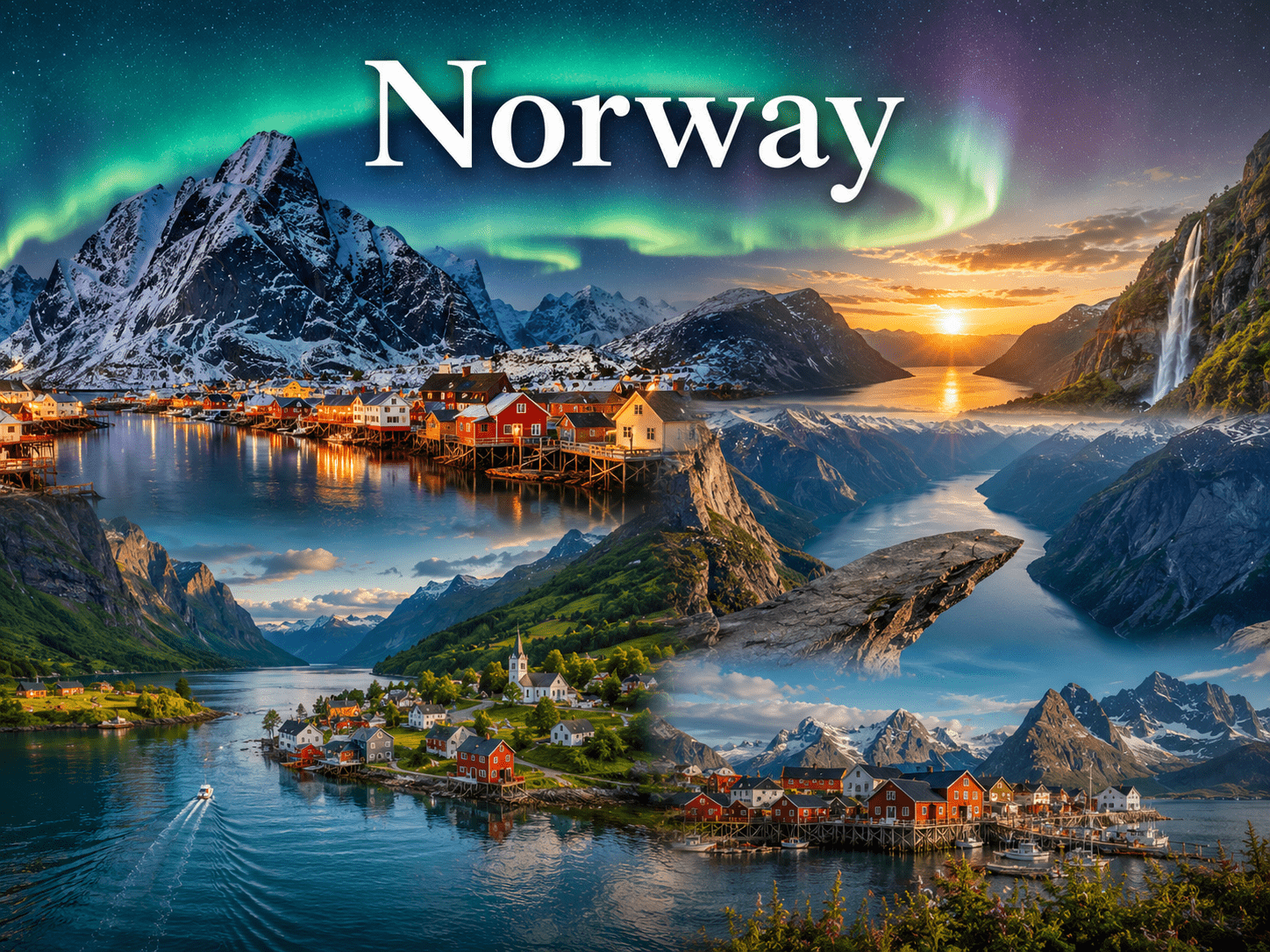
Norway – Land of Fjords, Vikings, and Northern Lights
Norway is one of the world’s most spectacular natural destinations, famous for dramatic fjords, snow-covered mountains, Viking heritage, Arctic landscapes, and high quality of life. Located in Northern Europe within Scandinavia, the country combines breathtaking wilderness with modern cities, rich traditions, and advanced sustainable development.
From the cosmopolitan streets of Oslo to the icy Arctic beauty of Tromsø and the scenic fjords along the western coastline, travelers can experience extraordinary landscapes unlike almost anywhere else on Earth. Towering mountains, waterfalls, glaciers, forests, and northern lights create unforgettable scenery throughout the year.
The nation is internationally respected for:
- Environmental sustainability
- Maritime history
- Renewable energy
- Social welfare systems
- Outdoor lifestyle
Its culture reflects centuries of Viking exploration, fishing traditions, Arctic survival, and close connections with nature. Modern architecture, innovative technology, and artistic creativity blend seamlessly with ancient heritage and Nordic customs.
Although the country is known for high living standards and modern infrastructure, traditional values such as simplicity, equality, and respect for nature remain deeply important across society.
Historical Background of Norway
Early Settlements and Viking Heritage
The territory of Norway has been inhabited since prehistoric times. Ancient communities depended on:
- Fishing
- Hunting
- Farming
- Seafaring
During the Viking Age, Scandinavian explorers and warriors from the region became famous across Europe and beyond.
The Viking Era
Between the 8th and 11th centuries, Viking sailors from Norway traveled extensively to:
- Britain
- Iceland
- Greenland
- North America
- Continental Europe
Vikings were known for:
- Longships
- Navigation skills
- Trade networks
- Exploration
- Maritime warfare
Medieval Period
Christianity gradually spread across the kingdom during the Middle Ages, leading to the construction of churches, monasteries, and royal institutions.
Union Periods
The country later entered political unions with:
- Denmark
- Sweden
These unions influenced language, governance, and trade systems.
Independence and Modern Development
The nation gained full independence in 1905 and later developed into one of the world’s most prosperous modern democracies.
Geographical Location and Natural Features
Where Is Norway Located?
Norway is located in Northern Europe on the Scandinavian Peninsula.
It shares borders with:
- Sweden
- Finland
- Russia
The country also has an extensive coastline facing:
- North Sea
- Norwegian Sea
- Arctic Ocean
Geographic Coordinates
- Approximate Coordinates: 60°N latitude and 8°E longitude
Fjords and Coastal Landscapes
The nation is globally famous for its fjords — deep coastal inlets carved by glaciers over thousands of years.
Major fjords include:
- Geirangerfjord
- Sognefjord
- Hardangerfjord
Mountains and Glaciers
Mountain ranges and glaciers dominate much of the landscape, creating ideal conditions for:
- Hiking
- Skiing
- Adventure tourism
Climate in Norway
Regional Climate Diversity
Norway experiences varying climate conditions depending on latitude and geography.
Coastal Regions
- Milder winters
- Wet conditions
- Ocean influence
Northern Arctic Regions
- Extremely cold winters
- Snowfall
- Polar nights
Midnight Sun and Polar Night
Northern areas experience:
- Midnight sun during summer
- Extended darkness during winter
These natural phenomena attract visitors worldwide.
Culture and Traditions of Norway
Nordic Lifestyle
Norway values:
- Equality
- Simplicity
- Community
- Sustainability
- Outdoor living
Outdoor Culture
Nature plays a central role in daily life.
Popular outdoor activities include:
- Hiking
- Skiing
- Fishing
- Camping
- Kayaking
Traditional Celebrations
Traditional customs remain important during:
- National Day celebrations
- Christmas
- Midsummer festivals
- Winter holidays
Religion in Norway
Historically, Christianity shaped cultural traditions and architecture.
Major Religion
- Christianity, especially Lutheran heritage
Modern society is highly secular, although churches and religious festivals remain culturally important.
Music and Arts in Norway
Traditional Folk Music
Traditional music often includes:
- Fiddles
- Folk singing
- Mountain-inspired melodies
Modern Music Scene
Norway has internationally recognized musicians in:
- Pop music
- Jazz
- Electronic music
- Classical music
Literature and Storytelling
The nation has strong literary traditions inspired by:
- Nature
- Folklore
- Viking sagas
- Arctic life
Cuisine of Norway
Cuisine reflects coastal geography and cold-climate traditions.
Popular Foods
Salmon
Fresh seafood is central to the national diet.
Cod and Stockfish
Fishing traditions remain historically important.
Brown Cheese
A sweet caramelized cheese unique to Scandinavian cuisine.
Meatballs and Stews
Traditional comfort foods are common during winter months.
Cinnamon Pastries
Nordic baked goods are popular throughout cafés and homes.
Economy of Norway
One of the World’s Wealthiest Economies
Norway has one of the highest standards of living globally.
The economy is based on:
- Oil and gas
- Renewable energy
- Shipping
- Fisheries
- Technology
Currency
The official currency is the Norwegian Krone (NOK).
Energy Industry
The nation is a major producer of:
- Petroleum
- Natural gas
- Hydropower energy
Maritime and Shipping Industry
Shipping and marine industries remain internationally significant.
Sustainability and Innovation
The country invests heavily in:
- Green technology
- Electric transportation
- Environmental protection
Major Cities in Norway
Oslo – The Capital City
Oslo is the capital and largest city.
The city is known for:
- Modern architecture
- Museums
- Waterfront districts
- Sustainability projects
Bergen
Bergen is famous for:
- Colorful harbor buildings
- Fjord tourism
- Rainy coastal climate
Tromsø
Tromsø is one of the best places to experience:
- Northern lights
- Arctic tourism
- Polar adventures
Stavanger
Stavanger is an important energy and oil industry center.
Languages Spoken in Norway
Official Language
Norwegian is the official language with two written forms:
- Bokmål
- Nynorsk
Other Languages
Additional languages spoken include:
- Sami languages
- English widely spoken
- Immigrant community languages
Tourist Attractions in Norway
Geirangerfjord
One of the most beautiful fjords in the world featuring:
- Waterfalls
- Cruise routes
- Mountain scenery
Northern Lights
Arctic regions attract visitors hoping to witness the aurora borealis.
Lofoten Islands
Known for:
- Fishing villages
- Arctic landscapes
- Hiking
- Photography
Preikestolen (Pulpit Rock)
A dramatic cliff overlooking Lysefjord and one of the nation’s most famous hiking destinations.
Norway and International Organizations
Norway participates in many international organizations including:
- United Nations (UN)
- NATO
- Nordic Council
- European Economic Area (EEA)
Official Resources
Biodiversity and Natural Environment in Norway
Norway is internationally recognized for its pristine natural environment, dramatic Arctic landscapes, and extraordinary biodiversity. The country’s ecosystems include:
- Fjords
- Glaciers
- Mountains
- Forests
- Arctic tundra
- Coastal islands
These landscapes support unique wildlife and outdoor tourism experiences.
Fjord Ecosystems
The famous fjords are among the nation’s most spectacular natural wonders. These deep glacial inlets create breathtaking scenery with:
- Waterfalls
- Cliffs
- Coastal villages
- Marine habitats
Many fjords are protected due to their environmental significance.
Forests and Wilderness
Large forested regions provide habitats for:
- Moose
- Wolves
- Lynx
- Foxes
- Reindeer
Nature conservation is an important priority across Norway.
Arctic Landscapes
Northern Arctic regions feature:
- Snow-covered plains
- Frozen coastlines
- Polar wildlife
- Tundra ecosystems
National Parks and Protected Areas
Jotunheimen National Park
This famous national park contains some of Northern Europe’s highest mountains.
Popular activities include:
- Hiking
- Glacier trekking
- Camping
- Mountaineering
Rondane National Park
Known for peaceful mountain scenery and wild reindeer populations.
Hardangervidda National Park
One of Europe’s largest mountain plateaus offering:
- Hiking trails
- Fishing lakes
- Arctic wildlife
Dovrefjell National Park
Visitors may encounter:
- Musk oxen
- Mountain foxes
- Alpine landscapes
Wildlife in Norway
Marine Wildlife
Coastal waters around Norway support:
- Whales
- Seals
- Dolphins
- Arctic fish species
Whale-watching tours are especially popular in northern regions.
Arctic Animals
Northern areas are home to:
- Polar foxes
- Reindeer
- Sea eagles
- Arctic birds
Birdwatching
The country is a paradise for birdwatchers due to:
- Coastal habitats
- Migratory bird routes
- Protected islands
Festivals and Cultural Celebrations
Constitution Day
The national day on May 17 is one of the biggest celebrations in Norway.
Celebrations include:
- Parades
- Traditional clothing
- Music
- Community gatherings
Sami Festivals
Indigenous Sami communities celebrate cultural traditions through:
- Reindeer events
- Folk music
- Traditional crafts
- Arctic heritage festivals
Music Festivals
Modern festivals showcase:
- Jazz
- Rock
- Electronic music
- Folk performances
Traditional Clothing and Heritage
Bunad Traditional Costume
The Bunad is a traditional outfit worn during celebrations and holidays.
Each region has unique designs featuring:
- Embroidery
- Silver jewelry
- Wool fabrics
Viking Heritage
Viking history remains an important cultural symbol.
Museums across Norway display:
- Viking ships
- Artifacts
- Historical exhibitions
Arts, Literature, and Architecture
Nordic Design
Modern Scandinavian design emphasizes:
- Simplicity
- Functionality
- Sustainability
- Natural materials
Literature
The nation has strong literary traditions inspired by:
- Nature
- Arctic life
- Folklore
- Viking sagas
Architecture
Architectural styles range from:
- Wooden stave churches
- Coastal fishing villages
- Contemporary eco-friendly buildings
Adventure Tourism in Norway
Fjord Cruises
Cruises through scenic fjords are among the most popular tourism experiences.
Travelers enjoy:
- Mountain scenery
- Waterfalls
- Quiet villages
- Arctic landscapes
Hiking Tourism
Popular hiking destinations include:
- Preikestolen
- Trolltunga
- Besseggen Ridge
Winter Sports
Winter tourism is highly developed with:
- Ski resorts
- Snowboarding
- Dog sledding
- Ice fishing
Northern Lights Tourism
Arctic regions attract photographers and travelers hoping to witness the aurora borealis.
Transportation and Travel Around Norway
Modern Infrastructure
Norway has advanced transportation systems connecting cities, fjords, and Arctic regions.
Rail Travel
Scenic railways offer spectacular mountain and fjord views.
Popular routes include:
- Bergen Railway
- Flåm Railway
Ferries and Coastal Travel
Ferries are essential for coastal communities and fjord transportation.
Airports
Major airports operate in:
- Oslo
- Bergen
- Tromsø
- Stavanger
Best Time to Visit Norway
Summer Season
Summer is ideal for:
- Fjord cruises
- Hiking
- Midnight sun experiences
- Outdoor festivals
Winter Season
Winter attracts visitors seeking:
- Northern lights
- Snow sports
- Arctic adventures
Autumn and Spring
These seasons offer:
- Colorful landscapes
- Fewer tourists
- Scenic photography opportunities
Food Culture and Culinary Traditions
Seafood Cuisine
Fresh seafood remains central to the cuisine of Norway.
Popular seafood includes:
- Salmon
- Cod
- Shrimp
- Crab
Traditional Nordic Dishes
Gravlax
Cured salmon served with herbs and sauces.
Meat Stews
Comfort food during colder seasons.
Brown Cheese
A sweet caramelized cheese popular nationwide.
Coffee Culture
Coffee consumption is among the highest in the world.
Cafés are important social spaces in urban areas.
Sami Indigenous Culture
Indigenous Heritage
The Sami people are indigenous communities living in Arctic regions.
Traditional Sami culture includes:
- Reindeer herding
- Handicrafts
- Folk music
- Arctic survival traditions
Cultural Preservation
Museums and festivals help preserve Sami identity and heritage.
Education and Innovation
High Educational Standards
Norway is internationally respected for its education system and research institutions.
Technology and Sustainability
The nation invests heavily in:
- Renewable energy
- Green technology
- Electric transportation
- Climate research
Digital Innovation
Technology sectors continue growing in:
- Artificial intelligence
- Maritime engineering
- Renewable industries
Daily Life and Modern Lifestyle
Work-Life Balance
The society values:
- Equality
- Family life
- Leisure time
- Outdoor recreation
Environmental Awareness
Sustainability is deeply integrated into:
- Transportation
- Energy systems
- Urban planning
- Consumer habits
Outdoor Living
People often spend weekends:
- Hiking
- Skiing
- Fishing
- Exploring nature
Hidden Gems in Norway
Senja Island
Known for:
- Arctic scenery
- Quiet fishing villages
- Hiking routes
Ålesund
A coastal town famous for:
- Art Nouveau architecture
- Ocean views
- Fjord access
Svalbard
An Arctic archipelago offering:
- Polar landscapes
- Wildlife
- Glaciers
- Remote exploration
Environmental Sustainability
Renewable Energy Leadership
Hydropower generates much of the country’s electricity.
Electric Vehicle Adoption
Norway is a global leader in electric vehicle usage and green transportation.
Conservation Policies
Protected areas preserve:
- Wildlife
- Marine ecosystems
- Arctic environments
Tourism Growth and International Appeal
Tourism continues growing because Norway offers:
- Spectacular landscapes
- Arctic adventures
- Sustainable travel
- Safe destinations
- Unique Nordic culture
Travelers include:
- Nature enthusiasts
- Luxury travelers
- Adventure tourists
- Photographers
Government and Political Structure
Norway operates as a constitutional monarchy with a parliamentary democratic system. The nation is internationally respected for political stability, transparency, and strong democratic institutions.
Constitutional Monarchy
The monarch serves as the ceremonial head of state, while elected officials manage daily governance and national policy.
Parliament and Government
The parliament oversees:
- Lawmaking
- Budget approval
- National policies
- Government accountability
The Prime Minister leads the executive branch and government ministries.
Judicial System
The judiciary operates independently and protects constitutional rights and legal standards across the country.
Famous Landmarks in Norway
Geirangerfjord
One of the country’s most famous fjords, Geirangerfjord is celebrated for:
- Steep cliffs
- Waterfalls
- Scenic cruises
- UNESCO recognition
Preikestolen (Pulpit Rock)
This dramatic cliff attracts hikers from around the world seeking panoramic fjord views.
Trolltunga
A spectacular rock formation extending above a mountain valley and lake.
Bryggen Wharf
Located in Bergen, Bryggen is a historic waterfront district featuring colorful wooden buildings and medieval trading heritage.
Arctic Cathedral
Situated in Tromsø, this modern church has become an architectural icon of the Arctic north.
Unique and Interesting Facts About Norway
Land of the Midnight Sun
Northern regions experience sunlight for 24 hours during parts of summer.
Northern Lights Destination
Norway is among the world’s best destinations for viewing the aurora borealis.
Viking Exploration Legacy
Vikings from the region reached:
- Iceland
- Greenland
- North America centuries ago
High Human Development
The country consistently ranks highly in:
- Education
- Healthcare
- Quality of life
- Environmental sustainability
Fjord Landscape
The coastline contains thousands of fjords shaped by ancient glaciers.
Business and Economic Opportunities
Energy Industry
Norway remains a major global producer of:
- Oil
- Natural gas
- Renewable hydropower
Green Technology
The nation invests heavily in:
- Electric transportation
- Renewable energy
- Sustainable innovation
- Carbon reduction technologies
Maritime Industries
Shipping and marine engineering continue playing vital economic roles.
Tourism and Hospitality
Tourism industries benefit from:
- Arctic travel
- Fjord cruises
- Adventure tourism
- Luxury eco-tourism
Detailed Guide to Major Cities
Oslo
Oslo is the capital and cultural center.
Popular attractions include:
- Opera House
- Viking museums
- Waterfront districts
- Art galleries
- Modern architecture
The city emphasizes sustainability and green urban development.
Bergen
Bergen is known as the gateway to the fjords.
Travelers enjoy:
- Bryggen Wharf
- Seafood markets
- Mountain cable cars
- Coastal scenery
Tromsø
Tromsø is famous for:
- Northern lights tourism
- Arctic culture
- Polar expeditions
- Winter adventures
Stavanger
Stavanger combines:
- Historic old town districts
- Oil industry headquarters
- Access to fjord hiking routes
Festivals and Cultural Celebrations
Constitution Day
Celebrated every May 17 with:
- Parades
- Traditional costumes
- Music
- Community events
Sami Cultural Festivals
Northern communities celebrate indigenous traditions through:
- Folk music
- Handicrafts
- Reindeer culture
- Arctic heritage events
Music and Arts Festivals
The country hosts international festivals featuring:
- Jazz
- Electronic music
- Classical concerts
- Folk performances
Transportation and Infrastructure
Scenic Railways
Rail systems are known for spectacular mountain scenery and comfortable travel experiences.
Coastal Ferry Routes
Ferries connect remote coastal communities and tourism destinations.
Airports
International airports provide access to:
- European capitals
- Arctic regions
- Global destinations
Sustainable Transportation
Electric vehicles and eco-friendly transportation systems are widely promoted across Norway.
Education and Scientific Development
Research and Innovation
The nation invests strongly in:
- Scientific research
- Climate studies
- Arctic exploration
- Renewable energy
Universities
Major universities attract students from around the world.
Popular academic fields include:
- Marine science
- Engineering
- Environmental studies
- Technology
Cuisine and Culinary Experiences
Seafood Excellence
Fresh seafood remains central to culinary traditions.
Popular dishes include:
- Salmon
- Cod
- King crab
- Shrimp
Nordic Comfort Foods
Traditional meals often include:
- Meat stews
- Potato dishes
- Rye bread
- Cream sauces
Modern Nordic Cuisine
Modern restaurants focus on:
- Sustainable ingredients
- Arctic seafood
- Local produce
- Innovative culinary techniques
Suggested 7-Day Travel Itinerary
Day 1–2: Oslo
Explore museums, waterfront attractions, and Nordic architecture.
Day 3–4: Bergen and Fjords
Enjoy fjord cruises, mountain scenery, and coastal culture.
Day 5: Flåm or Geirangerfjord
Experience scenic railways and dramatic landscapes.
Day 6: Tromsø
Discover Arctic culture and northern lights opportunities.
Day 7: Arctic Adventure
Try dog sledding, snowmobiling, or Sami cultural experiences.
Why Travelers Love Norway
Travelers admire Norway because of:
- Spectacular fjords
- Northern lights
- Arctic experiences
- Viking history
- Safe cities
- Sustainable lifestyle
The country combines untouched wilderness with modern Scandinavian comfort and innovation.
UNESCO and International Recognition
Several natural and cultural sites connected to Norway receive international recognition through:
- UNESCO
- United Nations
- Nordic organizations
Official Resources
Challenges and Future Outlook
Climate and Environmental Concerns
Environmental priorities include:
- Arctic protection
- Climate research
- Renewable transition
- Sustainable tourism
Economic Diversification
The economy increasingly focuses on:
- Technology
- Renewable energy
- Green innovation
- Sustainable industries
Arctic Development
Northern regions continue gaining strategic importance due to:
- Climate change
- Shipping routes
- Scientific research
Final Summary
Norway is one of the world’s most breathtaking destinations, combining Arctic beauty, Viking history, modern Scandinavian cities, and extraordinary natural landscapes. From dramatic fjords and snow-covered mountains to vibrant urban culture and sustainable innovation, the country offers unforgettable experiences for travelers of every kind.
Whether exploring Oslo’s modern architecture, hiking above fjords, witnessing the northern lights in Tromsø, or sailing through glacier-carved coastlines, visitors discover a nation deeply connected to nature and Nordic heritage.
Its combination of environmental leadership, cultural richness, outdoor adventure, and high quality of life continues making it one of Europe’s most admired and inspiring destinations.
Norway Key Facts Table
| Category | Information |
|---|---|
| Official Name | Kingdom of Norway |
| Capital City | Oslo |
| Region | Northern Europe |
| Official Language | Norwegian |
| Currency | Norwegian Krone (NOK) |
| Population | Over 5 million |
| Major Religion | Christianity |
| Climate | Arctic and Temperate |
| Famous Natural Feature | Fjords |
| Main Industries | Oil, Gas, Shipping, Tourism |
| Major Exports | Petroleum, Seafood, Natural Gas |
| UN Membership | Yes |
| Famous Phenomenon | Northern Lights |
| Major National Park | Jotunheimen National Park |
| Coastline | Extensive North Atlantic Coast |
FAQ Section
What is Norway famous for?
The country is famous for fjords, northern lights, Viking heritage, Arctic landscapes, and sustainable living.
What language is spoken in Norway?
Norwegian is the official language, while English is widely spoken.
What is the capital of Norway?
Oslo is the capital city.
What currency is used in Norway?
The official currency is the Norwegian Krone (NOK).
What are the best tourist attractions in Norway?
Popular attractions include Geirangerfjord, Lofoten Islands, Preikestolen, Tromsø, and Bergen.

