



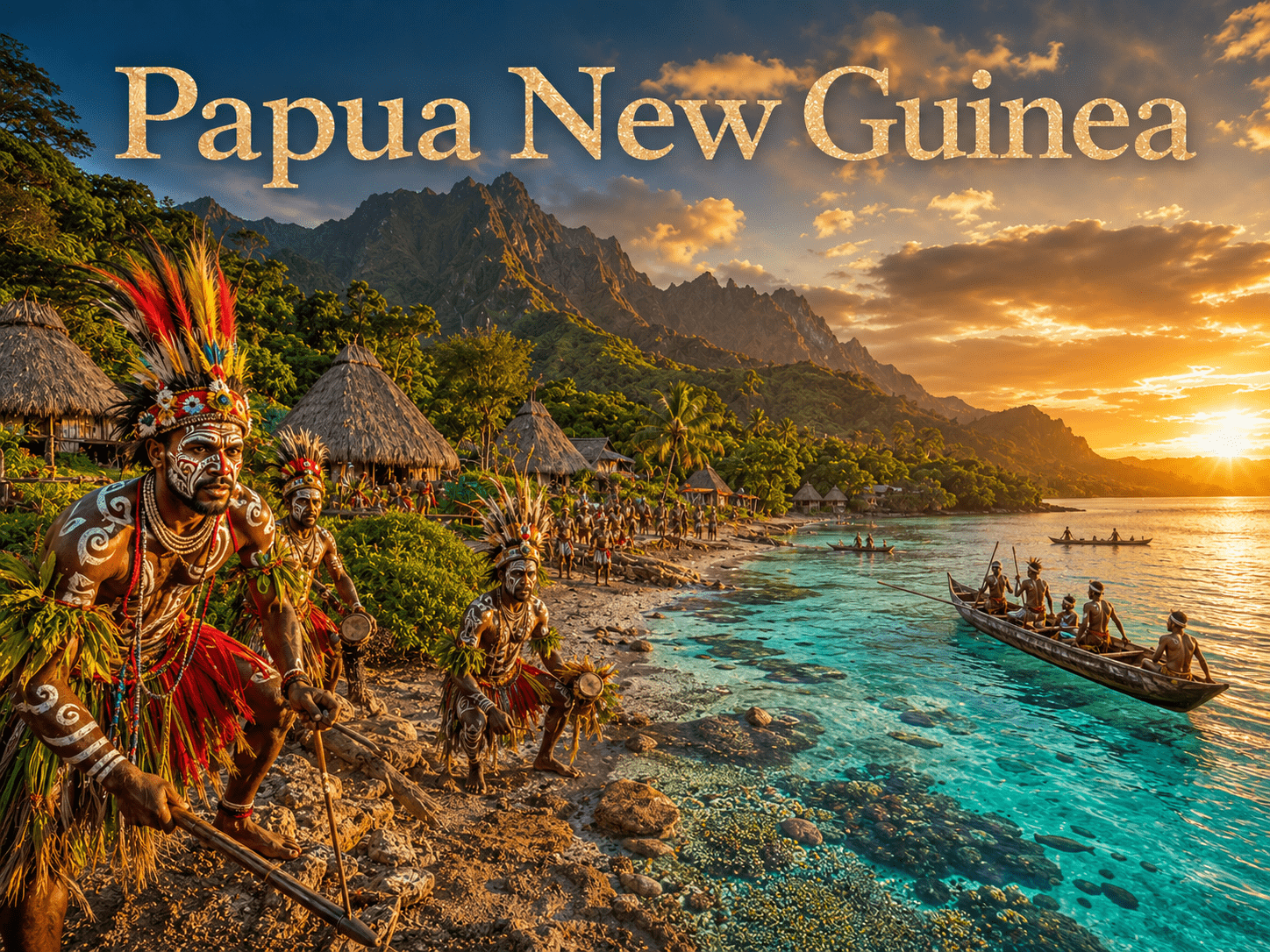
Papua New Guinea – A Land of Tribes, Rainforests, and Ocean Wonders
Papua New Guinea is one of the world’s most culturally diverse and naturally spectacular destinations. Located in the southwestern Pacific Ocean, the country is famous for ancient tribal traditions, tropical rainforests, volcanic mountains, coral reefs, remote islands, and extraordinary biodiversity.
The nation offers travelers an experience unlike almost anywhere else on Earth. Visitors encounter traditional villages, colorful festivals, rugged highlands, active volcanoes, and untouched marine ecosystems. With hundreds of indigenous communities and languages, the country preserves cultural traditions that have survived for centuries.
The country is internationally admired for:
- Tribal diversity
- Tropical biodiversity
- Mountain landscapes
- Scuba diving
- Cultural festivals
- Remote island adventures
Unlike crowded tourist destinations, Papua New Guinea remains largely unexplored, making it attractive for adventurous travelers and nature enthusiasts.
Historical Background of Papua New Guinea
Early Human Settlement
The islands and highlands of Papua New Guinea have been inhabited for thousands of years, making the region one of the oldest continuously inhabited areas in the Pacific.
Early communities developed:
- Agriculture
- Hunting traditions
- Fishing techniques
- Tribal societies
Tribal Development
Over centuries, isolated communities formed unique:
- Languages
- Ceremonies
- Artistic styles
- Cultural identities
European Exploration
European explorers arrived during the colonial era, bringing external trade and political influence to the islands.
Colonial Administration
Different regions were administered by:
- Germany
- Britain
- Australia
These colonial periods influenced:
- Education
- Infrastructure
- Government systems
Independence
Papua New Guinea gained independence in 1975 and became a sovereign nation within the Commonwealth.
Geographical Location and Natural Features
Where Is Papua New Guinea Located?
Papua New Guinea is located north of Australia in the southwestern Pacific Ocean.
Nearby regions include:
- Indonesia
- Solomon Islands
- Coral Sea
- Pacific Ocean
Geographic Coordinates
- Approximate Coordinates: 6°S latitude and 147°E longitude
Island and Mountain Geography
The country contains:
- Tropical islands
- Dense rainforests
- Mountain ranges
- River valleys
- Volcanoes
Highland Regions
The central highlands are famous for:
- Rugged mountains
- Traditional tribal communities
- Cool climates
- Agricultural valleys
Climate in Papua New Guinea
Tropical Climate
Papua New Guinea experiences warm tropical conditions throughout much of the year.
Climate Features
- High humidity
- Tropical rainfall
- Warm coastal weather
- Cooler mountain temperatures
Best Time to Visit
The best tourism season generally runs from:
- May to October
This period offers:
- Better trekking conditions
- More comfortable weather
- Improved diving visibility
Culture and Traditions of Papua New Guinea
Extraordinary Cultural Diversity
Papua New Guinea is considered one of the world’s most culturally diverse nations.
The country contains:
- Hundreds of tribes
- Unique traditions
- Distinct languages
- Traditional ceremonies
Tribal Communities
Many tribal groups continue preserving:
- Ancient customs
- Ceremonial dress
- Traditional music
- Ritual dances
Community Life
Traditional village life emphasizes:
- Family relationships
- Tribal cooperation
- Respect for elders
- Cultural identity
Religion in Papua New Guinea
Christianity is the dominant religion, although traditional spiritual beliefs still influence many communities.
Religious Traditions
Religious practices shape:
- Festivals
- Community gatherings
- Village ceremonies
- Cultural celebrations
Music and Arts in Papua New Guinea
Traditional Music
Traditional music includes:
- Drumming
- Singing
- Bamboo instruments
- Ceremonial chants
Dance Performances
Dance plays an important role in:
- Festivals
- Tribal ceremonies
- Cultural identity
Artistic Traditions
Local art includes:
- Wood carvings
- Masks
- Body painting
- Woven crafts
Cuisine of Papua New Guinea
Cuisine reflects tropical island ingredients and traditional cooking techniques.
Popular Foods
Seafood
Fish and shellfish are important parts of coastal diets.
Root Vegetables
Common ingredients include:
- Sweet potato
- Taro
- Yam
Tropical Fruits
Popular fruits include:
- Banana
- Papaya
- Coconut
- Pineapple
Traditional Cooking
Many traditional meals are cooked using:
- Earth ovens
- Open fires
- Banana leaves
Economy of Papua New Guinea
Resource-Based Economy
Papua New Guinea relies on natural resources and agriculture.
Currency
The official currency is the Papua New Guinean Kina (PGK).
Major Industries
Key economic sectors include:
- Mining
- Agriculture
- Forestry
- Fishing
- Tourism
Export Products
Major exports include:
- Gold
- Coffee
- Palm oil
- Natural gas
Major Cities in Papua New Guinea
Port Moresby – The Capital
Port Moresby is the capital and largest city.
The city serves as:
- Government center
- Economic hub
- International gateway
Lae
Lae is an important industrial and port city.
Mount Hagen
Mount Hagen is famous for:
- Highland culture
- Tribal festivals
- Agricultural trade
Languages Spoken in Papua New Guinea
Linguistic Diversity
Papua New Guinea has one of the highest numbers of languages in the world.
Official Languages
The official languages include:
- English
- Tok Pisin
- Hiri Motu
Tribal Languages
Hundreds of indigenous languages continue to be spoken across villages and regions.
Tourist Attractions in Papua New Guinea
Kokoda Track
One of the world’s most famous trekking routes known for:
- Mountain scenery
- World War II history
- Jungle trails
Sepik River
A culturally important river region famous for:
- Traditional villages
- Tribal art
- River expeditions
Tufi Fjords
Spectacular fjord-like coastal landscapes popular for:
- Diving
- Canoeing
- Eco-tourism
Milne Bay
A marine paradise featuring:
- Coral reefs
- Tropical islands
- Diving sites
Papua New Guinea and International Organizations
Papua New Guinea is a member of several international organizations including:
- United Nations (UN)
- Commonwealth of Nations
- Pacific regional organizations
Official Resources
Biodiversity and Natural Environment in Papua New Guinea
Papua New Guinea is one of the most biologically diverse countries in the world. Its isolated mountain valleys, tropical rainforests, coral reefs, mangroves, rivers, and islands support thousands of rare plant and animal species.
The country’s extraordinary ecosystems attract:
- Scientists
- Wildlife photographers
- Birdwatchers
- Eco-tourists
- Adventure travelers
Large areas remain untouched by modern development, preserving some of the Pacific region’s richest natural habitats.
Tropical Rainforests
Dense rainforests cover large parts of Papua New Guinea.
These forests contain:
- Exotic birds
- Rare orchids
- Giant trees
- Tropical mammals
- River ecosystems
Mountain Ecosystems
The highlands feature:
- Cool climates
- Mist-covered valleys
- Agricultural terraces
- Tribal villages
Coral Reefs and Marine Ecosystems
Marine environments include:
- Coral reefs
- Deep-sea ecosystems
- Tropical fish habitats
- Mangrove forests
National Parks and Protected Areas
Varirata National Park
Known for:
- Birdwatching
- Rainforest hiking
- Scenic mountain views
Kokoda Track Region
Protected rainforest and mountain areas preserve:
- Historical sites
- Biodiversity
- Indigenous culture
Marine Conservation Zones
Marine parks protect:
- Coral reefs
- Sea turtles
- Tropical fish populations
- Coastal ecosystems
Wildlife in Papua New Guinea
Birds of Paradise
Papua New Guinea is world-famous for Birds of Paradise species known for:
- Bright feathers
- Elaborate courtship dances
- Rare rainforest habitats
Rainforest Wildlife
Wildlife includes:
- Tree kangaroos
- Cassowaries
- Reptiles
- Tropical insects
Marine Wildlife
Ocean ecosystems support:
- Dolphins
- Sharks
- Sea turtles
- Coral reef fish
Tribal Festivals and Cultural Celebrations
Mount Hagen Cultural Show
One of the country’s most famous festivals featuring:
- Tribal performances
- Ceremonial costumes
- Traditional dances
- Cultural exhibitions
Goroka Festival
Celebrates the diversity of tribal traditions through:
- Singing
- Dancing
- Body painting
- Traditional music
Village Ceremonies
Many villages continue organizing:
- Ritual celebrations
- Community feasts
- Storytelling gatherings
Indigenous Communities and Traditional Life
Tribal Diversity
Papua New Guinea contains hundreds of tribal communities with distinct customs and languages.
Traditional Housing
Village architecture often includes:
- Elevated wooden homes
- Thatched roofs
- Bamboo construction
Traditional Clothing
Ceremonial attire includes:
- Feathers
- Body paint
- Shell jewelry
- Tribal ornaments
Cultural Preservation
Communities continue preserving:
- Oral history
- Traditional farming
- Indigenous crafts
- Spiritual customs
Arts, Crafts, and Cultural Heritage
Wood Carving Traditions
Artisans produce:
- Ceremonial masks
- Canoe carvings
- Tribal sculptures
Body Art and Decoration
Traditional body decoration plays an important role during:
- Festivals
- Ceremonies
- Community celebrations
Music and Dance
Music includes:
- Bamboo flutes
- Drums
- Choral singing
- Ceremonial rhythms
Adventure Tourism in Papua New Guinea
Trekking Adventures
The country offers world-famous trekking routes through:
- Mountains
- Rainforests
- Historical battlefields
Scuba Diving
Papua New Guinea is considered one of the Pacific’s top diving destinations.
Divers explore:
- Coral reefs
- Shipwrecks
- Marine sanctuaries
- Tropical fish ecosystems
River Expeditions
Travelers can explore:
- Remote villages
- Jungle waterways
- Traditional river communities
Volcano Exploration
Volcanic regions provide:
- Dramatic landscapes
- Adventure tourism
- Geological attractions
Transportation and Travel Around Papua New Guinea
International Access
Flights connect Papua New Guinea with:
- Australia
- Asia
- Pacific island nations
Domestic Flights
Because of rugged geography, domestic aviation is essential for:
- Highland access
- Remote communities
- Tourism routes
Boat Transportation
Boats connect:
- Coastal communities
- Islands
- River regions
Road Networks
Road systems mainly connect:
- Major towns
- Highlands
- Urban centers
Best Time to Visit Papua New Guinea
Dry Season
The best tourism period usually runs from:
- May to October
This season offers:
- Better trekking conditions
- Improved diving visibility
- Reduced rainfall
Tropical Weather
Warm tropical conditions remain common throughout most of the year.
Food Culture and Culinary Traditions
Traditional Highland Cuisine
Meals often include:
- Sweet potatoes
- Vegetables
- Pork
- Root crops
Coastal Seafood Dishes
Coastal communities enjoy:
- Fresh fish
- Crab
- Shellfish
- Coconut-based recipes
Traditional Cooking Methods
Food is commonly prepared using:
- Earth ovens
- Heated stones
- Banana leaves
Maritime Heritage and Island Traditions
Canoe Culture
Traditional canoes remain important for:
- Fishing
- Transportation
- Ceremonial events
Coastal Communities
Island communities maintain strong connections to:
- Ocean navigation
- Fishing traditions
- Marine resources
Education and Modern Development
Expanding Education
Modern education systems support:
- Technology
- Environmental science
- Tourism training
- Public services
Infrastructure Development
Development priorities include:
- Transportation
- Communication systems
- Healthcare access
Tourism Growth
Eco-tourism and cultural tourism continue expanding internationally.
Daily Life and Modern Lifestyle
Village Life
Traditional village communities remain central to the culture of Papua New Guinea.
Urban Development
Cities increasingly feature:
- Modern businesses
- Educational institutions
- Transportation services
Cultural Balance
Many communities balance:
- Modern technology
- Traditional customs
- Tribal identity
Hidden Gems in Papua New Guinea
Tufi Fjords
Beautiful fjord-like coastal scenery surrounded by rainforest and coral reefs.
New Britain
Known for:
- Volcanoes
- Diving
- Indigenous culture
Madang
A coastal region famous for:
- Marine biodiversity
- Coral reefs
- Tropical landscapes
Environmental Sustainability
Rainforest Conservation
Protected areas help preserve:
- Wildlife habitats
- Tribal lands
- Biodiversity
Marine Protection
Conservation efforts focus on:
- Coral reefs
- Sustainable fishing
- Marine biodiversity
Climate Change Challenges
Environmental risks include:
- Deforestation
- Coastal erosion
- Rising sea levels
Tourism Growth and International Appeal
Tourism continues growing because Papua New Guinea offers:
- Tribal culture
- Adventure tourism
- Rainforest exploration
- Diving experiences
- Unique festivals
The country attracts:
- Eco-tourists
- Adventure travelers
- Anthropologists
- Divers
- Wildlife photographers
Government and Political Structure
Papua New Guinea operates as a parliamentary democracy within the Commonwealth. Since independence, the country has focused on balancing modern national development with the preservation of tribal traditions and cultural diversity.
National Government
The government oversees:
- Infrastructure development
- Education
- Healthcare
- Environmental conservation
- International relations
Provincial Administration
Different provinces manage local development, cultural preservation, and regional economic activities.
International Relations
Papua New Guinea maintains diplomatic partnerships with nations across:
- Asia
- Oceania
- Europe
- North America
Famous Landmarks in Papua New Guinea
Kokoda Track
The Kokoda Track is one of the country’s most famous adventure destinations.
The route is known for:
- Jungle trekking
- Mountain scenery
- World War II history
- Cultural encounters
Sepik River
One of the Pacific region’s most culturally important river systems.
Visitors experience:
- Traditional villages
- Tribal artwork
- Canoe journeys
- River expeditions
Tufi Fjords
Beautiful coastal fjords surrounded by:
- Rainforests
- Coral reefs
- Traditional villages
Mount Wilhelm
The highest mountain in Papua New Guinea and a popular trekking destination.
Milne Bay
Internationally recognized for:
- Coral reefs
- Diving
- Tropical islands
- Marine biodiversity
Unique and Interesting Facts About Papua New Guinea
Extraordinary Language Diversity
Papua New Guinea has one of the highest numbers of languages spoken in any country.
One of the World’s Most Diverse Cultures
Hundreds of tribal communities preserve distinct traditions and ceremonies.
Birds of Paradise
The country is globally famous for rare Birds of Paradise species.
Remote Wilderness
Large regions remain relatively untouched by modern development.
Rich Marine Ecosystems
Coral reefs and tropical waters support extraordinary biodiversity.
Business and Economic Opportunities
Natural Resource Industries
Important economic sectors include:
- Mining
- Natural gas
- Agriculture
- Forestry
- Fisheries
Tourism Industry
Tourism opportunities continue growing through:
- Adventure tourism
- Cultural tourism
- Eco-tourism
- Diving tourism
Agricultural Exports
Major exports include:
- Coffee
- Palm oil
- Cocoa
- Coconut products
Detailed Guide to Major Cities
Port Moresby
Port Moresby is the nation’s capital and primary international gateway.
The city contains:
- Government institutions
- Museums
- Hotels
- Cultural centers
Lae
Lae serves as an important industrial and shipping center.
Mount Hagen
Mount Hagen is internationally known for:
- Highland culture
- Tribal festivals
- Agricultural markets
Madang
A scenic coastal destination admired for:
- Coral reefs
- Diving
- Tropical scenery
Festivals and Cultural Celebrations
Mount Hagen Show
One of the country’s largest cultural events featuring:
- Tribal costumes
- Music
- Dance
- Ceremonial performances
Goroka Festival
Celebrates tribal diversity and traditional cultural identity.
Community Celebrations
Village ceremonies often include:
- Feasting
- Storytelling
- Ritual performances
- Traditional music
Transportation and Infrastructure
Air Transportation
Domestic flights are essential because mountainous terrain makes road travel difficult in many regions.
Maritime Transport
Boats connect:
- Coastal communities
- Islands
- River settlements
Road Networks
Road systems mainly connect:
- Urban areas
- Highland regions
- Agricultural centers
Education and Scientific Development
Educational Expansion
Universities and institutions support:
- Environmental research
- Marine science
- Agriculture
- Public administration
Biodiversity Research
Scientists study:
- Rainforests
- Marine ecosystems
- Rare wildlife species
Cultural Preservation
Educational programs encourage:
- Indigenous language preservation
- Cultural heritage protection
- Traditional knowledge documentation
Cuisine and Culinary Experiences
Traditional Foods
Popular ingredients include:
- Sweet potato
- Taro
- Coconut
- Seafood
Highland Cooking
Mountain communities often prepare:
- Pork dishes
- Vegetable stews
- Earth-oven meals
Coastal Cuisine
Coastal areas specialize in:
- Fish dishes
- Coconut-based recipes
- Tropical fruits
Suggested 7-Day Travel Itinerary
Day 1–2: Port Moresby
Explore museums, cultural centers, and local markets.
Day 3: Highland Adventure
Travel to Mount Hagen for tribal culture and mountain scenery.
Day 4: Cultural Festival Experience
Attend traditional dance and music performances.
Day 5: Sepik River Expedition
Visit traditional river villages and tribal art communities.
Day 6: Diving and Marine Exploration
Explore coral reefs and marine biodiversity.
Day 7: Coastal Relaxation
Enjoy tropical beaches and island scenery before departure.
Why Travelers Love Papua New Guinea
Travelers admire Papua New Guinea because it offers:
- Tribal diversity
- Rainforest adventures
- Rare wildlife
- Diving experiences
- Remote island exploration
- Authentic cultural encounters
The country combines natural wilderness, traditional cultures, and Pacific island beauty unlike almost anywhere else on Earth.
UNESCO and International Recognition
Several natural and cultural regions connected to Papua New Guinea receive international recognition through:
- UNESCO
- United Nations
- Environmental conservation organizations
Official Resources
- UNESCO World Heritage Centre
- United Nations Papua New Guinea Profile
- World Bank Papua New Guinea Overview
Challenges and Future Outlook
Environmental Conservation
Important priorities include:
- Rainforest protection
- Coral reef conservation
- Wildlife preservation
- Sustainable tourism
Infrastructure Challenges
Mountainous geography creates transportation and development difficulties.
Climate Change Risks
Environmental threats include:
- Rising sea levels
- Coastal erosion
- Deforestation
Sustainable Development
Future growth focuses on:
- Eco-tourism
- Renewable energy
- Cultural preservation
Final Summary
Papua New Guinea is one of the world’s most extraordinary destinations for travelers seeking cultural authenticity, natural wilderness, and unforgettable adventure experiences. From tribal festivals in the highlands and rainforest trekking routes to coral reefs, tropical islands, and river expeditions, the country offers remarkable diversity across both culture and nature.
Its hundreds of indigenous communities preserve traditions, languages, music, and ceremonies that continue shaping daily life throughout the islands and mountain regions. At the same time, the nation’s rainforests, marine ecosystems, and rare wildlife make it one of the Pacific’s most biologically important environments.
Whether exploring remote villages, diving beside colorful coral reefs, trekking mountain trails, or attending cultural festivals, visitors discover a country unlike any other in Oceania. For eco-tourists, adventurers, photographers, and cultural travelers, Papua New Guinea remains one of the last truly unique frontiers of international travel.
Papua New Guinea Key Facts Table
| Category | Information |
|---|---|
| Official Name | Independent State of Papua New Guinea |
| Capital City | Port Moresby |
| Region | Oceania |
| Official Languages | English, Tok Pisin, Hiri Motu |
| Currency | Papua New Guinean Kina (PGK) |
| Population | Over 10 million |
| Major Religion | Christianity |
| Climate | Tropical Climate |
| Famous Landmark | Kokoda Track |
| Main Industries | Mining, Agriculture, Forestry |
| Major Exports | Gold, Coffee, Natural Gas |
| UN Membership | Yes |
| Famous Wildlife | Birds of Paradise |
| Major Tourism Activity | Trekking and Diving |
| Ocean Region | Southwestern Pacific Ocean |
FAQ Section
What is Papua New Guinea famous for?
The country is famous for tribal cultures, rainforest biodiversity, Birds of Paradise, diving, and mountain trekking.
What languages are spoken in Papua New Guinea?
The official languages are English, Tok Pisin, and Hiri Motu, alongside hundreds of tribal languages.
What is the capital of Papua New Guinea?
Port Moresby is the capital city.
What currency is used in Papua New Guinea?
The official currency is the Papua New Guinean Kina (PGK).
What are the best tourist attractions in Papua New Guinea?
Popular attractions include Kokoda Track, Sepik River, Tufi Fjords, Mount Wilhelm, and Milne Bay.

