



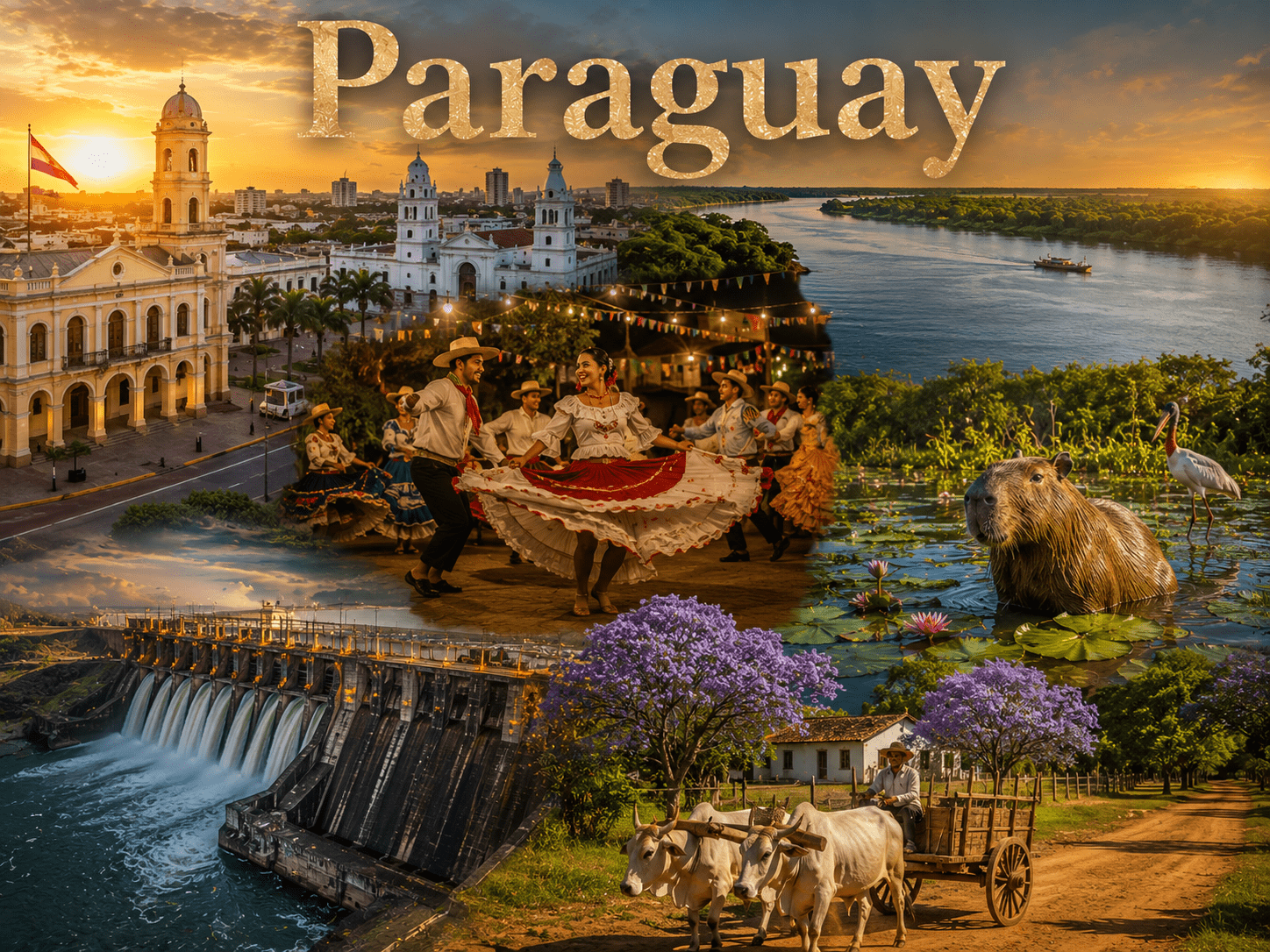
Paraguay – The Heart of South America
Paraguay is one of South America’s most unique and culturally rich destinations. Known for its rivers, green landscapes, indigenous heritage, colonial history, and warm hospitality, the country offers visitors an authentic South American experience away from crowded tourist routes.
Located in the center of the continent, the nation combines modern urban life with traditional customs, agricultural landscapes, wildlife reserves, and historical towns. Travelers can explore vibrant markets, riverfront cities, Jesuit ruins, tropical forests, and cultural festivals that reflect both indigenous and European influences.
The country is internationally admired for:
- Rich cultural identity
- Bilingual heritage
- River landscapes
- Traditional music
- Wildlife reserves
- Agricultural economy
Unlike many heavily commercialized travel destinations, Paraguay offers peaceful environments, authentic traditions, and strong cultural connections throughout its cities and rural communities.
Historical Background of Paraguay
Indigenous Civilizations
Before European colonization, indigenous communities inhabited the territory of Paraguay for centuries.
These communities developed:
- Agriculture
- Fishing traditions
- Trade networks
- Spiritual customs
The Guaraní people remain one of the country’s most influential indigenous groups.
Spanish Colonial Era
Spanish explorers arrived during the 16th century, establishing settlements and colonial administration.
During this period:
- Christianity spread
- Colonial towns developed
- Trade routes expanded
Jesuit Missions
Jesuit missions became important centers for:
- Education
- Religion
- Community organization
Historic mission ruins remain important cultural landmarks today.
Independence
Paraguay gained independence in the early 19th century and gradually developed into a sovereign South American republic.
Geographical Location and Natural Features
Where Is Paraguay Located?
Paraguay is a landlocked country located in the center of South America.
The nation borders:
- Argentina
- Brazil
- Bolivia
Geographic Coordinates
- Approximate Coordinates: 23°S latitude and 58°W longitude
Major Rivers
Important river systems include:
- Paraguay River
- Paraná River
These rivers support:
- Transportation
- Agriculture
- Fishing
- Trade
Regional Geography
The country contains:
- Grasslands
- Wetlands
- Forests
- Agricultural plains
Climate in Paraguay
Subtropical Climate
Paraguay experiences warm subtropical weather across most regions.
Climate Characteristics
- Hot summers
- Mild winters
- Seasonal rainfall
- Warm temperatures
Best Time to Visit
The most comfortable tourism season generally runs from:
- May to September
This period offers:
- Cooler weather
- Pleasant sightseeing conditions
- Outdoor travel opportunities
Culture and Traditions of Paraguay
Bilingual Cultural Identity
Paraguay is famous for preserving both Spanish and Guaraní cultural traditions.
Traditional Community Life
Cultural values emphasize:
- Family relationships
- Hospitality
- Respect for tradition
- Community celebrations
Folk Traditions
Traditional customs include:
- Music festivals
- Artisan crafts
- Dance performances
- Local storytelling
Religion in Paraguay
Christianity, especially Roman Catholicism, is the dominant religion.
Religious Influence
Religious traditions shape:
- Public holidays
- Festivals
- Community life
- Cultural customs
Churches remain important social and historical landmarks.
Music and Arts in Paraguay
Traditional Music
Music is an important part of life in Paraguay.
Popular instruments include:
- Harp
- Guitar
- Percussion instruments
Folk Dance
Traditional dances are performed during:
- Festivals
- Community events
- National celebrations
Handicrafts
Artisans create:
- Lace textiles
- Pottery
- Wood carvings
- Leather crafts
Cuisine of Paraguay
Cuisine reflects indigenous and Spanish influences.
Popular Foods
Sopa Paraguaya
A traditional cornmeal-based dish often served during celebrations.
Chipa
Cheese bread popular throughout the country.
Grilled Meat
Barbecue traditions remain central to local cuisine.
Traditional Soups
Hearty soups are commonly enjoyed in family meals.
Agricultural Ingredients
Common ingredients include:
- Corn
- Cassava
- Beef
- Cheese
- Rice
Economy of Paraguay
Agricultural Economy
Paraguay has a strong agricultural sector.
Major agricultural products include:
- Soybeans
- Corn
- Beef
- Wheat
Currency
The official currency is the Paraguayan Guaraní (PYG).
Important Industries
Key economic sectors include:
- Agriculture
- Hydroelectric energy
- Manufacturing
- Trade
Hydroelectric Power
The country is internationally known for large hydroelectric projects shared with neighboring countries.
Major Cities in Paraguay
Asunción – The Capital
Asunción is the capital and largest city.
The city is famous for:
- Historic architecture
- Riverfront scenery
- Markets
- Government institutions
Ciudad del Este
Ciudad del Este is an important commercial and border city.
Encarnación
Encarnación is known for:
- Riverside beaches
- Festivals
- Jesuit heritage
Languages Spoken in Paraguay
Official Languages
The official languages are:
- Spanish
- Guaraní
Cultural Importance of Guaraní
Guaraní remains widely spoken in:
- Rural communities
- Daily conversation
- Traditional culture
This bilingual identity makes Paraguay unique in South America.
Tourist Attractions in Paraguay
Jesuit Missions
Historic ruins reflect colonial religious history and cultural heritage.
Itaipu Dam
One of the world’s largest hydroelectric dams.
Asunción Historic District
Features:
- Colonial architecture
- Museums
- Cultural landmarks
Pantanal Wetlands
Wildlife-rich ecosystems popular for:
- Birdwatching
- Eco-tourism
- Nature photography
Paraguay and International Organizations
Paraguay is a member of several international organizations including:
- United Nations (UN)
- MERCOSUR
- Organization of American States (OAS)
Official Resources
Biodiversity and Natural Environment in Paraguay
Paraguay contains diverse natural environments including wetlands, forests, rivers, grasslands, and subtropical ecosystems. Although often less internationally known than some neighboring destinations, the country supports impressive biodiversity and important wildlife habitats.
Nature enthusiasts visit the country to experience:
- Wetland ecosystems
- River landscapes
- Tropical forests
- Wildlife reserves
- Birdwatching opportunities
- Eco-tourism adventures
Its central South American location creates ecological connections between several major regional ecosystems.
The Chaco Region
The Chaco is one of the most distinctive landscapes in Paraguay.
This region contains:
- Dry forests
- Grasslands
- Wildlife habitats
- Remote rural communities
Wetlands and River Ecosystems
River systems support:
- Fishing communities
- Agriculture
- Wildlife habitats
- Transportation routes
Forest Areas
Forest ecosystems contain:
- Tropical plants
- Bird species
- Mammals
- Reptiles
National Parks and Protected Areas
Defensores del Chaco National Park
One of the country’s largest protected natural areas known for:
- Wildlife conservation
- Dry forest ecosystems
- Remote landscapes
Ybycuí National Park
Popular for:
- Waterfalls
- Forest trails
- Nature tourism
- Historic sites
Pantanal Wetlands
Part of one of South America’s most important wetland systems supporting:
- Birds
- Reptiles
- Mammals
- Aquatic ecosystems
Wildlife in Paraguay
Birdlife
Paraguay is an excellent destination for birdwatching.
Bird species include:
- Toucans
- Herons
- Parrots
- Hawks
Mammals
Wildlife includes:
- Jaguars
- Capybaras
- Anteaters
- Deer
Wetland Wildlife
Wetlands support:
- Caimans
- Water birds
- River fish
- Amphibians
Festivals and Cultural Celebrations
National Festivals
Festivals across Paraguay celebrate:
- Music
- Dance
- Food
- Cultural traditions
Religious Celebrations
Religious events remain important parts of community life.
Folk Music Festivals
Traditional music performances feature:
- Harp music
- Guitar performances
- Folk dance
- Community gatherings
Indigenous Heritage and Traditional Communities
Guaraní Influence
The Guaraní cultural heritage strongly influences:
- Language
- Cuisine
- Music
- Daily life
Traditional Crafts
Communities produce:
- Handmade textiles
- Pottery
- Baskets
- Wood carvings
Rural Traditions
Village life preserves:
- Agricultural traditions
- Family customs
- Community celebrations
Arts, Architecture, and Handicrafts
Colonial Architecture
Historic districts feature:
- Churches
- Colonial homes
- Public plazas
- Government buildings
Traditional Lacework
One of the country’s most famous handicrafts is decorative lacework admired throughout South America.
Folk Art
Artisans create:
- Ceramics
- Leather products
- Musical instruments
- Decorative crafts
Adventure Tourism in Paraguay
River Tourism
Travelers explore:
- River cruises
- Fishing trips
- Wetland tours
- Nature photography
Wildlife Safaris
Eco-tourism experiences include:
- Birdwatching
- Wetland exploration
- Nature reserves
Hiking and Nature Trails
National parks provide:
- Forest trekking
- Scenic landscapes
- Waterfall visits
Transportation and Travel Around Paraguay
International Airports
Major airports connect Paraguay with regional South American destinations.
Road Networks
Highways connect:
- Major cities
- Agricultural regions
- Border areas
River Transportation
Rivers continue supporting:
- Cargo transport
- Fishing industries
- Tourism
Public Transport
Urban transportation includes:
- Buses
- Taxis
- Intercity travel services
Best Time to Visit Paraguay
Cooler Season
The best travel period generally runs from:
- May to September
This season offers:
- Pleasant weather
- Easier outdoor activities
- Comfortable sightseeing
Summer Conditions
Summers can be:
- Hot
- Humid
- Rainy in some regions
Food Culture and Culinary Traditions
Traditional Cuisine
Meals often feature:
- Corn dishes
- Cassava
- Grilled meats
- Cheese breads
Barbecue Culture
Grilled meat remains central to social gatherings and celebrations.
Traditional Drinks
Popular beverages include:
- Herbal drinks
- Fruit juices
- Traditional teas
River Culture and Daily Life
Importance of Rivers
Rivers influence:
- Transportation
- Fishing
- Trade
- Agriculture
Community Traditions
River communities preserve:
- Fishing practices
- Boat traditions
- Family customs
Education and Modern Development
Educational Growth
Universities and institutions support:
- Technology
- Agriculture
- Environmental science
- Business studies
Urban Development
Modern development includes:
- Infrastructure projects
- Commercial expansion
- Transportation improvements
Hydroelectric Innovation
Hydroelectric power projects remain internationally important to the economy of Paraguay.
Daily Life and Modern Lifestyle
Family Culture
Strong family connections remain central to society.
Urban Living
Cities increasingly feature:
- Shopping districts
- Universities
- Modern businesses
- Cultural centers
Rural Communities
Traditional lifestyles remain common in agricultural regions.
Hidden Gems in Paraguay
Areguá
A charming town known for:
- Artisan markets
- Lakeside scenery
- Traditional crafts
San Bernardino
Popular for:
- Lake tourism
- Relaxation
- Festivals
Filadelfia
A unique town influenced by immigrant communities and agricultural development.
Environmental Sustainability
Conservation Efforts
Protected areas focus on:
- Wetland preservation
- Forest conservation
- Wildlife protection
Climate Challenges
Environmental concerns include:
- Deforestation
- Habitat loss
- Agricultural expansion
Sustainable Tourism
Eco-tourism promotes:
- Responsible travel
- Wildlife protection
- Environmental awareness
Tourism Growth and International Appeal
Tourism continues growing because Paraguay offers:
- Authentic cultural experiences
- River landscapes
- Wildlife tourism
- Historical attractions
- Friendly hospitality
The country attracts:
- Eco-tourists
- Cultural travelers
- Nature photographers
- Adventure visitors
Government and Political Structure
Paraguay operates as a democratic republic with a constitutional system of government. Since independence, the nation has continued developing its institutions, economy, and infrastructure while preserving its strong cultural traditions and bilingual identity.
National Administration
The government manages:
- Infrastructure development
- Agriculture policies
- Education systems
- Environmental conservation
- International trade
Regional Governance
Departments and municipalities oversee:
- Local administration
- Tourism projects
- Community development
International Relations
Paraguay maintains diplomatic and economic partnerships with countries across:
- South America
- North America
- Europe
- Asia
Famous Landmarks in Paraguay
Itaipu Dam
One of the world’s largest hydroelectric projects located near the border with Brazil.
The dam is famous for:
- Renewable energy production
- Engineering achievements
- River scenery
Jesuit Missions
Historic Jesuit mission ruins are important cultural and historical landmarks showcasing colonial architecture and religious heritage.
Asunción Historic District
Asunción contains:
- Colonial buildings
- Museums
- Government landmarks
- Historic churches
Pantanal Wetlands
These wetlands attract eco-tourists seeking:
- Wildlife photography
- Birdwatching
- Nature exploration
Ybycuí National Park
Known for:
- Forest landscapes
- Waterfalls
- Hiking trails
- Historic sites
Unique and Interesting Facts About Paraguay
One of South America’s Few Bilingual Nations
Paraguay officially recognizes both Spanish and Guaraní languages.
Landlocked Yet River Connected
Although landlocked, major rivers support trade and transportation.
Hydroelectric Power Leader
The country is internationally recognized for hydroelectric energy production.
Strong Indigenous Influence
Indigenous traditions continue influencing:
- Language
- Cuisine
- Music
- Cultural identity
Traditional Harp Music
The Paraguayan harp is one of the nation’s most famous cultural symbols.
Business and Economic Opportunities
Agricultural Strength
Agriculture remains one of the most important sectors in Paraguay.
Major products include:
- Soybeans
- Corn
- Beef
- Wheat
Hydroelectric Industry
Hydroelectric projects contribute significantly to:
- Energy exports
- Industrial development
- Economic growth
Manufacturing and Trade
Growing industries include:
- Food processing
- Textile production
- Regional trade services
Tourism Expansion
Tourism opportunities continue increasing through:
- Eco-tourism
- Cultural tourism
- Historical travel
- River tourism
Detailed Guide to Major Cities
Asunción
Asunción is the capital and cultural center of the country.
Popular attractions include:
- Museums
- Riverfront districts
- Colonial architecture
- Local markets
Ciudad del Este
Ciudad del Este is one of the region’s most important commercial centers.
Encarnación
Encarnación is famous for:
- Riverside beaches
- Festivals
- Relaxed atmosphere
- Jesuit heritage
Filadelfia
Known for:
- Agricultural communities
- Cultural diversity
- Chaco region access
Festivals and Cultural Celebrations
National Independence Celebrations
Festivities feature:
- Music
- Dancing
- Public events
- Cultural performances
Religious Festivals
Religious celebrations remain important throughout communities and cities.
Folk Music Events
Traditional music festivals showcase:
- Paraguayan harp performances
- Folk dances
- Community gatherings
Transportation and Infrastructure
International Airports
Airports connect Paraguay with major South American destinations.
Highways and Roads
Modern road systems support:
- Regional trade
- Tourism
- Agricultural transportation
River Transportation
River networks continue supporting:
- Cargo movement
- Fishing industries
- Tourism activities
Education and Scientific Development
Expanding Education
Educational institutions support:
- Technology
- Agriculture
- Business studies
- Environmental sciences
Renewable Energy Research
Hydroelectric development encourages innovation in:
- Renewable energy
- Engineering
- Environmental management
Cultural Preservation
Programs promote:
- Guaraní language preservation
- Traditional arts
- Historical conservation
Cuisine and Culinary Experiences
Traditional Dishes
Popular foods include:
- Sopa Paraguaya
- Chipa
- Grilled meats
- Cassava dishes
Agricultural Ingredients
Cuisine commonly uses:
- Corn
- Cheese
- Rice
- Beef
Social Food Traditions
Family meals and community gatherings remain important cultural experiences.
Suggested 7-Day Travel Itinerary
Day 1–2: Asunción
Explore museums, colonial districts, local markets, and riverfront areas.
Day 3: Itaipu Dam
Visit the hydroelectric complex and nearby natural attractions.
Day 4: Jesuit Missions
Discover historical mission ruins and cultural heritage sites.
Day 5: Wetland Eco-Tour
Experience wildlife, birdwatching, and nature photography.
Day 6: Encarnación
Relax by the riverside and enjoy local cuisine and culture.
Day 7: Rural Countryside Experience
Visit agricultural communities and traditional artisan markets.
Why Travelers Love Paraguay
Travelers admire Paraguay because it offers:
- Authentic South American culture
- Peaceful landscapes
- River tourism
- Friendly communities
- Historical attractions
- Traditional music and cuisine
The country combines indigenous heritage, colonial history, and natural beauty in a welcoming and less crowded travel environment.
UNESCO and International Recognition
Several historical and cultural regions connected to Paraguay receive international recognition through:
- UNESCO
- United Nations
- Environmental organizations
Official Resources
Challenges and Future Outlook
Environmental Conservation
Important priorities include:
- Forest protection
- Wetland conservation
- Wildlife preservation
Economic Development
Future growth focuses on:
- Renewable energy
- Agricultural modernization
- Infrastructure expansion
Sustainable Tourism
Tourism development encourages:
- Eco-tourism
- Cultural preservation
- Responsible travel
Final Summary
Paraguay is one of South America’s most authentic and culturally fascinating destinations, offering visitors a blend of indigenous heritage, colonial history, peaceful river landscapes, and warm hospitality. From the bustling capital of Asunción and the engineering achievement of Itaipu Dam to wildlife-rich wetlands and historic Jesuit missions, the country provides a diverse and rewarding travel experience.
Its bilingual culture, strong Guaraní influence, traditional music, and artisan crafts create a unique identity rarely found elsewhere in the region. Nature lovers can explore wetlands, forests, and rivers filled with wildlife, while cultural travelers enjoy festivals, local cuisine, and traditional community life.
Whether discovering historic landmarks, exploring riverfront cities, enjoying eco-tourism adventures, or learning about indigenous traditions, visitors experience a welcoming South American nation rich in culture, history, and natural beauty.
Paraguay Key Facts Table
| Category | Information |
|---|---|
| Official Name | Republic of Paraguay |
| Capital City | Asunción |
| Region | South America |
| Official Languages | Spanish and Guaraní |
| Currency | Paraguayan Guaraní (PYG) |
| Population | Over 6 million |
| Major Religion | Christianity |
| Climate | Subtropical Climate |
| Famous Landmark | Itaipu Dam |
| Main Industries | Agriculture, Energy, Manufacturing |
| Major Exports | Soybeans, Beef, Corn |
| UN Membership | Yes |
| Famous Cultural Symbol | Paraguayan Harp |
| Major Rivers | Paraguay River and Paraná River |
| Major Tourism Activity | Eco-Tourism and Cultural Travel |
FAQ Section
What is Paraguay famous for?
The country is famous for hydroelectric power, bilingual culture, Jesuit missions, rivers, and traditional harp music.
What languages are spoken in Paraguay?
The official languages are Spanish and Guaraní.
What is the capital of Paraguay?
Asunción is the capital city.
What currency is used in Paraguay?
The official currency is the Paraguayan Guaraní (PYG).
What are the best tourist attractions in Paraguay?
Popular attractions include Itaipu Dam, Jesuit missions, Asunción, Pantanal wetlands, and Ybycuí National Park.

