



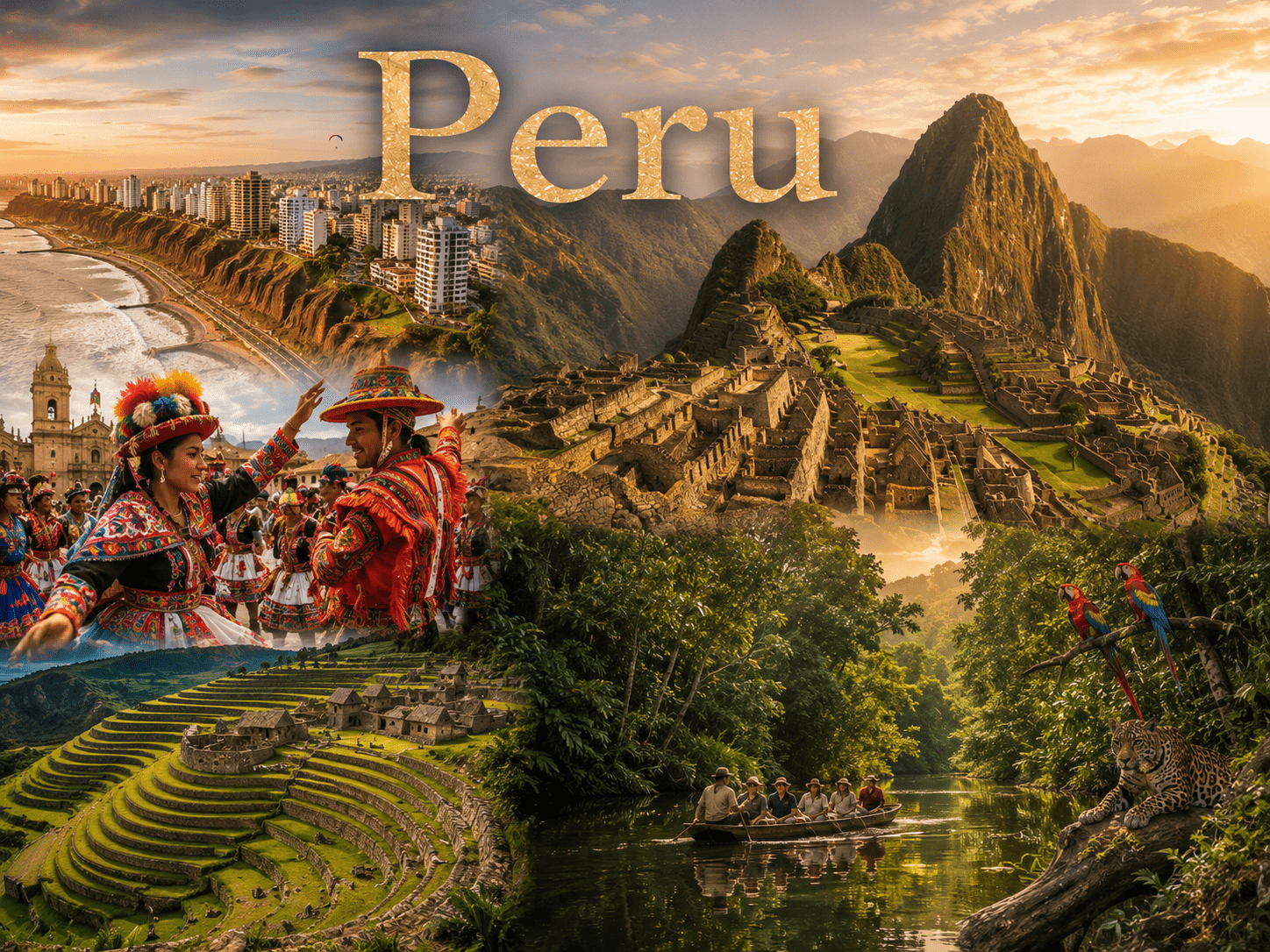
Peru – The Land of Ancient Civilizations and Natural Wonders
Peru is one of the most iconic travel destinations in the world, known for its ancient Inca civilization, breathtaking Andes mountains, mysterious Machu Picchu, Amazon rainforest, and rich cultural heritage. It is a country where history, nature, and tradition blend into an unforgettable experience.
From coastal deserts to snow-capped peaks and dense jungles, the country offers extreme geographical diversity. Travelers can explore ancient ruins, vibrant colonial cities, colorful markets, and world-famous trekking routes.
Peru is globally admired for:
- Machu Picchu heritage site
- Amazon rainforest biodiversity
- Andean mountain culture
- Rich indigenous traditions
- Unique cuisine
- Historic colonial cities
Historical Background of Peru
Ancient Civilizations
Before European arrival, Peru was home to advanced civilizations such as:
- Inca Empire
- Nazca culture
- Moche civilization
- Chavín culture
These civilizations developed:
- Engineering systems
- Agriculture terraces
- Road networks
- Architecture
The Inca Empire
The Inca Empire became one of the largest empires in pre-Columbian America, known for:
- Machu Picchu construction
- Advanced road systems
- Terrace farming
- Strong governance
Spanish Colonization
Spanish explorers arrived in the 16th century, transforming the region into a colonial territory.
This period introduced:
- Christianity
- Colonial cities
- European architecture
- New economic systems
Independence
Peru gained independence in the early 19th century and became a sovereign republic.
Geography and Location of Peru
Where is Peru Located?
Peru is located on the western coast of South America.
It borders:
- Ecuador
- Colombia
- Brazil
- Bolivia
- Chile
- Pacific Ocean
Geographic Coordinates
- Approximate Coordinates: 10°S latitude and 75°W longitude
Major Geographic Zones
The country has three main regions:
- Coastal desert
- Andean mountains
- Amazon rainforest
Climate in Peru
Diverse Climate Zones
Peru has multiple climates depending on region.
Coastal Region
- Dry and warm
Andes Mountains
- Cold and mountainous
Amazon Region
- Hot and humid
Best Time to Visit
Best travel months:
- May to September (dry season)
Culture and Traditions of Peru
Indigenous Heritage
Peru has strong indigenous roots, especially from Quechua and Aymara communities.
Traditional Clothing
Colorful clothing includes:
- Wool textiles
- Handwoven fabrics
- Traditional hats
Festivals
Famous festivals include:
- Inti Raymi (Sun Festival)
- Carnival celebrations
- Religious processions
Religion in Peru
Christianity is the dominant religion, especially Roman Catholicism, combined with indigenous traditions.
Religious Culture
Religion influences:
- Festivals
- Architecture
- Traditions
- Community life
Music and Arts in Peru
Traditional Music
Music styles include:
- Pan flute music
- Andean folk songs
- Drumming traditions
Dance Culture
Popular dances:
- Marinera
- Huayno
- Traditional festival dances
Handicrafts
Artisans produce:
- Pottery
- Textiles
- Silver jewelry
- Wooden crafts
Cuisine of Peru
Peru is considered one of the world’s top culinary destinations.
Famous Dishes
Ceviche
Fresh seafood marinated in citrus.
Lomo Saltado
Stir-fried beef with vegetables.
Aji de Gallina
Creamy chicken dish with spices.
Cuy
Traditional roasted guinea pig dish.
Ingredients
- Potatoes (thousands of varieties)
- Corn
- Quinoa
- Seafood
Economy of Peru
Mining and Resources
Peru is rich in:
- Copper
- Gold
- Silver
- Natural gas
Agriculture
Important crops:
- Coffee
- Corn
- Potatoes
- Fruits
Currency
The official currency is the Peruvian Sol (PEN).
Major Cities in Peru
Lima – Capital City
Lima is the capital and economic hub.
Cusco
Cusco is the historic capital of the Inca Empire.
Arequipa
Arequipa is known for volcanic landscapes.
Iquitos
Iquitos is the gateway to the Amazon rainforest.
Languages Spoken in Peru
Official Languages
- Spanish
- Quechua
- Aymara
Indigenous Languages
Many Amazonian languages are still spoken in rural regions.
Tourist Attractions in Peru
Machu Picchu
One of the New Seven Wonders of the World.
Sacred Valley
Ancient Inca agricultural region.
Nazca Lines
Mysterious geoglyphs in the desert.
Amazon Rainforest
One of the most biodiverse regions on Earth.
Peru and International Organizations
Peru is part of:
- United Nations (UN)
- World Trade Organization (WTO)
- Pacific Alliance
Official Sources
Amazon Rainforest and Biodiversity
Peru contains one of the most biodiverse regions on Earth—the Amazon rainforest. This vast ecosystem covers a large portion of the eastern side of the country and is home to thousands of plant and animal species found nowhere else.
Travelers and researchers visit this region for:
- Exotic wildlife observation
- Jungle expeditions
- River cruises
- Indigenous cultural encounters
- Eco-tourism adventures
Amazon Wildlife
The Peruvian Amazon includes:
- Jaguars
- Pink river dolphins
- Sloths
- Macaws
- Monkeys
River Systems
Major rivers such as the Amazon and its tributaries support:
- Transportation
- Fishing communities
- Biodiversity corridors
- Local economies
Andes Mountains and Highland Culture
The Andean Region
The Andes dominate the geography of Peru and shape its culture, climate, and history.
This region includes:
- High-altitude villages
- Terraced farming landscapes
- Snow-covered peaks
- Sacred valleys
Traditional Highland Life
Communities in the Andes preserve:
- Quechua traditions
- Textile weaving
- Alpaca farming
- Ancient agricultural techniques
Trekking Routes
Popular hiking experiences include:
- Inca Trail
- Salkantay Trek
- Rainbow Mountain hikes
Festivals and Cultural Celebrations
Inti Raymi Festival
One of the most important cultural events in Peru celebrating the Sun God tradition of the Inca civilization.
Carnival Celebrations
Held across regions with:
- Music
- Dance
- Water festivals
- Traditional costumes
Religious Processions
Catholic festivals include:
- Holy Week celebrations
- Virgin Mary festivals
- Local saint days
Traditional Clothing and Indigenous Identity
Andean Textiles
Clothing in Peru is known for:
- Bright colors
- Wool garments
- Geometric patterns
- Handmade weaving
Indigenous Communities
Major groups include:
- Quechua
- Aymara
- Amazonian tribes
Cultural Symbolism
Traditional clothing reflects:
- Identity
- Climate adaptation
- Spiritual beliefs
- Social status
Music, Dance, and Arts
Traditional Instruments
Music uses:
- Pan flutes
- Charango (small string instrument)
- Drums
- Quena flutes
Dance Traditions
Famous dances include:
- Marinera (romantic coastal dance)
- Huayno (Andean folk dance)
- Ritual festival dances
Handicrafts
Artisans produce:
- Alpaca wool textiles
- Silver jewelry
- Ceramics
- Carved gourds
Adventure Tourism in Peru
Trekking Adventures
Peru is a global trekking hotspot.
Famous routes include:
- Inca Trail to Machu Picchu
- Ausangate Trek
- Colca Canyon trails
Amazon Expeditions
Visitors explore:
- Jungle lodges
- River cruises
- Wildlife photography tours
Mountain Climbing
The Andes offer:
- High-altitude climbs
- Glacier trekking
- Volcanic peaks
Sandboarding and Desert Tours
Coastal deserts offer:
- Dune adventures
- Buggy rides
- Sunset photography
Transportation and Travel in Peru
Air Travel
Major airports connect Peru with global destinations.
Road Networks
Highways connect:
- Coastal cities
- Mountain regions
- Amazon gateways
Rail Journeys
Scenic train routes include:
- Cusco to Machu Picchu
- Andean scenic rail lines
River Transport
Amazon riverboats support:
- Remote travel
- Cargo transport
- Jungle tourism
Best Time to Visit Peru
Dry Season (Best Travel Period)
From May to September:
- Clear skies
- Ideal trekking conditions
- Better mountain visibility
Rainy Season
From November to March:
- Lush green landscapes
- Fewer tourists
- Heavier rainfall in Amazon
Hidden Gems in Peru
Huacachina Oasis
A desert oasis surrounded by massive sand dunes.
Choquequirao
A remote Inca archaeological site less visited than Machu Picchu.
Lake Titicaca
One of the highest navigable lakes in the world with floating islands.
Colca Canyon
One of the deepest canyons on Earth, home to condors.
Cuisine and Food Culture
Coastal Cuisine
Includes:
- Fresh ceviche
- Seafood rice dishes
- Lime-based flavors
Andean Cuisine
Includes:
- Potatoes in many varieties
- Quinoa soups
- Alpaca meat dishes
Amazon Cuisine
Includes:
- Tropical fruits
- River fish
- Cassava-based foods
Education and Modern Development
Education System
Peru has growing institutions in:
- Engineering
- Agriculture
- Tourism
- Environmental science
Economic Growth
Key development areas:
- Mining exports
- Tourism expansion
- Infrastructure upgrades
Urbanization
Cities continue expanding with:
- Modern housing
- Business districts
- Transport systems
Daily Life and Culture
Urban Lifestyle
Cities like Lima combine:
- Modern shopping centers
- Historic districts
- Coastal living
Rural Lifestyle
Rural areas focus on:
- Agriculture
- Traditional culture
- Community life
Cultural Values
Strong emphasis on:
- Family
- Hospitality
- Respect for tradition
Government and Political Structure
Peru is a democratic republic with a constitutional government system. The country operates through executive, legislative, and judicial branches, ensuring a balance of power across national governance.
National Administration
The government manages:
- Economic development
- Education policies
- Infrastructure projects
- Environmental protection
- International relations
Regional Governance
The country is divided into administrative regions that oversee:
- Local development
- Tourism management
- Public services
- Cultural preservation
International Relations
Peru maintains strong diplomatic ties across:
- South America
- North America
- Europe
- Asia-Pacific
It is an active member of multiple global organizations promoting trade, development, and environmental cooperation.
Famous Landmarks in Peru
Machu Picchu
One of the most iconic archaeological sites in the world, built by the Inca civilization and located high in the Andes mountains.
Sacred Valley
A culturally rich region filled with:
- Ancient ruins
- Agricultural terraces
- Traditional villages
Nazca Lines
Mysterious geoglyphs etched into the desert, still debated by historians and archaeologists.
Lake Titicaca
A sacred high-altitude lake shared with Bolivia, known for floating islands and indigenous communities.
Colca Canyon
One of the deepest canyons on Earth, famous for condor sightings and dramatic landscapes.
Unique and Interesting Facts About Peru
Ancient Inca Legacy
Peru is home to one of the most advanced ancient civilizations in history.
Biodiversity Hotspot
The country is among the top biodiversity-rich nations in the world due to its Amazon and Andean ecosystems.
Potato Origin Center
Peru is the birthplace of thousands of potato varieties.
Rainbow Mountain
A natural geological wonder with colorful mineral layers.
World-Famous Cuisine
Peruvian food is globally recognized for its diversity and flavor innovation.
Economy and Business Opportunities
Mining Industry
Peru is a global leader in:
- Copper production
- Gold mining
- Silver exports
Agriculture Sector
Key agricultural exports include:
- Coffee
- Avocados
- Grapes
- Quinoa
Tourism Industry
Tourism contributes significantly through:
- Cultural tourism
- Adventure travel
- Eco-tourism
- Archaeological tourism
Manufacturing and Trade
Industries include:
- Textiles
- Food processing
- Fishing exports
Major Cities in Peru
Lima – Capital City
Lima is the political, financial, and cultural hub.
Cusco – Historic Capital
Cusco is the gateway to Machu Picchu.
Arequipa – White City
Arequipa is known for volcanic landscapes and colonial architecture.
Iquitos – Amazon Gateway
Iquitos is accessible only by air or river and leads into the Amazon rainforest.
Transportation and Infrastructure
Air Transport
International airports connect Peru with global destinations.
Road Network
Highways link:
- Coastal regions
- Mountain cities
- Amazon gateways
Rail Travel
Scenic routes include:
- Cusco to Machu Picchu train
- Andean mountain rail journeys
River Transport
Amazon river systems support:
- Cargo movement
- Remote travel
- Jungle tourism
Travel Itinerary (7 Days in Peru)
Day 1–2: Lima
Explore historic center, coastal districts, and museums.
Day 3: Cusco
Visit ancient Inca capital and local markets.
Day 4: Sacred Valley
Discover ruins and traditional villages.
Day 5: Machu Picchu
Experience the iconic Inca citadel.
Day 6: Amazon Rainforest
Wildlife tours and river exploration.
Day 7: Arequipa
Enjoy volcanic scenery and colonial architecture.
Best Time to Visit Peru
Dry Season (Ideal)
May to September is best for:
- Hiking
- Sightseeing
- Mountain travel
Wet Season
November to March brings:
- Lush landscapes
- Heavy rain in jungle areas
Challenges and Future Development
Environmental Issues
Peru faces challenges such as:
- Deforestation
- Glacier melting
- Habitat loss
Economic Growth
Focus areas include:
- Sustainable mining
- Eco-tourism expansion
- Infrastructure development
Cultural Preservation
Efforts are made to protect:
- Indigenous languages
- Historical sites
- Traditional knowledge
Final Summary
Peru is one of the world’s most extraordinary travel destinations, combining ancient civilizations, breathtaking natural landscapes, and rich cultural traditions. From the legendary Machu Picchu and the vast Amazon rainforest to the vibrant cities of Lima and Cusco, the country offers a deeply diverse and unforgettable experience.
Its unique blend of Andean heritage, colonial history, biodiversity, and world-class cuisine makes it a must-visit destination for travelers seeking adventure, culture, and natural beauty. Whether exploring mountain trails, jungle rivers, archaeological wonders, or coastal cities, visitors discover a country full of history, life, and color.
Key Facts Table
| Category | Information |
|---|---|
| Official Name | Republic of Peru |
| Capital City | Lima |
| Region | South America |
| Languages | Spanish, Quechua, Aymara |
| Currency | Peruvian Sol (PEN) |
| Population | ~34 million |
| Famous Site | Machu Picchu |
| Climate Zones | Coastal, Andean, Amazon |
| Major Industry | Mining |
| Main Exports | Copper, Gold, Coffee |
| UN Membership | Yes |
| Famous Dish | Ceviche |
| Biodiversity | Amazon rainforest |
| Tourism Type | Adventure & cultural tourism |
FAQ Section
What is Peru famous for?
Peru is famous for Machu Picchu, the Amazon rainforest, and Inca history.
What is the capital of Peru?
The capital city is Lima.
What language is spoken in Peru?
Spanish, Quechua, and Aymara are widely spoken.
What is the best time to visit Peru?
May to September is the best travel season.
What currency is used in Peru?
The Peruvian Sol (PEN).

