



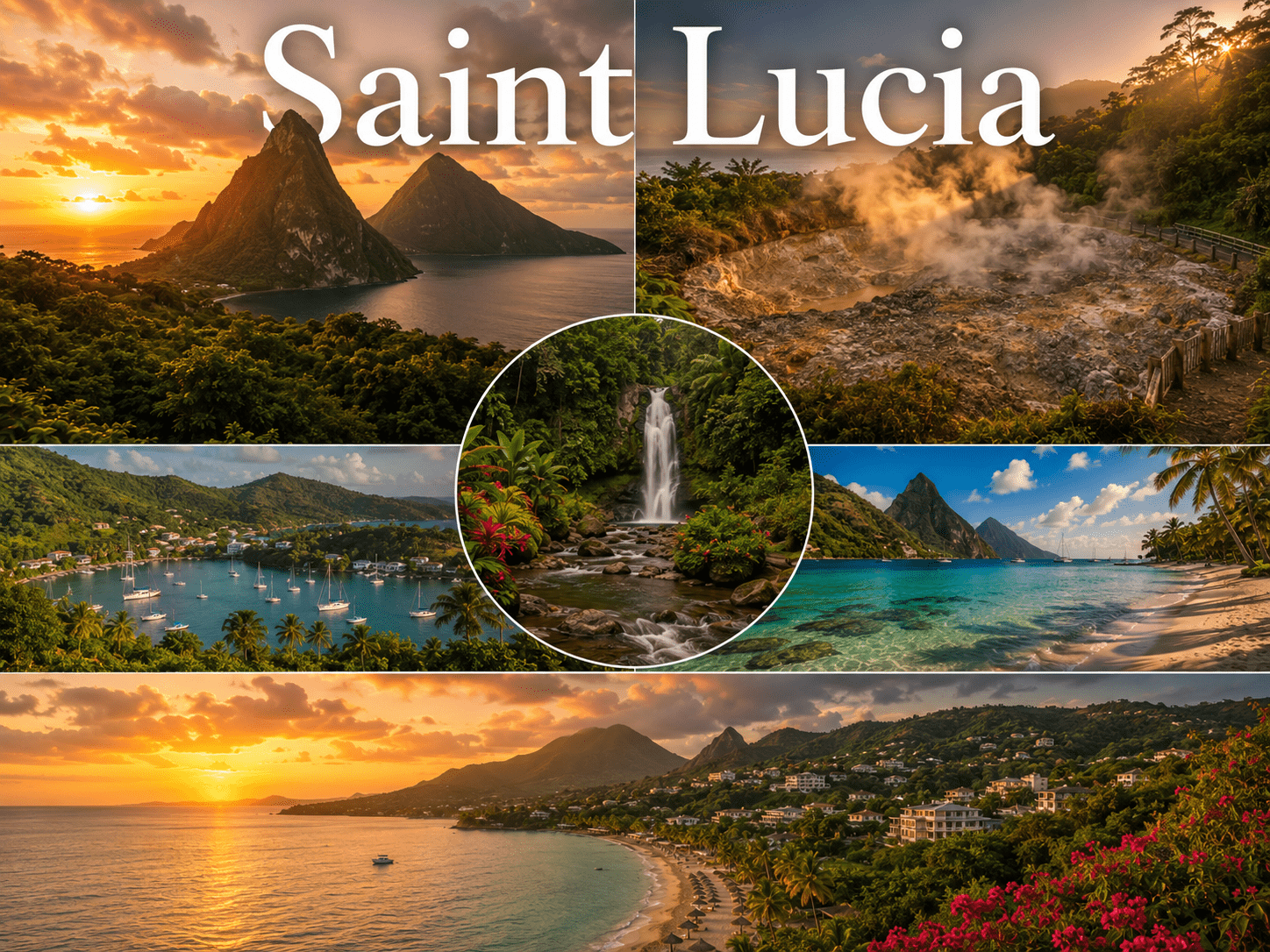
Introduction – The Emerald Island of the Caribbean
Saint Lucia is one of the most breathtaking destinations in the Caribbean, known for its dramatic volcanic peaks, lush rainforests, golden beaches, and vibrant Creole culture. Often called the “Helen of the West Indies,” this island nation blends natural beauty with rich history and warm island hospitality.
Travelers visit Saint Lucia for:
- Iconic Pitons mountains
- Luxury beach resorts
- Rainforest adventures
- Hot springs and volcanic spas
- Coral reefs and diving spots
- Cultural festivals and music
This island offers a perfect mix of romance, adventure, and relaxation.
Historical Background of the Island
Early Inhabitants
The earliest settlers of Saint Lucia were the Arawak and Carib peoples who lived through:
- Fishing and farming
- Coastal villages
- Traditional crafts
European Colonization
From the 16th century onward, the island was contested by European powers, mainly:
- France
- Britain
It changed hands multiple times due to its strategic Caribbean location.
Plantation Era
During colonial times, the island developed:
- Sugar plantations
- Enslaved labor systems
- Export-based economy
Independence
Saint Lucia gained independence in 1979, becoming a sovereign nation within the Commonwealth.
Geography and Location
Where is Saint Lucia Located?
Saint Lucia is located in the eastern Caribbean Sea, part of the Lesser Antilles.
It is near:
- Martinique
- Saint Vincent
- Barbados (regionally connected)
Geographic Coordinates
Approximate location: 14°N, 61°W
Landscape Features
The island features:
- Volcanic mountains
- Rainforests
- Coral reefs
- Sandy beaches
Climate of the Island
Tropical Maritime Climate
Saint Lucia has warm temperatures year-round.
Seasonal Overview
- Dry season: December to May
- Rainy season: June to November
Best Time to Visit
Ideal months:
- January to April
Perfect for:
- Beach holidays
- Hiking
- Festivals
Culture and Traditions
Creole Heritage
Culture in Saint Lucia blends:
- African traditions
- French colonial influence
- Caribbean identity
Music and Dance
Popular styles include:
- Soca
- Calypso
- Zouklove
Festivals
Major celebrations include:
- Carnival
- Jazz Festival
- La Rose and La Marguerite flower festivals
Religion and Society
Most people in Saint Lucia follow Christianity, especially:
- Roman Catholic
- Protestant denominations
Religion influences:
- Festivals
- Community life
- Cultural traditions
Music, Arts, and Lifestyle
Traditional Music
Includes:
- Drumming traditions
- Folk storytelling songs
- Creole performances
Modern Music Scene
Genres include:
- Reggae
- Soca
- Caribbean pop
Island Lifestyle
Life in Saint Lucia is:
- Relaxed
- Community-driven
- Tourism-focused
Cuisine of Saint Lucia
Caribbean Flavors
Food is spicy, fresh, and influenced by African and French cuisines.
Popular Dishes
Green Fig and Saltfish
The national dish of the island.
Callaloo Soup
A leafy vegetable-based soup.
Accra
Fried saltfish fritters.
Fresh Seafood
Lobster, tuna, and snapper are common.
Economy of the Island
Tourism-Based Economy
Saint Lucia depends heavily on:
- Tourism
- Agriculture
- Offshore services
Currency
The official currency is the Eastern Caribbean Dollar (XCD).
Key Industries
- Hospitality and resorts
- Banana exports
- Financial services
- Cruise tourism
Major Cities in Saint Lucia
Castries – Capital City
Castries is the main urban center with:
- Cruise port
- Markets
- Government buildings
Soufrière
A scenic town near the Pitons and volcanic attractions.
Languages Spoken
English is the official language in Saint Lucia.
Saint Lucian Creole French (Kwéyòl) is widely spoken.
Tourist Attractions
The Pitons
Twin volcanic peaks and UNESCO World Heritage Site.
Sulphur Springs
Known as the “drive-in volcano.”
Marigot Bay
A luxury yachting and resort destination.
Pigeon Island
Historic park with forts and beaches.
International Memberships
Saint Lucia is part of:
- United Nations (UN)
- Commonwealth of Nations
- CARICOM
Official Sources
Natural Landscapes, Rainforests & Volcanic Beauty
Saint Lucia is one of the most visually striking islands in the Caribbean, defined by dramatic volcanic peaks, dense rainforests, and crystal-clear coastlines. The island’s geography makes it a top destination for eco-tourism and adventure travel.
Visitors come for:
- Mountain and volcano hiking
- Rainforest trekking
- Beach relaxation
- Scenic viewpoints
- Marine exploration
The Pitons World Heritage Site
The iconic twin peaks of Saint Lucia are:
- Gros Piton
- Petit Piton
These volcanic spires offer:
- UNESCO protection
- Challenging hiking trails
- Panoramic ocean views
- Rich biodiversity
Tet Paul Nature Trail
A popular hiking route featuring:
- Easy rainforest walk
- Cultural storytelling
- Stunning viewpoints of the Pitons
Rainforest Reserve
The island’s interior includes:
- Tropical biodiversity
- Exotic birds
- Waterfalls and rivers
Volcanic Attractions & Hot Springs
Sulphur Springs (Drive-In Volcano)
One of the most unique attractions in Saint Lucia featuring:
- Active geothermal activity
- Mud baths
- Hot mineral pools
- Volcanic craters
Diamond Falls Botanical Gardens
Known for:
- Colorful mineral waterfall
- Tropical plants
- Healing spring waters
Warm Mineral Baths
Visitors enjoy:
- Natural spa experiences
- Relaxation therapy
- Volcanic healing traditions
Marine Life & Water Activities
Snorkeling and Diving
Saint Lucia offers rich underwater ecosystems:
- Coral reefs
- Tropical fish
- Sea turtles
- Volcanic underwater formations
Sailing Adventures
Popular experiences include:
- Catamaran cruises
- Sunset sailing
- Island hopping
Fishing Culture
Activities include:
- Deep-sea fishing
- Coastal fishing villages
- Fresh seafood markets
Festivals and Cultural Events
Saint Lucia Carnival
A major celebration in Saint Lucia featuring:
- Street parades
- Costumes and masks
- Soca music
- Dance competitions
Jazz and Arts Festival
Internationally known event with:
- Global music artists
- Beach concerts
- Cultural performances
Creole Heritage Month
Celebrates:
- Language
- Food
- Traditional music
- Dance culture
Adventure Tourism
Hiking and Mountain Trails
Popular routes include:
- Gros Piton climb
- Rainforest trails
- Waterfall hikes
Ziplining and Eco Parks
Adventure activities in Saint Lucia include:
- Rainforest ziplining
- Aerial canopy tours
- Nature adventure parks
Water Sports
Tourists enjoy:
- Kayaking
- Paddleboarding
- Jet skiing
- Sailing tours
Hidden Gems of Saint Lucia
Anse Chastanet Beach
Known for:
- Black volcanic sand
- Coral reefs
- Luxury diving spots
Pigeon Island National Park
Features:
- Historic fort ruins
- Hiking trails
- Panoramic viewpoints
Marigot Bay
A sheltered harbor with:
- Yachts and luxury boats
- Calm waters
- Resort lifestyle
Toraille Waterfall
A scenic waterfall surrounded by rainforest.
Transportation and Travel System
Air Travel
Hewanorra International Airport connects Saint Lucia to:
- North America
- Europe
- Caribbean islands
Road Transport
Roads are scenic and mountainous, offering:
- Coastal drives
- Village routes
- Resort connections
Ferry Services
Regional ferries connect nearby islands such as:
- Martinique
- Saint Vincent
Local Transport
Tourists use:
- Taxis
- Private drivers
- Rental cars
Food Culture and Culinary Traditions
Island Cuisine
Food in Saint Lucia is a fusion of African, French, and Caribbean influences.
Popular Street Foods
- Fried plantains
- Spiced fish cakes
- Coconut pastries
Seafood Specialties
- Grilled lobster
- Red snapper
- Tuna dishes
Dining Style
Meals are:
- Fresh and local
- Spiced with Creole flavors
- Community-oriented
Education and Development
Education System
Saint Lucia focuses on:
- Universal education access
- Vocational training
- Tourism-related studies
Economic Growth
Development areas include:
- Eco-tourism expansion
- Infrastructure improvement
- Renewable energy
Urban Development
Castries is modernizing with:
- Cruise port expansion
- Commercial zones
- Tourism facilities
Daily Life and Culture
Urban Lifestyle
In Castries:
- Cruise tourism drives economy
- Markets and shopping areas are active
- Festivals are frequent
Rural Lifestyle
Outside cities:
- Fishing villages
- Farming communities
- Slow-paced living
Cultural Values
Key values include:
- Hospitality
- Community unity
- Respect for tradition
Government and Political Structure
Saint Lucia is a parliamentary democracy within the Commonwealth realm. It combines British-style governance with a local democratic system.
Head of State
The British Monarch is the ceremonial head of state, represented locally by a Governor-General.
Head of Government
The Prime Minister leads the government and is responsible for national administration and policy.
Parliament
The legislative branch includes:
- House of Assembly
- Senate
Local Administration
Governance is structured to manage:
- Tourism development
- Infrastructure
- Public services
Famous Landmarks in Saint Lucia
The Pitons
The most iconic landmark in Saint Lucia:
- UNESCO World Heritage Site
- Twin volcanic peaks
- Hiking and photography hotspot
Sulphur Springs
A unique “drive-in volcano” offering:
- Mud baths
- Hot mineral pools
- Geothermal activity
Pigeon Island National Park
Features:
- Historic fort ruins
- Beaches and hiking trails
- Panoramic views
Marigot Bay
Known for:
- Luxury yachts
- Calm waters
- Resort lifestyle
Diamond Falls
A colorful mineral waterfall inside botanical gardens.
Unique and Interesting Facts About Saint Lucia
Only Country Named After a Woman
The island is named after Saint Lucy.
Two Official Capitals (Historical Influence)
Castries remains the main capital and commercial center.
Volcanic Island Formation
The Pitons are ancient volcanic plugs formed millions of years ago.
UNESCO Natural Heritage Site
The Pitons area is globally protected for its ecological importance.
Rich Creole Culture
The island has one of the strongest Creole cultural identities in the Caribbean.
Economy and Business Growth
Tourism-Driven Economy
Saint Lucia depends heavily on:
- Luxury tourism
- Cruise ships
- Eco-tourism
- Hospitality industry
Currency
The official currency is the Eastern Caribbean Dollar (XCD).
Key Industries
- Tourism and resorts
- Agriculture (bananas, cocoa)
- Financial services
- Construction
Foreign Investment
The country attracts investors through:
- Resort development
- Citizenship and residency programs
- Real estate tourism projects
Major Cities in Saint Lucia
Castries – Capital City
Castries is the main hub featuring:
- Cruise port
- Government offices
- Markets and shopping areas
Soufrière
Known for:
- Pitons views
- Sulphur Springs
- Eco-tourism base
Gros Islet
Famous for:
- Nightlife
- Rodney Bay
- Tourism infrastructure
Transportation and Infrastructure
Air Travel
Hewanorra International Airport connects Saint Lucia to:
- North America
- Europe
- Caribbean islands
Road Network
The island features:
- Scenic coastal roads
- Mountain routes
- Resort connectivity
Local Transport
Includes:
- Taxis
- Rental cars
- Private tours
Ferry Connections
Links to nearby islands such as:
- Martinique
- Saint Vincent
Travel Itinerary (7 Days in Saint Lucia)
Day 1–2: Castries & Rodney Bay
Explore markets, beaches, and nightlife.
Day 3: Pitons Region
Hike Gros Piton and visit Soufrière.
Day 4: Sulphur Springs
Enjoy mud baths and volcanic spa experience.
Day 5: Rainforest Adventure
Ziplining and waterfall exploration.
Day 6: Marigot Bay
Relax in luxury resorts and yacht harbor.
Day 7: Pigeon Island
Historical exploration and beach relaxation.
Best Time to Visit
Dry Season (Best Time)
December to April is ideal for:
- Beaches
- Hiking
- Festivals
Wet Season
May to November offers:
- Lush landscapes
- Fewer crowds
- Lower prices
Challenges and Future Development
Climate Risks
Saint Lucia faces:
- Hurricanes
- Coastal erosion
- Climate change impacts
Economic Diversification
Focus areas include:
- Renewable energy
- Digital economy
- Sustainable tourism
Infrastructure Growth
Improvements include:
- Port upgrades
- Airport expansion
- Road development
Final Summary
Saint Lucia is a Caribbean paradise where volcanic peaks, lush rainforests, and turquoise waters come together in stunning harmony. From the iconic Pitons and Sulphur Springs to its vibrant Creole culture and luxury beaches, the island offers a perfect balance of adventure, relaxation, and heritage.
Whether exploring rainforest trails, enjoying Carnival celebrations, or relaxing in Marigot Bay, visitors experience a destination full of natural beauty and cultural richness.
Key Facts Table
| Category | Information |
|---|---|
| Official Name | Saint Lucia |
| Capital City | Castries |
| Region | Caribbean (North America) |
| Language | English |
| Currency | Eastern Caribbean Dollar (XCD) |
| Population | ~180,000 |
| Famous Landmark | The Pitons |
| Climate | Tropical maritime |
| Major Industries | Tourism, Agriculture |
| Famous Cities | Castries, Soufrière, Gros Islet |
| Tourism Type | Beaches, adventure, eco-tourism |
| UN Membership | Yes |
| Special Feature | UNESCO volcanic twin peaks |
FAQ Section
What is Saint Lucia famous for?
Saint Lucia is famous for the Pitons, beaches, and volcanic landscapes.
What is the capital of Saint Lucia?
The capital is Castries.
Is Saint Lucia safe for tourists?
Yes, it is considered a safe and popular Caribbean destination.
What language is spoken in Saint Lucia?
English is official, with widespread Creole use.
What is the best time to visit?
December to April is the best season.

