



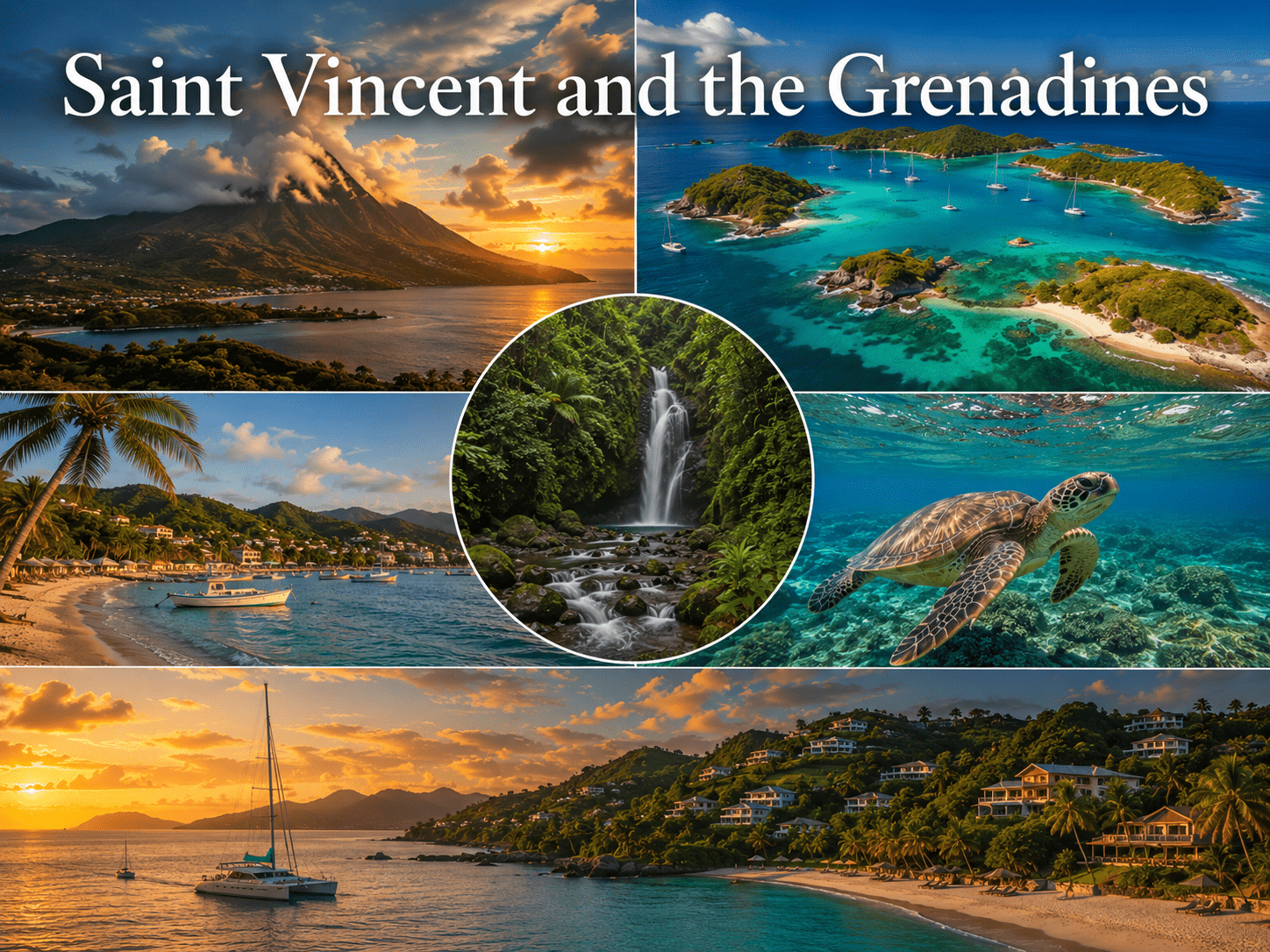
Introduction – The Hidden Caribbean Treasure
Saint Vincent and the Grenadines is a stunning multi-island nation in the Caribbean known for its volcanic landscapes, turquoise waters, coral reefs, and unspoiled tropical beauty. Unlike heavily commercialized destinations, this country remains one of the most authentic and natural island experiences in the Caribbean.
Travelers visit Saint Vincent and the Grenadines for:
- Active volcano hiking
- Island hopping across the Grenadines
- Sailing and yachting adventures
- Black sand beaches
- Coral reef diving
- Peaceful, untouched nature
This destination is ideal for travelers seeking adventure, privacy, and raw natural beauty.
Historical Background of the Islands
Early Indigenous Peoples
The earliest inhabitants of Saint Vincent and the Grenadines were the Kalinago (Carib) people who lived through:
- Fishing
- Farming cassava
- Coastal settlements
- Strong warrior traditions
Colonial Struggles
The island was heavily contested between:
- French settlers
- British Empire
Due to resistance from indigenous communities, the island had a unique colonial history compared to other Caribbean regions.
Plantation Economy
During colonial rule, the economy developed around:
- Sugar plantations
- Enslaved African labor
- Export trade systems
Independence
Saint Vincent and the Grenadines gained independence in 1979 and became a sovereign Caribbean nation within the Commonwealth.
Geography and Location
Where is Saint Vincent and the Grenadines Located?
Saint Vincent and the Grenadines is located in the southern Caribbean Sea, part of the Lesser Antilles.
It consists of:
- Main island: Saint Vincent
- 30+ smaller Grenadine islands
Geographic Coordinates
Approximate location: 13°N, 61°W
Landscape Features
The country features:
- Volcanic mountains
- Rainforests
- Coral atolls
- Sandy beaches
- Clear blue lagoons
Climate of the Islands
Tropical Maritime Climate
Saint Vincent and the Grenadines has warm tropical weather year-round.
Seasonal Overview
- Dry season: December to May
- Wet season: June to November
Best Time to Visit
Ideal months:
- January to April
Perfect for:
- Sailing
- Beach travel
- Island hopping
Culture and Traditions
African and Caribbean Heritage
Culture in Saint Vincent and the Grenadines blends:
- African roots
- Indigenous Kalinago heritage
- British colonial influence
Music and Dance
Popular cultural styles include:
- Calypso
- Soca
- Steelpan music
Festivals
Major celebrations include:
- Vincy Mas Carnival
- Independence Day events
- Cultural street festivals
Religion and Society
Most people in Saint Vincent and the Grenadines follow Christianity, including:
- Anglican
- Methodist
- Catholic traditions
Religion plays a major role in:
- Community gatherings
- Festivals
- Cultural identity
Music, Arts, and Lifestyle
Traditional Music
Includes:
- Drumming performances
- Folk storytelling songs
- Carnival music traditions
Modern Music Scene
Genres include:
- Soca
- Reggae
- Dancehall
Island Lifestyle
Life in Saint Vincent and the Grenadines is:
- Relaxed
- Community-centered
- Sea-oriented
Cuisine of Saint Vincent and the Grenadines
Caribbean Flavors
Food culture is influenced by African, Indian, and European traditions.
Popular Dishes
Roasted Breadfruit
A staple island food.
Callaloo Soup
Made from leafy greens and spices.
Fried Jackfish
A popular seafood dish.
Roti
Flatbread filled with curry meats or vegetables.
Economy of the Islands
Tourism and Agriculture Economy
Saint Vincent and the Grenadines relies on:
- Tourism
- Agriculture (bananas)
- Fishing
- Offshore services
Currency
The official currency is the Eastern Caribbean Dollar (XCD).
Key Industries
- Banana exports
- Tourism and sailing
- Fishing industry
- Small-scale agriculture
Major Cities in the Country
Kingstown – Capital City
Kingstown is the main port and cultural hub.
Bequia (Port Elizabeth)
A popular Grenadine island known for:
- Sailing culture
- Luxury tourism
- Quiet beaches
Languages Spoken
English is the official language in Saint Vincent and the Grenadines.
Vincentian Creole is widely spoken in daily life.
Tourist Attractions
La Soufrière Volcano
An active volcano and major hiking destination.
Tobago Cays
Famous for:
- Crystal-clear waters
- Sea turtles
- Coral reefs
Bequia Island
Known for sailing and peaceful beaches.
Dark View Falls
A rainforest waterfall attraction.
International Memberships
Saint Vincent and the Grenadines is part of:
- United Nations (UN)
- CARICOM
- Commonwealth of Nations
Official Sources
Volcanic Landscapes, Rainforests & Natural Beauty
Saint Vincent and the Grenadines is one of the most naturally diverse island nations in the Caribbean, combining active volcanic terrain, dense rainforest, and crystal-clear island waters. The landscape feels raw, untouched, and ideal for eco-travel.
Travelers visit for:
- Volcano hiking
- Rainforest trekking
- Sailing through islands
- Coral reef diving
- Remote beach exploration
La Soufrière Volcano Experience
The most dramatic natural landmark in Saint Vincent and the Grenadines is La Soufrière volcano.
It offers:
- Active volcanic crater
- Guided hiking expeditions
- Ash-covered landscapes after eruptions
- Panoramic island views
The hike is challenging but one of the most rewarding experiences in the Caribbean.
Rainforest Ecosystems
The main island is covered with lush tropical rainforest featuring:
- Exotic birds
- Waterfalls
- Medicinal plants
- Dense jungle trails
Popular rainforest areas include:
- Vermont Nature Trail
- Cumberland Valley
- Richmond Peak region
Grenadines Island Chain
The Grenadines section of Saint Vincent and the Grenadines includes more than 30 small islands such as:
- Bequia
- Mustique
- Canouan
- Union Island
- Tobago Cays
Each island has its own character:
- Luxury resorts
- Fishing villages
- Sailing harbors
- Private beaches
Marine Life & Water Adventures
Tobago Cays Marine Park
One of the most beautiful areas in Saint Vincent and the Grenadines featuring:
- Sea turtles
- Coral reefs
- Clear turquoise lagoons
- Protected marine ecosystems
Sailing and Yachting Paradise
The Grenadines are globally famous for sailing due to:
- Calm Caribbean waters
- Island-hopping routes
- Luxury yacht anchorages
Diving and Snorkeling
Underwater life includes:
- Colorful coral reefs
- Tropical fish species
- Shipwreck dive spots
- Marine conservation zones
Festivals and Cultural Celebrations
Vincy Mas Carnival
The biggest cultural event in Saint Vincent and the Grenadines featuring:
- Street parades
- Soca competitions
- Colorful costumes
- Music parties
Nine Mornings Festival
A unique early-morning Christmas tradition with:
- Pre-dawn celebrations
- Street music
- Community gatherings
Independence Celebrations
Marked with:
- National parades
- Cultural performances
- Heritage exhibitions
Adventure Tourism Activities
Hiking Adventures
Popular hiking routes include:
- La Soufrière summit trek
- Richmond Peak trails
- Rainforest nature walks
Water Sports
Tourists enjoy:
- Kayaking
- Paddleboarding
- Jet skiing
- Sailing tours
Island Cycling & Exploration
Exploring Saint Vincent and the Grenadines includes:
- Coastal road cycling
- Village exploration
- Scenic viewpoints
Hidden Gems of the Islands
Mustique Island
A private island known for:
- Celebrity villas
- Luxury resorts
- Quiet beaches
Union Island
Famous for:
- Kite surfing
- Fishing culture
- Hilltop views
Dark View Falls
A rainforest waterfall surrounded by bamboo bridges and tropical greenery.
Princess Margaret Beach
Located in Bequia, known for:
- Calm waters
- White sand
- Relaxed atmosphere
Transportation and Travel System
Air Travel
Argyle International Airport connects Saint Vincent and the Grenadines to:
- Caribbean islands
- North America
- Limited international routes
Ferry Transport
Ferries connect:
- Saint Vincent main island
- Grenadine islands
Local Transport
Options include:
- Minibuses
- Taxis
- Boat transfers between islands
Island Hopping Culture
Traveling between islands is a key experience in Saint Vincent and the Grenadines, especially via:
- Private yachts
- Charter boats
- Ferry services
Food Culture and Cuisine
Island Flavors
Food in Saint Vincent and the Grenadines is a mix of Caribbean, African, and Indian influences.
Popular Street Foods
- Fried plantains
- Fish cakes
- Coconut pastries
Seafood Specialties
- Grilled lobster
- Tuna steaks
- Fresh snapper
Dining Experience
Meals are:
- Fresh and local
- Spiced with Caribbean flavors
- Community-centered
Education and Development
Education System
Saint Vincent and the Grenadines focuses on:
- Primary and secondary education
- Vocational training
- Tourism-related studies
Economic Development
Key growth areas include:
- Tourism expansion
- Renewable energy projects
- Port development
Urban Growth
Kingstown is evolving with:
- Improved port facilities
- Tourism infrastructure
- Small business expansion
Daily Life and Culture
Urban Life in Kingstown
In Kingstown:
- Markets are busy and colorful
- Ferry services connect islands
- Cultural events are frequent
Rural Island Life
Outside cities:
- Fishing communities
- Farming villages
- Slow-paced lifestyle
Cultural Values
Key values include:
- Hospitality
- Strong family ties
- Respect for nature
Government and Political Structure
Saint Vincent and the Grenadines is a parliamentary democracy within the Commonwealth realm. It follows a British-style political system combined with local democratic governance.
Head of State
The British Monarch is the ceremonial head of state, represented locally by a Governor-General.
Head of Government
The Prime Minister is responsible for running the government and implementing national policies.
Parliament
The legislature includes:
- House of Assembly
- Senate
Local Governance
Administrative systems manage:
- Public services
- Infrastructure
- Tourism development
Famous Landmarks in Saint Vincent and the Grenadines
La Soufrière Volcano
The most iconic landmark in Saint Vincent and the Grenadines featuring:
- Active volcanic crater
- Hiking expeditions
- Panoramic island views
Tobago Cays Marine Park
A protected paradise known for:
- Sea turtles
- Coral reefs
- Crystal-clear lagoons
Bequia Island
A Grenadine island famous for:
- Sailing culture
- White sand beaches
- Quiet coastal towns
Dark View Falls
A lush rainforest waterfall with:
- Bamboo bridges
- Natural pools
- Tropical vegetation
Mustique Island
A private luxury island known for:
- Celebrity villas
- Exclusive resorts
- Secluded beaches
Unique and Interesting Facts About Saint Vincent and the Grenadines
Island Chain Nation
The country consists of over 30 islands and cays.
Volcanic Origin
The main island is formed by an active volcano.
Sailing Capital of the Caribbean
The Grenadines are world-famous for yachting routes.
Rich Creole Culture
The culture blends African, European, and indigenous influences.
Eco-Tourism Focus
The country strongly promotes sustainable tourism.
Economy and Business Growth
Tourism-Based Economy
Saint Vincent and the Grenadines depends on:
- Tourism
- Agriculture (bananas)
- Fishing
- Marine trade
Currency
The official currency is the Eastern Caribbean Dollar (XCD).
Key Industries
- Eco-tourism
- Banana exports
- Yacht tourism
- Small-scale agriculture
Foreign Investment
The country attracts investment in:
- Tourism resorts
- Marina development
- Renewable energy projects
Major Cities in Saint Vincent and the Grenadines
Kingstown – Capital City
Kingstown is the main hub with:
- Ports and ferry terminals
- Markets and shopping areas
- Government buildings
Bequia (Port Elizabeth)
Known for:
- Sailing lifestyle
- Boutique tourism
- Relaxed island culture
Transportation and Infrastructure
Air Travel
Argyle International Airport connects Saint Vincent and the Grenadines to:
- Caribbean islands
- North America
- Regional destinations
Ferry Network
Regular ferries connect:
- Saint Vincent main island
- Grenadine islands
Local Transport
Includes:
- Minibuses
- Taxis
- Boat transfers
Island Hopping System
A major part of travel in the country includes:
- Yacht charters
- Ferry routes
- Private boat services
Travel Itinerary (7 Days in Saint Vincent and the Grenadines)
Day 1–2: Kingstown
Explore markets, harbor, and local culture.
Day 3: La Soufrière Volcano
Hiking adventure and crater views.
Day 4: Bequia Island
Relax on beaches and explore sailing culture.
Day 5: Tobago Cays
Snorkeling and sea turtle experience.
Day 6: Mustique Island
Luxury relaxation and private beaches.
Day 7: Dark View Falls
Rainforest exploration and waterfalls.
Best Time to Visit
Dry Season (Best Time)
December to May is ideal for:
- Sailing
- Island hopping
- Beach tourism
Wet Season
June to November brings:
- Lush greenery
- Fewer crowds
- Occasional tropical rains
Challenges and Future Development
Climate Vulnerability
Saint Vincent and the Grenadines faces:
- Hurricanes
- Coastal erosion
- Volcanic risks
Economic Diversification
Focus areas include:
- Renewable energy
- Tourism expansion
- Marine conservation
Infrastructure Development
Ongoing improvements include:
- Port upgrades
- Airport expansion
- Tourism facilities
Final Summary
Saint Vincent and the Grenadines is a breathtaking Caribbean destination made up of volcanic landscapes, lush rainforests, and a chain of idyllic islands. From the active La Soufrière volcano to the turquoise waters of the Tobago Cays, it offers a rare blend of adventure and serenity.
Its rich Creole culture, sailing traditions, and untouched natural beauty make it one of the most authentic island experiences in the Caribbean. Whether hiking volcanoes, sailing between islands, or relaxing on secluded beaches, visitors discover a truly unforgettable destination.
Key Facts Table
| Category | Information |
|---|---|
| Official Name | Saint Vincent and the Grenadines |
| Capital City | Kingstown |
| Region | Caribbean (North America) |
| Language | English |
| Currency | Eastern Caribbean Dollar (XCD) |
| Population | ~110,000 |
| Famous Landmark | La Soufrière Volcano |
| Climate | Tropical maritime |
| Major Industries | Tourism, Agriculture |
| Famous Cities | Kingstown, Bequia |
| Tourism Type | Sailing, eco-tourism, adventure |
| UN Membership | Yes |
| Special Feature | Multi-island volcanic nation |
FAQ Section
What is Saint Vincent and the Grenadines famous for?
Saint Vincent and the Grenadines is famous for volcanoes, sailing, and untouched islands.
What is the capital city?
The capital is Kingstown.
Is it good for tourism?
Yes, especially for sailing, diving, and nature tourism.
What language is spoken?
English is the official language.
What is the best time to visit?
December to May is ideal.

