



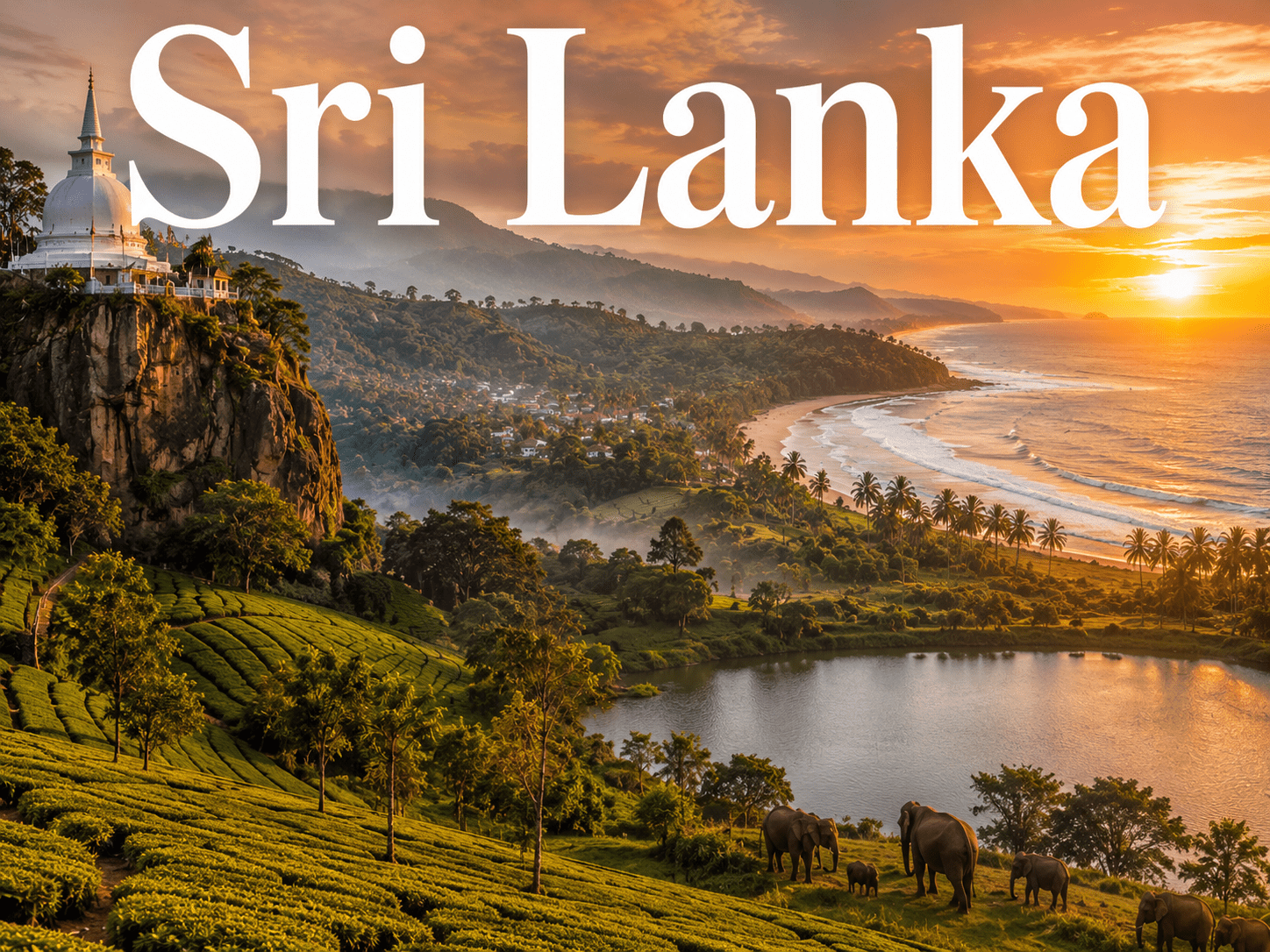
Introduction to Sri Lanka
Sri Lanka is a stunning island nation located in South Asia, known for its tropical beaches, ancient temples, lush mountains, wildlife parks, and rich cultural heritage. Travelers often describe Sri Lanka as a destination where history, nature, and spirituality come together in one island.
This island country is especially famous for:
- Golden beaches
- Tea plantations
- Buddhist heritage
- Wildlife safaris
- Tropical rainforests
- Cultural festivals
Modern Sri Lanka is a popular travel destination offering both relaxation and adventure experiences in a compact geographic area.
Historical Background of Sri Lanka
Ancient Civilization of Sri Lanka
The history of Sri Lanka dates back over 2,500 years. Early civilizations developed advanced irrigation systems, agriculture, and urban settlements.
Ancient kingdoms in Sri Lanka built:
- Stupas
- Temples
- Reservoirs
- Stone cities
The island’s historical legacy is deeply connected to Buddhism and ancient royal dynasties.
Colonial Period in Sri Lanka
Sri Lanka experienced colonial rule under:
- Portuguese
- Dutch
- British
Each colonial period influenced:
- Architecture
- Trade systems
- Education
- Language
British rule particularly shaped modern infrastructure and plantation agriculture in Sri Lanka.
Independence and Modern Era
Sri Lanka gained independence in 1948 and has since developed into a democratic republic.
Modern Sri Lanka continues to balance cultural tradition with economic and tourism development.
Geography and Location of Sri Lanka
Where Is Sri Lanka Located?
Sri Lanka is an island nation located in the Indian Ocean, just southeast of India.
Nearby regions include:
- India
- Maldives
Geographic Features
The geography of Sri Lanka includes:
- Coastal plains
- Central highlands
- Rainforests
- River valleys
- Beaches
Climate of Sri Lanka
The climate in Sri Lanka is tropical, with:
- Warm temperatures year-round
- Monsoon seasons
- High humidity
- Seasonal rainfall
Different regions of Sri Lanka experience different monsoon patterns.
Culture and Traditions in Sri Lanka
Cultural Identity of Sri Lanka
The culture of Sri Lanka is shaped by Buddhism, Hinduism, colonial history, and local traditions.
Cultural highlights include:
- Religious festivals
- Traditional dance
- Temple rituals
- Art and crafts
Languages Spoken in Sri Lanka
The main languages of Sri Lanka are:
- Sinhala
- Tamil
- English (widely used)
Religion in Sri Lanka
Religion plays a major role in Sri Lanka, with:
- Buddhism (majority)
- Hinduism
- Islam
- Christianity
Music and Dance
Traditional performing arts in Sri Lanka include:
- Kandyan dance
- Drumming traditions
- Folk music
- Religious performances
Cuisine of Sri Lanka
Food Culture in Sri Lanka
Food in Sri Lanka is known for its spices, coconut flavors, and rice-based meals.
Common ingredients include:
- Rice
- Coconut
- Chili
- Seafood
- Tropical fruits
Famous Dishes in Sri Lanka
Rice and Curry
Rice and curry is the staple meal in Sri Lanka, served with vegetables, fish, or meat.
Hoppers
Hoppers are bowl-shaped pancakes made from fermented rice flour, popular in Sri Lanka breakfast culture.
Kottu Roti
Kottu is a street food dish made by chopping roti with vegetables, eggs, and spices.
Seafood Dishes
Coastal regions of Sri Lanka offer fresh seafood such as crab, prawns, and fish curries.
Major Cities in Sri Lanka
Colombo – Capital of Sri Lanka
Colombo is the commercial capital of Sri Lanka, known for:
- Modern skyline
- Colonial buildings
- Markets
- Business districts
Kandy
Kandy is a cultural city in Sri Lanka, famous for the Temple of the Tooth Relic.
Galle
Galle is known for its historic Dutch Fort and coastal charm in Sri Lanka.
Jaffna
Jaffna represents northern cultural heritage and Tamil traditions in Sri Lanka.
Tourism in Sri Lanka
Why Visit Sri Lanka?
Tourism in Sri Lanka is popular due to:
- Beaches
- Wildlife parks
- Ancient ruins
- Tea plantations
- Cultural heritage
- Mountain scenery
Famous Attractions in Sri Lanka
Sigiriya Rock Fortress
Sigiriya is one of the most iconic historical sites in Sri Lanka.
Temple of the Tooth
Temple of the Sacred Tooth Relic is a sacred Buddhist temple in Sri Lanka.
Yala National Park
Yala National Park is famous for leopard safaris in Sri Lanka.
Internal Links
- Read also: Argentina travel guide
- Explore more: Barbados tourism guide
External DoFollow Links
World Bank Sri Lanka Overview: https://www.worldbank.org/en/country/srilanka
Sri Lanka Tourism Official: https://www.srilanka.travel
UNESCO Sri Lanka Heritage Sites: https://whc.unesco.org/en/statesparties/lk
Economy of Sri Lanka
The economy of Sri Lanka is based on a mix of agriculture, tourism, manufacturing, and services. Over time, Sri Lanka has developed into a developing middle-income economy with strong international trade links and a growing tourism sector.
Key economic sectors in Sri Lanka include:
- Tourism and hospitality
- Tea and agriculture exports
- Textile manufacturing
- Fishing industry
- Remittances from overseas workers
- Information technology services
Tourism remains one of the most important contributors to foreign income in Sri Lanka, supported by beaches, cultural heritage, and wildlife attractions.
Currency of Sri Lanka
The official currency used in Sri Lanka is the Sri Lankan Rupee (LKR).
Currency Facts
- Currency: Sri Lankan Rupee
- Code: LKR
- Central Bank: Central Bank of Sri Lanka
Cash and digital payments are both widely used across urban areas in Sri Lanka.
Agriculture and Tea Industry in Sri Lanka
Tea Plantations
Tea production is one of the most iconic industries in Sri Lanka. The country is globally known for Ceylon tea, which is exported worldwide.
Tea-growing regions in Sri Lanka include:
- Nuwara Eliya
- Kandy Highlands
- Ella region
These areas are famous for scenic green hills and cool climates.
Other Agricultural Products
Agriculture in Sri Lanka also includes:
- Coconut cultivation
- Rubber plantations
- Rice farming
- Spices (cinnamon, pepper, cardamom)
- Tropical fruits
Wildlife and Nature in Sri Lanka
Natural Diversity of Sri Lanka
Sri Lanka is one of the world’s most biodiverse island nations. Despite its small size, it contains rainforests, dry zones, mountains, and coastal ecosystems.
Wildlife includes:
- Elephants
- Leopards
- Sloth bears
- Crocodiles
- Exotic birds
National Parks in Sri Lanka
Yala National Park
Yala National Park in Sri Lanka is famous for having one of the highest leopard densities in the world.
Udawalawe National Park
Udawalawe is well known for large elephant herds in Sri Lanka.
Wilpattu National Park
Wilpattu is one of the oldest national parks in Sri Lanka, known for natural lakes and dense forest ecosystems.
Transportation in Sri Lanka
Public Transport System
Transportation in Sri Lanka includes:
- Buses
- Trains
- Tuk-tuks
- Private taxis
- Domestic flights
Rail travel in Sri Lanka is especially famous for scenic routes through mountains and tea plantations.
Airports in Sri Lanka
Major airports in Sri Lanka include:
- Bandaranaike International Airport (Colombo)
- Mattala Rajapaksa International Airport
These airports connect Sri Lanka with Asia, Europe, and the Middle East.
Scenic Train Routes
Train journeys in Sri Lanka are considered among the most beautiful in the world, especially routes passing through:
- Ella
- Nuwara Eliya
- Kandy hills
Festivals and Culture in Sri Lanka
Cultural Festivals in Sri Lanka
Festivals are an important part of life in Sri Lanka, reflecting religious and cultural diversity.
Major festivals include:
- Vesak Festival (Buddhist celebration)
- Sinhala and Tamil New Year
- Deepavali
- Ramadan celebrations
Kandy Esala Perahera
One of the most famous festivals in Sri Lanka is the Kandy Esala Perahera, featuring:
- Traditional dancers
- Elephants
- Drummers
- Religious processions
Tourism Highlights of Sri Lanka
Why Tourism is Important in Sri Lanka
Tourism in Sri Lanka plays a major role in the economy due to:
- Tropical beaches
- Ancient temples
- Wildlife safaris
- Tea plantations
- Cultural heritage sites
Beach Tourism in Sri Lanka
Coastal tourism in Sri Lanka includes:
- Mirissa Beach
- Unawatuna Beach
- Bentota
- Arugam Bay (surfing hotspot)
Hill Country Tourism
The central highlands of Sri Lanka offer:
- Tea estates
- Waterfalls
- Cool climate retreats
- Hiking trails
Best Time to Visit Sri Lanka
Seasonal Travel Guide
The best time to visit Sri Lanka depends on the region:
- West and South Coast: December to April
- East Coast: May to September
- Hill Country: Year-round but cooler months preferred
Interesting Facts About Sri Lanka
- Sri Lanka is known as the “Pearl of the Indian Ocean”
- It has eight UNESCO World Heritage Sites
- The country produces some of the world’s finest tea
- Ancient irrigation systems still function today
- Sri Lanka is home to one of Asia’s oldest civilizations
- The island has over 100 rivers and waterfalls
International Relations of Sri Lanka
United Nations Membership
Sri Lanka is a member of the United Nations and actively participates in international diplomacy and development programs.
Global Organizations
Sri Lanka is also part of:
- Commonwealth of Nations
- World Bank
- International Monetary Fund
- South Asian Association for Regional Cooperation (SAARC)
These memberships support economic growth and international cooperation.
Food and Culinary Experiences in Sri Lanka
The cuisine of Sri Lanka is famous for its bold spices, coconut-based flavors, and rice-centered meals. Food is deeply connected to daily life and cultural identity in Sri Lanka, with strong influences from South Indian, Arab, Dutch, and Portuguese traditions.
Meals in Sri Lanka often include:
- Rice as the main staple
- Coconut milk-based curries
- Fresh seafood
- Tropical vegetables
- Aromatic spices like cinnamon and cardamom
Eating in Sri Lanka is usually a communal and flavorful experience with multiple dishes served together.
Famous Foods in Sri Lanka
Rice and Curry
Rice and curry is the national-style meal of Sri Lanka, consisting of rice served with several side dishes such as:
- Vegetable curries
- Fish or chicken curry
- Lentil dhal
- Sambols (spicy condiments)
Hoppers (Appa)
Hoppers are bowl-shaped pancakes made from fermented rice flour, widely eaten for breakfast in Sri Lanka.
They are often served with:
- Egg
- Coconut sambol
- Sweet treacle
Kottu Roti
Kottu roti is a popular street food in Sri Lanka made by chopping flatbread and mixing it with:
- Vegetables
- Eggs
- Meat or chicken
- Spices
Seafood Specialties
Coastal regions of Sri Lanka offer fresh seafood dishes such as:
- Crab curry
- Grilled fish
- Prawn curry
Shopping in Sri Lanka
Shopping Experiences in Sri Lanka
Shopping in Sri Lanka offers a mix of modern malls, street markets, and traditional craft shops. Visitors can explore both luxury products and handmade souvenirs.
Popular items include:
- Ceylon tea
- Spices (cinnamon, pepper)
- Gemstones
- Handicrafts
- Wooden carvings
- Batik textiles
Local Markets
Local markets in Sri Lanka provide vibrant cultural experiences. These markets offer:
- Fresh fruits and vegetables
- Street food
- Clothing
- Handmade goods
Colombo markets are especially popular for tourists.
Gemstone Industry
Sri Lanka is internationally famous for its gemstones, including:
- Sapphires
- Rubies
- Topaz
Gem trading has been part of the country’s economy for centuries.
Education System in Sri Lanka
Structure of Education
Education in Sri Lanka is free and compulsory at primary and secondary levels.
The system includes:
- Primary education
- Secondary education
- Higher secondary education
- Universities and technical institutes
Higher Education
Universities in Sri Lanka offer programs in:
- Medicine
- Engineering
- Business studies
- Information technology
- Arts and humanities
Education standards are among the highest in South Asia.
Sports and Recreation in Sri Lanka
Popular Sports in Sri Lanka
Sports play an important role in Sri Lanka, especially:
- Cricket (most popular sport)
- Volleyball
- Athletics
- Rugby
Cricket Culture
Cricket is the most beloved sport in Sri Lanka, with the national team achieving international success, including winning the Cricket World Cup in 1996.
Outdoor Activities
Outdoor recreation in Sri Lanka includes:
- Surfing in Arugam Bay
- Hiking in Ella
- Wildlife safaris
- Whale watching in Mirissa
Travel Safety in Sri Lanka
Safety for Tourists
Sri Lanka is generally considered a safe travel destination. However, travelers should:
- Stay aware of surroundings
- Use trusted transport services
- Follow local guidance
- Keep valuables secure
Health and Travel Tips
Travelers to Sri Lanka are advised to:
- Drink bottled water
- Use mosquito protection
- Carry travel insurance
- Check seasonal weather conditions
Lifestyle and Culture in Sri Lanka
Daily Life in Sri Lanka
Life in Sri Lanka is relaxed and community-oriented. Family and religion play an important role in daily routines.
Traditional Clothing
Traditional clothing in Sri Lanka includes:
- Sarong for men
- Saree for women
- Modern casual wear in cities
Why Sri Lanka Is Unique
Cultural and Natural Diversity
The uniqueness of Sri Lanka lies in its combination of:
- Ancient civilization heritage
- Tropical beaches
- Mountain landscapes
- Wildlife biodiversity
- Rich cultural traditions
Few destinations in the world offer such variety within a single island.
Final Summary
Sri Lanka is a breathtaking island nation that blends natural beauty, cultural richness, and historical depth. From golden beaches and lush tea plantations to ancient temples and wildlife safaris, Sri Lanka offers a complete travel experience.
Visitors to Sri Lanka can enjoy:
- Cultural heritage sites
- Tropical beaches
- Tea country landscapes
- Wildlife national parks
- Vibrant festivals
- Delicious cuisine
- Scenic train journeys
With its welcoming people and diverse attractions, Sri Lanka remains one of the most beautiful and rewarding travel destinations in the world.
Key Facts About Sri Lanka
| Category | Information |
|---|---|
| Country Name | Sri Lanka |
| Continent | Asia |
| Capital City | Sri Jayawardenepura Kotte (administrative), Colombo (commercial) |
| Currency | Sri Lankan Rupee (LKR) |
| Language | Sinhala, Tamil, English |
| Famous For | Tea, beaches, wildlife |
| Major Religion | Buddhism |
| Climate | Tropical monsoon |
| Famous Sport | Cricket |
| UNESCO Sites | 8 heritage sites |
| Best Time to Visit | Dec–Apr (south/west coast) |

