



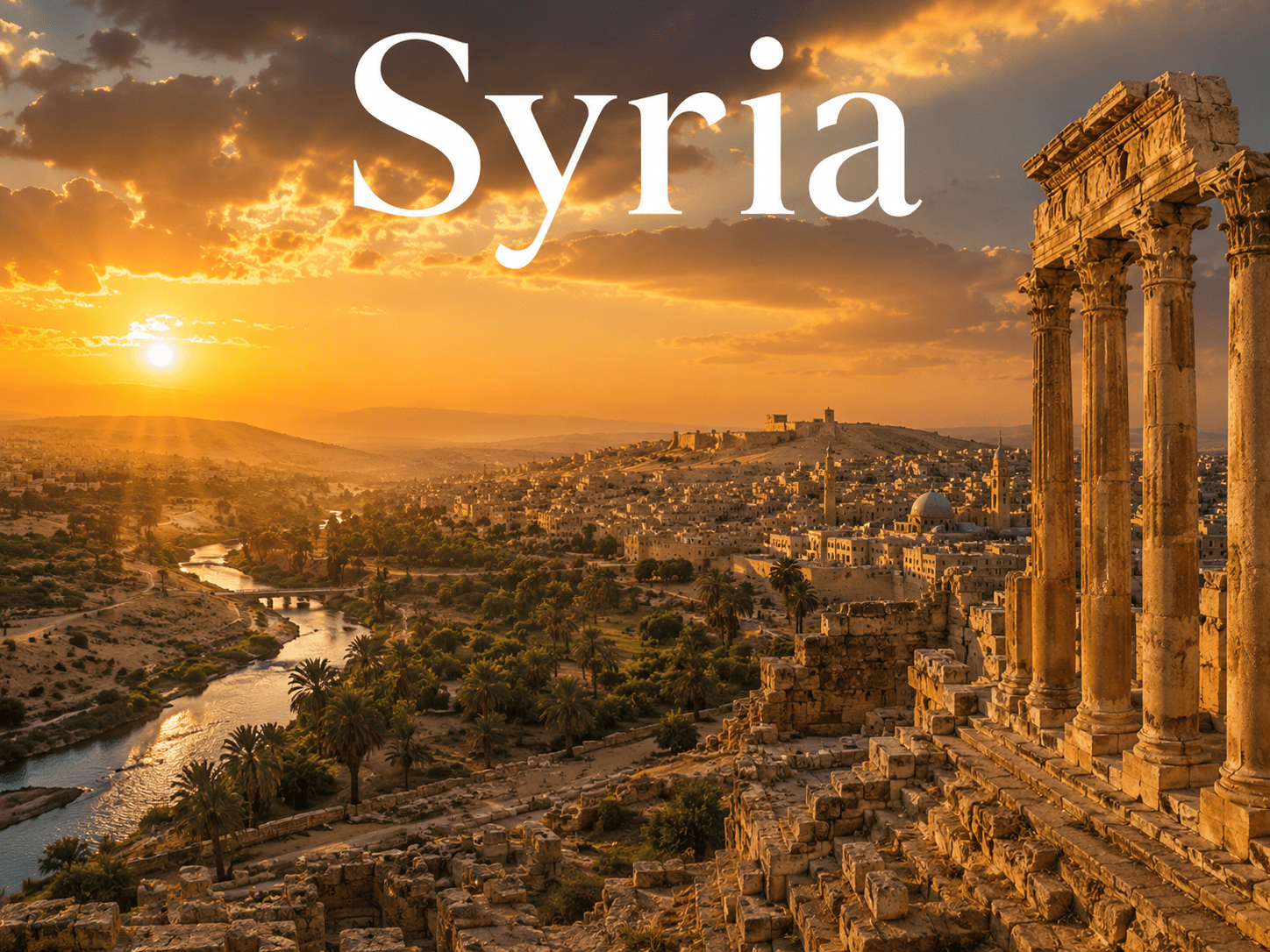
Introduction to Syria
Syria is a historically rich country located in Western Asia, in the heart of the Middle East. It is one of the world’s oldest continuously inhabited regions, known for ancient civilizations, cultural heritage, and historic cities.
The land of Syria has played a major role in:
- Early human civilizations
- Trade routes of the ancient world
- Religious and cultural development
- Architectural heritage
- Strategic geopolitical history
Modern Syria is known for its deep historical roots and diverse cultural identity shaped over thousands of years.
Historical Background of Syria
Ancient Civilizations in Syria
The history of Syria dates back thousands of years to some of the earliest human settlements. Ancient cities in Syria were part of major civilizations such as:
- Mesopotamian cultures
- Phoenician trade networks
- Roman Empire territories
- Byzantine influences
Classical and Islamic Eras
During the Islamic Golden Age, Syria became a center of:
- Learning and science
- Architecture
- Trade and commerce
- Religious scholarship
Cities in Syria flourished as cultural and intellectual hubs.
Modern History of Syria
In the modern era, Syria went through Ottoman rule, French mandate control, and later independence in the 20th century.
Today, Syria retains its deep historical identity despite modern challenges.
Geography and Location of Syria
Where Is Syria Located?
Syria is located in Western Asia, part of the Levant region of the Middle East.
Neighboring countries include:
- Turkey (north)
- Iraq (east)
- Jordan (south)
- Lebanon (west)
- Israel (southwest)
Geographic Features
The geography of Syria includes:
- Coastal Mediterranean region
- Fertile plains
- Mountain ranges
- Desert regions
- River valleys (Euphrates River)
This diverse geography makes Syria historically important for agriculture and trade.
Climate of Syria
The climate in Syria varies:
- Mediterranean climate along the coast
- Semi-arid inland regions
- Desert climate in eastern areas
Culture and Society in Syria
Cultural Identity of Syria
The culture of Syria is one of the oldest in the world, influenced by Arab, Ottoman, Roman, and Mediterranean traditions.
Cultural highlights include:
- Ancient architecture
- Traditional music and poetry
- Handicrafts and art
- Strong family values
- Historical storytelling traditions
Languages Spoken in Syria
The official language of Syria is Arabic. Other languages include:
- Kurdish
- Armenian
- Aramaic (historical communities)
Religion in Syria
Religion in Syria is diverse, including:
- Islam (majority)
- Christianity (various denominations)
- Minority religious communities
Religious heritage is deeply embedded in Syria’s cultural identity.
Music and Arts in Syria
Music in Syria is rich and traditional, featuring:
- Oud instruments
- Classical Arabic music
- Folk songs
- Poetry-based performances
Cuisine of Syria
Food Culture in Syria
Food in Syria is part of the broader Levantine cuisine, known for fresh ingredients and rich flavors.
Common ingredients include:
- Olive oil
- Wheat and grains
- Lamb and chicken
- Fresh vegetables
- Spices and herbs
Famous Dishes in Syria
Kibbeh
Kibbeh is a signature dish in Syria, made from minced meat, bulgur, and spices.
Hummus
Hummus is widely eaten in Syria, made from chickpeas, tahini, lemon, and garlic.
Shawarma
Shawarma is a popular street food in Syria, made with grilled meat and flatbread.
Baklava
Baklava is a sweet pastry enjoyed across Syria, made with nuts and syrup.
Major Cities in Syria
Damascus – Capital City
Damascus is the capital of Syria and one of the oldest continuously inhabited cities in the world.
Aleppo
Aleppo is a historic commercial center in Syria, known for its ancient markets and architecture.
Homs
Homs is an important industrial and cultural city in Syria.
Latakia
Latakia is a coastal city in Syria, located along the Mediterranean Sea.
Tourism in Syria
Why Visit Syria?
Tourism in Syria is centered around:
- Ancient ruins
- Historic cities
- Cultural heritage
- Religious landmarks
- Archaeological sites
Famous Attractions in Syria
Ancient City of Damascus
Old City of Damascus is one of the oldest inhabited urban areas in the world.
Palmyra Ruins
Palmyra Archaeological Site is a UNESCO-listed ancient city in Syria known for Roman-era ruins.
Krak des Chevaliers
Krak des Chevaliers is one of the most famous medieval castles in Syria.
Internal Links
- Read also: Argentina travel guide
- Explore more: Barbados tourism guide
External DoFollow Links
UN Overview: https://www.un.org
UNESCO Syria Sites: https://whc.unesco.org/en/statesparties/sy
World Bank Syria Data: https://www.worldbank.org/en/country/syria
Economy of Syria
The economy of Syria is shaped by agriculture, trade, manufacturing, and energy resources. Historically, Syria was an important commercial hub in the Middle East due to its strategic location connecting Asia, Europe, and Africa.
Key sectors of Syria include:
- Agriculture and farming
- Oil and natural gas
- Textile production
- Trade and small-scale industries
- Food processing
- Traditional crafts
Agriculture remains a major livelihood source across rural regions of Syria.
Agriculture in Syria
Fertile regions in Syria support crops such as:
- Wheat
- Barley
- Cotton
- Olives
- Fruits and vegetables
The Euphrates River valley plays an important role in farming activities in Syria.
Currency of Syria
The official currency of Syria is the Syrian Pound (SYP).
Currency Overview:
- Currency: Syrian Pound
- Code: SYP
- Central Bank: Central Bank of Syria
Cash-based transactions are widely used in daily life across Syria.
Industry and Trade in Syria
Industrial activity in Syria includes:
- Textile manufacturing
- Food processing
- Cement and construction materials
- Handicrafts and traditional goods
Trade routes in Syria historically connected major ancient civilizations.
Transport System in Syria
Road Transport in Syria
Road transport is the main mode of travel in Syria, including:
- Buses
- Shared taxis
- Private vehicles
- Freight trucks
Air Transport in Syria
Major airports in Syria include:
- Damascus International Airport
- Aleppo International Airport
- Latakia Airport
These airports connect Syria with regional destinations.
Railway System
Railways in Syria exist but are limited compared to road transport, mainly used for cargo and selected passenger routes.
Culture and Traditions in Syria
Cultural Identity of Syria
Culture in Syria is deeply rooted in ancient civilizations and Arab traditions. Syria is known for:
- Historical architecture
- Traditional music and poetry
- Religious diversity
- Artisan craftsmanship
- Strong hospitality culture
Family and community play an important role in daily life across Syria.
Festivals in Syria
Traditional celebrations in Syria include:
- Eid al-Fitr and Eid al-Adha
- Christmas celebrations among Christian communities
- Spring festivals
- Local cultural fairs and markets
These festivals reflect the cultural diversity of Syria.
Music and Arts in Syria
Music in Syria is rich and expressive, featuring:
- Oud and traditional string instruments
- Classical Arabic music
- Folk dance traditions
- Poetry recitations
Art and craftsmanship in Syria include:
- Mosaic art
- Wood carving
- Textile weaving
- Metal engraving
Education System in Syria
Structure of Education
Education in Syria includes:
- Primary education
- Secondary education
- Technical institutes
- Universities and higher education
Education has long been an important part of society in Syria.
Higher Education in Syria
Major fields of study in Syria include:
- Medicine
- Engineering
- Humanities
- Agriculture
- Science and technology
Universities in Syria have historically been important academic centers in the region.
Nature and Geography of Syria
Natural Landscape of Syria
The geography of Syria is diverse, including:
- Mediterranean coastline
- Fertile plains
- Mountain ranges
- River valleys
- Desert regions
This variety makes Syria ecologically and historically significant.
Rivers in Syria
Major rivers in Syria include:
- Euphrates River
- Orontes River
These rivers support agriculture and settlements across Syria.
Climate of Syria
The climate in Syria varies:
- Coastal Mediterranean climate
- Semi-arid inland regions
- Desert climate in eastern areas
Seasonal variation affects farming and lifestyle in Syria.
Best Time to Visit Syria
Seasonal Overview
The best time to visit Syria depends on travel interests:
- Spring (March–May): Pleasant weather and green landscapes
- Autumn (September–November): Comfortable temperatures
- Summer (June–August): Hot inland but coastal areas are moderate
- Winter (December–February): Cold in inland and mountainous areas
Interesting Facts About Syria
- Syria is home to some of the oldest cities in the world
- Ancient trade routes passed through Syria
- The country has rich archaeological heritage
- Traditional crafts are still practiced in many regions
- Syria has diverse cultural and religious communities
- The Euphrates River is one of the most important rivers in Syria
International Relations of Syria
United Nations Membership
Syria is a member of the United Nations and participates in international discussions through diplomatic channels.
Regional Organizations
Syria has historical and regional ties within the Middle East and the Arab world, contributing to cultural and political cooperation in the region.
Food and Culinary Culture in Syria
The cuisine of Syria is one of the richest in the Levant region, known for its balance of spices, fresh ingredients, and ancient culinary traditions. Food culture in Syria reflects centuries of trade, cultural exchange, and agricultural abundance.
Meals in Syria commonly include:
- Olive oil and fresh herbs
- Grains like bulgur and rice
- Lamb, chicken, and legumes
- Yogurt-based dishes
- Fresh vegetables and pickles
Food is an important part of hospitality in Syria, and sharing meals is a strong cultural tradition.
Famous Foods in Syria
Kibbeh
Kibbeh is a signature dish in Syria, made from bulgur wheat, minced meat, onions, and spices. It can be baked, fried, or served raw in some regions.
Hummus
Hummus is widely consumed across Syria, made from chickpeas, tahini, garlic, lemon, and olive oil.
Shawarma
Shawarma is a popular street food in Syria, featuring marinated meat cooked on a vertical spit and served in flatbread.
Baklava
Baklava is a sweet pastry in Syria, made with layers of filo dough, nuts, and syrup.
Shopping and Lifestyle in Syria
Traditional Markets in Syria
Markets (souks) are a central part of life in Syria, especially in historic cities. These markets offer:
- Spices and herbs
- Handmade textiles
- Traditional clothing
- Jewelry and crafts
- Local foods and sweets
The souks of Syria reflect centuries of trade and cultural exchange.
Handicrafts and Art in Syria
Syria is known for its traditional craftsmanship, including:
- Mosaic artwork
- Wood carving
- Metal engraving
- Glasswork
- Handwoven textiles
These crafts are an important part of cultural identity in Syria.
Lifestyle in Syria
Daily life in Syria is centered around family, community, and tradition. Hospitality is a core value, and social gatherings are important in both urban and rural areas.
Sports and Recreation in Syria
Popular Sports in Syria
Sports in Syria include:
- Football (soccer)
- Basketball
- Weightlifting
- Wrestling
- Athletics
Football is the most popular sport in Syria, followed closely by basketball.
Outdoor Activities in Syria
Outdoor life in Syria varies by region:
- Hiking in mountain areas
- Exploring ancient ruins
- Coastal activities along the Mediterranean
- Desert tourism and historical tours
Travel Safety and Tips in Syria
Safety Considerations
Travel conditions in Syria can vary depending on the region. Visitors should:
- Stay updated with official travel advisories
- Use local guidance when traveling
- Avoid restricted or unsafe zones
- Respect local laws and customs
Health and Travel Advice
Travelers visiting Syria should:
- Carry essential medications
- Drink safe bottled water
- Be prepared for seasonal weather changes
- Arrange travel insurance
Why Syria Is Unique
Cultural and Historical Importance
The uniqueness of Syria comes from its deep historical roots and cultural richness. Few countries in the world have such a long record of continuous human settlement and civilization.
Key highlights of Syria include:
- Ancient cities and archaeological sites
- Rich cultural traditions
- Diverse religious and ethnic communities
- Strategic historical trade routes
- Strong culinary heritage
Final Summary
Syria is one of the world’s most historically significant countries, often referred to as part of the cradle of civilization. From ancient cities and archaeological wonders to rich culinary traditions and cultural diversity, Syria offers a deep and complex heritage.
Travelers and researchers exploring Syria can discover:
- Ancient ruins and historic cities
- Traditional Levantine cuisine
- Cultural markets and crafts
- Mountain, river, and coastal landscapes
- Deep historical and religious significance
Despite modern challenges, Syria remains a land of extraordinary historical and cultural importance.
Key Facts About Syria
| Category | Information |
|---|---|
| Country Name | Syria |
| Continent | Asia |
| Capital | Damascus |
| Currency | Syrian Pound (SYP) |
| Language | Arabic |
| Famous For | Ancient cities, history |
| Geography | Coast, mountains, desert |
| Major Rivers | Euphrates, Orontes |
| Famous Cities | Damascus, Aleppo, Homs |
| Cuisine | Levantine food culture |
| Best Time to Visit | Spring and autumn |

