



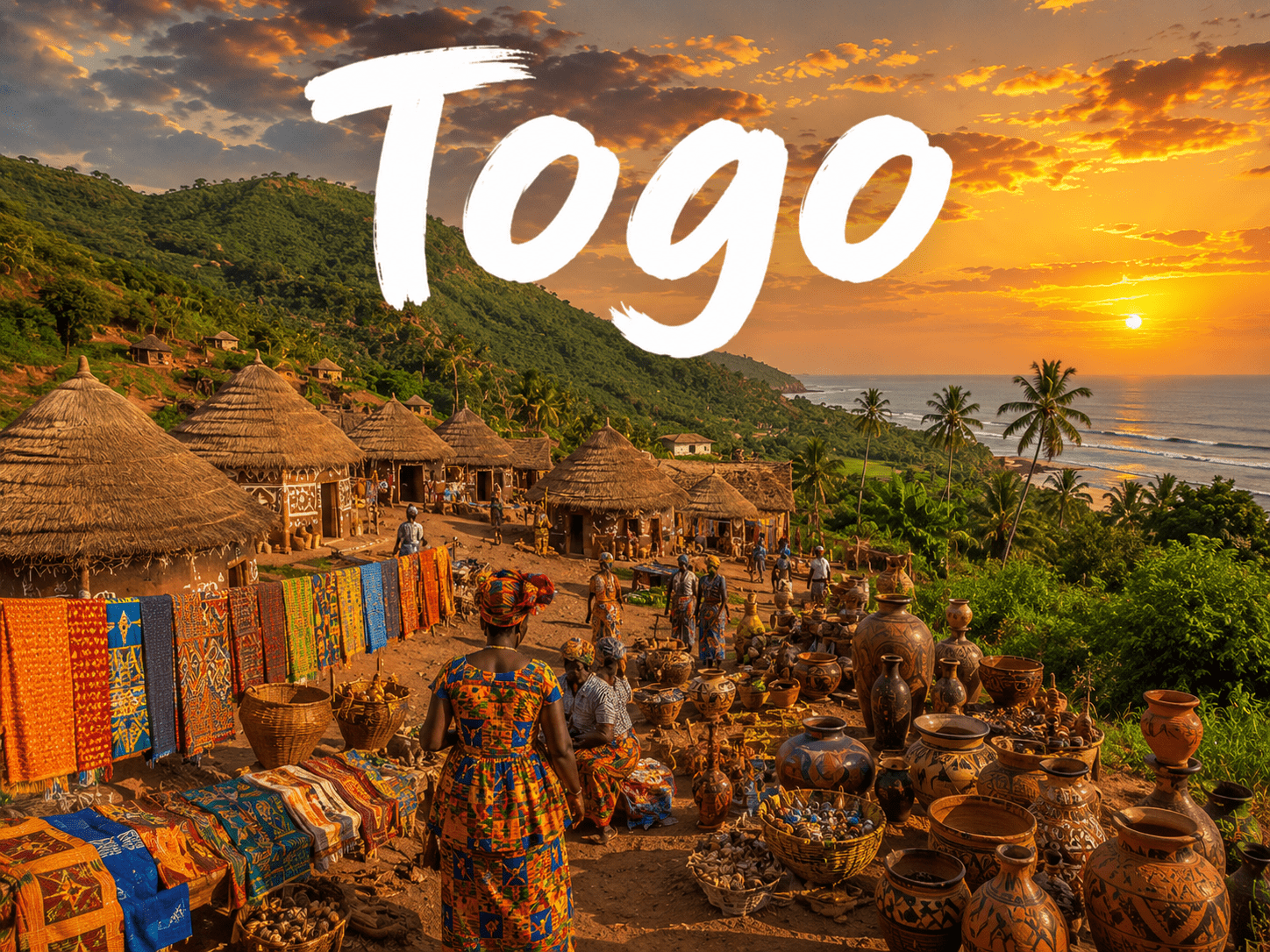
Introduction to Togo
Togo is a narrow West African country known for vibrant markets, coastal scenery, traditional culture, and welcoming communities. Though smaller than many African nations, Togo offers diverse landscapes ranging from Atlantic beaches to rolling hills and savannah regions.
Travelers visit Togo for:
- Cultural heritage and traditions
- Colorful local markets
- Atlantic coastline and beaches
- Music and dance festivals
- Mountain villages and landscapes
- Authentic West African experiences
Modern Togo blends urban growth with deep-rooted cultural traditions.
Historical Background of Togo
Early History of Togo
The early history of Togo includes powerful tribal communities and regional trade networks that connected West African societies for centuries.
Communities in Togo developed:
- Farming traditions
- Handicraft industries
- Local trade systems
- Spiritual and cultural practices
Colonial Period
During the colonial era, Togo was influenced by European powers, first under German administration and later under French control after World War I.
This period shaped:
- Infrastructure
- Language use
- Educational systems
- Trade development
Independence and Modern Development
Modern Togo gained independence in 1960 and has continued developing its economy, transportation, and tourism sectors.
Today, Togo is known for:
- Cultural diversity
- Regional trade
- Traditional crafts
- Coastal tourism
Geography and Location of Togo
Where Is Togo Located?
Togo is located in West Africa and borders:
- Ghana
- Benin
- Burkina Faso
The country also has a coastline along the Gulf of Guinea.
Geographic Features
The geography of Togo includes:
- Atlantic beaches
- Savannah plains
- Forested hills
- River valleys
- Mountainous regions in the west
Climate of Togo
The climate in Togo is tropical:
- Coastal areas are humid and warm
- Northern regions are hotter and drier
- Rainy and dry seasons shape agriculture and travel conditions
Culture and Society in Togo
Cultural Identity of Togo
Culture in Togo reflects the traditions of many ethnic communities living across the country.
Important cultural features in Togo include:
- Traditional drumming and dance
- Spiritual ceremonies
- Handcrafted art
- Community festivals
- Storytelling traditions
Languages Spoken in Togo
The official language of Togo is French.
Other commonly spoken languages in Togo include:
- Ewe
- Kabye
- Mina and regional languages
Religion in Togo
Religion in Togo includes:
- Christianity
- Islam
- Traditional African spiritual beliefs
Traditional spiritual practices remain culturally important in many areas of Togo.
Music and Arts in Togo
Music culture in Togo includes:
- Drumming performances
- Folk music traditions
- Modern Afrobeat influences
- Dance ceremonies
Artistic traditions in Togo include:
- Wood carving
- Textile weaving
- Pottery
- Handmade jewelry
Cuisine of Togo
Food Culture in Togo
Food in Togo reflects West African culinary traditions with flavorful sauces, grains, and fresh ingredients.
Common ingredients in Togo include:
- Maize
- Cassava
- Rice
- Fish and seafood
- Yams and vegetables
Famous Foods in Togo
Fufu
Fufu is a staple food in Togo, made from cassava or yam and served with soup or sauce.
Pâte
Pâte is a maize-based dish commonly eaten in Togo alongside vegetable or meat stews.
Grilled Fish
Fresh grilled fish is especially popular in coastal areas of Togo.
Peanut Sauce Dishes
Peanut-based sauces are widely used in traditional cooking throughout Togo.
Major Cities in Togo
Lomé – Capital City
Lomé is the capital and largest city of Togo, known for:
- Coastal beaches
- Markets and trade
- Cultural centers
- Government institutions
Sokodé
Sokodé is an important cultural and commercial city in central Togo.
Kara
Kara is known for traditional culture and northern landscapes in Togo.
Kpalimé
Kpalimé is famous for mountain scenery and craft traditions in Togo.
Tourism in Togo
Why Visit Togo?
Tourism in Togo attracts visitors interested in:
- Authentic African culture
- Beaches and coastal towns
- Traditional villages
- Local crafts and markets
- Nature and hiking experiences
Famous Attractions in Togo
Lomé Grand Market
Grand Marché is one of the busiest and most colorful markets in Togo.
Koutammakou
Koutammakou is a UNESCO-listed cultural landscape famous for traditional mud tower houses.
Lake Togo
Lake Togo is a scenic destination known for fishing villages and cultural tourism.
Internal Links
- Read also: Argentina travel guide
- Explore more: Barbados tourism guide
External DoFollow Links
UN Official Site: https://www.un.org
UNESCO Togo Sites: https://whc.unesco.org/en/statesparties/tg
World Bank Togo Data: https://www.worldbank.org/en/country/togo
Economy of Togo
The economy of Togo is based on agriculture, trade, mining, transportation services, and regional commerce. Due to its coastal location and port facilities, Togo serves as an important trade gateway for neighboring West African countries.
Major sectors in Togo include:
- Agriculture and farming
- Port and transport services
- Phosphate mining
- Fishing industries
- Small-scale manufacturing
The Port of Lomé plays a key role in the economy of Togo.
Agriculture in Togo
Agriculture supports a large part of the population in Togo, especially in rural communities.
Important agricultural products in Togo include:
- Coffee
- Cocoa
- Cotton
- Maize
- Cassava
- Yams and millet
Farming remains an essential part of daily life in Togo.
Mining Industry in Togo
Mining contributes significantly to the economy of Togo, especially phosphate production.
Natural resources in Togo include:
- Phosphate deposits
- Limestone
- Marble
- Clay and construction materials
Currency of Togo
The official currency of Togo is the West African CFA Franc (XOF).
Currency Details:
- Currency: West African CFA Franc
- Code: XOF
- Regional Currency System: West African Economic and Monetary Union
Cash transactions remain common throughout Togo, especially in local markets.
Transportation in Togo
Road Transport in Togo
Road transportation is the primary travel system in Togo.
Common transportation methods include:
- Buses and minibuses
- Motorcycle taxis
- Shared taxis
- Private vehicles
Roads connect major cities and trade routes across Togo.
Port of Lomé
The Port of Lomé is one of the most important transport and trade hubs in Togo and West Africa.
The port supports:
- International trade
- Cargo transportation
- Regional economic activity
Airports in Togo
Major airports in Togo include:
- Gnassingbé Eyadéma International Airport in Lomé
This airport connects Togo with regional and international destinations.
Nature and Wildlife in Togo
Natural Beauty of Togo
Nature in Togo includes:
- Coastal lagoons
- Forest reserves
- Savannah regions
- Hills and waterfalls
- River valleys
The country’s landscapes vary significantly between southern and northern regions.
Wildlife in Togo
Wildlife found in Togo includes:
- Antelope species
- Monkeys
- Birds and tropical wildlife
- Reptiles and wetland species
Protected natural areas help preserve biodiversity in Togo.
National Parks in Togo
Fazao-Malfakassa National Park
Fazao-Malfakassa National Park is the largest national park in Togo, known for forests and wildlife.
Kéran National Park
Kéran National Park is another important conservation area in northern Togo.
Mount Agou
Mount Agou is the highest mountain in Togo and a popular hiking destination.
Festivals and Traditions in Togo
Cultural Traditions in Togo
Traditional customs remain an important part of life in Togo.
Cultural traditions include:
- Tribal ceremonies
- Music and drumming festivals
- Traditional storytelling
- Dance performances
- Community celebrations
Traditional Festivals
Festivals in Togo celebrate:
- Harvest seasons
- Spiritual traditions
- Community unity
- Historical heritage
These celebrations often include music, dance, and colorful clothing.
Handicrafts in Togo
Traditional crafts in Togo include:
- Batik fabric art
- Pottery and carving
- Basket weaving
- Jewelry making
Craft markets are popular attractions in many parts of Togo.
Education System in Togo
Structure of Education
Education in Togo includes:
- Primary schooling
- Secondary education
- Vocational training
- Universities and colleges
The government continues working to improve education access across Togo.
Higher Education in Togo
Universities in Togo focus on:
- Agriculture
- Engineering
- Health sciences
- Business and economics
Best Time to Visit Togo
Seasonal Travel Guide
The best time to visit Togo depends on weather conditions and travel preferences:
- November–February: Dry season and comfortable travel weather
- March–May: Warm temperatures and greener landscapes
- June–September: Rainy season in many regions
- October: Transitional weather with fewer crowds
Interesting Facts About Togo
- Togo is one of the smaller countries in West Africa
- The Port of Lomé is an important regional trade hub
- Traditional spiritual culture remains influential in Togo
- The country has both beaches and mountain landscapes
- Koutammakou is a UNESCO-listed cultural landscape in Togo
- Drumming and dance are important cultural traditions
International Relations of Togo
United Nations Membership
Togo is a member of the United Nations and participates in regional cooperation initiatives.
Regional Organizations
Togo is also part of:
- African Union (AU)
- Economic Community of West African States (ECOWAS)
- West African economic partnerships
Food and Culinary Culture in Togo
The cuisine of Togo reflects the rich traditions of West Africa, combining local grains, vegetables, seafood, and flavorful sauces. Food culture in Togo is strongly connected to community gatherings, hospitality, and family traditions.
Meals in Togo commonly include:
- Maize and cassava dishes
- Rice and millet
- Fish and grilled meat
- Peanut-based sauces
- Tropical fruits and vegetables
Traditional cooking in Togo often uses local spices and fresh ingredients from markets and farms.
Famous Foods in Togo
Fufu
Fufu is one of the most popular foods in Togo, prepared from cassava or yam and served with soups and stews.
Pâte
Pâte is a maize-based staple dish in Togo, commonly eaten with vegetable or meat sauces.
Akoumé
Akoumé is another traditional meal in Togo, made from fermented maize and served with soup.
Grilled Fish
Fresh grilled fish is especially popular in coastal areas of Togo near the Gulf of Guinea.
Shopping and Lifestyle in Togo
Shopping Experience in Togo
Shopping in Togo combines traditional markets with modern urban stores.
Visitors can buy:
- Handwoven textiles
- Wood carvings
- Handmade jewelry
- Batik fabrics
- Traditional musical instruments
Markets are central to daily life in Togo and provide insight into local culture.
Traditional Markets in Togo
Traditional markets in Togo are lively centers for:
- Fresh produce
- Spices and food products
- Clothing and crafts
- Cultural interaction
The Grand Market in Lomé is among the best-known shopping destinations in Togo.
Lifestyle in Togo
Life in Togo emphasizes:
- Family relationships
- Community support
- Respect for elders
- Cultural celebrations
- Music and dance traditions
Many communities in Togo maintain strong traditional lifestyles alongside modern urban development.
Sports and Recreation in Togo
Popular Sports in Togo
Sports in Togo include:
- Football (soccer)
- Athletics
- Basketball
- Martial arts
- Traditional wrestling
Football is the most widely followed sport in Togo.
Outdoor Activities in Togo
Outdoor recreation in Togo includes:
- Hiking in mountain regions
- Exploring waterfalls
- Beach tourism
- Cultural village tours
- Wildlife exploration
Nature tourism is gradually expanding in Togo.
Travel Safety in Togo
Safety for Tourists
Togo is generally welcoming to travelers, especially in tourist and cultural regions. Visitors should:
- Respect local customs and traditions
- Use trusted transportation services
- Stay aware in crowded market areas
- Follow local travel advice
Health and Travel Tips
Travelers visiting Togo should:
- Stay hydrated in warm climates
- Carry local currency for markets
- Prepare for tropical weather conditions
- Use mosquito protection in some regions
Why Togo Is Unique
Cultural and Natural Identity
The uniqueness of Togo comes from its combination of:
- Traditional West African culture
- Coastal scenery and lagoons
- Mountain villages
- Vibrant music and dance traditions
- Authentic local markets
- UNESCO cultural heritage sites
Few destinations in West Africa offer such a compact mix of landscapes and cultural experiences as Togo.
Final Summary
Togo is a fascinating West African destination filled with cultural richness, traditional communities, scenic landscapes, and coastal beauty. From the busy streets of Lomé to mountain villages and cultural festivals, Togo offers authentic travel experiences away from heavily crowded tourist destinations.
Visitors to Togo can enjoy:
- Traditional markets and crafts
- Atlantic beaches and lagoons
- Cultural festivals and music
- Mountain hiking and waterfalls
- Historical and UNESCO heritage sites
- Warm hospitality and local traditions
With its vibrant culture and diverse landscapes, Togo remains one of West Africa’s most underrated travel destinations.
Key Facts About Togo
| Category | Information |
|---|---|
| Country Name | Togo |
| Region | West Africa |
| Capital | Lomé |
| Currency | West African CFA Franc (XOF) |
| Official Language | French |
| Famous For | Markets, culture, beaches |
| Highest Mountain | Mount Agou |
| Major Attraction | Koutammakou |
| Popular Sport | Football |
| Climate | Tropical |
| Best Time to Visit | November to February |

