



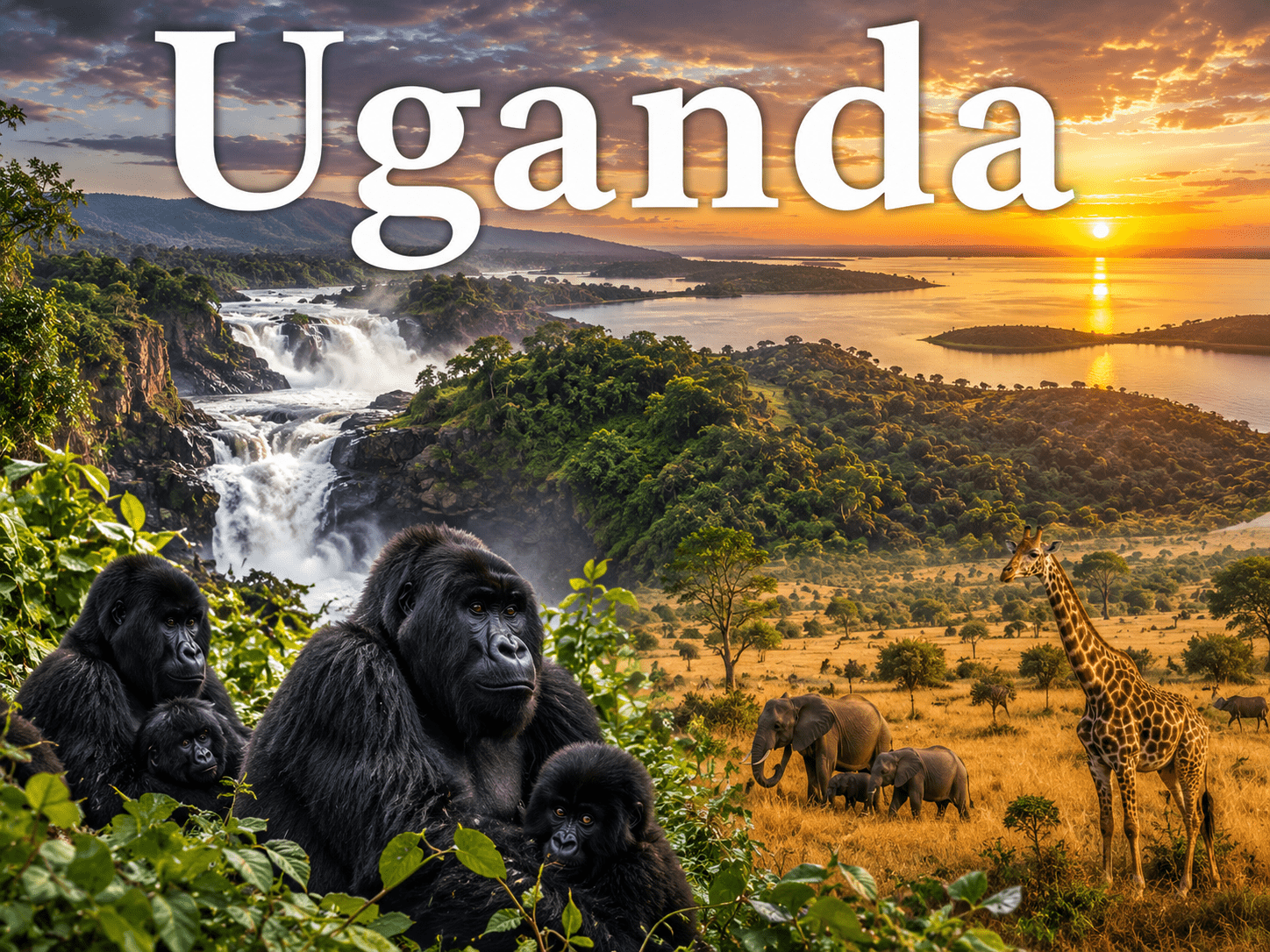
Introduction to Uganda
Uganda is one of East Africa’s most beautiful and diverse travel destinations, famous for mountain gorillas, national parks, lakes, waterfalls, and vibrant cultural traditions. Known as the “Pearl of Africa,” Uganda offers travelers extraordinary wildlife experiences alongside warm hospitality and stunning natural scenery.
Visitors travel to Uganda for:
- Gorilla trekking adventures
- Wildlife safaris
- National parks and forests
- Lake and river scenery
- Cultural experiences
- Adventure tourism and hiking
Modern Uganda combines rich biodiversity, historical heritage, and growing tourism infrastructure.
Historical Background of Uganda
Ancient History of Uganda
The history of Uganda stretches back centuries through traditional kingdoms and local communities.
Ancient societies in Uganda developed:
- Agricultural traditions
- Trade routes and cultural exchange
- Royal kingdoms and leadership systems
- Artistic and musical traditions
Colonial Period
During the colonial era, Uganda experienced major political and economic changes.
This period introduced:
- New transportation systems
- Missionary education
- Administrative reforms
- Expanding international trade
Modern Development of Uganda
Modern Uganda became independent in the 20th century and continues developing infrastructure, tourism, education, and business sectors.
Today, Uganda is known for:
- Eco-tourism and wildlife conservation
- Agricultural production
- Growing cities and industries
- Cultural diversity and hospitality
Geography and Location of Uganda
Where Is Uganda Located?
Uganda is located in East Africa and borders:
- Kenya
- Tanzania
- Rwanda
- Democratic Republic of the Congo
- South Sudan
The country is landlocked but contains many lakes and rivers.
Geographic Features
The geography of Uganda includes:
- Tropical forests
- Savannah landscapes
- Mountain ranges
- Lakes and rivers
- Wetlands and waterfalls
The diverse landscapes make Uganda one of Africa’s top eco-tourism destinations.
Climate of Uganda
The climate in Uganda is generally tropical and moderate due to elevation.
Weather conditions include:
- Warm temperatures throughout the year
- Rainy and dry seasons
- Cooler mountain climates
- Green landscapes and forests
The pleasant climate makes travel in Uganda possible during most months of the year.
Culture and Society in Uganda
Cultural Identity of Uganda
Culture in Uganda reflects many ethnic groups, languages, and traditions.
Important cultural elements include:
- Traditional dance and music
- Storytelling and crafts
- Community celebrations
- Family-centered lifestyles
- Religious diversity and customs
Languages Spoken in Uganda
The official languages of Uganda are:
- English
- Swahili
Many local languages are also spoken across different regions of Uganda.
Religion in Uganda
Christianity and Islam are the major religions practiced in Uganda.
Religious celebrations and traditions are important aspects of social life.
Arts and Traditional Crafts
Traditional crafts in Uganda include:
- Basket weaving
- Wood carving
- Pottery and beadwork
- Bark cloth production
- Traditional musical instruments
Local markets in Uganda showcase handmade cultural products.
Cuisine of Uganda
Food Culture in Uganda
The cuisine of Uganda combines African traditions with fresh local ingredients and regional influences.
Common ingredients include:
- Bananas and plantains
- Cassava and sweet potatoes
- Beans and vegetables
- Fish and grilled meats
- Rice and maize dishes
Meals in Uganda are often hearty and community-oriented.
Famous Foods in Uganda
Matoke
Matoke is one of the most famous traditional foods in Uganda, made from steamed green bananas.
Rolex
Rolex is a popular street food in Uganda, consisting of eggs rolled in chapati bread.
Fresh Fish Dishes
Fish from lakes and rivers is widely enjoyed across Uganda.
Groundnut Sauces
Peanut-based sauces are common in many dishes throughout Uganda.
Major Cities in Uganda
Kampala
Kampala is the capital and largest city of Uganda.
The city is known for:
- Cultural attractions
- Markets and nightlife
- Business and education centers
- Historic landmarks
Entebbe
Entebbe is famous for lakeside scenery and the country’s main international airport.
Jinja
Jinja is known as an adventure tourism destination near the Nile River.
Tourism in Uganda
Why Visit Uganda?
Tourism in Uganda attracts travelers interested in:
- Gorilla trekking
- Safari wildlife experiences
- Tropical forests and lakes
- River adventures and rafting
- Cultural tourism and eco-tourism
Famous Attractions in Uganda
Bwindi Impenetrable National Park
Bwindi Impenetrable National Park is world-famous for mountain gorilla trekking.
Murchison Falls National Park
Murchison Falls National Park is known for waterfalls and safari wildlife.
Source of the Nile
Source of the Nile is one of the country’s most famous natural attractions.
External DoFollow Links
- Uganda Tourism Board: https://www.visituganda.com
- UNESCO Uganda Sites: https://whc.unesco.org/en/statesparties/ug
- World Bank Uganda Data: https://www.worldbank.org/en/country/uganda
Economy of Uganda
The economy of Uganda is supported by agriculture, tourism, trade, manufacturing, and natural resources. Due to fertile land and growing industries, Uganda continues developing as an important economy in East Africa.
Major sectors in Uganda include:
- Agriculture and farming
- Tourism and hospitality
- Manufacturing and trade
- Fishing industries
- Construction and transportation
Tourism and wildlife conservation are increasingly important to the economy of Uganda.
Agriculture in Uganda
Agriculture plays a major role in Uganda and employs a large portion of the population.
Key agricultural products include:
- Coffee
- Tea
- Bananas and plantains
- Maize and cassava
- Cotton and sugarcane
Coffee is one of the most important export products of Uganda.
Currency of Uganda
The official currency of Uganda is the Ugandan Shilling (UGX).
Currency Details:
- Currency: Ugandan Shilling
- Code: UGX
- Central Bank: Bank of Uganda
Mobile banking and digital payment systems continue expanding in Uganda.
Transportation in Uganda
Public Transportation in Uganda
Transportation in Uganda includes:
- Buses and minibuses
- Motorcycle taxis known as boda-bodas
- Domestic flights
- Road transportation networks
Road travel is the most common transportation method in Uganda.
Airports in Uganda
Entebbe International Airport
Entebbe International Airport is the main international airport of Uganda.
Rail and Water Transport
Railways and water transport continue to support trade and travel in parts of Uganda.
Lake transportation is important in regions near large lakes and islands.
National Parks and Wildlife in Uganda
Wildlife Tourism in Uganda
Wildlife tourism is one of the biggest attractions in Uganda.
Travelers visit Uganda to see:
- Mountain gorillas
- Lions and elephants
- Chimpanzees and monkeys
- Hippos and crocodiles
- Bird species and savannah wildlife
Famous National Parks in Uganda
Bwindi Impenetrable National Park
Bwindi Impenetrable National Park is internationally famous for mountain gorilla trekking.
Queen Elizabeth National Park
Queen Elizabeth National Park is known for wildlife safaris and tree-climbing lions.
Murchison Falls National Park
Murchison Falls National Park features dramatic waterfalls and safari experiences.
Kibale National Park
Kibale National Park is famous for chimpanzee tracking and tropical forests.
Lakes and Rivers in Uganda
Lake Victoria
Lake Victoria
Lake Victoria is Africa’s largest lake and an important natural feature connected to Uganda.
Activities include:
- Fishing
- Boat trips
- Birdwatching
- Lakeside tourism
Nile River
Source of the Nile
Source of the Nile is one of the country’s most famous attractions.
Adventure activities near the Nile include:
- White-water rafting
- Kayaking
- River cruises
- Bungee jumping
Nature and Landscapes in Uganda
Natural Beauty of Uganda
Nature in Uganda includes:
- Rainforests and mountains
- Savannah plains
- Lakes and wetlands
- Waterfalls and rivers
- Volcanoes and valleys
The diverse landscapes make Uganda ideal for eco-tourism and photography.
Mountain Regions
Rwenzori Mountains
Rwenzori Mountains are famous for glaciers, hiking, and dramatic scenery.
Festivals and Traditions in Uganda
Cultural Traditions in Uganda
Traditional customs remain important throughout Uganda.
Cultural traditions include:
- Dance and drumming performances
- Community ceremonies
- Storytelling traditions
- Traditional weddings
- Religious celebrations
Music and Dance
Music in Uganda combines:
- Traditional rhythms
- Modern African influences
- Drumming and vocal performances
Dance plays an important role in celebrations and festivals.
Festivals in Uganda
Festivals in Uganda celebrate:
- Music and arts
- Religious traditions
- Cultural heritage
- Local communities and tourism
Education System in Uganda
Structure of Education
Education in Uganda includes:
- Primary and secondary schools
- Vocational institutions
- Universities and colleges
Education access continues improving across Uganda.
Higher Education in Uganda
Universities focus on:
- Science and technology
- Agriculture and medicine
- Business and engineering
- Environmental studies
Best Time to Visit Uganda
Seasonal Travel Guide
The best time to visit Uganda depends on safari and trekking interests.
Travel seasons include:
- June–September: Dry season and gorilla trekking
- December–February: Wildlife viewing and safaris
- Rainy seasons: Greener landscapes and birdwatching opportunities
Interesting Facts About Uganda
- Uganda is known as the “Pearl of Africa”
- Mountain gorillas live in protected forests of Uganda
- The Nile River begins near Jinja
- The country has exceptional bird biodiversity
- Lake Victoria is connected to Uganda
- Traditional kingdoms remain culturally important
International Relations of Uganda
Regional Importance
Uganda plays an important role in East African trade, tourism, and regional cooperation.
International Organizations
Uganda participates in:
- United Nations
- African Union
- East African Community
- International conservation initiatives
Food and Culinary Culture in Uganda
The cuisine of Uganda reflects East African traditions, fertile agricultural lands, and diverse cultural influences. Food culture in Uganda emphasizes fresh ingredients, hearty meals, and community dining.
Meals in Uganda commonly include:
- Bananas and plantains
- Cassava and sweet potatoes
- Beans and vegetables
- Fish and grilled meats
- Rice and maize dishes
Traditional meals are an important part of family and community life throughout Uganda.
Famous Foods in Uganda
Matoke
Matoke is one of the most famous traditional foods in Uganda, prepared using steamed green bananas.
Rolex
Rolex is a popular street food in Uganda, made with eggs rolled inside chapati bread.
Luwombo
Luwombo is a traditional dish in Uganda prepared with meat, vegetables, and rich sauces.
Fresh Fish Dishes
Fish from lakes and rivers is widely enjoyed across Uganda, especially near Lake Victoria.
Shopping and Lifestyle in Uganda
Shopping Experience in Uganda
Shopping in Uganda combines modern shopping centers with traditional markets and craft villages.
Visitors can buy:
- Handmade baskets
- Wood carvings
- Beaded jewelry
- Traditional fabrics
- Coffee and local crafts
Cultural markets provide authentic experiences throughout Uganda.
Traditional Crafts in Uganda
Traditional crafts in Uganda include:
- Basket weaving
- Pottery and beadwork
- Bark cloth production
- Wooden sculptures
- Handmade musical instruments
These crafts represent the rich artistic heritage of Uganda.
Lifestyle in Uganda
Life in Uganda combines:
- Modern city lifestyles
- Traditional family values
- Strong community culture
- Religious traditions
- Music and social celebrations
The friendliness and hospitality of Uganda are among the country’s most memorable qualities.
Sports and Recreation in Uganda
Popular Sports in Uganda
Sports in Uganda include:
- Football (soccer)
- Athletics
- Rugby
- Boxing
- Basketball
Football is the most popular sport in Uganda.
Outdoor Activities in Uganda
Outdoor recreation in Uganda includes:
- Gorilla trekking
- Safari tours
- Hiking and mountain climbing
- White-water rafting
- Birdwatching and photography
Adventure tourism continues growing across Uganda.
Travel Safety in Uganda
Safety for Tourists
Uganda is one of East Africa’s major tourism destinations. Visitors should:
- Respect local customs and traditions
- Follow wildlife safety guidelines
- Use professional safari operators
- Stay informed about regional travel advice
Health and Travel Tips
Travelers visiting Uganda should:
- Carry insect protection
- Stay hydrated in warm climates
- Prepare for varying road conditions
- Wear suitable clothing for trekking and safaris
Why Uganda Is Unique
Cultural and Natural Identity
The uniqueness of Uganda comes from its combination of:
- Mountain gorilla experiences
- Tropical forests and lakes
- Diverse wildlife and bird species
- Rich cultural traditions
- Nile River adventures
- Friendly communities and hospitality
Few African destinations combine safari tourism and rainforest biodiversity as completely as Uganda.
Final Summary
Uganda is a remarkable East African destination known for wildlife safaris, mountain gorillas, lakes, forests, and vibrant cultural traditions. From the dense rainforests of Bwindi and the waterfalls of Murchison Falls to the Nile River adventures near Jinja, Uganda offers unforgettable experiences for nature lovers and adventure travelers.
Visitors to Uganda can enjoy:
- Gorilla trekking adventures
- Wildlife safaris and birdwatching
- River rafting and outdoor activities
- Cultural tourism and traditional crafts
- Tropical forests and mountain scenery
- Warm hospitality and local cuisine
With its extraordinary biodiversity, scenic landscapes, and welcoming culture, Uganda remains one of Africa’s most exciting travel destinations.
Key Facts About Uganda
| Category | Information |
|---|---|
| Country Name | Uganda |
| Region | East Africa |
| Capital | Kampala |
| Currency | Ugandan Shilling (UGX) |
| Official Languages | English and Swahili |
| Famous For | Gorilla trekking and wildlife |
| Major Attraction | Bwindi Impenetrable National Park |
| Popular Sports | Football and athletics |
| Geography | Lakes, forests, mountains |
| Best Time to Visit | June to September |

