



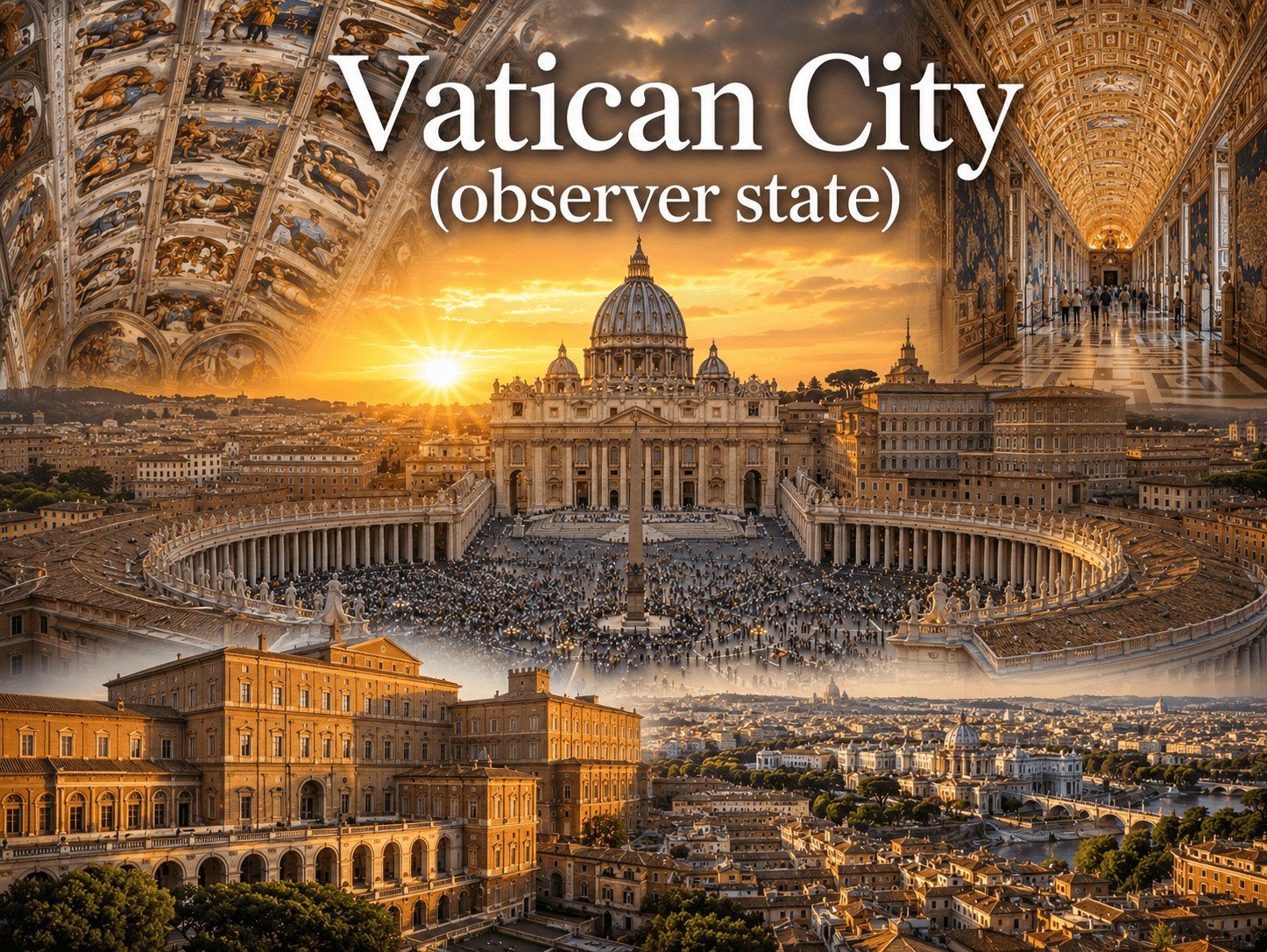
Introduction to Vatican City (Observer State)
Vatican City (observer state) is the smallest independent state in the world and the spiritual center of the Roman Catholic Church. Located entirely within Rome, it is a unique destination that blends religion, art, architecture, and history into one compact but powerful cultural site.
Millions of visitors travel to Vatican City (observer state) every year to experience:
- Sacred Christian heritage
- Renaissance and Baroque art
- Iconic religious architecture
- The Papal residence and ceremonies
- Museums and ancient artifacts
Despite its small size, Vatican City (observer state) holds global importance in religion, diplomacy, and cultural preservation.
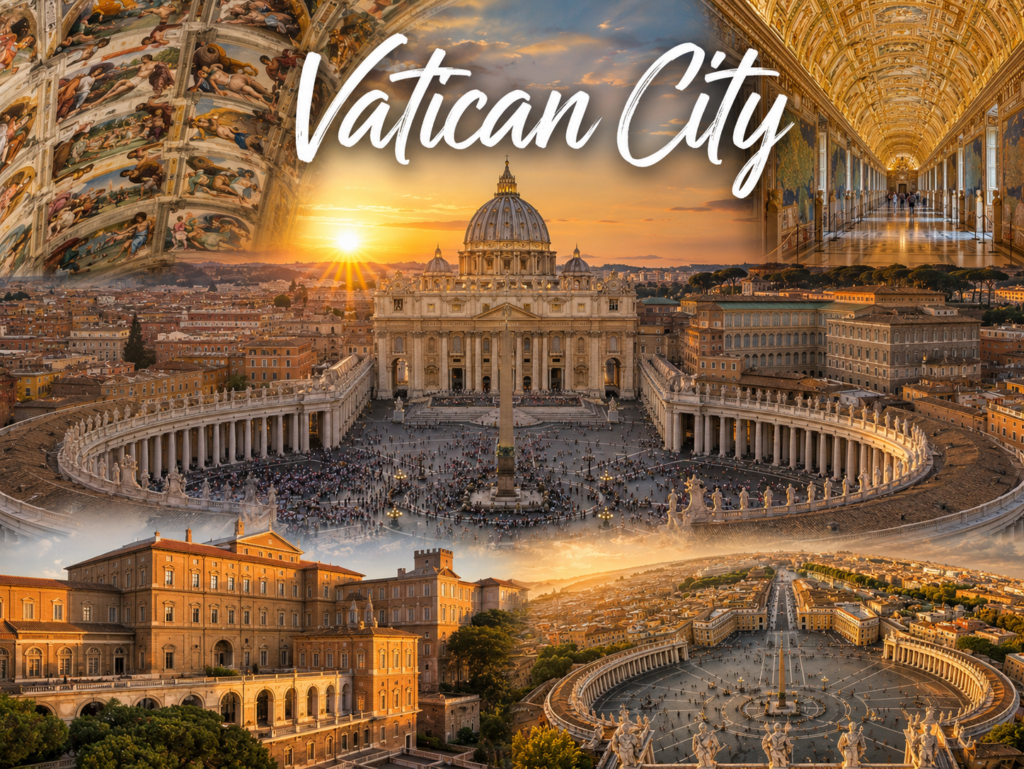
Historical Background of Vatican City (Observer State)
Origins of Vatican City (Observer State)
The history of Vatican City (observer state) is deeply connected to early Christianity and the Roman Empire. The site became important after the martyrdom and burial of Saint Peter, one of the apostles of Jesus Christ.
Over centuries, Vatican City (observer state) evolved into:
- A religious center of Christianity
- The seat of the Pope
- A hub of religious authority
- A major pilgrimage destination
Formation of the Modern State
Modern Vatican City (observer state) was officially established in 1929 through the Lateran Treaty between the Holy See and Italy.
This agreement granted:
- Sovereign independence
- Defined territorial boundaries
- Political neutrality
- International recognition
Religious Importance
Today, Vatican City (observer state) serves as:
- The headquarters of the Catholic Church
- The residence of the Pope
- A center of global religious leadership
- A symbol of faith and tradition
Geography and Location
Where Is Vatican City (Observer State)?
Vatican City (observer state) is located entirely inside the city of Rome, Italy.
It is:
- The smallest country in the world
- Enclosed within a single city
- Located on the Vatican Hill
- Adjacent to the Tiber River region
Physical Features
The geography of Vatican City (observer state) includes:
- St. Peter’s Square
- Basilica complex
- Vatican Museums
- Gardens and administrative buildings
Despite its small size, it contains some of the most important religious landmarks in the world.
Climate
The climate in Vatican City (observer state) is identical to Rome:
- Hot summers
- Mild winters
- Mediterranean weather
- Seasonal tourism peaks
Culture and Religion
Cultural Identity of Vatican City (Observer State)
Culture in Vatican City (observer state) is centered around religion, art, and tradition.
Key cultural elements include:
- Catholic traditions and rituals
- Renaissance art and sculpture
- Papal ceremonies
- Religious music and choirs
- Historic manuscripts and archives
Language
The official language of Vatican City (observer state) is Latin (ceremonial use), while Italian is commonly used in daily administration.
Religion
Vatican City (observer state) is the spiritual center of Roman Catholicism and represents:
- Global Catholic leadership
- Religious diplomacy
- Spiritual teachings
- Christian pilgrimage site
Art and Architecture
Renaissance Masterpieces
Art is one of the most powerful attractions in Vatican City (observer state).
It is home to:
- Michelangelo’s works
- Raphael’s frescoes
- Ancient Roman sculptures
- Renaissance architectural designs
St. Peter’s Basilica
St. Peter’s Basilica is one of the largest and most important churches in the world.
St. Peter’s Square
St. Peter’s Square is the central gathering place for religious events and papal ceremonies.
Vatican Museums
Overview of Vatican Museums
The museums in Vatican City (observer state) contain one of the largest and most important art collections in the world.
They include:
- Ancient Roman artifacts
- Renaissance paintings
- Religious relics
- Sculptures and frescoes
Sistine Chapel
Sistine Chapel is world-famous for Michelangelo’s ceiling frescoes, including “The Creation of Adam.”
Raphael Rooms
Raphael Rooms showcase Renaissance masterpieces painted by Raphael and his workshop.
Tourism in Vatican City (Observer State)
Why Visit Vatican City (Observer State)?
Tourism in Vatican City (observer state) is driven by:
- Religious pilgrimage
- Art and history exploration
- Architectural wonders
- Cultural significance
- Global heritage importance
Visitor Experience
Visitors to Vatican City (observer state) typically experience:
Papal audience gatherings
Guided museum tours
Religious ceremonies
Art exhibitions
Basilica visits
External DoFollow Links
- Vatican Official Site: https://www.vatican.va
- Vatican Museums: https://www.museivaticani.va
- Holy See: https://www.vaticanstate.va
Economy and Governance of Vatican City (Observer State)
The economy of Vatican City (observer state) is unique because it does not function like a typical country. Instead, it is supported by donations, tourism revenue, museum tickets, and investments managed by the Holy See.
Main income sources include:
- Donations from Catholics worldwide
- Ticket sales from museums
- Philatelic and coin sales
- Publishing and media activities
- Investments and property income
The financial system of Vatican City (observer state) is designed to support religious, cultural, and administrative functions rather than commercial expansion.
Governance Structure
Vatican City (observer state) is governed as an absolute elective monarchy led by the Pope.
Key institutions include:
- The Pope (Head of State)
- Roman Curia (administrative body)
- Pontifical commissions
- Swiss Guard (security force)
The governance system of Vatican City (observer state) is centered on religious leadership rather than political democracy.
Transportation and Access
How to Reach Vatican City (Observer State)
Access to Vatican City (observer state) is extremely easy because it is located inside Rome, Italy.
Common ways to reach it:
- Metro Line A (Ottaviano Station)
- City buses from Rome
- Walking from central Rome
- Taxi and private transport
There are no airports inside Vatican City (observer state), so visitors use Rome’s international airports.
Security and Entry Rules
Entry into Vatican City (observer state) is free, but some areas require tickets.
Rules include:
- Security checks at entrances
- Dress code for religious sites
- Restrictions on photography in certain areas
- Respectful behavior required in basilicas
Museums and Cultural Collections
Vatican Museums Overview
The museums of Vatican City (observer state) are among the most important cultural institutions in the world, housing thousands of years of art and history.
Collections include:
- Ancient Egyptian artifacts
- Classical Roman sculptures
- Renaissance paintings
- Religious relics and manuscripts
- Decorative arts and tapestries
Gallery of Maps
Gallery of Maps is a long corridor featuring detailed geographic frescoes of Italy from the Renaissance period.
Apostolic Palace
Apostolic Palace is the official residence of the Pope and an important administrative center.
Vatican Gardens
Vatican Gardens offer peaceful green landscapes and historical monuments inside the city-state.
Festivals and Religious Events
Major Events in Vatican City (Observer State)
Religious celebrations in Vatican City (observer state) attract millions of pilgrims and visitors.
Key events include:
- Easter celebrations
- Christmas Mass at St. Peter’s Basilica
- Papal audiences
- Canonization ceremonies
- Feast days of saints
Papal Audience
Papal Audience is a weekly event where the Pope addresses visitors and pilgrims.
Christmas and Easter Celebrations
During major holidays, Vatican City (observer state) becomes a global center of Christian worship, with large gatherings in St. Peter’s Square.
Tourism Tips for Visitors
Best Time to Visit Vatican City (Observer State)
The best time to visit Vatican City (observer state) is during spring and autumn when Rome has pleasant weather and fewer crowds.
Recommended seasons:
- March to May
- September to November
Visitor Tips
Travelers visiting Vatican City (observer state) should:
- Book museum tickets in advance
- Arrive early to avoid crowds
- Wear modest clothing for religious sites
- Plan at least half a day for museums
- Use guided tours for deeper understanding
Photography Guidelines
In Vatican City (observer state):
- Photography is allowed in many areas
- Flash photography is restricted in some museums
- Silence is required in sacred spaces
Interesting Facts About Vatican City (Observer State)
- It is the smallest independent state in the world
- Entire population is under 1,000 residents
- It has its own postal system and currency system
- The Vatican Museums contain over 70,000 artworks
- Swiss Guard is the oldest active military unit in the world
- It is entirely surrounded by Rome, Italy
International Relations
Diplomatic Role
Vatican City (observer state) maintains diplomatic relations with countries worldwide and participates in international discussions on peace, ethics, and humanitarian issues.
Global Influence
Despite its size, Vatican City (observer state) has significant influence in:
- Religion and spirituality
- Global diplomacy
- Cultural preservation
- Human rights discussions
Food and Culinary Experience around Vatican City (Observer State)
Food culture in Vatican City (observer state) is not defined by a traditional cuisine of its own, as it is extremely small. Instead, visitors experience Roman and Italian cuisine from surrounding Rome.
Common food experiences near Vatican City (observer state) include:
- Italian pasta and pizza
- Espresso and cappuccino culture
- Gelato and desserts
- Roman street food
- Fine dining restaurants in Rome
Meals near Vatican City (observer state) are often enjoyed in cafés and restaurants around St. Peter’s Square and nearby neighborhoods.
Popular Italian Foods for Visitors
Pasta Dishes
Classic pasta dishes near Vatican City (observer state) include carbonara, amatriciana, and cacio e pepe.
Pizza
Roman-style pizza is widely available around Vatican City (observer state), known for thin crust and simple toppings.
Gelato
Gelato shops are common near Vatican City (observer state) and are popular with tourists after museum visits.
Lifestyle and Daily Atmosphere
Life Inside Vatican City (Observer State)
Daily life in Vatican City (observer state) is centered around religious administration, art preservation, and ceremonial duties.
Lifestyle features include:
- Clergy and religious staff presence
- Administrative offices of the Catholic Church
- Museum and cultural management
- Quiet and highly secure environment
- Limited residential population
Surrounding Lifestyle in Rome
Since Vatican City (observer state) is inside Rome, visitors experience vibrant city life just outside its borders:
- Busy cafés and restaurants
- Historic streets and piazzas
- Modern Italian shopping districts
- Cultural festivals and events
Cultural Institutions
Vatican Library
Vatican Apostolic Library is one of the oldest libraries in the world, preserving ancient manuscripts and historical documents.
Vatican Observatory
Vatican Observatory is a scientific research institution focusing on astronomy and space studies.
Sports and Recreation
Sports in Vatican City (Observer State)
There are no major professional sports leagues in Vatican City (observer state) due to its size, but it has:
- Small football team for internal matches
- Participation in friendly games
- Religious and community-based recreational activities
Nearby Sports Culture in Rome
Visitors staying near Vatican City (observer state) can experience Rome’s strong sports culture:
- Football (AS Roma and Lazio clubs)
- Tennis tournaments
- Cycling events
- International sporting competitions
Travel Safety and Etiquette
Safety for Visitors
Vatican City (observer state) is one of the safest destinations in the world due to strict security and controlled access.
Visitors should:
- Follow security instructions
- Respect religious spaces
- Keep belongings secure in crowded areas
- Avoid restricted zones
Dress Code Guidelines
When visiting Vatican City (observer state), especially religious sites:
- Shoulders must be covered
- No short skirts or shorts in basilicas
- Hats should be removed indoors
- Modest clothing is required
Photography Etiquette
Visitors in Vatican City (observer state) should:
- Avoid flash photography in museums
- Respect no-photo zones
- Be mindful during religious ceremonies
Why Vatican City (Observer State) Is Unique
Cultural and Spiritual Identity
The uniqueness of Vatican City (observer state) comes from its unmatched combination of:
- Spiritual leadership of Catholicism
- World-famous art collections
- Renaissance architecture
- Global religious influence
- Historical and cultural significance
No other place in the world holds such concentrated religious and artistic importance as Vatican City (observer state).
Final Summary
Vatican City (observer state) is the spiritual heart of the Roman Catholic Church and one of the most important cultural and religious destinations in the world. Located within Rome, it offers visitors an extraordinary experience of sacred art, architecture, and history.
From St. Peter’s Basilica and the Sistine Chapel to the Vatican Museums and Papal ceremonies, Vatican City (observer state) represents centuries of faith, creativity, and global influence.
Visitors to Vatican City (observer state) can enjoy:
- World-famous religious landmarks
- Renaissance masterpieces by Michelangelo and Raphael
- Papal events and ceremonies
- Rich Roman cuisine nearby
- Museums and cultural heritage sites
- A peaceful and spiritually significant environment
Despite its small size, Vatican City (observer state) remains one of the most powerful cultural and religious centers in the world.
Key Facts About Vatican City (Observer State)
| Category | Information |
|---|---|
| Name | Vatican City (Observer State) |
| Location | Rome, Italy |
| Status | Independent city-state |
| Head of State | The Pope |
| Currency | Euro (EUR) |
| Language | Italian (Latin in ceremonies) |
| Famous For | St. Peter’s Basilica & Sistine Chapel |
| Major Attraction | Vatican Museums |
| Population | Under 1,000 |
| Best Time to Visit | Spring and Autumn |

