



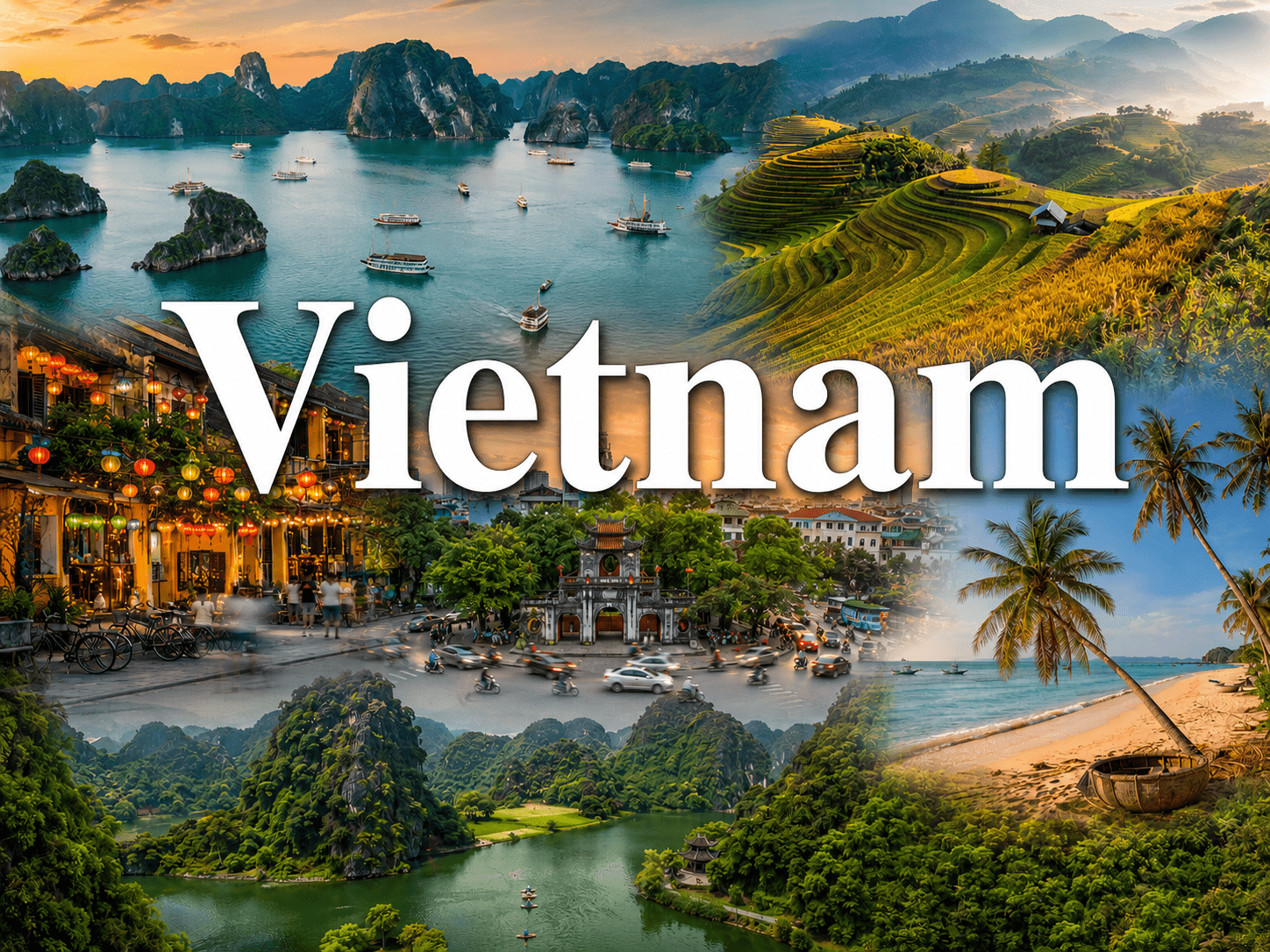
Introduction to Vietnam
Vietnam is one of Southeast Asia’s most fascinating destinations, known for its dramatic landscapes, deep cultural heritage, vibrant cities, and world-famous cuisine. Stretching along the eastern coast of the Indochinese Peninsula, Vietnam offers a remarkable mix of mountains, rice terraces, tropical beaches, historic towns, and bustling urban centers.
Travelers visit Vietnam for:
- Beautiful coastal scenery
- Ancient cultural traditions
- Street food and local cuisine
- Historic architecture
- Mountain adventures and trekking
- Island and beach destinations
Modern Vietnam combines centuries of tradition with rapid development and growing tourism.
Historical Background of Vietnam
Early Civilizations
The history of Vietnam stretches back thousands of years. Ancient communities developed around fertile river systems and gradually formed organized kingdoms.
Early societies contributed:
- Agricultural development
- Bronze craftsmanship
- Trade routes
- Early governance systems
Dynasties and Kingdoms
For centuries, Vietnam developed through different dynasties that shaped culture, architecture, and political structures.
These eras contributed:
- Literature and philosophy
- Traditional architecture
- Confucian influence
- Expansion of trade networks
Modern Development
Modern Vietnam emerged through periods of colonial rule, conflict, and later economic reforms that transformed the country into one of Asia’s growing economies.
Today Vietnam is known for:
- Manufacturing growth
- Expanding tourism
- Cultural preservation
- Modern infrastructure development
Geography and Location
Where Is Vietnam Located?
Vietnam is located in Southeast Asia and borders:
- China to the north
- Laos to the west
- Cambodia to the southwest
- The South China Sea to the east
Geographic Features
Vietnam contains diverse landscapes including:
- Mountain ranges
- River deltas
- Tropical coastlines
- Forests and caves
- Rice terraces
The long shape of Vietnam creates significant regional climate differences.
Climate of Vietnam
The climate of Vietnam varies by region:
- Northern areas experience four seasons
- Central regions have tropical weather patterns
- Southern areas remain warm year-round
Travel conditions change depending on the season and location.
Culture and Society
Cultural Identity of Vietnam
Culture in Vietnam reflects a combination of local traditions and historical influences.
Key cultural elements include:
- Family-centered traditions
- Festivals and ceremonies
- Traditional music
- Local crafts and art
- Community celebrations
Language
The official language of Vietnam is Vietnamese.
Additional languages and dialects are spoken among ethnic communities throughout the country.
Religion and Beliefs
Major beliefs practiced in Vietnam include:
- Buddhism
- Folk traditions
- Christianity
- Ancestor worship
Food Culture in Vietnam
Vietnamese cuisine is known worldwide for fresh ingredients and balanced flavors.
Popular ingredients include:
- Rice noodles
- Fresh herbs
- Seafood
- Vegetables
- Meat and spices
Famous Foods
Pho
Pho is a globally recognized noodle soup featuring broth, rice noodles, herbs, and meat.
Banh Mi
Banh Mi combines bread with meats, vegetables, and local flavors.
Spring Rolls
Gỏi cuốn are light rolls filled with vegetables, herbs, and seafood or meat.
Major Cities in Vietnam
Hanoi
Hanoi serves as the political and cultural capital.
Ho Chi Minh City
Ho Chi Minh City is the country’s largest city and commercial hub.
Da Nang
Da Nang is famous for beaches and modern development.
Tourism Highlights
Ha Long Bay
Ha Long Bay is one of the most famous natural attractions in Asia.
Hoi An Ancient Town
Hoi An Ancient Town is known for lantern-lit streets and preserved architecture.
Economy of Vietnam
The economy of Vietnam has experienced rapid growth and modernization over recent decades. Manufacturing, agriculture, technology, exports, and tourism contribute significantly to economic development.
Major sectors in Vietnam include:
- Manufacturing and electronics
- Agriculture and seafood production
- Tourism and hospitality
- Technology and services
- Trade and exports
Economic reforms have helped Vietnam become one of the fastest-growing economies in Southeast Asia.
Agriculture in Vietnam
Agriculture remains important in Vietnam, especially in rural regions and river deltas.
Major agricultural products include:
- Rice
- Coffee
- Pepper
- Tea
- Seafood
- Tropical fruits
Vietnam is one of the world’s leading exporters of coffee and rice.
Currency of Vietnam
The official currency of Vietnam is the Vietnamese Dong (VND).
Currency details:
- Currency: Vietnamese Dong
- Code: VND
- Central Bank: State Bank of Vietnam
Cash and digital payments are widely used throughout Vietnam.
Transportation in Vietnam
Public Transportation
Transportation in Vietnam includes modern and traditional systems connecting cities and rural regions.
Travel options include:
- Domestic flights
- Trains
- Public buses
- Ride-hailing services
- Motorbike taxis
- Ferries
Major Airports
Nội Bài International Airport
Noi Bai International Airport serves northern Vietnam.
Tân Sơn Nhất International Airport
Tan Son Nhat International Airport is the largest airport in Vietnam.
Railway Network
The railway system in Vietnam connects many important cities and scenic areas.
Reunification Express
Reunification Express is a famous train route linking north and south.
Beaches and Islands in Vietnam
Coastal Beauty
The long coastline of Vietnam provides many beach destinations and island experiences.
Popular activities include:
- Swimming
- Snorkeling
- Diving
- Island tours
- Water sports
Famous Beach Destinations
Nha Trang
Nha Trang is famous for beaches and marine activities.
Phú Quốc
Phu Quoc is known for resorts and tropical scenery.
Mũi Né
Mui Ne attracts visitors with dunes and coastal landscapes.
Nature and Wildlife in Vietnam
National Parks and Ecosystems
The natural environment of Vietnam includes forests, mountains, wetlands, and marine ecosystems.
Wildlife includes:
- Monkeys
- Rare birds
- Elephants
- Reptiles
- Marine species
Famous Natural Areas
Phong Nha–Kẻ Bàng National Park
Phong Nha-Ke Bang National Park is known for cave systems and biodiversity.
Cát Tiên National Park
Cat Tien National Park protects wildlife and tropical forests.
Festivals and Traditions in Vietnam
Traditional Celebrations
Festivals in Vietnam combine history, religion, and community traditions.
Major celebrations include:
- Lunar New Year events
- Harvest festivals
- Religious celebrations
- Cultural ceremonies
Tet Festival
Tet is the most important celebration in Vietnam, featuring family gatherings, decorations, and traditional foods.
Traditional Arts
Traditional culture in Vietnam includes:
- Water puppet performances
- Folk music
- Traditional dances
- Handicrafts
Best Time to Visit Vietnam
The best time depends on region and travel interests.
General guidance:
- Northern regions: October–April
- Central coast: February–August
- Southern regions: December–April
Interesting Facts About Vietnam
- Vietnam is one of the largest coffee producers in the world
- Motorbikes are a major transportation method
- The country has thousands of islands
- Ha Long Bay contains thousands of limestone formations
- Cave systems in the country are among the world’s largest
Food and Culinary Culture in Vietnam
Food in Vietnam is one of the country’s strongest cultural identities and is internationally recognized for fresh ingredients, balanced flavors, and regional variety. Cuisine often combines sweet, sour, salty, spicy, and savory elements in a single dish.
Common ingredients in Vietnam include:
- Rice and rice noodles
- Fresh herbs and vegetables
- Seafood and meats
- Fish sauce
- Tropical fruits and spices
Street food culture is a major part of daily life throughout Vietnam.
Famous Foods in Vietnam
Bún Chả
Bún Chả is a dish of grilled pork served with noodles and herbs.
Cơm Tấm
Cơm Tấm is a popular rice meal often served with grilled meat.
Cao Lầu
Cao Lầu is strongly associated with central regions and local culinary traditions.
Lifestyle and Daily Life in Vietnam
Modern Lifestyle
Life in Vietnam combines traditional customs with rapid modernization.
Daily life commonly includes:
- Family-centered social structures
- Busy city environments
- Traditional markets
- Cafés and street food culture
- Growing technology and business sectors
Shopping and Local Markets
Markets remain important social and economic centers in Vietnam.
Popular shopping items include:
- Handcrafted products
- Silk products
- Coffee
- Traditional clothing
- Local artwork
Bến Thành Market
Ben Thanh Market is one of the country’s most famous markets.
Entertainment and Nightlife
Entertainment in Vietnam varies between cities and regions.
Popular activities include:
- Night markets
- Live music venues
- Cafés and cultural spaces
- Traditional performances
- Modern shopping districts
Walking Streets and Public Spaces
Nguyễn Huệ Walking Street
Nguyen Hue Walking Street is a popular social and entertainment destination.
Sports and Recreation in Vietnam
Popular Sports
Sports in Vietnam are important both recreationally and professionally.
Popular sports include:
- Football (soccer)
- Volleyball
- Badminton
- Martial arts
- Cycling
Football remains the most widely followed sport in Vietnam.
Outdoor Activities
Outdoor recreation in Vietnam includes:
- Trekking in mountains
- Boat tours
- Cycling routes
- Beach sports
- Cave exploration
Adventure Tourism
Adventure travelers in Vietnam enjoy:
- Hiking trails
- Cave expeditions
- Coastal activities
- Island exploration
Travel Safety Tips
Safety for Visitors
Vietnam is generally considered a welcoming destination for international travelers.
Travel recommendations:
- Keep valuables secure in crowded places
- Follow local transportation rules
- Carry sufficient cash and payment methods
- Respect local customs and traditions
- Use licensed transportation services
Health Tips
Visitors to Vietnam should:
- Stay hydrated in hot weather
- Use mosquito protection in some regions
- Carry travel insurance
- Follow local health guidance
Why Vietnam Is Unique
Cultural and Natural Identity
The uniqueness of Vietnam comes from its extraordinary blend of:
- Ancient traditions
- Mountain landscapes
- Tropical coastlines
- Rich culinary heritage
- Historic cities
- Dynamic urban development
From caves and beaches to traditional villages and major cities, Vietnam offers diverse experiences in one destination.
Final Summary
Vietnam is a country of rich history, diverse landscapes, and vibrant culture. Travelers can experience limestone bays, mountain regions, beaches, historic sites, and globally celebrated cuisine.
Visitors to Vietnam can enjoy:
- Scenic landscapes and nature
- Historical and cultural sites
- Traditional food and street cuisine
- Festivals and local customs
- Adventure and outdoor activities
- Modern cities and traditional communities
The combination of natural beauty and cultural depth makes Vietnam one of Southeast Asia’s most memorable travel destinations.
Key Facts About Vietnam
| Category | Information |
|---|---|
| Country Name | Vietnam |
| Capital | Hanoi |
| Region | Southeast Asia |
| Currency | Vietnamese Dong (VND) |
| Official Language | Vietnamese |
| Famous For | Cuisine and natural landscapes |
| Major Attraction | Ha Long Bay |
| Popular Sport | Football |
| Geography | Mountains, coastline, river deltas |
| Best Time to Visit | Varies by region |
Vietnam National Tourism Administration
World Travel & Tourism Council Vietnam Information

