



Introduction
Yemen is one of the most historically significant nations on the Arabian Peninsula and has long been recognized for its strategic position, ancient civilizations, and deep cultural traditions. Located at the southern end of Western Asia, this nation has served as a meeting point for trade routes connecting Africa, Asia, and Europe for thousands of years. Ancient kingdoms flourished here, merchants crossed its landscapes carrying valuable goods, and communities built remarkable cities that continue to attract global attention.
The country possesses mountain landscapes, coastal regions, desert areas, and islands that create an impressive range of geographical diversity. Its long history has shaped traditions, architecture, cuisine, and social customs that remain important in modern life.
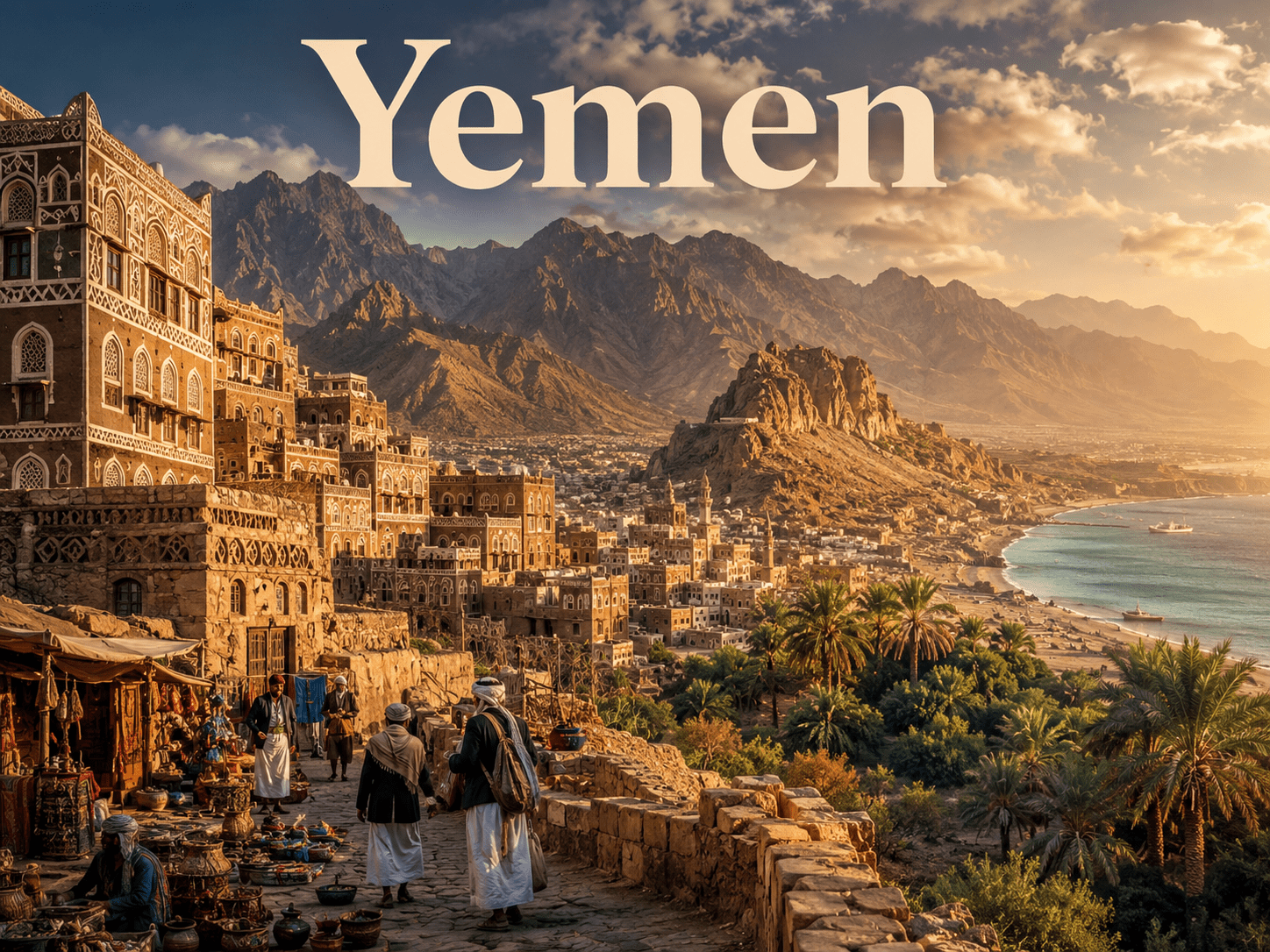
From old mud-brick skyscrapers to markets filled with spices and handmade crafts, travelers and historians continue to find unique stories across this land. Understanding its heritage reveals why it remains an important cultural and historical destination within the Middle East.
Historical Background of Yemen
History in this region stretches back thousands of years and includes some of the earliest organized kingdoms in the Arabian world.
Ancient Kingdoms and Early Civilizations
Ancient civilizations such as the Sabaean Kingdom gained influence because of trade and agricultural development. Historical records and archaeological discoveries suggest that these kingdoms became wealthy through commerce involving incense and spices.
The famous Incense Route connected southern Arabia with neighboring regions and helped create economic prosperity. Frankincense and myrrh were among the most valuable products transported through trade networks.
Early communities also developed sophisticated irrigation systems that allowed agriculture to flourish despite difficult environmental conditions.
Medieval Period
During the medieval era, Islamic influence became central to political and social life. Cities developed as centers of scholarship, religion, and commerce.
Several dynasties ruled different regions, creating diverse cultural and political structures. Architectural achievements from these periods continue to survive in historic urban areas.
Colonial Influence and Modern Development
During later centuries, outside powers became increasingly interested in strategic locations and trade opportunities. The city of Aden became especially important because of its position near maritime routes.
The twentieth century brought political transformations and eventually the formation of the modern state.
Historical Timeline
| Period | Major Event |
|---|---|
| Ancient Era | Rise of Sabaean civilization |
| 7th Century | Spread of Islam |
| Medieval Era | Development of Islamic centers |
| 19th Century | Increased colonial influence |
| 20th Century | Formation of modern political structures |
Geographic Location and Natural Landscape
Geography plays a major role in shaping the country’s environment and culture.
Location
This nation occupies the southern region of the Arabian Peninsula in Western Asia.
Geographical coordinates:
Approximately 15°N latitude and 48°E longitude
Neighboring Countries and Borders
The country shares borders with:
- Saudi Arabia
- Oman
Nearby waters include:
- Red Sea
- Gulf of Aden
- Arabian Sea
These waterways have historically supported trade and transportation activities.
Major Geographic Regions
Mountain Areas
Mountain ranges dominate large portions of the western landscape. These areas experience cooler temperatures and receive more rainfall than surrounding regions.
Desert Regions
Eastern territories include dry landscapes characterized by sand and sparse vegetation.
Coastal Areas
Coastal zones support fishing communities and maritime activity.
Islands
Among the most interesting island territories is the Socotra archipelago, famous for unique biodiversity and unusual plant species.
Culture and Traditions of Yemen
Culture reflects centuries of historical influences and local traditions.
Religion and Social Values
Islam is the primary religion and strongly influences everyday life, customs, celebrations, and social interactions.
Community and family relationships remain central to society.
Traditional Clothing
Traditional clothing varies by region.
Men often wear:
- Long garments
- Decorative belts
- Traditional daggers for ceremonial purposes
Women wear clothing styles that differ depending on cultural practices and local traditions.
Music and Performing Arts
Music includes traditional instruments and folk performances that have been passed across generations.
Popular cultural expressions include:
- Wedding songs
- Folk dances
- Storytelling traditions
- Poetry
Poetry has historically occupied an important role in social and cultural life.
Food and Culinary Heritage
Traditional dishes feature rich flavors and aromatic spices.
Popular foods include:
- Saltah
- Fahsa
- Mandi
- Bint Al-Sahn
- Fresh bread varieties
Meals frequently bring families and communities together.
Festivals and Celebrations
Religious and cultural celebrations play an important role.
Events often include:
- Community gatherings
- Traditional music
- Food preparation
- Family visits
Economy and Industries
The economy has historically developed around agriculture, trade, fisheries, and natural resources. Due to its strategic location connecting maritime routes, commercial activity has influenced growth patterns for centuries.
Economic activity varies across regions, with urban centers focusing more on commerce and services while rural communities often depend on agriculture and local markets.
Major Economic Sectors
Agriculture
Agriculture continues to play an important role in supporting livelihoods.
Major agricultural products include:
- Coffee
- Sorghum
- Millet
- Cotton
- Fruits
- Vegetables
Terraced farming systems built into mountain landscapes represent an important agricultural practice that has existed for generations.
Fishing Industry
Coastal regions along the Arabian Sea and the Red Sea support fishing communities and seafood production.
Commonly harvested resources include:
- Tuna
- Shrimp
- Sardines
- Lobster
Fishing contributes both to local food supplies and economic activity.
Oil and Natural Resources
Petroleum resources have historically been among the country’s major export products.
Natural resources include:
- Crude oil
- Natural gas
- Mineral deposits
- Fisheries
Changes in global energy markets can influence economic performance because energy products remain important exports.
Manufacturing and Small Industries
Manufacturing activities include:
- Food processing
- Textile production
- Handicrafts
- Traditional products
- Construction materials
Local craftsmanship remains valuable in many regions.
Currency and Trade Information
The national currency is:
Yemeni Rial (YER)
Trade relationships have historically connected markets across Asia, Europe, and neighboring Middle Eastern countries.
Major trading relationships often involve:
- Regional Gulf countries
- Asian markets
- International commercial partners
Export products commonly include:
- Petroleum products
- Fish
- Agricultural goods
Imports may include:
- Machinery
- Food products
- Consumer goods
- Medical supplies
Economic structures continue evolving based on domestic and international factors.
Official Language and Common Dialects
Language forms an important part of national identity and cultural continuity.
Official Language
The official language is Arabic.
Arabic serves as the primary language used in:
- Government institutions
- Education
- Media
- Business activities
- Daily communication
Common Regional Dialects
Several regional dialects exist and differ in pronunciation and vocabulary.
Examples include:
Sanaani Arabic
Spoken mainly around central regions.
Ta’izzi-Adeni Arabic
Used in southern areas and urban communities.
Hadhrami Arabic
Found in eastern territories.
Dialect differences contribute to cultural diversity and reflect historical influences.
English may also be used in some business and educational contexts.
Major Cities and Urban Centers
Urban centers combine historical importance with modern development.
Sana’a — Capital City
The capital city is Sana’a.
This historic city is known for:
- Ancient architecture
- Decorative tower houses
- Historic markets
- Cultural heritage sites
Old sections of the city are internationally recognized because of their distinctive architectural style.
Aden
Aden has historically functioned as an important port city because of its location along maritime trade routes.
Key characteristics include:
- Coastal landscapes
- Commercial activity
- Historic significance
- Harbor facilities
Taiz
Taiz is recognized for:
- Educational institutions
- Cultural influence
- Mountain scenery
Mukalla
Mukalla serves as an important urban center along the coast.
Features include:
- Waterfront views
- Fishing activity
- Trade connections
Al Hudaydah
This city supports:
- Maritime transportation
- Commercial activities
- Fishing industries
Tourist Attractions and Places to Explore
Travel experiences in this region can include historical sites, mountain landscapes, coastal areas, and natural environments.
Historic Sana’a
Popular features include:
- Traditional tower houses
- Historic streets
- Decorative architecture
- Ancient markets
The city remains one of the oldest continuously inhabited urban centers in the world.
Shibam
Often called the “Manhattan of the Desert,” Shibam is known for:
- Tall mud-brick buildings
- Ancient urban planning
- Historic architecture
Socotra Archipelago
Natural attractions include:
- Dragon Blood trees
- Rare wildlife
- Limestone caves
- Beaches
- Mountain landscapes
Aden Coastline
Travelers often appreciate:
- Coastal scenery
- Harbor views
- Beaches
- Historical locations
Haraz Mountains
The region features:
- Terraced farms
- Scenic roads
- Traditional villages
- Elevated viewpoints
International Organizations and Global Participation
International cooperation plays a role in diplomacy and development activities.
The country became a member of the United Nations and participates in international discussions involving:
- Development initiatives
- Humanitarian cooperation
- Global policy matters
- Economic collaboration
Other international organizations include:
- Arab League
- Organization of Islamic Cooperation
- World Bank Group
Unique and Interesting Facts
This nation has many fascinating characteristics that make it stand out historically, geographically, and culturally.
- The ancient kingdoms of southern Arabia were among the earliest organized civilizations in the region.
- Coffee culture has deep historical roots here, and the port city of Mocha became famous worldwide because coffee beans were traded through the area.
- Traditional mud-brick architecture has survived for centuries and represents a remarkable example of engineering and design.
- Mountain villages were built on steep landscapes and connected by old trade routes.
- The Socotra archipelago contains plant and animal species found nowhere else on Earth.
- Traditional markets remain an important part of daily life and continue centuries-old trading practices.
- Poetry has historically been highly valued and has played an important role in cultural identity.
- Historic buildings often contain decorative windows and unique geometric designs that distinguish local architecture from many other regions.
Best Time to Visit
Travel conditions vary depending on elevation, geography, and local climate.
Generally, the most comfortable periods for visitors are:
March to May
During these months:
- Temperatures are moderate
- Mountain landscapes appear greener
- Outdoor exploration is easier
September to November
Advantages include:
- Pleasant weather conditions
- Better sightseeing opportunities
- Comfortable temperatures in many regions
Summer temperatures may become very high in lower regions and coastal areas.
Mountain areas can remain cooler throughout much of the year.
Transportation and Getting Around
Transportation methods vary across regions and cities.
Air Travel
Air transportation connects major urban centers and international destinations.
Travelers commonly use airports serving larger cities.
Road Transportation
Road travel remains one of the most common methods for domestic movement.
Transportation options include:
- Private vehicles
- Taxis
- Buses
- Local transportation services
Road conditions can differ significantly depending on location.
Public Transportation
Local transport options in urban areas often include:
- Shared taxis
- Minibuses
- Public buses
These services help residents and visitors move between neighborhoods and nearby communities.
Travel Tips
Visitors often find these suggestions useful:
- Carry local currency for smaller purchases
- Keep travel documents accessible
- Review transportation arrangements before long journeys
- Learn basic Arabic phrases for easier communication
- Check current travel information before planning trips
Final Summary
This country combines ancient history, distinctive architecture, cultural traditions, and diverse landscapes into a destination with remarkable significance. Mountain ranges, coastal regions, islands, historic cities, and traditional communities create an environment shaped by centuries of trade and civilization.
Its cultural heritage includes poetry, music, cuisine, architecture, and social traditions that continue influencing daily life. Historic cities and natural landscapes provide opportunities for travelers interested in history, culture, and geography.
From ancient kingdoms and coffee trade routes to traditional markets and unique biodiversity, this region continues to attract interest from historians, researchers, and travelers around the world.
Key Facts Table
| Category | Information |
|---|---|
| Official Name | Republic of Yemen |
| Capital | Sana’a |
| Largest Major Cities | Sana’a, Aden, Taiz, Mukalla, Al Hudaydah |
| Continent | Asia |
| Region | Arabian Peninsula |
| Coordinates | Approximately 15°N, 48°E |
| Official Language | Arabic |
| Currency | Yemeni Rial (YER) |
| Major Industries | Agriculture, fishing, petroleum, trade, manufacturing |
| Major Exports | Petroleum products, fish, agricultural goods |
| Religion | Islam |
| UN Membership | Member of United Nations |
| Neighboring Countries | Saudi Arabia, Oman |
| Famous Attractions | Old Sana’a, Shibam, Socotra, Haraz Mountains |
| Best Travel Season | March–May and September–November |
External DoFollow Links:

