



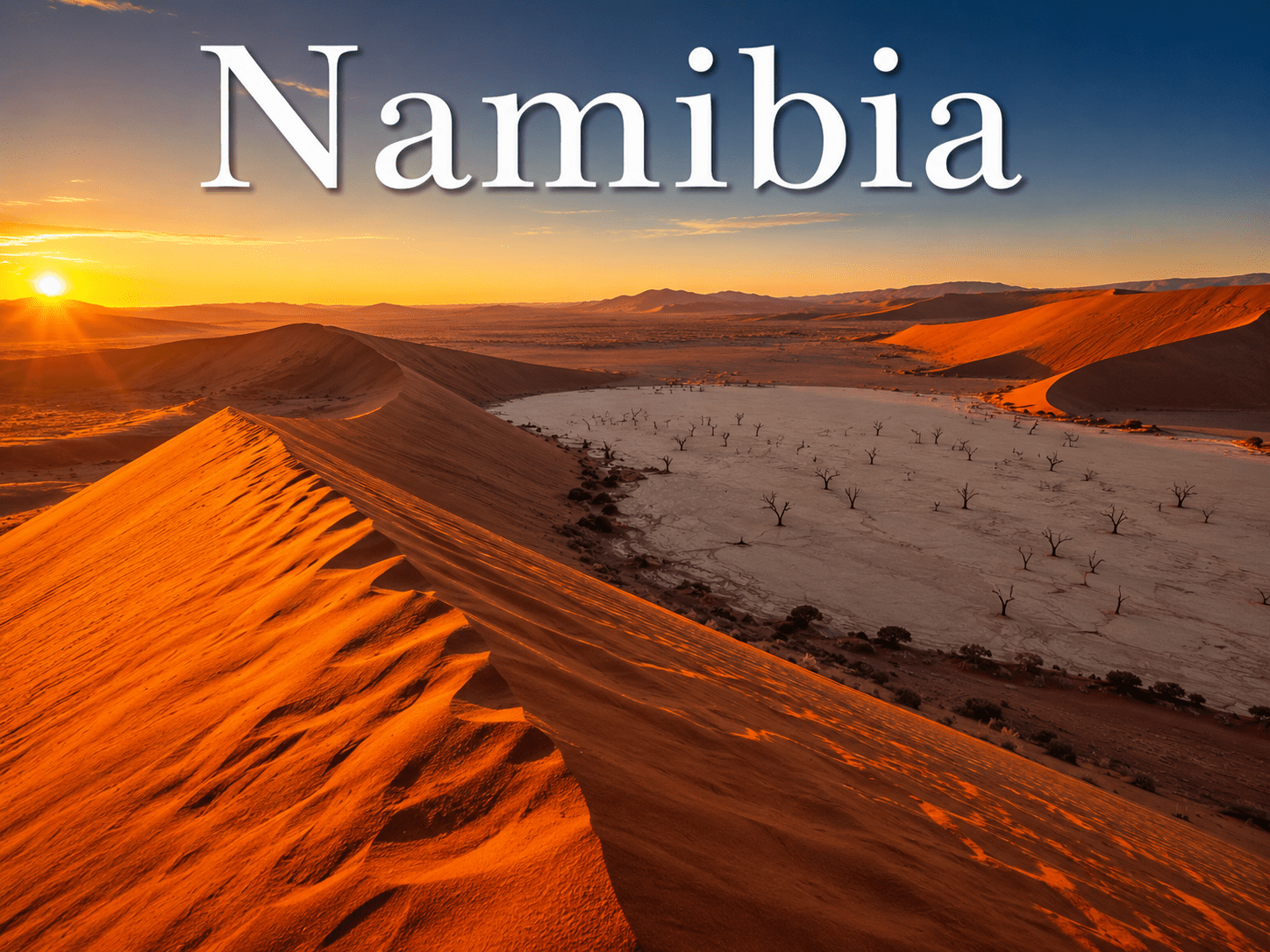
Namibia Introduction
Namibia is one of Africa’s most spectacular travel destinations, famous for dramatic desert landscapes, extraordinary wildlife, coastal scenery, and rich cultural heritage. Located in southwestern Africa, Namibia attracts travelers seeking adventure tourism, safari experiences, photography, and untouched natural beauty.
The country is internationally recognized for destinations such as the Namib Desert, Etosha National Park, Skeleton Coast, Swakopmund, and Sossusvlei. Massive sand dunes, wildlife reserves, rugged coastlines, and vast open spaces make Namibia one of the most visually unique countries in the world.
Travelers visiting Namibia can enjoy desert safaris, wildlife photography, cultural experiences, stargazing, hiking, sandboarding, and scenic road trips. The country’s low population density and protected wilderness areas create peaceful travel experiences far from crowded tourist destinations.
Namibia also has a fascinating cultural identity influenced by African traditions, German colonial history, and indigenous communities such as the Himba, Herero, and San peoples.
Modern Namibia continues developing eco-tourism, wildlife conservation, and sustainable travel initiatives while protecting natural ecosystems and cultural heritage.
Quick Facts About Namibia
| Feature | Details |
|---|---|
| Official Name | Republic of Namibia |
| Capital City | Windhoek |
| Continent | Africa |
| Population | Around 2.7 million |
| Official Language | English |
| Currency | Namibian Dollar |
| Government Type | Presidential Republic |
| Major Religion | Christianity |
| Area | Approximately 825,615 sq km |
| Independence | 1990 |
History of Namibia
Early History of Namibia
The territory of Namibia has been inhabited for thousands of years by indigenous African communities.
San hunter-gatherers are among the oldest known inhabitants of the region. Ancient rock art sites across Namibia reflect long cultural traditions and historical survival in harsh desert environments.
Colonial History
European influence increased during the nineteenth century when Germany established colonial control over Namibia.
German colonial architecture, language influences, and historical sites remain visible in several cities today.
During the twentieth century, South Africa administered the territory before independence movements emerged.
Independence of Namibia
After years of political struggle and international negotiations, Namibia gained independence in 1990.
The country became a democratic republic focused on national development, conservation, and international cooperation.
Modern Namibia
Modern Namibia is recognized globally for eco-tourism, wildlife conservation, mining industries, and political stability.
The country continues investing in tourism infrastructure and sustainable development programs.
Geography of Namibia
Where Is Namibia Located?
Namibia is located in southwestern Africa along the Atlantic Ocean coastline.
Geographic Coordinates
- Latitude: 22.9576° S
- Longitude: 18.4904° E
The country borders:
- Angola
- Zambia
- Botswana
- South Africa
The Atlantic Ocean forms Namibia’s western boundary.
Landscape and Natural Features
Namibia is famous for extraordinary landscapes and geological diversity.
Main Geographic Features
- Namib Desert
- Skeleton Coast
- Etosha salt pan
- Sand dunes
- Mountain ranges
- Savannah plains
The country’s dramatic scenery attracts photographers and nature enthusiasts from around the world.
Namib Desert
The Namib Desert is considered one of the oldest deserts on Earth.
Popular Attractions
- Red sand dunes
- Desert wildlife
- Scenic landscapes
- Sunrise photography
- Adventure tourism
Sossusvlei and Deadvlei are among the most iconic desert destinations in Namibia.
Skeleton Coast
The Skeleton Coast is known for shipwrecks, foggy beaches, and remote wilderness.
Why Visitors Explore the Skeleton Coast
- Dramatic coastal scenery
- Wildlife viewing
- Desert-meets-ocean landscapes
- Adventure road trips
The region has become famous for its mysterious atmosphere and rugged beauty.
Climate of Namibia
Desert and Semi-Arid Climate
Namibia has a generally dry climate with warm temperatures and low rainfall.
Main Seasons
Dry Season
Ideal for safaris and wildlife viewing.
Rainy Season
Short seasonal rains transform landscapes with greener vegetation.
Because of clear skies and limited light pollution, Namibia is also famous for exceptional stargazing opportunities.
Culture and Traditions of Namibia
Cultural Identity of Namibia
Namibia has a multicultural society influenced by indigenous African traditions and European history.
Traditional customs, storytelling, music, and ceremonies remain important aspects of community life.
Indigenous Communities
Several indigenous communities preserve unique cultural traditions across Namibia.
Famous Indigenous Groups
- Himba
- Herero
- San
- Ovambo
Each community contributes to the country’s cultural diversity.
Traditional Music and Dance
Traditional music often includes drumming, singing, and ceremonial dances.
Cultural festivals help preserve regional heritage and historical identity.
Food and Cuisine in Namibia
Namibian Cuisine
Namibian cuisine combines African, German, and South African influences.
Popular Namibian Dishes
Braai
Traditional barbecue meals featuring grilled meat.
Kapana
Street food made from grilled beef pieces.
Game Meat
Venison and wild meats are commonly served.
Potjiekos
Slow-cooked stew prepared in cast-iron pots.
Local cuisine emphasizes hearty flavors and outdoor cooking traditions.
Seafood Along the Coast
Atlantic coastal regions serve fresh seafood such as:
- Oysters
- Lobster
- Fish dishes
Coastal dining is especially popular in Swakopmund and Walvis Bay.
Official Language of Namibia
English Language
English is the official language of Namibia and is widely used in education, government, and business.
Other Languages Spoken
Many additional languages are spoken throughout Namibia.
Common Languages
- Afrikaans
- German
- Oshiwambo
- Herero
- Nama
Multilingual communication is common across the country.
Major Cities in Namibia
Windhoek
Windhoek is the capital and largest city of Namibia.
Main Attractions
- Museums
- German colonial architecture
- Restaurants
- Markets
- Government buildings
The city serves as the country’s political and economic center.
Swakopmund
Swakopmund is one of the most popular tourism destinations in Namibia.
Popular Activities
- Sandboarding
- Desert tours
- Coastal sightseeing
- Adventure sports
The city combines German-inspired architecture with Atlantic coastal scenery.
Walvis Bay
Walvis Bay is known for marine tourism and birdlife.
Highlights
- Flamingos
- Dolphin tours
- Lagoon scenery
- Seafood restaurants
Lüderitz
Lüderitz is a historic coastal town influenced strongly by German colonial history.
Attractions
- Colonial architecture
- Desert scenery
- Coastal landscapes
Tourism in Namibia
Why Visit Namibia?
Namibia offers extraordinary landscapes, wildlife safaris, cultural experiences, and adventure tourism opportunities.
Top Reasons Tourists Visit
- Desert photography
- Wildlife safaris
- National parks
- Adventure activities
- Stargazing
- Cultural tourism
The country is considered one of Africa’s best self-drive travel destinations.
External DoFollow Links
- Official Namibia Tourism Website
- United Nations Namibia Profile
- UNESCO Official Website
- World Bank Namibia Data
Economy of Namibia
Namibia Economy Overview
Namibia has a developing economy supported by mining, tourism, agriculture, fishing, and renewable energy projects. The country is internationally recognized for mineral resources, wildlife conservation, and eco-tourism industries.
Modern Namibia continues investing in infrastructure, transportation, tourism facilities, and environmental sustainability programs.
Because of political stability and extraordinary natural beauty, Namibia has become one of Africa’s leading eco-tourism destinations.
Currency of Namibia
The official currency of Namibia is the Namibian Dollar (NAD).
The South African Rand is also widely accepted throughout the country.
Currency Facts
| Feature | Details |
|---|---|
| Official Currency | Namibian Dollar |
| Currency Code | NAD |
| Common Payment Methods | Cash and cards |
| Banking Access | Available in major cities |
Tourism regions generally support international payment cards and ATM services.
Mining Industry in Namibia
Mining plays a major role in the Namibia economy.
Important Mineral Resources
- Diamonds
- Uranium
- Gold
- Zinc
- Copper
Namibia is one of the world’s important uranium producers.
Diamond mining along coastal regions contributes significantly to exports and national revenue.
Agriculture and Livestock
Agriculture supports rural communities throughout Namibia.
Main Agricultural Activities
- Cattle farming
- Sheep farming
- Crop cultivation
- Wildlife ranching
Dry climate conditions limit large-scale farming in some regions.
Tourism Industry in Namibia
Tourism is one of the fastest-growing sectors of the Namibia economy.
Travelers visit Namibia for:
- Wildlife safaris
- Desert landscapes
- Photography tours
- Adventure travel
- Cultural experiences
Eco-tourism and conservation programs help protect natural habitats while supporting local communities.
Top Tourist Attractions in Namibia
Sossusvlei
Sossusvlei is one of the most famous destinations in Namibia.
Main Attractions
- Massive red sand dunes
- Sunrise photography
- Desert scenery
- Adventure activities
The area contains some of the tallest sand dunes in the world.
Deadvlei
Deadvlei is known for white clay landscapes and ancient dead acacia trees surrounded by orange dunes.
Why Visitors Love Deadvlei
- Unique photography opportunities
- Dramatic desert contrasts
- Scenic hiking routes
The landscape has become one of Africa’s most iconic natural scenes.
Etosha National Park
Etosha National Park is one of Africa’s best safari destinations.
Wildlife Commonly Seen
- Elephants
- Lions
- Giraffes
- Rhinos
- Zebras
Waterholes provide excellent wildlife viewing opportunities during the dry season.
Skeleton Coast
The Skeleton Coast combines desert wilderness with Atlantic Ocean scenery.
Highlights
- Shipwrecks
- Seal colonies
- Coastal dunes
- Remote landscapes
Adventure travelers and photographers especially enjoy this mysterious region.
Swakopmund
Swakopmund is one of the most popular tourism cities in Namibia.
Popular Activities
- Sandboarding
- Skydiving
- Quad biking
- Dolphin cruises
The city blends German-inspired architecture with coastal adventure tourism.
Wildlife Safaris in Namibia
Safari Experiences
Namibia is internationally respected for conservation-based safari tourism.
Popular Safari Destinations
- Etosha National Park
- Namib-Naukluft National Park
- Damaraland
- Caprivi Strip
Wildlife viewing often includes rare desert-adapted species.
Desert Wildlife
Despite harsh desert conditions, Namibia supports unique wildlife populations.
Desert Species
- Oryx
- Springbok
- Desert elephants
- Brown hyenas
These animals have adapted remarkably to dry environments.
Rhino Conservation
Namibia is recognized globally for successful rhino conservation efforts.
Community conservation programs help protect endangered species and promote sustainable tourism.
National Parks in Namibia
Namib-Naukluft National Park
This is one of Africa’s largest protected areas.
Features
- Sand dunes
- Mountain landscapes
- Desert valleys
- Wildlife habitats
The park contains Sossusvlei and Deadvlei.
Etosha National Park
Etosha remains the country’s premier wildlife reserve.
The enormous salt pan visible from space creates one of Africa’s most distinctive safari landscapes.
Bwabwata National Park
Located in northeastern Namibia, this park combines rivers, forests, and wildlife habitats.
Popular Wildlife
- Buffalo
- Hippos
- Elephants
- Crocodiles
The region differs greatly from Namibia’s desert environments.
Adventure Tourism in Namibia
Sandboarding
Sandboarding on giant dunes is one of the most exciting adventure activities in Namibia.
Swakopmund is especially famous for desert sports.
Quad Biking
Adventure companies organize guided quad bike tours across desert landscapes.
These tours provide opportunities to explore remote dune regions.
Stargazing
Namibia is considered one of the best stargazing destinations in the world because of clear skies and low light pollution.
Stargazing Experiences
- Desert night photography
- Astronomy tours
- Luxury desert lodges
Hot Air Balloon Rides
Hot air balloon rides above desert landscapes provide unforgettable sunrise experiences.
Travelers enjoy panoramic views of dunes and mountains.
Coastal Tourism in Namibia
Walvis Bay
Walvis Bay is known for marine wildlife and lagoon scenery.
Popular Experiences
- Dolphin cruises
- Flamingo watching
- Kayaking
- Seafood dining
The lagoon attracts thousands of migratory birds.
Seal Colonies
Cape fur seal colonies along the Skeleton Coast attract wildlife photographers and marine tourists.
Large colonies can be observed near Cape Cross.
Transportation in Namibia
Getting to Namibia
International travelers usually arrive through Hosea Kutako International Airport near Windhoek.
Regional flights also connect tourism destinations.
Traveling Around Namibia
Self-drive tourism is extremely popular because of scenic roads and wide open landscapes.
Common Transportation Options
- Rental vehicles
- Guided tours
- Domestic flights
- Safari vehicles
Travel distances can be long between destinations.
Festivals and Events in Namibia
Cultural Festivals
Traditional festivals celebrate music, heritage, dance, and local identity.
Festival Highlights
- Traditional costumes
- Community celebrations
- Music performances
- Food events
Windhoek Carnival
The Windhoek Carnival reflects German cultural influence and includes colorful parades and entertainment.
Best Time to Visit Namibia
Dry Season
The dry season is generally considered the best time to visit Namibia.
Advantages
- Better wildlife viewing
- Cooler temperatures
- Clear skies
- Ideal safari conditions
Rainy Season
The rainy season brings greener landscapes and excellent birdwatching opportunities.
Photography conditions can also become especially dramatic.
Food Experiences in Namibia
Traditional Meat Dishes
Namibian cuisine often includes grilled meats and game dishes.
Popular Foods
- Steak
- Sausages
- Venison
- Braai meals
Outdoor cooking traditions are deeply connected to local culture.
German Culinary Influence
German colonial history influenced breads, pastries, and beer culture in Namibia.
Bakeries and cafés remain popular in several cities.
Seafood Along the Coast
Fresh oysters and Atlantic seafood are especially popular in coastal tourism regions.
Modern Lifestyle in Namibia
Urban Development
Cities such as Windhoek continue modernizing with:
- Hotels
- Shopping centers
- Business districts
- Tourism facilities
Urban areas balance modern growth with environmental conservation.
Sustainable Tourism
Namibia is internationally recognized for sustainable tourism initiatives and community-based conservation.
Eco-tourism projects support wildlife protection and rural development.
External DoFollow Links
- Official Namibia Tourism Website
- United Nations Namibia Profile
- UNESCO Official Website
- World Bank Namibia Data
Unique and Interesting Facts About Namibia
Namibia Has Some of the World’s Tallest Sand Dunes
Namibia is famous for the enormous red dunes of Sossusvlei, considered among the tallest sand dunes on Earth.
The dramatic desert scenery creates unforgettable landscapes especially during sunrise and sunset.
Namibia Is One of the Least Densely Populated Countries
Large open spaces and low population density make Namibia one of the most peaceful travel destinations in Africa.
Remote landscapes allow travelers to experience untouched wilderness and quiet natural environments.
Namibia Is a Global Leader in Conservation
Namibia became one of the first countries in the world to include environmental protection within its constitution.
Community-based conservation programs help protect wildlife while supporting local communities.
Namibia Has Extraordinary Stargazing Conditions
Clear skies and minimal light pollution make Namibia one of the world’s best destinations for astronomy and stargazing tourism.
Luxury desert lodges often organize night-sky observation experiences.
Namibia Combines Desert and Ocean Landscapes
Few countries in the world combine massive desert dunes with dramatic Atlantic coastlines as beautifully as Namibia.
The meeting point between desert and ocean creates spectacular scenery.
Education and Healthcare in Namibia
Education System in Namibia
Namibia continues improving education access and literacy programs throughout the country.
Schools, universities, and vocational training institutions support workforce development and national growth.
Major Areas of Study
- Tourism
- Agriculture
- Engineering
- Environmental science
- Business
Educational reforms continue expanding opportunities in rural regions.
Healthcare Services in Namibia
Healthcare services are available through public hospitals, clinics, and private medical facilities.
Urban areas generally provide more advanced healthcare access than remote desert communities.
Healthcare Improvements
- Expanded rural clinics
- Vaccination programs
- Medical infrastructure projects
- International healthcare partnerships
Travel insurance is recommended for visitors exploring remote safari and desert regions.
Hidden Attractions in Namibia
Damaraland
Damaraland is known for rugged mountains, desert-adapted wildlife, and ancient rock art.
Main Attractions
- Desert elephants
- Scenic valleys
- Rock formations
- Cultural heritage sites
The region offers incredible road-trip and photography opportunities.
Spitzkoppe
Spitzkoppe is a dramatic granite mountain formation often called the “Matterhorn of Namibia.”
Popular Activities
- Rock climbing
- Stargazing
- Camping
- Landscape photography
The area attracts adventure travelers and outdoor enthusiasts.
Fish River Canyon
Fish River Canyon is one of the largest canyons in the world.
Why Visitors Explore Fish River Canyon
- Hiking trails
- Scenic viewpoints
- Geological landscapes
- Adventure tourism
The canyon provides some of the country’s most breathtaking natural scenery.
Cape Cross Seal Reserve
Cape Cross is famous for enormous colonies of Cape fur seals along the Atlantic coast.
Wildlife photography opportunities attract nature enthusiasts throughout the year.
Cultural Traditions in Namibia
Traditional Community Life
Community values and family traditions remain important throughout Namibia.
Celebrations often include storytelling, music, dance, and ceremonial gatherings.
Himba Cultural Heritage
The Himba people are internationally recognized for traditional clothing, hairstyles, and cultural practices.
Visitors interested in cultural tourism often explore Himba villages through responsible guided tours.
Herero Traditional Dress
Herero women are known for colorful Victorian-inspired dresses reflecting historical and cultural identity.
Traditional clothing remains important during festivals and ceremonies.
Food Experiences in Namibia
Traditional Namibian Meals
Local cuisine often focuses on grilled meats, bread, vegetables, and outdoor cooking traditions.
Popular Foods
- Braai barbecue
- Kapana street food
- Potjiekos stew
- Fresh bread
Food culture combines African and European influences.
Game Meat Cuisine
Wild game dishes are commonly available in Namibia.
Common Game Meats
- Springbok
- Oryx
- Kudu
Game meat is often prepared using traditional grilling methods.
Coastal Seafood
Atlantic coastal regions serve fresh oysters, fish, lobster, and seafood platters.
Seafood restaurants are especially popular in Swakopmund and Walvis Bay.
Shopping in Namibia
Traditional Handicrafts
Local artisans create handmade crafts inspired by wildlife and cultural heritage.
Popular Souvenirs
- Wood carvings
- Jewelry
- Basket weaving
- Textiles
- Paintings
Craft markets support local communities and tourism industries.
Gemstones and Minerals
Namibia is famous for gemstones and mineral products because of its mining industry.
Visitors often purchase locally crafted jewelry and stones.
Luxury Tourism in Namibia
Luxury Safari Lodges
Luxury safari tourism has grown significantly across Namibia.
Travelers can enjoy:
- Private wildlife reserves
- Desert lodges
- Eco-friendly resorts
- Scenic safari camps
Many accommodations provide panoramic desert and wildlife views.
Eco-Luxury Experiences
Eco-tourism combines comfort with environmental sustainability.
Luxury lodges often support wildlife conservation and community development projects.
Safety and Travel Tips for Namibia
Is Namibia Safe for Tourists?
Namibia is generally considered one of Africa’s safer travel destinations, especially for safari tourism and organized travel experiences.
Visitors should still follow normal travel precautions in urban areas and remote regions.
Important Travel Tips
Prepare for Long Distances
Travel routes between attractions can be extremely long.
Carry Water and Supplies
Desert conditions require careful preparation during road trips.
Respect Wildlife
Animals should always be observed from safe distances during safaris.
Drive Carefully
Some rural roads are gravel and require cautious driving.
Best Experiences in Namibia
Watching Sunrise Over Sossusvlei Dunes
The changing colors of the desert at sunrise create one of Africa’s most iconic travel experiences.
Safari Adventures in Etosha National Park
Wildlife viewing near waterholes provides unforgettable safari moments.
Stargazing in the Namib Desert
Night skies in Namibia are among the clearest in the world.
Exploring the Skeleton Coast
The rugged meeting point between desert and Atlantic Ocean creates dramatic scenery unlike anywhere else.
Namibia and International Organizations
United Nations Membership
Namibia became a member of the United Nations in 1990 after independence.
The country participates in international development, conservation, and peace initiatives.
Other International Organizations
Namibia is associated with several international organizations, including:
- African Union
- UNESCO
- Southern African Development Community
- Commonwealth partnerships
These organizations support economic cooperation and environmental protection.
Final Summary
Namibia is one of Africa’s most extraordinary travel destinations, offering dramatic desert landscapes, wildlife safaris, cultural diversity, and unforgettable adventure experiences.
From the towering dunes of Sossusvlei to the wildlife-rich plains of Etosha National Park and the mysterious Skeleton Coast, Namibia provides breathtaking scenery and peaceful exploration opportunities.
The country’s strong conservation efforts, low population density, and eco-tourism initiatives make Namibia a paradise for photographers, nature lovers, safari travelers, and adventure seekers.
Whether exploring ancient deserts, enjoying luxury safari lodges, stargazing beneath clear skies, or discovering indigenous cultures, visitors experience the natural beauty and timeless atmosphere of Namibia.
Key Facts About Namibia
| Category | Information |
|---|---|
| Official Name | Republic of Namibia |
| Capital City | Windhoek |
| Continent | Africa |
| Population | Around 2.7 million |
| Official Language | English |
| Currency | Namibian Dollar |
| Major Religion | Christianity |
| Government Type | Presidential Republic |
| Area | Approximately 825,615 sq km |
| Famous Desert | Namib Desert |
| Largest National Park | Etosha National Park |
| Highest Point | Königstein |
| Independence | 1990 |
| UN Membership | Joined in 1990 |
Frequently Asked Questions About Namibia
What is Namibia famous for?
Namibia is famous for desert landscapes, wildlife safaris, giant sand dunes, and adventure tourism.
What is the best time to visit Namibia?
The dry season is generally considered the best period for wildlife viewing and desert travel.
Is Namibia expensive for tourists?
Namibia offers both luxury safari tourism and budget-friendly travel experiences depending on travel style.
What language is spoken in Namibia?
English is the official language, although Afrikaans, German, and indigenous languages are also widely spoken.
Is Namibia safe for travelers?
Namibia is generally considered safe for tourists, especially in organized safari and tourism regions.
Internal Links
Explore more destinations:
External DoFollow Links
- Official Namibia Tourism Website
- United Nations Namibia Profile
- UNESCO Official Website
- World Bank Namibia Data

