



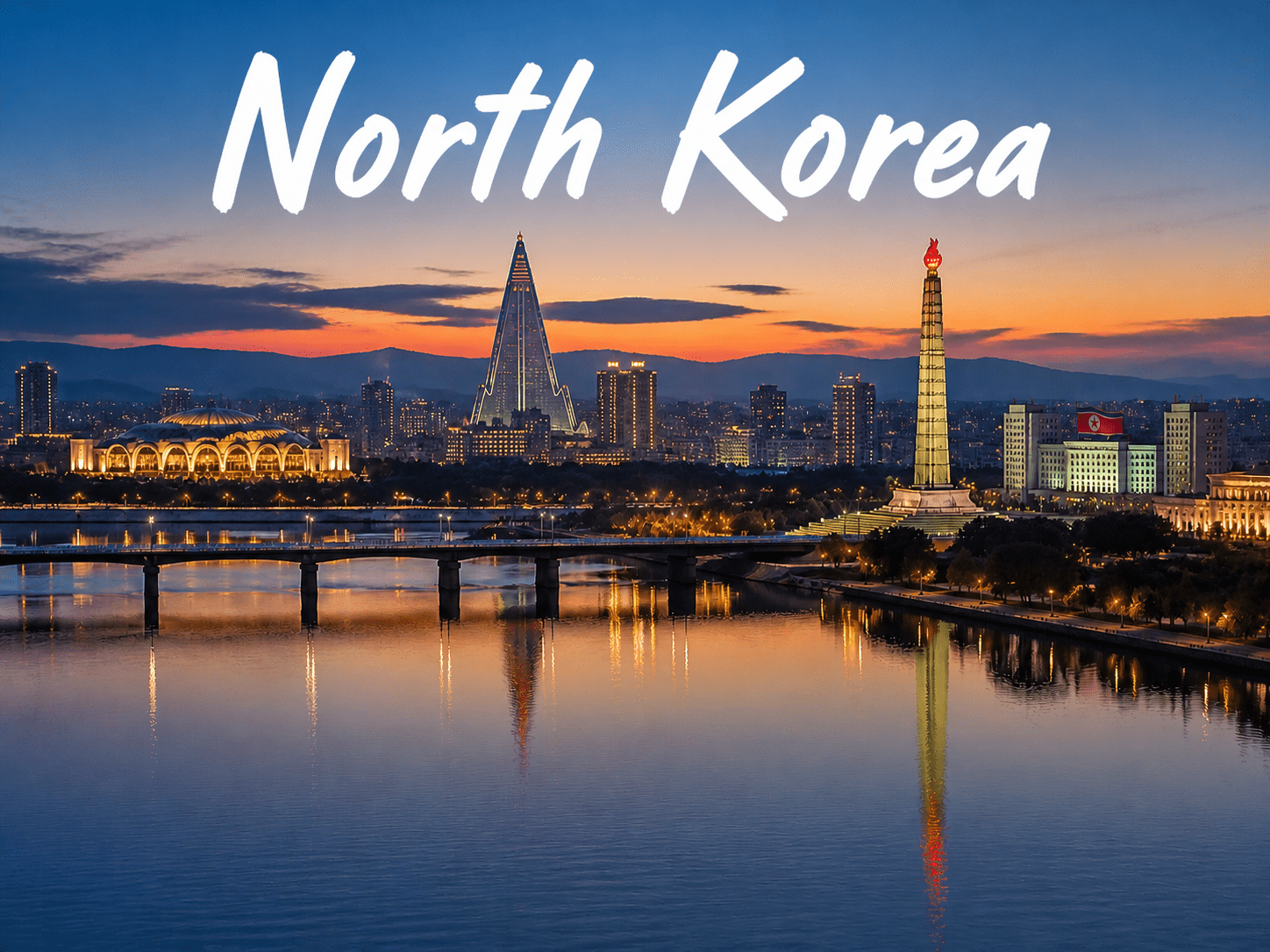
🌍 Introduction
North Korea is a country located in East Asia on the northern part of the Korean Peninsula. It is officially known as the Democratic People’s Republic of Korea (DPRK). This nation is known for its distinct political system, isolated geography, and strong cultural traditions.
Travel and information about North Korea are limited compared to most countries, which makes it one of the most mysterious nations in the modern world. Despite this, North Korea has a deep historical background, unique cultural identity, and significant geopolitical importance.
🏛 History of North Korea
Ancient Korean Kingdoms
The history of North Korea is connected to ancient Korean kingdoms such as Goguryeo, which once controlled large parts of the Korean Peninsula and Manchuria. These early kingdoms shaped the cultural foundations of modern North Korea.
Colonial Period
In the early 20th century, the Korean Peninsula came under Japanese rule. This period had a major impact on the region, including the northern area that later became North Korea.
Division of Korea
After World War II, the Korean Peninsula was divided along the 38th parallel. This division led to the creation of two separate states, and the northern region eventually became North Korea.
Korean War
Between 1950 and 1953, the Korean War took place, involving major global powers. The war ended with an armistice, not a peace treaty, leaving North Korea and South Korea technically still in a state of conflict.
🌍 Geography of North Korea
Location and Coordinates
North Korea is located in East Asia.
- Coordinates: 40.3399° N, 127.5101° E
- Region: Korean Peninsula
Neighboring Countries
North Korea shares borders with:
- China
- Russia
- South Korea
It also has coastlines along the Yellow Sea and the Sea of Japan (East Sea).
Landscape and Terrain
The geography of North Korea includes:
- Mountain ranges
- Forested regions
- River valleys
- Coastal plains
Mountains cover a large portion of the country, shaping settlement patterns.
Climate
North Korea has a continental climate:
- Cold winters
- Hot, humid summers
- Seasonal rainfall
🎭 Culture of North Korea
Cultural Identity
Culture in North Korea is deeply influenced by Korean traditions, language, and historical heritage. Music, dance, and literature are important aspects of national identity.
Traditional Arts
Traditional art forms include:
- Folk music
- Dance performances
- Calligraphy
- Painting
These cultural expressions are preserved and showcased in national events across North Korea.
Language
- Korean is the official language
- Local dialects exist across regions
Language plays a strong role in cultural unity within North Korea.
Society and Values
Society in North Korea emphasizes:
- Community life
- National identity
- Cultural discipline
Family and social structure are important aspects of daily life.
🏙 Major Cities of North Korea
Pyongyang (Capital)
Pyongyang is:
- Capital city of North Korea
- Political and administrative center
- Home to monuments and institutions
Hamhung
Hamhung is:
- Industrial city
- Important port region
Nampo
Nampo is:
- Coastal city
- Shipping and trade hub
🌐 North Korea in Global Context
North Korea participates in limited international organizations but maintains diplomatic relations with select countries.
It is a member of:
United Nations
💰 Economy Overview
General Economic Structure
The economy of this East Asian nation is centrally planned and state-controlled. Most industries, resources, and services are managed by the government, with limited private sector activity.
Despite international sanctions and restrictions, the country maintains domestic production systems focused on self-reliance and internal distribution.
Key Economic Sectors
1. Industry and Manufacturing
Heavy industry plays a major role in the economy. Key sectors include:
- Steel production
- Machinery manufacturing
- Mining operations
- Chemical industries
Industrial development is concentrated around urban centers and resource-rich regions.
2. Agriculture
Agriculture is an essential sector due to limited arable land. Major crops include:
- Rice
- Maize
- Potatoes
- Soybeans
Farming is often organized into collective systems, and rural production is crucial for food supply.
3. Mining and Natural Resources
The region has significant mineral resources such as:
- Coal
- Iron ore
- Gold
- Rare earth elements
Mining contributes to domestic industrial activity and limited exports.
4. Services and Domestic Trade
Domestic trade and services operate under state supervision, focusing on distribution of essential goods and public services.
Currency and Trade
- Currency: North Korean Won (KPW)
Trade relationships are limited but include select international partners. External trade is heavily regulated due to geopolitical conditions.
Economic Challenges
Major challenges include:
- International sanctions
- Limited foreign investment
- Energy shortages
- Infrastructure constraints
Global institutions like the
- World Bank
have limited engagement, but economic data and analysis are still monitored internationally.
🌄 Geography & Natural Features
Mountainous Terrain
The landscape is largely mountainous, with ranges covering a significant portion of the country. These mountains influence settlement patterns and agriculture.
Rivers and Valleys
Important rivers include:
- Yalu River
- Taedong River
These rivers support agriculture and urban development.
Coastal Areas
The western and eastern coasts provide access to:
- Fishing resources
- Ports
- Maritime transport routes
Climate Conditions
The climate is continental:
- Cold, dry winters
- Hot, humid summers
- Seasonal monsoon rains
🏙 Cities and Infrastructure
Pyongyang
The capital is the largest and most developed city, featuring:
- Government buildings
- Monuments
- Cultural centers
Industrial Cities
Other important cities include:
- Hamhung (manufacturing hub)
- Chongjin (northern port city)
- Nampo (shipping and trade center)
Transportation System
Transport infrastructure includes:
- Rail networks
- Road systems
- Metro system in the capital
Travel between regions is regulated and structured.
🧭 Demilitarized Zone (DMZ)
Overview
One of the most internationally known regions is the Demilitarized Zone separating the northern and southern parts of the Korean Peninsula.
This area is heavily guarded and serves as a buffer zone between two different political systems.
Geopolitical Importance
The DMZ is considered one of the most sensitive borders in the world, attracting global attention for diplomatic and security reasons.
🌐 International Relations
The country maintains selective diplomatic relations and participates in limited international cooperation.
It is officially represented in global diplomacy through:
- United Nations
✨ Unique Facts
- The country operates a centrally planned economy
- The Korean Peninsula remains divided since the 1950s
- Mountains cover most of the territory
- Pyongyang is one of the most structured capital cities globally
- International travel is highly restricted
- Agriculture remains a major livelihood source
🎭 Culture and Society
Daily Life and Social Structure
Life in this East Asian country is shaped by structured social systems, strong community organization, and cultural traditions that emphasize collective values.
Daily life in urban areas like the capital is more structured and organized, while rural regions are centered around agriculture and local community work.
Traditional Identity
Despite modernization in certain cities, traditional Korean heritage remains strong. Music, dance, literature, and national festivals are important cultural expressions.
Cultural preservation is a key focus, and traditional arts are often showcased in public performances and national celebrations.
Music and Performing Arts
Music plays an important role in cultural identity. Common styles include:
- Folk music
- Orchestral performances
- Traditional dance shows
Performances often highlight historical themes, unity, and cultural pride.
Language and Communication
The official language is Korean, with regional variations in dialect. Language is a strong symbol of national identity and cultural unity.
Religion and Beliefs
Religion is limited in public life, but traditional beliefs and cultural practices still exist in private and historical contexts.
🍽 Food Culture
Traditional Cuisine
Food in this region is simple, seasonal, and locally sourced. Meals often reflect agricultural practices and regional availability.
Common dishes include:
- Rice-based meals
- Noodle soups
- Kimchi (fermented vegetables)
- Vegetable stews
Food culture emphasizes balance, freshness, and simplicity.
Everyday Meals
A typical meal often includes:
- Rice
- Soup
- Side dishes (vegetables, pickles, or fish)
Meals are usually shared within families or groups.
Street Food and Local Markets
In urban areas, small food stalls and markets offer:
- Dumplings
- Noodles
- Grilled items
- Seasonal snacks
Beverages
Common drinks include:
- Tea
- Fermented beverages
- Herbal drinks
🗺 7-Day Travel Style Itinerary (Conceptual Guide)
Note: Independent tourism is highly restricted; this itinerary is based on structured travel programs.
Day 1: Arrival in Capital Region
Explore:
- Monumental architecture
- Public squares
- Cultural introductions
Day 2: City Highlights
Visit:
- Museums
- Government districts
- Cultural halls
Day 3: Historical Sites
Learn about:
- Korean Peninsula history
- War memorials
- Cultural heritage centers
Day 4: Nature Exploration
Experience:
- Mountain landscapes
- Rivers and valleys
- Scenic viewpoints
Day 5: Industrial Areas
Observe:
- Manufacturing regions
- Urban planning systems
Day 6: Cultural Performances
Enjoy:
- Traditional music shows
- Dance performances
- Art exhibitions
Day 7: Final Exploration & Departure
Final visits and structured departure.
🌍 International Relations
This country maintains limited diplomatic relations but is formally recognized in the international system.
It is a member of:
- United Nations
Global engagement is generally selective and focused on diplomacy and humanitarian discussions.
🤔 Interesting Facts
- The Korean Peninsula remains divided into two separate states
- Mountains cover a large portion of the territory
- The capital is one of the most structured urban centers in East Asia
- Agriculture remains essential for food supply
- Cultural performances are an important part of national identity
- Travel is highly regulated and controlled
🔗 Internal Link Suggestion
Explore another destination guide:
➡️ Kenya Travel Guide
📊 Final Summary
This East Asian nation is one of the most unique and structured countries in the world. With its mountain landscapes, planned cities, and strong cultural traditions, it offers a very different perspective compared to most global destinations.
While access is limited, its historical significance, geography, and cultural identity make it an important part of the Korean Peninsula and global geopolitics.
📋 Key Facts Table
| Category | Details |
|---|---|
| Country | North Korea |
| Capital | Pyongyang |
| Region | East Asia |
| Coordinates | 40.3399° N, 127.5101° E |
| Language | Korean |
| Currency | North Korean Won (KPW) |
| Population | ~25 million |
| Government | Centralized state system |
| Geography | Mostly mountainous |
| Climate | Continental |
| UN Membership | Yes |
List of All 195 Countries
- Afghanistan
- Albania
- Algeria
- Andorra
- Angola
- Antigua and Barbuda
- Argentina
- Armenia
- Australia
- Austria
- Azerbaijan
- Bahamas
- Bahrain
- Bangladesh
- Barbados
- Belarus
- Belgium
- Belize
- Benin
- Bhutan
- Bolivia
- Bosnia and Herzegovina
- Botswana
- Brazil
- Brunei
- Bulgaria
- Burkina Faso
- Burundi
- Cabo Verde
- Cambodia
- Cameroon
- Canada
- Central African Republic
- Chad
- Chile
- China
- Colombia
- Comoros
- Congo (Congo-Brazzaville)
- Costa Rica

