



Introduction
The Iraq is a country in the Middle East with a rich history, diverse culture, and remarkable landscapes. Known as the cradle of civilization, Iraq is home to Mesopotamia, where some of the world’s first cities and empires emerged. Today, Iraq combines historical landmarks, modern cities, and unique traditions that attract scholars, historians, and adventurous travelers.
Located between the Tigris and Euphrates rivers, Iraq has played a central role in global history for thousands of years. From the ancient Sumerians and Babylonians to the Abbasid Caliphate, Iraq has witnessed immense cultural, political, and religious developments.
Visitors to Iraq will find an intriguing blend of ancient ruins, Islamic architecture, bustling bazaars, and rich culinary traditions. Despite modern challenges, Iraq continues to be a place of historical importance, natural beauty, and cultural pride.
In this comprehensive guide, we will explore Iraq in detail: its history, geography, culture, economy, tourism, major cities, languages, and fascinating facts.
History of Iraq
Ancient Mesopotamia
The region of modern-day Iraq was historically called Mesopotamia, which means “land between rivers.” This area is considered the cradle of civilization, where agriculture, writing, cities, and law codes first developed.
Ancient civilizations in Iraq include:
- Sumerians – Invented cuneiform writing
- Akkadians – Established one of the first empires
- Babylonians – Built the famous Hanging Gardens
- Assyrians – Known for military power and monumental architecture
The history of Iraq is deeply connected with these ancient societies, which influenced the entire world.
Islamic and Medieval Periods
In the 7th century, Arab Muslim forces conquered the region of modern Iraq. The city of Baghdad, founded in 762 CE, became the capital of the Abbasid Caliphate and one of the most important cultural and intellectual centers in the world.
During the medieval period, Iraq became renowned for its:
- Libraries and knowledge centers
- Islamic art and architecture
- Trade and scientific advancements
The history of Iraq during this era showcases its global significance in religion, culture, and learning.
Ottoman Rule and 20th Century
From the 16th to the early 20th century, Iraq was part of the Ottoman Empire. After World War I, the League of Nations placed Iraq under British mandate until independence in 1932.
Modern Iraq experienced political changes throughout the 20th century, including the monarchy, military coups, and the rise of Saddam Hussein.
The late 20th century brought wars, including the Iran-Iraq War (1980–1988) and the Gulf War (1990–1991), impacting the country’s social and economic development.
Geography of Iraq
Location of Iraq
Iraq is located in the Middle East, in southwestern Asia. It is bordered by:
- Turkey to the north
- Iran to the east
- Kuwait to the southeast
- Saudi Arabia to the south
- Jordan to the west
- Syria to the northwest
Coordinates of Iraq:
- Latitude: 33.2232° N
- Longitude: 43.6793° E
The location of Iraq has made it a historic crossroads for trade, culture, and military campaigns throughout history.
Physical Landscape
Iraq has a diverse geography that includes:
- Fertile plains along the Tigris and Euphrates rivers
- Desert regions in the west and south
- Mountainous areas in the north (Kurdistan region)
- Marshlands in southern Iraq
This varied landscape supports agriculture, trade, and cultural diversity in Iraq.
Climate in Iraq
The Iraq has a desert and semi-arid climate with extremely hot summers and mild winters.
- Summer temperatures can exceed 50°C (122°F) in southern deserts
- Winter temperatures range from 5°C to 20°C (41°F to 68°F)
- Rainfall is scarce, mostly occurring in the north and central regions
Travelers visiting Iraq should plan visits during cooler months (October to April) to avoid extreme heat.
Culture of Iraq
Languages in Iraq
The official languages of Iraq are:
- Arabic (official)
- Kurdish (official in Kurdistan region)
Other languages spoken in Iraq include Turkmen, Assyrian, and Armenian. Arabic dialects vary across regions, reflecting Iraq’s ethnic and cultural diversity.
Religion and Traditions
Religion plays a major role in Iraq’s culture. The population consists primarily of:
- Shia Muslims (~60%)
- Sunni Muslims (~35%)
- Christian and other minorities (~5%)
Religious holidays, rituals, and festivals shape social life in Iraq, including Ashura, Ramadan, and Eid celebrations.
Music, Dance & Cuisine
Iraq has a rich cultural heritage reflected in its music, dance, and cuisine.
- Traditional music includes maqam, a form of melodic mode used in Arabic music
- Dance is regionally diverse, with folkloric dances performed at weddings and festivals
- Cuisine features dishes like masgouf (grilled fish), dolma, kebab, and baklava
Food and music are integral to cultural identity in Iraq.
Major Cities of Iraq
Baghdad (Capital City)
Baghdad is the capital of Iraq and the largest city. It was founded in 762 CE and became the center of the Abbasid Caliphate. Today, Baghdad is:
- The political capital of Iraq
- A cultural and educational hub
- Home to historic mosques, museums, and marketplaces
Other Major Cities
Basra
A southern port city near the Persian Gulf, important for trade and oil exports.
Mosul
Known for historic architecture and archaeological sites from ancient Assyria.
Erbil
Capital of the Kurdistan Region, famous for Erbil Citadel, one of the oldest continuously inhabited settlements in the world.
Najaf & Karbala
Major religious centers for Shia Muslims visiting shrines and holy sites.
Iraq Economy, Trade & Tourism
Economy of Iraq
The Iraq has one of the largest economies in the Middle East, primarily driven by its vast oil reserves. Oil accounts for over 90% of government revenue and is central to the country’s international trade.
Other important sectors in Iraq include agriculture, services, manufacturing, and tourism. Economic recovery efforts are ongoing after decades of conflict, and foreign investment continues to grow.
Key Economic Sectors
Oil & Gas
The oil and gas sector dominates the economy of Iraq. Major oil fields are located in the south (Basra) and north (Kirkuk). Iraq is a member of OPEC, exporting crude oil worldwide.
Agriculture
Despite its arid climate, Iraq maintains agriculture along the Tigris and Euphrates river valleys. Crops include:
- Wheat
- Barley
- Dates
- Rice
- Vegetables
Agriculture in Iraq is critical for local food security and rural employment.
Manufacturing
Iraq has a small but growing manufacturing sector. Key industries include:
- Food processing
- Textiles
- Cement
- Construction materials
Currency of Iraq
The official currency of Iraq is the Iraqi Dinar (IQD).
The Iraqi Dinar is issued by the Central Bank of Iraq and is used throughout the country. International visitors to Iraq often exchange foreign currency in banks or licensed exchange offices.
Trade Partners of Iraq
The main trade partners of Iraq include:
- China – Major importer of Iraqi oil
- United States – Trade and reconstruction projects
- India – Oil and commercial trade
- European Union – Industrial and energy imports
- Turkey – Trade in energy and consumer goods
International trade helps sustain the economy of Iraq and provides access to global markets.
Tourism in Iraq
Despite past instability, Iraq is rich in historical and cultural attractions. Tourism focuses on archaeology, religious sites, and natural landscapes.
Top Tourist Attractions in Iraq
Mesopotamian Archaeological Sites
Iraq is home to ancient cities of Mesopotamia, including:
- Babylon – Ancient city with reconstructed ruins
- Ur – Sumerian city and birthplace of Abraham
- Nineveh – Ancient Assyrian capital
These sites showcase the historical significance of Iraq as the cradle of civilization.
Religious Sites
Religious tourism is significant in Iraq, especially for Shia Muslims:
- Imam Ali Shrine (Najaf)
- Imam Husayn Shrine (Karbala)
Millions of pilgrims visit these sacred sites every year, making Iraq a key destination for spiritual travel.
Natural Attractions
- Tigris & Euphrates Rivers – Scenic river valleys
- Marshes of Southern Iraq – Unique wetlands and biodiversity
- Mountains of Kurdistan – Hiking and stunning landscapes
Nature tourism in Iraq provides opportunities for photography, birdwatching, and eco-tourism.
Baghdad & Erbil
- Baghdad – Historical museums, libraries, and markets
- Erbil – Ancient citadel and modern urban attractions
Urban tourism in Iraq combines historical exploration with modern cultural experiences.
Transportation in Iraq
Getting around Iraq is possible via air, road, and river transportation.
Airports
Major airports in Iraq include:
- Baghdad International Airport – Main gateway
- Erbil International Airport – Northern region
- Basra International Airport – Southern oil hub
These airports connect Iraq with Middle Eastern and European cities.
Roads and Public Transport
- Extensive highway network links major cities
- Buses, taxis, and shared minivans are common
- Safety is advised due to regional security variations
Best Time to Visit Iraq
The best months to visit Iraq are October to April, when temperatures are milder and more comfortable for sightseeing.
Summer months (June–August) can be extremely hot, particularly in southern Iraq.
DoFollow References
- United Nations: https://www.un.org
- UNESCO World Heritage: https://whc.unesco.org
- World Bank: https://www.worldbank.org
- CIA World Factbook: https://www.cia.gov/the-world-factbook/
These sources provide authoritative data on Iraq’s economy, culture, and history.
Unique and Interesting Facts About Iraq
The Iraq is a land of remarkable history, natural wonders, and cultural achievements. Here are some unique facts about Iraq:
1. Cradle of Civilization
Iraq is often called the cradle of civilization because it is home to Mesopotamia, where writing, agriculture, and cities first developed thousands of years ago.
2. Ancient Ziggurats
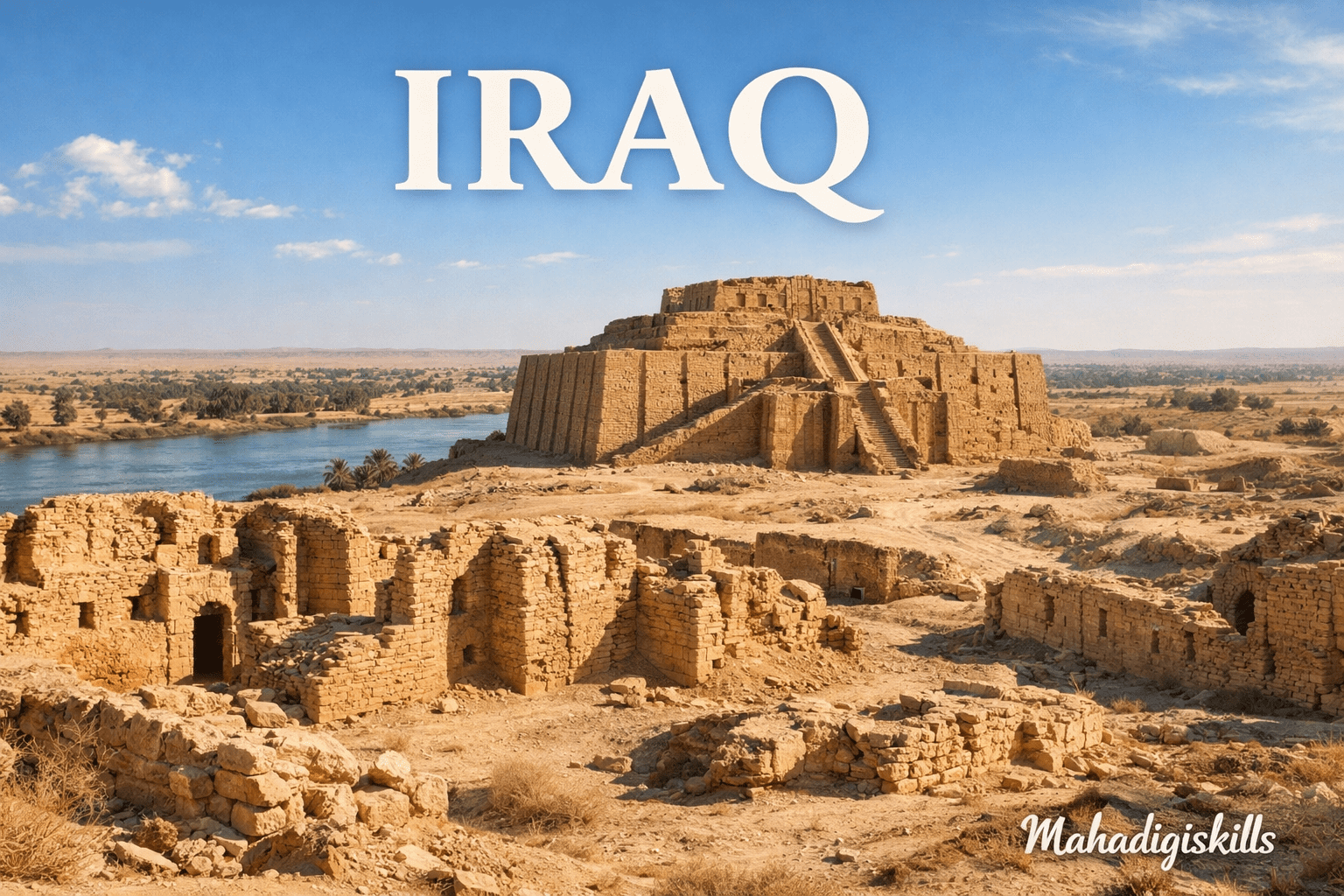
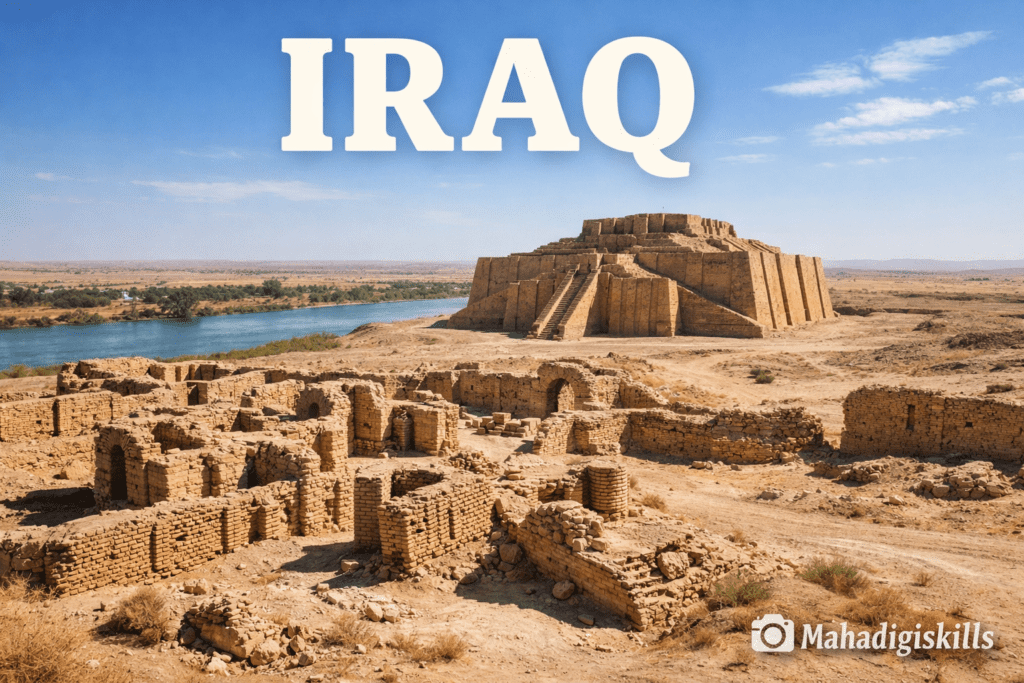
The ziggurats, massive temple structures built by the Sumerians and Babylonians, are iconic symbols of ancient Iraq. Ziggurat of Ur is a must-visit for history enthusiasts.
3. Tigris and Euphrates Rivers
The lifelines of Iraq, the Tigris and Euphrates, have supported civilizations for millennia. The fertile valleys allowed Iraq to develop agriculture and urban centers early in human history.
4. Archaeological Riches
Iraq has some of the world’s most important archaeological sites, including Babylon, Nineveh, and Ur. These sites are critical for understanding human history.
5. Cultural Contributions
Iraq has contributed immensely to literature, science, mathematics, and philosophy, particularly during the Abbasid Caliphate, when Baghdad was a global center of knowledge.
Iraq in International Organizations
The Iraq actively participates in global organizations, promoting diplomacy, economic cooperation, and cultural exchange.
United Nations Membership
The Iraq is a member of the United Nations (UN) and contributes to peacekeeping, humanitarian efforts, and sustainable development initiatives.
Official UN page:
https://www.un.org
Other International Organizations
- Organization of Islamic Cooperation (OIC)
- Arab League
- International Monetary Fund (IMF)
- World Bank
- World Trade Organization (WTO)
Participation in these organizations enables Iraq to engage in regional and global development programs.
Travel Tips for Visiting Iraq
Traveling to Iraq can be highly rewarding, but visitors should prepare carefully.
Entry Requirements
- Passport valid for at least 6 months
- Visa depending on nationality (check Iraqi embassy)
- Travel insurance recommended
Safety Tips
- Stick to major cities and tourist areas
- Avoid conflict zones
- Use licensed taxis and organized tours
- Follow local advice on security and travel
Currency and Payments
The Iraqi Dinar (IQD) is used throughout Iraq, but major cities may accept USD in hotels and tourist areas.
Local Etiquette
- Respect religious customs
- Dress modestly, especially near mosques
- Politeness and greetings are valued
DoFollow References
- United Nations: https://www.un.org
- UNESCO World Heritage: https://whc.unesco.org
- World Bank: https://www.worldbank.org
- CIA World Factbook: https://www.cia.gov/the-world-factbook/
These sources provide verified information on the Iraq’s history, economy, and culture.
Final Summary
The Iraq is a country of extraordinary historical significance, cultural richness, and natural beauty. From the ancient ruins of Mesopotamia to the modern cityscape of Baghdad, Iraq offers a unique experience for travelers and historians alike.
Its rivers, deserts, mountains, and cities reflect centuries of human civilization. With growing infrastructure, tourism potential, and a young, vibrant population, the Iraq continues to rebuild and thrive on the global stage.
Whether for historical exploration, religious pilgrimage, or cultural immersion, the Iraq is a destination that tells the story of humanity’s beginnings while offering a window into modern Middle Eastern life.
Key Facts About Iraq
| Category | Information |
|---|---|
| Country Name | Iraq |
| Capital City | Baghdad |
| Continent | Asia (Middle East) |
| Coordinates | 33.2232° N, 43.6793° E |
| Population | ~43 million |
| Official Languages | Arabic, Kurdish |
| Currency | Iraqi Dinar (IQD) |
| Government | Federal parliamentary republic |
| Highest Point | Cheekha Dar (3,611 m) |
| Lowest Point | Shatt al-Arab (~0 m) |
| Main Industries | Oil & gas, agriculture, manufacturing |
| Major Exports | Crude oil, petrochemicals, dates |
| UN Membership | Yes |
List of All 195 Countries
A
- Afghanistan
- Albania
- Algeria
- Andorra
- Angola
- Antigua and Barbuda
- Argentina
- Armenia
- Australia
- Austria
- Azerbaijan
- Bahamas
- Bahrain
- Bangladesh
- Barbados
- Belarus
- Belgium
- Belize
- Benin
- Bhutan
- Bolivia
- Bosnia and Herzegovina
- Botswana
- Brazil
- Brunei
- Bulgaria
- Burkina Faso
- Burundi
- Cabo Verde
- Cambodia
- Cameroon
- Canada
- Central African Republic
- Chad
- Chile
- China
- Colombia
- Comoros
- Congo (Congo-Brazzaville)
- Costa Rica

