



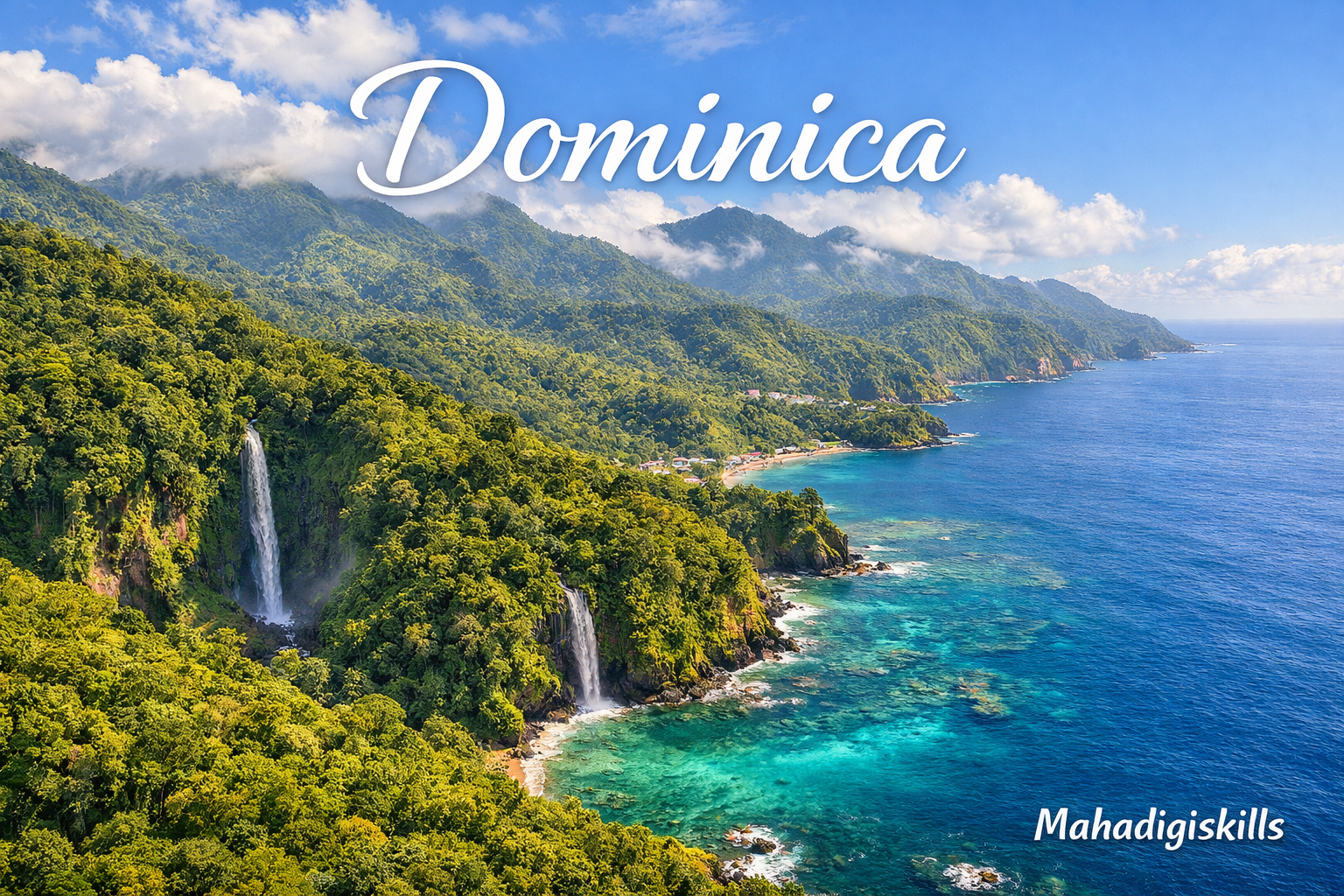
Introduction to Dominica
Dominica is a breathtaking island nation located in the eastern Caribbean Sea. Known as the “Nature Island of the Caribbean,” Dominica is famous for its lush rainforests, volcanic landscapes, waterfalls, and rich biodiversity. Unlike many other Caribbean islands known primarily for beaches and resorts, Dominica offers an authentic eco-tourism experience centered around nature, adventure, and cultural heritage.
Travelers visiting Dominica often come to explore its dramatic mountain scenery, hot springs, rivers, and protected national parks. The island is home to one of the Caribbean’s most remarkable natural wonders, the Boiling Lake, which is the second-largest hot spring lake in the world.
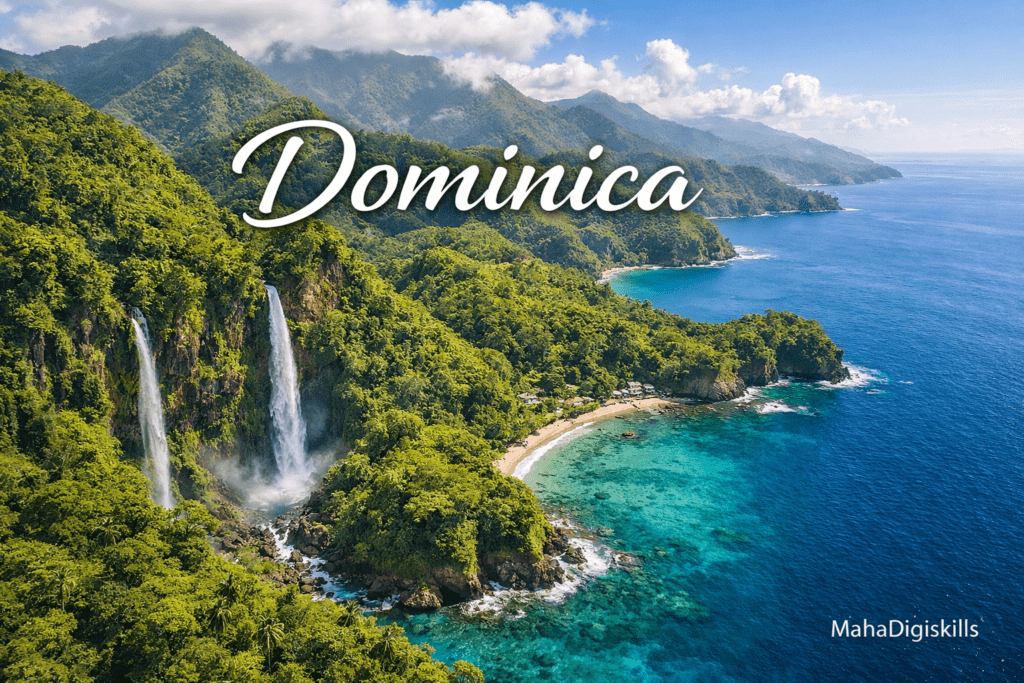
Because of its preserved natural environment, Dominica attracts hikers, divers, wildlife enthusiasts, and eco-tourists seeking unique outdoor experiences. From tropical forests and volcanic valleys to vibrant coral reefs, the landscapes of Dominica are among the most diverse in the Caribbean region.
Geographical Location of Dominica
Location in the Caribbean
Dominica is located in the Lesser Antilles, a chain of islands forming the eastern boundary of the Caribbean Sea. The island lies between the French territories of Guadeloupe to the north and Martinique to the south.
This strategic location places Dominica at the heart of the Caribbean archipelago.
Geographic Coordinates
Approximate coordinates of Dominica:
Latitude: 15°25′ N
Longitude: 61°20′ W
The tropical location of Dominica contributes to its warm climate, lush vegetation, and abundant rainfall.
Landscape and Natural Environment
The terrain of Dominica is dominated by volcanic mountains, dense rainforests, and numerous rivers. The island contains some of the most rugged landscapes in the Caribbean.
Important natural features include:
- volcanic peaks
- deep valleys
- hot springs and geothermal areas
- rivers and waterfalls
- coral reefs and coastal cliffs
Because of its mountainous terrain and protected forests, Dominica is considered one of the most environmentally preserved islands in the Caribbean.
Rivers and Waterfalls
One of the unique geographic characteristics of Dominica is its large number of rivers.
The island contains more than 350 rivers, many of which flow from the central mountains toward the coast. These rivers create spectacular waterfalls and freshwater pools throughout the island.
Some of the most famous waterfalls in Dominica include:
- Trafalgar Falls
- Middleham Falls
- Victoria Falls
These natural attractions contribute to the island’s reputation as a paradise for nature lovers.
Boiling Lake
One of the most famous natural wonders in Dominica is the Boiling Lake, located within Morne Trois Pitons National Park.
Boiling Lake is a flooded volcanic crater that continuously releases steam and bubbling water due to geothermal activity beneath the earth’s surface.
Key facts about Boiling Lake:
- It is the second-largest boiling lake in the world
- Water temperatures can reach near boiling levels
- The surrounding valley contains fumaroles and hot springs
Hiking to Boiling Lake is considered one of the most adventurous activities in Dominica.
History of Dominica
Early Indigenous People
Before European contact, Dominica was inhabited by indigenous peoples known as the Kalinago (also called Caribs).
The Kalinago people migrated through the Caribbean islands and developed communities based on fishing, agriculture, and trade. Their culture and traditions remain an important part of the island’s heritage.
Today, Dominica is home to the Kalinago Territory, one of the last remaining indigenous communities in the Caribbean.
European Discovery
Christopher Columbus is believed to have sighted Dominica during his second voyage to the Americas in 1493.
The island was named “Dominica” because it was reportedly discovered on a Sunday (“domingo” in Spanish).
For several centuries, European powers competed for control of Dominica, particularly France and Great Britain.
Colonial Period
During the colonial period, Dominica changed hands multiple times between France and Britain.
Both countries established plantations on the island, producing crops such as sugar, coffee, and cocoa. African slaves were brought to work on these plantations, shaping the cultural and demographic history of Dominica.
Eventually, the island became a British colony in 1763.
Independence of Dominica
Dominica gained independence from the United Kingdom on November 3, 1978.
Since independence, Dominica has operated as a parliamentary republic within the Commonwealth of Nations.
The country continues to maintain strong diplomatic relationships with nations around the world.
Official Language of Dominica
The official language of Dominica is English, which is used in government, education, and business.
However, many residents also speak Dominican Creole French, commonly known as Kwéyòl.
This Creole language developed during the colonial period and reflects the island’s French cultural influence.
Culture of Dominica
Cultural Diversity
The culture of Dominica reflects a blend of African, European, and indigenous traditions.
Music, dance, storytelling, and community celebrations play important roles in daily life on the island.
Cultural traditions are preserved through festivals, local crafts, and traditional cuisine.
Music and Dance
Music is an essential part of life in Dominica.
Popular musical styles include:
- Cadence-lypso
- Bouyon music
- Calypso
These genres combine African rhythms with Caribbean influences and are widely performed during festivals and celebrations.
Cuisine of Dominica
Traditional cuisine in Dominica reflects the island’s agricultural heritage and coastal location.
Popular dishes include:
- Mountain chicken (frog legs)
- Callaloo soup
- Fresh seafood
- Green fig and saltfish
Local ingredients such as plantains, coconut, spices, and tropical fruits are widely used in Dominican cooking.
Festivals and Celebrations
Several festivals celebrate the culture and heritage of Dominica.
Important events include:
- Dominica Carnival
- World Creole Music Festival
- Independence Day celebrations
These events showcase the island’s music, dance, cuisine, and traditions.
Economy of Dominica
The economy of Dominica is largely based on agriculture, tourism, and small-scale manufacturing. As a small island nation with abundant natural resources but limited industrial capacity, Dominica focuses on sustainable development and eco-tourism.
Historically, agriculture was the backbone of the economy of Dominica, especially banana production. However, in recent decades the country has diversified its economic activities to include tourism, financial services, and renewable energy development.
Major sectors contributing to the economy of Dominica include:
- Agriculture and food exports
- Tourism and eco-tourism
- Fisheries and marine resources
- Small manufacturing industries
- Renewable energy development
Because of its natural beauty and environmental protection policies, Dominica has positioned itself as a leading eco-tourism destination in the Caribbean.
Currency of Dominica
The official currency used in Dominica is the Eastern Caribbean Dollar (XCD).
This currency is shared by several countries in the Eastern Caribbean and is managed by the Eastern Caribbean Central Bank.
The Eastern Caribbean dollar is pegged to the US dollar, which helps maintain stability for trade and tourism in Dominica.
Visitors traveling to Dominica can easily use:
- credit cards in hotels and restaurants
- ATMs in major towns
- US dollars in many tourist areas
Major Industries in Dominica
Agriculture
Agriculture remains an important part of life in Dominica, particularly in rural communities.
The island’s fertile volcanic soil and tropical climate allow farmers to grow a variety of crops.
Important agricultural products include:
- bananas
- coconuts
- citrus fruits
- cocoa
- coffee
- root vegetables
Banana exports once dominated the economy of Dominica, although diversification efforts have reduced dependence on a single crop.
Fisheries
Fishing is another traditional industry in Dominica.
The surrounding Caribbean waters provide abundant marine resources, including:
- tuna
- snapper
- lobster
- shrimp
Local fishermen supply seafood to domestic markets and restaurants across the island.
Renewable Energy
Dominica is investing in renewable energy development, particularly geothermal power.
The island sits on a volcanic system with significant geothermal potential. The government hopes that geothermal energy projects will reduce dependence on imported fuel and strengthen energy security.
This initiative reflects Dominica’s commitment to sustainable development and environmental protection.
Tourism in Dominica
Tourism is a growing sector in Dominica, especially eco-tourism and adventure tourism.
Unlike some Caribbean islands known primarily for luxury resorts, Dominica attracts travelers interested in nature, hiking, diving, and cultural experiences.
Visitors travel to Dominica to explore:
- tropical rainforests
- volcanic lakes
- waterfalls and rivers
- coral reefs and marine life
The island’s natural beauty has earned it the nickname “The Nature Island of the Caribbean.”
Major Tourist Attractions in Dominica
Trafalgar Falls
Trafalgar Falls is one of the most famous natural attractions in Dominica.
Located near the capital city of Roseau, the site features two spectacular waterfalls surrounded by lush rainforest.
Visitors often refer to them as:
- “Father Falls” (the taller waterfall)
- “Mother Falls” (the wider waterfall)
The surrounding area contains hot springs and scenic hiking trails.
Champagne Reef
Champagne Reef is one of the most unique diving locations in the Caribbean.
Located along the southwestern coast of Dominica, the reef gets its name from the bubbles that rise from the ocean floor due to volcanic geothermal activity.
Snorkelers and divers visiting Dominica can experience underwater bubbles while exploring coral reefs and tropical marine life.
Common marine species include:
- colorful reef fish
- sea turtles
- coral formations
- octopus and crustaceans
Cabrits National Park
Cabrits National Park is a protected area located near the town of Portsmouth in northern Dominica.
The park covers volcanic peninsulas, coastal forests, and coral reefs.
One of the most important historical sites within the park is Fort Shirley, a restored British colonial fort overlooking the Caribbean Sea.
Visitors can explore:
- hiking trails
- historic ruins
- scenic coastal views
- wildlife habitats
Morne Trois Pitons National Park
Morne Trois Pitons National Park is the most famous protected area in Dominica.
The park is a UNESCO World Heritage Site and contains some of the island’s most spectacular landscapes.
Major attractions within the park include:
- Boiling Lake
- Emerald Pool
- Middleham Falls
- volcanic valleys and fumaroles
The park protects a wide range of ecosystems, including rainforests, rivers, waterfalls, and geothermal features.
Wildlife and Biodiversity
Because of its preserved forests and ecosystems, Dominica is home to extraordinary biodiversity.
Important wildlife species include:
- Sisserou Parrot (Imperial Amazon) – the national bird
- Jaco Parrot (Red-necked Amazon)
- bats and reptiles
- tropical frogs and insects
The waters around Dominica are also rich in marine life.
Visitors may encounter:
- whales and dolphins
- sea turtles
- coral reef fish
- migrating sperm whales
Dominica is one of the few places in the Caribbean where sperm whales can be seen year-round.
Adventure Tourism
Adventure tourism continues to grow in Dominica due to its rugged landscapes and natural attractions.
Popular activities include:
- rainforest hiking
- waterfall exploration
- scuba diving and snorkeling
- whale watching
- canyoning and river trekking
These experiences allow travelers to explore the wild beauty of Dominica.
Major Cities in Dominica
Although Dominica is a relatively small island nation, it has several towns and cities that play important roles in the country’s political, cultural, and economic life.
Roseau – The Capital City
Roseau is the capital and largest city of Dominica. Located on the southwest coast of the island, Roseau serves as the main center for government, commerce, and tourism.
The city is known for its colorful Caribbean architecture, bustling markets, and waterfront views of the Caribbean Sea.
Important attractions in Roseau include:
- Old Market Square
- Dominica Museum
- Botanical Gardens
- Roseau Cathedral
- Waterfront Promenade
Roseau is also the main port where cruise ships arrive, bringing visitors from around the world to explore Dominica.
Portsmouth
Portsmouth is the second-largest town in Dominica and is located on the northern coast near Prince Rupert Bay.
Historically, Portsmouth was once considered as a possible capital of the island because of its large natural harbor.
Visitors to Portsmouth can explore:
- Cabrits National Park
- Fort Shirley
- Indian River
- nearby beaches and forests
The town offers a quieter atmosphere compared to Roseau while still providing access to some of the island’s most important natural attractions.
Marigot
Marigot is a coastal town located in northeastern Dominica, close to Douglas–Charles Airport, the island’s main international airport.
Because of its location, Marigot serves as an important gateway for visitors arriving by air.
The town also offers beautiful coastal scenery, fishing communities, and easy access to nearby rainforests and rivers.
Other Important Towns
Several other communities contribute to the cultural and economic life of Dominica.
These include:
- La Plaine – known for agriculture and coastal views
- Mahaut – an important fishing village
- Castle Bruce – located on the island’s eastern coast
Each of these towns reflects the traditional lifestyle and local culture of Dominica.
Interesting Facts About Dominica
Here are some fascinating facts that make Dominica one of the most unique islands in the Caribbean.
- Dominica is known as the “Nature Island of the Caribbean.”
- The island has over 350 rivers, more than any other Caribbean island.
- Boiling Lake in Dominica is the second-largest boiling lake in the world.
- The national bird of Dominica is the Sisserou Parrot, which appears on the national flag.
- The island is one of the best places in the world to see sperm whales year-round.
- Dominica is home to the Kalinago Territory, the largest remaining indigenous community in the Caribbean.
These features highlight the natural beauty and cultural uniqueness of Dominica.
Dominica and the United Nations
Dominica became a member of the United Nations in 1978, shortly after gaining independence.
The country actively participates in international cooperation and supports global initiatives related to:
- environmental protection
- climate change awareness
- sustainable development
- disaster resilience
Dominica is also a member of several international organizations, including:
- Commonwealth of Nations
- Caribbean Community (CARICOM)
- Organization of American States (OAS)
- World Bank
- International Monetary Fund (IMF)
More information:
https://www.un.org/en/member-states/dominica
Best Time to Visit Dominica
Because of its tropical climate, Dominica can be visited throughout the year. However, certain seasons offer more comfortable travel conditions.
December to April – Dry Season
This period is considered the best time to visit Dominica.
During these months:
- rainfall is lower
- temperatures are pleasant
- hiking and outdoor activities are ideal
Many festivals and cultural events also take place during the dry season.
May to November – Rainy Season
The rainy season brings heavier rainfall and higher humidity.
However, this season also offers advantages:
- fewer tourists
- lush green landscapes
- lower travel costs
Travelers interested in nature photography and waterfalls may enjoy visiting Dominica during this period.
Transportation and Travel in Dominica
Traveling around Dominica is relatively easy thanks to a network of coastal roads and transportation services.
Airports
The main airport serving Dominica is:
Douglas–Charles Airport
The airport connects the island with major Caribbean hubs and international destinations.
Roads and Local Transport
Most towns in Dominica are connected by scenic coastal roads.
Common transportation options include:
- taxis
- rental cars
- minibuses
- guided tours
Driving around Dominica offers spectacular views of mountains, forests, and coastal landscapes.
Ferry Connections
Ferry services connect Dominica with nearby Caribbean islands such as:
- Guadeloupe
- Martinique
- Saint Lucia
These ferries provide convenient regional travel options for visitors exploring multiple Caribbean destinations.
DoFollow Links
United Nations – Dominica
https://www.un.org/en/member-states/dominica
UNESCO World Heritage Sites
https://whc.unesco.org
World Bank Country Profile
https://www.worldbank.org/en/country/dominica
Discover Dominica Tourism Authority
https://discoverdominica.com
Final Summary
Dominica is one of the Caribbean’s most remarkable destinations, offering travelers an authentic experience filled with natural beauty, cultural heritage, and outdoor adventure.
From the volcanic landscapes of Morne Trois Pitons National Park to the vibrant markets of Roseau, the island provides endless opportunities to explore nature and local traditions.
Visitors can hike through rainforests, dive among coral reefs, watch whales in the Caribbean Sea, and discover waterfalls hidden deep within tropical valleys.
With its preserved ecosystems, welcoming communities, and unique cultural identity, Dominica truly deserves its title as the Nature Island of the Caribbean.
Key Facts About Dominica
| Category | Information |
|---|---|
| Official Name | Commonwealth of Dominica |
| Capital | Roseau |
| Region | Caribbean |
| Population | ~72,000 |
| Official Language | English |
| Common Language | Dominican Creole |
| Currency | Eastern Caribbean Dollar |
| Independence | 3 November 1978 |
| UN Membership | 1978 |
| Famous For | Boiling Lake, Rainforests, Eco-Tourism |
List of All 195 Countries
A
- Afghanistan
- Albania
- Algeria
- Andorra
- Angola
- Antigua and Barbuda
- Argentina
- Armenia
- Australia
- Austria
- Azerbaijan
- Bahamas
- Bahrain
- Bangladesh
- Barbados
- Belarus
- Belgium
- Belize
- Benin
- Bhutan
- Bolivia
- Bosnia and Herzegovina
- Botswana
- Brazil
- Brunei
- Bulgaria
- Burkina Faso
- Burundi
- Cabo Verde
- Cambodia
- Cameroon
- Canada
- Central African Republic
- Chad
- Chile
- China
- Colombia
- Comoros
- Congo (Congo-Brazzaville)
- Costa Rica

