



Introduction
Djibouti is a small yet strategically important country located in the Horn of Africa. Known for its dramatic landscapes, rich cultural heritage, and strategic maritime location, Djibouti offers travelers and researchers a fascinating blend of African, Arab, and French influences.
Despite its small size, Djibouti plays a significant role in international trade and global geopolitics due to its position along the Bab el-Mandeb Strait, one of the busiest shipping routes in the world. The country sits between the Red Sea and the Gulf of Aden, making Djibouti an essential gateway connecting Africa, the Middle East, and Europe.
Visitors to Djibouti discover breathtaking natural attractions including salt lakes, volcanic formations, coral reefs, and desert landscapes. In addition, the nation’s multicultural population and vibrant traditions provide unique cultural experiences.
From the turquoise waters of Lake Assal to the bustling markets of Djibouti City, the country offers an unforgettable glimpse into one of Africa’s most unique destinations.
Geographical Location of Djibouti
Location in Africa
Djibouti is located in East Africa, within the region known as the Horn of Africa. The country occupies a strategic coastal position between the Red Sea and the Gulf of Aden, making it a vital maritime hub.
The geographic position of Djibouti has historically made it an important trading center linking Africa with the Middle East and Asia.
Geographic Coordinates
Approximate coordinates of Djibouti:
Latitude: 11°30′ N
Longitude: 43°00′ E
Because of its location near the equator, Djibouti experiences a hot desert climate with high temperatures throughout most of the year.
Neighboring Countries
Djibouti shares borders with three countries in the Horn of Africa:
- Eritrea to the north
- Ethiopia to the west and southwest
- Somalia to the southeast
In addition, Djibouti has coastlines along both the Red Sea and the Gulf of Aden.
This location gives Djibouti great importance in global maritime trade.
Landscape and Natural Environment
The landscape of Djibouti is dominated by deserts, volcanic formations, salt lakes, and rugged mountains.
Key geographical features include:
- Lava fields and volcanic plateaus
- Salt flats and desert basins
- Coastal coral reefs
- Mountain ranges in the north
Although much of the terrain appears barren, Djibouti contains unique ecosystems that support diverse wildlife and plant species.
Lake Assal
One of the most remarkable natural landmarks in Djibouti is Lake Assal.
Lake Assal is:
- the lowest point in Africa
- one of the saltiest lakes in the world
Located about 155 meters below sea level, the lake is surrounded by volcanic mountains and vast salt flats.
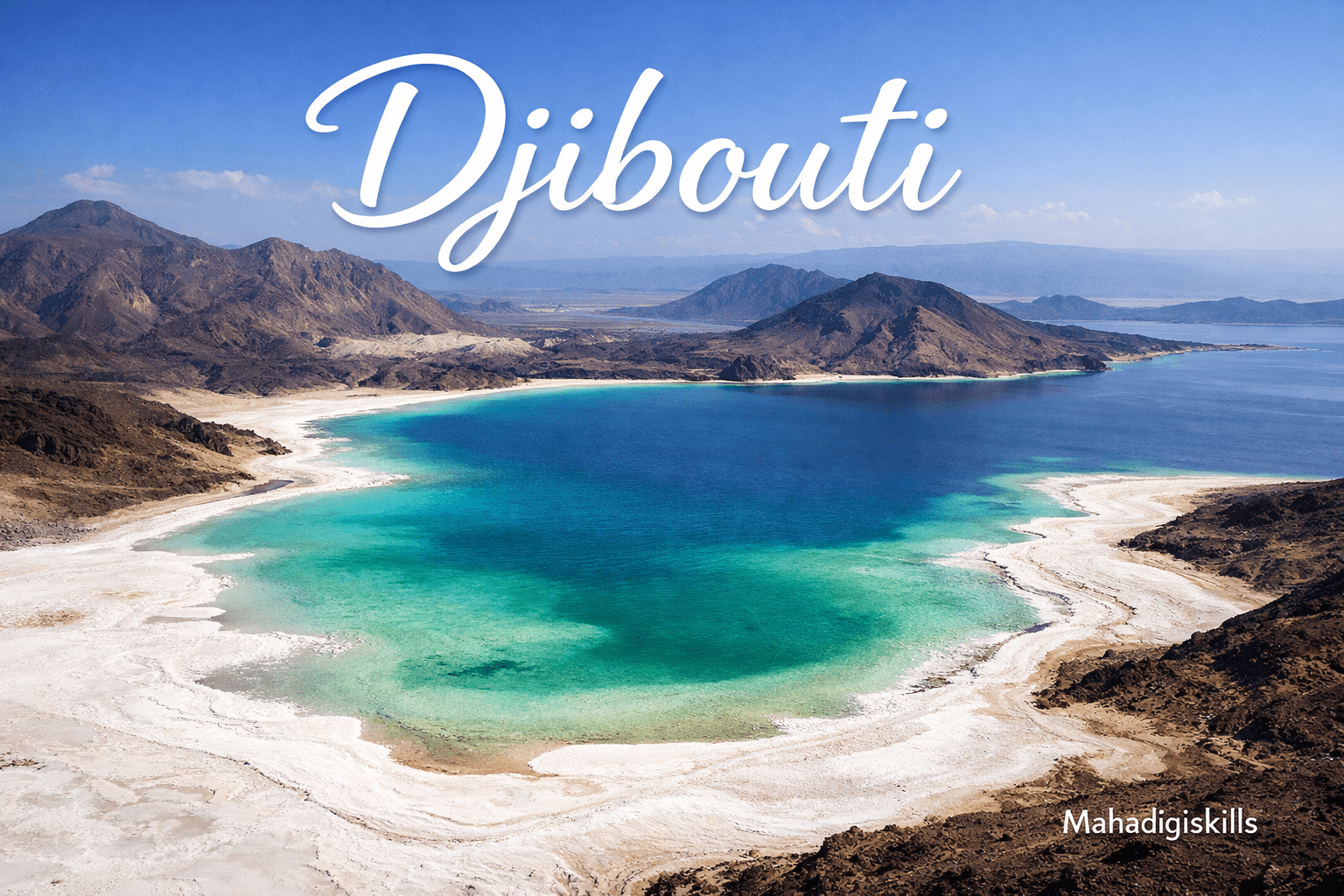
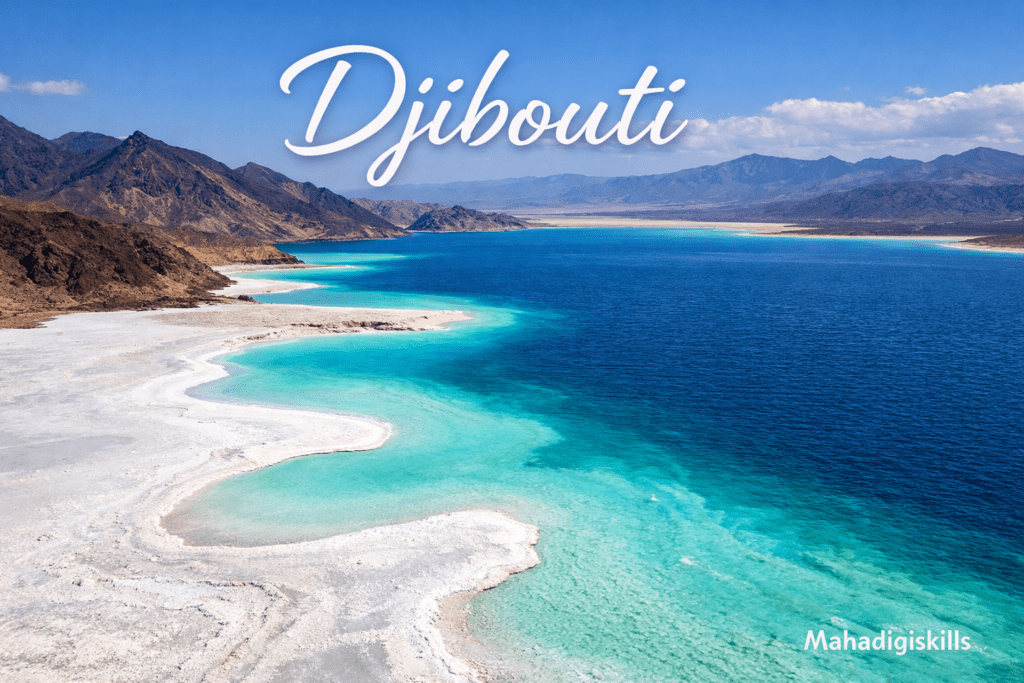
The striking turquoise water and white salt crystals make Lake Assal one of the most photographed locations in Djibouti.
History of Djibouti
Early Civilizations
The region that is now Djibouti has been inhabited for thousands of years. Early communities were primarily nomadic pastoralists who relied on livestock and trade.
Historical evidence suggests that the area was connected to ancient trade networks linking Africa, Arabia, and Asia.
Caravans traveling through the region carried goods such as:
- spices
- incense
- ivory
- textiles
Because of its coastal location, Djibouti became an important stop along maritime trade routes.
Islamic Influence
Islam arrived in the region during the early centuries of the Islamic era.
Over time, Islamic culture and traditions became deeply integrated into society. Today, the majority of the population in Djibouti practices Islam.
Mosques, religious traditions, and Islamic festivals play a central role in daily life throughout the country.
French Colonial Period
In the late 19th century, France established control over the territory that would later become Djibouti.
The region became known as French Somaliland, and it served as an important colonial trading port. French influence shaped many aspects of the country, including language, education, and infrastructure.
During this period, Djibouti City developed into a major port linking Ethiopia with international markets.
Independence of Djibouti
After decades of colonial rule, Djibouti gained independence from France on June 27, 1977.
Since independence, the country has maintained political stability compared to many other nations in the region.
Today, Djibouti operates as a republic with a presidential system of government.
Official Languages of Djibouti
The official languages of Djibouti are:
- French
- Arabic
Both languages are used in government, education, and media.
Commonly Spoken Languages
In addition to the official languages, several local languages are widely spoken in Djibouti.
These include:
- Somali
- Afar
The Somali and Afar ethnic groups make up the majority of the population, and their languages remain an important part of cultural identity.
Because of its diverse population, Djibouti is a multilingual society where several languages coexist in daily communication.
Culture of Djibouti
Ethnic Diversity
The population of Djibouti consists primarily of two major ethnic groups:
- Somali
- Afar
These communities share many cultural traditions while also maintaining distinct identities.
The cultural heritage of Djibouti reflects influences from Africa, the Arabian Peninsula, and French colonial history.
Traditional Music and Dance
Music and dance are important forms of expression in Djibouti.
Traditional performances often include:
- rhythmic drumming
- storytelling songs
- community dances
These performances are commonly seen during celebrations, weddings, and festivals.
Cuisine of Djibouti
Food in Djibouti reflects the country’s diverse cultural influences.
Popular dishes include:
- Skoudehkaris – a rice and meat dish with spices
- Lahoh – a spongy pancake similar to Ethiopian injera
- Grilled fish and seafood
Spices, rice, and fresh seafood play major roles in the national cuisine.
Festivals and Celebrations
Important celebrations in Djibouti include:
- Eid al-Fitr
- Eid al-Adha
- Independence Day (June 27)
These events bring communities together for religious ceremonies, family gatherings, and cultural festivities.
Economy of Djibouti
The economy of Djibouti is strongly influenced by its strategic geographic location. Positioned along one of the busiest maritime routes in the world, Djibouti serves as an essential gateway for international trade between Africa, the Middle East, Europe, and Asia.
Although the country has limited natural resources and agricultural land, Djibouti has developed a service-based economy focused on logistics, shipping, and port services.
Major economic sectors include:
- Port and maritime services
- Logistics and transportation
- Telecommunications
- Banking and finance
- Tourism
The port industry plays a central role in economic growth because Djibouti serves as a major trade hub for landlocked neighboring countries, especially Ethiopia.
Currency of Djibouti
The official currency used in Djibouti is the Djiboutian Franc (DJF).
The Djiboutian franc has historically maintained a stable exchange rate against the US dollar, which helps provide financial stability and encourages international investment.
Banks, hotels, and businesses in major cities accept international currencies and digital payments, although cash is still widely used in local markets.
Major Industries in Djibouti
Port and Shipping Industry
The Port of Djibouti is one of the most important economic assets of the country.
Due to its location near the Bab el-Mandeb Strait, the port handles large volumes of global shipping traffic.
Key activities include:
- container shipping
- fuel storage and distribution
- cargo transportation
- logistics services
A significant portion of Ethiopia’s international trade passes through Djibouti’s port facilities, making the country a vital logistics partner for the region.
Logistics and Transportation
Djibouti has invested heavily in infrastructure to support trade and transportation.
Major projects include:
- modern port terminals
- railway connections to Ethiopia
- free trade zones
- logistics centers
The Djibouti-Addis Ababa railway connects the port with Ethiopia’s capital city, significantly improving regional trade efficiency.
Telecommunications
Telecommunications services have expanded rapidly in Djibouti.
The country hosts several international submarine fiber optic cables that connect Africa with Europe and Asia. This has helped improve internet connectivity and digital infrastructure.
As a result, Djibouti is becoming an important telecommunications hub in East Africa.
Tourism Industry
Tourism is a growing sector in Djibouti due to its unique landscapes, marine ecosystems, and cultural diversity.
Visitors travel to Djibouti to experience:
- volcanic deserts
- coral reefs and marine wildlife
- scenic salt lakes
- cultural heritage
Although tourism is still developing, the country offers some of the most unusual natural attractions in Africa.
Major Tourist Attractions in Djibouti
Lake Assal
Lake Assal is one of the most famous landmarks in Djibouti.
This salt lake lies approximately 155 meters below sea level, making it the lowest point in Africa. The lake’s extremely high salt concentration creates stunning white salt formations along the shoreline.
Visitors are drawn to Lake Assal for its dramatic landscape of turquoise water, salt flats, and volcanic mountains.
Lake Abbe
Lake Abbe is another remarkable natural attraction in Djibouti.
The lake is known for its limestone chimneys, which rise dramatically from the desert floor. These formations were created by geothermal activity beneath the earth’s surface.
The surreal landscape of Lake Abbe has been featured in several international films and documentaries.
Moucha Island
Located in the Gulf of Tadjoura, Moucha Island is one of the best places in Djibouti for marine tourism.
The island is surrounded by coral reefs and clear turquoise waters, making it ideal for:
- snorkeling
- diving
- swimming
- wildlife observation
Visitors often see dolphins, tropical fish, and colorful coral formations.
Day Forest National Park
Day Forest National Park is the largest forest area in Djibouti.
Located in the Goda Mountains, the park offers a refreshing contrast to the country’s desert landscapes.
The national park contains:
- forests of juniper trees
- mountain wildlife
- scenic hiking trails
- panoramic viewpoints
Nature lovers visiting Djibouti often travel to Day Forest National Park to explore its unique ecosystems.
Wildlife and Marine Life
Although much of the land in Djibouti appears arid, the country supports a surprising diversity of wildlife.
Animals found in Djibouti include:
- gazelles
- baboons
- antelope
- desert foxes
The marine ecosystems are especially rich. The waters around Djibouti are home to:
- coral reefs
- whale sharks
- dolphins
- sea turtles
Whale shark migration near the Gulf of Tadjoura attracts divers and marine researchers from around the world.
Adventure Tourism
Adventure travelers are increasingly discovering Djibouti as a destination for outdoor exploration.
Popular activities include:
- desert trekking
- volcanic landscape tours
- snorkeling and scuba diving
- whale shark watching
- cultural village visits
These experiences provide travelers with unique opportunities to explore the natural and cultural heritage of Djibouti.
Protected Natural Areas
Several protected areas help preserve the environment of Djibouti.
Important conservation sites include:
- Day Forest National Park
- Moucha Marine Area
- Goda Mountains ecosystem
These regions protect wildlife habitats and support ecological research.
Major Cities in Djibouti
Although Djibouti is a relatively small country, it has several important cities that serve as administrative, cultural, and economic centers. These cities provide visitors with insight into daily life, history, and traditions across the country.
Djibouti City – The Capital
Djibouti City is the capital and largest city of Djibouti. Located along the Gulf of Tadjoura, the city is the economic and political heart of the country.
The city is known for its busy port, modern infrastructure, and vibrant markets. Djibouti City also serves as the main gateway for international travelers entering the country.
Popular attractions in Djibouti City include:
- Central Market (Marché Central)
- Hamoudi Mosque
- Djibouti Port
- European Quarter architecture
- Coastal beaches along the Gulf of Tadjoura
The city reflects a fascinating mix of African, Arab, and French cultural influences.
Tadjoura – The White City
Tadjoura is one of the oldest towns in Djibouti and is often called “The White City” because of its whitewashed buildings.
Located across the Gulf of Tadjoura from the capital, Tadjoura has historically been an important trading port.
Visitors travel to Tadjoura to experience:
- historic mosques
- traditional architecture
- quiet coastal scenery
- access to nearby mountains and forests
The town’s peaceful atmosphere makes it a charming destination for travelers exploring Djibouti.
Ali Sabieh
Ali Sabieh is located in southern Djibouti near the border with Ethiopia.
Surrounded by rocky hills and desert landscapes, the city is known for its dramatic scenery and traditional markets.
Ali Sabieh is an important regional transportation hub and offers visitors a chance to explore rural culture and desert environments.
Dikhil
Dikhil lies in western Djibouti near the Ethiopian border.
The town is surrounded by open plains and mountainous terrain, providing access to scenic landscapes and traditional villages.
Travelers interested in experiencing authentic local culture often visit Dikhil while exploring the interior regions of Djibouti.
Interesting Facts About Djibouti
Here are some fascinating facts that make Djibouti unique:
- Djibouti is located at the crossroads of Africa and the Middle East.
- The country hosts several international military bases due to its strategic location.
- Lake Assal is the lowest point in Africa.
- The waters near Djibouti are famous for whale shark migrations.
- Djibouti has one of the busiest shipping routes in the world nearby.
- Despite its desert climate, the country has rich marine biodiversity.
These features highlight the global significance and natural uniqueness of Djibouti.
Djibouti and the United Nations
Djibouti became a member of the United Nations in 1977, shortly after gaining independence from France.
The country participates in international cooperation and contributes to global discussions on:
- maritime security
- climate change
- regional stability
- humanitarian development
Djibouti is also a member of several international organizations, including:
- African Union (AU)
- Arab League
- Intergovernmental Authority on Development (IGAD)
- World Bank
- International Monetary Fund (IMF)
More information:
https://www.un.org/en/member-states/djibouti
Best Time to Visit Djibouti
The climate of Djibouti is generally hot and dry throughout the year. However, certain months offer more comfortable travel conditions.
November – March
This period is considered the best time to visit Djibouti because temperatures are relatively cooler.
It is also the best season for whale shark watching, which attracts divers and marine enthusiasts.
April – May
Spring months are still suitable for travel, although temperatures begin to rise.
Visitors can explore lakes, deserts, and coastal areas during this period.
June – September
Summer temperatures can become extremely hot, often exceeding 40°C (104°F).
Travel during these months is possible but can be challenging for outdoor activities.
Transportation and Travel in Djibouti
Travel within Djibouti is relatively straightforward, although infrastructure is still developing in some areas.
Airports
The main international gateway to Djibouti is:
Djibouti–Ambouli International Airport
This airport connects the country with destinations in Africa, the Middle East, and Europe.
Roads and Transport
Road networks connect major cities across Djibouti.
Common transportation options include:
- taxis
- minibuses
- private vehicles
- organized tours
Travelers often use guided tours to explore remote desert landscapes and natural attractions.
Railway Connection
The Djibouti–Addis Ababa Railway connects Djibouti with Ethiopia’s capital city.
This modern railway plays an important role in transporting goods and passengers between the two countries.
DoFollow Links
United Nations – Djibouti
https://www.un.org/en/member-states/djibouti
UNESCO World Heritage
https://whc.unesco.org
World Bank Country Profile
https://www.worldbank.org/en/country/djibouti
Djibouti National Tourism Office
https://tourisme.gouv.dj
Final Summary
Djibouti is one of Africa’s most fascinating yet often overlooked travel destinations. From its strategic maritime location and multicultural heritage to its dramatic landscapes and marine ecosystems, the country offers a unique experience for travelers and researchers alike.
Visitors to Djibouti can explore volcanic deserts, salt lakes, coral reefs, and vibrant coastal cities. The nation’s rich cultural traditions, friendly communities, and growing tourism industry continue to attract adventurers from around the world.
Whether discovering the surreal beauty of Lake Assal or diving among whale sharks in the Gulf of Tadjoura, Djibouti provides unforgettable experiences that showcase the natural and cultural diversity of the Horn of Africa.
Key Facts About Djibouti
| Category | Information |
|---|---|
| Official Name | Republic of Djibouti |
| Capital | Djibouti City |
| Region | Horn of Africa |
| Population | ~1 million |
| Official Languages | French, Arabic |
| Major Local Languages | Somali, Afar |
| Currency | Djiboutian Franc |
| Independence | 27 June 1977 |
| UN Membership | 1977 |
| Major Landmark | Lake Assal |
List of All 195 Countries
A
- Afghanistan
- Albania
- Algeria
- Andorra
- Angola
- Antigua and Barbuda
- Argentina
- Armenia
- Australia
- Austria
- Azerbaijan
- Bahamas
- Bahrain
- Bangladesh
- Barbados
- Belarus
- Belgium
- Belize
- Benin
- Bhutan
- Bolivia
- Bosnia and Herzegovina
- Botswana
- Brazil
- Brunei
- Bulgaria
- Burkina Faso
- Burundi
- Cabo Verde
- Cambodia
- Cameroon
- Canada
- Central African Republic
- Chad
- Chile
- China
- Colombia
- Comoros
- Congo (Congo-Brazzaville)
- Costa Rica

