



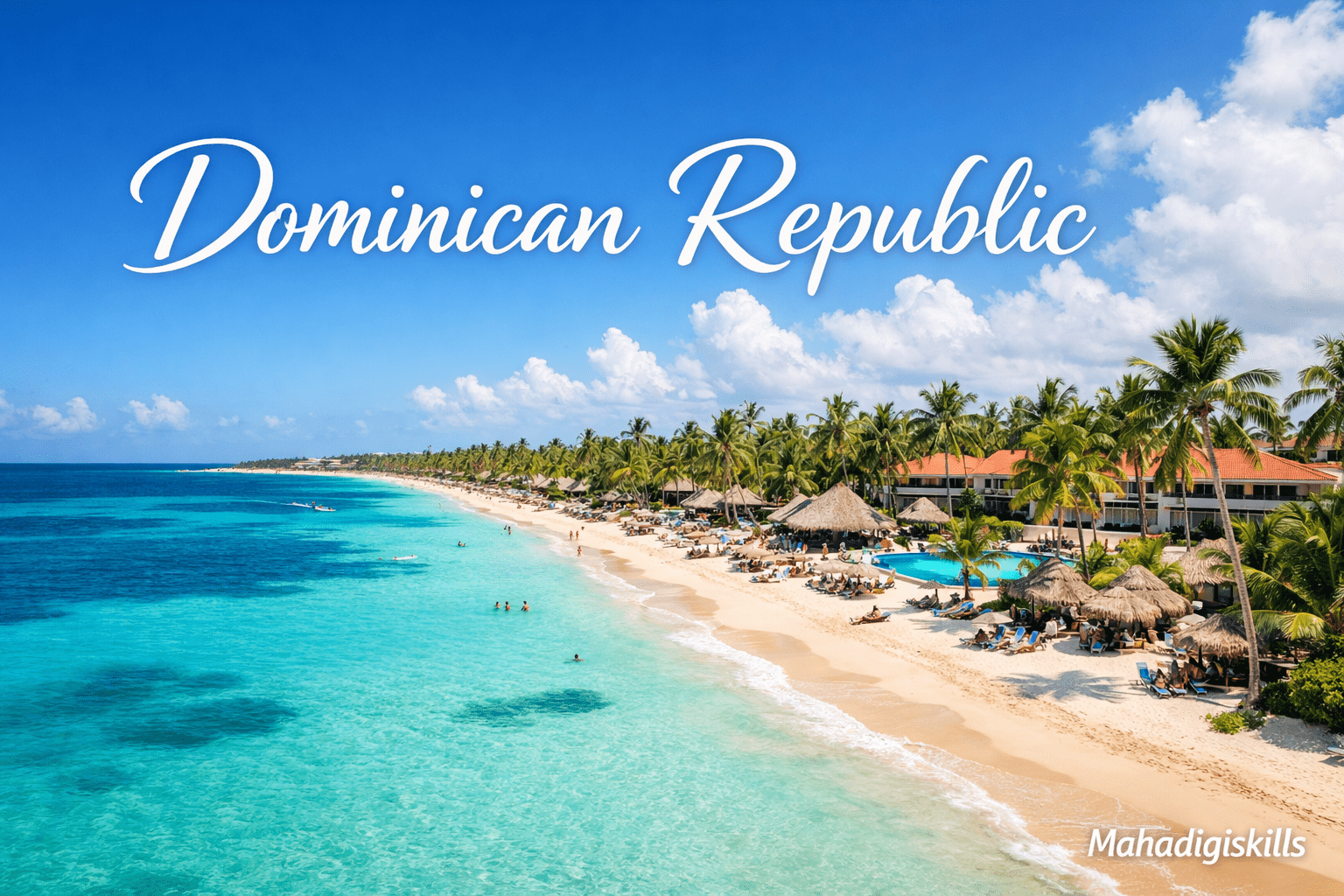
The Dominican Republic is one of the most fascinating and vibrant countries in the Caribbean. Located on the island of Hispaniola, the Dominican Republic combines stunning beaches, rich history, diverse culture, and a rapidly growing economy. Known for its turquoise waters, lively music, and welcoming people, the Dominican Republic attracts millions of visitors every year.
The Dominican Republic shares the island of Hispaniola with Haiti and is the second-largest Caribbean nation by area. From the historic streets of Santo Domingo to the luxury resorts of Punta Cana, the Dominican Republic offers travelers a wide variety of experiences.
Tourists visiting the Dominican Republic enjoy breathtaking landscapes that range from tropical rainforests and mountain ranges to deserts and pristine beaches. Beyond tourism, the Dominican Republic is also known for its agriculture, mining, cultural traditions, and strong ties with international organizations.
The Dominican Republic is famous for producing world-class baseball players, vibrant festivals, merengue and bachata music, and delicious Caribbean cuisine. These cultural elements help define the unique identity of the Dominican Republic.
In this detailed guide, we will explore the Dominican Republic in depth—covering its history, geography, culture, economy, tourism, languages, and many fascinating facts.
History of the Dominican Republic
Early Indigenous History
Before European arrival, the island that now contains the Dominican Republic was inhabited by the Taíno people. The Taíno were indigenous Caribbean inhabitants who lived in organized communities and practiced agriculture, fishing, and trade.
When Christopher Columbus arrived in 1492, the island of Hispaniola became the first permanent European settlement in the Americas. The area that is now the Dominican Republic played a crucial role in early Spanish colonial expansion.
Santo Domingo, the capital of the Dominican Republic, became the first European city established in the Americas. Many historic buildings in the city still reflect the early Spanish colonial period.
Spanish Colonial Period
During the 16th century, the Dominican Republic became a major center of Spanish colonial administration. The Spanish built forts, churches, and administrative centers that still stand today in Santo Domingo’s Colonial Zone.
However, over time the importance of the Dominican Republic declined as Spain focused more on wealthier colonies such as Mexico and Peru.
The island eventually experienced political instability, conflicts, and shifts in colonial control.
Haitian Occupation
One of the most important periods in the history of the Dominican Republic occurred in the 19th century when Haiti controlled the entire island of Hispaniola.
From 1822 to 1844, Haiti governed the territory that is now the Dominican Republic. This period shaped many aspects of Dominican national identity.
Independence of the Dominican Republic
The Dominican Republic declared independence from Haiti on February 27, 1844. This day remains the most important national holiday in the Dominican Republic.
Dominican national heroes such as Juan Pablo Duarte, Francisco del Rosario Sánchez, and Ramón Matías Mella led the movement for independence.
The establishment of the Dominican Republic created a sovereign nation that developed its own political system, culture, and identity.
20th Century and Modern Development
The 20th century brought significant political changes to the Dominican Republic.
One of the most notable periods was the dictatorship of Rafael Trujillo, who ruled the Dominican Republic from 1930 to 1961. His regime left a lasting impact on the country’s political and social landscape.
After Trujillo’s assassination in 1961, the Dominican Republic gradually transitioned toward democracy.
Today, the Dominican Republic is a democratic republic with regular elections and growing economic development.
Geography of the Dominican Republic
Location of the Dominican Republic
The Dominican Republic is located in the Caribbean region of North America. It occupies the eastern two-thirds of the island of Hispaniola.
Geographical coordinates of the Dominican Republic:
Latitude: 18.7357° N
Longitude: 70.1627° W
Neighboring territories include:
- Haiti to the west
- Puerto Rico to the east across the Mona Passage
- Cuba to the northwest
- Jamaica to the southwest
The strategic location of the Dominican Republic has made it an important cultural and economic hub in the Caribbean.
Physical Landscape
The Dominican Republic has one of the most geographically diverse landscapes in the Caribbean.
Key natural features include:
- Mountain ranges
- Coastal plains
- Tropical forests
- Desert regions
- Rivers and lakes
The country contains the highest mountain in the Caribbean, Pico Duarte, which rises to about 3,098 meters above sea level.
The Dominican Republic also contains Lake Enriquillo, the lowest elevation point in the Caribbean.
Climate in the Dominican Republic
The Dominican Republic has a tropical maritime climate with warm temperatures year-round.
Average temperatures:
- 25°C to 30°C (77°F to 86°F)
There are two primary seasons:
- Dry season: December to April
- Rainy season: May to November
Because of its tropical climate, the Dominican Republic is ideal for beach tourism and outdoor activities.
Culture of the Dominican Republic
The Dominican Republic has a rich and dynamic culture shaped by Spanish, African, and Taíno influences.
Music, dance, festivals, and cuisine all play major roles in everyday life in the Dominican Republic.
Music and Dance
Two music styles are deeply connected with the identity of the Dominican Republic:
Merengue
Merengue is the national dance and music style of the Dominican Republic. The fast rhythm and energetic movements make it one of the most recognizable musical traditions in the Caribbean.
Bachata
Bachata originated in the Dominican Republic and has become globally popular in recent decades. Its emotional lyrics and guitar melodies have made it a favorite among music lovers worldwide.
Festivals in the Dominican Republic
The Dominican Republic celebrates numerous festivals throughout the year.
Major festivals include:
- Dominican Carnival
- Merengue Festival
- Independence Day celebrations
- Religious festivals
Carnival celebrations in the Dominican Republic feature colorful masks, costumes, music, and dancing.
Traditional Food
Food in the Dominican Republic blends Spanish, African, and Caribbean flavors.
Popular dishes include:
- La Bandera Dominicana (rice, beans, and meat)
- Mangú (mashed plantains)
- Sancocho (traditional stew)
- Mofongo
- Tostones
Cuisine is an important part of daily life and cultural identity in the Dominican Republic.
Official Languages in the Dominican Republic
The official language of the Dominican Republic is Spanish.
However, several other languages are spoken due to migration and tourism.
Languages commonly heard in the Dominican Republic include:
- Spanish
- Haitian Creole
- English (tourism areas)
- Italian
- German
Spanish spoken in the Dominican Republic has its own accent and vocabulary influenced by African and Taíno languages.
Major Cities of the Dominican Republic
Santo Domingo (Capital City)
Santo Domingo is the capital and largest city of the Dominican Republic.
Founded in 1496, Santo Domingo is the oldest continuously inhabited European settlement in the Americas.
Important attractions include:
- Colonial Zone (UNESCO World Heritage Site)
- Alcázar de Colón
- Santo Domingo Cathedral
- National Palace
The capital is the political, economic, and cultural center of the Dominican Republic.
Other Major Cities
Important cities in the Dominican Republic include:
Santiago de los Caballeros
The second-largest city in the Dominican Republic, known for industry and culture.
Punta Cana
A famous tourism hub known for luxury resorts and beaches.
La Romana
An important tourist destination with resorts and golf courses.
Puerto Plata
A historic coastal city famous for beaches and amber mining.
External DoFollow Sources
United Nations:
https://www.un.org
World Bank:
https://www.worldbank.org
UNESCO:
https://whc.unesco.org
CIA World Factbook:
https://www.cia.gov/the-world-factbook/
Economy of Dominican Republic
The Dominican Republic has one of the fastest-growing economies in the Caribbean region. Over the past few decades, the Dominican Republic has transitioned from a primarily agricultural economy to a more diversified system that includes tourism, manufacturing, services, and mining.
Economic development in the Dominican Republic has been driven largely by tourism, international trade, foreign investment, and remittances from Dominicans living abroad.
Key Economic Sectors
Several industries play a major role in the economic success of the Dominican Republic.
Tourism Industry
Tourism is the largest contributor to the economy of the Dominican Republic. Millions of travelers visit the Dominican Republic each year to enjoy its tropical beaches, cultural heritage, and luxury resorts.
Popular destinations such as Punta Cana, Puerto Plata, and Santo Domingo attract international tourists from North America, Europe, and Latin America.
The tourism sector in the Dominican Republic generates significant employment opportunities and foreign currency revenue.
Agriculture
Agriculture remains an important economic sector in the Dominican Republic, especially in rural areas.
Major agricultural products produced in the Dominican Republic include:
- Sugarcane
- Coffee
- Cocoa
- Bananas
- Tobacco
- Rice
Dominican coffee and cocoa are especially valued in international markets.
Mining
Mining also contributes to the economic development of the Dominican Republic. The country produces gold, silver, nickel, and bauxite.
One of the largest gold mines in the Caribbean is located in the Dominican Republic, making mining a key export industry.
Manufacturing
The Dominican Republic has developed a strong manufacturing sector through free trade zones. These zones allow international companies to produce goods for export.
Manufactured products from the Dominican Republic include:
- Medical devices
- Electronics
- Textiles
- Footwear
These industries have helped the Dominican Republic become an important exporter in the Caribbean region.
Currency of Dominican Republic
The official currency of the Dominican Republic is the Dominican Peso (DOP).
The Dominican Peso is issued and regulated by the Central Bank of the Dominican Republic.
Visitors traveling to the Dominican Republic often exchange their currency into Dominican Pesos, although US dollars are widely accepted in major tourist areas.
The stable financial system of the Dominican Republic has helped support economic growth and international trade.
Trade Partners of Dominican Republic
International trade plays a crucial role in the economy of the Dominican Republic. The country exports agricultural products, manufactured goods, and minerals to many global markets.
Major trade partners of the Dominican Republic include:
- United States
- China
- Haiti
- Canada
- European Union countries
The United States is the largest trading partner of the Dominican Republic, importing many Dominican products and investing heavily in Dominican industries.
Trade agreements have helped the Dominican Republic strengthen its economic position in the Caribbean.
Tourism in Dominican Republic
Tourism is one of the defining features of the Dominican Republic. The country welcomes more than six million visitors each year, making the Dominican Republic one of the most popular travel destinations in the Caribbean.
Travelers are drawn to the Dominican Republic because of its warm climate, beautiful coastlines, and vibrant culture.
Luxury resorts, eco-tourism adventures, historic landmarks, and cultural festivals make the Dominican Republic a diverse destination for travelers.
Top Tourist Attractions in Dominican Republic
The Dominican Republic offers a wide variety of attractions ranging from historic cities to natural wonders.
Punta Cana
Punta Cana is the most famous tourist destination in the Dominican Republic. Known for its white-sand beaches and luxury resorts, Punta Cana attracts visitors from around the world.
Activities in Punta Cana include:
- Snorkeling
- Scuba diving
- Parasailing
- Beach relaxation
- Golf resorts
Many travelers visit the Dominican Republic specifically to experience Punta Cana’s tropical beauty.
Saona Island
Saona Island is one of the most beautiful natural destinations in the Dominican Republic.
Located within Cotubanamá National Park, Saona Island is famous for its crystal-clear waters and palm-lined beaches.
Tourists visiting the Dominican Republic often take day trips to Saona Island for snorkeling, swimming, and wildlife viewing.
Puerto Plata
Puerto Plata is another important tourist destination in the Dominican Republic.
The city is known for:
- Historic architecture
- Amber museums
- Cable car rides to Mount Isabel de Torres
Visitors exploring the Dominican Republic often travel to Puerto Plata to experience both history and scenic mountain views.
Damajagua Waterfalls
The 27 Waterfalls of Damajagua are one of the most exciting eco-tourism attractions in the Dominican Republic.
Adventure travelers visiting the Dominican Republic can hike through tropical forests and slide down natural waterfalls.
This attraction highlights the natural beauty of the Dominican Republic.
Colonial Zone of Santo Domingo
The Colonial Zone in Santo Domingo is one of the most historically significant areas in the Dominican Republic.
This UNESCO World Heritage Site contains centuries-old buildings, museums, and churches.
Visitors exploring the Dominican Republic often walk through cobblestone streets to experience the rich colonial history.
External reference:
https://whc.unesco.org
Transportation in Dominican Republic
Getting around the Dominican Republic is relatively easy due to a well-developed transportation system.
International Airports
The Dominican Republic has several international airports serving millions of travelers each year.
Major airports include:
- Punta Cana International Airport
- Las Américas International Airport (Santo Domingo)
- Cibao International Airport
- Puerto Plata International Airport
These airports connect the Dominican Republic with cities across North America, Europe, and Latin America.
Public Transportation
Public transportation options in the Dominican Republic include:
- Buses
- Taxis
- Shared minibuses (guaguas)
- Ride-sharing services
Cities like Santo Domingo also have a modern metro system, making transportation within the Dominican Republic more efficient.
Road Travel
Many travelers exploring the Dominican Republic choose to rent cars.
Highways connect major cities and tourist areas across the Dominican Republic, making road travel convenient for visitors.
However, travelers should always drive carefully because traffic conditions can vary.
Best Time to Visit Dominican Republic
The Dominican Republic enjoys warm tropical weather throughout the year, but some months are better for travel than others.
Peak Tourist Season
The best time to visit the Dominican Republic is typically from December to April.
During this period, the Dominican Republic experiences pleasant weather with lower humidity and less rainfall.
Tourists from colder countries often travel to the Dominican Republic during these months to enjoy sunny beaches.
Off-Season Travel
The Dominican Republic can also be visited during the off-season from May to November.
While this period includes the Caribbean hurricane season, many travelers still visit the Dominican Republic because prices are lower and resorts offer discounts.
Festivals and Events
Travelers interested in culture may prefer visiting the Dominican Republic during festival periods.
Important celebrations include:
- Dominican Carnival
- Independence Day
- Merengue Festival
These festivals allow visitors to experience the vibrant traditions of the Dominican Republic.
External DoFollow Sources
United Nations
https://www.un.org
World Bank
https://www.worldbank.org
UNESCO
https://whc.unesco.org
CIA World Factbook
https://www.cia.gov/the-world-factbook/
Unique and Interesting Facts About Dominican Republic
The Dominican Republic is filled with fascinating history, natural wonders, and cultural achievements that make it stand out in the Caribbean region. From unique geography to global cultural influence, the Dominican Republic continues to capture worldwide attention.
1. Birthplace of the First European City in the Americas
The Dominican Republic is home to Santo Domingo, the first permanent European settlement in the Americas. Founded in 1496, Santo Domingo played a central role in the early colonial history of the New World.
Today, visitors exploring the Dominican Republic can walk through the historic Colonial Zone, where centuries-old buildings still remain.
2. Highest Mountain in the Caribbean
The Dominican Republic contains Pico Duarte, the tallest mountain in the Caribbean region.
Pico Duarte reaches approximately 3,098 meters (10,164 feet) above sea level. Hiking to the summit is one of the most exciting adventures for travelers visiting the Dominican Republic.
3. Lowest Point in the Caribbean
Another surprising geographic feature of the Dominican Republic is Lake Enriquillo, the lowest point in the Caribbean.
Lake Enriquillo sits 44 meters below sea level and is also one of the largest saltwater lakes in the Caribbean.
4. Famous Amber Deposits
The Dominican Republic is one of the world’s leading sources of amber, a fossilized tree resin that sometimes contains ancient insects preserved inside.
Dominican amber became internationally famous after being featured in the movie Jurassic Park.
5. Baseball Passion
Baseball is the most popular sport in the Dominican Republic. Many internationally famous Major League Baseball players come from the Dominican Republic.
Dominican players have become stars in professional leagues across North America and Latin America.
Dominican Republic in International Organizations
The Dominican Republic actively participates in many global organizations and international partnerships.
United Nations Membership
The Dominican Republic is a member of the United Nations (UN) and participates in global diplomatic cooperation.
UN membership allows the Dominican Republic to contribute to discussions about international peace, development, and environmental protection.
Official UN website:
https://www.un.org
Other Global Organizations
The Dominican Republic is also a member of several important international organizations, including:
- Organization of American States (OAS)
- World Trade Organization (WTO)
- Caribbean Community partnerships
- International Monetary Fund (IMF)
- World Bank
These memberships allow the Dominican Republic to participate in global economic and political cooperation.
World Bank reference:
https://www.worldbank.org
Travel Tips for Visiting Dominican Republic
Traveling to the Dominican Republic can be an unforgettable experience. The country offers beautiful beaches, exciting nightlife, and rich cultural traditions.
Here are some helpful travel tips for visitors exploring the Dominican Republic.
Entry Requirements
Travelers visiting the Dominican Republic generally need:
- A valid passport
- A tourist entry form (often digital)
- Return flight confirmation
Visa requirements for the Dominican Republic depend on the visitor’s nationality.
Safety Tips
The Dominican Republic is generally safe for tourists, especially in major resort areas.
Travelers should still follow basic safety practices while visiting the Dominican Republic:
- Avoid isolated areas at night
- Use licensed taxis or transportation services
- Protect personal belongings in crowded areas
These precautions help ensure a safe trip to the Dominican Republic.
Currency and Payments
Although the official currency of the Dominican Republic is the Dominican Peso, many tourist businesses accept US dollars and credit cards.
Visitors traveling through the Dominican Republic should carry some local currency for small purchases.
Local Etiquette
People in the Dominican Republic are known for their friendliness and hospitality.
Visitors exploring the Dominican Republic will often find locals eager to share their culture, music, and traditions.
Simple greetings and polite behavior are appreciated when interacting with residents of the Dominican Republic.
External DoFollow References
United Nations
https://www.un.org
UNESCO World Heritage
https://whc.unesco.org
World Bank
https://www.worldbank.org
CIA World Factbook
https://www.cia.gov/the-world-factbook/
These sources provide reliable global data related to the Dominican Republic.
Final Summary
The Dominican Republic is one of the most captivating destinations in the Caribbean. With its tropical beaches, vibrant culture, historic cities, and growing economy, the Dominican Republic offers something for every type of traveler.
From the colonial heritage of Santo Domingo to the luxury resorts of Punta Cana, the Dominican Republic showcases both history and modern development. Its music, cuisine, festivals, and welcoming people create a unique cultural experience that visitors remember long after their trip.
The Dominican Republic also plays an important role in international cooperation through its membership in organizations such as the United Nations and the World Bank.
Whether someone visits the Dominican Republic for adventure, relaxation, culture, or history, the country continues to be one of the most popular and exciting destinations in the Caribbean region.
Key Facts About Dominican Republic
| Category | Information |
|---|---|
| Country Name | Dominican Republic |
| Capital City | Santo Domingo |
| Continent | North America (Caribbean region) |
| Coordinates | 18.7357° N, 70.1627° W |
| Population | ~11 million |
| Official Language | Spanish |
| Currency | Dominican Peso (DOP) |
| Government | Democratic Republic |
| Highest Point | Pico Duarte (3,098 m) |
| Lowest Point | Lake Enriquillo (-44 m) |
| Main Industries | Tourism, Agriculture, Mining, Manufacturing |
| Major Exports | Coffee, Cocoa, Gold, Medical Devices |
| UN Membership | Yes |
List of All 195 Countries
A
- Afghanistan
- Albania
- Algeria
- Andorra
- Angola
- Antigua and Barbuda
- Argentina
- Armenia
- Australia
- Austria
- Azerbaijan
- Bahamas
- Bahrain
- Bangladesh
- Barbados
- Belarus
- Belgium
- Belize
- Benin
- Bhutan
- Bolivia
- Bosnia and Herzegovina
- Botswana
- Brazil
- Brunei
- Bulgaria
- Burkina Faso
- Burundi
- Cabo Verde
- Cambodia
- Cameroon
- Canada
- Central African Republic
- Chad
- Chile
- China
- Colombia
- Comoros
- Congo (Congo-Brazzaville)
- Costa Rica

