



Introduction
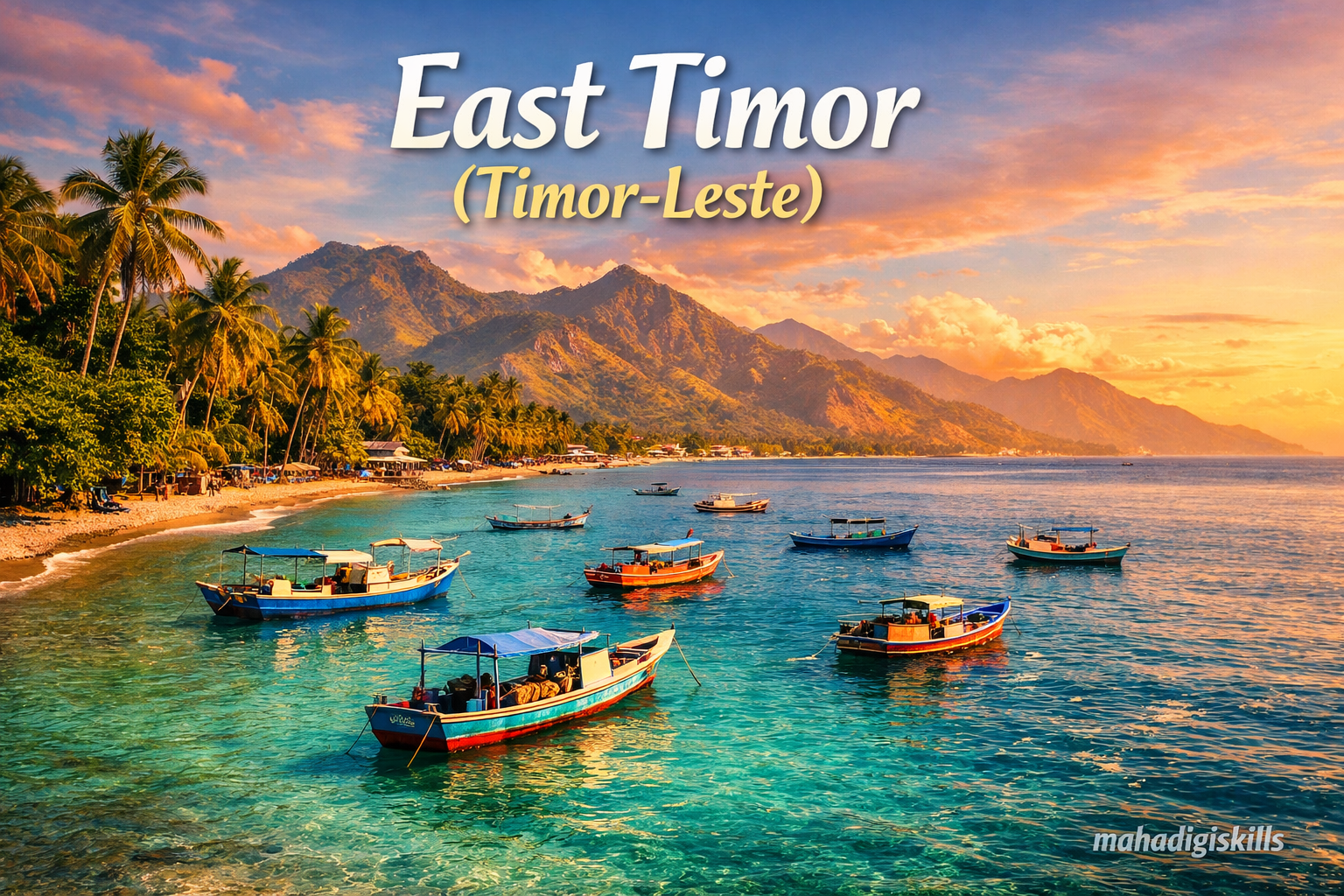
East Timor is a young and fascinating nation located in Southeast Asia, occupying the eastern portion of the island of Timor. Officially known as Timor-Leste, this country is recognized for its dramatic landscapes, deep cultural heritage, and inspiring journey toward independence.
Situated between Indonesia and Australia, this island nation offers travelers pristine beaches, mountainous terrain, coral reefs, and traditional villages that reflect centuries of cultural influences. Despite its relatively small size, the country is rich in biodiversity and cultural diversity.
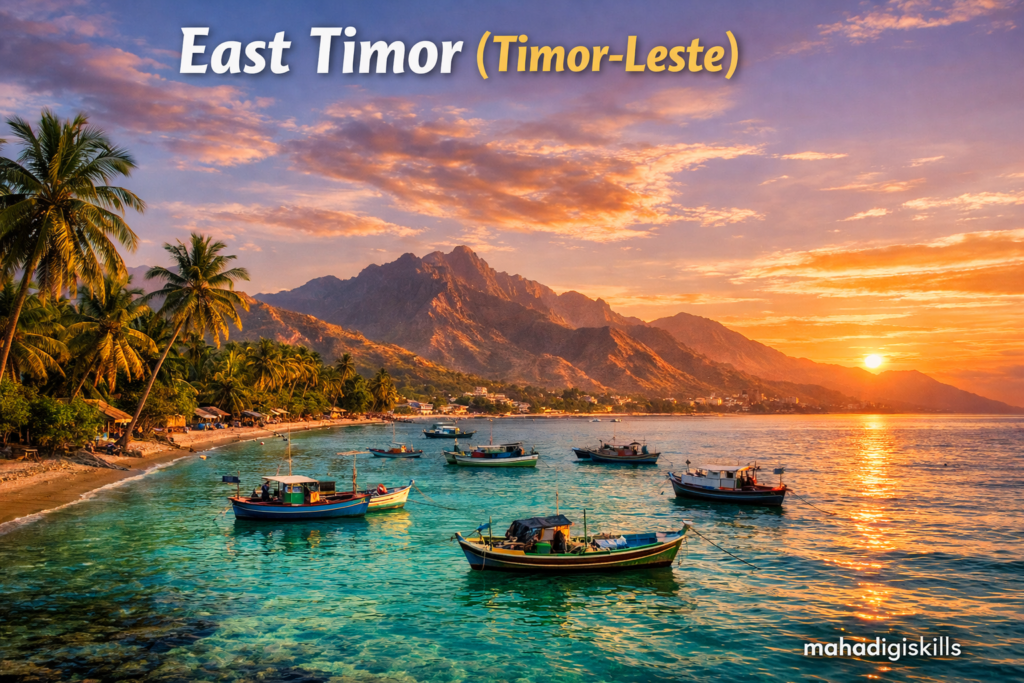
Visitors often come here to explore remote coastlines, enjoy scuba diving in clear waters, and experience a unique blend of Portuguese colonial heritage and Southeast Asian traditions.
Historical Background
The story of this Southeast Asian country spans centuries and includes indigenous kingdoms, European colonial influence, and a long path toward national sovereignty.
Early Indigenous Communities
Long before European arrival, the island was home to diverse ethnic groups that lived in small kingdoms and tribal communities. These societies relied on agriculture, fishing, and regional trade networks connecting nearby islands.
Traditional social structures centered around clans and village leadership, and many of these cultural systems continue to influence local communities today.
Portuguese Colonial Period
Portugal established control over the eastern portion of the island during the 16th century, beginning a colonial era that lasted for more than four centuries.
Portuguese rule introduced several lasting influences, including:
- Christianity
- European-style administration
- Architectural traditions
- The Portuguese language
Many churches and colonial buildings from this period can still be seen today.
Indonesian Occupation
After Portugal withdrew in 1975, the territory briefly declared independence. Shortly afterward, neighboring Indonesia occupied the region, beginning a period of political conflict.
The occupation lasted more than two decades and resulted in international attention and calls for self-determination.
Independence and Modern Development
A historic referendum organized by the United Nations in 1999 allowed citizens to vote on independence. The overwhelming majority supported sovereignty.
Following a UN transitional administration, full independence was officially achieved on May 20, 2002, making the country one of the newest sovereign nations in the world.
External Source
https://www.britannica.com/place/Timor-Leste
Geography and Location
The country lies in the eastern half of the island of Timor, which is part of the Malay Archipelago in Southeast Asia.
Geographic Coordinates
Approximate coordinates:
8° South latitude and 126° East longitude
Neighboring Regions
This island nation shares borders with:
- Indonesia to the west
- Australia across the Timor Sea to the south
In addition to the main territory, the country also includes Oecusse, an enclave located inside Indonesian territory.
Landscape and Natural Environment
The landscape is dominated by rugged mountains, tropical forests, and scenic coastal plains.
Mount Ramelau
Mount Ramelau, also known as Tatamailau, is the highest peak in the country, reaching approximately 2,986 meters above sea level.
The summit offers spectacular views and is an important pilgrimage destination.
Coastal Ecosystems
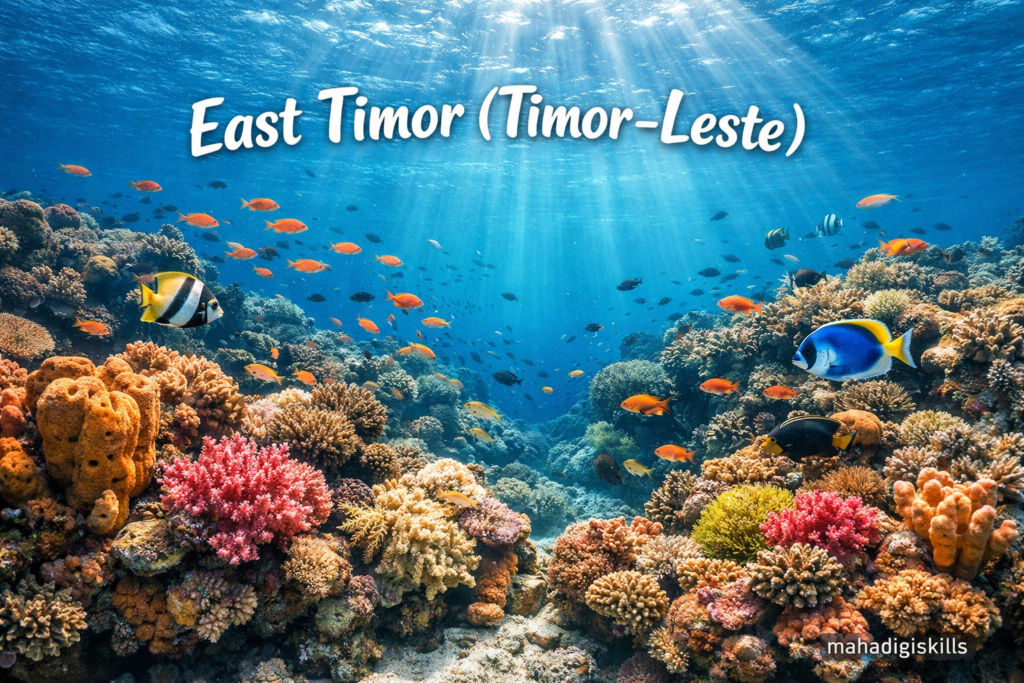
The surrounding waters form part of the Coral Triangle, one of the most biodiverse marine regions in the world.
Marine life includes:
- Coral reefs
- Tropical fish
- Dolphins
- Sea turtles
- Migratory whales
These ecosystems make the region a popular destination for scuba diving and snorkeling.
Climate
The country experiences a tropical climate with two primary seasons:
Wet Season: November to April
Dry Season: May to October
The dry season provides the most comfortable weather conditions for travelers.
Culture and Traditions
The culture of this island nation reflects a combination of indigenous traditions, Portuguese influence, and Southeast Asian customs.
More than 30 ethnic groups contribute to a diverse cultural landscape.
Languages
Two official languages are used in government and education:
- Tetum
- Portuguese
Additional languages widely spoken include:
- Indonesian
- English
Numerous local dialects are also preserved in rural communities.
Religion
Religion plays a central role in society. The majority of citizens practice Roman Catholicism, making this one of the most Catholic-majority nations in Asia.
Church events, religious ceremonies, and festivals are widely celebrated.
Traditional Arts and Crafts
One of the most famous cultural traditions is Tais weaving, a colorful textile craft produced by hand.
Tais cloth is used in:
- Ceremonial clothing
- Cultural celebrations
- Gifts for important occasions
Other artistic traditions include wood carving, music, and folk dance.
Local Cuisine
Food traditions combine influences from Portuguese, Indonesian, and local island cooking.
Popular ingredients include rice, seafood, tropical vegetables, and spices.
Common dishes include:
- Grilled fish
- Rice with vegetable stews
- Coconut-based curries
- Tropical fruits such as papaya and mango
Coffee cultivation is also important, and locally produced beans are known for their organic quality and rich flavor.
Festivals and Celebrations
National and community celebrations play an important role in social life.
Independence Day
Celebrated on May 20, this holiday commemorates national sovereignty and features parades, music, and cultural performances.
Religious Festivals
Christian holidays such as Christmas and Easter are widely celebrated with church services and community gatherings.
Village Cultural Events
Traditional festivals often include:
Ceremonial clothing
Folk dances
Traditional music
Storytelling
Economy and Development
The economy of this Southeast Asian island nation has been gradually developing since independence in 2002. Government programs, international support, and natural resources have helped support national growth.
Major economic sectors include:
- Petroleum and natural gas
- Agriculture
- Coffee exports
- Fisheries
- Tourism
Petroleum resources from the Timor Sea have been one of the primary sources of national revenue. However, efforts are underway to diversify the economy through tourism, agriculture, and infrastructure development.
External Source
https://www.worldbank.org/en/country/timor-leste
Currency and Financial System
The country uses the United States Dollar (USD) as its official currency, while local coins called centavos are also in circulation.
Key economic partners include:
- Australia
- Indonesia
- Portugal
- China
- Singapore
International cooperation has helped support economic growth and development projects.
Agriculture and Natural Resources
Agriculture plays an important role in rural communities.
Common agricultural products include:
- Coffee
- Rice
- Corn
- Cassava
- Coconut
- Vegetables
Among these products, coffee is the most famous export. Coffee plantations in mountainous areas produce high-quality beans known in international markets for their organic farming methods.
Major Cities and Urban Centers
Although the country has a relatively small population, several cities serve as cultural, economic, and administrative centers.
Dili – Capital City
Dili is the capital and largest city, located along the northern coastline of the island. The city serves as the political, economic, and cultural center of the country.
Important attractions include:
- Cristo Rei Statue
- Resistance Museum
- Government Palace
- Waterfront promenade
Visitors often enjoy the relaxed atmosphere, seafood restaurants, and scenic ocean views.
Baucau
Baucau is the second-largest city and is known for its colonial architecture and scenic surroundings.
Attractions include:
- Historic Portuguese buildings
- Baucau beach
- Mountain viewpoints
The city also has one of the oldest airports in the country.
Maliana
Maliana lies near the western border and serves as an agricultural center.
The surrounding region is known for:
- Rice farming
- Traditional villages
- Mountain landscapes
Oecusse
Oecusse is a unique enclave separated from the main territory and surrounded by Indonesian land.
This region has historical importance because it was one of the earliest Portuguese settlements on the island.
Tourism in East Timor
Tourism is gradually emerging as an important sector. Travelers are attracted by untouched nature, diving opportunities, and cultural experiences.
Top Tourist Attractions
Cristo Rei of Dili
The Cristo Rei statue is one of the most recognizable landmarks. Standing about 27 meters tall, the statue overlooks the ocean from a hill near the capital.
Visitors climb hundreds of steps to reach the viewpoint, where panoramic views of the coastline can be seen.
Atauro Island
Located north of the capital, Atauro Island is famous for crystal-clear waters and vibrant coral reefs.
Activities include:
- Scuba diving
- Snorkeling
- Whale watching
- Village cultural tours
Marine biodiversity in this region is considered among the richest in the world.
Mount Ramelau
The highest mountain in the country is a popular hiking destination.
Many travelers climb the peak early in the morning to watch the sunrise above the clouds.
Jaco Island
Jaco Island is a small, uninhabited island known for white sand beaches and clear turquoise waters.
The island is considered sacred by local communities and remains a protected natural area.
Nino Konis Santana National Park
This national park protects forests, wildlife habitats, and marine ecosystems.
Visitors can explore:
- Tropical forests
- Birdwatching areas
- Coastal ecosystems
Marine Tourism and Diving
One of the most exciting travel experiences in this island nation is diving.
The surrounding waters belong to the Coral Triangle, which contains some of the highest marine biodiversity on Earth.
Divers often encounter:
- Colorful coral reefs
- Reef sharks
- Sea turtles
- Dolphins
- Whale sharks
Because tourism is still developing, many dive sites remain relatively untouched.
Best Time to Visit
The best time to visit this Southeast Asian destination depends on weather conditions.
Dry Season (May – October)
This is generally the best time for travel.
Weather conditions are sunny and dry, making it ideal for:
- Beach activities
- Hiking
- Diving
Wet Season (November – April)
Rainfall increases during these months, especially in mountainous areas.
However, landscapes become greener and more vibrant.
Travelers visiting during this season should plan for occasional heavy rain.
Transportation and Travel Tips
Travel infrastructure is improving gradually, making exploration easier.
Flights
The main international airport is located in Dili, connecting the country with nearby destinations such as:
- Bali
- Darwin
- Singapore
Road Transport
Road networks connect many towns and villages across the island.
Travelers often use:
- Shared minibuses
- Taxis
- Private vehicles
Road conditions may vary in rural areas.
Cultural Etiquette
Visitors are encouraged to respect local customs and traditions.
Helpful travel tips include:
- Dress modestly when visiting churches or villages
- Ask permission before photographing people
- Respect sacred cultural sites
Local communities are known for their hospitality and friendliness toward visitors.
Unique and Interesting Facts
This small island nation has many interesting characteristics.
- One of the youngest countries in the world
- One of the most Catholic nations in Asia
- Home to extremely biodiverse coral reefs
- Coffee cultivation supports many rural communities
- Cultural textiles called Tais are important national symbols
These unique elements contribute to a distinctive identity that blends tradition, history, and natural beauty.
DoFollow Links
World Bank – Timor-Leste
https://www.worldbank.org/en/country/timor-leste
United Nations – Timor-Leste
https://www.un.org/en/about-us/member-states/timor-leste
Role in Global Organizations
Since gaining independence in 2002, this Southeast Asian nation has gradually built diplomatic relationships and joined major international organizations. Participation in global institutions supports economic development, international cooperation, and peacekeeping initiatives.
United Nations Membership
The country officially became a member of the United Nations in September 2002, shortly after independence. Membership allows participation in international programs related to development, health, education, and climate action.
External DoFollow Link
https://www.un.org/en/about-us/member-states/timor-leste
Through cooperation with the UN, the nation has received support in areas such as:
- Democratic governance
- Infrastructure development
- Disaster management
- Education and healthcare
Regional Cooperation
In addition to UN membership, the country participates in several regional and global organizations, including:
- World Bank
- International Monetary Fund (IMF)
- Community of Portuguese Language Countries (CPLP)
Efforts have also been made to strengthen relations with Southeast Asian neighbors through diplomatic and economic partnerships.
Suggested Travel Itinerary
Travelers exploring this island destination can experience a combination of culture, nature, and history through a well-planned itinerary.
7-Day Travel Plan
Day 1 – Arrival in Dili
Begin the journey in the capital city.
Popular activities include:
- Visiting the Resistance Museum
- Exploring the waterfront
- Trying traditional cuisine in local restaurants
Day 2 – Cristo Rei and Coastal Views
Start the morning by climbing the steps to the Cristo Rei statue, which offers panoramic views of the ocean and surrounding beaches.
Later, relax along the coastline and explore nearby villages.
Day 3 – Atauro Island Adventure
Take a boat trip to Atauro Island, known for exceptional marine biodiversity.
Activities include:
- Snorkeling
- Scuba diving
- Visiting local fishing communities
Day 4 – Cultural Experiences
Spend time learning about local traditions.
Visitors can experience:
- Tais textile weaving
- Traditional music and dance
- Local food markets
Day 5 – Mount Ramelau Trek
Adventure travelers often climb Mount Ramelau, the highest peak in the country.
The sunrise view from the summit is considered one of the most spectacular in Southeast Asia.
Day 6 – Jaco Island
Travel to the eastern region to visit Jaco Island, an uninhabited island famous for white sand beaches and turquoise waters.
This protected area is known for its peaceful natural environment.
Day 7 – Local Markets and Departure
Return to the capital and explore local markets for souvenirs such as:
- Handwoven Tais textiles
- Wooden handicrafts
- Local coffee beans
Transportation Options
Traveling across the island can be done through several methods.
Domestic Travel
Transportation options include:
- Shared minibuses
- Taxis
- Private vehicles
Some travelers also choose guided tours to explore remote regions more easily.
International Access
The main international gateway is Presidente Nicolau Lobato International Airport in Dili.
Flights connect the country with nearby destinations including:
- Bali (Indonesia)
- Darwin (Australia)
- Singapore
Travel Safety and Practical Advice
Travelers generally find the country welcoming and friendly. However, it is always wise to follow basic precautions.
Recommended tips include:
- Carry travel insurance
- Respect cultural traditions
- Stay updated on travel advisories
- Bring cash when visiting rural areas
Visitors should also respect sacred sites and ask permission before photographing people in villages.
Unique and Interesting Facts
This island nation has many unique characteristics that distinguish it globally.
- One of the newest independent countries in the world
- Official languages include Tetum and Portuguese
- Marine biodiversity around the island is among the richest on Earth
- Traditional textiles called Tais symbolize cultural identity
- Coffee production supports thousands of farming families
These elements create a distinctive national identity that blends heritage, resilience, and natural beauty.
Final Summary
East Timor is a remarkable destination that combines history, cultural diversity, and untouched natural landscapes. From the mountainous interior to coral-rich coastal waters, the country offers travelers unique experiences rarely found in more crowded tourist destinations.
Visitors can explore colonial architecture, hike dramatic mountain peaks, dive in vibrant coral ecosystems, and interact with welcoming communities that preserve centuries-old traditions.
As tourism gradually grows, this island nation continues to attract explorers seeking authentic travel experiences in Southeast Asia.
Key Facts Table
| Category | Information |
|---|---|
| Official Name | Democratic Republic of Timor-Leste |
| Capital | Dili |
| Region | Southeast Asia |
| Population | About 1.3 million |
| Area | 14,874 km² |
| Official Languages | Tetum, Portuguese |
| Currency | United States Dollar |
| Independence | May 20, 2002 |
| Highest Mountain | Mount Ramelau (2,986 m) |
| UN Membership | Joined in 2002 |
DoFollow Links
United Nations – Timor-Leste
https://www.un.org/en/about-us/member-states/timor-leste
World Bank – Timor-Leste
https://www.worldbank.org/en/country/timor-leste

