



Introduction
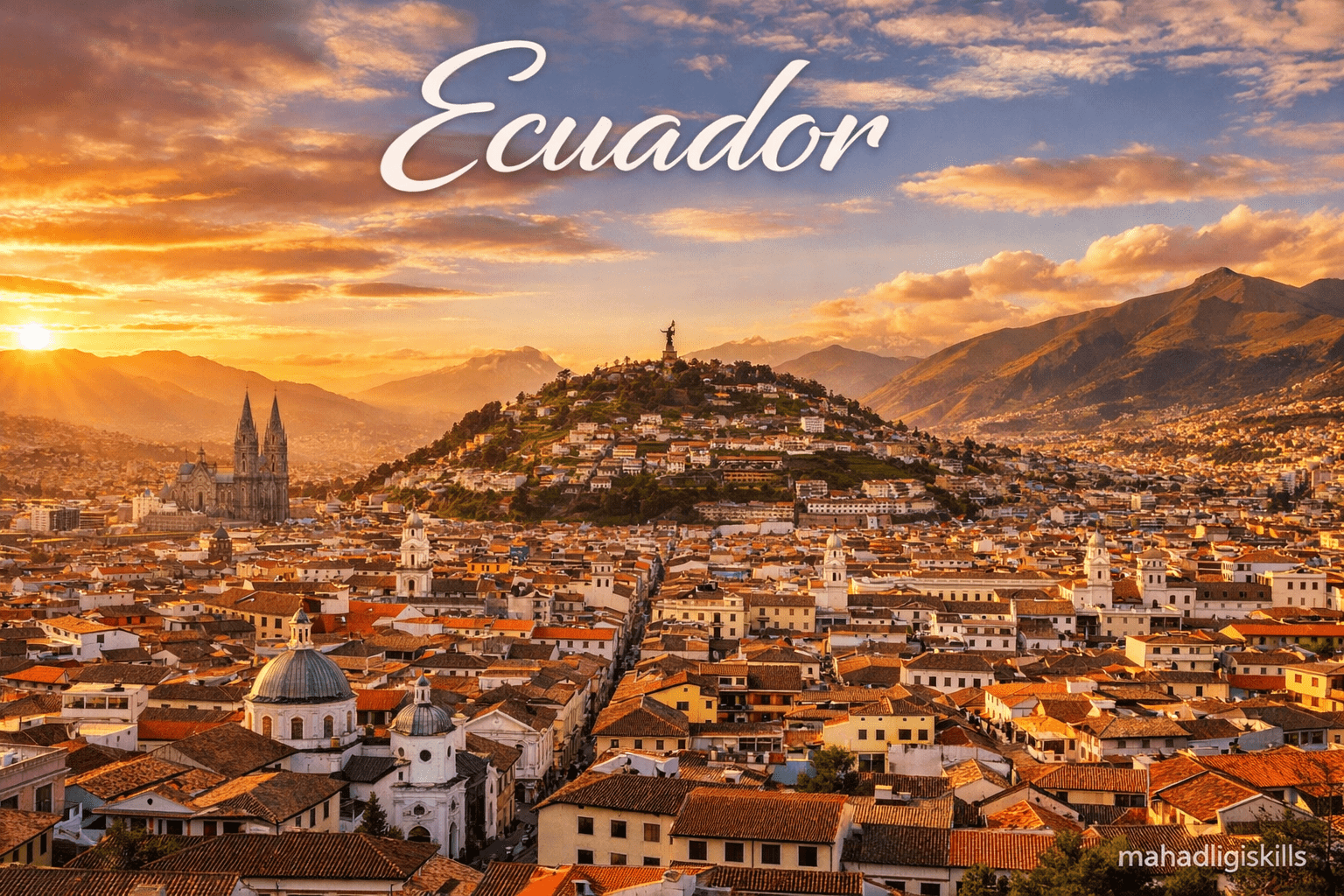
Ecuador is a fascinating destination located along the northwestern coast of South America. Named after the Equator, this country sits directly on the imaginary line dividing the northern and southern hemispheres.
Travelers are often amazed by the remarkable diversity found within this relatively small territory. From towering Andean volcanoes to tropical rainforests and Pacific beaches, the landscapes offer extraordinary variety. The famous Galápagos Islands, located off the western coast, further add to the region’s global significance for biodiversity and wildlife conservation.
Visitors exploring this destination can discover colonial cities, vibrant indigenous cultures, lush jungles, and breathtaking natural scenery.
Historical Background
The history of this South American nation reflects a rich combination of indigenous civilizations, Spanish colonial rule, and the development of a modern republic.
Early Indigenous Cultures
Long before European explorers arrived, the region was home to numerous indigenous communities. These societies built complex agricultural systems and developed strong cultural traditions.
Prominent groups included:
- Caranqui
- Cañari
- Quitu
- Shuar
Many of these communities established settlements along coastal areas, fertile valleys, and highland regions.
Inca Empire Expansion
During the 15th century, the powerful Inca Empire expanded northward from present-day Peru into the Andean region of this territory.
The Incas introduced advanced administrative systems and impressive infrastructure such as:
- Stone roads connecting mountain cities
- Agricultural terraces
- Military and administrative centers
The city of Quito became one of the important northern capitals of the Inca Empire.
Spanish Colonial Era
Spanish explorers arrived in the 16th century, eventually incorporating the territory into the Spanish colonial empire.
Colonial rule brought significant changes to society, including:
- The Spanish language
- Roman Catholic religion
- European architectural styles
Historic districts in cities such as Quito and Cuenca still preserve colonial churches, plazas, and buildings from this period.
Independence Movement
By the early 19th century, independence movements were spreading across Latin America.
In 1822, revolutionary forces led by Simón Bolívar and Antonio José de Sucre defeated Spanish troops during the Battle of Pichincha, which took place near Quito.
Following this victory, the region joined Gran Colombia, a political union that also included Colombia and Venezuela.
By 1830, the territory became an independent republic.
External Source
https://www.britannica.com/place/Ecuador
Geography and Location
This South American nation lies between the Pacific Ocean and the Andes Mountains, creating a unique combination of coastal and mountainous environments.
Geographic Coordinates
Approximate coordinates:
1° South latitude and 78° West longitude
Neighboring Countries
Borders include:
- Colombia to the north
- Peru to the east and south
- Pacific Ocean to the west
Major Geographic Regions
The landscape is commonly divided into four major geographic zones, each with its own climate, ecosystems, and cultural characteristics.
The Andes Highlands
The Andes Mountains run through the center of the country, forming a dramatic chain of volcanoes and high valleys.
Notable peaks include:
- Chimborazo, one of the tallest mountains in the region
- Cotopaxi, one of the world’s highest active volcanoes
These highlands contain historic cities and fertile farmland.
The Amazon Basin
Eastern regions form part of the Amazon rainforest, one of the most biodiverse ecosystems on Earth.
Dense forests and large rivers dominate this region, providing habitat for extraordinary wildlife such as:
- Jaguars
- Monkeys
- Exotic birds
- Thousands of plant species
Indigenous communities continue to maintain traditional ways of life in many parts of the rainforest.
Pacific Coastal Region
The western coastline stretches along the Pacific Ocean and includes tropical beaches, fishing communities, and commercial ports.
The city of Guayaquil is the largest urban and economic center in this region.
Mangrove forests and marine ecosystems support fishing industries and wildlife habitats.
Galápagos Islands
Located about 1,000 kilometers west of the mainland, the Galápagos Islands are among the most famous wildlife destinations on Earth.
These volcanic islands became globally known through the scientific observations of Charles Darwin, which contributed to the theory of evolution.
Today, the archipelago is protected as a UNESCO World Heritage Site.
External Source
https://whc.unesco.org/en/statesparties/ec
Culture and Traditions
Culture reflects a blend of indigenous heritage, Spanish colonial influence, and African traditions.
More than a dozen indigenous groups contribute to the diverse cultural identity of the country.
Languages
Spanish is the primary language used in government, education, and daily life.
However, several indigenous languages are also widely spoken, including:
- Quechua
- Shuar
These languages remain important cultural symbols in rural communities.
Religion
Most citizens identify as Roman Catholic, reflecting the influence of Spanish colonial history.
However, Protestant churches and indigenous spiritual traditions also exist throughout the country.
Music and Dance
Traditional music often includes instruments such as:
- Pan flutes
- Drums
- String instruments
Folk dances are commonly performed during cultural festivals and community celebrations.
Local Cuisine
Food traditions combine indigenous ingredients with Spanish culinary techniques.
Common ingredients include:
- Corn
- Rice
- Potatoes
- Seafood
- Tropical fruits
Popular dishes include:
- Ceviche (marinated seafood)
- Locro de papa (potato soup with cheese and avocado)
- Hornado (slow-roasted pork)
Regional cuisine varies depending on whether dishes originate from the coast, highlands, or rainforest areas.
Festivals and Celebrations
Colorful festivals take place throughout the year and highlight local traditions and history.
Inti Raymi
A celebration of the ancient Inca sun festival, still observed in Andean communities.
Carnival
Carnival festivities include music, parades, dancing, and playful water celebrations before the Christian season of Lent.
Independence Celebrations
National holidays include parades, cultural performances, and fireworks in cities across the country.
Major Cities and Urban Centers
The country features several vibrant cities that serve as political, economic, and cultural hubs. Each city reflects a unique mix of colonial heritage, modern development, and local traditions.
Quito – The Capital City
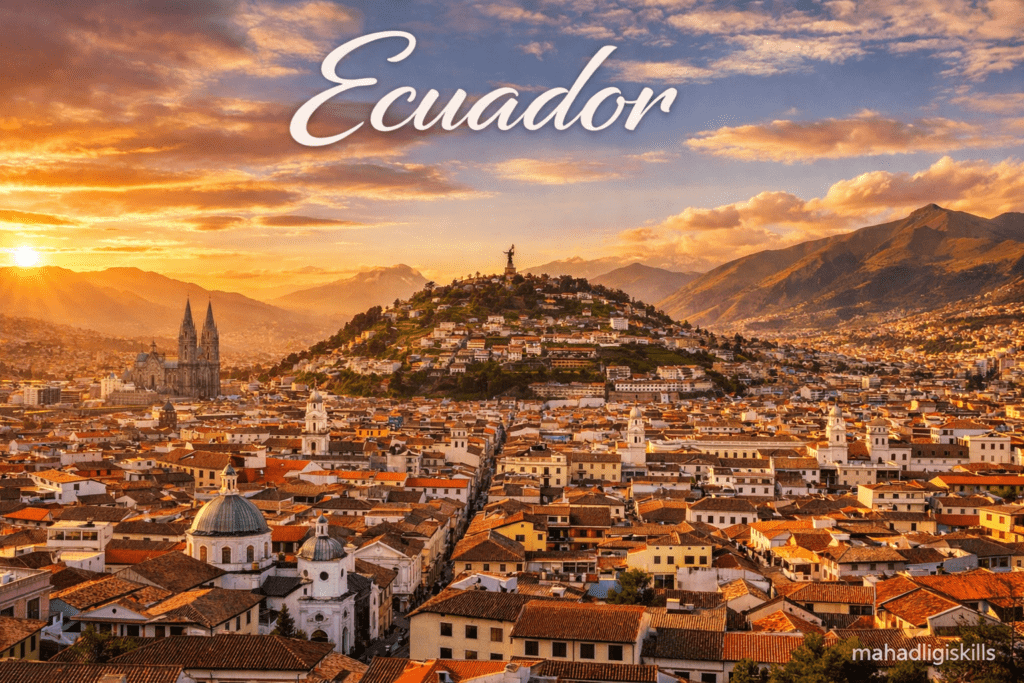
Quito, the capital, is located high in the Andes Mountains at an elevation of about 2,850 meters above sea level. It is one of the highest capital cities in the world.
The historic center of Quito is among the best-preserved colonial districts in Latin America and has been designated a UNESCO World Heritage Site.
Key highlights of Quito include:
- Plaza de la Independencia
- La Compañía de Jesús Church
- Basilica del Voto Nacional
- TelefériQo cable car with mountain views
The city blends colonial architecture, cultural institutions, and modern infrastructure.
Guayaquil – Economic Powerhouse
Guayaquil is the largest city and primary economic center. Located on the Pacific coast, it plays a crucial role in international trade and shipping.
Important attractions include:
- Malecón 2000 waterfront promenade
- Las Peñas historic neighborhood
- Santa Ana Hill viewpoint
The city also serves as the main gateway for travelers heading to the Galápagos Islands.
Cuenca – Cultural and Architectural Gem
Cuenca is famous for its elegant colonial buildings, cobblestone streets, and artistic heritage.
The city is another UNESCO World Heritage Site and is widely known for its:
- Spanish colonial architecture
- Historic cathedrals
- Traditional crafts such as Panama hats
Cuenca is also considered one of the most beautiful and livable cities in South America.
Economy and Industries
The economy is diverse and supported by natural resources, agriculture, manufacturing, and tourism.
Currency
The official currency used today is the United States Dollar (USD), which replaced the previous national currency in the year 2000.
Dollarization helped stabilize inflation and improve financial stability.
Major Economic Sectors
Agriculture
Agriculture remains a vital sector. The country is one of the world’s largest exporters of bananas, along with other agricultural products such as:
- Cocoa
- Coffee
- Flowers
- Shrimp
These exports contribute significantly to international trade.
Oil and Energy
Petroleum production plays an important role in national income.
Oil reserves located in the Amazon Basin generate export revenue and support government spending.
Manufacturing
Manufacturing industries produce goods such as:
- Textiles
- Processed foods
- Chemicals
- Consumer products
These industries mainly operate in larger urban centers.
Tourism
Tourism has become a major contributor to the economy.
Travelers are drawn to:
- Andes mountain landscapes
- Amazon rainforest adventures
- Pacific coast beaches
- The world-famous Galápagos Islands
International visitors continue to increase each year due to the country’s biodiversity and cultural attractions.
External Source
https://www.worldbank.org
Trade Partners
Major trading partners include:
- United States
- China
- European Union nations
- Colombia
- Peru
Exports primarily include agricultural products, seafood, and petroleum.
Imports include machinery, vehicles, and industrial equipment.
Natural Attractions and Tourism
The country offers a wide range of natural wonders that attract travelers, researchers, and adventure seekers.
Galápagos Islands
The Galápagos archipelago is one of the most famous wildlife destinations on the planet.
Visitors can see unique animals such as:
- Giant tortoises
- Marine iguanas
- Blue-footed boobies
- Sea lions
Strict conservation rules protect the fragile ecosystem of these volcanic islands.
The area is recognized as a UNESCO World Heritage Site.
External Source
https://whc.unesco.org/en/list/1
Cotopaxi National Park
Cotopaxi National Park contains one of the highest active volcanoes in the world.
Visitors enjoy activities such as:
- Hiking
- Mountain climbing
- Wildlife observation
- Photography
The park’s dramatic scenery includes high-altitude grasslands and snow-covered peaks.
Amazon Rainforest Adventures
The Amazon region offers opportunities for eco-tourism and wildlife exploration.
Guided tours often include:
- River boat journeys
- Jungle hiking
- Birdwatching
- Indigenous cultural experiences
This area contains some of the most diverse ecosystems on Earth.
Pacific Coast Beaches
The coastline provides beautiful beaches and resort destinations.
Popular coastal towns include:
- Montañita
- Salinas
- Manta
These locations attract surfers, beach lovers, and seafood enthusiasts.
National Parks and Biodiversity
Despite its relatively small size, this South American nation is considered one of the most biodiverse countries in the world.
Scientists have identified:
- Thousands of plant species
- Hundreds of bird species
- Numerous reptiles and mammals
Protected areas and national parks help conserve these ecosystems.
Transportation and Travel Infrastructure
Transportation networks allow visitors to travel between major cities and regions.
Airports
Major international airports include:
- Mariscal Sucre International Airport (Quito)
- José Joaquín de Olmedo International Airport (Guayaquil)
These airports connect the country to North America, Europe, and other South American destinations.
Road Travel
Modern highways connect most major cities and tourist destinations.
Bus transportation is widely used and provides an affordable way to travel across the country.
Domestic Flights
Because of mountainous terrain, domestic flights are often the fastest way to travel between regions.
Flights frequently connect cities such as Quito, Guayaquil, Cuenca, and island destinations.
Best Time to Visit
Travel conditions vary depending on the region.
Andes Highlands
The highland region experiences mild temperatures year-round.
Best months for travel: June to September.
Amazon Region
The rainforest climate is warm and humid throughout the year.
Wildlife viewing is possible year-round, though rainfall can be heavy during certain months.
Pacific Coast
The coastal region experiences warm temperatures with sunny beach weather between December and May.
Galápagos Islands
The islands can be visited at any time of the year.
Wildlife viewing varies by season, making each visit unique.
DoFollow Links
World Bank – Country Overview
https://www.worldbank.org/en/country/ecuador
UNESCO – World Heritage Sites
https://whc.unesco.org/en/statesparties/ec
Languages and Communication
Language plays an important role in cultural identity and daily life across this South American nation.
Official Language
Spanish is the primary official language used in:
- Government administration
- Education systems
- Media and communication
Most citizens communicate in Spanish, especially in urban areas and official institutions.
Indigenous Languages
Several indigenous languages are also recognized and widely spoken in rural communities.
The most common indigenous languages include:
- Quechua (Kichwa)
- Shuar
These languages are especially prominent in the Andean highlands and Amazon regions.
Many cultural traditions, stories, and local customs are preserved through these native languages.
Population and Demographics
The country has a population of approximately 18 million people.
The population is diverse and reflects a mixture of ethnic and cultural backgrounds.
Major population groups include:
- Mestizo (mixed Indigenous and Spanish ancestry)
- Indigenous peoples
- Afro-descendant communities
- European descendants
Urban centers such as Quito, Guayaquil, and Cuenca are home to large populations, while rural communities are common in mountainous and rainforest regions.
International Organizations and Global Role
This South American republic plays an active role in international diplomacy and global cooperation.
United Nations Membership
The country became a member of the United Nations (UN) in 1945.
Through its participation, the government works with other nations to address global issues such as:
- Sustainable development
- Climate change
- International peacekeeping
- Economic cooperation
External Source
https://www.un.org/en/about-us/member-states/ecuador
Other International Organizations
Membership in several global institutions supports international collaboration.
These include:
- Organization of American States (OAS)
- World Trade Organization (WTO)
- Community of Latin American and Caribbean States (CELAC)
- Union of South American Nations (UNASUR)
Participation in these organizations helps strengthen diplomatic and economic relationships.
Unique and Interesting Facts
Many fascinating facts make this country stand out among global travel destinations.
1. Named After the Equator
The name comes from the Equator, the imaginary line that divides Earth into northern and southern hemispheres.
Visitors can actually stand on this line at the Mitad del Mundo monument near Quito.
2. Home to One of the Most Biodiverse Regions
Despite its relatively small size, this nation ranks among the most biodiverse countries in the world.
It contains:
- Tropical rainforests
- Cloud forests
- Mountain ecosystems
- Marine environments
Thousands of plant and animal species live in these habitats.
3. Galápagos Islands Inspired Evolutionary Theory
The Galápagos Islands played a critical role in Charles Darwin’s theory of evolution.
Unique species such as giant tortoises and marine iguanas helped scientists understand natural selection.
4. One of the Highest Capitals in the World
Quito sits at approximately 2,850 meters (9,350 feet) above sea level, making it one of the highest capital cities on Earth.
5. Chimborazo Is Closest Point to the Sun
Due to the Earth’s equatorial bulge, the summit of Mount Chimborazo is technically the closest point on Earth to the Sun.
Travel Tips for Visitors
Traveling across this diverse landscape can be an unforgettable experience when visitors plan properly.
Transportation Tips
- Domestic flights are useful for traveling between regions.
- Long-distance buses connect most cities and towns.
- Taxis and rideshare services operate in urban areas.
Safety and Preparation
Travelers should:
- Carry identification documents
- Follow local travel advice
- Stay aware of altitude conditions in mountain regions
High altitudes can affect some visitors, especially when traveling to Andean cities.
Responsible Tourism
Visitors are encouraged to support responsible tourism by:
- Respecting wildlife habitats
- Following national park regulations
- Supporting local communities and businesses
Eco-tourism is an important part of the tourism industry.
Best Travel Experiences
Visitors can enjoy a wide range of experiences across different regions.
Cultural Experiences
- Exploring historic Quito
- Visiting colonial churches and museums
- Attending traditional festivals
Nature and Adventure
- Hiking in the Andes
- Exploring Amazon rainforest lodges
- Wildlife watching in the Galápagos Islands
Coastal Relaxation
- Surfing at Montañita
- Beach resorts near Salinas
- Fresh seafood along the Pacific coast
Final Summary
Ecuador stands out as one of the most diverse and fascinating destinations in South America. From towering Andean volcanoes and lush Amazon rainforests to the extraordinary wildlife of the Galápagos Islands, the country offers travelers a remarkable variety of landscapes and experiences.
Its rich cultural heritage reflects a blend of indigenous traditions and Spanish colonial history. Historic cities such as Quito and Cuenca showcase beautiful architecture and vibrant cultural life, while coastal towns and rainforest communities highlight the country’s natural beauty and ecological importance.
With a growing tourism industry, diverse ecosystems, and welcoming culture, this destination continues to attract visitors, researchers, and adventurers from around the world.
Key Facts Table
| Category | Information |
|---|---|
| Capital City | Quito |
| Largest City | Guayaquil |
| Population | ~18 million |
| Official Language | Spanish |
| Major Indigenous Languages | Quechua, Shuar |
| Currency | United States Dollar (USD) |
| Continent | South America |
| Major Geographic Regions | Andes, Amazon, Coast, Galápagos |
| UN Membership | 1945 |
| Famous Natural Landmark | Galápagos Islands |
DoFollow Links
United Nations
https://www.un.org/en/about-us/member-states/ecuador
World Bank Country Overview
https://www.worldbank.org/en/country/ecuador
UNESCO World Heritage Sites
https://whc.unesco.org/en/statesparties/ec
List of All 195 Countries
- Afghanistan
- Albania
- Algeria
- Andorra
- Angola
- Antigua and Barbuda
- Argentina
- Armenia
- Australia
- Austria
- Azerbaijan
- Bahamas
- Bahrain
- Bangladesh
- Barbados
- Belarus
- Belgium
- Belize
- Benin
- Bhutan
- Bolivia
- Bosnia and Herzegovina
- Botswana
- Brazil
- Brunei
- Bulgaria
- Burkina Faso
- Burundi
- Cabo Verde
- Cambodia
- Cameroon
- Canada
- Central African Republic
- Chad
- Chile
- China
- Colombia
- Comoros
- Congo (Congo-Brazzaville)
- Costa Rica

