



Introduction
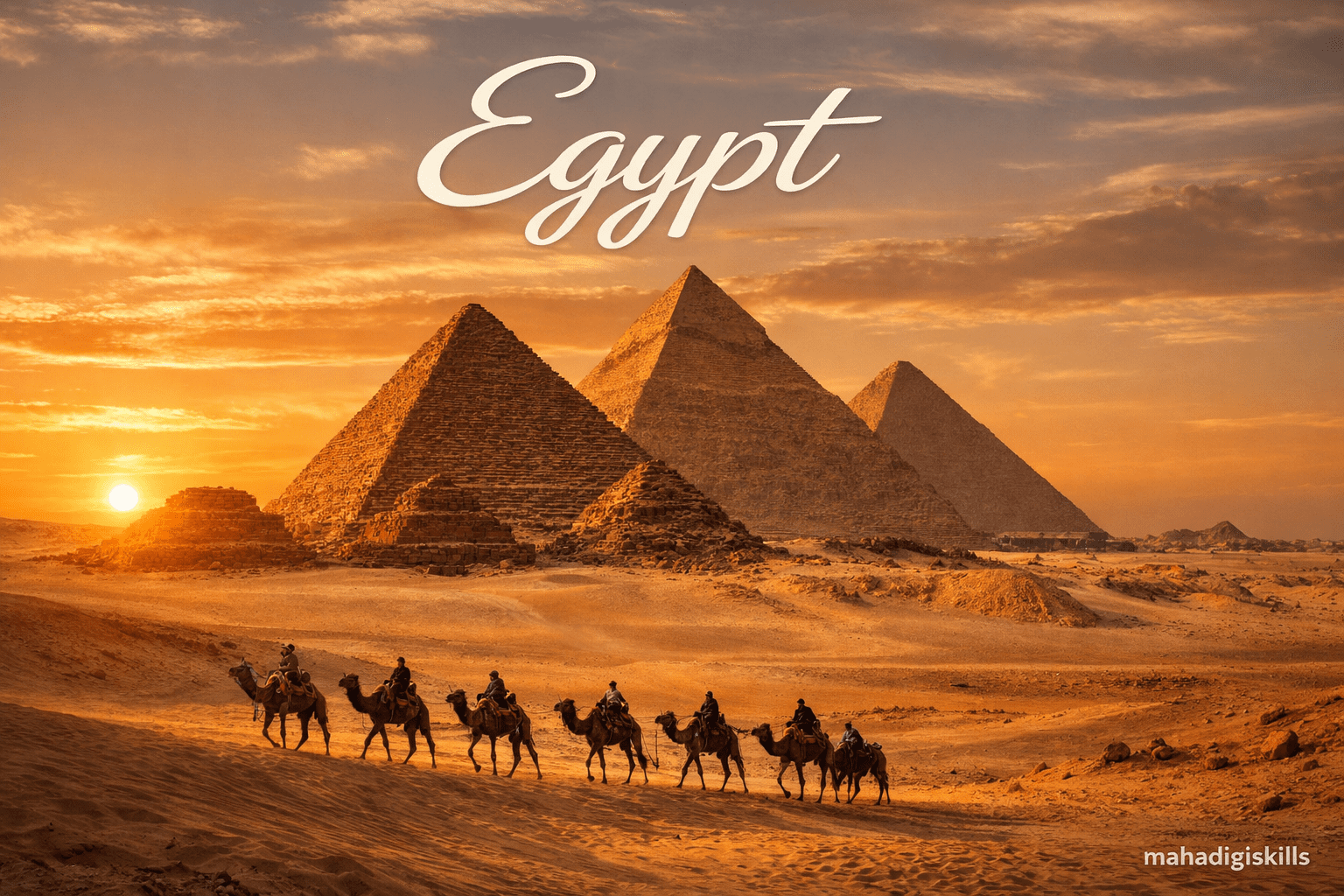
Egypt is one of the most historically significant countries in the world. Located in North Africa, this nation has fascinated travelers, historians, and archaeologists for centuries.
Famous for its ancient pyramids, pharaohs, temples, and the Nile River, Egypt represents one of the earliest and most influential civilizations in human history.
Today, Egypt combines ancient heritage with modern culture. Visitors can explore archaeological wonders, vibrant cities, desert landscapes, and beautiful coastlines along the Red Sea and Mediterranean Sea.
From the bustling capital city of Cairo to the legendary temples of Luxor, Egypt remains one of the most iconic travel destinations on Earth.
History of Egypt
The history of Egypt spans more than 5,000 years, making it one of the oldest continuously recorded civilizations in the world.
Ancient Egyptian Civilization
Ancient Egyptian civilization began around 3100 BCE when the first pharaoh united Upper and Lower Egypt.
This early civilization developed advanced achievements in:
- Architecture
- Mathematics
- Astronomy
- Medicine
- Writing systems
Hieroglyphics, the famous writing system used by ancient Egyptians, recorded religious beliefs, historical events, and royal achievements.
The Age of the Pharaohs
During the era of the pharaohs, Egypt built some of the world’s most remarkable monuments.
Important structures include:
- Great Pyramid of Giza
- Temple of Karnak
- Temple of Abu Simbel
- Valley of the Kings
The Great Pyramid remains the only surviving structure of the Seven Wonders of the Ancient World.
These monumental buildings demonstrate the advanced engineering skills of ancient Egyptian civilization.
Greek and Roman Period
In 332 BCE, Alexander the Great conquered Egypt and founded the city of Alexandria, which became a major center of culture and learning.
After Alexander’s death, the Ptolemaic dynasty ruled Egypt, with Cleopatra VII becoming one of the most famous rulers in history.
Later, the Roman Empire took control, integrating Egypt into its expanding territory.
Islamic and Ottoman Influence
Islam arrived in Egypt during the 7th century, transforming society and culture.
Over time, the region became part of several Islamic empires including:
- The Umayyad Caliphate
- The Abbasid Caliphate
- The Ottoman Empire
Islamic architecture, mosques, and cultural traditions remain significant elements of Egyptian society.
Modern Independence
Modern Egypt began emerging in the 20th century.
In 1952, the Egyptian Revolution led to the end of the monarchy and the establishment of a republic.
Since then, Egypt has become one of the most politically and culturally influential countries in the Middle East and North Africa.
External Source
https://www.britannica.com/place/Egypt
Geography and Location
Egypt occupies a strategic geographic location between Africa and the Middle East.
The country connects two continents through the Sinai Peninsula, which lies in Asia.
Geographic Coordinates
Approximate coordinates:
26° North latitude
30° East longitude
Neighboring Countries
Egypt shares borders with:
- Libya to the west
- Sudan to the south
- Israel and Gaza Strip to the northeast
The country also borders two important bodies of water:
- Mediterranean Sea to the north
- Red Sea to the east
Major Geographic Regions
Egypt’s landscape is dominated by desert, but several important regions define its geography.
The Nile River Valley
The Nile River is the lifeline of Egypt.
Almost all major cities and agricultural areas are located along the Nile River and its fertile valley.
For thousands of years, the Nile has supported farming, transportation, and settlement.
The Nile Delta
The Nile Delta forms where the river flows into the Mediterranean Sea.
This region is one of the most fertile agricultural areas in the country, producing crops such as:
- Cotton
- Rice
- Wheat
- Vegetables
Several major cities are located in the delta region.
Western Desert
The Western Desert forms part of the Sahara Desert and covers a large portion of Egypt’s territory.
Despite its harsh environment, this region contains several beautiful oases including:
- Siwa Oasis
- Bahariya Oasis
- Farafra Oasis
These desert settlements have unique cultural traditions.
Sinai Peninsula
The Sinai Peninsula lies between the Mediterranean Sea and the Red Sea.
This region contains rugged mountains and important religious sites such as Mount Sinai, where tradition says Moses received the Ten Commandments.
Culture and Traditions
Egyptian culture reflects thousands of years of history combined with modern influences.
Language
The official language is Arabic.
However, many Egyptians also speak:
- English
- French
These languages are commonly used in tourism, business, and education.
Religion
Religion plays an important role in Egyptian society.
The majority of the population practices Islam, while a significant minority follows Christianity, particularly within the Coptic Orthodox Church.
Religious traditions influence festivals, social customs, and daily life.
Music and Arts
Egypt has long been a center of artistic expression in the Arab world.
Traditional music often features instruments such as:
- Oud (string instrument)
- Tabla (drum)
- Ney (flute)
Modern Egyptian cinema and music industries are influential throughout the Middle East.
Egyptian Cuisine
Egyptian cuisine combines Middle Eastern, Mediterranean, and African influences.
Popular dishes include:
- Koshari (rice, pasta, lentils, and tomato sauce)
- Ful medames (slow-cooked fava beans)
- Ta’ameya (Egyptian falafel)
- Mahshi (stuffed vegetables)
Street food culture is very popular in cities like Cairo and Alexandria.
Festivals and Celebrations
Several cultural and religious festivals take place throughout the year.
Ramadan and Eid
During Ramadan, Muslims fast during daylight hours and gather for evening meals.
Eid celebrations mark the end of Ramadan with family gatherings and festivities.
Sham El-Nessim
This ancient spring festival dates back to pharaonic times and celebrates the arrival of spring.
Families often enjoy outdoor picnics and traditional foods.
DoFollow Links
United Nations
https://www.un.org/en/about-us/member-states/egypt
UNESCO Heritage Sites
https://whc.unesco.org/en/statesparties/eg
Economy and Industries
Egypt has one of the largest economies in North Africa and the Middle East. Its economy is supported by several important sectors including tourism, agriculture, manufacturing, and energy production.
The country’s strategic location between Africa, Asia, and Europe has made it an important hub for international trade and transportation.
Currency
The official currency is the Egyptian Pound (EGP).
The financial system includes a growing banking sector and modern financial institutions that support business and international trade.
Major Economic Sectors
Tourism
Tourism is one of the most important industries in Egypt. Millions of visitors travel each year to see historic monuments and experience the country’s unique culture.
Major tourism attractions include:
- Pyramids of Giza
- Luxor temples
- Nile River cruises
- Red Sea resorts
Tourism contributes significantly to employment and economic growth.
Agriculture
Agriculture has been essential to Egyptian society for thousands of years. Most farming occurs along the fertile Nile Valley and Nile Delta.
Important agricultural products include:
- Cotton
- Wheat
- Rice
- Sugarcane
- Fruits and vegetables
The Nile River continues to provide water for irrigation and agriculture.
Oil and Natural Gas
Energy production is another important economic sector.
Egypt produces:
- Oil
- Natural gas
- Petrochemical products
Energy exports contribute to national revenue and support regional energy markets.
Manufacturing
Manufacturing industries produce a wide variety of goods including:
- Textiles
- Chemicals
- Construction materials
- Processed foods
Many factories are located near large cities and industrial zones.
External Source
https://www.worldbank.org/en/country/egypt
Major Cities in Egypt
Several cities play important roles in politics, culture, tourism, and commerce.
Cairo – The Capital City
Cairo is the largest city in Egypt and one of the largest metropolitan areas in Africa and the Middle East.
Located along the Nile River, Cairo serves as the country’s political, economic, and cultural center.
Important attractions include:
- Egyptian Museum
- Islamic Cairo
- Khan el-Khalili Bazaar
- Cairo Citadel
The nearby Giza Plateau is home to the famous pyramids and the Great Sphinx.
Alexandria
Alexandria is a historic port city located on the Mediterranean Sea.
Founded by Alexander the Great, the city became one of the most important cultural centers of the ancient world.
Highlights of Alexandria include:
- Bibliotheca Alexandrina (modern library)
- Qaitbay Citadel
- Mediterranean coastline
- Historic museums
Giza
Giza is internationally known for its extraordinary archaeological sites.
The Giza Plateau contains:
- Great Pyramid of Khufu
- Pyramid of Khafre
- Pyramid of Menkaure
- The Great Sphinx
These monuments attract millions of tourists every year.
Luxor
Luxor is often described as the world’s greatest open-air museum.
Located in southern Egypt, Luxor contains some of the most impressive temples and tombs from ancient civilization.
Major attractions include:
- Karnak Temple Complex
- Luxor Temple
- Valley of the Kings
- Valley of the Queens
These sites provide incredible insights into ancient Egyptian history.
Tourism and Major Attractions
Egypt is one of the most famous tourism destinations in the world due to its remarkable archaeological heritage and natural beauty.
The Pyramids of Giza
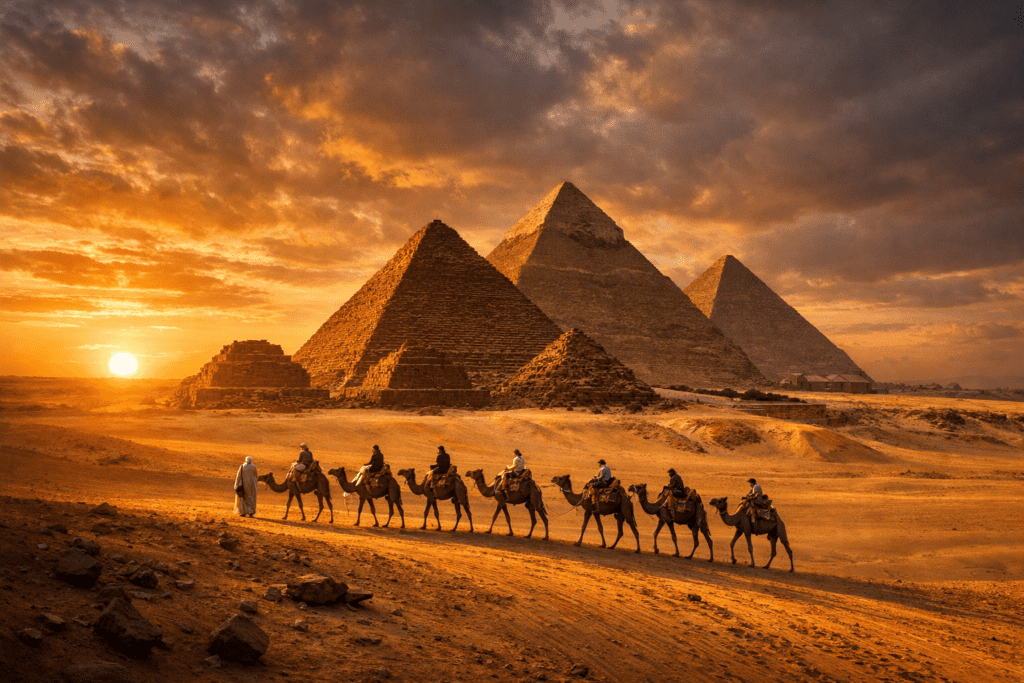
The Great Pyramids of Giza are among the most recognizable monuments on Earth.
Built over 4,500 years ago, these pyramids served as royal tombs for pharaohs.
The Great Pyramid of Khufu originally stood at 146 meters and remains an extraordinary example of ancient engineering.
The Sphinx
Near the pyramids stands the Great Sphinx, a giant limestone statue with the body of a lion and the head of a pharaoh.
The statue symbolizes strength and wisdom and remains one of the most mysterious monuments in the world.
Karnak Temple
The Karnak Temple Complex in Luxor is one of the largest religious structures ever built.
Construction began more than 3,000 years ago, and many pharaohs contributed to its expansion.
Visitors can explore enormous columns, statues, and ceremonial halls.
Valley of the Kings
The Valley of the Kings served as a royal burial ground for many pharaohs of the New Kingdom.
Famous tombs discovered in this valley include the tomb of King Tutankhamun, which contained remarkable treasures.
Nile River Cruises
One of the most popular travel experiences in Egypt is a Nile River cruise.
Cruises typically travel between Luxor and Aswan, allowing visitors to explore historic temples along the river.
Stops often include:
- Edfu Temple
- Kom Ombo Temple
- Philae Temple
These journeys combine scenic landscapes with historical exploration.
Red Sea Tourism
The Red Sea coast has become a major destination for beach tourism and marine activities.
Popular resort towns include:
- Hurghada
- Sharm El-Sheikh
- Marsa Alam
The Red Sea is famous for:
- Coral reefs
- Scuba diving
- Snorkeling
- Luxury beach resorts
These destinations attract travelers from Europe and around the world.
National Parks and Natural Landscapes
Egypt also offers impressive natural landscapes beyond its historical monuments.
Examples include:
- White Desert National Park with unique chalk rock formations
- Ras Mohammed National Park known for coral reefs and marine life
- Siwa Oasis surrounded by desert landscapes
These areas offer opportunities for eco-tourism and desert adventures.
Transportation and Travel Infrastructure
Travel within Egypt is relatively easy thanks to a wide transportation network.
Airports
Major international airports include:
- Cairo International Airport
- Hurghada International Airport
- Sharm El-Sheikh International Airport
These airports connect Egypt with Europe, Asia, and Africa.
Rail Travel
Egypt has one of the oldest railway systems in Africa and the Middle East.
Trains connect major cities including:
- Cairo
- Alexandria
- Luxor
- Aswan
Rail travel is a popular option for both locals and tourists.
Road Transportation
Modern highways and bus services connect cities and tourist destinations across the country.
Taxis, ride-sharing services, and private tours are commonly used in major cities.
Best Time to Visit Egypt
Egypt generally has a desert climate, meaning hot summers and mild winters.
Best Months for Travel
The most comfortable months for visiting are:
October to April
During this period, temperatures are cooler and ideal for sightseeing.
Summer Travel
Summer temperatures can exceed 40°C, especially in desert regions and southern cities.
However, coastal destinations along the Red Sea remain popular during summer.
Internal Link Suggestion
Related blog:
Argentina Travel Guide/argentina-travel-guide
DoFollow Links
World Bank
https://www.worldbank.org/en/country/egypt
UNESCO Heritage Sites
https://whc.unesco.org/en/statesparties/eg
Languages and Communication
Language plays an important role in daily life, culture, and communication across Egypt.
Official Language
The official language of Egypt is Arabic, which is used in government, education, media, and daily conversation.
The specific form spoken by most people is Egyptian Arabic, a dialect widely understood across the Arab world because of Egyptian media and films.
Other Languages
Due to international tourism and business connections, many Egyptians also speak:
- English
- French
- Italian (in some tourist areas)
These languages are commonly used in hotels, airports, and travel services.
Population and Demographics
Egypt is one of the most populous countries in Africa and the Middle East.
The population is estimated to be over 110 million people, making it a major regional center for culture, commerce, and politics.
Most people live near the Nile River Valley and Nile Delta, where fertile land supports agriculture and urban development.
Major population groups include:
- Egyptians of Arab heritage
- Nubian communities in southern Egypt
- Bedouin groups in desert regions
Urbanization continues to grow as more people move to large cities for employment and education.
Egypt in International Organizations
Egypt plays an important role in regional and international diplomacy.
United Nations Membership
Egypt became a member of the United Nations in 1945, shortly after the organization was established.
Through its participation, Egypt contributes to global discussions on:
- Peace and security
- Climate change
- Sustainable development
- Economic cooperation
External Source
https://www.un.org/en/about-us/member-states/egypt
Other Global Organizations
Egypt is also a member of several international institutions, including:
- African Union (AU)
- Arab League
- World Trade Organization (WTO)
- International Monetary Fund (IMF)
These memberships help strengthen diplomatic and economic partnerships worldwide.
Unique and Interesting Facts
Egypt has many fascinating features that make it one of the most interesting countries in the world.
1. Home of One of the Oldest Civilizations
Ancient Egyptian civilization developed more than 5,000 years ago, making it one of the earliest advanced societies in human history.
2. The Great Pyramid Is the Only Surviving Ancient Wonder
The Great Pyramid of Giza is the only remaining structure among the Seven Wonders of the Ancient World.
3. The Nile River Is the Longest River in the World
The Nile River flows through Egypt and several other African countries.
For thousands of years, it has supported agriculture, transportation, and settlement.
4. Egyptian Hieroglyphs Were One of the Earliest Writing Systems
Ancient Egyptians developed a complex writing system known as hieroglyphics, used on temple walls, monuments, and papyrus scrolls.
5. Cairo Is One of the Largest Cities in Africa
Cairo has a population of more than 20 million people in its metropolitan area, making it one of the largest urban centers on the African continent.
Travel Tips for Visitors
Traveling in Egypt can be an incredible experience when visitors prepare properly.
Cultural Respect
Visitors should respect local customs and traditions.
For example:
- Dress modestly when visiting religious sites
- Ask permission before photographing people
- Follow guidelines at archaeological locations
Health and Safety
Travelers should:
- Stay hydrated in hot climates
- Use sunscreen when exploring desert regions
- Follow official travel guidance
Currency and Payments
Cash is commonly used in markets and small shops.
However, credit cards are accepted in most hotels, restaurants, and major tourist attractions.
Best Travel Experiences
Egypt offers a wide range of unforgettable travel experiences.
Historical Exploration
Visitors can explore some of the world’s most famous historical sites, including:
- Pyramids of Giza
- Luxor temples
- Valley of the Kings
- Abu Simbel temples
Nile River Journeys
A cruise along the Nile allows travelers to experience ancient temples, scenic landscapes, and traditional villages.
Red Sea Adventures
The Red Sea offers some of the best diving and snorkeling locations in the world, with colorful coral reefs and marine life.
Desert Exploration
Travelers can explore the Sahara Desert through guided tours that include:
- Camel rides
- Desert camping
- Oasis visits
Final Summary
Egypt remains one of the most extraordinary destinations in the world. Its ancient monuments, vibrant culture, and remarkable landscapes attract millions of visitors every year.
From the pyramids of Giza to the temples of Luxor and the coral reefs of the Red Sea, Egypt offers an unmatched combination of history, adventure, and natural beauty.
The country’s strategic location, rich heritage, and welcoming culture make it an essential destination for travelers interested in archaeology, culture, and world history.
With thousands of years of civilization, Egypt continues to inspire curiosity and fascination across the globe.
Key Facts Table
| Category | Information |
|---|---|
| Capital City | Cairo |
| Largest City | Cairo |
| Population | ~110 million |
| Official Language | Arabic |
| Currency | Egyptian Pound (EGP) |
| Continent | Africa |
| Major River | Nile River |
| Famous Landmarks | Pyramids of Giza, Sphinx, Luxor temples |
| UN Membership | 1945 |
| Major Tourism Areas | Cairo, Luxor, Red Sea coast |
DoFollow Links
United Nations
https://www.un.org/en/about-us/member-states/egypt
World Bank
https://www.worldbank.org/en/country/egypt
UNESCO Heritage Sites
https://whc.unesco.org/en/statesparties/eg
List of All 195 Countries
- Afghanistan
- Albania
- Algeria
- Andorra
- Angola
- Antigua and Barbuda
- Argentina
- Armenia
- Australia
- Austria
- Azerbaijan
- Bahamas
- Bahrain
- Bangladesh
- Barbados
- Belarus
- Belgium
- Belize
- Benin
- Bhutan
- Bolivia
- Bosnia and Herzegovina
- Botswana
- Brazil
- Brunei
- Bulgaria
- Burkina Faso
- Burundi
- Cabo Verde
- Cambodia
- Cameroon
- Canada
- Central African Republic
- Chad
- Chile
- China
- Colombia
- Comoros
- Congo (Congo-Brazzaville)
- Costa Rica

