



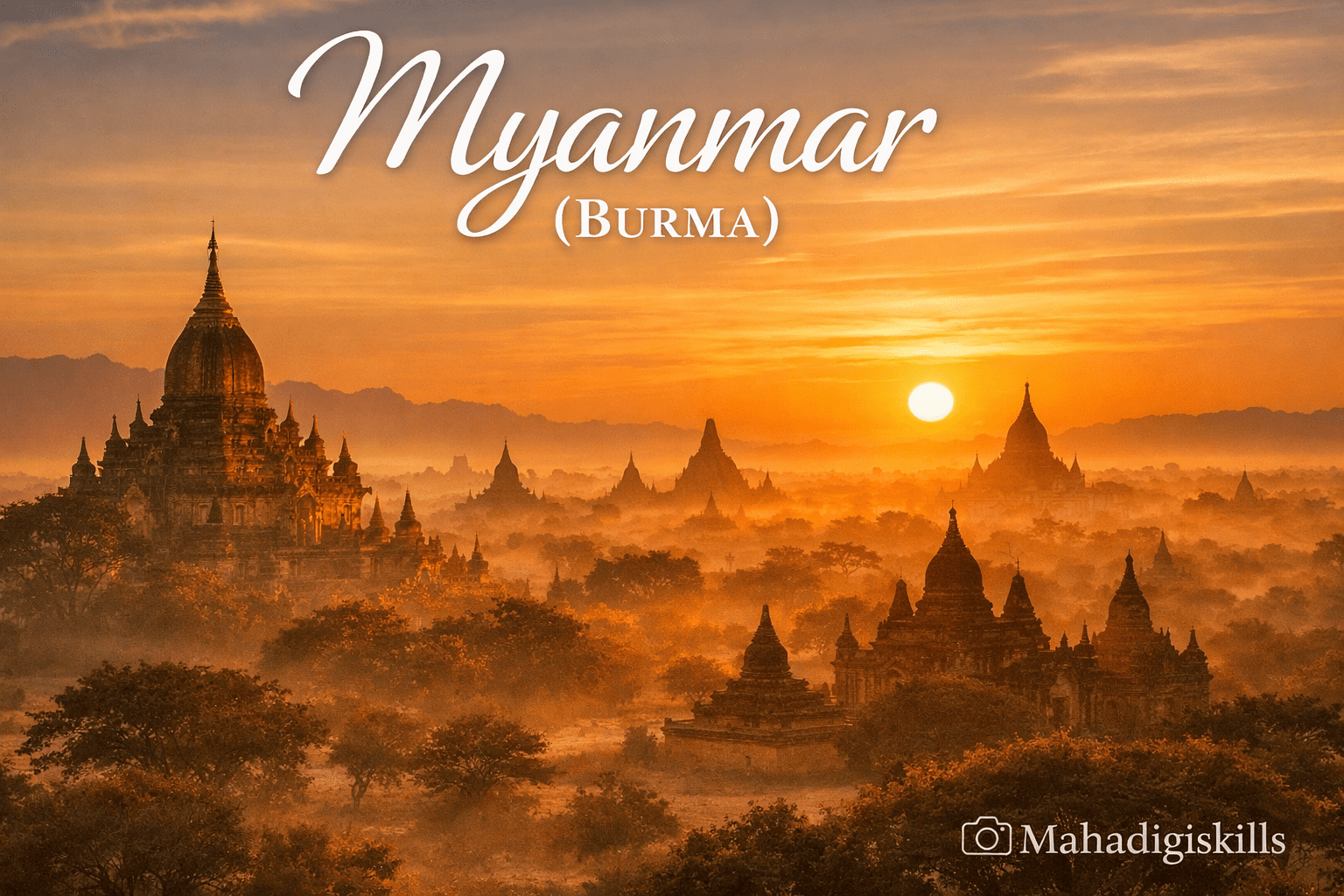
Discover Myanmar: Land of Golden Temples and Diverse Landscapes
Myanmar, a Southeast Asian nation, is a land of golden pagodas, sprawling rivers, and vibrant cultures. From the historic city of Bagan, with thousands of ancient temples, to the bustling streets of Yangon, this region presents travelers with a unique mix of history, spirituality, and natural beauty. The country’s diverse landscapes include fertile river valleys, dense jungles, and serene beaches along the Bay of Bengal and Andaman Sea.
Historical Overview of Myanmar
The country’s history stretches back over a millennium, shaped by ancient kingdoms such as Pagan, which unified much of the region and established Theravada Buddhism as a central cultural influence. Over centuries, the area experienced colonial rule under the British, Japanese occupation during World War II, and finally independence in 1948.
Key Historical Landmarks:
- Bagan Temples: Thousands of Buddhist temples and pagodas dating from the 9th–13th centuries
- Shwedagon Pagoda: Iconic golden pagoda in Yangon, a spiritual and cultural symbol
- Mandalay Palace: Historic royal residence of the last Burmese monarchy
For more historical context, see UNESCO World Heritage Sites in Myanmar.
Geography and Location
Located in Southeast Asia, Myanmar shares borders with India, Bangladesh, China, Laos, and Thailand. Its coordinates are roughly 21°N latitude and 96°E longitude, covering about 676,578 square kilometers. The nation boasts diverse landscapes:
- Irrawaddy River: Major river supporting agriculture and settlements
- Shan Hills: Mountainous regions with ethnic diversity and scenic views
- Mrauk U: Historical city with ancient temples
- Beaches & Coastlines: Ngapali and Ngwe Saung offer tropical relaxation
The climate varies from tropical monsoon in the south to cooler highlands in the north, with a rainy season from June to October.
Culture and Traditions
Myanmar’s culture blends Buddhist, ethnic, and colonial influences, creating a rich tapestry of traditions.
Language and Religion
- Official Language: Burmese
- Local Languages: Shan, Karen, Kachin, Mon, and others
- Religion: Predominantly Theravada Buddhism, with minority Christian and Muslim communities
Festivals and Music
- Thingyan Water Festival: Celebrates the Burmese New Year with water-based festivities
- Traditional music includes pattala (bamboo xylophone) and hsaing waing ensembles
- Folk dances, puppet shows, and storytelling are common during cultural festivals
Cuisine
- Mohinga: National dish, rice noodle soup with fish broth
- Laphet Thoke: Fermented tea leaf salad
- Use of local spices, herbs, and coconut milk is prominent in both northern and coastal cuisines
Economy and Trade Overview
The Southeast Asian nation has a diverse economy relying on agriculture, natural resources, and emerging industries. Agriculture remains a backbone, supporting livelihoods across rural regions.
Currency and Financial System
- Currency: Burmese Kyat (MMK)
- Major Trade Partners: China, Thailand, India, Japan, Singapore
- Key Industries:
- Agriculture: Rice, pulses, beans, and sugarcane
- Mining: Jade, gemstones, and oil
- Manufacturing: Food processing, textiles, and handicrafts
- Tourism: Growing contribution from cultural and natural attractions
Efforts to modernize infrastructure, attract foreign investment, and expand tourism are ongoing, particularly in Yangon, Mandalay, and Bagan. For economic details, see World Bank – Myanmar Overview.
Major Cities and Capitals
Yangon – Economic and Cultural Hub
Yangon, the largest city, is Myanmar’s commercial center, blending colonial architecture with modern urban life. Landmarks include Shwedagon Pagoda, colonial-era streets, and bustling markets.
Mandalay – Historical and Spiritual Center
Mandalay is famous for its royal palace, monasteries, and traditional crafts. It serves as a hub for travelers exploring northern cultural sites and river cruises along the Irrawaddy.
Naypyidaw – Administrative Capital
Established in 2005 as the administrative capital, Naypyidaw hosts government offices and modern infrastructure, although it remains less populated than Yangon or Mandalay.
Other Key Cities
- Bagan: UNESCO-listed archaeological site with thousands of temples
- Inle Lake: Scenic lake area with stilt houses, floating gardens, and traditional handicrafts
- Mawlamyine: Coastal city with cultural diversity and colonial heritage
Tourism Attractions
Myanmar offers a blend of ancient history, spiritual sites, and natural beauty, appealing to cultural explorers and nature enthusiasts alike.
Historical and Cultural Sites
- Bagan Temples: Thousands of pagodas and monasteries
- Shwedagon Pagoda: Iconic golden stupa in Yangon
- Mrauk U: Ancient city with historical temples and fortresses
Natural Wonders
- Inle Lake: Scenic lake surrounded by floating gardens and ethnic villages
- Ngapali Beach: Pristine white-sand beaches along the Bay of Bengal
- Hkakabo Razi: Highest mountain in Myanmar, ideal for trekking and adventure tourism
Cultural Experiences
- Traditional markets and festivals showcasing local crafts
- Monastery visits and meditation retreats for spiritual travelers
Best Times to Visit and Travel Tips
- Cool Season (November–February): Ideal for sightseeing and cultural tours
- Hot Season (March–May): Suitable for coastal or highland trips but can be extremely hot
- Rainy Season (June–October): Monsoon season; some roads may be difficult to access
Transportation Options:
- Domestic flights connect Yangon, Mandalay, and coastal cities
- Boats and ferries on Irrawaddy River provide scenic travel
- Buses and taxis for urban travel; private tours recommended for rural exploration
Unique and Interesting Facts
- The country has over 135 officially recognized ethnic groups, contributing to its rich cultural diversity
- Theravada Buddhism shapes daily life, architecture, and festivals
- Known for high-quality jade and gemstones, exported worldwide
- Traditional longyi garments are worn by both men and women
- Member of the United Nations, ASEAN, and Asia-Pacific regional organizations
Myanmar in Global Organizations
Myanmar plays a significant role in regional and international affairs, participating in various global organizations.
United Nations Membership
- Member Since: 19 April 1948
- Status: Active participant in UN initiatives
- Contributions: Peacekeeping support, humanitarian programs, and development projects
Other International Memberships
- ASEAN (Association of Southeast Asian Nations): Regional economic and political collaboration
- Asia-Pacific Regional Organizations: Participates in cultural, educational, and trade programs
- UNESCO World Heritage Sites: Protects Bagan temples and other cultural landmarks
Cultural and Social Insights
Arts and Literature
- Renowned for ancient temple murals, traditional puppetry, and bamboo musical instruments
- Oral storytelling and Buddhist literature remain central to local culture
Folk Traditions and Music
- Traditional music ensembles (hsaing waing) accompany dances during festivals
- Festivals such as Thingyan (Water Festival) reflect spiritual and communal life
Cuisine and Dining
- National dishes: Mohinga (fish noodle soup) and Laphet Thoke (tea leaf salad)
- Use of local spices, coconut milk, and fresh herbs adds distinct regional flavor
- Street food culture is vibrant, particularly in Yangon and Mandalay
Travel Itineraries and Exploration Tips
Myanmar’s size and diversity require careful planning to make the most of a trip.
Suggested 7-Day Itinerary
- Day 1-2 – Yangon: Shwedagon Pagoda, Bogyoke Aung San Market, colonial architecture
- Day 3 – Mandalay: Mandalay Palace, Mahamuni Buddha Temple, cultural workshops
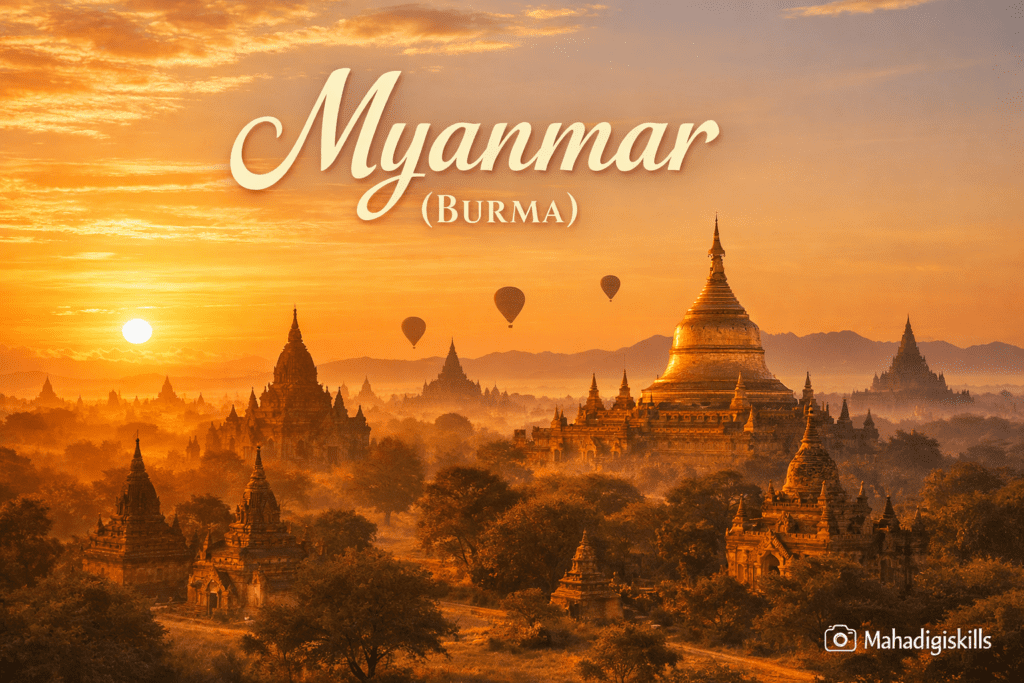
- Day 4 – Bagan: Sunrise hot-air balloon rides over ancient temples
- Day 5 – Inle Lake: Floating gardens, traditional crafts, stilt-house villages
- Day 6 – Ngapali Beach: Relaxation and water sports along the Bay of Bengal
- Day 7 – Hsipaw or Shan Hills: Trekking, ethnic village exploration, and scenic nature tours
Transportation Tips
- Domestic Flights: Best for covering long distances
- Riverboats and Ferries: Scenic and traditional travel along Irrawaddy River
- Buses and Private Tours: Ideal for cultural villages and rural exploration
Best Times to Visit Recap
- Cool Season (Nov–Feb): Ideal for sightseeing and cultural exploration
- Hot Season (Mar–May): Suitable for beaches and highland trekking
- Rainy Season (Jun–Oct): Monsoon season; travel may be limited in rural areas
Final Summary
Myanmar is a treasure trove of history, culture, and natural beauty. Travelers can experience ancient temples, bustling cities, serene rivers, and tropical beaches, all while immersing themselves in the rich traditions of over 135 ethnic groups. From the golden Shwedagon Pagoda in Yangon to the historic Bagan plains and tranquil Inle Lake, the country offers experiences that are both memorable and transformative.
Its participation in UN, ASEAN, and UNESCO programs further highlights Myanmar’s global significance, making it a destination for cultural, historical, and ecological exploration.
Key Facts Table
| Feature | Details |
|---|---|
| Capital | Naypyidaw |
| Largest City | Yangon |
| Official Language | Burmese |
| Local Languages | Shan, Karen, Kachin, Mon, and others |
| Currency | Burmese Kyat (MMK) |
| Population | ~55 million |
| Area | 676,578 km² |
| Borders | India, Bangladesh, China, Laos, Thailand |
| Major Rivers | Irrawaddy River |
| Climate | Tropical monsoon, cooler highlands in the north |
| UNESCO Sites | Bagan, Pyu Ancient Cities |
| Major Industries | Agriculture, mining, tourism, textiles |
| Best Time to Visit | Cool Season (Nov–Feb) |
| UN Status | Member since 1948, active participant |
List of All 195 Countries
A
- Afghanistan
- Albania
- Algeria
- Andorra
- Angola
- Antigua and Barbuda
- Argentina
- Armenia
- Australia
- Austria
- Azerbaijan
- Bahamas
- Bahrain
- Bangladesh
- Barbados
- Belarus
- Belgium
- Belize
- Benin
- Bhutan
- Bolivia
- Bosnia and Herzegovina
- Botswana
- Brazil
- Brunei
- Bulgaria
- Burkina Faso
- Burundi
- Cabo Verde
- Cambodia
- Cameroon
- Canada
- Central African Republic
- Chad
- Chile
- China
- Colombia
- Comoros
- Congo (Congo-Brazzaville)
- Costa Rica

