



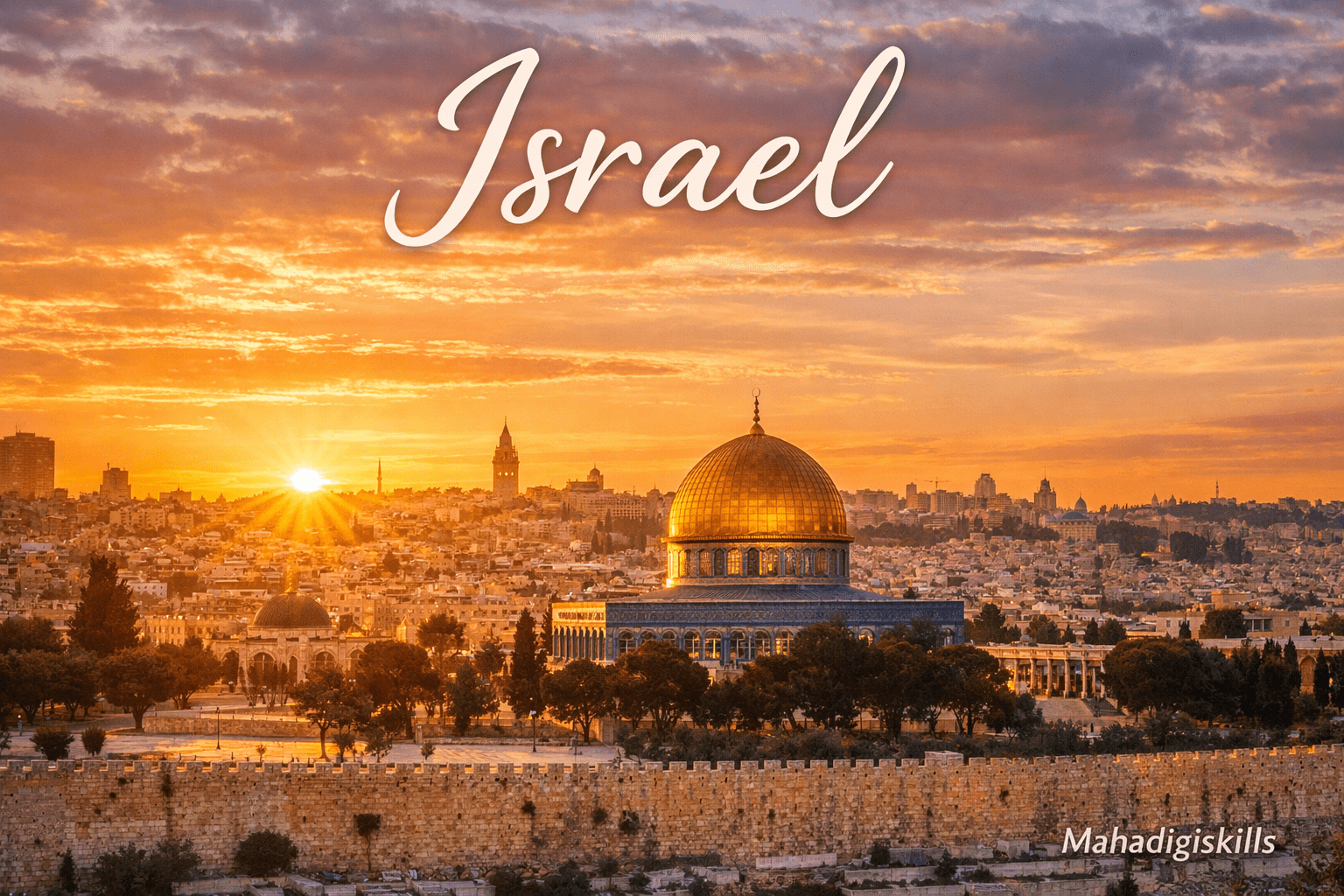
Discover Israel: Land of History and Innovation
Israel, a Middle Eastern nation, is renowned for its ancient heritage, vibrant cities, and diverse landscapes. From the historic streets of Jerusalem to the modern energy of Tel Aviv, this region offers travelers a blend of spiritual, cultural, and natural experiences. The country spans the Mediterranean coastline, fertile valleys, and desert areas, providing opportunities for sightseeing, adventure, and relaxation.
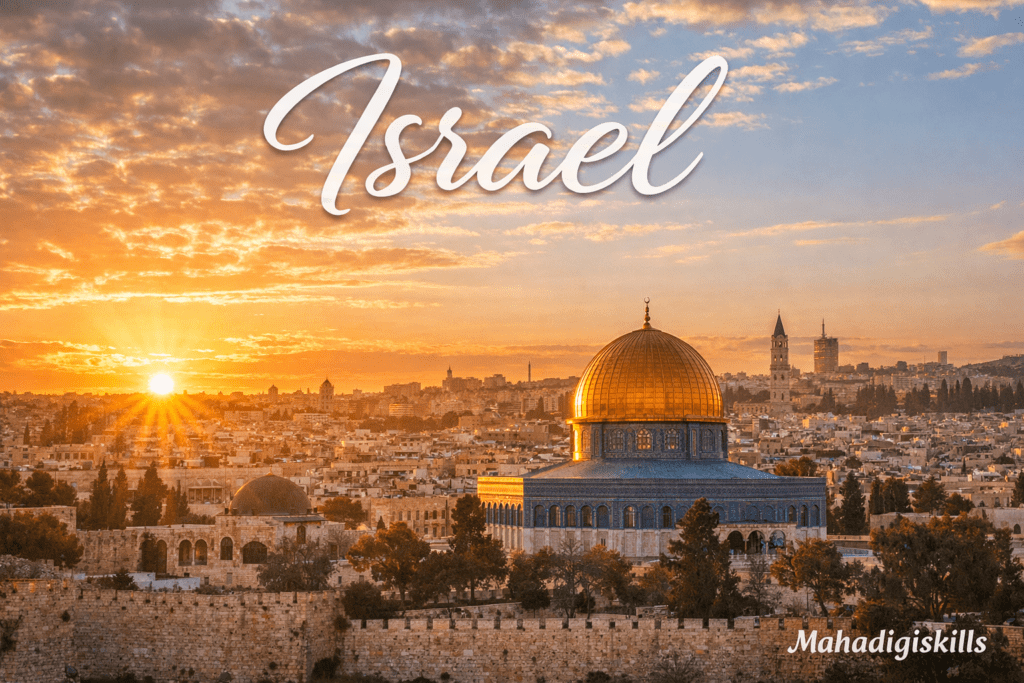
Historical Overview of Israel
Israel’s history is deeply intertwined with religion, politics, and civilization. Considered the birthplace of Judaism, Christianity, and Islam, the region has hosted civilizations for thousands of years. Key historical events include:
- Ancient Kingdoms: The kingdoms of Israel and Judah shaped the nation’s early history.
- Roman and Byzantine Periods: Significant archaeological and cultural developments occurred during this era.
- Modern Era: Established as a modern state in 1948, Israel has since become a center of innovation, culture, and international diplomacy.
Key Historical Landmarks:
- Western Wall (Jerusalem): Sacred site for Jewish prayers
- Church of the Holy Sepulchre (Jerusalem): Important Christian pilgrimage site
- Masada: Ancient fortress overlooking the Dead Sea
For historical details, visit UNESCO World Heritage Sites – Israel.
Geography and Location
Situated in the Middle East, Israel shares borders with Egypt, Jordan, Lebanon, and Syria. Its coordinates are roughly 31°N latitude and 35°E longitude, covering approximately 22,072 square kilometers. The country’s landscapes include:
- Negev Desert: Arid desert covering the southern region
- Dead Sea: Lowest point on Earth with unique mineral-rich waters
- Galilee & Golan Heights: Fertile hills and scenic lakes
- Mediterranean Coastline: Beautiful beaches and urban centers such as Tel Aviv
The climate varies from Mediterranean along the coast to desert conditions in the south, with hot summers and mild winters.
Culture and Traditions
Israel’s culture is a blend of ancient heritage and modern innovation, influenced by Jewish, Arab, and Christian communities, as well as global diaspora.
Language and Religion
- Official Languages: Hebrew and Arabic
- Local Languages: English widely spoken; Russian, Amharic, and French among immigrant communities
- Religion: Judaism (majority), Islam, Christianity, Druze, and Baha’i Faith
Festivals and Music
- Religious Holidays: Passover, Hanukkah, Ramadan, Easter
- Cultural Festivals: Jerusalem Film Festival, Tel Aviv Pride, Israel Music Festival
- Traditional music ranges from Jewish liturgical chants to modern pop and world music influences
Cuisine
- Hummus, falafel, shakshuka, and sabich are national favorites
- Fresh produce, Mediterranean spices, and locally sourced ingredients define regional dishes
- Street food culture is vibrant in Tel Aviv and Jerusalem
Economy and Trade Overview
Israel’s economy is highly diversified, combining advanced technology, agriculture, tourism, and natural resources. Often called the “Start-up Nation,” the country is a global leader in innovation and research.
Currency and Financial System
- Currency: Israeli Shekel (ILS)
- Major Trade Partners: United States, European Union, China, India
- Key Industries:
- Technology & Start-ups: Cybersecurity, biotech, software development
- Agriculture: Citrus fruits, vegetables, and advanced irrigation technologies
- Tourism: Historical sites, religious pilgrimages, and desert adventures
- Manufacturing: Chemicals, pharmaceuticals, and defense technology
For detailed economic insights, see World Bank – Israel Overview.
Major Cities and Capitals
Jerusalem – Spiritual and Historical Heart
Jerusalem is the capital city and a center of religion, culture, and history. Major landmarks include the Western Wall, Dome of the Rock, and Church of the Holy Sepulchre.
Tel Aviv – Modern Innovation Hub
Tel Aviv is Israel’s economic powerhouse, known for start-ups, beaches, nightlife, and art galleries. It’s a cosmopolitan city offering a modern contrast to historic Jerusalem.
Haifa – Northern Coastal Center
Haifa, situated on the Mediterranean coast, is known for the Bahá’í Gardens, ports, and industrial centers.
Other Key Cities
- Eilat: Red Sea resort city with diving, beaches, and marine tourism
- Beersheba: Capital of the Negev desert region, hub for desert tourism and Bedouin culture
Tourism Attractions
Israel offers a blend of history, spirituality, and natural wonders, making it a top destination for cultural and adventure travelers.
Historical and Religious Sites
- Old City of Jerusalem: Sacred to Judaism, Christianity, and Islam
- Nazareth: Childhood home of Jesus, significant for Christian pilgrimages
- Masada: Ancient fortress overlooking the Dead Sea
Natural Wonders
- Dead Sea: Float in mineral-rich waters, unique for wellness tourism
- Sea of Galilee: Scenic freshwater lake with historical significance
- Negev Desert: Offers desert trekking, camel rides, and Bedouin experiences
Cultural Experiences
- Street markets in Tel Aviv and Jerusalem
- Wine tours in Galilee and Golan Heights
- Festivals such as Jerusalem Film Festival and Tel Aviv Pride
Best Times to Visit and Travel Tips
- Spring (March–May) & Autumn (September–November): Ideal for sightseeing, pleasant weather
- Summer (June–August): Hot, dry; ideal for beach destinations
- Winter (December–February): Mild temperatures, fewer tourists, occasional rain
Transportation Options:
- Domestic flights for long distances
- Trains, buses, and taxis for urban travel
- Car rentals recommended for exploring northern and southern regions
Unique and Interesting Facts
- Israel is the only country with Hebrew as the national language
- Known for innovation in water conservation, agriculture, and technology
- Home to UNESCO World Heritage Sites, including Masada and Old City of Jerusalem
- Diverse population includes Jewish, Arab, Druze, and Christian communities
- Member of the United Nations, OECD, and various Middle Eastern trade organizations
Israel in Global Organizations
Israel plays an active role in regional and international affairs, participating in several key organizations.
United Nations Membership
- Member Since: 11 May 1949
- Status: Active participant in UN initiatives
- Contributions: Peacekeeping support, humanitarian projects, and development programs
Other International Memberships
- OECD: Focused on economic cooperation and development
- Asia-Pacific and Middle Eastern Trade Organizations: Engages in trade, science, and technology collaborations
- UNESCO: Protects cultural and historical landmarks like Masada and the Old City of Jerusalem
Travel Itineraries and Exploration Tips
Israel’s compact size allows travelers to explore history, beaches, and deserts in a short time.
Suggested 7-Day Itinerary
- Day 1-2 – Jerusalem: Western Wall, Church of the Holy Sepulchre, Mount of Olives
- Day 3 – Tel Aviv: Beaches, Carmel Market, nightlife, museums
- Day 4 – Haifa & Bahá’í Gardens: Explore coastal city and cultural heritage
- Day 5 – Dead Sea: Float in mineral-rich waters and visit Ein Gedi Nature Reserve
- Day 6 – Masada & Negev Desert: Desert trekking and historical exploration
- Day 7 – Galilee & Nazareth: Scenic landscapes and Christian heritage sites
Transportation Tips
- Domestic flights for longer distances
- Trains, buses, and taxis in urban areas
- Car rentals for flexibility in northern and southern regions
Final Summary
Israel is a destination that blends ancient history, spirituality, and modern innovation. Travelers can explore sacred sites in Jerusalem, vibrant urban life in Tel Aviv, desert landscapes, and the unique Dead Sea.
Its diverse culture combines Jewish, Arab, Christian, and Druze traditions, while technological advancements and modern industries highlight Israel’s global significance. From historical landmarks to natural wonders, the country offers unforgettable experiences for every traveler.
Key Facts Table
| Feature | Details |
|---|---|
| Capital | Jerusalem |
| Largest City | Tel Aviv |
| Official Languages | Hebrew, Arabic |
| Local Languages | English, Russian, French, Amharic |
| Currency | Israeli Shekel (ILS) |
| Population | ~9.5 million |
| Area | 22,072 km² |
| Borders | Egypt, Jordan, Lebanon, Syria |
| Major Rivers & Lakes | Jordan River, Sea of Galilee, Dead Sea |
| Climate | Mediterranean, arid in the south |
| UNESCO Sites | Masada, Old City of Jerusalem, Bahá’í Gardens |
| Major Industries | Technology, agriculture, tourism, manufacturing |
| Best Time to Visit | Spring (Mar–May) & Autumn (Sep–Nov) |
| UN Status | Member since 1949, active participant |
List of All 195 Countries
A
- Afghanistan
- Albania
- Algeria
- Andorra
- Angola
- Antigua and Barbuda
- Argentina
- Armenia
- Australia
- Austria
- Azerbaijan
- Bahamas
- Bahrain
- Bangladesh
- Barbados
- Belarus
- Belgium
- Belize
- Benin
- Bhutan
- Bolivia
- Bosnia and Herzegovina
- Botswana
- Brazil
- Brunei
- Bulgaria
- Burkina Faso
- Burundi
- Cabo Verde
- Cambodia
- Cameroon
- Canada
- Central African Republic
- Chad
- Chile
- China
- Colombia
- Comoros
- Congo (Congo-Brazzaville)
- Costa Rica

