



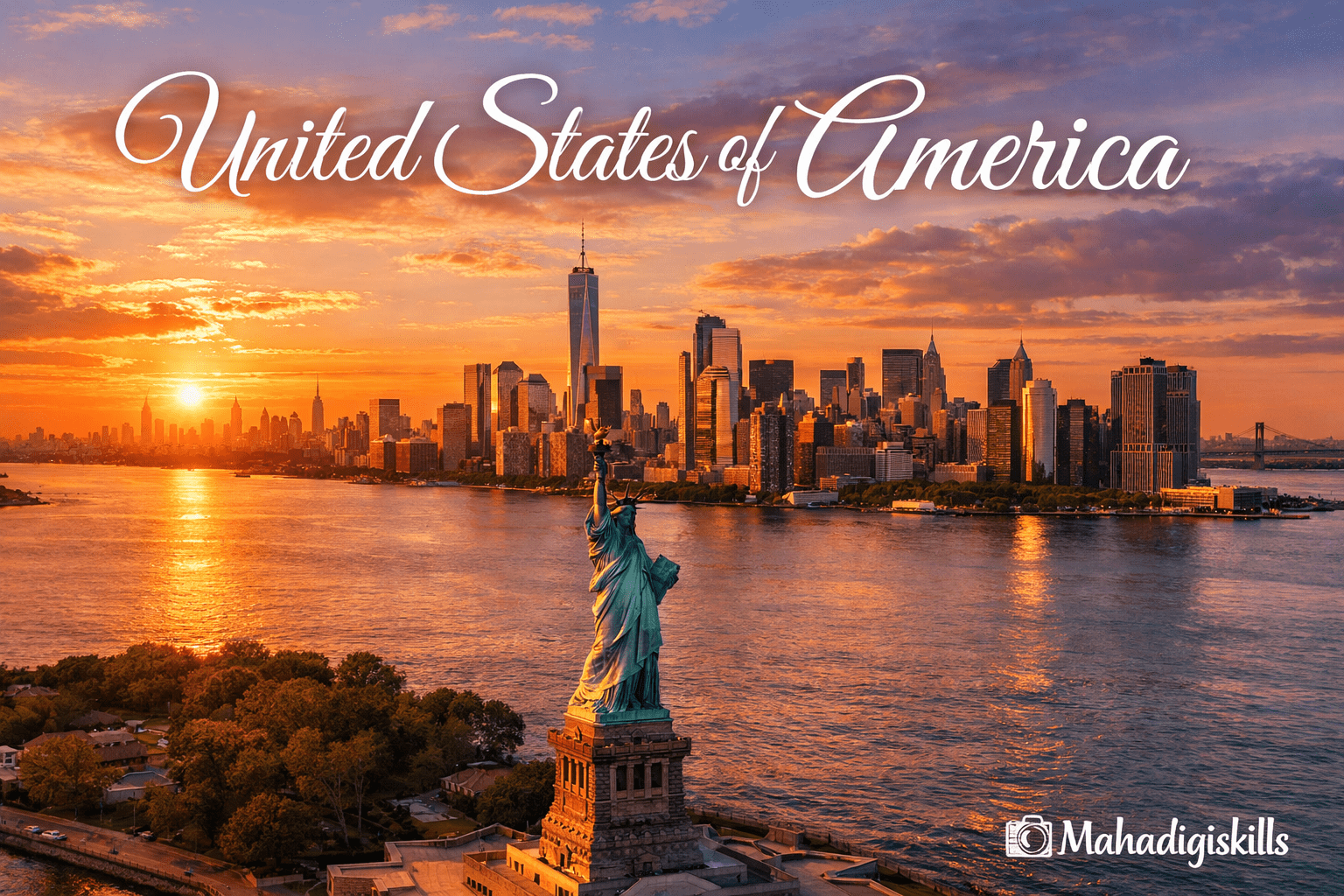
Discover the United States of America: Land of Diversity and Opportunity
The United States of America, commonly known as the USA, is a vast North American country recognized for its cultural diversity, technological innovation, and natural wonders. From the bustling streets of New York City to the scenic national parks of the West, the country offers a blend of history, modern urban life, and outdoor adventure. Its landscapes range from deserts and mountains to lakes and coastlines, making it one of the most geographically diverse nations in the world.
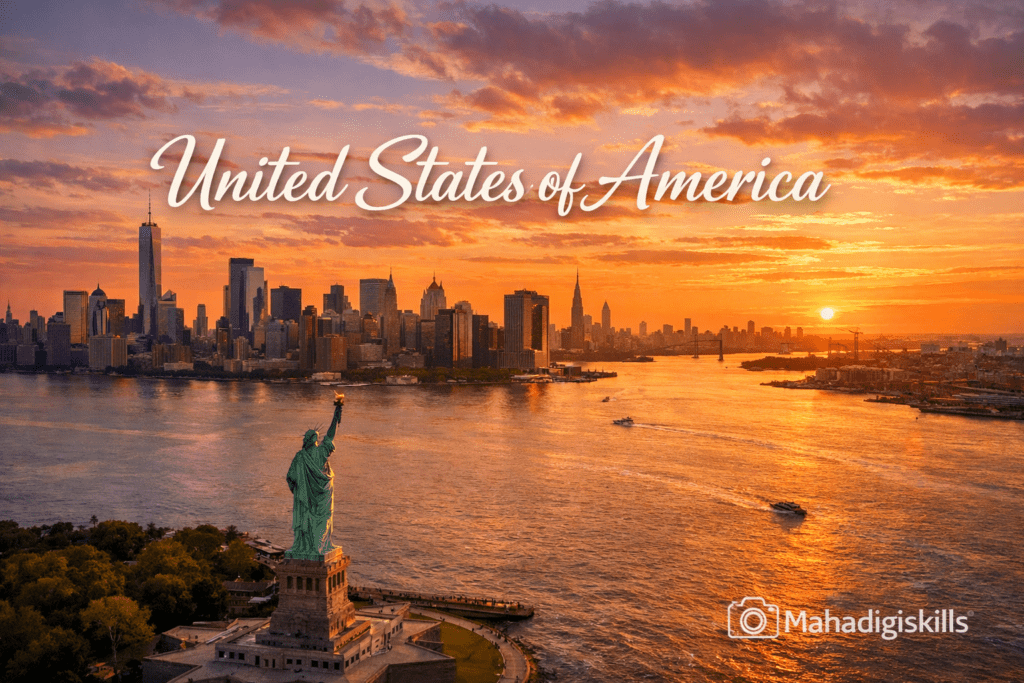
Historical Overview of the United States of America
The United States of America has a rich history shaped by indigenous cultures, colonization, independence, and modern global influence.
Key Historical Milestones:
- Colonial Era: European settlers established colonies in the 17th century
- American Revolution (1775–1783): Led to independence from Britain
- Constitution & Bill of Rights (1787–1791): Foundation of the modern democratic system
- Civil War (1861–1865): Conflict over slavery and national unity
- Modern Era: Emerged as a global superpower, leading in technology, economy, and culture
Famous Landmarks:
- Statue of Liberty, New York: Symbol of freedom and democracy
- Independence Hall, Philadelphia: Birthplace of American independence
- Mount Rushmore, South Dakota: Monument celebrating U.S. presidents
For historical details, visit UNESCO World Heritage Sites – United States of America.
Geography and Location
Situated in North America, the United States of America shares borders with Canada, Mexico, and the Atlantic and Pacific Oceans. Its coordinates are roughly 38°N latitude and 97°W longitude, covering approximately 9.8 million square kilometers, making it the third-largest country in the world.
Major Geographical Features:
- Rocky Mountains & Appalachian Mountains: Offer trekking, skiing, and scenic vistas
- Great Lakes: Largest group of freshwater lakes by area in the world
- Grand Canyon & Yellowstone: Iconic natural attractions
- Coastlines: Eastern Atlantic seaboard and western Pacific beaches
The climate varies from arctic conditions in Alaska to tropical weather in Hawaii and Florida, with deserts in the southwest and temperate zones in the northeast.
Culture and Traditions
The United States of America is known for its cultural melting pot, blending Native American heritage, European influence, African traditions, and immigrant cultures from around the world.
Language and Religion
- Official Language: None at federal level (English widely spoken)
- Local Languages: Spanish, Chinese, French, and many indigenous languages
- Religion: Predominantly Christian, with Jewish, Muslim, Buddhist, and other communities
Festivals and Music
- Holidays: Independence Day, Thanksgiving, Christmas, Memorial Day
- Music: Jazz, blues, rock, country, hip-hop, and classical influences
- Cultural diversity reflected in food festivals, parades, and music events
Cuisine
- Regional specialties: New England clam chowder, Southern barbecue, Tex-Mex, Pacific Northwest seafood
- Fast food culture alongside gourmet dining
- Local farmers’ markets and international cuisine available in urban centers
Economy and Trade Overview
The United States of America has one of the largest and most diverse economies in the world, driven by technology, finance, manufacturing, and natural resources.
Currency and Financial System
- Currency: United States Dollar (USD)
- Major Trade Partners: China, Canada, Mexico, Japan, European Union
- Key Industries:
- Technology & Innovation: Silicon Valley leads in software, hardware, AI, and biotech
- Agriculture: Corn, soybeans, wheat, and dairy production dominate rural areas
- Manufacturing: Automobiles, aerospace, and industrial machinery
- Tourism: National parks, cultural landmarks, and vibrant cities
- Energy: Oil, natural gas, and renewable energy initiatives
For more economic insights, see World Bank – United States Overview.
Major Cities and Capitals
Washington, D.C. – Political and Administrative Hub
The capital city is home to the White House, Capitol Hill, and national museums. Washington, D.C., is the heart of government and historical sites.
New York City – Cultural and Economic Center
New York City is known as the financial and cultural hub, featuring Wall Street, Broadway, Central Park, and the Statue of Liberty.
Los Angeles – Entertainment Capital
Los Angeles is synonymous with Hollywood, film production, and beach lifestyle, offering diverse attractions from studios to coastal cities.
Other Key Cities
- Chicago: Architectural landmarks and Lake Michigan shoreline
- San Francisco: Golden Gate Bridge and tech industry
- Miami: Tropical beaches and Latin American cultural influence
Tourism Attractions
The United States of America offers a blend of natural beauty, urban experiences, and cultural landmarks.
Historical and Cultural Sites
- National Mall, Washington, D.C.: Monuments, museums, and memorials
- Philadelphia: Liberty Bell and Independence Hall
- Boston: Revolutionary War history and historic streets
Natural Wonders
- Grand Canyon, Arizona: Iconic geological formations
- Yellowstone National Park: Geysers, wildlife, and geothermal activity
- Niagara Falls, New York: Famous waterfalls attracting millions of visitors
Cultural Experiences
- Broadway shows in New York City
- Jazz and blues tours in New Orleans
- Native American heritage sites across the Southwest
Best Times to Visit and Travel Tips
- Spring (March–May) & Fall (September–November): Ideal for city sightseeing and national park tours
- Summer (June–August): Popular for beaches, outdoor adventures, and festivals
- Winter (December–February): Skiing in Colorado, Utah, and New England
Transportation Options:
- Extensive domestic flight network connecting major cities
- Trains (Amtrak) and buses for regional travel
- Rental cars for national park and rural area exploration
Unique and Interesting Facts
- The United States of America is home to over 330 million people, representing a diverse cultural and ethnic population
- It leads in technological innovation, scientific research, and entertainment industry
- Hosts 63 UNESCO World Heritage Sites, including national parks, monuments, and historic districts
- American holidays like Thanksgiving, Independence Day, and Halloween are widely celebrated
- Member of the United Nations, G7, G20, and WTO, playing a central role in global affairs
United States of America in Global Organizations
The United States of America plays a major role in international affairs, participating in numerous global organizations and initiatives.
United Nations Membership
- Member Since: 24 October 1945
- Status: Founding member and permanent member of the UN Security Council
- Contributions: Peacekeeping missions, humanitarian aid, global development programs
Other International Memberships
- G7 and G20: Economic and political collaboration
- World Trade Organization (WTO): Global trade policies
- NATO: Defense and strategic alliances
- UNESCO: Protection of cultural and natural heritage, including national parks and historic landmarks
Travel Itineraries and Exploration Tips
The United States of America offers an enormous variety of experiences for travelers, from historic cities to natural wonders.
Suggested 10-Day Itinerary
- Day 1-2 – Washington, D.C.: National Mall, Smithsonian museums, monuments
- Day 3-4 – New York City: Statue of Liberty, Times Square, Broadway shows
- Day 5 – Philadelphia: Liberty Bell, Independence Hall, historic district
- Day 6 – Chicago: Millennium Park, Lake Michigan, architectural tour
- Day 7 – Grand Canyon: Scenic flights, hiking, and photography
- Day 8 – Las Vegas & Hoover Dam: Entertainment, nightlife, and engineering marvels
- Day 9 – San Francisco: Golden Gate Bridge, Alcatraz Island, city exploration
- Day 10 – Los Angeles: Hollywood, Santa Monica, cultural districts
Transportation Tips
- Flights: Efficient for coast-to-coast travel
- Trains & Buses: Amtrak and Greyhound cover many regions
- Rental Cars: Recommended for national parks and rural exploration
Final Summary
The United States of America is a country of immense diversity, rich history, and cultural innovation. From historic landmarks and cosmopolitan cities to breathtaking national parks and scenic coastlines, travelers can experience urban energy, natural beauty, and cultural depth in a single trip.
Its global influence, technological leadership, and participation in UN and international organizations make it a prominent nation on the world stage. Visitors to the country will find an unforgettable blend of history, culture, nature, and modern innovation, ensuring a truly memorable journey.
Key Facts Table
| Feature | Details |
|---|---|
| Capital | Washington, D.C. |
| Largest City | New York City |
| Official Language | None federally; English widely spoken |
| Other Languages | Spanish, Chinese, French, indigenous languages |
| Currency | United States Dollar (USD) |
| Population | ~330 million |
| Area | 9,826,675 km² |
| Borders | Canada, Mexico, Atlantic & Pacific Oceans |
| Major Rivers & Lakes | Mississippi River, Colorado River, Great Lakes |
| Climate | Varies: temperate, desert, tropical, arctic |
| UNESCO Sites | Grand Canyon, Statue of Liberty, Independence Hall, Yellowstone |
| Major Industries | Technology, finance, manufacturing, agriculture, tourism |
| Best Time to Visit | Spring & Fall for most regions |
| UN Status | Founding member since 1945, permanent Security Council member |
List of All 195 Countries
A
- Afghanistan
- Albania
- Algeria
- Andorra
- Angola
- Antigua and Barbuda
- Argentina
- Armenia
- Australia
- Austria
- Azerbaijan
- Bahamas
- Bahrain
- Bangladesh
- Barbados
- Belarus
- Belgium
- Belize
- Benin
- Bhutan
- Bolivia
- Bosnia and Herzegovina
- Botswana
- Brazil
- Brunei
- Bulgaria
- Burkina Faso
- Burundi
- Cabo Verde
- Cambodia
- Cameroon
- Canada
- Central African Republic
- Chad
- Chile
- China
- Colombia
- Comoros
- Congo (Congo-Brazzaville)
- Costa Rica

