



🌍 Introduction
Hungary is a fascinating Central European country known for its rich history, stunning architecture, thermal baths, and vibrant cultural heritage. Located in the heart of Europe, Hungary offers a unique blend of medieval charm and modern sophistication.
From the iconic skyline of Budapest to the tranquil countryside and historic castles, Hungary is a destination that captivates travelers with its beauty and diversity. Whether you’re a history enthusiast, foodie, or adventure seeker, Hungary has something to offer.
🏛 History of Hungary
Early Settlements and Magyar Arrival
The history of Hungary dates back to ancient times, but the modern nation began to take shape in the 9th century when the Magyars settled in the Carpathian Basin.
Kingdom of Hungary
In the year 1000,
Stephen I of Hungary
was crowned king, establishing the Kingdom of Hungary and adopting Christianity.
During the medieval period, Hungary became a powerful European kingdom with strong political and cultural influence.
Ottoman and Habsburg Rule
In the 16th century, Hungary was partially occupied by the Ottoman Empire. Later, it came under the control of the Habsburg monarchy.
These periods shaped the culture, architecture, and identity of Hungary.
Austro-Hungarian Empire
In 1867, Hungary became part of the Austro-Hungarian Empire, one of Europe’s most powerful states at the time. Budapest flourished during this era, becoming a major cultural and economic center.
Modern Hungary
After World War I, the empire dissolved, and Hungary became an independent nation. It later experienced:
- World War II
- Soviet influence during the Cold War
Since 1989, Hungary has transitioned into a democratic republic and joined major international organizations.
🌎 Geography of Hungary
Location and Coordinates
Hungary is located in Central Europe.
- Coordinates: 47.1625° N, 19.5033° E
- Continent: Europe
Neighboring Countries
Hungary shares borders with:
- Austria
- Slovakia
- Ukraine
- Romania
- Serbia
- Croatia
- Slovenia
Landscape and Terrain
The geography of Hungary is mostly flat, with:
- The Great Hungarian Plain (Alföld)
- Rolling hills in the west
- River valleys
The most important river in Hungary is the
Danube River,
which flows through Budapest.
Climate
Hungary has a continental climate:
- Warm summers
- Cold winters
- Moderate rainfall
🎭 Culture of Hungary
Traditions and Heritage
Culture in Hungary reflects centuries of European influence, combined with unique Magyar traditions.
Religion
Religion in Hungary includes:
- Roman Catholicism
- Protestant Christianity
Churches and cathedrals are an important part of Hungarian heritage.
Festivals and Celebrations
Popular festivals in Hungary include:
- Budapest Spring Festival
- Sziget Festival (music festival)
- National Day (August 20)
Music and Arts
Hungary has a rich musical tradition:
- Classical composers like
Franz Liszt - Folk music and dance
Food Culture
Hungarian cuisine is famous worldwide:
- Goulash (national dish)
- Paprika-based dishes
- Chimney cake (kürtőskalács)
Food in Hungary is hearty and flavorful.
🗣 Language in Hungary
Official Language
- Hungarian (Magyar)
Hungarian is unique and not closely related to most European languages.
Other Languages
- English (widely spoken in cities)
- German (in some regions)
🏙 Major Cities of Hungary
Budapest (Capital)
The capital city of Hungary, Budapest, is:
- Divided by the Danube River
- Known for historic architecture
- Famous for thermal baths
Debrecen
- Second-largest city
- Cultural and educational center
Szeged
- Known for sunshine and festivals
Pécs
- Historic city with Roman roots
🌐 Hungary in Global Organizations
Hungary is a member of:
- United Nations
- European Union
- NATO
These memberships strengthen Hungary’s global presence.
💰 Economy of Hungary
Overview of Hungary’s Economy
Hungary has a well-developed and diversified economy compared to many countries in Central and Eastern Europe. Since transitioning from a centrally planned system to a market economy in the early 1990s, Hungary has experienced significant growth and modernization.
Today, Hungary is known for:
- Strong industrial production
- Growing service sector
- Strategic location in Europe
As a member of the
European Union,
Hungary benefits from trade agreements, investment opportunities, and economic cooperation across Europe.
Key Economic Sectors in Hungary
1. Manufacturing and Industry
Manufacturing is one of the largest contributors to Hungary’s economy.
Major industries include:
- Automotive production
- Electronics
- Machinery
- Chemicals
Global companies such as
Audi and
Mercedes-Benz
have major production facilities in Hungary, making it a key hub for automotive manufacturing.
2. Agriculture
Agriculture remains an important sector in Hungary, particularly in rural regions.
Main products:
- Wheat
- Corn
- Sunflowers
- Wine
Hungarian wine, especially from the
Tokaj
region, is world-famous.
3. Services and Tourism
The service sector plays a major role in Hungary’s economy, especially:
- Tourism
- Finance
- IT services
Tourism is a major contributor, with millions visiting Hungary each year.
Currency of Hungary
The official currency of Hungary is:
- Hungarian Forint (HUF)
Although Hungary is part of the EU, it has not adopted the euro.
Major Trade Partners
Hungary’s main trade partners include:
- Germany
- Austria
- Italy
- Slovakia
Exports from Hungary include:
- Vehicles
- Electronics
- Pharmaceuticals
Economic Strengths and Challenges
Strengths:
- Skilled workforce
- Strong industrial base
- Strategic location in Europe
Challenges:
- Inflation fluctuations
- Dependence on external markets
- Regional economic disparities
International organizations such as the
- World Bank
- International Monetary Fund
provide economic insights and support for Hungary.
🏝 Tourist Attractions in Hungary
🏛 Historical & Cultural Attractions
1. Hungarian Parliament Building
The iconic
Hungarian Parliament Building
is one of the most famous landmarks in Hungary, known for:
- Gothic Revival architecture
- Stunning riverside location
2. Buda Castle
Located in Budapest,
Buda Castle
offers:
- Panoramic city views
- Museums and galleries
3. Fisherman’s Bastion
The picturesque
Fisherman’s Bastion
provides breathtaking views of the Danube River and city skyline.
🌿 Natural Attractions
1. Lake Balaton
The largest lake in Central Europe,
Lake Balaton,
is often called the “Hungarian Sea.”
It offers:
- Beaches
- Water sports
- Resorts
2. Hortobágy National Park
A UNESCO World Heritage Site,
Hortobágy National Park
is famous for:
- Traditional Hungarian plains
- Wildlife
- Cultural heritage
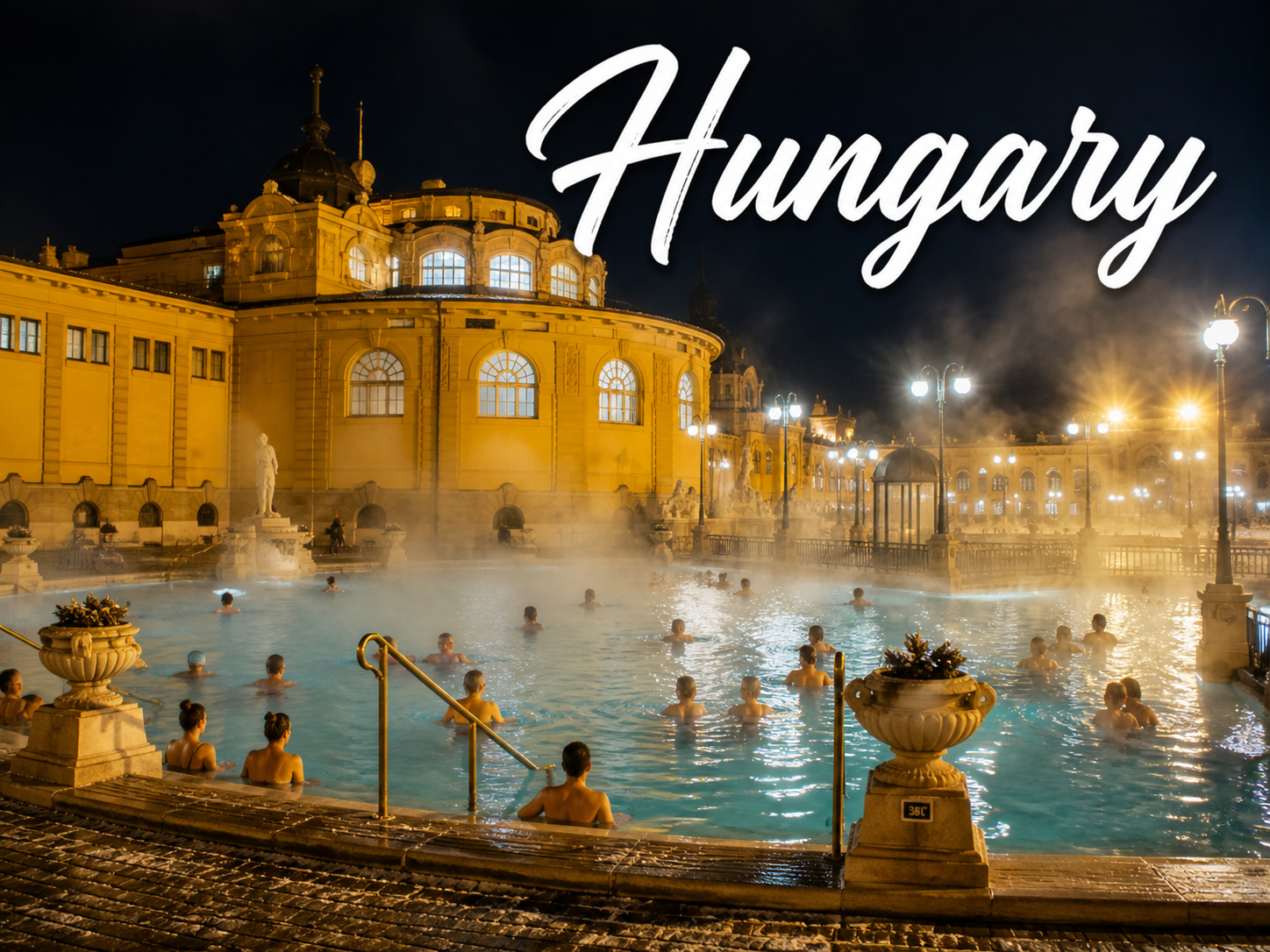
💧 Thermal Baths
Hungary is famous for its thermal baths due to natural hot springs.
Popular baths include:
- Széchenyi Thermal Bath
- Gellért Thermal Bath
These baths are a must-visit experience in Hungary.
✨ Unique Facts About Hungary
Here are some interesting facts about Hungary:
- Hungary has over 1,000 thermal springs.
- The Rubik’s Cube was invented in Hungary by
Ernő Rubik. - Budapest is often called the “Paris of the East.”
- The Hungarian language is one of the most unique in Europe.
- Hungary has one of the oldest railway systems in the region.
🌆 More About Cities in Hungary
Budapest – Cultural Capital
Budapest is the heart of Hungary, offering:
- Historic architecture
- Nightlife
- Museums
Debrecen – Educational Hub
Debrecen is known for:
- Universities
- Cultural festivals
Szeged – City of Sunshine
Szeged is famous for:
- Warm climate
- Outdoor events
Pécs – Historic Charm
Pécs offers:
- Roman ruins
- Artistic culture
✈️ Best Time to Visit Hungary
Ideal Travel Season
The best time to visit Hungary is:
- April to June (spring)
- September to October (autumn)
These seasons offer:
- Pleasant weather
- Fewer crowds
Winter Travel
Winter in Hungary is:
- Cold but festive
- Known for Christmas markets
🚗 Transportation in Hungary
Getting Around
Transportation in Hungary is efficient:
- Trains
- Buses
- Metro systems (Budapest)
Airports
Main international airport:
- Budapest Ferenc Liszt International Airport
🧭 Travel Tips for Hungary
- Learn basic Hungarian phrases
- Use public transport for convenience
- Try local cuisine
- Respect cultural etiquette
🔗 External DoFollow Links
- United Nations: https://www.un.org
- World Bank: https://www.worldbank.org
- UNESCO: https://whc.unesco.org
🎭 Deep Cultural Insights of Hungary
Traditions and Daily Life
Hungary has a deeply rooted cultural identity shaped by centuries of history, regional influences, and strong national pride. Daily life in Hungary blends modern European living with long-standing traditions. In rural areas of Hungary, traditional customs, folk dress, and agricultural lifestyles are still preserved, while cities like Budapest reflect contemporary urban culture.
Hospitality is highly valued in Hungary, and visitors often experience warm, welcoming interactions.
Religion and Spiritual Life
Religion continues to play an important role in Hungary:
- Roman Catholicism
- Calvinism (Reformed Church)
- Lutheranism
Churches and cathedrals across Hungary are not only places of worship but also architectural masterpieces.
Festivals and Celebrations
National Day (August 20)
One of the most important celebrations in Hungary, this day honors
Stephen I of Hungary
and the founding of the Hungarian state.
Celebrations include:
- Fireworks in Budapest
- Cultural events
- Traditional food
Sziget Festival
The famous
Sziget Festival
is one of Europe’s largest music festivals, attracting visitors from around the world.
Music and Dance
Music is an essential part of life in Hungary:
- Folk music traditions
- Classical music heritage
- Modern pop and electronic music
Hungary has produced legendary composers like
Franz Liszt.
🍽 Food Guide of Hungary
Traditional Hungarian Dishes
Cuisine in Hungary is rich, hearty, and flavorful:
- Goulash – a famous meat and vegetable stew
- Chicken Paprikash – chicken in paprika sauce
- Lángos – fried dough street food
- Stuffed cabbage
Paprika is a key ingredient in most dishes in Hungary.
Desserts and Sweets
Popular desserts in Hungary include:
- Chimney cake (kürtőskalács)
- Dobos torte
- Strudel
Street Food Culture
Street food is vibrant in Hungary, especially in Budapest:
- Food markets
- Festivals
- Night food stalls
🗺 7-Day Travel Itinerary for Hungary
Day 1: Arrival in Budapest
Explore:
- City center
- Hungarian Parliament Building
- Danube riverfront
Day 2: Buda Side Exploration
Visit:
- Buda Castle
- Fisherman’s Bastion
Day 3: Thermal Bath Experience
Relax at:
- Széchenyi Thermal Bath
Day 4: Day Trip to Lake Balaton
Visit:
- Lake Balaton
Day 5: Explore Pécs
Discover:
- Historic sites
- Cultural attractions
Day 6: Visit Hortobágy National Park
Explore:
- Hortobágy National Park
Day 7: Return & Departure
Return to Budapest for departure.
🌍 Hungary and Global Presence
Hungary plays an important role in global affairs and is a member of:
- United Nations
- European Union
- NATO
These memberships strengthen Hungary’s economic and political influence worldwide.
🤔 Interesting & Lesser-Known Facts About Hungary
- Hungary has more than 1,000 thermal springs.
- The Rubik’s Cube was invented in Hungary by
Ernő Rubik. - Budapest has one of the oldest metro systems in the world.
- Hungarian is one of the most unique languages in Europe.
- Hungary has a rich tradition of folk art and embroidery.
🔗 Internal Link Suggestion
If you enjoyed reading about Hungary, explore another destination:
➡️ Argentina Travel Guide (internal link suggestion)
📊 Final Summary
Hungary is a country that beautifully blends history, culture, and modern life. From the grand architecture of Budapest to the peaceful landscapes of the countryside, Hungary offers a diverse and enriching travel experience.
With its world-famous cuisine, thermal baths, and vibrant festivals, Hungary stands out as one of Europe’s most unique destinations. Whether you’re exploring historical landmarks or enjoying local traditions, Hungary promises unforgettable memories.
📋 Key Facts About Hungary
| Category | Details |
|---|---|
| Country Name | Hungary |
| Capital | Budapest |
| Continent | Europe |
| Coordinates | 47.1625° N, 19.5033° E |
| Official Language | Hungarian |
| Currency | Hungarian Forint (HUF) |
| Population | ~9.6 million |
| Independence | 1918 (modern state formation) |
| Climate | Continental |
| Major Cities | Budapest, Debrecen, Szeged, Pécs |
| Major Attraction | Parliament Building |
| UN Membership | Yes |
List of All 195 Countries
- Afghanistan
- Albania
- Algeria
- Andorra
- Angola
- Antigua and Barbuda
- Argentina
- Armenia
- Australia
- Austria
- Azerbaijan
- Bahamas
- Bahrain
- Bangladesh
- Barbados
- Belarus
- Belgium
- Belize
- Benin
- Bhutan
- Bolivia
- Bosnia and Herzegovina
- Botswana
- Brazil
- Brunei
- Bulgaria
- Burkina Faso
- Burundi
- Cabo Verde
- Cambodia
- Cameroon
- Canada
- Central African Republic
- Chad
- Chile
- China
- Colombia
- Comoros
- Congo (Congo-Brazzaville)
- Costa Rica

