



🌟 Introduction
Madagascar is a one-of-a-kind island nation located off the southeastern coast of Africa, famous for its extraordinary biodiversity, unique landscapes, and rich cultural heritage. It is the fourth-largest island in the world and offers experiences found nowhere else.
Traveling through Madagascar reveals rainforests, beaches, deserts, and wildlife that evolved in isolation over millions of years. It is often described as a “natural laboratory” due to its high number of endemic species.
Visitors to Madagascar are drawn by its wildlife, natural beauty, and adventurous spirit.
🏛 History of Madagascar
Early Settlement
The island has a unique cultural origin, with settlers arriving from Southeast Asia and East Africa. This blend created a distinct identity.
Kingdoms and Trade
Over centuries, local kingdoms developed and engaged in trade with Arab and European merchants.
Colonial Period
The island came under French colonial rule in the late 19th century, influencing language, culture, and infrastructure.
Independence and Modern Era
The country gained independence in 1960 and has since developed its own political and cultural identity.
🌍 Geography of Madagascar
Location and Coordinates
Madagascar is located in the Indian Ocean.
- Coordinates: 18.7669° S, 46.8691° E
- Region: Southeast of Africa
Surrounding Waters
The island is surrounded by:
- Indian Ocean
- Mozambique Channel
Landscape Features
The geography includes:
- Rainforests
- Highlands
- Coastal plains
- Desert regions
Climate
The climate is tropical:
- Wet season (November–April)
- Dry season (May–October)
🐒 Wildlife and Biodiversity
Unique Species
The island is famous for its biodiversity. Many species are found nowhere else on Earth.
Lemurs
One of the most iconic animals is:
- Lemur
There are over 100 species of lemurs.
Other Wildlife
The island is home to:
- Chameleons
- Unique birds
- Rare plants
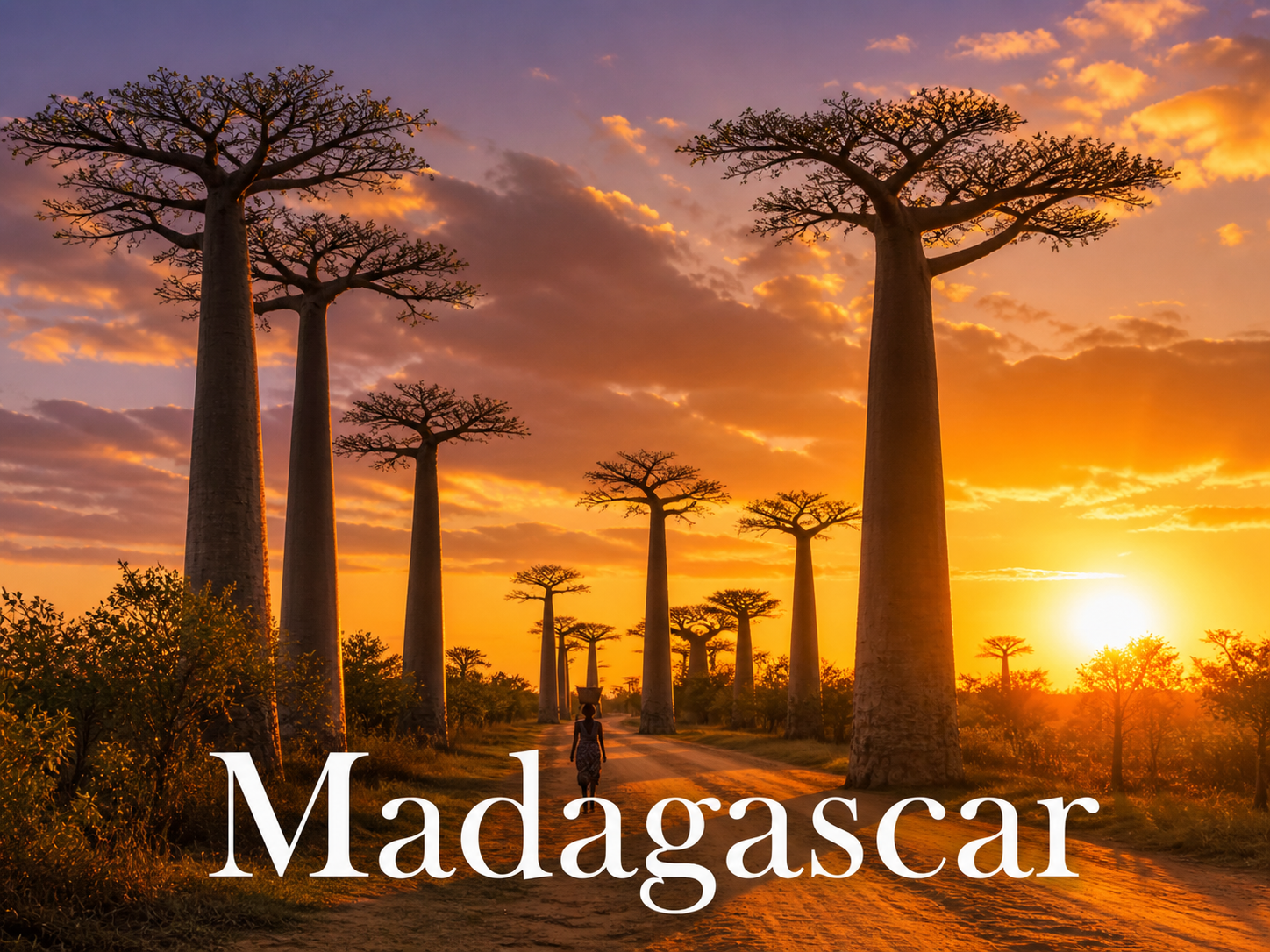
Baobab Trees
Another iconic feature is:
- Baobab tree
These trees create dramatic landscapes.
🎭 Culture of Madagascar
Cultural Identity
Culture reflects a blend of African and Asian influences, making it unique.
Language
- Malagasy (official)
- French
Religion
Religious practices include:
- Christianity
- Traditional beliefs
Traditions
Cultural traditions include:
- Music
- Dance
- Ancestral ceremonies
🏙 Major Cities of Madagascar
Antananarivo (Capital)
Antananarivo is:
- Capital city
- Political center
- Located in the highlands
Toamasina
Toamasina is:
- Major port city
- Economic hub
Mahajanga
Mahajanga is:
- Coastal city
- Known for beaches
🌐 Madagascar in Global Organizations
Madagascar is a member of:
African Union
United Nations
💰 Economy of Madagascar
Overview of the Economy
The economy of Madagascar is largely based on agriculture, natural resources, and tourism. While still developing, it has significant potential due to its biodiversity and unique ecosystems.
Rural communities play a major role in economic activity, especially through farming and small-scale industries.
Key Economic Sectors
1. Agriculture
Agriculture is the backbone of daily life. Key products include:
- Rice
- Vanilla
- Coffee
- Cloves
The country is one of the world’s leading producers of vanilla, making agriculture a crucial export sector.
2. Mining and Natural Resources
Natural resources include:
- Nickel
- Cobalt
- Precious stones
Mining contributes to exports and industrial growth.
3. Tourism
Tourism is an important and growing sector. Visitors are attracted by:
- Wildlife
- Landscapes
- Beaches
The unique environment of Madagascar makes it a top destination for eco-tourism.
4. Fisheries
Fishing supports coastal communities and provides both local consumption and export opportunities.
Currency and Trade
- Currency: Malagasy Ariary (MGA)
Major trade partners include:
- France
- China
- India
Exports include agricultural products, minerals, and textiles.
Economic Challenges
Key challenges include:
- Infrastructure limitations
- Poverty
- Environmental pressures
- Climate risks
Organizations like the
- World Bank
support development projects and sustainability efforts.
🌳 National Parks & Protected Areas
Overview
The island is home to numerous national parks that protect its unique ecosystems and wildlife.
Andasibe-Mantadia National Park
- Andasibe-Mantadia National Park
This park is famous for:
- Rainforests
- Lemur species
- Birdlife
Isalo National Park
- Isalo National Park
Known for:
- Sandstone formations
- Canyons
- Natural pools
Tsingy de Bemaraha
- Tsingy de Bemaraha
A UNESCO World Heritage Site featuring:
- Sharp limestone formations
- Unique ecosystems
🏖 Beaches & Coastal Life
Island Beaches
The coastline offers:
- White sandy beaches
- Clear waters
- Coral reefs
Popular Coastal Areas
- Nosy Be
- Sainte-Marie Island
These areas are known for relaxation and marine life.
Marine Activities
Visitors can enjoy:
- Snorkeling
- Diving
- Whale watching (seasonal)
🏝 Island Experience
Tropical Atmosphere
The island environment provides:
- Warm climate
- Exotic landscapes
- Relaxed lifestyle
Local Communities
Coastal communities depend on:
- Fishing
- Tourism
- Small businesses
🚵 Adventure Activities
Wildlife Exploration
Guided tours allow visitors to observe:
- Lemurs
- Reptiles
- Rare plants
Hiking and Trekking
National parks offer trails through forests and mountains.
Water Adventures
Activities include:
- Diving
- Kayaking
- Boat tours
🌿 Unique Landscapes
Baobab Avenue
One of the most iconic landscapes is:
- Avenue of the Baobabs
Rainforests
Dense forests create biodiversity hotspots.
Desert and Canyon Areas
Regions like Isalo offer unique rock formations and dry landscapes.
✨ Unique Facts
- One of the most biodiverse places on Earth
- Majority of species are endemic
- Major producer of vanilla
- Home to unique landscapes like Tsingy
- Tropical island with diverse ecosystems
- Strong eco-tourism potential
🎭 Culture and Daily Life
Cultural Identity
Culture in Madagascar is a unique blend of African and Southeast Asian influences. This combination shapes traditions, language, and daily life across the island.
Ethnic Diversity
The population is made up of several ethnic groups, each with distinct customs, clothing, and traditions. These differences contribute to a rich and diverse cultural identity.
Traditions and Beliefs
Traditional beliefs remain important and often coexist with modern religions. One well-known cultural practice is ancestor reverence, which plays a central role in social life.
Music and Dance
Music is deeply rooted in daily life. Cultural expression includes:
- Traditional instruments
- Rhythmic dance
- Storytelling
Modern music blends traditional sounds with global styles.
Language and Communication
- Malagasy (national language)
- French
Language reflects the island’s historical and cultural influences.
🎉 Festivals and Celebrations
Traditional Festivals
Festivals celebrate:
- Heritage
- Community
- Seasonal events
Cultural Events
Events often include:
- Music performances
- Dance celebrations
- Ritual ceremonies
Religious Celebrations
Christian holidays and traditional ceremonies are widely observed.
🍽 Food Culture
Traditional Cuisine
Cuisine in Madagascar is based on simple, flavorful ingredients.
Common dishes include:
- Rice with meat or vegetables
- Coconut-based dishes
- Seafood along the coast
Rice is the staple food and is eaten daily.
Street Food
Street food culture includes:
- Fried snacks
- Grilled meats
- Fresh fruits
Markets are central to food culture.
Seafood
Coastal regions offer:
- Fish
- Shrimp
- Lobster
Beverages
Popular drinks include:
- Local rum
- Fruit juices
- Herbal drinks
🗺 7-Day Travel Itinerary
Day 1: Arrival in Antananarivo
Explore:
- Antananarivo
- Markets
- Cultural sites
Day 2: Andasibe Rainforest
Visit:
- Andasibe-Mantadia National Park
Spot lemurs and explore rainforest.
Day 3: Travel to Morondava
Experience:
- Scenic landscapes
- Rural life
Day 4: Baobab Avenue
Visit:
- Avenue of the Baobabs
Enjoy sunrise or sunset views.
Day 5: Isalo National Park
Explore:
- Isalo National Park
Hike through canyons and natural pools.
Day 6: Beach Relaxation
Head to coastal areas for:
- Swimming
- Snorkeling
- Relaxation
Day 7: Return & Departure
Return to the capital for departure.
🌐 International Role
This island nation participates in global cooperation and development programs.
It is a member of:
- United Nations
- African Union
🤔 Interesting Facts
- Home to unique wildlife found nowhere else
- Over 90% of species are endemic
- One of the world’s top vanilla producers
- Diverse landscapes from rainforest to desert
- Rich cultural traditions
- Strong eco-tourism potential
🔗 Internal Link Suggestion
Explore next:
➡️ Kenya Travel Guide
📊 Final Summary
This island destination offers an extraordinary mix of biodiversity, landscapes, and culture. From rainforests filled with unique wildlife to scenic coastlines and traditional villages, it provides an unforgettable travel experience.
Visitors can explore national parks, relax on beaches, and immerse themselves in local culture. With its natural beauty and cultural richness, Madagascar stands out as one of the most unique destinations in the world.
📋 Key Facts Table
| Category | Details |
|---|---|
| Country | Madagascar |
| Capital | Antananarivo |
| Region | Indian Ocean |
| Coordinates | 18.7669° S, 46.8691° E |
| Language | Malagasy, French |
| Currency | Malagasy Ariary (MGA) |
| Population | ~30 million |
| Geography | Island, rainforest, coast |
| Famous Feature | Baobab Trees |
| Climate | Tropical |
| UN Membership | Yes |

