



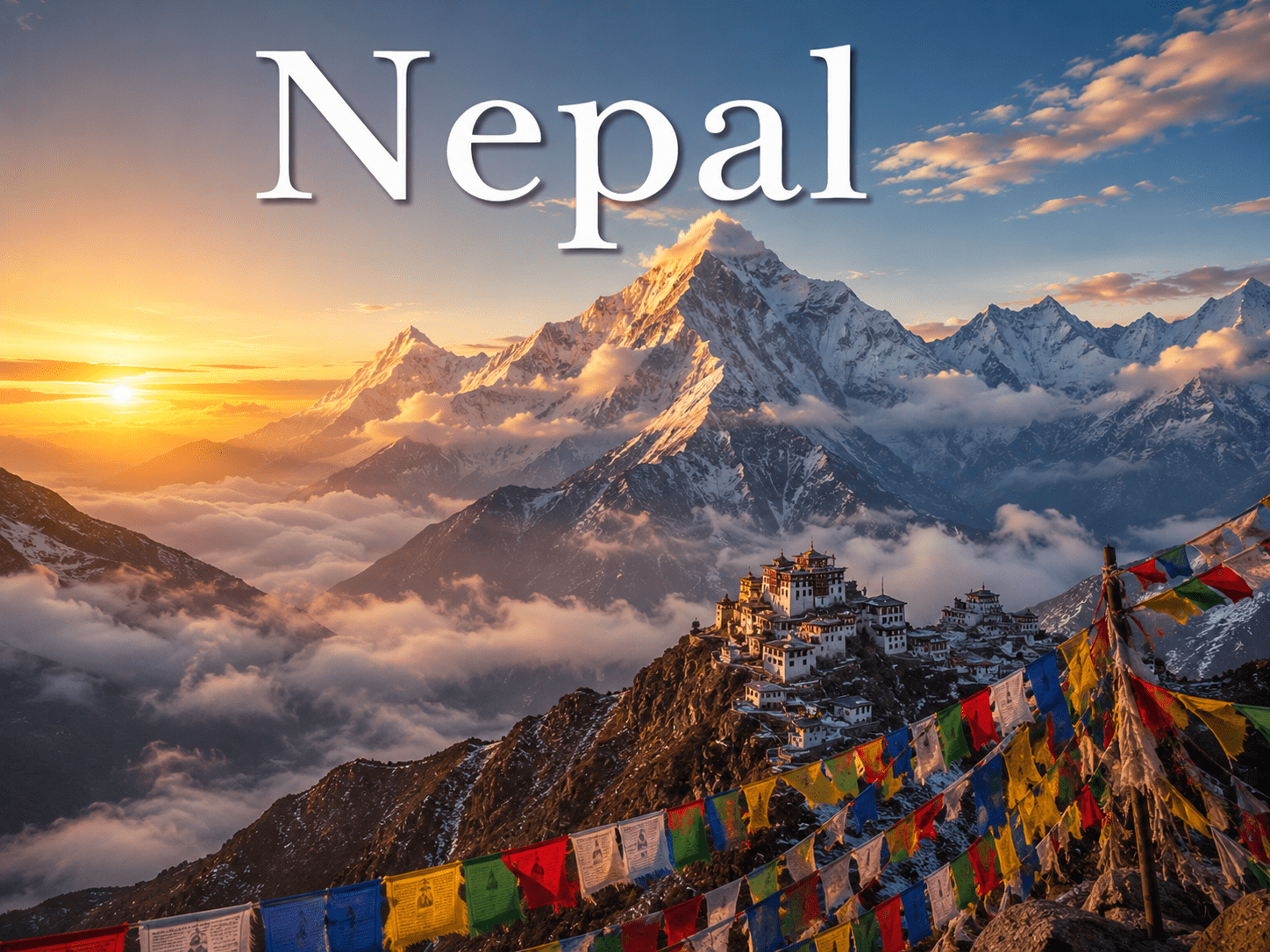
Nepal Introduction
Nepal is one of South Asia’s most fascinating destinations, globally famous for Himalayan mountains, spiritual traditions, ancient temples, trekking adventures, and extraordinary cultural heritage. Located between China and India, Nepal attracts millions of travelers seeking mountain expeditions, spiritual journeys, wildlife tourism, and authentic cultural experiences.
The country is internationally recognized as the home of Mount Everest, the world’s highest mountain. Snow-covered Himalayan peaks, deep valleys, peaceful monasteries, colorful festivals, and historic cities create a unique travel atmosphere unlike anywhere else in the world.
Travelers visiting Nepal can experience trekking routes, Buddhist monasteries, Hindu temples, jungle safaris, mountain villages, adventure sports, and traditional markets. The country offers unforgettable opportunities for nature lovers, photographers, hikers, and spiritual explorers.
Nepal also has deep historical importance connected to Buddhism and Hinduism. Ancient kingdoms, sacred temples, UNESCO World Heritage Sites, and centuries-old traditions continue shaping daily life across the country.
Modern Nepal combines traditional culture with growing tourism infrastructure, sustainable mountain tourism, education development, and international partnerships while preserving its remarkable heritage and natural beauty.
Quick Facts About Nepal
| Feature | Details |
|---|---|
| Official Name | Federal Democratic Republic of Nepal |
| Capital City | Kathmandu |
| Continent | Asia |
| Population | Around 30 million |
| Official Language | Nepali |
| Currency | Nepalese Rupee |
| Government Type | Federal Parliamentary Republic |
| Major Religion | Hinduism |
| Area | Approximately 147,516 sq km |
| Highest Mountain | Mount Everest |
History of Nepal
Early History of Nepal
The history of Nepal stretches back thousands of years through ancient Himalayan civilizations and trade routes connecting South Asia and Tibet.
Archaeological discoveries and ancient temples reveal rich cultural traditions and spiritual heritage.
Ancient Kingdoms
Several powerful kingdoms ruled different regions of Nepal throughout history.
Historical Influences
- Hindu traditions
- Buddhist philosophy
- Himalayan trade culture
- Royal dynasties
Kathmandu Valley became an important cultural and commercial center.
Birthplace of Buddha
Lumbini in Nepal is internationally recognized as the birthplace of Siddhartha Gautama, known globally as Buddha.
The site remains one of the world’s most important Buddhist pilgrimage destinations.
Modern Nepal
Modern Nepal transitioned from monarchy to a federal democratic republic.
The country continues focusing on development, tourism, infrastructure, and environmental conservation.
Geography of Nepal
Where Is Nepal Located?
Nepal is located in South Asia between India and China.
Geographic Coordinates
- Latitude: 28.3949° N
- Longitude: 84.1240° E
The Himalayan mountain range dominates northern landscapes.
Himalayan Landscapes
Nepal contains some of the world’s most dramatic mountain scenery.
Geographic Features
- Himalayan peaks
- Deep valleys
- Rivers
- Forests
- Lakes
- Hill regions
The country ranges from lowland jungles to high-altitude mountain terrain.
Mount Everest
Mount Everest, the highest mountain on Earth, lies along the Nepal-China border.
Why Mount Everest Is Famous
- World’s tallest mountain
- International climbing destination
- Himalayan trekking routes
- Adventure tourism
Everest attracts mountaineers and trekkers from around the world.
Rivers and Lakes
Major river systems flow through Nepal from the Himalayas toward India.
Important Rivers
- Koshi River
- Gandaki River
- Karnali River
Lakes and rivers support agriculture, tourism, and hydroelectric development.
Climate of Nepal
Diverse Climate Zones
Nepal experiences several climate zones because of dramatic elevation changes.
Climate Regions
Himalayan Climate
Cold temperatures and snowfall at high elevations.
Hill Climate
Moderate weather in valleys and mountain towns.
Tropical Climate
Warm and humid conditions in southern lowlands.
This geographic diversity makes Nepal attractive year-round for different travel experiences.
Culture and Traditions of Nepal
Cultural Identity of Nepal
Nepal has a multicultural society shaped by Himalayan traditions, Hinduism, Buddhism, and regional ethnic communities.
Traditional customs remain deeply connected to daily life.
Religion in Nepal
Religion plays a central role throughout Nepal.
Major Religions
- Hinduism
- Buddhism
- Islam
- Christianity
Temples, monasteries, and sacred festivals are visible across the country.
Traditional Festivals
Festivals are among the most colorful aspects of culture in Nepal.
Popular Festivals
Dashain
The largest Hindu festival celebrated nationwide.
Tihar
Festival of lights honoring animals, family, and prosperity.
Holi
Festival of colors celebrated with music and community gatherings.
Traditional Music and Dance
Music and dance performances are important during celebrations and religious events.
Traditional instruments and folk songs vary between regions and ethnic groups.
Food and Cuisine in Nepal
Nepali Cuisine
Cuisine in Nepal combines Himalayan flavors with South Asian influences.
Popular Nepali Dishes
Dal Bhat
Traditional meal with rice, lentil soup, and vegetables.
Momos
Steamed dumplings filled with vegetables or meat.
Thukpa
Noodle soup popular in mountain regions.
Sel Roti
Traditional rice-based ring-shaped bread.
Tea and Mountain Food Culture
Tea culture is popular throughout Nepal, especially in mountain regions.
Travelers often enjoy warm local meals during trekking adventures.
Official Language of Nepal
Nepali Language
Nepali is the official language and the most widely spoken language across the country.
Other Languages Spoken
Many ethnic communities speak regional languages and dialects.
Common Languages
- Maithili
- Bhojpuri
- Newari
- Tamang
- Tibetan dialects
Multilingual communication reflects the country’s cultural diversity.
Major Cities in Nepal
Kathmandu
Kathmandu is the capital and largest city of Nepal.
Main Attractions
- Historic temples
- Markets
- UNESCO heritage sites
- Buddhist stupas
Kathmandu serves as the country’s cultural and tourism center.
Pokhara
Pokhara is famous for lakes, mountain views, and adventure tourism.
Popular Activities
- Paragliding
- Boating
- Trekking
- Mountain photography
The city offers spectacular Himalayan scenery.
Lumbini
Lumbini is one of the world’s most important Buddhist pilgrimage destinations.
Highlights
- Sacred gardens
- Monasteries
- Historical monuments
Chitwan
Chitwan is known for wildlife tourism and jungle safaris.
Wildlife Attractions
- Rhinos
- Tigers
- Elephants
- Bird species
Tourism in Nepal
Why Visit Nepal?
Nepal attracts travelers seeking mountain adventures, cultural exploration, spiritual experiences, and wildlife tourism.
Top Reasons Tourists Visit
- Himalayan trekking
- Mount Everest
- Ancient temples
- Spiritual tourism
- Wildlife safaris
- Adventure sports
The country offers experiences ranging from luxury mountain lodges to remote trekking villages.
External DoFollow Links
- Official Nepal Tourism Website
- United Nations Nepal Profile
- UNESCO Official Website
- World Bank Nepal Data
Economy of Nepal
Nepal Economy Overview
Nepal has a developing economy supported by tourism, agriculture, remittances, handicrafts, hydropower, and service industries. Mountain tourism and trekking activities contribute significantly to national income and international recognition.
Modern Nepal continues investing in infrastructure, transportation, renewable energy, education, and sustainable tourism projects.
The country’s strategic location between India and China also influences trade and regional economic cooperation.
Currency of Nepal
The official currency of Nepal is the Nepalese Rupee (NPR).
Currency Facts
| Feature | Details |
|---|---|
| Official Currency | Nepalese Rupee |
| Currency Code | NPR |
| Common Payment Methods | Cash and digital payments |
| ATM Availability | Major cities and tourism areas |
Travelers are encouraged to carry cash while visiting remote trekking regions.
Agriculture in Nepal
Agriculture remains an important part of the Nepal economy and supports a large percentage of the population.
Main Agricultural Products
- Rice
- Corn
- Wheat
- Tea
- Vegetables
Mountain farming and terraced agriculture create scenic rural landscapes across the country.
Hydropower Development
Fast-flowing Himalayan rivers provide major opportunities for hydropower generation in Nepal.
Hydropower projects continue expanding to support economic growth and electricity production.
Tourism Industry in Nepal
Tourism is one of the country’s most important industries.
Why Tourism Matters
- Trekking income
- International visitors
- Employment opportunities
- Cultural preservation
Travelers visit Nepal for adventure tourism, spiritual journeys, and Himalayan scenery.
Trekking in Nepal
Everest Base Camp Trek
The Everest Base Camp Trek is one of the world’s most famous trekking routes.
Trek Highlights
- Himalayan scenery
- Sherpa villages
- Mountain monasteries
- Everest viewpoints
Trekkers from around the world visit Nepal specifically for this adventure.
Annapurna Circuit
The Annapurna Circuit is internationally known for diverse landscapes and mountain culture.
Popular Experiences
- Snow-covered peaks
- Forest trails
- Mountain villages
- Scenic valleys
The route combines adventure tourism with cultural exploration.
Langtang Valley Trek
Langtang Valley offers beautiful trekking experiences closer to Kathmandu.
Attractions
- Himalayan landscapes
- Buddhist monasteries
- Traditional villages
The area is popular among nature lovers and photographers.
Adventure Tourism in Nepal
Mountaineering
Nepal is one of the world’s leading mountaineering destinations.
Famous Climbing Regions
- Everest region
- Annapurna region
- Manaslu region
The country attracts professional climbers and adventure travelers globally.
Paragliding in Pokhara
Pokhara is one of Asia’s top paragliding destinations.
Why Travelers Love Pokhara
- Himalayan views
- Lakeside scenery
- Adventure sports
- Relaxed atmosphere
Paragliding flights provide breathtaking views of mountains and lakes.
White Water Rafting
Himalayan rivers create exciting rafting opportunities.
Popular Rivers for Rafting
- Trishuli River
- Bhote Koshi River
- Seti River
Adventure tourism companies organize rafting experiences for different skill levels.
Jungle Safaris
Southern lowland regions of Nepal provide excellent wildlife tourism opportunities.
Safari Activities
- Jeep safaris
- Canoe rides
- Birdwatching
- Nature walks
UNESCO World Heritage Sites in Nepal
Kathmandu Valley Heritage Sites
Kathmandu Valley contains several UNESCO-listed historical and religious monuments.
Famous Heritage Attractions
- Pashupatinath Temple
- Boudhanath Stupa
- Swayambhunath
- Patan Durbar Square
Ancient architecture and spiritual traditions attract visitors year-round.
Lumbini
Lumbini is recognized globally as the birthplace of Buddha.
Highlights
- Sacred pilgrimage sites
- Monasteries
- Historical gardens
Buddhist pilgrims travel from around the world to visit this sacred destination.
Chitwan National Park
Chitwan National Park is a UNESCO-listed wildlife reserve.
Wildlife Commonly Seen
- One-horned rhinos
- Bengal tigers
- Crocodiles
- Elephants
The park combines conservation with eco-tourism.
Wildlife and Nature in Nepal
Himalayan Wildlife
Mountain ecosystems support unique wildlife species.
Animals Found in Nepal
- Snow leopards
- Himalayan tahr
- Red pandas
- Musk deer
Conservation projects help protect endangered species.
Birdwatching Opportunities
Nepal is also popular among birdwatchers because of ecological diversity.
Wetlands, forests, and mountain regions support hundreds of bird species.
Transportation in Nepal
Getting to Nepal
International travelers usually arrive through Tribhuvan International Airport in Kathmandu.
Regional airports also connect mountain tourism destinations.
Traveling Around Nepal
Transportation options vary depending on terrain and region.
Common Transportation Methods
- Domestic flights
- Tourist buses
- Jeeps
- Taxis
- Trekking routes
Mountain geography can make travel times longer than expected.
Festivals and Celebrations in Nepal
Dashain Festival
Dashain is the most important festival in Nepal.
Festival Traditions
- Family gatherings
- Religious ceremonies
- Traditional foods
- Cultural celebrations
The festival symbolizes victory and blessings.
Tihar Festival
Tihar celebrates lights, animals, family bonds, and prosperity.
Homes and streets become decorated with colorful lights and flowers.
Buddha Jayanti
Buddha Jayanti celebrates the birth of Buddha and is especially important in Buddhist communities.
Monasteries organize prayers, ceremonies, and cultural events.
Best Time to Visit Nepal
Spring Season
Spring is one of the best times to visit Nepal.
Advantages
- Clear mountain views
- Pleasant trekking weather
- Blooming rhododendron forests
Autumn Season
Autumn is extremely popular for trekking and mountain photography.
Dry weather and clear skies create ideal travel conditions.
Winter and Monsoon Seasons
Winter provides peaceful travel opportunities in lower elevations, while monsoon rains create lush green landscapes.
Shopping in Nepal
Traditional Handicrafts
Nepal is famous for handmade products and artisan crafts.
Popular Souvenirs
- Prayer flags
- Handmade jewelry
- Pashmina products
- Wood carvings
- Tibetan crafts
Local markets provide rich cultural shopping experiences.
Thamel Market
Thamel in Kathmandu is one of the country’s most popular tourist shopping areas.
Travelers can find trekking gear, souvenirs, and traditional art products.
Modern Lifestyle in Nepal
Urban Development
Cities such as Kathmandu and Pokhara continue modernizing with:
- Hotels
- Cafés
- Shopping centers
- Tourism facilities
Urban growth combines traditional culture with modern development.
Eco-Tourism and Sustainability
Nepal promotes sustainable tourism through conservation programs and eco-friendly trekking practices.
Protected areas help preserve wildlife and mountain ecosystems.
External DoFollow Links
- Official Nepal Tourism Website
- United Nations Nepal Profile
- UNESCO Official Website
- World Bank Nepal Data
Unique and Interesting Facts About Nepal
Nepal Is Home to Mount Everest
Nepal is globally famous as the home of Mount Everest, the tallest mountain on Earth.
The Himalayan nation attracts mountaineers, trekkers, photographers, and adventure travelers from around the world.
Nepal Has Extraordinary Geographic Diversity
Within a relatively small area, Nepal contains tropical jungles, deep valleys, rivers, hills, and snow-covered Himalayan peaks.
This diversity creates unique ecosystems and travel experiences.
Nepal Is the Birthplace of Buddha
Lumbini in Nepal is internationally recognized as the birthplace of Siddhartha Gautama, known globally as Buddha.
The sacred site remains one of the most important pilgrimage destinations for Buddhists worldwide.
Nepal Has Rich Cultural Diversity
Many ethnic groups, languages, traditions, and regional cultures exist across Nepal.
Traditional customs and festivals continue shaping daily life throughout villages and cities.
Nepal Is Famous for Trekking Tourism
Some of the world’s most famous trekking routes are located in Nepal.
Trekkers explore mountain trails surrounded by glaciers, monasteries, forests, and Himalayan scenery.
Education and Healthcare in Nepal
Education System in Nepal
Education continues improving across Nepal through government reforms and international partnerships.
Schools, universities, and technical institutions support national development and tourism industries.
Popular Fields of Study
- Tourism management
- Engineering
- Agriculture
- Medicine
- Environmental science
Educational opportunities continue expanding in urban and rural regions.
Healthcare Services in Nepal
Healthcare services are available through hospitals, clinics, and private medical centers.
Major cities generally provide better healthcare infrastructure than remote mountain areas.
Healthcare Improvements
- Expanded rural healthcare programs
- Vaccination campaigns
- Medical education development
- International healthcare cooperation
Travel insurance is highly recommended for trekking and mountain travel.
Hidden Attractions in Nepal
Bandipur
Bandipur is a beautiful hilltop town known for traditional architecture and peaceful mountain scenery.
Popular Experiences
- Cultural walks
- Mountain views
- Photography
- Traditional village tourism
Rara Lake
Rara Lake is the largest lake in Nepal and one of the country’s most peaceful natural destinations.
Why Travelers Visit Rara Lake
- Crystal-clear water
- Forest scenery
- Quiet trekking routes
- Nature photography
Mustang Region
The Mustang region offers dramatic desert-like Himalayan landscapes and Tibetan cultural heritage.
Attractions
- Ancient monasteries
- Mountain caves
- Remote villages
- Scenic trekking routes
Ilam Tea Gardens
Eastern Nepal contains beautiful tea plantations surrounded by green hills and misty landscapes.
The region is ideal for peaceful eco-tourism experiences.
Cultural Traditions in Nepal
Family and Community Life
Family values and community traditions remain deeply important throughout Nepal.
Festivals and religious events often bring communities together through music, food, and ceremonies.
Buddhist and Hindu Heritage
Temples, monasteries, prayer flags, and spiritual rituals are visible across Nepal.
The peaceful coexistence of Hindu and Buddhist traditions shapes the country’s cultural identity.
Traditional Clothing
Traditional clothing varies between ethnic groups and regions.
Common Traditional Dress
- Daura Suruwal
- Gunyo Cholo
- Sherpa clothing
Traditional attire remains important during festivals and ceremonies.
Food Experiences in Nepal
Traditional Mountain Cuisine
Mountain food culture emphasizes warm, nutritious meals suited for cold climates.
Popular Mountain Foods
- Dal Bhat
- Yak cheese
- Tibetan bread
- Noodle soups
Street Food Culture
Cities such as Kathmandu and Pokhara offer lively street food scenes.
Popular Snacks
- Momos
- Chatamari
- Sel Roti
- Spiced tea
Tea Culture
Tea is an important part of social life in Nepal.
Travelers frequently enjoy traditional tea during trekking and cultural experiences.
Shopping in Nepal
Traditional Markets
Local markets provide opportunities to experience Himalayan culture and artisan traditions.
Popular Souvenirs
- Prayer wheels
- Handmade carpets
- Singing bowls
- Pashmina shawls
- Buddhist artwork
Handmade Crafts
Craftsmanship remains an important cultural and economic activity in Nepal.
Handmade products often reflect Buddhist symbolism and Himalayan artistic traditions.
Luxury Tourism in Nepal
Luxury Mountain Lodges
Luxury tourism has expanded significantly in Nepal.
Travelers can enjoy:
- Boutique mountain resorts
- Luxury trekking lodges
- Wellness retreats
- Scenic helicopter tours
Helicopter Mountain Tours
Helicopter sightseeing tours provide panoramic Himalayan views for travelers seeking premium experiences.
These tours are especially popular around Mount Everest.
Safety and Travel Tips for Nepal
Is Nepal Safe for Tourists?
Nepal is generally considered safe for travelers, especially in organized trekking and tourism areas.
Visitors should still prepare carefully for mountain travel and changing weather conditions.
Important Travel Tips
Prepare for Altitude
High-altitude trekking requires gradual acclimatization.
Carry Cash
Remote trekking villages may not support card payments.
Respect Religious Sites
Visitors should dress respectfully at temples and monasteries.
Travel With Proper Gear
Mountain weather conditions can change quickly.
Best Experiences in Nepal
Watching Sunrise Over the Himalayas
Sunrise views above Himalayan peaks create unforgettable travel memories.
Trekking Through Mountain Villages
Trekking routes provide opportunities to experience Sherpa culture and Himalayan hospitality.
Visiting Ancient Temples and Monasteries
Historic religious sites reveal centuries of spiritual and architectural heritage.
Jungle Safari Adventures
Wildlife safaris in Chitwan National Park provide opportunities to see rhinos, elephants, and Bengal tigers.
Nepal and International Organizations
United Nations Membership
Nepal became a member of the United Nations in 1955.
The country participates in peacekeeping missions, environmental programs, and international development initiatives.
Other International Organizations
Nepal is associated with several international organizations, including:
- United Nations Educational, Scientific and Cultural Organization
- South Asian Association for Regional Cooperation
- World Bank partnerships
These relationships support development, education, tourism, and conservation.
Final Summary
Nepal is one of the world’s most remarkable travel destinations, offering Himalayan mountains, ancient spiritual traditions, wildlife safaris, trekking adventures, and extraordinary cultural diversity.
From the towering summit of Mount Everest to the peaceful monasteries of Lumbini and the colorful streets of Kathmandu, Nepal combines natural beauty with deep historical and spiritual significance.
The country’s trekking routes, sacred temples, mountain villages, and warm hospitality create unforgettable experiences for adventure travelers, photographers, spiritual seekers, and cultural explorers.
Whether exploring Himalayan landscapes, enjoying jungle safaris, visiting UNESCO heritage sites, or experiencing traditional festivals, travelers discover the timeless beauty and unique identity of Nepal.
Key Facts About Nepal
| Category | Information |
|---|---|
| Official Name | Federal Democratic Republic of Nepal |
| Capital City | Kathmandu |
| Continent | Asia |
| Population | Around 30 million |
| Official Language | Nepali |
| Currency | Nepalese Rupee |
| Major Religion | Hinduism |
| Government Type | Federal Parliamentary Republic |
| Area | Approximately 147,516 sq km |
| Highest Mountain | Mount Everest |
| Famous Heritage Site | Lumbini |
| Major Tourism Activity | Trekking |
| Independence Status | Never fully colonized |
| UN Membership | Joined in 1955 |
Frequently Asked Questions About Nepal
What is Nepal famous for?
Nepal is famous for Mount Everest, Himalayan trekking, Buddhist heritage, temples, and adventure tourism.
What is the best time to visit Nepal?
Spring and autumn are generally considered the best seasons for trekking and mountain sightseeing.
Is Nepal expensive for tourists?
Nepal offers both affordable backpacking experiences and luxury mountain tourism depending on travel style.
What language is spoken in Nepal?
Nepali is the official language, although many regional languages and dialects are also spoken.
Is Nepal safe for travelers?
Nepal is generally safe for tourists, especially in popular trekking and tourism regions.
Internal Links
Explore more destinations:
External DoFollow Links
- Official Nepal Tourism Website
- United Nations Nepal Profile
- UNESCO Official Website
- World Bank Nepal Data

