



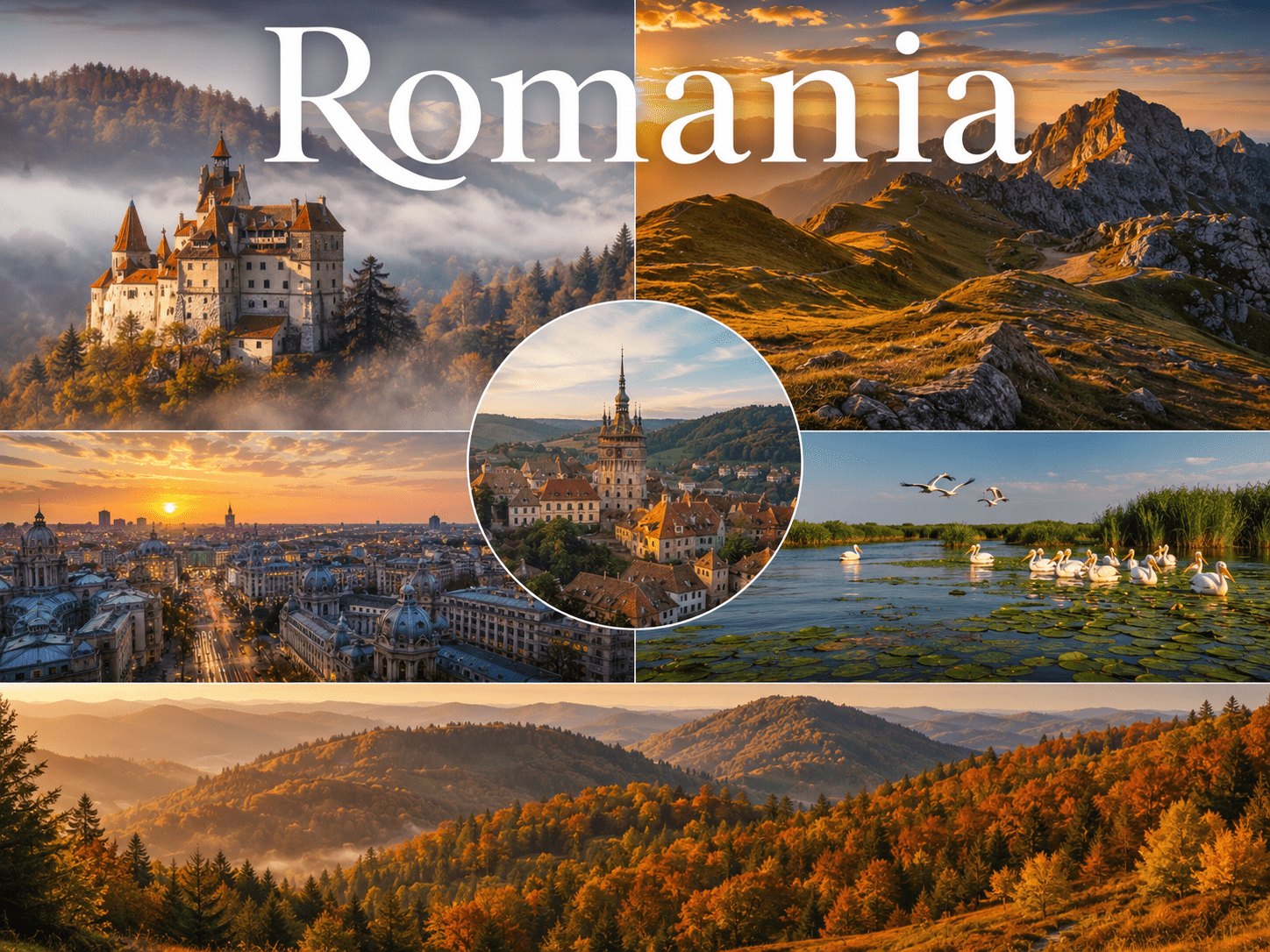
Introduction – The Land of Castles and Legends
Romania is one of Eastern Europe’s most fascinating destinations, known for its dramatic landscapes, medieval castles, ancient traditions, and rich folklore. Located at the crossroads of Central and Southeastern Europe, it offers a unique blend of history, nature, and cultural heritage.
Travelers are drawn to Romania for:
- Legendary Dracula castles
- Carpathian mountain landscapes
- Medieval towns and fortresses
- Diverse wildlife and nature
- Vibrant folk traditions
- Affordable European travel
From the mystical region of Transylvania to the lively capital Bucharest, this country feels like a journey through time.
Historical Background of Romania
Ancient Origins
The early history of Romania begins with the Dacians, an ancient civilization known for:
- Fortified settlements
- Metalwork skills
- Resistance against the Roman Empire
Roman Influence
After Roman conquest, the region became Dacia, influencing:
- Latin-based language roots
- Infrastructure development
- Cultural blending
Medieval Principalities
Later, the territory formed three major regions:
- Wallachia
- Moldavia
- Transylvania
Each developed its own political and cultural identity.
Ottoman and Habsburg Influence
For centuries, the region experienced external influence while maintaining local traditions and autonomy.
Modern Independence
Romania became independent in the 19th century and later unified into a modern state.
20th Century Transformation
The country went through:
- World War changes
- Communist era
- Transition to democracy
Today, it is a modern European Union member.
Geography and Location
Where is Romania Located?
Romania is located in Southeastern Europe.
It is bordered by:
- Ukraine
- Moldova
- Bulgaria
- Serbia
- Hungary
- Black Sea
Geographic Coordinates
Approximate location: 45°N, 25°E
Natural Landscape
The country includes:
- Carpathian Mountains
- Rolling hills
- River plains
- Black Sea coastline
Climate of Romania
Temperate Continental Climate
Romania experiences four distinct seasons.
Seasonal Overview
- Spring: Blooming landscapes
- Summer: Warm and ideal for travel
- Autumn: Colorful forests
- Winter: Snowy mountains
Best Time to Visit
Ideal months:
- May to September
- December for winter tourism
Culture and Traditions
Folk Heritage
The culture of Romania is deeply rooted in:
- Rural traditions
- Folk music
- Handmade crafts
Traditional Clothing
Folk costumes include:
- Embroidered shirts
- Wool garments
- Decorative belts
Family Values
Key cultural values include:
- Strong family bonds
- Respect for elders
- Community traditions
Religion in Romania
The majority of people in Romania follow Eastern Orthodox Christianity, which influences:
- Festivals
- Architecture
- Traditions
- Daily life
Churches and monasteries are key landmarks across the country.
Music, Arts, and Folklore
Traditional Music
Romanian folk music includes:
- Pan flute (nai)
- Violin melodies
- Regional dance music
Dance Traditions
Popular dances include:
- Hora
- Sârba
- Călușari
Mythology and Legends
Romania is famous for:
- Dracula legends
- Vampire folklore
- Medieval myths
Cuisine of Romania
Traditional Food Culture
Romanian cuisine is hearty and influenced by Balkan and Central European flavors.
Popular Dishes
Sarmale
Cabbage rolls filled with meat and rice.
Mămăligă
Cornmeal dish similar to polenta.
Ciorbă
Sour soup variety.
Cozonac
Sweet festive bread.
Economy of Romania
Growing European Economy
Romania has a developing economy supported by:
- IT industry
- Manufacturing
- Agriculture
- Tourism
Currency
The official currency is the Romanian Leu (RON).
Key Industries
- Automotive production
- Software development
- Energy sector
- Farming
Major Cities in Romania
Bucharest – Capital City
Bucharest is the political and economic center.
Cluj-Napoca
A major university and IT hub.
Timișoara
Known for cultural diversity and architecture.
Brașov
Gateway to Transylvania and mountain tourism.
Languages Spoken
The official language is Romanian, a Romance language derived from Latin.
English is widely spoken in urban areas.
Tourist Attractions
Bran Castle
Often associated with Dracula legends.
Peleș Castle
A royal palace in the Carpathians.
Transylvania Region
Famous for medieval towns and mountains.
Danube Delta
A UNESCO-listed biodiversity hotspot.
International Memberships
Romania is part of:
- European Union (EU)
- NATO
- United Nations (UN)
Official Sources
Natural Landscapes, Mountains & Biodiversity
Romania is one of Europe’s most nature-rich destinations, offering a mix of mountains, forests, rivers, and one of the continent’s most untouched ecosystems. The country is especially known for its wilderness areas and dramatic scenery.
Travelers visit for:
- Carpathian mountain trekking
- Dense forest exploration
- Wildlife spotting (bears, wolves, lynx)
- Rural village experiences
- Photography and road trips
Carpathian Mountains
The Carpathians dominate much of Romania and offer:
- Alpine hiking trails
- Snowy winter landscapes
- Remote villages
- Stunning viewpoints
Danube Delta
A UNESCO World Heritage Site, the delta is one of Europe’s richest ecosystems with:
- Over 300 bird species
- Wetlands and canals
- Fishing communities
- Boat-based exploration
Apuseni Mountains
Known for:
- Limestone caves
- Underground rivers
- Traditional villages
- Hiking routes
National Parks and Protected Areas
Retezat National Park
One of the oldest national parks in Romania, featuring:
- Glacial lakes
- Alpine peaks
- Rare plant species
Piatra Craiului National Park
Famous for:
- Dramatic limestone ridges
- Bear habitats
- Hiking trails
Rodna Mountains National Park
Known for:
- Remote wilderness
- High peaks
- Peaceful landscapes
Festivals and Cultural Events
Traditional Folk Festivals
Romania celebrates its heritage with:
- Rural folk dances
- Traditional costumes
- Music performances
Sighișoara Medieval Festival
A major cultural event featuring:
- Medieval reenactments
- Street performances
- Historic parades
Christmas and Easter Traditions
Deeply rooted religious celebrations include:
- Painted Easter eggs
- Winter carols (colinde)
- Family gatherings
Adventure Tourism in Romania
Hiking and Trekking
The Carpathians offer:
- Beginner to advanced routes
- Mountain shelters
- Wildlife encounters
Cave Exploration
Popular caves include:
- Scarisoara Ice Cave
- Movile Cave
- Bear Cave
Ski Tourism
Winter destinations include:
- Poiana Brașov
- Sinaia resorts
- Predeal slopes
Cycling and Road Trips
Romania offers scenic routes through:
- Villages
- Mountain passes
- Forest highways
Hidden Gems of Romania
Sighișoara
A perfectly preserved medieval citadel and UNESCO site.
Viscri Village
Famous for:
- Traditional Saxon houses
- Slow rural life
- UNESCO heritage status
Turda Salt Mine
An underground attraction featuring:
- Salt chambers
- Underground lake
- Amusement areas
Maramureș Region
Known for:
- Wooden churches
- Traditional lifestyle
- Rural authenticity
Transportation and Travel System
Air Travel
Major airports connect Romania with Europe and beyond.
Rail Network
Train travel includes:
- Scenic countryside routes
- Intercity connections
- Affordable travel
Road Travel
Highways and rural roads support:
- Mountain tourism
- Village exploration
- Cross-country trips
Public Transport
Cities use:
- Buses
- Trams
- Metro system in Bucharest
Food Culture and Culinary Traditions
Traditional Cuisine
Food in Romania is hearty and influenced by Balkan, Turkish, and Central European flavors.
Popular Street Foods
- Mititei (grilled minced meat rolls)
- Covrigi (pretzels)
- Pies and pastries
Regional Specialties
Different regions offer:
- Mountain cheese dishes
- Fish from Danube Delta
- Rustic countryside meals
Education and Modern Development
Education System
Romania has strong academic institutions in:
- Engineering
- Medicine
- IT and software development
- Arts and humanities
Technology Growth
The country is growing rapidly in:
- Software outsourcing
- Startup ecosystem
- Digital services
Urban Development
Cities are modernizing with:
- New infrastructure
- Business centers
- Renovated historic districts
Daily Life and Culture
Urban Lifestyle
In cities like Bucharest and Cluj-Napoca:
- Cafés and nightlife are popular
- Universities drive youth culture
- Modern malls coexist with historic areas
Rural Lifestyle
Countryside life includes:
- Farming traditions
- Handmade crafts
- Strong community bonds
Cultural Identity
Key values include:
- Family importance
- Respect for traditions
- Strong national pride
Government and Political Structure
Romania is a semi-presidential republic with a democratic system. Power is divided among the executive, legislative, and judicial branches to maintain balance and governance.
Executive Branch
The President serves as head of state, while the Prime Minister manages government operations and policy execution.
Legislative Branch
Parliament consists of:
- Chamber of Deputies
- Senate
Local Administration
The country is divided into counties (județe), which manage:
- Local infrastructure
- Education systems
- Public services
Famous Landmarks in Romania
Bran Castle
Often linked with Dracula legends and medieval Transylvania history.
Peleș Castle
A royal residence known for:
- Neo-Renaissance architecture
- Mountain surroundings
- Artistic interiors
Palace of the Parliament
Located in Bucharest, it is one of the largest administrative buildings in the world.
Sighișoara Citadel
A UNESCO World Heritage Site with:
- Cobblestone streets
- Medieval towers
- Historic charm
Danube Delta
A biodiversity hotspot with unique wetland ecosystems.
Unique and Interesting Facts About Romania
Dracula Legend Origin
The Dracula myth is inspired by Vlad the Impaler, a historical ruler from Transylvania.
Europe’s Last Wilderness
Large parts of the Carpathians remain untouched and wild.
Wooden Churches Heritage
Maramureș is famous for tall wooden churches built without nails.
Salt Mine Cities
Turda Salt Mine is one of the most unique underground attractions in Europe.
Rich Folk Culture
Traditional clothing, dances, and music are still widely preserved.
Economy and Business Growth
Emerging European Economy
Romania has a growing economy driven by:
- IT outsourcing
- Automotive manufacturing
- Agriculture
- Energy production
- Tourism
Currency
The official currency is the Romanian Leu (RON).
Foreign Investment
The country attracts investment due to:
- Skilled workforce
- EU membership
- Low operational costs
Major Cities in Romania
Bucharest – Capital City
Bucharest is the political and economic center.
Cluj-Napoca
A major tech and student hub.
Timișoara
Known for culture, history, and architecture.
Brașov
A gateway to Transylvania and mountain tourism.
Transportation and Infrastructure
Air Travel
International airports connect Romania to major European cities.
Rail Network
Trains provide:
- Scenic travel routes
- Affordable transportation
- City-to-city connections
Road System
Highways and rural roads support:
- Tourism travel
- Trade logistics
- Mountain exploration
Urban Transport
Cities use:
- Trams
- Buses
- Metro (Bucharest only)
Travel Itinerary (7 Days in Romania)
Day 1–2: Bucharest
Explore museums, old town, and Parliament Palace.
Day 3: Brașov
Visit medieval squares and nearby castles.
Day 4: Bran & Peleș Castles
Discover Dracula legends and royal history.
Day 5: Sighișoara
Walk through a preserved medieval citadel.
Day 6: Transylvania Countryside
Experience villages and mountain scenery.
Day 7: Danube Delta
Enjoy boat tours and wildlife watching.
Best Time to Visit Romania
Spring (April–June)
Best for:
- Flowers
- City tours
- Mild weather
Summer (July–September)
Ideal for:
- Mountains
- Festivals
- Road trips
Winter (December–February)
Perfect for:
- Skiing
- Snow landscapes
- Christmas markets
Challenges and Future Development
Environmental Issues
Romania faces:
- Deforestation risks
- Pollution in urban areas
- Wildlife protection needs
Economic Development
Focus areas include:
- Digital economy growth
- Infrastructure upgrades
- Tourism expansion
EU Integration
Continued alignment with EU policies supports modernization and development.
Final Summary
Romania is a country where myth, history, and nature come together in a powerful blend. From the legendary castles of Transylvania and the wild Carpathian Mountains to vibrant cities like Bucharest and Cluj-Napoca, it offers a deeply diverse travel experience.
Its rich folklore, medieval heritage, natural beauty, and growing modern economy make it one of Europe’s most underrated yet fascinating destinations. Whether exploring Dracula’s castles, wandering medieval towns, or sailing through the Danube Delta, visitors experience a country full of mystery and charm.
Key Facts Table
| Category | Information |
|---|---|
| Official Name | Romania |
| Capital City | Bucharest |
| Region | Southeastern Europe |
| Language | Romanian |
| Currency | Romanian Leu (RON) |
| Population | ~19 million |
| Famous Landmark | Bran Castle |
| Climate | Temperate continental |
| Major Industries | IT, Automotive, Agriculture |
| Famous Cities | Bucharest, Brașov, Cluj-Napoca |
| Tourism Type | History, nature, adventure |
| UN Membership | Yes |
| EU Membership | Yes |
FAQ Section
What is Romania famous for?
Romania is famous for castles, Dracula legends, mountains, and medieval towns.
What is the capital of Romania?
The capital is Bucharest.
Is Romania part of the EU?
Yes, it is a member of the European Union.
What language is spoken in Romania?
Romanian is the official language.
What is the best time to visit Romania?
Spring and summer are ideal for travel.

