



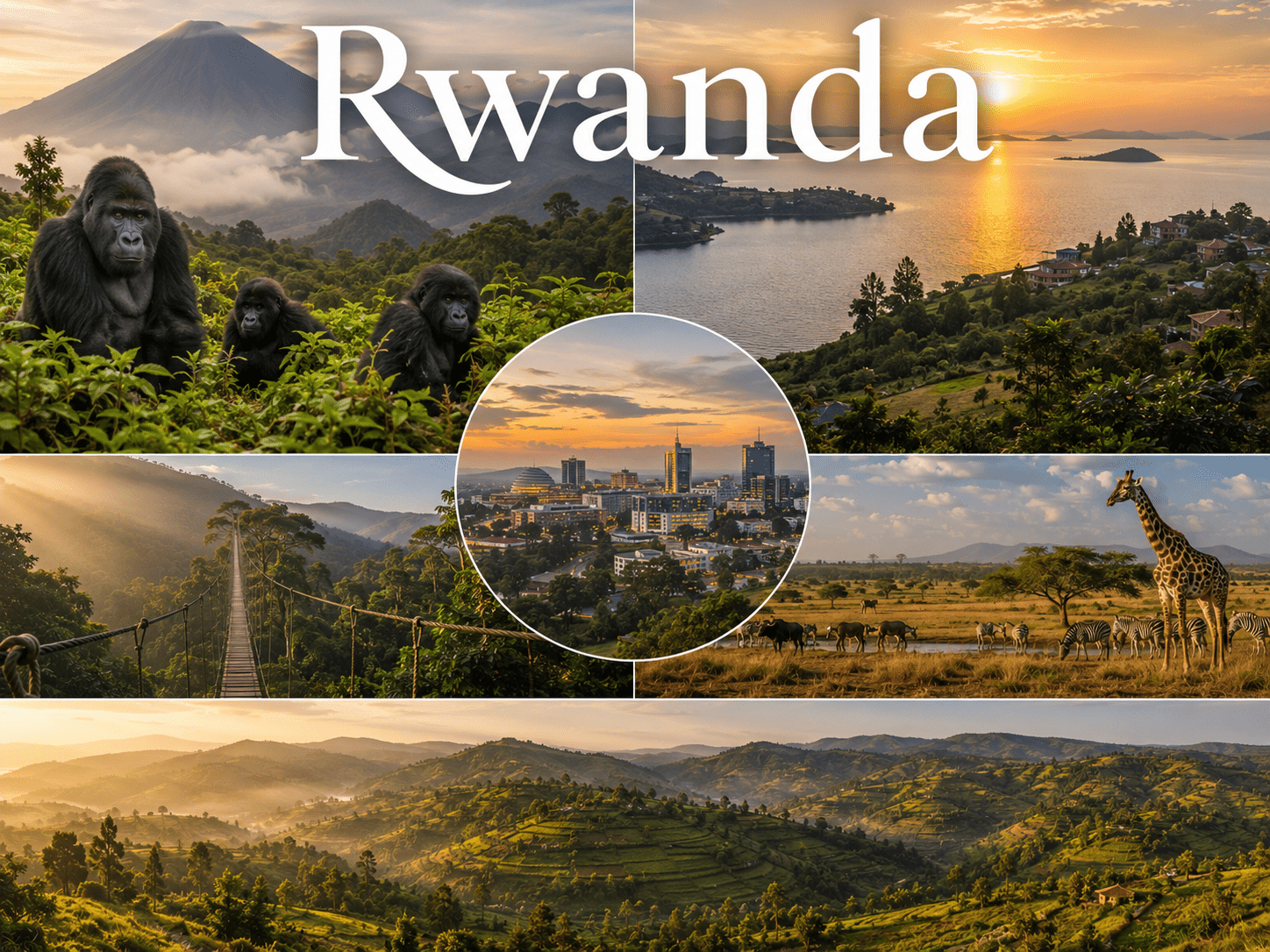
Introduction – The Land of a Thousand Hills
Rwanda is one of Africa’s most remarkable destinations, often called the “Land of a Thousand Hills” due to its stunning green landscapes and rolling terrain. Despite being a small country, it has become one of the most admired travel destinations in East Africa because of its cleanliness, safety, wildlife, and rapid development.
Travelers are drawn to Rwanda for:
- Mountain gorilla trekking
- Scenic volcanic landscapes
- Clean and modern capital city
- Rich cultural heritage
- National parks and biodiversity
- Peaceful and safe environment
From misty volcanoes to lush rainforests and sparkling lakes, this country offers an unforgettable African experience.
Historical Background of Rwanda
Early Kingdoms
The early history of Rwanda begins with organized kingdoms led by traditional monarchs. Society was structured around:
- Clan systems
- Farming communities
- Livestock culture
Colonial Period
In the late 19th century, the region came under German and later Belgian colonial rule, introducing:
- Administrative systems
- Cash crop agriculture
- Infrastructure development
Independence
Rwanda gained independence in 1962, marking a new era of national identity.
Modern History
The country experienced major challenges in the 1990s but has since rebuilt itself into one of Africa’s fastest-growing and most stable nations.
Geography and Location
Where is Rwanda Located?
Rwanda is located in East-Central Africa.
It is bordered by:
- Uganda (north)
- Tanzania (east)
- Burundi (south)
- Democratic Republic of Congo (west)
Geographic Coordinates
Approximate location: 2°S, 30°E
Landscape Features
The country is known for:
- Hills and mountains
- Volcanoes
- Rainforests
- Lakes and rivers
Climate of Rwanda
Tropical Highland Climate
Rwanda has a mild tropical climate due to its elevation.
Seasonal Overview
- Long rainy season
- Short rainy season
- Dry seasons in between
Best Time to Visit
Ideal months:
- June to September
- December to February
Perfect for:
- Gorilla trekking
- Safari tours
- Hiking
Culture and Traditions
Strong Cultural Identity
Culture in Rwanda is rooted in:
- Community values
- Respect for elders
- Traditional storytelling
Traditional Dance
One of the most famous cultural expressions includes:
- Intore dance (warrior dance)
- Drumming performances
- Cultural ceremonies
Handicrafts
Local crafts include:
- Basket weaving
- Wooden carvings
- Jewelry making
Religion in Rwanda
The population of Rwanda practices:
- Christianity (majority)
- Islam (minority)
- Indigenous beliefs
Religion plays a key role in:
- Community life
- Festivals
- Social values
Music and Arts
Traditional Music
Includes:
- Drumming ensembles
- Folk songs
- Storytelling music
Modern Music Scene
The country has a growing entertainment industry featuring:
- Afrobeat
- Hip-hop
- Gospel music
Cultural Centers
Museums and cultural villages preserve:
- History
- Dance
- Traditional artifacts
Cuisine of Rwanda
Rwanda cuisine is simple, natural, and locally sourced.
Popular Foods
Ugali
Cornmeal staple food.
Isombe
Cassava leaves cooked with spices.
Brochettes
Grilled meat skewers.
Fresh Fruits
Bananas, pineapples, and mangoes.
Food Culture
Meals are:
- Fresh and organic
- Locally grown
- Shared in communities
Economy of Rwanda
Fast-Growing Economy
Rwanda is one of Africa’s fastest-developing economies driven by:
- Agriculture
- Tourism
- Technology
- Services
Currency
The official currency is the Rwandan Franc (RWF).
Key Industries
- Coffee and tea exports
- Tourism (safaris and gorillas)
- ICT sector growth
- Construction
Major Cities in Rwanda
Kigali – Capital City
Kigali is known for:
- Clean streets
- Modern infrastructure
- Cultural museums
Butare (Huye)
Known for:
- University town
- Cultural heritage sites
Gisenyi
A lakeside city near Lake Kivu.
Languages Spoken
Rwanda has multiple official languages:
- Kinyarwanda
- English
- French
- Swahili
Tourist Attractions
Volcanoes National Park
Famous for mountain gorilla trekking.
Akagera National Park
Known for:
- Big Five safaris
- Savannah landscapes
Nyungwe Forest
A rich rainforest ecosystem.
Lake Kivu
One of Africa’s Great Lakes.
International Memberships
Rwanda is part of:
- United Nations (UN)
- African Union (AU)
- East African Community (EAC)
Official Sources
Volcanoes, Forests & Natural Landscapes
Rwanda is globally famous for its lush green scenery, volcanic mountains, and dense rainforests. Despite its small size, it offers some of the richest biodiversity in Africa.
Travelers come here for:
- Mountain gorilla trekking
- Volcano hiking adventures
- Rainforest exploration
- Scenic lake views
- Wildlife photography
Volcanoes National Park
One of the most important protected areas in Rwanda, known for:
- Mountain gorillas
- Golden monkeys
- Volcano hiking trails
- Mist-covered landscapes
Nyungwe Forest National Park
A biodiversity hotspot featuring:
- Ancient rainforest
- Canopy walkway
- Chimpanzee tracking
- Birdwatching species
Akagera National Park
The only savannah park in the country, offering:
- Lions and elephants
- Safari game drives
- Wetlands and lakes
Gorilla Trekking Experience
One of Africa’s Most Iconic Activities
Gorilla trekking in Rwanda is a once-in-a-lifetime experience.
Visitors:
- Hike through dense forests
- Track gorilla families
- Observe natural behavior
- Spend limited time with gorillas
Conservation Efforts
The country is known for strong wildlife protection policies including:
- Anti-poaching programs
- Eco-tourism development
- Community-based conservation
Festivals and Cultural Events
Kwita Izina Ceremony
A famous naming ceremony for newborn gorillas in Rwanda.
Rwanda Cultural Festival
Celebrates:
- Traditional dance
- Music performances
- Heritage exhibitions
National Holidays
Include:
- Independence celebrations
- Liberation Day
- Unity Day
Adventure Tourism in Rwanda
Hiking and Mountain Climbing
Popular locations include:
- Mount Bisoke
- Mount Karisimbi
- Volcano trekking routes
Lake Activities
At Lake Kivu:
- Kayaking
- Boat rides
- Beach relaxation
Cycling Tourism
Rwanda promotes eco-friendly cycling routes across:
- Hills
- Rural villages
- Scenic landscapes
Hidden Gems of Rwanda
Lake Kivu Islands
Known for peaceful island retreats and scenic beauty.
King’s Palace Museum
A cultural heritage site showing traditional royal life.
Kigali Genocide Memorial
A powerful historical site honoring victims and promoting peace.
Musanze Caves
Lava cave systems formed by volcanic activity.
Transportation and Travel System
Air Travel
Kigali International Airport connects Rwanda to Africa, Europe, and the Middle East.
Road Network
Well-developed roads connect:
- Cities
- National parks
- Border regions
Public Transport
Includes:
- Buses
- Motorcycle taxis (moto taxis)
- Private cars
Eco-Friendly Transport
The country promotes:
- Clean mobility
- Reduced emissions
- Smart urban transport
Food Culture and Culinary Traditions
Traditional Cuisine
Food in Rwanda is fresh, simple, and locally sourced.
Popular Street Foods
- Grilled meat skewers (brochettes)
- Roasted maize
- Fried plantains
Local Dining Style
Meals are:
- Communal
- Organic
- Farm-to-table
Education and Development
Education System
Rwanda focuses on:
- Universal education
- ICT training
- Higher education development
Technology Growth
The country is becoming a digital hub with:
- E-governance systems
- Startup ecosystems
- Innovation centers
Urban Development
Kigali is rapidly developing with:
- Clean infrastructure
- Smart city planning
- Green policies
Daily Life and Culture
Urban Lifestyle
In Kigali:
- Clean streets and organized traffic
- Cafés and modern restaurants
- Growing business culture
Rural Lifestyle
In villages:
- Farming communities
- Traditional homes
- Strong social bonds
Cultural Values
Key values in Rwanda include:
- Unity
- Respect
- Community harmony
Government and Political Structure
Rwanda is a presidential republic with a strong centralized government focused on stability, development, and long-term planning. Over the past decades, the country has built a reputation for efficient governance and rapid modernization.
Executive Branch
The President serves as head of state and government, overseeing national policy, security, and development programs.
Legislative Branch
Parliament is composed of:
- Chamber of Deputies
- Senate
Local Governance
The country is divided into provinces and districts that manage:
- Public services
- Infrastructure development
- Community programs
Famous Landmarks in Rwanda
Kigali Genocide Memorial
A deeply important site in Rwanda dedicated to remembrance, education, and peace.
Volcanoes National Park
Famous for:
- Mountain gorillas
- Volcano landscapes
- Guided trekking experiences
Lake Kivu
One of Africa’s Great Lakes offering:
- Scenic beaches
- Island resorts
- Boat activities
Nyungwe Forest Canopy Walk
A thrilling bridge walkway above ancient rainforest.
King’s Palace Museum
A cultural heritage site showcasing traditional monarchy history.
Unique and Interesting Facts About Rwanda
Cleanest Country in Africa
The country is globally recognized for strict environmental cleanliness policies.
Gorilla Conservation Leader
Home to some of the world’s most successful mountain gorilla conservation programs.
Plastic Bag Ban
One of the first African nations to ban plastic bags nationwide.
Land of a Thousand Hills
Named for its endless rolling green hills and landscapes.
Fast Urban Development
Kigali is considered one of Africa’s most organized and clean capitals.
Economy and Business Growth
Rapidly Growing Economy
Rwanda is one of Africa’s fastest-growing economies driven by:
- Agriculture exports (coffee & tea)
- Tourism and eco-tourism
- ICT and digital services
- Infrastructure development
Currency
The official currency is the Rwandan Franc (RWF).
Foreign Investment
The country attracts investors due to:
- Political stability
- Business-friendly reforms
- Digital governance systems
Major Cities in Rwanda
Kigali – Capital City
Kigali is known for:
- Clean urban planning
- Government institutions
- Growing tech sector
Musanze
Gateway to Volcanoes National Park.
Huye
Known for education and cultural institutions.
Rubavu
A lakeside city on Lake Kivu with tourism appeal.
Transportation and Infrastructure
Air Travel
Kigali International Airport connects Rwanda to Africa, Europe, and the Middle East.
Road Network
Well-maintained roads connect:
- National parks
- Cities
- Border regions
Public Transport
Includes:
- Bus systems
- Motorcycle taxis (moto taxis)
- Private car services
Future Development
The country is investing in:
- Smart transport systems
- Green mobility
- Infrastructure expansion
Travel Itinerary (7 Days in Rwanda)
Day 1–2: Kigali
Explore museums, local markets, and city landmarks.
Day 3: Volcanoes National Park
Go gorilla trekking and explore volcanic landscapes.
Day 4: Musanze
Visit caves and nearby cultural sites.
Day 5: Nyungwe Forest
Experience canopy walk and chimpanzee tracking.
Day 6: Lake Kivu
Relax with boat rides and lakeside views.
Day 7: Akagera National Park
Enjoy safari game drives and wildlife viewing.
Best Time to Visit Rwanda
Dry Seasons (Best Time)
June to September and December to February are ideal for:
- Gorilla trekking
- Hiking
- Safari tours
Rainy Seasons
March–May and October–November are lush but wetter, ideal for:
- Photography
- Fewer tourist crowds
Challenges and Future Development
Environmental Protection
Rwanda continues to focus on:
- Forest conservation
- Wildlife protection
- Sustainable tourism
Economic Diversification
Key goals include:
- Expanding tech sector
- Increasing tourism revenue
- Strengthening manufacturing
Social Development
The country emphasizes:
- Education access
- Healthcare improvement
- Community development
Final Summary
Rwanda is a powerful example of transformation, resilience, and natural beauty. From mist-covered volcanoes and dense rainforests to clean modern cities and rich cultural traditions, it offers one of the most unique travel experiences in Africa.
Its commitment to conservation, sustainability, and development has made it a global model for eco-tourism and national rebuilding. Whether trekking gorillas in Volcanoes National Park or exploring Kigali’s modern streets, visitors experience a country that beautifully blends nature, culture, and progress.
Key Facts Table
| Category | Information |
|---|---|
| Official Name | Republic of Rwanda |
| Capital City | Kigali |
| Region | East Africa |
| Language | Kinyarwanda, English, French, Swahili |
| Currency | Rwandan Franc (RWF) |
| Population | ~14 million |
| Famous Landmark | Volcanoes National Park |
| Climate | Tropical highland |
| Major Industries | Agriculture, Tourism, ICT |
| Famous Cities | Kigali, Musanze, Rubavu |
| Tourism Type | Wildlife, eco-tourism, culture |
| UN Membership | Yes |
| Special Feature | Gorilla trekking destination |
FAQ Section
What is Rwanda famous for?
Rwanda is famous for gorilla trekking, clean cities, and scenic hills.
What is the capital of Rwanda?
The capital is Kigali.
Is Rwanda safe for tourists?
Yes, it is considered one of the safest countries in Africa.
What language is spoken in Rwanda?
Kinyarwanda is widely spoken, along with English, French, and Swahili.
What is the best time to visit Rwanda?
Dry seasons from June–September and December–February.

