



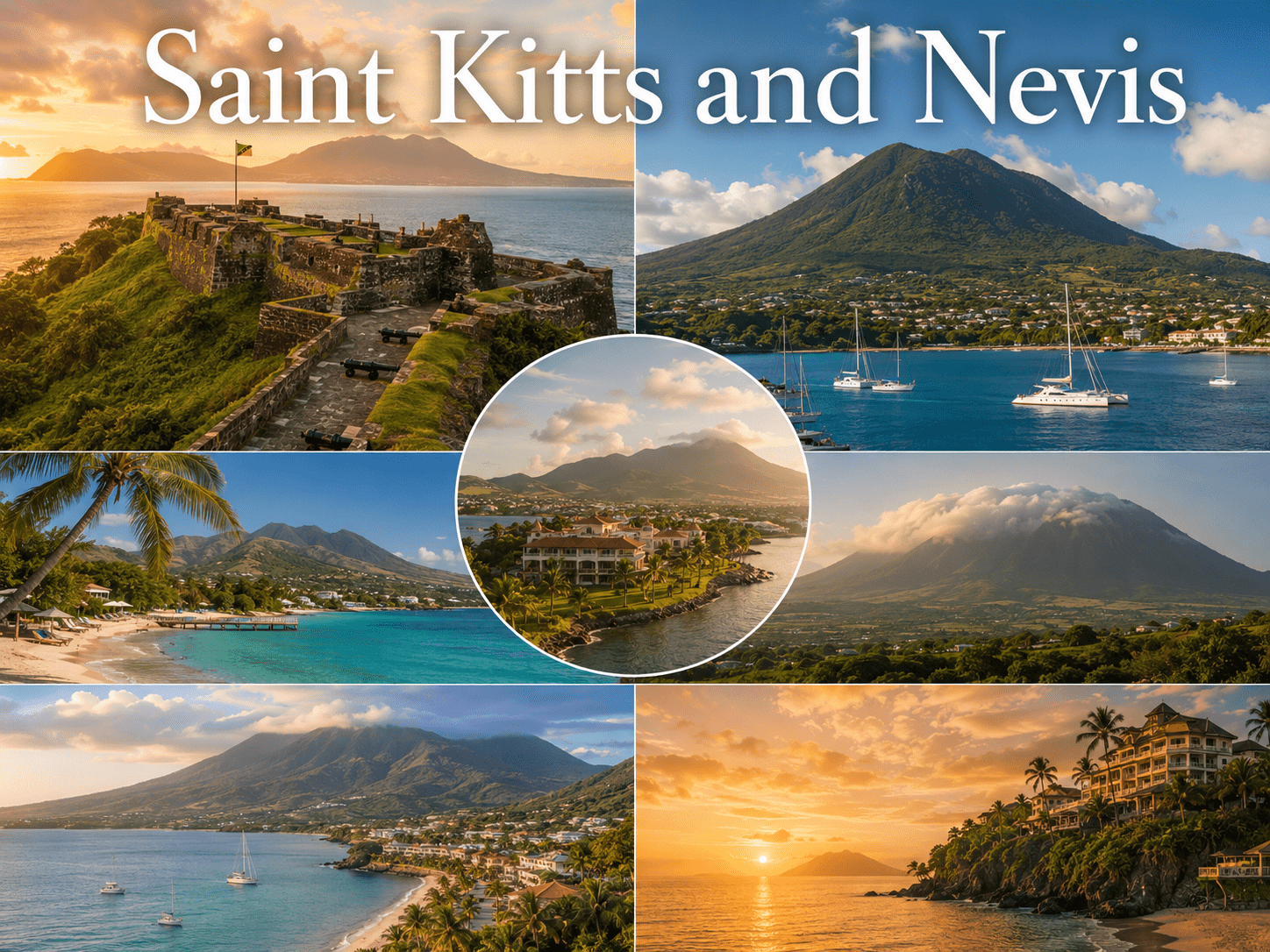
Introduction – The Twin Island Paradise
Saint Kitts and Nevis is a breathtaking twin-island nation in the Caribbean known for its volcanic landscapes, pristine beaches, colonial history, and relaxed island lifestyle. It is one of the smallest countries in the Western Hemisphere, yet it offers some of the most beautiful tropical scenery in the world.
Travelers visit Saint Kitts and Nevis for:
- Crystal-clear beaches
- Luxury resorts and cruises
- Volcano hiking adventures
- Colonial heritage sites
- Coral reefs and marine life
- Peaceful island atmosphere
This destination blends natural beauty, history, and Caribbean culture into a perfect tropical escape.
Historical Background of the Islands
Early Inhabitants
The earliest people of Saint Kitts and Nevis were the Kalinago (Carib) and Arawak communities who lived through:
- Fishing
- Farming
- Coastal settlement life
European Colonization
In the 17th century, European powers arrived, making the islands:
- One of the earliest British colonies in the Caribbean
- A key sugar plantation hub
- A strategic trading point
Plantation Era
The economy was shaped by:
- Sugarcane plantations
- Enslaved African labor
- Export trade networks
Independence
Saint Kitts and Nevis gained independence in 1983, becoming the smallest sovereign nation in the Americas.
Geography and Location
Where is Saint Kitts and Nevis Located?
Saint Kitts and Nevis is located in the Lesser Antilles of the Caribbean Sea.
It is bordered by:
- Atlantic Ocean
- Caribbean Sea
- Nearby islands like Antigua and Saint Martin
Geographic Features
The islands feature:
- Volcanic mountains
- Rainforests
- Coral reefs
- Coastal plains
Coordinates
Approximate location: 17°N, 62°W
Climate of the Islands
Tropical Climate
Saint Kitts and Nevis has a warm tropical climate year-round.
Seasonal Overview
- Dry season: December to April
- Wet season: May to November
Best Time to Visit
Ideal months:
- January to April
Perfect for:
- Beaches
- Cruises
- Outdoor exploration
Culture and Traditions
African and European Influence
Culture in Saint Kitts and Nevis blends:
- African heritage
- British colonial traditions
- Caribbean lifestyle
Music and Dance
Popular cultural forms include:
- Calypso music
- Soca rhythms
- Steelpan performances
Festivals
The islands are known for:
- Carnival celebrations
- Music festivals
- Street parades
Religion and Society
Most people in Saint Kitts and Nevis follow Christianity, especially:
- Anglican
- Methodist
- Catholic traditions
Religion influences:
- Festivals
- Community life
- Cultural values
Music, Arts, and Lifestyle
Traditional Music
Includes:
- Drum-based Caribbean rhythms
- Folk storytelling songs
- Dance performances
Modern Music Scene
Genres include:
- Reggae
- Soca
- Calypso fusion
Island Lifestyle
Life in Saint Kitts and Nevis is:
- Relaxed
- Community-focused
- Tourism-driven
Cuisine of Saint Kitts and Nevis
Caribbean Flavors
Food culture is rich and spicy, influenced by African and British cuisines.
Popular Dishes
Goat Water
A traditional spicy meat stew.
Saltfish and Dumplings
A classic breakfast dish.
Pelau
Rice cooked with meat and vegetables.
Fresh Seafood
Lobster, fish, and crab are widely enjoyed.
Economy of the Islands
Tourism-Based Economy
Saint Kitts and Nevis relies heavily on:
- Tourism
- Financial services
- Agriculture
Currency
The official currency is the Eastern Caribbean Dollar (XCD).
Key Industries
- Tourism and hospitality
- Offshore banking
- Agriculture (sugar historically)
- Real estate
Major Cities in the Country
Basseterre – Capital City
Basseterre is the main port and cultural hub.
Charlestown
Located on Nevis island, known for:
- Historic architecture
- Peaceful beaches
Languages Spoken
English is the official language in Saint Kitts and Nevis.
Local dialects include Caribbean Creole influences.
Tourist Attractions
Brimstone Hill Fortress
A UNESCO World Heritage Site with colonial history.
Mount Liamuiga
A dormant volcano offering hiking adventures.
Pinney’s Beach
A famous Nevis beach with soft sand and calm waters.
Cockleshell Bay
Known for crystal-clear waters and resorts.
International Memberships
Saint Kitts and Nevis is part of:
- United Nations (UN)
- Commonwealth of Nations
- Caribbean Community (CARICOM)
Official Sources
Natural Landscapes, Beaches & Volcanic Beauty
Saint Kitts and Nevis is a paradise of volcanic peaks, lush rainforests, and turquoise Caribbean waters. Despite being a small nation, it offers an impressive variety of natural scenery packed into two islands.
Visitors come here for:
- Tropical beach relaxation
- Volcano hiking
- Rainforest exploration
- Coral reef diving
- Scenic coastal drives
Mount Liamuiga
The highest point in Saint Kitts and Nevis is an inactive volcano offering:
- Dense rainforest trails
- Crater views
- Cloud forest ecosystem
- Guided trekking tours
Nevis Peak
On Nevis island, this volcanic mountain features:
- Challenging hiking routes
- Misty rainforest zones
- Panoramic island views
Caribbean Beaches
The coastline offers:
- Golden and black sand beaches
- Calm swimming waters
- Luxury resort areas
- Sunset viewpoints
Marine Life & Water Activities
Snorkeling and Diving
Saint Kitts and Nevis is rich in marine biodiversity:
- Coral reefs
- Tropical fish species
- Sea turtles
- Shipwreck dive sites
Sailing Adventures
Visitors enjoy:
- Catamaran cruises
- Island hopping tours
- Sunset sailing trips
Fishing Culture
Traditional and sport fishing includes:
- Deep sea fishing
- Reef fishing
- Local fishing villages
Festivals and Cultural Events
Carnival Celebration
One of the biggest events in Saint Kitts and Nevis featuring:
- Street parades
- Soca music
- Costumes and dance
- Night parties
Music Festivals
The islands host:
- Reggae events
- Calypso competitions
- Beach concerts
Independence Celebrations
Marked with:
- National parades
- Cultural shows
- Fireworks
Adventure Tourism
Hiking Trails
Popular routes include:
- Rainforest trails on Mount Liamuiga
- Nevis Peak trekking
- Coastal walking paths
Ziplining and Eco Parks
Adventure activities include:
- Rainforest ziplining
- Canopy tours
- Nature reserves
Island Cycling
Exploring Saint Kitts and Nevis by bike includes:
- Coastal roads
- Village routes
- Scenic viewpoints
Hidden Gems of the Islands
Romney Manor
A historic plantation site surrounded by botanical gardens.
Black Rocks Formation
Volcanic rock formations on the Atlantic coast.
Timothy Hill Viewpoint
A famous panoramic spot where the Atlantic meets the Caribbean Sea.
Nevis Botanical Gardens
Featuring:
- Tropical plants
- Exotic flowers
- Fountain courtyards
Transportation and Travel System
Air Travel
Robert L. Bradshaw International Airport connects Saint Kitts and Nevis to:
- Caribbean islands
- North America
- Europe (seasonal routes)
Ferry Services
Regular ferries operate between:
- Saint Kitts island
- Nevis island
Road Transport
Roads include:
- Coastal scenic routes
- Mountain access roads
- Resort connections
Taxi and Local Transport
Tourists commonly use:
- Taxis
- Private tours
- Rental cars
Food Culture and Culinary Traditions
Island Cuisine
Food in Saint Kitts and Nevis blends Caribbean spices with African and European influences.
Popular Street Foods
- Fried fish
- Roti wraps
- Coconut-based snacks
Seafood Specialties
- Grilled lobster
- Conch dishes
- Fresh snapper
Dining Culture
Meals are:
- Relaxed
- Family-oriented
- Fresh and locally sourced
Education and Modern Development
Education System
Saint Kitts and Nevis focuses on:
- Primary and secondary education
- Regional university programs
- Tourism-related training
Economic Development
The country is expanding through:
- Tourism infrastructure
- Financial services
- Real estate investment
Urban Growth
Basseterre is developing with:
- Cruise port expansion
- Modern hotels
- Commercial centers
Daily Life and Island Culture
Urban Lifestyle
In Basseterre:
- Cruise tourism is central
- Markets and shops are active
- Cultural events are frequent
Rural Island Life
Outside cities:
- Fishing communities
- Quiet villages
- Agricultural traditions
Cultural Values
Key values in Saint Kitts and Nevis include:
- Hospitality
- Community living
- Relaxed lifestyle
Government and Political Structure
Saint Kitts and Nevis is a parliamentary democracy within the Commonwealth realm. It has a stable political system that blends local governance with constitutional monarchy traditions.
Head of State
The King of the United Kingdom is the ceremonial head of state, represented locally by a Governor-General.
Head of Government
The Prime Minister leads the government and manages national policies.
Parliament
The National Assembly includes:
- Elected representatives
- Appointed senators
Local Administration
Governance is organized to manage:
- Public services
- Infrastructure
- Tourism development
Famous Landmarks in Saint Kitts and Nevis
Brimstone Hill Fortress
A UNESCO World Heritage Site in Saint Kitts and Nevis featuring:
- Colonial military architecture
- Ocean views
- Historic cannons and walls
Mount Liamuiga
A volcanic peak offering:
- Rainforest trekking
- Crater views
- Guided hikes
Pinney’s Beach
A long sandy beach on Nevis known for:
- Calm waters
- Luxury resorts
- Sunset views
Cockleshell Bay
Popular for:
- Clear turquoise water
- Beach bars
- Water sports
Charlestown Historic District
Colonial architecture and cultural heritage sites.
Unique and Interesting Facts About Saint Kitts and Nevis
Smallest Sovereign Nation in the Western Hemisphere
It is one of the smallest countries in the world by land area and population.
Two-Island Nation
The country consists of two main islands with distinct identities.
Volcanic Origin
Both islands were formed by volcanic activity.
Citizenship by Investment Program
The country is known for offering one of the world’s oldest investment citizenship programs.
UNESCO Fortress Site
Brimstone Hill is one of the best-preserved fortresses in the Caribbean.
Economy and Business Growth
Tourism-Driven Economy
Saint Kitts and Nevis relies heavily on:
- Cruise tourism
- Luxury resorts
- Eco-tourism
Currency
The official currency is the Eastern Caribbean Dollar (XCD).
Key Industries
- Tourism and hospitality
- Financial services
- Real estate investment
- Agriculture (limited scale)
Foreign Investment
The country attracts global investors through:
- Citizenship programs
- Tourism infrastructure projects
- Offshore services
Major Cities in Saint Kitts and Nevis
Basseterre – Capital City
Basseterre is the main port and cultural hub with:
- Cruise terminals
- Markets
- Historic buildings
Charlestown – Nevis Island Capital
Known for:
- Colonial architecture
- Quiet coastal charm
- Historical museums
Transportation and Infrastructure
Air Travel
Robert L. Bradshaw International Airport connects Saint Kitts and Nevis to:
- North America
- Caribbean islands
- Seasonal international flights
Ferry Services
Regular ferries connect the two islands:
- Saint Kitts ↔ Nevis
Road Network
Roads support:
- Scenic island tours
- Resort access
- Coastal travel
Local Transport
Includes:
- Taxis
- Shuttle services
- Private tours
Travel Itinerary (7 Days in Saint Kitts and Nevis)
Day 1–2: Basseterre
Explore markets, museums, and waterfront.
Day 3: Brimstone Hill Fortress
Discover UNESCO heritage and history.
Day 4: Mount Liamuiga
Rainforest hike and volcano adventure.
Day 5: Nevis Island
Visit Charlestown and botanical gardens.
Day 6: Beaches & Resorts
Relax at Pinney’s Beach and Cockleshell Bay.
Day 7: Island Cruise & Leisure
Enjoy sailing, snorkeling, and sunset views.
Best Time to Visit
Dry Season (Best Time)
December to April is ideal for:
- Beach tourism
- Outdoor activities
- Cruises
Wet Season
May to November is warmer and greener but includes occasional tropical rain.
Challenges and Future Development
Climate Vulnerability
Saint Kitts and Nevis faces:
- Hurricanes
- Coastal erosion
- Climate change risks
Economic Diversification
Focus areas include:
- Expanding tourism
- Renewable energy
- Digital services
Infrastructure Development
Improvements include:
- Port expansion
- Road upgrades
- Hotel development
Final Summary
Saint Kitts and Nevis is a stunning Caribbean destination where volcanic mountains, turquoise beaches, and colonial history come together in a compact but breathtaking island experience.
From the historic Brimstone Hill Fortress and rainforest-covered Mount Liamuiga to the peaceful beaches of Nevis, the country offers a perfect blend of adventure, relaxation, and culture. Its welcoming people, vibrant festivals, and slow island lifestyle make it one of the Caribbean’s most charming travel destinations.
Key Facts Table
| Category | Information |
|---|---|
| Official Name | Federation of Saint Kitts and Nevis |
| Capital City | Basseterre |
| Region | Caribbean (North America) |
| Language | English |
| Currency | Eastern Caribbean Dollar (XCD) |
| Population | ~50,000 |
| Famous Landmark | Brimstone Hill Fortress |
| Climate | Tropical |
| Major Industries | Tourism, Finance, Real Estate |
| Famous Cities | Basseterre, Charlestown |
| Tourism Type | Beaches, adventure, heritage |
| UN Membership | Yes |
| Special Feature | Smallest country in the Americas |
FAQ Section
What is Saint Kitts and Nevis famous for?
Saint Kitts and Nevis is famous for beaches, volcano hikes, and colonial history.
What is the capital city?
The capital is Basseterre.
Is Saint Kitts and Nevis safe for tourists?
Yes, it is considered one of the safer Caribbean destinations.
What language is spoken there?
English is the official language.
What is the best time to visit?
December to April is ideal for tourism.

